Lifestyle
Feeling drained? Here's how to rediscover your childlike wonder

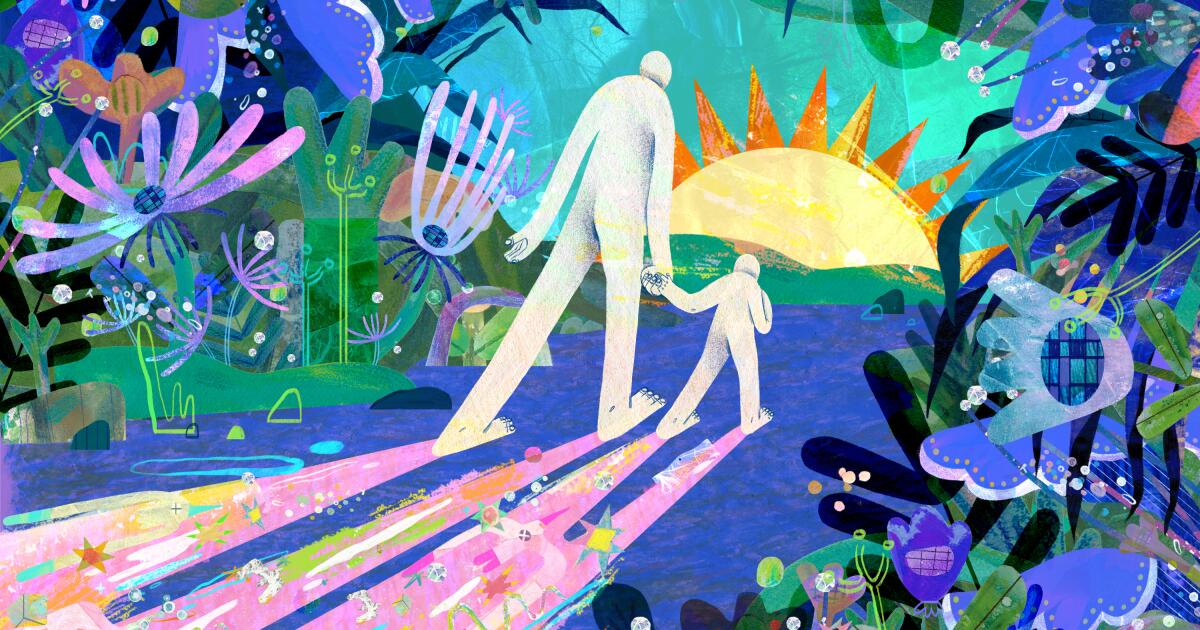
The older I get, the more I enjoy acting like a kid.
I jump at every opportunity to do backflips in the pool and absolutely love seeing the circus when it’s in town. I’ll giggle over banana splits at Fluffy McCloud’s and relish the silly moments when my friends want to watch an animated movie or order an absurd treat like Carvel’s “Fudgie the Whale” ice cream cake. Every few months, my partner and I make a pilgrimage to the desert where we climb huge rocks and lie beneath the stars to feel existentially tiny.
I’ve loved all of these activities since I was young, but my last year has been especially joyful since I started learning the art of childlike wonder.
The phrase first came into my life as a way my partner would justify ordering Shirley Temples, but the more I thought about childlike wonder, the more I began to notice it. I’d find posts about it on social media and contemplate it with friends, including my co-worker Kailyn, who told me about the whimsy she felt as she rolled down a grassy hill at the Getty Center.
And though these notions aren’t new to the world, recent research shows that experiencing awe and wonder can positively affect our mental and physical health, ultimately benefiting our lives. So in 2023, I sought out experts on awe and play and tried to reframe my life in L.A. around the big and tiny things that propel people into states of reverence and joy.
Through this, I discovered something profound yet simple: With the right perspective, and a little bit of effort, we can teach ourselves to generate childlike wonder in all sorts of places.
1. Look for awe in the mundane
Though Dacher Keltner has lived in Berkeley since 1996, he still has a distinctly SoCal vibe. His flowy blond hair looks eternally sun-kissed, and his disposition is equal parts optimistic and laid-back.
“Raised by an artist and a literature professor and living in the wild Laurel Canyon in the late ’60s, you know, life was awe,” Keltner said from his light-dappled kitchen.
A psychology professor at UC Berkeley, Keltner has been formally studying awe since 1999. As a scientist who focuses on the social functions of emotion, Keltner recently wrote “Awe: The New Science of Everyday Wonder and How It Can Transform Your Life” and was a consultant on Pixar’s “Inside Out.”
Keltner said that when he first started researching awe, there were a few early studies on goosebumps, chills and neuroaesthetics, but no one had really zeroed in on the impact of the feeling.
“I always think in terms of phenomena. Where is the motion? Where do I see it? How do I feel it?” Keltner said. “It just seemed like almost everything that really mattered to me — from being at a concert, to sports teams I love winning a championship, to people I really admire, to having children — it’s just all awe.”
Nearly 25 years later, Keltner has these experiences — and what triggers them — down to a science.
“Awe is an emotion that you feel when you encounter vast things that are mysterious,” he explained. “Wonder is what follows awe. It is a mental state, less so an emotion. It’s just a mental state where you’re curious and wanting to explore and discover.”
Keltner has been able to determine eight wonders of life that often propel people into states of awe: moral beauty (witnessing the virtue of others); collective effervescence (often experienced in large groups like those at weddings, rallies or sporting events); nature; music; visual design (beautiful buildings, paintings and the like); spiritual and religious experiences; life and death; and epiphanies.
Learning about these different kinds of wonder made it easier for me to zoom in on moments of awe that I could’ve otherwise forgotten, like carving through Laurel Canyon this summer in my beloved convertible, listening to KCRW play Sampha’s “Spirit 2.0” as the moon rose over the city.
When it comes to researching awe, Keltner often mixes qualitative questions and stories with quantitative measurements. One of his experiments had people create self-portraits while looking at either Yosemite Valley or San Francisco’s Fisherman’s Wharf. The self-portraits from Yosemite consistently had smaller subjects, suggesting that people’s sense of self — or ego — can shrink or even disappear when they’re experiencing awe.
“How much awe do you feel? Tell me a story? How small is your self? Do you feel humble? Draw a circle of the people you’re part of?” Keltner said as he listed various ways to measure awe. “Goosebumps, tears, vagal tone, default mode network deactivation, vocalizations, body postures. I mean, man, we can measure it, and that in its own right some people would not have predicted.”
Shrinking your ego or “self” may sound intimidating, but I like to think about it as feeling like a little guy. That might come from something literal — like wearing a size 5XL sweater for comfort — or it could be more poetic, like finding places where you feel tiny. I often experience this when I dive into the Pacific and roast marshmallows over the fire pits at Dockweiler Beach. Maybe you’ll get that same 5-year-old-in-an-adult-body sensation learning about far-off galaxies at Griffith Observatory’s planetarium or feeling the wind whip over the edge of a canyon.
2. But don’t forget to appreciate wonder in unsurprising places
Some of Keltner’s eight wonders might feel a bit obvious — of course you’ll feel awe when a new baby is born, or while processing a life-changing epiphany. It’s not shocking to learn that people access awe and gratitude while volunteering in their local communities, and by reflecting on the people who shaped their moral compass.
“We were surprised that moral beauty was the most prevalent source of awe around the world,” Keltner said. “People aren’t talking about the Grand Canyon; what they’re talking about, it’s like, ‘Man, I had this teacher and she did everything for her students.’”
Spiritual wonder is another form of awe that’s always at our fingertips. Angelenos can partake in death meditations and sink into sound baths. We take trips to breakup boot camps, energy vortexes or atheist retreats. We laugh and cry inside the most ethereal sacred spaces and find ways to revel in the beauty of our loneliness.
For Keltner, working on this book in the wake of his brother’s death made grief feel like its own complex yet obvious source of wonder. His work made him wrestle with the awe-lessness that he was feeling, and eventually brought him to appreciate the cycles of life that are constantly in motion around us.
Your obvious sources of wonder might look different. I know that awe is guaranteed when I plan a night out with my friends at a crowded gay bar or buy tickets to see Beyoncé perform for a silver-swathed crowd of thousands at SoFi Stadium. I know I’ll find it at weddings, as I watch loved ones reflect on finding someone who turned their world upside down, and I’m guaranteed to feel it every time I get to hug my mom or dad, who live 2,500 miles away.
People aren’t talking about the Grand Canyon; what they’re talking about, it’s like, ‘Man, I had this teacher and she did everything for her students.’
— Dacher Keltner, author of ‘Awe: The New Science of Everyday Wonder and How It Can Transform Your Life’
When I really need to ground myself, I’ll return to my favorite botanical gardens. Though I love taking special trips to the Huntington (to marvel at bonsai trees and sample various teas) and Descanso Gardens (to appreciate summer nights filled with ambient music and glowing foliage each winter), I’m loyal to UCLA’s garden, which is completely free. I find awe in the monstera leaves, often larger than my head, and make silent wishes on my favorite orange-and-black koi fish every time I visit.
It’s also easy enough to stumble upon the kind of jaw-dropping and awe-inspiring nature and design that Keltner mentions around California: We have drive-through redwoods, architectural triumphs, vibrant fields of flowers and spectacular ceilings. I can visit national parks of every flavor; float in lakes and swimming holes; and trip on psychedelics in the desert.
All of these channels for accessing wonder make Keltner hopeful: If awe is able to quiet the negative voices that get trapped in our heads, perhaps this sensation can better people’s lives.
“I started to think about the problems associated with too much self-focus — depression, rumination, anxiety, shame, self-harm, suicide, body-image issues,” Keltner said. “People are sick of the self-focus [that’s] imposed upon us by Instagram and the like. They want to be free of the self.
“Here’s an emotion that frees us of that, and gets us to see how we’re a part of much larger things,” he continued. “And what good news.”
3. Allow yourself to be more playful
Though prioritizing awe is a huge revelation, it’s only one piece of this existential puzzle.
So many of the things that brighten my life are tethered to the softest and brightest parts of my childhood. My partner and I make up silly dances and comedy bits as we move through the day to make each other laugh. Even as I try new hobbies, I find myself returning to the activities that I loved when I was a teenager: swimming, watercolor painting and pottery. When I need to get out of a deep emotional funk, I’ll usually order birria tacos and put on my favorite movie of the last two decades: Pixar’s “Ratatouille.”
That’s all to say that staying close to my playful childhood habits has made it easier to access awe, so I wanted to find out how these aspects of life are intertwined.
Stuart Brown, founder of the National Institute for Play, began studying play in 1966, when he was tasked with figuring out a motive behind the Texas Tower shooting.
“I subsequently went to the Texas state prison system, through a grant, and studied homicidal males,” Brown explained. “And I found out in a pilot study of 26 or so of these individuals, that their play life was very different than a control group.”
This study set Brown on a lifelong mission to study play and how it shapes people’s lives and allows them to enter a gleeful state. Throughout the years, he has interviewed thousands of people — “from Nobel laureates to murderers” — to map out their play patterns.
Brown listed examples of his interview questions: “What did you really, really enjoy as a kid? What’s a joyful moment you had? What’s the first toy you had? Did you have pets? Were there vacation times that were tremendously important? Can you remember a moment of joyfulness where you were absolutely at peace with yourself?”
From those interviews, Brown identified the different play patterns that naturally manifest in each person. For some, that looks like body play — think of dancing or playing a sport — while other people will be more interested in musical play or object play (think of using a Lego set or collecting stamps or keys).
Brown likened these play patterns to our fingerprints, saying they’re deeply embedded within each of us, but he added that many people don’t prioritize play as a significant part of personal well-being and fulfillment.
“Can you remember a moment of joyfulness where you were absolutely at peace with yourself?”
— Stuart Brown, founder of the National Institute for Play
That’s one huge challenge that the NIFP comes up against: Many people don’t see play as indispensable.
“If you go back 50 years, people didn’t know that sleep was important,” said Tony Christopher, the executive director for the institute. “And today, it’s very clear that [if] you don’t get a good night’s sleep you are far from at your best.”
And when people don’t get to play, there are clear drawbacks. Brown said that people can be grumpier, more rigid, and worse problem solvers when they’re play-deprived.
“From birth to death, [play is] a part of being human,” Brown said. “But when it’s not experienced, there are consequences. And the consequences are mild depression, or an outlook that’s not optimistic and not creative and not innovative.”
(Changyu Zou / For The Times)
4. Fill your life with people who expand your universe
When I hear Brown talk about play, it makes me think about Randy King Lawrence, the man behind Echo Park’s colorful and astounding Phantasma Gloria. Lawrence is the kind of person who always brings out my playful side, constantly showing people new ways to look at the world. He’s convinced me that everything looks a little more beautiful through one of his metal stencils or ruby-colored marbles.
“It’s just so damn fun, and it’s so easy,” Lawrence said of his art as we stood in his front yard in 2022. His words and enthusiasm struck me with a feeling that is now, clearly, awe. I had just moved to L.A., and seeing his art was one of the first experiences that convinced me that moving across the country wasn’t a massive mistake.
I’m lucky to be surrounded by many people who love to play, like my friend Charlie, who brought me to Griffith Park for Clown Zoo last spring to partake in a night of comedy. I think of my friends Sophia and Riley, who joined me at Akbar’s craft night one rainy Wednesday to decorate paper owls with pom-poms and beads, or Simone, whom I met in a ceramics class, and all of the long days we’ve spent at the Pottery Studio experimenting with glazes and throwing pots that sometimes crumple.
My roommates sometimes tease me about how silly my schedule often sounds — I’m not free that night because I’m seeing Cirque du Soleil. Wednesday I have to wake up at 6 in the morning to see the Oscar Mayer Wienermobile with the Los Angeles Breakfast Club — but these activities keep me feeling playful. Sometimes I’ll be sampling various crafts around the city and learning archery in Van Nuys, or jet-skiing to Catalina and riding railbikes through Ventura County.
But you don’t need to buy a jet ski or start woodworking to play more (though those are both great ways to get the feeling going). Swapping stories, making weekly or yearly rituals with friends and attending dinner parties are all great ways that adults can play.
“Adult play is not the same as childhood play,” Brown said. “We all have changed our tune as we age. I’m a grandfather and telling stories to my grandkids is a lot of fun to me. Whereas if I was telling stories when I was 18, I would have thought I was nuts.”
5. Slow down to appreciate things you take for granted
When Ingrid Barreneche is having a tough moment, she likes to move slowly and spend a little time on her patio.
“I walk out there and just close my eyes and I let the sun touch my skin,” Barreneche said. “That contact with the sun makes me feel immediately alive and [makes me] wonder.”
Barreneche, who did her MFA thesis on reclaiming wonder, was inspired by Rachel Carson’s 1965 book, “The Sense of Wonder.” Barreneche still creates art that’s intended to “awaken the viewer to rediscover the wonders of the world around them,” and as a resident of Boca Raton, Fla., she often finds awe and joy in admiring the fruit trees that surround her.
“In my backyard, I have a starfruit tree, and my nephew [and I], we call the tree the giving tree,” Barreneche said, a nod to the book by Shel Silverstein.
“It’s such a beautiful thing and people throw [it] away — there’s just fruit everywhere,” she continued. “[When] there’s too much going on, we don’t notice those things.”
She described wonder as something that comes from her gut — a deep, instinctive practice that shapes the way she views the world throughout each day.
“I paint every day; I cook; I walk the dogs; I love,” she mused. “I’ve been with my husband 27 years, and I wonder, ‘How come I’m so blessed to have a love in my life? And such a good human being?’”
That perspective is exactly what Catherine L’Ecuyer, author of “The Wonder Approach,” suggests for those who are trying to reconnect with wonder.
“Wonder is the desire to know,” she said. “Wonder is not taking anything for granted, so it is seeing things as if it were for the first — or for the last — time.”
“I paint every day; I cook; I walk the dogs; I love. I’ve been with my husband 27 years, and I wonder, ‘How come I’m so blessed to have a love in my life? And such a good human being?’”
— Ingrid Barreneche, artist
Ingrid Barreneche’s “A Tale of Life” (2023).
(Courtesy of Ingrid Barreneche)
L’Ecuyer, who is a doctor of both education and psychology, said that adults often approach the world with more cynicism, which is “the opposite of wonder.”
“In my speeches, I often invite people to identify how capable of wonder they are by asking them, ‘When you woke up this morning and you saw the person that was at your side, did you feel wonder and awe?’” L’Ecuyer continued. “We adults tend to get used to the beauty of the world and take it for granted.”
Talking with L’Ecuyer made me feel lucky to have a love who makes every morning feel more exciting than the day before. My partner, Reanna, always finds new ways to make me appreciate the world on a deeper level. They introduce me to their favorite foods — a bucket of popcorn at Brain Dead Studios, or maybe a Fat Sal’s sandwich — with unbridled enthusiasm and always make me laugh while we run errands. On date nights, they’ll surprise me with mini-golf games at Sherman Oaks Castle Park or trips to the piers of Marina del Rey to admire the basking sea lions.
We’ll often spend joyful afternoons at their favorite museum, the bizarre and wonderful Museum of Jurassic Technology, which serves tea in a captivating rooftop garden filled with doves. Sometimes I’m able to bring them to a new-to-us hidden gem, like the Velaslavasay Panorama, which houses a breathtaking 360-degree panoramic painting of China’s Shenyang city in the early 1900s.
Even on the hardest days, appreciating the presence and company of a loved one is a sure-fire way to access a little wonder.
6. Create new daily rituals, like ‘awe walks’
Keltner speaks of the world with an unbridled enthusiasm, as if he can find awe in nearly everything around him: when he’s noticing how the leaves change color in the fall; when he’s revisiting the music of Brian Eno; when he’s reading the work of Ralph Waldo Emerson, Walt Whitman or Rachel Carson.
He makes his work a daily practice through taking “awe walks,” where he’ll slowly observe the beauty surrounding him. He’ll often focus on small details, like a leaf on a tree, and then expand out to the big picture.
“You can get to awe quickly, but to really make it rich, it’s got to be part of this broader pursuit of wonders — of life,” he said. “It’s about a lot of deeper stuff. It’s about your life philosophy, and what you find meaningful, what Aristotle called eudaimonia: What do I care about? And how do I find it in music? And then act upon it?”
By centering awe, Keltner believes that people are more inclined to preserve nature, help each other and reach “big ideas that move our mind.”
“Awe tells you what’s sacred to you,” he said. “And we will fight for sacred stuff; we will sacrifice for what’s sacred.”
The daily awe practices that I’ve integrated into my own life are fairly simple. I now take a 30-minute-long walk every morning, and try to take a photo of something special that I wouldn’t have noticed if I were in a hurry. As I explore my neighborhood day after day, I’ll find myself pausing to take in a lush natural tunnel made by curving trees and the tropical birds that one of my neighbors keeps in their front yard.
I’ve been trying to slow down and really appreciate the beauty that’s constantly around me. I’m acknowledging the small and special joys, pausing for even just a second to acknowledge a new leaf that sprouted on one of my houseplants, or how lucky I am to live two minutes from a taco stand with the best homemade tortillas I’ve ever tasted.
I’m doing my best to appreciate my life for what it is — not what it once was, or not what it could be in the future. (There’s no way to say that without it feeling corny, so please cut me a little slack.) It doesn’t always feel like it’s working, but I’m sure that even the most optimistic people still have bad days.
I don’t believe that awe will combat all of the depression and anxiety that plagues my brain, but I know that strengthening my sense of wonder has helped me appreciate things more deeply. I hope that I’ll continue to find awe each morning, as the sun streams through my window and my partner snores lightly from the other side of the bed.
If nothing else, I hope that this reinvigorated sense of playfulness and wonder will keep compelling me to move through the world with a little more kindness and buoyancy, so I can float down the river of life knowing I didn’t miss all the beauty it has to offer.


new video loaded: The Fashion References in ‘Cats: The Jellicle Ball’

By Helen Shaw, Vanessa Friedman, Léo Hamelin, Laura Salaberry and Sutton Raphael
June 2, 2026

At around 1 in the morning at the Sassafras Saloon in Hollywood, four masc lesbians in cowboy hats and chaps were dancing on top of the bar while bartenders attempted to continue making espresso martinis beneath them.
One performer crawled into the crowd and between the spread legs of an audience member, licking the air between their thighs. Another wrapped a belt around their girlfriend’s neck while thrusting against her to Bon Jovi’s “You Give Love a Bad Name.” The ravenous audience, almost entirely women, fluttered dollar bills all around, while easily filling the saloon’s 300-person capacity.
Across Los Angeles, countless strip clubs and revue shows were unfolding at that same hour, though none quite like this and likely few provoking this level of frenzy. The night had all the riotous energy of a scene from “Coyote Ugly,” with the choreographed masculinity of “Magic Mike.” Playing on the latter’s name, this was the doing of Magic Mascs, an all-masc lesbian and translesbian revue, by sapphics for sapphics.
Skye Valentinez, from left, Alexa Legend, Daddii Syd and King Captain are members of Magic Mascs, an all-masc lesbian and translesbian collective, that started in February.
“Our idea was to give lesbians what men get all the time at a strip club, but instead of just sitting around and singing ‘Pink Pony Club,’ actually going wild,” said group founder Daddii Syd, a.k.a. Syd Latimore.
The performers, self-described “daddies” — Daddii Syd, Alexa Legend, Skye Valentinez and King Captain — formed Magic Mascs in February. The performance at the Saloon was their third overall, but the group has already become an institution within lesbian nightlife in Los Angeles. They will make their debut during a Pride Month performance on Friday at Womxn Pride’s rooftop party in downtown L.A.
The members come from professional dance backgrounds. King Captain entered dance school at age 12 and taught dance for nearly a decade. Daddii Syd has danced since childhood. Alexa Legend spent years go-go dancing across clubs in the city before joining the troupe. Skye Valentinez, the baby of the group — cherub-faced, smiling through braces — is the newest to performing, though she steps into it naturally, exhibiting the same living, breathing caricature of masculinity as the rest of them.
“No one’s trying to be cisgender,” King Captain makes clear. “We’re not trying to be the kind of men who are born into and fed by patriarchy,” Daddii Syd added. “We’re redefining masculinity.”

King Captain gets their underwear stuffed with dollar bills from the crowd.
Magic Mascs’ success follows a broader trend of lesbians confidently stepping into masculinity before hungry eyes. In the past year, performative masc competitions have appeared across the country, with lesbians — hair slicked back and carabiners dangling from their Carhartt jeans — showing off in front of leering crowds. Magic Mascs feels like a more professionalized version of that phenomenon, less tongue-in-cheek — just tongue.
“We always knew there was a huge hunger for this,” Daddii Syd said.
Their first performance, in San Diego, sold out fast.
“I knew right away we were onto something special,” Daddii Syd said.
Videos of the troupe traveled far across sapphics’ algorithms, especially clips of King Captain, whose devoted fan base — known collectively as “The Castle” — make arduous trips just to see them in the flesh. One fan drove more than 20 hours from Dallas to San Diego to see Magic Mascs. Another sent an edible fruit bouquet from Australia.
Backstage, every gesture from the troupe was ultra-confident. Captain, wearing briefs stuffed with a sock full of rice, talked to me with a leg cocked on the footrest of my stool. Daddii Syd, Alexa Legend and Skye Valentinez stood pelvis-forward, hands behind their heads, flexing ropey muscles. They loved the camera, eyeing it like prey while tipping the brims of their cowboy hats. (“You guys are like the modern-day Beatles,” our photographer said.)

King Captain gets the Hollywood crowd into a frenzy during a recent show.
Everything in the show revolved around their hips. The performers rolled and glided before delivering sudden, mechanical thrusts powerful enough to rattle nearby glasses. Their bodies were taut with effort and exaggerated lust. Daddii Syd performed with her girlfriend Jamie in matching plaid, not leaving much to the imagination as they licked whipped cream off each other.
Alexa Legend, who described herself as shy offstage, eventually stripped down to nipple pasties and a cowboy hat, firing confetti from her crotch into the crowd. King Captain swerved their hips like a powerful mechanical bull. “Oh, Captain, my captain,” someone in the crowd said, hand pressed dramatically to her forehead.
They paid particular attention to a woman in a wheelchair in the crowd — typical of their performances — asking if they could sit on the wheelchair. They received keen consent. “That was, um, very nice,” she told me after, still a little lost for words.
“We’re huge on consent,” Daddii Syd said. At the start of the show, they told the crowd to cross their arms in a Wakanda Forever pose if they didn’t wish to be touched. They checked in constantly while moving through the crowd, leaning close to ask questions like, “Is this OK?” and “Anywhere you don’t like to be touched?”
Captain learned these habits through work in intimacy coordination and under the mentorship of Tonia Sina, among the first professional intimacy coordinators in Hollywood. That ethos of care extended beyond their interactions with the audience and into the way they interacted with one another offstage.

“We want everyone in the crowd to feel gorgeous,” King Captain said before the recent show at Sassafras Saloon in Hollywood.

King Captain, left, and Lauren Henson, a stage kitten for the Magic Mascs, perform together on the bar.
Forming a sanctuary for themselves was just as important to the troupe as emboldening others’ desire. “It’s hard to find other masc friends,” Daddii Syd said. “Everybody’s weirdly competitive and trying to sabotage each other.” King Captain agreed, asking: “Why can’t we all be daddies at the same time?”
Daddii Syd and King Captain, who are both in their 30s, had little butch representation or friendship growing up and they have now become something like father figures to Alexa Legend and Skye Valentinez, who are in their 20s.
“We have to protect each other,” King Captain said. “We have to look out for each other.”
Daddii Syd put her arm around Skye Valentinez and said: “Look at this beautiful baby we have.”
That tenderness carried straight into the night. There was a striking seriousness to the whole performance, which spanned from just past 10 p.m. to 2 a.m. Unlike a bachelorette party or the typical male revue, there was no giggling in the room, and no wink of camp from the performers. Here was a rare claim to unabashed public sapphic desire; it was given the scale and seriousness routinely afforded to heterosexual display, like the gleeful bravado of a man striding into Hooters.
By the end of the night at Sassafras Saloon, the performers had stripped down nearly to nothing, pouring water over themselves while the audience roared. The atmosphere felt like one of collective release, a recognition that masculinity and desire don’t belong only to men — that a group of four masc lesbians can be horny, inspire horniness and ultimately stir a hysteria that once greeted Channing Tatum or even the Beatles.
It was the magnitude of the response that night at the Saloon, as on every other night they’ve performed, that’s inspiring their next moves: total domination in sum. The troupe is already planning a national tour through Florida, Dallas and Sacramento, though Daddii Syd’s ambitions extend much further.
“The idea,” she told me, “is to go global. Like a boy band.”

It’s hot, school’s out, put your PTO in – summer’s here! And that means Brittany’s back for It’s Been a Minute’s annual summer books episode! This time around authors Sasha Bonét (The Waterbearers) and Cindy Pham (The Secret World of Briar Rose) join the show to give their summer reading recommendations. From wanderlust to first time love – there’s something for everyone.
Want more summer book recommendations?
Sexy & Spiteful: the best books to read this summer
Simmering over summer books
Support Public Media. Join NPR Plus.
Follow Brittany on Instagram: @bmluse
For handpicked podcast recommendations every week, subscribe to NPR’s Pod Club newsletter at npr.org/podclub.
This episode was produced by Alexis Williams. The video was edited by Maya Dangerfield. It was edited by Nick Michael. Our Executive Producer is Barton Girdwood. Our VP of Programming is Yolanda Sangweni.
-

 North Carolina5 minutes ago
The Real Reason North Carolina’s GOP Is Proposing the Most Radical Anti-Abortion Bill Yet
-

 North Dakota8 minutes ago
10 Small Towns In North Dakota Were Ranked Among US Favorites
-

 Ohio13 minutes ago
Central Ohio family sues Hilliard funeral home after mother mistakenly cremated
-
 Oklahoma20 minutes ago
Oklahoma AG files petition to block proposed smelting project in Inola
-

 Oregon23 minutes ago
New Jersey man sentenced in Oregon federal court for conspiring to distribute fentanyl
-

 Pennsylvania28 minutes ago
Digital News Publishers Launch Pennsylvania Independent News Association (PiNA) to Advocate for Local News Organizations – Saucon Source
-

 South-Carolina33 minutes ago
South Carolina store owner found not guilty of murder in fatal shooting of Black teen
-

 Rhode Island35 minutes ago
Flight restrictions over World Cup sites: Unpermitted drones could be destroyed if they fly in certain areas – The Boston Globe

