Lifestyle
Dungeons & Dragons turns 50 this year. Here’s what the game has meant to you.


Vintage game modules from the role-playing game Dungeons & Dragons on display at The Dungeon Hobby Shop and Museum in Lake Geneva, which is located in the old offices of TSR, the company Gary Gygax created to sell the game.
E. Jason Wambsgans/Chicago Tribune/Tribune News Service via Getty Images
hide caption
toggle caption
E. Jason Wambsgans/Chicago Tribune/Tribune News Service via Getty Images
The first edition of tabletop role-playing game Dungeons & Dragons was released 50 years ago this year.
Since then, the game’s publisher, Wizards of the Coast, estimates that over 50 million people have played.
And it’s changed a lot since 1974. It was a pastime of nerds in the ‘80s and in part fueled the “Satanic Panic,” a time when concerned parents and news outlets linked the game teen killings and witchcraft.
It’s become more mainstream after featuring in Netflix’s hit series Stranger Things. It also made its way to the big screen multiple times since 2000, most recently with 2023’s Dungeons and Dragons: Honor Among Thieves.
During the pandemic, it became a popular way for friends to stay connected through virtual campaigns held on Zoom or on ‘virtual tabletop’ websites like Roll20. NBC reported that D&D product sales rose 33% in 2020.
That momentum continued after lockdown into 2023, as Baldur’s Gate 3, a video game based on D&D, exploded in popularity, reaching over half a million concurrent players at its peak in September of 2023. It went on to win Game of the Year.
Throughout the decades, it’s remained as a way for its most loyal players to socialize with friends and escape to faraway lands. A few weeks ago, we asked readers and listeners to tell us what role the game has played in their lives.
Nearly 1,000 of you shared your passion for the game. Here are five of your stories.
Memorializing loved ones
James Rubis and his wife Rena played D&D together throughout their relationship. When their daughter Gwen was born in 2003, they switched to online play to save time. As Gwen grew up, she became interested in playing with her parents. One day, Rena was playing an online game and encountered a Beholder – a floating, spherical monster with tentacles that have eyes on their ends. “My daughter saw that, and she went back to her room, and drew a picture of it and gave it to my wife – we still have it hanging on the wall in our spare room,” Rubis said.

A drawing of a beholder, a Dungeons & Dragons monster, done by James Rubis’ late daughter Gwen.
Courtesy James Rubis
hide caption
toggle caption
Courtesy James Rubis
The three of them started playing together as a family, in one-off games from Adventure in a Box, a monthly subscription service. “That was our monthly family time,” Rubis said. “We’d play 6 to 8 hours over the weekend once a month.”
In June of 2019, Gwen was killed in an accident while visiting family in California. Two weeks later, the monthly Dungeon in a Box arrived at Rubis’ house. “When I got that, it was like ‘Man, we’re not gonna get to do this again”, he said. He sent an email to the Dungeon in a Box customer service team thanking them for the memories their service allowed them. The co-founder responded, asking if they could honor Gwen’s memory in an upcoming campaign.
Gwen’s character was included in the final chapter of a long sequence of adventures, which was sent to Rubis’ home. “I started going through the book, I found it, it’s been like 6 – 8 months since she had passed away, and I lost it, I just started crying. Because everything they put in there was her story, and how she acted,” he said. “She would’ve loved it.”
Bridging generations
Michael McKenna was introduced to D&D as a kid, when his older brother let him play with his friends. He rediscovered the game in 2017 through Critical Role, a web series where professional voice-actors play D&D in real time. His child Julius wanted to play the game, so Michael put his experience as a high school English teacher to use and wrote a one-on-one campaign for the two of them – and catered to the needs of Julius, who is transgender and has been diagnosed with autism.
“Back then, he had a lot of problems expressing himself,” McKenna said, “but they really loved [D&D]”. The seemingly infinite set of directions to take the campaign started out overwhelming. Michael would ask Julius how his character Greta felt, or how she would react to a situation. “At first, Julius was like I don’t know, so we’d give options. Eventually, it became ‘this is what she’s doing’, and then it became ‘this is what I, Julius, am doing’,” McKenna recounted
“We caught him at 1:30 in the morning, with a flashlight in their bed, and their Chromebook, writing fiction about their D&D character,” McKenna recalled and laughed.“And it’s like you should go to bed responsibly, but it was so great that they were doing that.” At first, Julius kept the contents of the writing to himself, but he began to open up, eventually sharing the game with friends. “They’ve been more comfortable in situations and activities because of exploring things in D&D. They’re more assertive.”
Connecting cultures across borders
Khaver Siddiqi grew up in Karachi, Pakistan. The country has a Sunni Muslim majority, and making friends in other denominations was rare. Siddiqi began playing D&D in 1997, when a friend returned from a trip to England with a copy of the 2nd Edition box set. “We poured over the three books religiously every weekend,” Siddiqi told us “It was truly immersive for us as Pakistani teenagers, being transported to a place completely different from ours.”
Through his immersion in the world of D&D, he became curious about the real-world events and cultures that inspired the campaigns he played. “You go and you read and you realize, ‘Wow, other cultures have this fascinating history and mythology,’” he said. That curiosity then extended back to his view of his own culture, which he could study with a broader perspective. “It gave me a sense of purpose, an anchor in life to be like ‘This is my identity’.”
Siddiqi found community through the game, adding players from the Shia Muslim minority to his D&D party. Playing kept him and the rest of his friends grounded and connected through the country’s political strikes, government changes, and corruption. “There was chaos all around us at some point or another, whether it was political or otherwise. But every Friday night we would get together and play. It would drag into the early hours of Saturday morning or night,” he said.
Siddiqi hopes that the worlds in D&D’s mythology will look more like where he grew up and include facets of his culture. He recalls how important representation has been for his family, “Like Miss Marvel – I have a daughter who looks up to her because she’s like ‘oh yeah, she’s Pakistani-American,’ that’s what was missing for me in D&D when I was growing up. It was all these Euro-centric settings.”
Helping people discover themselves
Abby Morrione Matz, a transgender woman, first chose to play a female character during her first big D&D campaign in 2000. “At this point in my life, I was still trying to get a sense of who I was gender and sexuality-wise. I decided to use it as a platform to try out being a girl in front of my friends,” she said. “I really got to explore myself, as an elf, a wizard, but as a woman for the first time.”
Creating the character, she was inspired by the Lord of the Rings – a text that inspired the world of D&D. “I fell in love with Éowyn,” she described, “I was like ‘oh my god, she’s so cool, I want to play someone like her,’ but I also really liked Gandalf, so I did a wizard, I combined the two.”
Matz’ identity has been generally accepted throughout her D&D community. She found a community looking to start a group for women only. “I contacted [the leader] like ‘how do you feel about trans women?’ and she’s like ‘I’ll see you on Wednesday.’ We’ve built a humongous community since then, I’ve met some of my absolute best friends through this game.”
Platform for mental health and healing
In 2021, Stacia Seaman found her partner Reese in cardiac arrest in her home. “She wasn’t breathing,” Seaman said. “Her heart wasn’t beating. I had to do CPR on her while I waited for the EMTs to arrive.” She had suffered a reaction to an antibiotic and was left with mental and physical impairment due to lack of oxygen in her brain.

Stacia Seaman’s partner, Reese, pictured at the hospital after she was found in cardiac arrest at her home.
Courtesy Stacia Seaman
hide caption
toggle caption
Courtesy Stacia Seaman
As Reese slowly recovered, Seaman began slowly introducing new activities. “We started with games,” she said. “We played Go Fish, we played Rummy, we played dominoes, and then she was able to come home.” Then, they reintroduced the game both had played throughout their lives: D&D.
They began by building a D&D Lego set that came with a playable adventure. “[Reese] took one look at that and said ‘When are we going to start playing again?’” Seaman said, “I was thinking we’re not.” But she decided to slowly help Reese begin playing.
They created a character to play together, and Seaman reached out to the leader of a game for them to join, and described Reese’s situation. They welcomed the couple. “That’s one of the things I love about our gaming community: We get young kids, people with autism, and you just work with it,” Seaman said.
Seaman sees the game as benefitting Reese’s recovery.

Seaman credits Dungeons & Dragons for helping her partner Reese recover from a brain injury due to cardiac arrest.
Courtesy Stacia Seaman
hide caption
toggle caption
Courtesy Stacia Seaman
“It’s therapeutic,” she said. “It helps her with fine motor control because she’s rolling dice, it’s helping her cognitively because she’s in groups again. She’s just a happier person again. She’ll never be who she was, but she’s a lot more herself.”

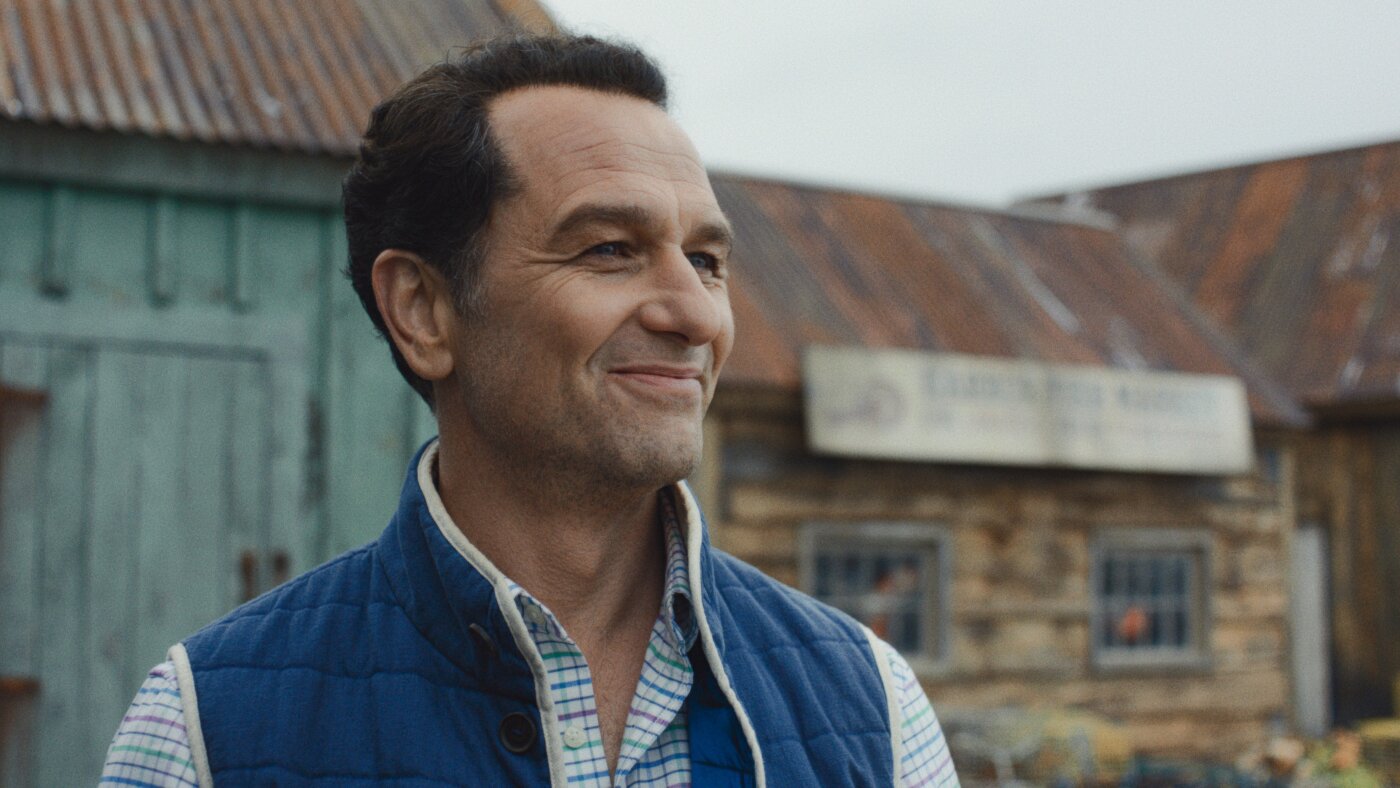
Matthew Rhys was nominated for his role in Widow’s Bay.
Apple TV
hide caption
toggle caption
Apple TV
The 2026 Emmy nominations are here. We’re unpacking the record-breaking nominations for Hacks, plus a big day for Widow’s Bay, The Pitt, and The Bear. We’ll also talk about the snubs and make some early predictions of who will win.
Connect with Pop Culture Happy Hour:
Letterboxd / Facebook
Our weekly newsletter
Support Pop Culture Happy Hour+


Can you say no to a friend’s wedding?
Getty Images/Getty images
hide caption
toggle caption
Getty Images/Getty images
Are we spending too much on other people’s weddings?
Going to a friend’s weddings can be so fun and meaningful… but it can also really hurt your wallet. A survey by LendingTree found that 31% of people who had been to a wedding in the past five years had accrued debt to attend. So what’s driving up the cost of weddings for guests? And what makes it so hard to say no to these expenses?
Brittany breaks it down with Allyson Rees, senior analyst at trend forecasting firm WGSN, and Annie Joy Williams, assistant editor at The Atlantic.
This episode was produced by Liam McBain, with additional support from Corey Antonio Rose. It was edited by Neena Pathak. Our Supervising Producer is Cher Vincent. Our Executive Producer is Barton Girdwood. Our VP of Programming is Yolanda Sangweni.
-

 Mississippi19 seconds ago
Ben Crump seeks independent autopsy in Nolan Wells death
-

 Missouri6 minutes ago
Missouri politicians champion unity, diversity on America’s 250th
-

 Montana13 minutes ago
Montana signs onto data center energy cost protection pledge
-

 Nebraska16 minutes ago
Gov. Jim Pillen calls for budget cuts, hiring freeze in new memo
-

 Nevada21 minutes ago
UNR tests whether cow manure can help restore Nevada landscapes after wildfires
-

 New Hampshire28 minutes ago
New Hampshire’s boutique Centennial Hotel sold to Lord Hotels
-

 New Jersey31 minutes ago
7 On Your Side helps man recover his stolen iPhone from safe pickup site
-
.jpg?w=400&resize=400,240&ssl=1 "Ex-Barcelona defender takes over as new Mexico boss as Javier Aguirre leaves after England defeat | Goal.com US")
.jpg?w=80&resize=80,80&ssl=1 "Ex-Barcelona defender takes over as new Mexico boss as Javier Aguirre leaves after England defeat | Goal.com US") New Mexico36 minutes ago
New Mexico36 minutes agoEx-Barcelona defender takes over as new Mexico boss as Javier Aguirre leaves after England defeat | Goal.com US

