Lifestyle
Dolce & Gabbana Co-Founder Resigned as Chair







Does having an affair with a married co-worker (who is in a loveless marriage, and whose wife is having an affair too, but they’re staying together for their child) make me, morally, a bad person?

That depends on what you believe a “bad” person to be. If your married co-worker and their spouse have both communicated and acknowledged the refined terms of their relationship to each other — that their romantic relationship is over, and that they are both free to pursue connections outside of their marriage while continuing their domestic partnership and performing whatever outer auspices of their relationship to ensure their child has a stable home until they come of age — then your co-worker and their spouse are essentially in an open relationship that prioritizes co-parenting. But the nature of this agreement, and the consequences of actions stemming from it, all depends on whether this agreement is mutually consensual and clear.
The word “morally” carries a weight with different subjective meanings. Generally it refers to undertaking an action in accordance with certain principles or values decided by an individual. So in that sense, what is “moral” in this situation can take on a variety of forms, depending on which definition of what is “right” is prioritized in your own mind.
Oftentimes we decide what is “wrong” for us based on how a certain idea or action makes us feel. That feeling can present in many ways — rumination, a knot in your throat or your chest, an unease in your stomach, the tensing of muscles. The fact that you’re asking this question tells me that something about this situation is likely making you feel a certain way. I invite you to explore what shape that feeling takes, not just in your mind, but in your body.
Instead of obsessively over-rationalizing or avoiding, try making friends with that feeling. If it’s uncomfortable or unsustainable to live with continuously, ask your body why — and how it can help you make decisions that are the kindest possible to your nervous system.
I would encourage you to get more clarity from your co-worker on the terms of their marriage, and exactly how open and honest they and their wife have been with each other. Have they both acknowledged to each other that they are seeing other people? If so, does their agreement have a “don’t ask, don’t tell” clause, or is your co-worker being asked to give details on the who, when, or how?
If one party isn’t as aware of what’s going on as the other party, this isn’t an objectively “right” or “wrong” vignette, per se. But it does mean that your new partner may come with some baggage, and perhaps with some growth opportunities in the area of communication. Ethical open relationships (ethical meaning different from morality, meaning more about a general societal consensus around what’s most evolved versus an individual’s codes for behavior) take a lot of maturity, humility, honesty and willingness to constantly grow. Taking on a partner in an open marriage, especially if a child and mutual source of income are involved, will likely present a certain requirement of effort for your heart and mind. And I would contend that even if you’ve already set a mental boundary that this relationship will be short-term or temporary, or purely sexual, chances are you’ll still have to undertake a degree of risk tolerance and emotional navigation through it, given the unique circumstances of the situation. Are you comfortable taking that on? Only you can answer this question for yourself.
Oftentimes we decide what is “wrong” for us based on how a certain idea or action makes us feel. That feeling can present in many ways — rumination, a knot in your throat or your chest, an unease in your stomach, the tensing of muscles. … I invite you to explore what shape that feeling takes, not just in your mind, but in your body.

Goth Shakira wears a Miss Claire Sullivan corset and skirt, Shushu/Tong shoes, Blumarine earring, Hirotaka earring, Pianegonda ring, Xeno underwear and stylist’s own collar.
The most important question here becomes: Is this a situation that is sustainable for you? Are you comfortable with the degree of honesty present among all three people involved in this (four, counting the child)? If there’s something that bothers you about it, what is it exactly that leaves you unsettled? Sitting with these questions will lead you to the best course of action for you, because you are the only person who has to live with you at the end of the day.
And if you were my friend, what I would say to you is this — are you truly infatuated with your co-worker, or do you just see them 40 hours a week? Consistency and proximity, especially in the professional context of teamwork, collaboration and problem-solving, can make a work connection feel like it has more potential for romantic intimacy, depth and longevity than it actually does. Dating your co-worker can be hard (there’s no workplace escape from your personal life if you get into a fight, and one or both of you can find your material stability threatened if the romantic relationship sours). Dating someone with a child can be hard. Dating someone in an open marriage can be hard. In your mind, body and heart, is your connection with this person worth what it comes with? Considering all angles of the situation through the lens of your own well-being first and foremost will give you all the answers you need.
Photography Eugene Kim
Styling Britton Litow
Hair and makeup Jaime Diaz
Visual direction Jess Aquino de Jesus
Production Cecilia Alvarez Blackwell
Photo assistant Joe Elgar
Styling assistant Wendy Gonzalez Vivaño

DBenitostock/Moment RF/Getty Images
Forty percent of Americans have their daily lives interrupted by uncomfortable bowel symptoms, according to the American Gastroenterological Association. That’s a lot of troubled guts.
But Dr. Trisha Pasricha says at the other end of the spectrum, there are people who experience “poophoria.” That’s Pasricha’s term for a state of being where doing your business is painless and worry-free. “ I just want you to poop quickly, effortlessly, and then go live your best life,” she says.
Want the latest stories on the science of healthy living? Subscribe to NPR’s Health newsletter.
Pasricha is the director of the Institute for Gut-Brain Research at Beth Israel Deaconess Medical Center, an assistant professor of medicine at Harvard Medical School, and writes for the Washington Post. She also treats patients with IBS and other painful digestive issues that can be tricky to diagnose.
Pasricha’s is not a one-size-fits all approach. There’s no magic number of times you need to go in a day, nor a perfect color or consistency that means you’re healthy or normal, she says. But if you often struggle with issues like bloating, constipation or diarrhea she wants you to know: There’s a better way to poop.

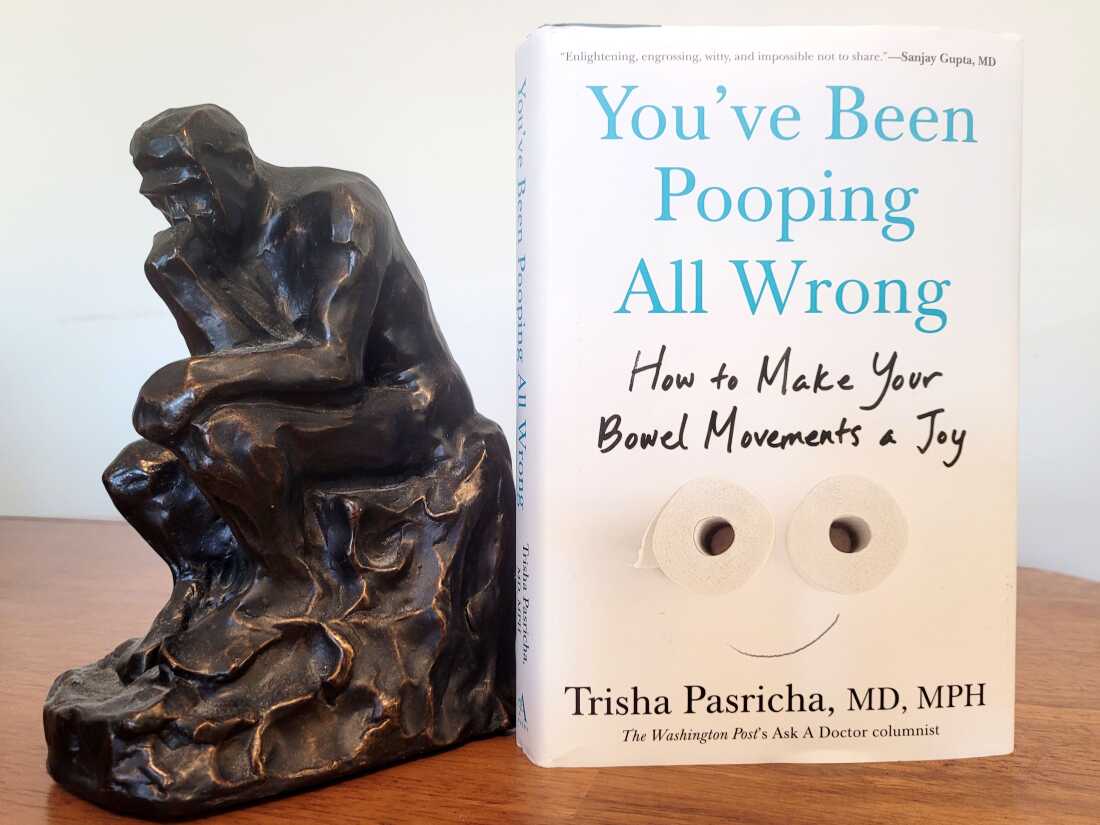
In her new book You’ve Been Pooping All Wrong: How to Make Your Bowel Movements a Joy Pasricha lays out evidence-based habits and practices to make your relationship with your solid waste as smooth as possible. Here are some of her most tried-and-true tips. Pasricha offers much of this advice to her patients — but following it just might save you a trip to the doctor.
Do: Take a look at your Number 2
A lot of people are shy about looking at the toilet bowl but Pasricha says you can learn a lot if you do. Very hard, small lumps or watery, soupy liquid are both cause for concern. A spectrum of shades is fine — but seek medical attention if you see black or whitish stool. A red or maroon color may indicate bleeding, or it can just give you insight on how long it took you to digest those beets.
When it comes to how often you go, there is a normal range: Pasricha says having a bowel movement anywhere from three times a day to three times a week can be perfectly healthy.

Do: Eat more fiber, and experiment with spices
Why is fiber at the top of the list when it comes to digestive health? It’s a real problem-solver even in the short term, Pasricha says. “If you have diarrhea, it forms this gel that kind of pulls it together and makes it more formed. If you have constipation, it softens it up,” she says.
Even more importantly, fiber is food for the microbes in your colon. Those microbes in turn produce short-chain fatty acids that reduce inflammation in the gut. Some of these fatty acids like have been linked to lower risk of colon cancer, and reduced risk of heart attack and dementia.
Since most people don’t get enough fiber in their diets, Pasricha often recommends a psyllium supplement — a plant-based powder that you can mix into water or coffee. Or you can learn which foods are high in fiber and amp up your intake.
Loading up on spicy food cooked with hot peppers can sometimes kick your bowel movements into overdrive, and not in a good way. ”But if you eat just the right amount, it can actually, in the long term, prevent pain and help you stay regular,” Pasricha says. Other seasonings including mustard, oregano, garlic and horseradish have been shown to stimulate the same nerve receptors.

Don’t: Consume a lot of ultra-processed foods and artificial sweeteners
Research has found concerning links with ultra-processed foods and digestive troubles. Specifically some additives and emulsifiers appear to “decrease the mucus barrier that’s on our guts, and can change the microbes,” Pasricha says. A study she cites in her book of over 200,000 human participants found that people who ate higher amounts of ultra-processed foods were 20% more likely to have irritable bowel syndrome compared to those who ate the least.
Pasricha also advises her patients to steer clear of foods with artificial sweeteners — often advertised as sugar-free — because they’re known to cause diarrhea and bloating.
Don’t: Spend more than 5 minutes on the toilet
Researchers think that sitting for extended periods on a toilet seat with an unsupported pelvic floor can increase risk for hemorrhoids. Hemorrhoids are actually something we all have, Pasricha says. They’re cushions of veins that sit inside the rectum. Sitting suspended over the toilet bowl for too long may weaken the connective tissue around the hemorrhoids, “and those veins start to bulge, then they pop out and they become inflamed and angry,” she explains.
What to do instead: Get up and move your body
If you’re perched in the bathroom for more than five minutes without results, take a movement break. Any amount of exercise can be beneficial, Pasricha says. “Studies have found that even just a brisk walk will be enough to help stimulate contractions of your bowel movement.”
Don’t: Bring your phone to the throne
After seeing a study from Great Britain from 1989 about people reading the newspaper in the loo, Pasricha decided to try an updated version in her own lab. She focused, of course, on smartphone use. Her team at Beth Israel surveyed 125 people about their lifestyle and bowel habits. Then the patients went in for colonoscopies and the doctors noted whether each patient had hemorrhoids or not.
The result? People who said they used their smartphones on the toilet were 46% more likely to have hemorrhoids than those who went device-free. “We found out that you were five times as likely to spend more than five minutes in the bathroom if you brought your smartphone in,” Pasricha says.
Aside from distracting you from the job at hand, Pasricha points out that there’s plenty of research on the stress-inducing effects of social media. “ You’re doom scrolling. You’re like getting caught by some rage bait,” she says. And stress can make it harder for the muscles in your pelvic floor to relax enough to clear the pipes..
What to do instead: Try some light print material
When she was a kid, people used to keep “bathroom reading” within easy reach of the seat, Pasricha notes with nostalgia. “To me, the ideal bathroom reader is something that gives you quick takes like a comic book, like short magazine articles, and ideally it should be from like three months ago,” she says.
If you absolutely must look at your phone, Pasricha tells patients to set a “two TikTok limit.” ”That’s, I have to bring my phone in, but after two TikToks, I’m gonna check in with myself and make a decision.”
Do: Squat, and lean forward
When you’re sitting at a 90-degree angle, a muscle called the puborectalis curves around the colon like a sling and helps keep it shut. But when you’re defecating, you want the tube of your bowel to be able to straighten out. And that’s where squatting comes in.
Pasricha says there’s no need to abandon the comfort of a modern toilet — instead put a stool or a pair of yoga blocks under your feet to raise your knees higher than your hips. “That basically allows that muscle to relax so that the tube straightens up again,” Pasricha says.
And to perfect your pooping posture, look to the famous sculpture, The Thinker by August Rodin. The figure is leaning forward, resting his elbows on his knees. There’s research suggesting “that’s the optimal way,” to help straighten the angle of the tube, says Pasricha.
Gut health is complex, and can change with age, shifts in lifestyle, and a whole number of other factors. If something seems off, don’t be shy about bringing it up with your doctor, Pasricha says. “ I get a lot of pictures of poop in my clinical messaging tool and I mean, it’s very helpful.”

Mohammad Saiyub (above, in a Mumbai quarter on a February day) appeared in a photo that went viral in the early days of the pandemic. He and his childhood buddy Amrit Kumar were hitching home, a journey of nearly 1,000 miles. Kumar, who is a Hindu Dalit, fell ill. Saiyub, a Muslim, cradled his friend by the roadside. Their different religious identities drew attention in a country where communal relations have been polarized after a decade of Hindu nationalist rule. The photo and the story behind it inspired the award-winning movie Homebound.
Diaa Hadid/NPR
hide caption
toggle caption
Diaa Hadid/NPR
DEVARI, India — The legendary Martin Scorsese was the movie’s executive producer although his role was kept secret to ensure the film crew could keep working without attracting media attention. He was even assigned a code name: “elder brother.”
That’s because Neeraj Ghaywan, director of Homebound, didn’t want to go public with his movie until it was ready. He worried its central story might be received with hostility by Indian media — by a country — profoundly changed by a decade of rule by the e Prime Minister Narendra Modi and his Hindu nationalist Bharatiya Janata Party, known as the BJP.
He need not have worried.
Homebound, is based on a true story: a tender friendship between two boys from a dusty village, one a Muslim; the other a Dalit, a South Asian caste once known as “untouchables.” The movie revolves around their failed attempts to push through the discrimination they face in today’s India as their lives are upturned and imperiled by the Indian government’s response to the COVID pandemic.
“I treaded that path very, very carefully. Like we didn’t disclose about the story for a long time. We were being very cautious,” Ghaywan tells NPR. “I thought: Let the film speak for itself.”

Neeraj Ghaywan is the director of Homebound.
Kate Green/Getty Images/Getty Images Europe
hide caption
toggle caption
Kate Green/Getty Images/Getty Images Europe
The film has spoken for itself — helped of course, by the megaphone that is the backing of one of the world’s most prominent directors.
Cannes loved it — a nine-minute standing ovation. Homebound made the rounds of film festivals, gathered up medals along the way, then was selected by India for consideration for an Oscar in the foreign film category. It even made it to the prestigious shortlist — a rare feat for any Indian movie.
Based on a true story
Homebound is based on a New York Times essay from 2020 by writer Basharat Peer. It tells the backstory of a photograph that went viral during the early days of the pandemic in India. The image shows one man cradling another in his lap in the dirt, by the roadside. And that man is clearly unwell.
“Just the care and the dignity, the photograph moved me immensely,” says Peer. “It was a great act of friendship.”
Then Peer discovered the men were Hindu and Muslim, and it drew him in, because of the context of “everything that had come before that in the past 10 years,” he says, referring to the routine vilification of Muslims by Hindu nationalists, including members of the ruling BJP party, and the prime minister himself. Perhaps most prominently this year, in February, the chief minister of the northeastern state of Assam, Himanta Biswa Sarma, generated an AI video of himself shooting Muslims. It was shared by his party and only taken down after a backlash, and a member of the state’s BJP social media team was fired.)
The two men in the image are garment factory workers: Mohammad Saiyub, a Muslim and Amrit Kumar, a Dalit.
That image captured them as they were trying to get home after the Modi government shut down most industries and transport to prevent the spread of the virus.
But with no work, migrant workers, who survive off low wages, began going hungry — and trying to leave. Economist Jayati Ghosh, who researched India’s COVID response, estimates some 80 million migrant workers tried to return home, walking and hitching rides in searing summer heat.
Peer says it reminded him of the Dust Bowl exodus of the ’30s in the United States. “I was thinking about Steinbeck and the Dust Bowl migrants, which led him to write Grapes of Wrath,” says Peer — except in India: “They’re not running from their Dust Bowl villages. They’re running from the Californias to their villages.”
Migrants died enroute — including the man in that viral photo, Amrit Kumar. “He died of heat exhaustion,” his friend Mohammad Saiyub tells us in a tiny tea house in a crowded Mumbai quarter, where workers sat at stainless steel tables to down steaming cups of chai, boiled in a giant, blackened pot manned by a teenager whose face was largely buried in his phone. Saiyub was in the port city to look for work.
Saiyub says the day that photo was taken, he and Kumar had paid a truck driver the equivalent of $53 for a ride. The cargo was crammed with other migrant workers, desperate to return home. But Kumar developed a fever, and the driver booted him off. “They worried he had corona,” Saiyub recalled.
So Saiyub helped his friend off the truck. Then, he says, “the driver told me, you get on the truck and let’s go.” Saiyub refused to abandon his friend. They sat by the roadside, waiting for help. That’s when someone took their photo. As the image spread online, an ambulance raced to find them.
Too late.
Saiyub ultimately returned home with his friend’s body. He dug his best friend’s grave. “My blood is Kumar’s,” he says. “And Kumar’s blood is mine. We were friends like that.”
A personal connection
Director Ghaywan read the essay, drawn in by that tender friendship between a Muslim and a Dalit Hindu.
There was also a very personal reason that Ghaywan was so affected: He was born into a Dalit family but concealed that information for much of his life, fearing rejection by his upper-caste peers if he told them the truth about who he was.
Ghaywan also happens to be a celebrated wunderkid in Bollywood. He got the backing of a major production studio to make Homebound.
He drew on his own experiences of fear and shame as a Dalit-in-hiding to draw Kumar’s character. “In the film, I poured in a lot of my own shame.” And he hoped to humanize a story rarely told, about India’s downtrodden workers. “I felt there is a strong springboard to talk about contemporary India,” Ghaywan said.
Film critic and curator Meenakshi Shedde said the decision to put money on a movie like Homebound spoke to Ghaywan’s talents as a director, and yet remained, something of a “miracle.”
“In today’s India, you can imagine how daring it is of a producer to put money on a film that’s going against the grain,” Shedde said. The grain she refers to is the stuff that Bollywood is increasingly churning out: films that reflect the Indian government’s Hindu nationalist ideology – with macho Hindu men fighting evil Muslims and proud Indians battling enemy Pakistan.
India’s notoriously prickly censors approved the film for screening in the country, although they insisted on changes that diminished the intensity of the caste and faith discrimination that the protagonists faced. Still, Ghaywan says, “the soul of the film remained intact.”
And then, it was selected as India’s official entry for the Oscars.
It was a striking choice to represent India. Just last year, an Indian movie that critics globally tipped as an Oscar winner was passed over by the same selection committee. Critics suggested that was because it featured a steamy Hindu-Muslim romance.
(NPR sought to speak to the Indian selection committee but received no response.)
Film curator Shedde said she, like many of her peers, were dumbstruck. “How did they end up being India’s submission? OK, so those are, I think, mysteries of the universe,” says Shedde.
Ultimately, Homebound made it to the Oscar shortlist for best foreign film but not the final five.
A very personal screening
After all the excitement died down, Ghaywan set about screening the movie in the one place that really mattered: in Devari, the dusty hamlet that Kumar and Sayoub came from.
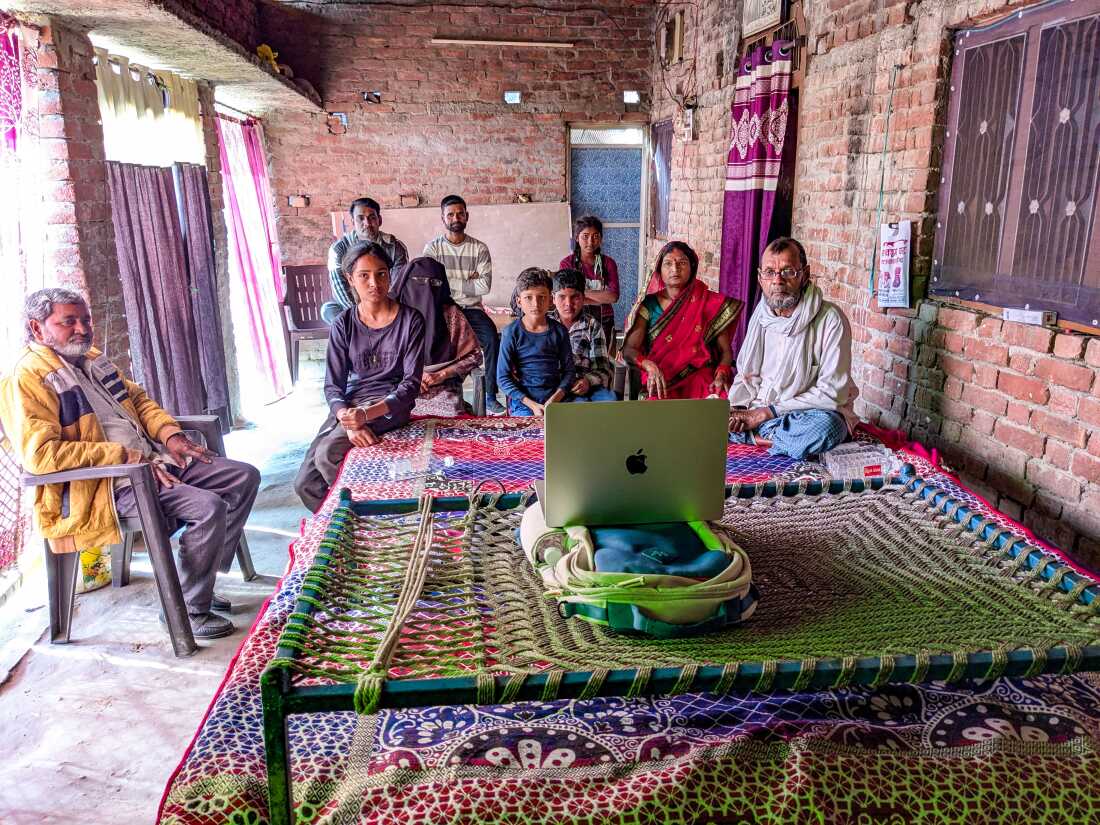
The families of two young men whose friendship inspired the movie Homebound gather for a makeshift screening on the balcony of the home of Mohammad Saiyub.
Diaa Hadid/NPR
hide caption
toggle caption
Diaa Hadid/NPR
That day, Gaywan hugged the fathers of Saiyub and Kumar, who were waiting to meet him. Both men, elderly and unable to work, sat on the same wooden bench.
Kumar’s mother Subhawati arrived later, dressed in her best, brightly colored sari, gifted by her daughter. Subhawati, hunched and sunburnt, stood quietly outside, until Ghaywan insisted she sit with the menfolk on the porch. Saiyub is from a conservative Muslim family. His sisters and mother stayed inside the house, his mother only poked her head outside to pass on plates of food for lunch.
After the meal, Ghaywan lined up plastic chairs on the Saiyoub family porch. Hung up sheets to block the light. Set up his laptop. Curious villagers piled in. Saiyub’s mother even drew up a chair.
But one person refused to watch: Kumar’s mother, Subhawati.
Ghaywan pleaded with her. “Your son’s story,” he said, “inspired millions of people.” Maybe if she watched the movie, she would see how big he had become in people’s hearts, and “maybe this will help you in some way to heal.”
Kumar’s mother asks us: “What good will it do me to watch this movie?”
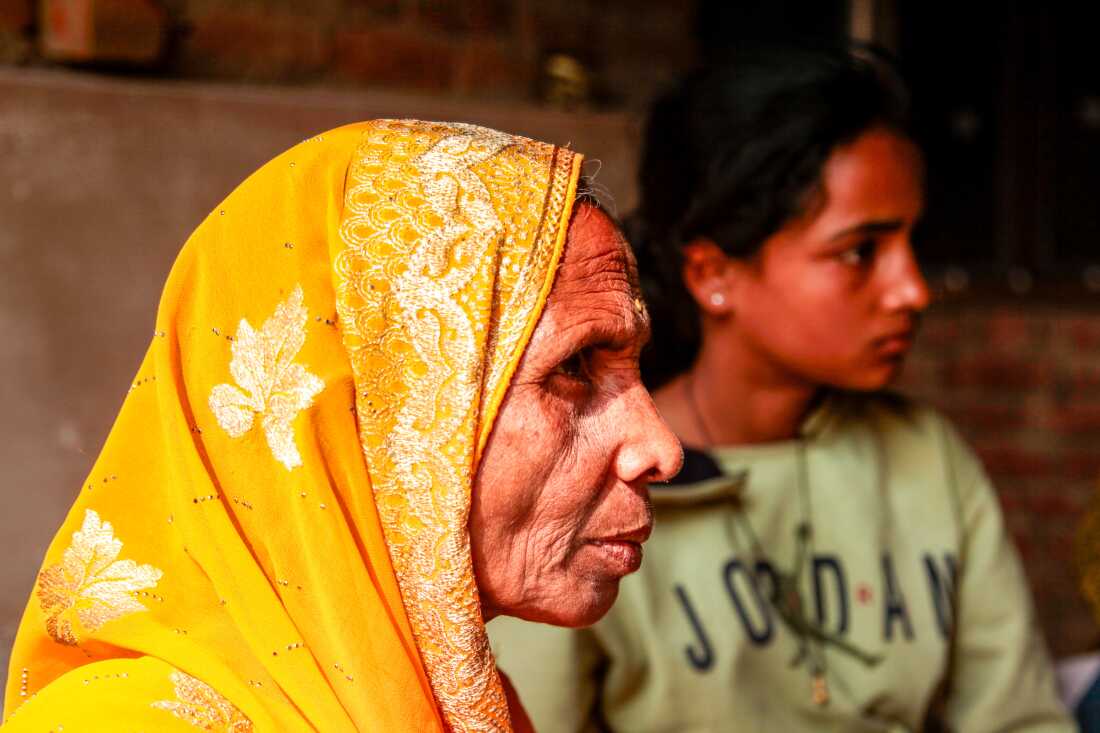
Subhawati is the mother of Amrit Kumar, who was on a 1,000-mile journey home with his childhood friend Mohammad Saiyub. Kumar fell ill and later died. Their story inspired the movie Homebound. When the director arranged a screening for the families of the two young men, Kumar’s mother could not bear to watch.
Diaa Hadid/NPR
hide caption
toggle caption
Diaa Hadid/NPR
It was her son Amrit who kept their bellies full with his garment factory work. Now she works on construction sites for a few dollars a day.
“Amrit used to see my sorrow and my happiness. He took my troubles away. If I watch this film — and Amrit doesn’t speak to me, what is the point?”
So as the opening score wafted from the porch, of a movie about her son’s life and death, she walked away.

Trump blasts Spanberger ahead of Virginia meetings, says state faces tax base exodus like New York, California

Americans wait overnight for access to free healthcare as costs soar ‘out of reach’

Caitlin Clark’s Fever make several key offseason signings in championship pursuit

Remove your personal info from the web; stop it from coming back

Man charged with arson after setting fires inside Ontario Mills mall

Florida High School Football Rankings: Top 25 teams – Oct. 21

How old is Bo Nix? What to know about Oregon quarterback ahead of 2024 NFL Draft

Cleary's 21 help Le Moyne down Central Connecticut State 69-64 in OT

99th annual Pony Swim held in Virginia

Indiana Members Credit Union announced as new anchor tenant at Bottleworks District
Trump blasts Spanberger ahead of Virginia meetings, says state faces tax base exodus like New York, California

Pope Leo urges world leaders to reject war and negotiate peace

Manhattan DA’s office to investigate Swalwell sexual assault allegation

NASA’s Artemis II mission in 20 minutes

Trump adversary running for Senate borrows his filibuster playbook
-

 Atlanta, GA7 days ago
1 teenage girl killed, another injured in shooting at Piedmont Park, police say
-

 Movie Reviews1 week ago
Vaazha 2 first half review: Hashir anchors a lively, chaos-filled teen tale
-

 Georgia4 days ago
Georgia House Special Runoff Election 2026 Live Results
-

 Pennsylvania5 days ago
Parents charged after toddler injured by wolf at Pennsylvania zoo
-

 Arkansas1 day ago
Arkansas TV meteorologist Melinda Mayo retires after nearly four decades on air
-
 Milwaukee, WI5 days ago
Potawatomi Casino Hotel evacuated after fire breaks out in rooftop HVAC system
-
 Entertainment1 week ago
Inside Ye’s first comeback show at SoFi Stadium
-

 Indianapolis, IN1 week ago
Fighting Illini begin Final Four preparations in Indianapolis