Lifestyle
Disney California Adventure turns 25. Will it ever not feel like a work in progress?

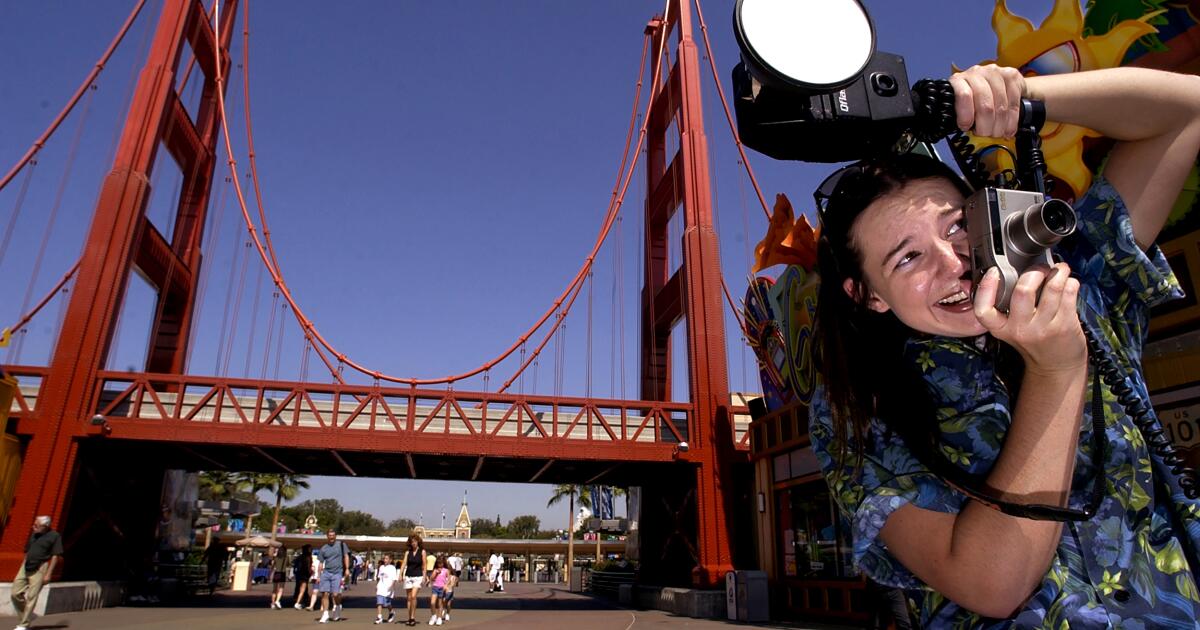
Disney California Adventure this month turns 25. Though Disneyland Park’s littler and much younger sibling, the park has grown into a respectable offering, one that ranks among my favorite Disney parks in North America. No small feat, considering its checkered, less-than-ambitious launch.
California Adventure is today emblematic of some of the best that Disney has to offer. And yet it remains a work in progress. The subject of constant tinkering, another reimagining is on the horizon.
With more Marvel, more “Avatar” and more Pixar due to be injected into the park, California Adventure stands at a crossroads. But also one with risks: Will it soon feel like a collection of brand deposits? This, of course, has appeared to be the vision of the company’s theme parks in the recent past. This doesn’t always have to be a negative. Consider it more a word of caution.
A “Coco” boat ride is destined for Disney California Adventure. The ride is under construction.
(Pixar / Disneyland Resort)
Few Disney properties, for instance, seem more ripe for exploration in a California-focused theme park than “Coco.” Under construction where Paradise Gardens and Pixar Pier meet, a “Coco”-inspired boat ride will give the park at long last a permanent home to recognize our state’s Latin culture and heritage. While fans may long for the days of original attractions such as Pirates of the Caribbean and the Haunted Mansion, those based on intellectual property — IP in industry speak — aren’t evil, especially when used to heighten the overall themes of the park. California Adventure’s own Cars Land is a key example.
When it starts to feel like retail, however, parks can become exhausting. Looking at you, Avengers Campus, a half-finished land with a bombastic orchestral score and familiar, urban design that wouldn’t be out of place in downtown L.A. In its current state, the land works best as a backdrop for live entertainment as it lacks the welcoming feel of Disney’s top creations.
California Adventure, at its most idealized, stood for more than an assortment of film properties. Its pitch was to show the Golden State as a romanticized destination, one that in the post-Gold Rush era has often given America permission to dream. It would capture our people, our nature, our food and our glamour through a lighthearted, optimistic lens. When completed, the park had a mini Golden Gate Bridge and giant letters that spelled out the name of our state (which were removed about a decade later).

California Adventure in 2001 was meant to depict a romanticized vision of California.
(Mark Boster / Los Angeles Times)
By the time California Adventure opened in February 2001, it had already been the subject of much revision. The Walt Disney Co. wanted it to be a West Coast answer to Walt Disney World’s Epcot. Its plans at the time were well-documented, with the Walt Disney Co. initially giving Westcot, as it was to be called, a spherical answer to the Florida park’s Spaceship Earth. In time, and in attempts to quell neighborhood concerns, the globe’s design would shift to become a large, futuristic needle.
None of it was to be. Financial headaches, caused in part by the early-year struggles of Disneyland Paris, inspired Disney to change course. Disney California Adventure would open with few attractions that rose to the Disneyland level, and yet The Times was kind in its opening coverage, praising the park’s change of pace from its neighbor and admiring how its architecture blurred fiction and reality.
The hang-gliding simulation Soarin’ Over California was an instant hit, and Eureka! A California Parade was Disney theatricality at its weirdest, with floats that depicted Old Town San Diego, Watts and more. But California Adventure’s prevalence of dressed-up county fair-like rides failed to command crowds. Disney’s own documentary “The Imagineering Story” took a tough-love approach, comparing some of its initial designs to those of a local mall.

The grand opening of California Adventure in February 2001.
(Mark Boster / Los Angeles Times)
And yet today it’s home to one of the Walt Disney Co.’s most fully-realized areas in Cars Land, which opened in 2012. Flanked by sun-scarred, reddish rocks that look lifted from Arizona, Cars Land is a marvel, and on par with the best of Walt Disney Imagineering’s designs (see New Orleans Square, Star Wars: Galaxy’s Edge and Pandora — the World of Avatar). Nodding to our Route 66 history, the land is a neon-lit, ‘50s rock leaning hub of activity, complete with the showstopping Radiator Springs Racers.
Cars Land led a major makeover of the park that also included the nostalgic Buena Vista Street, a nod to the Los Feliz era of the 1920s. And by the mid-2010s, many of California Adventure’s most insufferable traits, such as its ghastly puns (San Andreas Shakes was bad, but the Philip A. Couch Casting Agency was cringe-inducing) as well as the short-lived disaster of a ride that was Superstar Limo, had begun to disappear.

Cars Land, added to California Adventure in 2012, is one of Walt Disney Imagineering’s grandest achievements.
(Mark Boster / Los Angeles Times)
With the nighttime show World of Color, and a bevy of in-park entertainment, California Adventure pre-pandemic began to feel like something akin to a full-day park. It wasn’t perfect, of course — no park is.
The Little Mermaid — Ariel’s Undersea Adventure, though lightly charming, suffers from being a hodgepodge of familiar scenes from the film rather than a narrative tableau that can stand on its own. Too many empty buildings clutter its Hollywood Land area, the makeover of Paradise Pier into Pixar Pier did little but add garish film-referencing art to the land and the crowd-pleasing transformation of the Twilight Zone Tower of Terror into Guardians of the Galaxy — Mission: Breakout! was completed at the expense of the park’s prime Southern California theming.

Paradise Pier at California Adventure in 2002. The land has since been remade into Pixar Pier.
(Don Kelsen / Los Angeles Times)
But there is much about California Adventure to adore. It shines during holidays, whether that’s Lunar New Year at the top of the year or the back-to-back combo of Halloween and Christmas seasons near its end. Here is when California Adventure’s entertainment comes to the fore, bringing the park alive with cultural tales that at last reflect the diversity of the modern theme park audience.
How grand it would be, however, if California Adventure were blessed with this level of entertainment year-round. The Hyperion Theater, a 2,000-seat venue at the end of Hollywood Land, and once home to shows inspired by “Frozen,” “Aladdin” and “Captain America,” today sits empty. If the Walt Disney Co. can’t justify funding the theater, jettison it with the park’s upcoming makeover, as it stands as a reminder of how fickle the corporation can be when it comes to live performance (also gone, the great newsboy-inspired street show).

Staff at California Adventure put the final bit of polish on the letters that spell out “California” ahead of the park’s 2001 opening. The letters once stood at the entrance of the park.
(Mark Boster / Los Angeles Times)
Looking ahead, I expect Disney to deliver a powerful “Avatar” ride, and early concept art has shown a thrilling boat attraction that appears to use a similar ride system to Shanghai’s Pirates of the Caribbean: Battle for the Sunken Treasure, which is hailed by many as one of the company’s strongest modern additions. Worthy of debate, however, is how the pure fantasy landscape of “Avatar” fits in a park that still nominally tries to reflect California and our diversity.
And does it matter?
The company would likely argue that if the ride wows guests and extends the “Avatar” brand into another generation, that it does not. But Disneyland next door isn’t timeless because it has “Peter Pan” and “Star Wars.” It has endured for 70 years because its attractions, by and large, reflect cultural myths. And it’s a park we want to spend days in, thanks to its gorgeous landscaping, calming Rivers of America, and human tales of avarice, unity and romance spread throughout its attractions.
For theme parks, after all, can jump the shark, so to speak. Spend some time, for instance, sitting in California Adventure’s San Fransokyo Square. It’s a needless, post-pandemic makeover. What was once a simple food court has been transformed into a loud nook stuffed with a “Big Hero 6” meet-and-greet and gift shop. You’ll be transported, but to a place more akin to a marketing event.
So happy 25, California Adventure. We love you, and you’re a park worth celebrating, but like most post-collegiate kids, there’s still some room to learn.



A screenshot from George Mélière’s Gugusse et l’Automate. The pioneering French filmmaker’s 1897 short, which likely features the first known depiction of a robot on film, was thought lost until it was found among a box of old reels that had belonged to a family in Michigan and restored by the Library of Congress.
The Frisbee Collection/Library of Congress
hide caption
toggle caption
The Frisbee Collection/Library of Congress
The Library of Congress has found and restored a long-lost silent film by Georges Méliès.
The famed 19th century French filmmaker is best known for his groundbreaking 1902 science fiction adventure masterpiece Le Voyage dans la Lune (A Trip to the Moon).
The 45-second-long, one-reel short Gugusse et l’Automate – Gugusse and the Automaton – was made nearly 130 years ago. But the subject matter still feels timely. The film, which can be viewed on the Library of Congress’ website, depicts a child-sized robot clown who grows to the size of an adult and then attacks a human clown with a stick. The human then decimates the machine with a hammer.
In an Instagram post, Library of Congress moving image curator Jason Evans Groth said the film represents, “probably the first instance of a robot ever captured in a moving image.” (The word “robot” didn’t appear until 1921, when Czech dramatist Karel Čapek coined it in his science fiction play R.U.R..)
“Today, many of us are worried about AI and robots,” said archivist and filmmaker Rick Prelinger, in an email to NPR. “Well, people were thinking about robots in 1897. Very little is new.”
A long journey
Groth said the film arrived in a box last September from a donor in Michigan, Bill McFarland. “Bill’s great grandfather, William Frisbee, was a person who loved technology,” Groth said. “And in the late 19th century, must have bought a projector and a bunch of films and decided to drive them around in his buggy to share them with folks in Pennsylvania, Ohio, New York.”
McFarland didn’t know what was on the 10 rusty reels he dropped off at the Library of Congress’ National Audio-Visual Conservation Center in Culpeper, Va. A Library article about the discovery describes the battered, pre-World War I artifacts as having been, “shuttled around from basements to barns to garages,” and that they, “could no longer be safely run through a projector,” owing to their delicate condition. “The nitrate film stock had crumbled to bits on some; other strips were stuck together,” the article said. It was a lab technician in Michigan who suggested McFarland contact the Library of Congress.
“The moment we set our eyes on this box of film, we knew it was something special,” said George Willeman, who heads up the Library’s nitrate film vault, in the article.
Willeman’s team carefully inspected the trove of footage, which also contained another well-known Méliès film, Nouvelles Luttes extravagantes (The Fat and Lean Wrestling Match) and parts of The Burning Stable, an early Thomas Edison work. With the help of an external expert, they identified the reel as having been created by Méliès because it features a star painted on a pedestal in the center of the screen – the logo for Méliès Star Film Company.
A pioneering filmmaker
Méliès was one of the great pioneers of cinema. The scene in which a rocket lands playfully in the eye of Méliès’ anthropomorphic moon in Le Voyage dans la Lune is one of the most famous moments in cinematic history. And he helped to popularize such special effects as multiple exposures and time-lapse photography.

This moment from George Méliès’ Le Voyage dans la Lune (A Trip to the Moon) is considered to be one of the most famous in cinematic history.
George Méliès/Public Domain
hide caption
toggle caption
George Méliès/Public Domain
Presumed lost until the Library of Congress’s discovery, Gugusse et L’Automate loomed large in the imaginations of science fiction and early cinema buffs for more than a century. In their 1977 book Things to Come: An Illustrated History of the Science Fiction Film, authors Douglas Menville and R. Reginald described Gugusse as possibly being, “the first true SF [science fiction] film.”
“While it may seem that no more discoveries remain to be made, that’s not the case,” said Prelinger of the work’s reappearance. “Here’s a genuine discovery from the early days of film that no one anticipated.”

Joshua Jackson
I Got the Eye of the Tiger!!!
Published
BACKGRID
Joshua Jackson may have picked up a thing or two from “Karate Kid: Legends” … we got video of him going H.A.M. in a boxing gym with a trainer.
Watch the video … the 47-year-old actor ditched his shirt for the workout, really working up a sweat as he bobbed and weaved in the ring while throwing in some pretty impressive jabs!

He later goes to work solo on a speed bag like an old pro.
Joshua has publicly said that starring in “Karate Kid: Legends” in the role of a former boxer was a dream for him, but there’s no word on whether he’s training for another role or just really fell in love with boxing.
Either way … you’re looking great, Joshua!

Tracy Morgan, left, and Daniel Radcliffe star in The Fall and Rise of Reggie Dinkins.
Scott Gries/NBC
hide caption
toggle caption
Scott Gries/NBC
Tracy Morgan, as a presence, as a persona, bends the rules of comedy spacetime around him.
Consider: He’s constitutionally incapable of tossing off a joke or an aside, because he never simply delivers a line when he can declaim it instead. He can’t help but occupy the center of any given scene he’s in — his abiding, essential weirdness inevitably pulls focus. Perhaps most mystifying to comedy nerds is the way he can take a breath in the middle of a punchline and still, somehow, land it.
That? Should be impossible. Comedy depends on, is entirely a function of, timing; jokes are delicate constructs of rhythms that take time and practice to beat into shape for maximum efficiency. But never mind that. Give this guy a non-sequitur, the nonner the better, and he’ll shout that sucker at the top of his fool lungs, and absolutely kill, every time.
Well. Not every time, and not everywhere. Because Tracy Morgan is a puzzle piece so oddly shaped he won’t fit into just any world. In fact, the only way he works is if you take the time and effort to assiduously build the entire puzzle around him.
Thankfully, the makers of his new series, The Fall and Rise of Reggie Dinkins, understand that very specific assignment. They’ve built the show around Morgan’s signature profile and paired him with an hugely unlikely comedy partner (Daniel Radcliffe).
The co-creators/co-showrunners are Robert Carlock, who was one of the showrunners on 30 Rock and co-created The Unbreakable Kimmy Schmidt, and Sam Means, who also worked on Girls5eva with Carlock and has written for 30 Rock and Kimmy Schmidt.
These guys know exactly what Morgan can do, even if 30 Rock relegated him to function as a kind of comedy bomb-thrower. He’d enter a scene, lob a few loud, puzzling, hilarious references that would blow up the situation onscreen, and promptly peace out through the smoke and ash left in his wake.
That can’t happen on Reggie Dinkins, as Tracy is the center of both the show, and the show-within-the-show. He plays a former NFL star disgraced by a gambling scandal who’s determined to redeem himself in the public eye. He brings in an Oscar-winning documentarian Arthur Tobin (Radcliffe) to make a movie about him and his current life.
Tobin, however, is determined to create an authentic portrait of a fallen hero, and keeps goading Dinkins to express remorse — or anything at all besides canned, feel-good platitudes. He embeds himself in Dinkins’ palatial New Jersey mansion, alongside Dinkins’ fiancée Brina (Precious Way), teenage son Carmelo (Jalyn Hall) and his former teammate Rusty (Bobby Moynihan), who lives in the basement.
If you’re thinking this means Reggie Dinkins is a show satirizing the recent rise of toothless, self-flattering documentaries about athletes and performers produced in collaboration with their subjects, you’re half-right. The show feints at that tension with some clever bits over the course of the season, but it’s never allowed to develop into a central, overarching conflict, because the show’s more interested in the affinity between Dinkins and Tobin.
Tobin, it turns out, is dealing with his own public disgrace — his emotional breakdown on the set of a blockbuster movie he was directing has gone viral — and the show becomes about exploring what these two damaged men can learn from each other.
On paper, sure: It’s an oil-and-water mixture: Dinkins (loud, rich, American, Black) and Tobin (uptight, pretentious, British, practically translucent). Morgan’s in his element, and if you’re not already aware of what a funny performer Radcliffe can be, check him out on the late lamented Miracle Workers.
Whenever these two characters are firing fusillades of jokes at each other, the series sings. But, especially in the early going, the showrunners seem determined to put Morgan and Radcliffe together in quieter, more heartfelt scenes that don’t quite work. It’s too reductive to presume this is because Morgan is a comedian and Radcliffe is an actor, but it’s hard to deny that they’re coming at those moments from radically different places, and seem to be directing their energies past each other in ways that never quite manage to connect.

Precious Way as Brina.
Scott Gries/NBC
hide caption
toggle caption
Scott Gries/NBC
It’s one reason the show flounders out of the gate, as typical pilot problems pile up — every secondary character gets introduced in a hurry and assigned a defining characteristic: Brina (the influencer), Rusty (the loser), Carmelo (the TV teen). It takes a bit too long for even the great Erika Alexander, who plays Dinkins’ ex-wife and current manager Monica, to get something to play besides the uber-competent, work-addicted businesswoman.
But then, there are the jokes. My god, these jokes.
Reggie Dinkins, like 30 Rock and Kimmy Schmidt before it, is a joke machine, firing off bit after bit after bit. But where those shows were only too happy to exist as high-key joke-engines first, and character comedies second, Dinkins is operating in a slightly lower register. It’s deliberately pitched to feel a bit more grounded, a bit less frenetic. (To be fair: Every show in the history of the medium can be categorized as more grounded and less frenetic than 30 Rock and Kimmy Schmidt — but Reggie Dinkins expressly shares those series’ comedic approach, if not their specific joke density.)
While the hit rate of Reggie Dinkins‘ jokes never achieves 30 Rock status, rest assured that in episodes coming later in the season it comfortably hovers at Kimmy Schmidt level. Which is to say: Two or three times an episode, you will encounter a joke that is so perfect, so pure, so diamond-hard that you will wonder how it has taken human civilization until 2026 Common Era to discover it.
And that’s the key — they feel discovered. The jokes I’m talking about don’t seem painstakingly wrought, though of course they were. No, they feel like they have always been there, beneath the earth, biding their time, just waiting to be found. (Here, you no doubt will be expecting me to provide some examples. Well, I’m not gonna. It’s not a critic’s job to spoil jokes this good by busting them out in some lousy review. Just watch the damn show to experience them as you’re meant to; you’ll know which ones I’m talking about.)
Now, let’s you and I talk about Bobby Moynihan.
As Rusty, Dinkins’ devoted ex-teammate who lives in the basement, Moynihan could have easily contented himself to play Pathetic Guy™ and leave it at that. Instead, he invests Rusty with such depths of earnest, deeply felt, improbably sunny emotions that he solidifies his position as show MVP with every word, every gesture, every expression. The guy can shuffle into the far background of a shot eating cereal and get a laugh, which is to say: He can be literally out-of-focus and still steal focus.
Which is why it doesn’t matter, in the end, that the locus of Reggie Dinkins‘ comedic energy isn’t found precisely where the show’s premise (Tracy Morgan! Daniel Radcliffe! Imagine the chemistry!) would have you believe it to be. This is a very, very funny — frequently hilarious — series that prizes well-written, well-timed, well-delivered jokes, and that knows how to use its actors to serve them up in the best way possible. And once it shakes off a few early stumbles and gets out of its own way, it does that better than any show on television.
This piece also appeared in NPR’s Pop Culture Happy Hour newsletter. Sign up for the newsletter so you don’t miss the next one, plus get weekly recommendations about what’s making us happy.
Listen to Pop Culture Happy Hour on Apple Podcasts and Spotify.

San Francisco Ballet cancels upcoming performances at Kennedy Center

14-year-old girl shot on Cleveland’s East Side

Multiple people injured in mass shooting on 6th St; Austin Police investigating

Detroit Lions meet with Alabama star OL at NFL combine

Alaska Sports Scoreboard: Feb. 28, 2026

Florida High School Football Rankings: Top 25 teams – Oct. 21

Cleary's 21 help Le Moyne down Central Connecticut State 69-64 in OT

How old is Bo Nix? What to know about Oregon quarterback ahead of 2024 NFL Draft

99th annual Pony Swim held in Virginia

Indiana Members Credit Union announced as new anchor tenant at Bottleworks District

Mamdani’s response to Trump’s Iran strike sparks conservative backlash: ‘Rooting for the ayatollah’

Activists hail ‘historic’ EU’s decision on accessible abortion

A long-buried recording and the Supreme Court of old (CT+) : Consider This from NPR

2 Survivors Describe the Terror and Tragedy of the Tahoe Avalanche

Iran fires missiles at US bases across Middle East after American strikes on nuclear, IRGC sites
-

 World3 days ago
Exclusive: DeepSeek withholds latest AI model from US chipmakers including Nvidia, sources say
-

 Massachusetts4 days ago
Mother and daughter injured in Taunton house explosion
-

 Montana1 week ago
2026 MHSA Montana Wrestling State Championship Brackets And Results – FloWrestling
-

 Louisiana6 days ago
Wildfire near Gum Swamp Road in Livingston Parish now under control; more than 200 acres burned
-

 Denver, CO3 days ago
10 acres charred, 5 injured in Thornton grass fire, evacuation orders lifted
-

 Technology1 week ago
YouTube TV billing scam emails are hitting inboxes
-

 Technology1 week ago
Stellantis is in a crisis of its own making
-

 Politics1 week ago
OpenAI didn’t contact police despite employees flagging mass shooter’s concerning chatbot interactions: REPORT