Connect with us

Lifestyle

Can this trendy ingredient in Erewhon's drink aisle really boost your mood or help your anxiety?

Published

on

Can this trendy ingredient in Erewhon's drink aisle really boost your mood or help your anxiety?

Licorice root, reishi mushrooms and vitamin B-6 are often among the ingredients listed in various adaptogenic drinks.

(Rebecca Peloquin / For The Times)

It’s not enough for a drink just to taste good anymore. Most specialty grocery or liquor stores now offer colorful cans and bottles that advertise so-called adaptogens, ingredients that beverage companies claim can help you manage stress, enhance creativity and sharpen focus. With packaging printed with bright colors and trendy fonts, these drinks are designed to pop on the shelves and on your social media feed — a subtle health flex for the aesthetically conscious and sober-inclined.

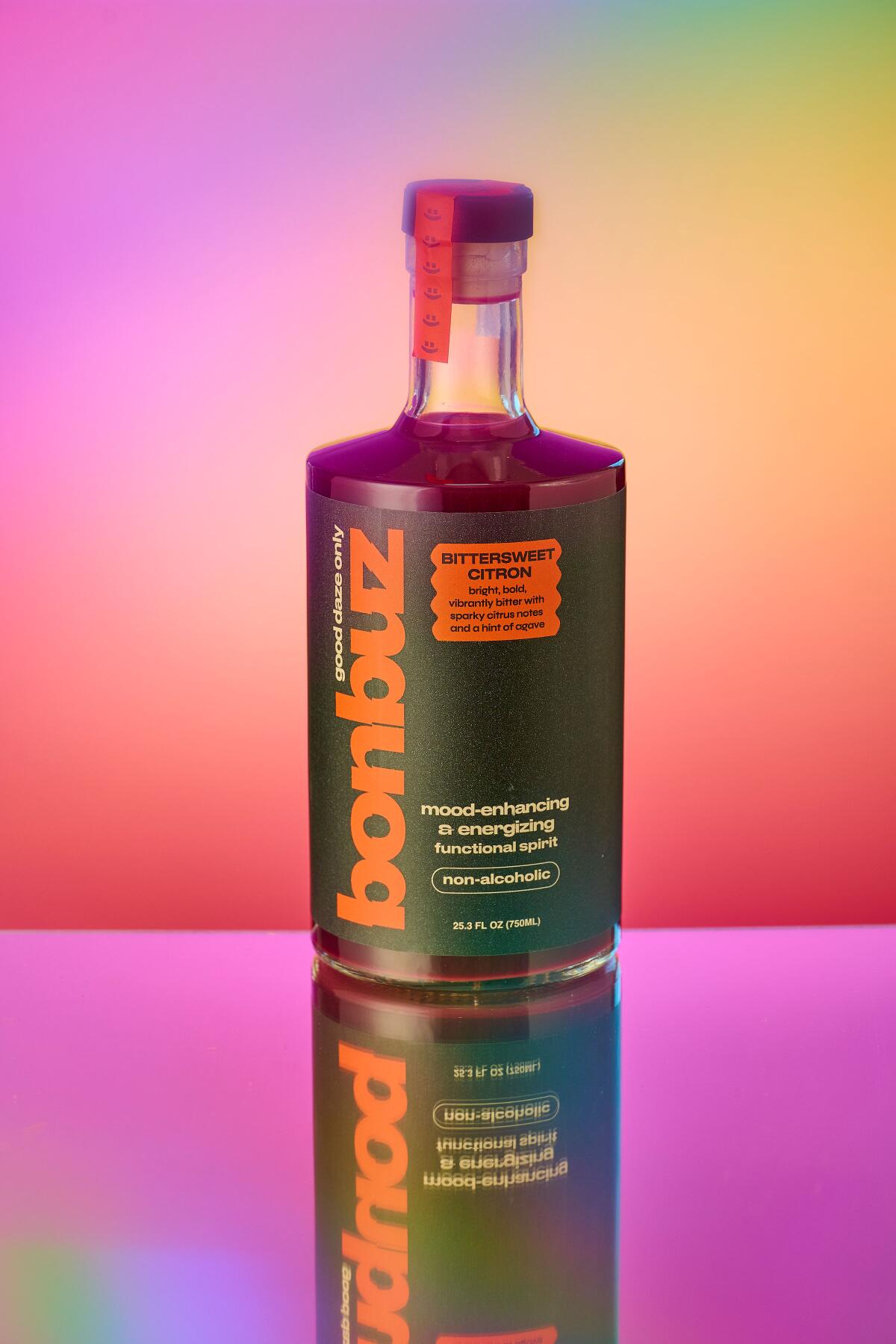
You can find them in trendy superettes around the city. Silver Lake’s Soft Spirits’ adaptogenic section includes a Spritz Italiano from L.A.-based De Soi (founded by Katy Perry and Morgan McLachlan), a concoction containing Reishi mushroom, which the company claims is “a stress soothing, brain boosting botanical often referred to as ‘the herb of immortality.’” At Bristol Farms across the city, you can pick up Bonbuz, a blood red tonic that promises to “heighten your senses and transport you to a deeper mind-body experience” with ingredients like pyridoxine-HCL (a vitamin-b6), ginger root and rhodiola rosea. Or you can grab a hemp-infused chili margarita by Aplos at the Dream Hotel in Hollywood that says it can “elevate mood, stimulate brain function and boost energy.” In Erewhon, you can’t throw a gluten-free turmeric chicken tender without hitting a canned beverage touting its adaptogenic qualities.
Advertisement
Bonbuz Bittersweet Citron, a non-alcoholic spirit with citrus, ginger and gentian.

Bonbuz Bittersweet Citron, a non-alcoholic spirit with citrus, ginger and gentian.

(Rebecca Peloquin / For The Times)

But the appeal for consumers goes beyond smart marketing and playful design. The adaptogenic drink market is booming, as research shows that young people are less and less interested in alcohol and seek healthy alternatives. (Gen-Z drink 20% less than millennials, which is perhaps why Anheuser-Busch InBev projects one-fifth of their sales to be from non- and low-alcohol beers by 2025). The global market for these beverages is set to reach $1.2282 billion by 2024, with the projected valuation increasing to $2.4168 billion in 10 years.

A TikTok video from last fall that highlights different types of adaptogenic drinks has been viewed over 1.2 million times. In the comments, viewers ask where they can buy them and share their experiences.

“I love these drinks,” one user writes. “I have horrible anxiety and some of them calm me and make me feel warm and fuzzy lol.”

Advertisement

Though adaptogenic drinks are relatively new to Western consumers, the term “adaptogen” has been around since 1947, when it was coined by the Soviet scientist Nikolai Lazarev who was searching for stimulating substances during the Cold War.

“Adaptogens are made from herbs, roots, and other plant materials that may help our bodies deal with and manage stress or restore homeostasis after stressful situations,” said Dana Ellis Hunnes, a senior clinical dietitian at UCLA Medical Center and assistant professor at UCLA Fielding School of Public Health, in an email. “Some of these stressors can be physical (a small burn), physiological (burnout from work and the toll that takes on our bodies) or psychological (emotional stress).”

Examples of common adaptogens are ingredients like rhodiola (a root promoted to increase stamina), ashwagandha (a shrub promoted to reduce stress and fatigue), licorice and reishi mushrooms, which have been used as traditional Chinese and Ayurvedic medicines for centuries.

Today, those same ingredients are showing up in adaptogenic supplements and beverages, but their medical value is debated. In the Food and Drug Administration’s book, adaptogens are categorized as supplements and thus not regulated the same way drugs are. For that reason, it’s hard for medical experts to make blanket statements about their efficiency or even their safety.
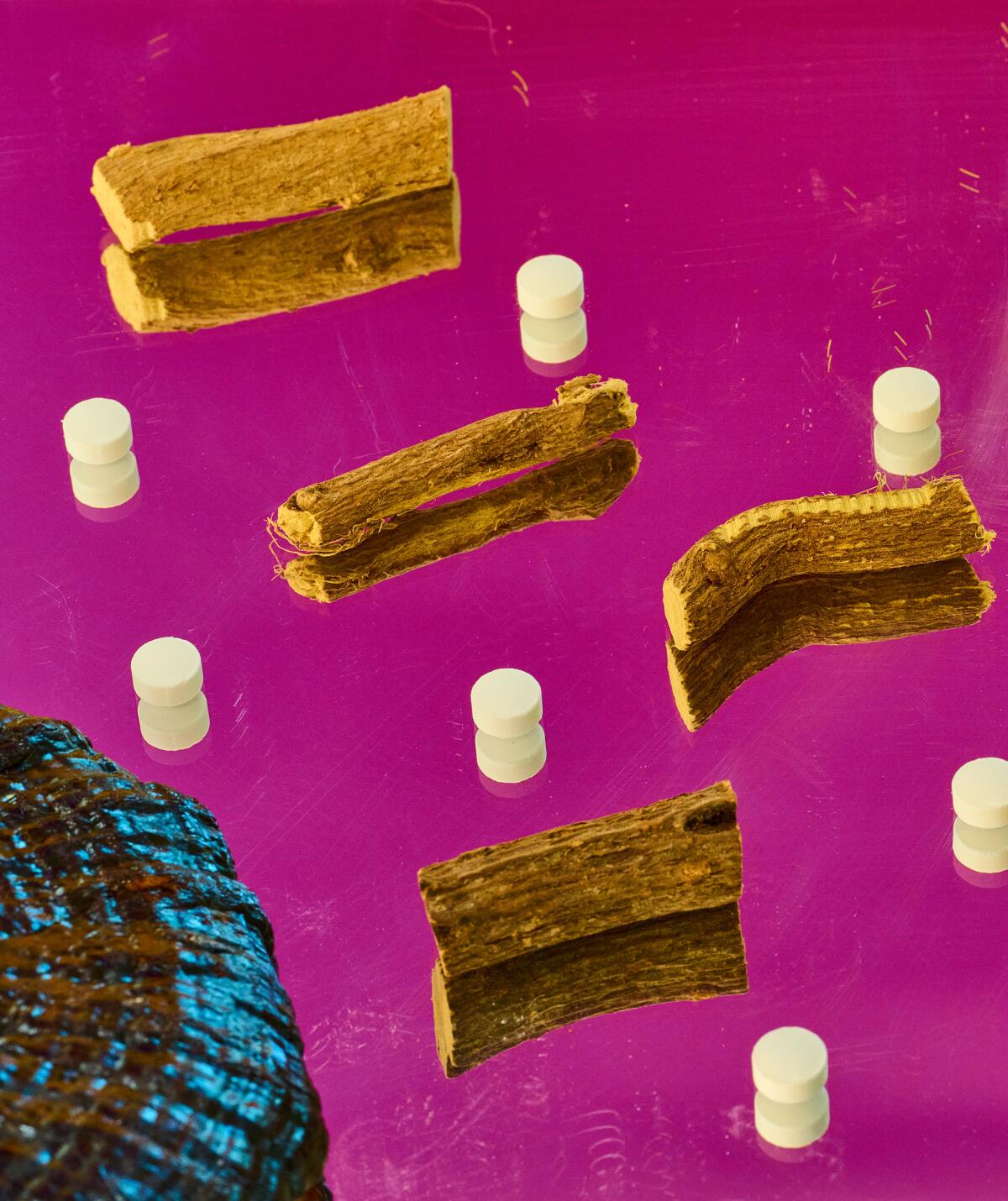
Licorice root, reishi mushrooms and vitamin B-6 are often among the ingredients listed in various adaptogenic drinks.

Licorice root, reishi mushrooms and vitamin B-6 are often among the ingredients listed in various adaptogenic drinks.

(Rebecca Peloquin / For The Times)

Advertisement

“It’s unknown whether the dose that most people can buy of adaptogens on the market are high enough to produce a medicinal effect,” Ellis said. ”So, what you think you’re buying, may not actually contain as much [or may sometimes contain more] than you think.”

Depending on the person, some adaptogens may even cause nausea and stomach problems. (Those who are taking specific medications, pregnant or breastfeeding should first seek guidance from their healthcare provider before consuming them.) Clarity about adaptogens’ efficacy is further muddled due to the fact that most research on these ingredients comes from animal or in-vitro studies that Nicholas B. Tiller, a senior researcher at the Institute of Respiratory Medicine & Exercise Physiology, noted in an email “are not necessarily applicable to the real world.”

“The few human studies [on adaptogens] are largely disappointing,” he said. “It’s going to require a lot more high-quality evidence before these herbs and other natural products are extensively incorporated into medical practice.”

But do most adaptogenic drink consumers see their consumption of these beverages as explicitly medicinal, or are they simply weighing their options and picking something less altering than a beer and more novel than a seltzer?

Advertisement

“When we initially opened our doors [in 2021], a lot of customers asked ‘what’s the point?’ and had a difficult time wrapping their heads around why anyone would want a cocktail without alcohol,” said Jillian Barkley, Soft Spirits Founder & CEO, in an email. She found these beverages — although harder to acquire back then — hugely helpful when she stopped drinking five years ago.
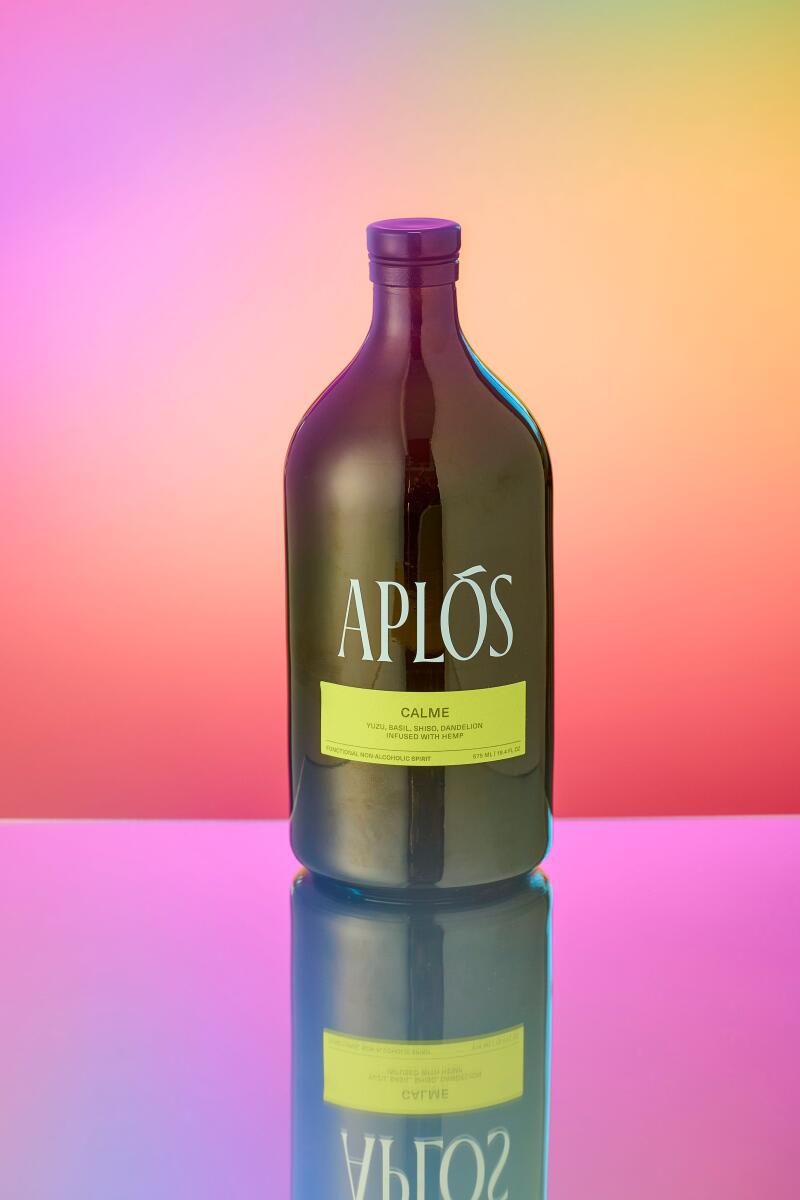
Aplos Arise, a non-alcoholic spirit infused with adaptogens.
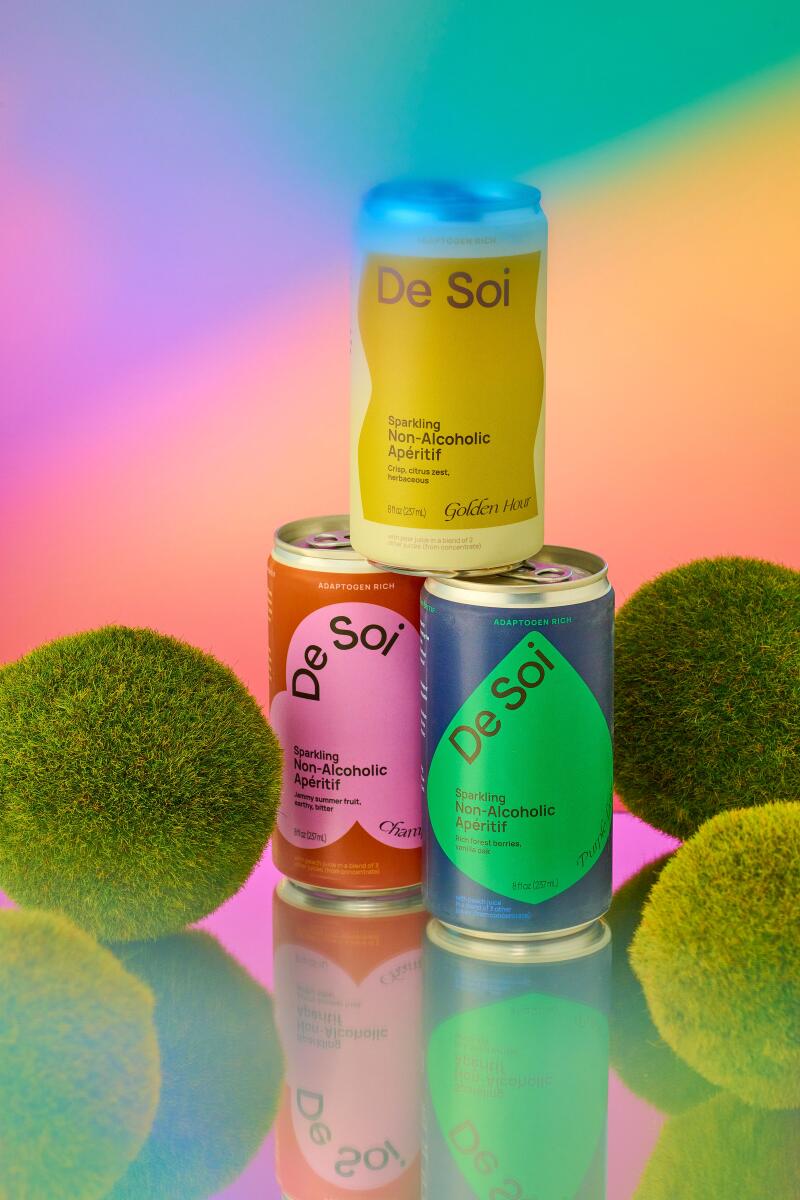
De Soi, a non-alcoholic aperitif made with natural adaptogens. De Soi is a company co-founded by Katy Perry and Morgan McLachlan.

Aplos Arise, a non-alcoholic spirit infused with adaptogens. De Soi, a non-alcoholic aperitif made with natural adaptogens. De Soi is a company co-founded by Katy Perry and Morgan McLachlan. (Rebecca Peloquin/For The Times)

“Shopping at Erewhon and buying Kin makes you a part of a certain in-crowd, and people are seeking belonging.”

— Nikita Walia, brand strategist

Advertisement

“For those folks, the possibility of a physical effect tends to be enticing,” she said. “‘So you’re telling me I can drink this nightcap and it will help me feel relaxed, but I won’t be intoxicated?’ Yep!”

Nikita Walia, brand strategist and founder and CEO of BLANK, thinks the popularity of adaptogenic beverages will only gain more steam with consumers as our culture puts a higher premium on health and wellness.

“Having a beverage that is a social tonic, well-branded and aesthetically pleasing as a stand-in for alcohol is a perfect substitute,” Walia said in an email. She adds that many of these drinks are expensive and seen as luxury items only adds to their appeal.

“Shopping at Erewhon and buying Kin makes you a part of a certain in-crowd, and people are seeking belonging.”

Advertisement

In other words, whether adaptogenic drinks can actually elevate your mood might not matter — as long as they can elevate your social status.

Lifestyle

Bet on Anything, Everywhere, All at Once : Up First from NPR

Published

on

Bet on Anything, Everywhere, All at Once : Up First from NPR

Online prediction market platforms allow people to place bets on wide-ranging subjects such as sports, finance, politics and currents events.

Photo Illustration by Scott Olson/Getty Images


hide caption

toggle caption

Advertisement

Photo Illustration by Scott Olson/Getty Images

The rise of prediction markets means you can now bet on just about anything, right from your phone. Apps like Kalshi and Polymarket have grown exponentially in President Trump’s second term, as his administration has rolled back regulations designed to keep the industry in check. Billions of dollars have flooded in, and users are placing bets on everything from whether it will rain in Seattle today to whether the US will take over control of Greenland. Who’s winning big on these apps? And who is losing? NPR correspondent Bobby Allyn joins The Sunday Story to explain how these markets came to be and where they are going.

This episode was produced by Andrew Mambo. It was edited by Liana Simstrom and Brett Neely. Fact-checking by Barclay Walsh and Susie Cummings. It was engineered by Robert Rodriguez. 

We’d love to hear from you. Send us an email at TheSundayStory@npr.org.

Advertisement

Listen to Up First on Apple Podcasts and Spotify.

Continue Reading

Lifestyle

A secret-ish Japanese-style listening lounge just opened inside the Hollywood Palladium

Published

on

A secret-ish Japanese-style listening lounge just opened inside the Hollywood Palladium

Now you can pair your big show with dinner and a more intimate listening experience. The Hollywood Palladium, an Art Deco music venue graced by performers like Frank Sinatra, Richard Pryor, Jimi Hendrix, Lady Gaga and Jay-Z since 1940, has debuted a swanky lounge known as Vinyl Room.

Inspired by 1970s Japanese high-fidelity (hi-fi for short) listening rooms and operated by entertainment company Live Nation, it’s a space where concertgoers can have dinner, grab drinks and catch a vinyl DJ set before, during or after their ticketed event in the same venue.

With a name like Vinyl Room, you can expect to see vinyl records everywhere.

“You’re in [for] a whole night of music,” says Geni Lincoln, president of the California region for Live Nation, adding that her team put “so much thought” into the sound and design of the space, which was in development for more than two years.

Advertisement

“I’ve been coming to the Palladium since I was a teenager, so it’s really special to see,” she says.

Entering Vinyl Room feels like you’re stepping into a secret speakeasy for music lovers, one with iconic music memorabilia, a thoughtful food menu and premium sound quality. Want to check it out? Here are five things to know.

Two people play cards at Vinyl Room.

Everything inside of Vinyl Room is inspired by the sounds and the musicians who’ve played at the Hollywood Palladium since 1940.

1. Vinyl Room is exclusively open to members and concertgoers with an upgraded ticket

Vinyl Room is open only on Hollywood Palladium show nights, starting 90 minutes before doors open, and remains open one hour after the concert. Admission is limited to concertgoers who purchase a ticket upgrade, which starts at $35. Early reservations are recommended.

Vinyl Room also offers annual membership packages, which start at $2,000 and come with various benefits such as complimentary guest passes to Vinyl Room, access to an exclusive menu, valet parking, table reservations inside the lounge, a dedicated private entry, complimentary coat check and concert ticket credits.

Advertisement
Tip Dunn, also known as DJ tenSpeed, plays music at Vinyl Room.

Tip Dunn, also known as DJ tenSpeed, played records during opening night at Vinyl Room at the Hollywood Palladium.

2. Hi-fi is having a moment in Los Angeles — and Vinyl Room delivers on sound quality

From Common Wave Hi-Fi in Boyle Heights to Slow Jamz Gallery in the Arts District and Gold Line bar in Highland Park, hi-fi — a 1950s term used to describe the high-quality reproduction of sound — venues and experiences have been slowly popping up around L.A. over the last few years. Vinyl Room joins a short list of places where audiophiles can go to listen to music on hi-fi equipment, which many argue is the best way to experience it.

Much like the Hollywood Palladium, which is known for its top-tier sound, Vinyl Room also makes sound a priority. The lounge utilizes hi-fi sound equipment including Master Sounds Clarity-M speakers to ensure that the records sound as crisp as possible. Live DJs spin records on a set of turntables, which helps to create a richer and more analog sound that is closer to the original track than compressed versions such as MP3s.

Vintage concert posters decorate the walls at Vinyl Room.

Ruthie Embry, vice president of architecture and design at Live Nation, says the records and other memorabilia inside the space “connects you directly to the venue’s history the second you walk in the door.”

3. All of the decor ties back to music and the Hollywood Palladium’s rich history

With a name like Vinyl Room, you can expect to see vinyls everywhere. Records line most of the walls and shelves, drinks are served on vinyl-shaped coasters and tables and light fixtures are designed to the theme. There’s even vinyl wallpaper in the photo booth. In one corner of the lounge, you can dig through records under a neon sign that reads, “But have you heard it on vinyl?”

Advertisement

Ruthie Embry, vice president of architecture and design at Live Nation, says the records and other memorabilia inside the space “connects you directly to the venue’s history the second you walk in the door.”

Some standout items include a Red Hot Chili Peppers show flier, a Hollywood Palladium postcard signed by late musician and host Lawrence Welk and a photo of late singers Bonnie Baker and Orrin Tucker at the venue. Even the bathroom creates a memorable photo moment: The stalls are filled with photos of musicians and an “on air” studio sign lights up when a stall is occupied.

Food served at Vinyl Room in Hollywood.

Vinyl Room’s menu, created by Chef Ryan DeRieux, is inspired by Asian flavors and includes items like the “Vinyl Roll,” which is made with spicy tuna.

4. Don’t worry about dinner plans before or after the show. Vinyl Room has got you covered

Eliminating the need to find a pre- or post-show restaurant, Vinyl Room has a full Asian-inspired menu created by Chef Ryan DeRieux.

Think sushi tots (like crispy tuna but with tater tots instead of rice), tuna poke nachos, chili crunch chicken wings and shiitake tempura burgers. There’s also a mouth-watering 10-ounce American wagyu skirt steak served with shishito peppers, pickles and charred carrots. For dessert, try the taiyaki, a popular fish-shaped Japanese street food, which is served with a delicious passion fruit cream that I wanted to take to go because I liked it so much.

Advertisement
Cocktails at Vinyl Room

Signature cocktails at Vinyl Room, inspired by popular songs, include the Superfly, Escape (if you like piña coladas) and Smoke on the Water.

5. The craft cocktails aren’t just delicious — they each have a story

Vinyl Room's old-fashioned is made with Nikka Yoichi whisky, which is made in Japan.

Vinyl Room’s old-fashioned is made with Nikka Yoichi whisky, which is made in Japan.

The cocktail program, developed by third-generation bartender Sean Kenyon, is inspired by the songs created by musicians who’ve graced the Hollywood Palladium stage. A nod to the 1970s, the Superfly is a fizzy, citrus-forward play on Curtis Mayfield’s 1972 track and is made with Roku Gin and yuzu and sencha syrup. Other signature drinks include the rum-based Escape (if you like piña coladas) with coconut oolong syrup, pineapple juice and miso, and the tart yet sweet Smoke on the Water, which is reminiscent of Deep Purple’s 1972 song. The bar also offers an espresso martini (called the MT Joy), a signature old-fashioned (made with Nikka Yoichi whisky) and a Japanese whiskey highball (made with Hibiki Harmony whisky). The bar offers a number of non-alcoholic options as well.

Advertisement
Continue Reading

Lifestyle

Found: The 19th century silent film that first captured a robot attack

Published

on

Found: The 19th century silent film that first captured a robot attack

A screenshot from George Mélière’s Gugusse et l’Automate. The pioneering French filmmaker’s 1897 short, which likely features the first known depiction of a robot on film, was thought lost until it was found among a box of old reels that had belonged to a family in Michigan and restored by the Library of Congress.

The Frisbee Collection/Library of Congress


hide caption

toggle caption

Advertisement

The Frisbee Collection/Library of Congress

The Library of Congress has found and restored a long-lost silent film by Georges Méliès.

The famed 19th century French filmmaker is best known for his groundbreaking 1902 science fiction adventure masterpiece Le Voyage dans la Lune (A Trip to the Moon).

The 45-second-long, one-reel short Gugusse et l’AutomateGugusse and the Automaton – was made nearly 130 years ago. But the subject matter still feels timely. The film, which can be viewed on the Library of Congress’ website, depicts a child-sized robot clown who grows to the size of an adult and then attacks a human clown with a stick. The human then decimates the machine with a hammer.

Advertisement

In an Instagram post, Library of Congress moving image curator Jason Evans Groth said the film represents, “probably the first instance of a robot ever captured in a moving image.” (The word “robot” didn’t appear until 1921, when Czech dramatist Karel Čapek coined it in his science fiction play R.U.R..)

“Today, many of us are worried about AI and robots,” said archivist and filmmaker Rick Prelinger, in an email to NPR. “Well, people were thinking about robots in 1897. Very little is new.”

A long journey

Groth said the film arrived in a box last September from a donor in Michigan, Bill McFarland. “Bill’s great grandfather, William Frisbee, was a person who loved technology,” Groth said. “And in the late 19th century, must have bought a projector and a bunch of films and decided to drive them around in his buggy to share them with folks in Pennsylvania, Ohio, New York.”

Advertisement

McFarland didn’t know what was on the 10 rusty reels he dropped off at the Library of Congress’ National Audio-Visual Conservation Center in Culpeper, Va. A Library article about the discovery describes the battered, pre-World War I artifacts as having been, “shuttled around from basements to barns to garages,” and that they, “could no longer be safely run through a projector,” owing to their delicate condition. “The nitrate film stock had crumbled to bits on some; other strips were stuck together,” the article said. It was a lab technician in Michigan who suggested McFarland contact the Library of Congress.

“The moment we set our eyes on this box of film, we knew it was something special,” said George Willeman, who heads up the Library’s nitrate film vault, in the article.

Willeman’s team carefully inspected the trove of footage, which also contained another well-known Méliès film, Nouvelles Luttes extravagantes (The Fat and Lean Wrestling Match) and parts of The Burning Stable, an early Thomas Edison work. With the help of an external expert, they identified the reel as having been created by Méliès because it features a star painted on a pedestal in the center of the screen – the logo for Méliès Star Film Company.

A pioneering filmmaker

Méliès was one of the great pioneers of cinema. The scene in which a rocket lands playfully in the eye of Méliès’ anthropomorphic moon in Le Voyage dans la Lune is one of the most famous moments in cinematic history. And he helped to popularize such special effects as multiple exposures and time-lapse photography.

This moment from George Méliès' Le Voyage dans la Lune (A Trip to the Moon) is considered to be one of the most famous in cinematic history.

This moment from George Méliès’ Le Voyage dans la Lune (A Trip to the Moon) is considered to be one of the most famous in cinematic history.

George Méliès/Public Domain

Advertisement


hide caption

toggle caption

George Méliès/Public Domain

Advertisement

Presumed lost until the Library of Congress’s discovery, Gugusse et L’Automate loomed large in the imaginations of science fiction and early cinema buffs for more than a century. In their 1977 book Things to Come: An Illustrated History of the Science Fiction Film, authors Douglas Menville and R. Reginald described Gugusse as possibly being, “the first true SF [science fiction] film.”

“While it may seem that no more discoveries remain to be made, that’s not the case,” said Prelinger of the work’s reappearance. “Here’s a genuine discovery from the early days of film that no one anticipated.”

Continue Reading

Trending
