Lifestyle
Balloon Art You Won’t Find at a Children’s Birthday Party


“It’s funny how little memory I have of balloons growing up,” said DJ Morrow, one of the greatest avant-garde balloon artists in the United States. “It’s almost like because it was around me constantly I didn’t even notice them.” They were, that is, like air.
Morrow, 29, lives in a small apartment in Houston, and makes his living as a wedding videographer. But his true passion, passed down from his parents, is balloons. He has transformed that passion into a career creating ephemeral inflatable sculptures unlike those seen at a typical child’s birthday.
One wall of Morrow’s living room/workshop is taken up by plastic boxes containing his hand pumps, tape measures and thousands and thousands of balloons, organized by color. During a visit in January, a rough draft of his most recent piece sat in the middle of the room: a life-size girl in a blue pinafore dress holding a snarling German shepherd by the leash. Every muscle group of the dog was taut, striated in aggression. Its teeth were bared and its yellowed eyes popped from its face. The girl’s face was a mask of panic.
The piece, titled “The Long Night Takes Hold,” “puts an image to the sense of general helplessness that I was feeling with the incoming administration,” said Morrow, his purple mohawk swept up with a clamshell hair claw.
On a large television screen was a photograph of a dead lamb, on its side, its muzzle bloodied. It will become the final element of the composition, its neck destined for the jaws of the dog.
As Morrow worked, the room filled with squeaks. To recreate the dead lamb, he inflated long white balloons. He began twisting, eyes glued to the screen, hands grasping and inflating balloons as smoothly as an archer draws an arrow from a quiver.
Slowly the form of a lamb’s jaw began to take shape. As Morrow twisted and pinched, and occasionally popped, a head grew.
Morrow is part of a very small cadre of balloon artists seeking to use the medium to express the profound. For Morrow, his ballooning journey began in Rio de Janeiro, where he was born, before moving to Taiwan and later Houston.
His parents were members of the Family of God (now called Family International), the cult founded by Morrow’s great-great-grandfather, David Berg, in 1968. They both worked with balloons. His mother, under the name Miss Sunshine, still does. His father developed a latex allergy and had to quit. (“That terrifies me,” Morrow said.)
At 16, Morrow began learning how to twist from his mother. After two weeks, he had learned her repertoire of swords, hats, dogs and teddy bears — “the standard canon of ’90s shapes,” he said. Hungry for more, he began experimenting with multiple balloons in a single piece. Soon he discovered the work of Matt Falloon and Rupert Appleyard, two balloon visionaries who developed systems to create large-scale sculptures. “Being an autodidact was a big part of the cult’s culture,” Morrow said, “so I really began to expand my balloon knowledge quickly.” (The Morrows left the cult in 2012; DJ now identifies as an atheist.)
In 2019, Morrow twisted a life-size sculpture of a sad clown, his first foray into inflatable pathos. It was inspired by his inner life.
“I was dealing with a lot of depression,” he said, “but, as an entertainer, I was constantly under pressure to put on a happy face.” For the first time, he unlocked balloon sculpture’s gravitas.
The piece wasn’t widely seen. But later that year, when he created a large reproduction of Francisco Goya’s “Saturn Devouring His Son” and posted it to Reddit, it became the top post on the website. “The fact that it got to the number one really opened my eyes to the power of being artistically genuine,” he said. Soon Morrow was twisting balloons into large recreations of Francis Bacon’s disturbing “Study After Velázquez’s Portrait of Pope Innocent X” with the pope replaced by Clarence Thomas.
Since then, Morrow has mounted large-scale exhibitions, including one at the Jung Center in Houston called “Out of the Strong Something Sweet,” which explored his childhood as a member of a cult and featured balloon sculptures of Samson wrestling with a lion.
“It represented to me all the good things that came out of my cult upbringing,” Morrow said. “It was me trying to salvage the good from the experience, as Samson did finding honey in the lion’s carcass.”
Those pieces, like all of his sculptures, began to decay as soon as they were finished. Preserving the balloons is out of the question. “It would be like embalming a corpse,” he said. (Morrow sells prints of photographs of his work on his website. Special editions run between $300 and $600.)
“It’s wonderfully artistically enriching,” he said as he worked on finessing the dead lamb, but he admitted that, “financially, it’s not the greatest.” Grabbing another balloon that he inflated, twisted and bent into a lamb’s mandible, he added, buoyantly, “It is beautiful in its absurdity though.”



What freedom looks like today.
Getty Images/Viktoriia Miroshnikova/Photo illustration by NPR
hide caption
toggle caption
Getty Images/Viktoriia Miroshnikova/Photo illustration by NPR
What does freedom mean today?
Happy Juneteenth! For those not in the know, today commemorates when U.S. federal troops arrived in Galveston, Texas in 1865 to take control of the state and ensure that all enslaved people were freed – a full two and a half years after the signing of the Emancipation Proclamation. Since then, Juneteenth has been celebrated all over the country, especially in Texas and across the South, where Juneteenth parades, cookouts, festivals and pageants happen every year. Two weeks from now, the country will celebrate the Fourth of July – and its 250th anniversary. For many Black Americans, there’s always been a tension between these holidays – and their two different ideals for what it means to be free. As voting rights protections are rolled back and Black history is being scrubbed from government websites, what does freedom look like for Black Americans today?
To get into it, Brittany is joined by Dr. Kellie Carter Jackson, chair of Africana Studies at Wellesley College.
For more episodes about the quality of Black life in America, check out:
Jesse Jackson & the end of the civil rights superhero
Is the economy slowing? Ask Black women.
What to expect when you’re expecting racism
Support Public Media. Join NPR Plus.
Follow Brittany on Instagram: @bmluse
For handpicked podcast recommendations every week, subscribe to NPR’s Pod Club newsletter at npr.org/podclub.
This episode was produced by Corey Antonio Rose and Liam McBain. It was edited by Neena Pathak. We had engineering support from Josephine Nyounai. Our Supervising Producer is Cher Vincent. Our Executive Producer is Barton Girdwood. Our VP of Programming is Yolanda Sangweni.

First released in 2000, the acclaimed film Amores perros, which was produced and directed by Alejandro González Iñárritu and written by Guillermo Arriaga, has been remastered and is returning to theaters.
Mubi
hide caption
toggle caption
Mubi
Before Amores Perros became widely regarded as a modern classic, it belonged to Mexico. The film premiered at the 53rd Cannes Film Festival in 2000, where it won The Grand Prix, launching a run of international acclaim that has never quite ended. This month, Amores Perros is back in theaters in a fully remastered format from its original Kodak film stocks.
The film’s plot centers on three strangers whose lives intersect at the scene of a car crash. Each story wrestles with overlapping issues of social class disparities, crime and familial betrayal. The release in Mexico coincided with the end of the Institutional Revolutionary Party or PRI’s 71-year hold on power. Amores Perros was followed by a period of original, contemporary films in Latin America that would prove the region’s studios could compete with Hollywood in scope and complexity.

One of the film’s lead charachters, Octavio, is played by actor Gael García Bernal.
Mubi
hide caption
toggle caption
Mubi
The film marked the directorial debut of Alejandro González Iñárritu, who would go on to win four Academy Awards including back-to-back best director awards for Birdman (2014) and The Revenant (2015). In a recent interview with NPR, Gael García Bernal, a lead actor in Amores Perros, called the film’s launch “a new geography in cinema.”
González Iñárritu and García Bernal spoke with Morning Edition’s A Martinez about their early collaboration and the film’s continued resonance with new audiences.
Listen to the interview by clicking on the blue play button above.
The broadcast version of this story was produced by Margaux Bauerlein.

Preparations underway for the Great American State Fair, as seen on Washington, D.C.’s National Mall last week.
Win McNamee/Getty Images
hide caption
toggle caption
Win McNamee/Getty Images
A lot is changing these days in Washington, D.C., with even more on the horizon: 10 city blocks of the National Mall will soon transform into a multi-week state fair spectacle, complete with a Ferris wheel, in honor of the country’s 250th birthday.
The “Great American State Fair” will run from June 25 through July 10, promising to bring state-themed pavilions, movie screenings, musical performances, military flyovers, nostalgic snacks, a daily rodeo — and potentially scores of tourists — to the nation’s capital.
It will feature more than 150 exhibits, with full participation across the United States and several U.S. territories, as well as “businesses, innovators and civic organizations,” according to Freedom250, the White House-backed campaign that is organizing the fair in addition to other semiquincentennial events.
“A master-planned celebration will unfold along the National Mall from the Capitol to the Washington Monument, featuring vibrant pavilions representing every U.S. state and territory,” says the White House website, adding that the beaux-arts style tents will also highlight national themes like agriculture, the arts, faith and family.

Workers started setting up the fair, in view of the U.S. Capitol, in late May.
Anna Moneymaker/Getty Images
hide caption
toggle caption
Anna Moneymaker/Getty Images
However, not all states are sending official government delegations to the fair. Officials in more than half a dozen states — including Connecticut, Hawaii, Illinois, Maine, Massachusetts, North Carolina, Oregon, Rhode Island and Washington — confirmed to NPR that they are not participating directly. Most cited financial considerations and a desire to prioritize celebrations in their own communities, though others voiced political concerns.
Rachel Reisner, a spokesperson for Freedom250, emphasized in an email that there is “a vast majority participating” among the states. Additionally, others are being represented by local businesses and organizations — such as two companies from North Carolina and a museum from Illinois.
“Whether represented by a governor’s office, a tourism board, or a beloved state company or organization, every community will be celebrated, and every American will see themselves in this once-in-a-generation event,” Reisner said.
The state fair is one in a series of patriotic anniversary events planned for D.C. this summer, including the UFC fight night outside the White House last Sunday and a fireworks-heavy July Fourth celebration that President Trump rebranded as a political rally in a Truth Social post on Monday.
In another post that day, Trump encouraged people to attend the kickoff to the fair on Wednesday — and, by extension, the “summer long Celebration of 250 years of American Independence.”
“We are going to have fun, and celebrate America!” he wrote.

That opening event was originally billed as a concert, though many of the performers originally attached to it — including Martina McBride, Bret Michaels, the Commodores and Young MC — have withdrawn in recent weeks. Organizers now say the kickoff will feature remarks by Trump and performances by Lee Greenwood and Christopher Macchio, musicians who have sung at Trump events before.
What to know about the fair
The fair is an all-day, rain-or-shine event. It is free and open to the public, though preregistration is encouraged.
Freedom250 is promising attendees an interactive experience at the state pavilions, from Michigan’s mechanical milking cow to Florida’s re-creation of a Spanish fort honoring explorer Juan Ponce de León.
There will also be activations by a wide range of companies, organizations and government agencies, from NASA and John Deere to Meta and the Washington Commanders.
Each of the fair’s 16 days has its own theme, including two “MAHA Mondays” and a military and veterans’ appreciation day. July Fourth is branded as the Independence Day Celebration, and the fair’s final day is billed as “The Next 250: Innovation.”
The extravaganza will span a wide swath of the National Mall, much of it already blocked off with fences and construction cranes. The fair may also impact air travel in the area.
In a press release this week, the Metropolitan Washington Airports Authority warned travelers at D.C.’s Reagan National Airport that their flights might be adjusted or delayed due to some of the America 250 celebrations — including the opening and closing days of the state fair.
“Many events will include downtown flyovers or other aerial displays such as fireworks or parachute jumps, which will affect flights periodically at Reagan National,” it said, adding that the most significant disruptions are expected on July 3 and 4.
Why some state governments aren’t participating
Nearly 10 states say they will not be spending funds or sending personnel to the D.C. fair. While all but one are led by Democratic governors, many told NPR the decision not to attend was a financial decision, not an overt political statement.
“The states were expected to fund and to staff a multi-week exhibit in Washington, D.C., which would entail getting staffers down to D.C., housing them, feeding them, and with the booths and everything … the estimated budget was at least $100,000,” said Cathryn Vaulman, a spokesperson for Connecticut Gov. Ned Lamont.
Vaulman said that money would have come out of the state’s budget for its own 250th celebrations — so leaders made a “resource-based decision” to focus on those instead. But she noted that plenty of other blue states, like New York, are still planning to staff the state fair.
Some other states estimated their costs as $100,000, though others were much higher: Sarah Hansen, director of the Maine Semiquincentennial Commission, told NPR that its cost estimates were “half a million dollars or more,” which she said was not feasible for the state, “given the federal government’s refusal to provide any funding.”
Washington Lt. Gov. Denny Heck’s office told NPR over email that the state opted out in large part because of confusion over costs.

The fair will span 10 city blocks on the National Mall for over two weeks.
Anna Moneymaker/Getty Images
hide caption
toggle caption
Anna Moneymaker/Getty Images
“We had heard participating states (whether that was state agencies, tourism authorities, etc.) were generally planning for their costs to be anywhere between $100k to nearly $1m,” Dallas Roberts, Heck’s chief of staff, said in the email.
Each state and territory gets about 600 square feet to build its exhibit, with no set dollar amount required to participate, according to Freedom250. It acknowledges that cost was a concern for many states, which is why some partnered with tourism bureaus and companies.
“Our ask was not your government entity must do this and give money; it was an invitation to the state to represent their culture, heritage, and landscape however they would like,” Reisner, the Freedom250 spokesperson, wrote in an email, adding that the event is funded by “both private and public dollars.”
Officials in a handful of states have been more outspoken in their criticism of how the event is being run.

Speaking to GBH News’ Boston Public Radio earlier this month, Massachusetts Gov. Maura Healey, who also opted out, said Trump “invited all the states to participate and wants to charge us to go down and put something on his exhibit.”
“It’s just ridiculous,” she added. “This is taxpayer money.”
Luke Harkins, a spokesperson for Oregon Gov. Tina Kotek, told Oregon Public Broadcasting that the state is not participating “due to both the cost of participating in the Fair and growing concerns that the event in Washington, D.C. is shaping up to be a more partisan affair than originally presented.”
Officials from different states told NPR they had different understandings of how representation from their state would work.
Jayette Bolinski, a spokesperson for the Illinois Department of Natural Resources, said the Peoria Riverfront Museum volunteered to represent the state with an “Illinois-centric pavilion” featuring a hologram of stories from over 50 residents — none of which was paid for by state funds, she stressed. Vaulman, of Connecticut, said she believes its booth will have photos and posters of some sort, while Hansen of Maine said their inquiries to Freedom250 about this “have gone unanswered.”
What else is on the anniversary agenda — and who’s planning it
Planning for national 250th anniversary events mainly falls to two main groups, which have become increasingly politicized.
In 2015, looking ahead, Congress created a nonpartisan commission to orchestrate anniversary celebrations, which in turn created a nonprofit called America250. It’s composed mostly of private citizens, along with several members of Congress and representatives from federal agencies.
America250 appears to focus mainly on getting Americans involved in celebrations at the local level, such as attending synchronized nationwide block parties. It has gathered — and recently sealed — a time capsule with contributions from every state and is hosting a July Fourth concert in Los Angeles, with tickets selling for $17.76, featuring the Smashing Pumpkins, Chris Stapleton and Queen Latifah.
Freedom250, on the other hand, emerged from a Trump 2025 executive order establishing a task force for celebrating the milestone. Critics — including progressive consumer advocacy group Public Citizen — see this group as Trump’s attempt to bypass America250 after trying unsuccessfully to pack it with loyalists.
Freedom250 describes itself as “the national, non-partisan organization leading the celebration of our Nation’s 250th birthday.” Another sign of its standing in the administration: The official White House webpage for the 250th links out to Freedom250, not America250.
The group has organized many other high-profile anniversary events, including the White House UFC event, the July Fourth rally on the Mall, a July Fourth tall ship event on the East Coast and the Freedom 250 Grand Prix of Washington, D.C., an Indycar event scheduled for the National Mall in August.
Trump’s executive order says the 250th task force must disband at the end of the year, unless he extends it. And many of the beautification projects his administration is undertaking in D.C. — from restoring fountains to installing statues to repainting the Lincoln Memorial Reflecting Pool — are tied to the anniversary but could shape the city far beyond it.
-

 Health6 minutes ago
New At-Home DNA Test Reveals if GLP-1 Weight-Loss Drugs Will Work for You
-
Lifestyle21 minutes ago
What does freedom actually look like? : It’s Been a Minute
-

 Technology30 minutes ago
Barret Zoph is out at OpenAI again after just five months
-

 World36 minutes ago
Iran hardliner behind US deal warns Tehran won’t honor agreement if Trump fails to deliver
-

 Politics43 minutes ago
Top GOP lawmaker rallies around conservative school board member facing calls to resign
-

 Sports51 minutes ago
2026 World Cup Odds: How Far Can Mexico Go After Winning Group A?
-

 Technology58 minutes ago
6 in 10 identity crimes now begin with a new account
-
 Business1 hour ago
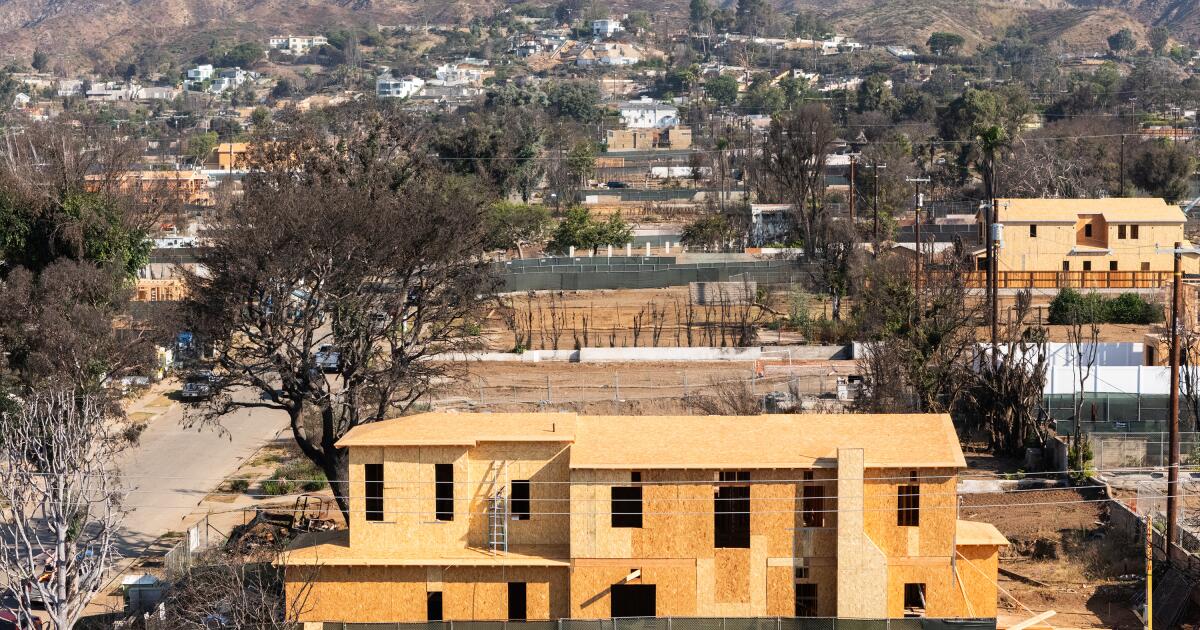
January 2025 wildfire victims seek tougher penalties against State Farm over claims handling

