Lifestyle
Are you good at knowing when something should end? Mark Duplass is still learning


Mark Duplass says he’s learning how to finish the creative process now he’s not in “lockstep” with his brother.
MICHAEL TRAN/AFP via Getty Images/AFP
hide caption
toggle caption
MICHAEL TRAN/AFP via Getty Images/AFP
A note from Wild Card host Rachel Martin: In the summer of 2012, I was overdue with my first child, and so I went to the movies to get my mind off the fact that, you know, everything was about to totally change. The movie was called Safety Not Guaranteed, and Mark Duplass plays this guy who is dead set on traveling through time.
He’s the kind of person who is dismissed and laughed at, and he is so vulnerable. Like, his heart’s just walking around in the world, exposed, and at any second it could be crushed into a million pieces. But it’s not. The script treats him with so much dignity, and he’s alright in the end. The credits rolled, and when the movie finished, people filed out, and I sat there and sobbed. Really sobbed.
The trailer for “Safety Not Guaranteed.”
YouTube
Having a baby is a bizarre thing. Maybe you’ve heard people say this: It’s like your heart is walking around outside your body. It’s so vulnerable, just like Duplass’s character in Safety Not Guaranteed. And I think when I watched that movie, I needed to be reassured that this baby I was going to bring into the world would encounter kindness. That his tender heart or his wild imagination would be nurtured, not cast off.
That vulnerability shows up in all of Duplass’s creative projects. He and his brother Jay have produced dozens of shows and movies together. Duplass goes back and forth between acting and writing and producing. He’s gotten two Emmy nominations for his role as Chip Black on The Morning Show.
He’s got two new projects out right now. One is a docuseries that he and his brother executive produced called Out There: Crimes of the Paranormal on Hulu. The other is a show he produced and co-wrote called Penelope. It’s about a teenage girl who runs away from home to try to survive in the woods by herself.
The trailer for “Penelope.”
YouTube
This Wild Card interview has been edited for length and clarity. Host Rachel Martin asks guests randomly-selected questions from a deck of cards. Tap play above to listen to the full podcast, or read an excerpt below.
Question 1: What period of your life do you often daydream about?
Mark Duplass: When I was 20 years old, I took a semester off of college at the University of Texas. This was 1997. And I was very inspired by independent artists, whether they were in the music scene or the film scene. And I used to work as a busboy at a restaurant — I’d saved up about $2,000. I decided, “I’m going to record my own record and I’m going to press a thousand CDs and I’m going to book my own tour and live out of my van.” And everybody thought it was crazy. But I just, I really felt compelled to do this.

So I booked a four-and-a-half-month tour. A lot of it was just, like, open mic nights or whatever I could get and a lot of unpaid gigs. But that time — no cell phone, traveling by a Rand McNally map, getting lost a bunch, showing up, not having anywhere to sleep, offering a free CD to anyone who would put me up — the vulnerability of exposing myself in that way, giving myself into the energy and the belief that if I just jump off of this cliff with a little bit of naivete and earnestness, the world will catch me and it will take care of me. And it did.
I would go two to three days sometimes without speaking to someone. I didn’t have a phone in order to escape. So I sat with myself in a way that no 20-year-old, I think, today is offered the luxury — I wanna call it a luxury — to be able to do. And some of that was the inspiration, honestly, behind making my show Penelope — you know, I want to put somebody out in the woods, which is very similar to some of the time that I had to just sit, and be, and just be quiet.
Question 2: How do you manage envy?
Duplass: This sounds maybe more reductive than it should, but the more successful I get, the less I have to face envy in my career. I had a lot of it early on. Like, I had a really hard time being able to enjoy, like, John Krasinski and Zach Braff because I was like, “They’re taking up my spots!” and it made me mad, you know?
It’s actually not really a big problem for me at this point. But it does rear its head every now and then. I talk a lot about my own journeys with mental health on social media and whatnot. So I have to go really to the source, which is what’s happening inside of me.

So it’s less about I’m feeling envious about this person because their independent film really knocked it out of the park and mine didn’t this year, and I’m feeling bad about myself. I really just have to go inward.
And for me, there’s a couple of just really simple solutions, which is, “Did you get your eight hours of sleep? Did you get at least 20 to 30 minutes of rigorous exercise to get your endorphins going? Have you done your meditation? Are you eating good foods?” And as long as I get those basic things in, I stay relatively centered.
Rachel Martin: So envy is just part of the cornucopia of emotions and mental health stuff you’re managing?
Duplass: Yes. The way I describe my life is like: if I wake up feeling something — whether it’s jealous, envy, sadness, overwhelm — I do something I call “the scan.” I look up at the ceiling and I throw all the elements of my life up on the ceiling, and I’m like, “OK, marriage, kids, work life, my jealousy, my envy, my this, my that,” and usually if there’s like one or two things wrong, that means there’s something wrong with those things. And I’ll pick those things out and I’ll solve them. But for me, usually what it is, is they all look wrong to me. And I realize: it’s not that overnight everything went wrong. It’s something going on inside of me that I need to retool so that I can then look at them with clearer eyes.
Question 3: Are you good at knowing when something should end?
Duplass: Wow. Here’s what I’ll say to that. My journey as an artist and a creative person for most of my life has been lockstep with my brother [Jay Duplass]. And what that has meant is that I have only had to learn how to do a certain amount of things well, because I had a partner who could do those other things.
For instance, I still cannot open a box and put anything together — vacuum cleaner, anything — because Jay was older, smarter and he always did that for me. So I have these weird gaps because I was in such close lockstep with someone for so long. One of those things is the finishing of art. I am not good at it.
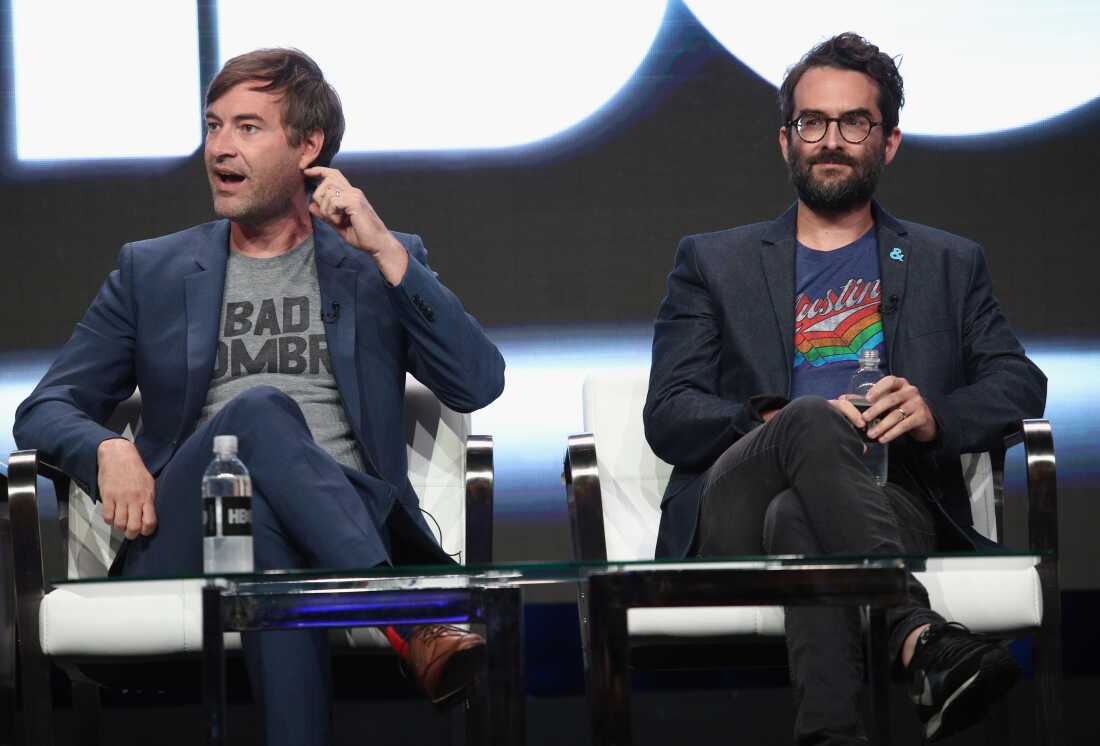
Mark Duplass (left) and Jay Duplass in 2017.
Frederick M. Brown/Getty Images
hide caption
toggle caption
Frederick M. Brown/Getty Images
Martin: What do you mean? Get specific.
Duplass: OK. You and I are hanging out and we’re like, “Let’s make a movie together,” and we come up with a concept. There’s almost no one better than me who will team build and begin this process better. I will look around and say, “This person should be our DP. We’re going to shoot it in this house. We’re going to make it for $50,000. There’s no way it’ll lose money.”
I take that concept, I go and write a pretty good B to B-minus first draft very quickly. So I have this power where I can just galvanize things and get them to the 85% completion mark extremely well.
And then, like a relay race, you’re watching me with the baton trying to pass it off and my legs just start giving out on me and I need a closer. And Jay has always been my closer and he is excellent at it.

But, you know, about five years ago, Jay really requested some creative space from being lockstep, making creativity together. So while we still produce together as a company, you know, I lost my closer and my partner.
So now I’m doing two things. I seek other partners who can fit that for me, because I truly believe you don’t have to do everything to be a good artist — you just got to do a couple of things really well and fit into the puzzle.
But I’m also challenging myself to grow as an artist and see if I can also learn how to close. And I may just discover, “Hey, it’s not what you do well, that’s OK. Leave it.” But it’s not in my natural DNA.
Martin: Were you OK with that ending though?
Duplass: Yeah. Things end. My feeling about that is, when you have these long-term relationships like I have with my brother, my wife, my children, the ending — like all great M. Night Shyamalan movies [laughs] — has something that rebirths itself, in some way. What has emerged from my brother and I ending our lockstep creative partnership has been unexpectedly quite incredible, where we’re now on the sidelines of each other’s artistic pieces, cheering each other on with zero competition, no fighting for breathing space. It’s quite beautiful, but it was very hard.

Lifestyle
The BoF Podcast | Decoding Paris Haute Couture: Wonder, Restraint and the Call of the Void


Lifestyle
L.A. Affairs: It’s hot when a man drives to me. But would this new guy make the trek from the Valley?
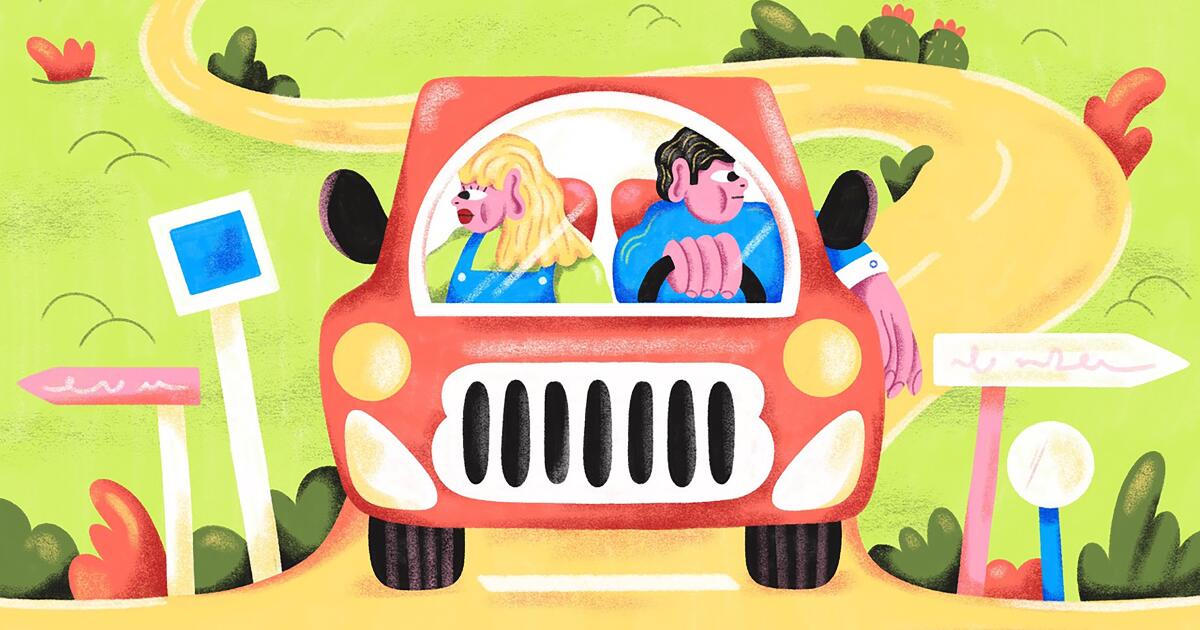
I met Dan on Hinge.
He lives in Woodland Hills, and I live in Venice. In Los Angeles, this is considered a long-distance relationship. In another city it might be nothing. Here, it’s a factor.
But I believe that with the right person, you can make anything work, so I stay open. I’m a native New Yorker, and if I were living in Brooklyn and a guy lived on the Upper West Side, that would be a 45-minute subway ride, which is truly nothing in New York. So with that same logic, I try to have flexibility with men in L.A.
When we started planning our first date, Dan suggested three options: a hike on mushrooms, a wine tasting or a walk on the beach.
A hike on mushrooms is something I’d only do with someone I already trust, not someone I just met online. I don’t do first-date hikes because I don’t like feeling trapped if the guy’s a dud. So I chose the wine tasting.
Then I learned the wine tasting was in West Hills.
On a Friday night, driving there from Venice would be insane. So I said I didn’t want to meet there because of the traffic. He suggested Malibu. That was also not ideal on a Friday.
I was getting annoyed — this was a pink flag because in my dating world, the guy is supposed to come to the woman’s neighborhood in the early days. I’ve gone out with plenty of men from the Valley who effortlessly suggested they come to me. It’s not rare or impossible.
I suggested he come to the Westside. I didn’t specifically say Venice, and in hindsight, I probably should have. He landed on Brentwood, which was manageable for both of us. On our first date, we met at an Irish pub on Wilshire Boulevard. He was cuter and more interesting than I had expected, and with the Guinness flowing, we had fun.
When I got home, he texted me: “Well, I like you 🙂 Less the tik tok and the lack of rock music in your life, but it’s not a deal breaker — there are other qualities 🙂 What are your thoughts?”
I noticed the slight negativity but was mostly dazzled that a man texted immediately after the date to say he liked me. In the modern dating economy, this felt rare.
The next day, both of our evening plans fell through, so we made a last-minute date. The wine tasting he originally suggested still sounded like fun, and although it meant me driving to the Valley, I was up for it now that we’d met.
We sipped flights at Malibu Wines & Beer Garden in its airy, romantic courtyard and played a flirty version of Truth or Dare. Halfway through, he dared me to kiss him.
We ended with sushi on Ventura Boulevard and a short make-out session in his car. He invited me to Thanksgiving at his uncle’s, which felt too soon, but also sweet.
After the second date, he texted and said he had his kids that week and was also hosting an event on Thursday, so his only day to meet was Wednesday. I said great.
On Tuesday night, he checked if we were still on, and I said yes.
Then he texted: “I’m flexible on time but not on location. I have a big event on Thursday, hopefully you can come to me again.”
My stomach tightened. This again?
So I texted back: “I drove to you last time, which was a bit of an exception for me especially in the early days, but the wine tasting location sounded special. Usually guys come to my area. How about we switch it up this time?”
He replied: “I appreciate the effort! Because of my event, I’d rather be close to a computer just if needed … Here is what i offer:
— I’ll come to your area anytime next week/end
— Lunch/dinner on me
I want to continue where we stopped last time 😉 No pressure of course, but let’s snuggle”
I responded: “Ok let’s meet next week. Snuggles sound nice … let’s see what happens …”
Then he wrote: “So I won’t see you tomorrow?”
I replied: “Unless you wanna come to me and bring your laptop along, let’s rain check until you have more flexibility.”
He said: “Dang, you are hard. I’ll let you know tomorrow around midday if it’s ok.”
And then — surprise — he decided to come.
He drove to Venice for a 5 p.m. date. He said his ETA was 5 p.m., and it ended up being 5:25 p.m., typical 405 Freeway.
When he showed up, he was in a cranky mood. On our way to KazuNori in Marina del Rey, I thanked him for picking me up and told him I think it’s hot when the guy comes to the girl.
“You’re just saying that because you want me to come to you more,” he said, not playfully, but aggressively.
That was basically the end for me. But there I was, in his car, heading to dinner. So I stayed pleasant and tried to make the best of it.
I shared that in the early stages of dating, I find it’s good etiquette for the guy to come to the woman’s neighborhood. He immediately disagreed and started ranting about how dating rules are ridiculous and how they swing in women’s favor. He resented paying for dates and declared he wasn’t looking to “sponsor a woman’s life.”
“If women want equality and equal rights,” he said, “then it should apply all across the board, including dating, and the man shouldn’t have to pay.”
I said women don’t actually have equal rights because we get paid less than men and often receive lower salaries than men in the same position.
I tried to change the subject and reset the mood, but he insisted we keep hashing it out.
I tried to explain masculine/feminine dynamics: providing and protecting, giving and receiving.
“What does the man get out of this arrangement?” he asked.
It was like watching someone’s personality warp into Mr. Hyde. Then he brought up another point: He’s a single dad of two kids, so he gets tired; and because I don’t have kids, that should factor into who drives where.
At this point, I was barely engaging and focused on eating my hand rolls, and I couldn’t wait to get home.
The check came, and I happily split it, wanting nothing further from him.
In the car back to my place, he remarked: “It’s obvious we’re never gonna see each other again.”
Obvious, but did it need to be stated?
Then he showed me a Spotify playlist he’d made for me of his favorite electronic music, because he knows I like EDM.
“Oh, that’s sweet,” I said.
“Yeah, that’s how I show interest. Through things like this, not who drives to who,” he replied.
When I got out of the car, we wished each other luck, and I headed inside and shut the door.
Two hours later, he sent me the playlist. I’ve yet to listen to it.
It wasn’t the distance that ruined it. It was the resentment. I’m not looking for a man who feels burdened by the effort. I’m looking for a man who sees the value of courting a woman in the first place.
The author is a writer, comedian and former psychologist who lives in Venice. She is the creator of the new vertical series “Manfari.” She’s on Instagram: @solange_neue and @manfari.show.
L.A. Affairs chronicles the search for romantic love in all its glorious expressions in the L.A. area, and we want to hear your true story. We pay $400 for a published essay. Email LAAffairs@latimes.com. You can find submission guidelines here. You can find past columns here.
-

 Technology3 minutes ago
No, Flock isn’t threatening people for debating surveillance
-

 World6 minutes ago
Israel signals readiness for another Iran strike as Trump declares ceasefire over
-

 Politics11 minutes ago
Kelley Paul: America’s Founders were the ‘first civil rights heroes’
-

 Health18 minutes ago
Your resting heart rate could reveal more about your health than you think, doctors say
-

 Sports21 minutes ago
Shohei Ohtani ruled out of MLB All-Star Game as Dodgers plan to manage nagging injury
-

 Technology33 minutes ago
Fake VA shoe offer targets veterans
-
 Business36 minutes ago
Los Angeles hotels saved by last-minute surge in World Cup bookings
-
 Entertainment41 minutes ago
Emily Ratajkowski’s viral essay on sex life as a single mom scores her a seven-figure book deal

