Lifestyle
After fires, L.A. teens just want to feel normal. New all-ages venue is ‘a way to escape’


Through a veil of dark hair tendrils, Audrey Cymone stares intensely into the darkened room. The 16-year-old singer of the high school band Kim Theory croons the melancholy-tinged lyrics from “Growing Pains,” their song about adolescent angst.
Why can’t things just be the same?
The question hangs in the air as the sound thickens during soundcheck — guitars climbing, drums cracking. It carries double meaning here at Backyard Party, a new all-ages music venue in a nondescript business park on the border of Pasadena and Altadena.
The band, the venue’s team and the audience share an undesirable connective tissue. All have been affected in different ways by the Eaton and Palisades fires. Some watched their homes burn to the ground. Others live as expatriates from their own community because their houses in the burn zones are still uninhabitable. And some simply bear witness to the grief that, almost a year later, still bubbles up.
Before this rainy November night, the all-female band self-described as Riot Grrrl-adjacent mostly performed at house parties and small downtown L.A. venues. To celebrate the release of its EP, “Bitch Scene,” Kim Theory chose Backyard Party.
“This is a big deal,” says Lula Seifert, 16, the guitarist, watching the line of people snake through the door. “This is an awesome venue.”
When Cymone, wearing a dress fashioned out of a trash bag, and Seifert take the stage later with drummer Zoey Su, and bassist Lucy Fraser, the sold-out room crackles with energy. Teenagers crowd around the stage. A mosh pit breaks out. Bodies collide in a whirl of elbows and flying sneakers.
Attendees dance in the crowd during the band Kim Theory’s EP Release Party at Backyard Party on November 15.
The back of the room — populated with parents, guardians and supervisors — is more sedate. Linda Wang, 45, the drummer’s mom, likes the all-ages venue because it provides a safe space for teens to experience live music. Nearby, a dad vigorously bobs his head. Hugs are exchanged between community members torn apart by January’s wildfires.
At Backyard Party, where live music happens every weekend, the vibes are good, the guest list is family friendly and the house rules are straight-edged. Between band sets, Brandon Jay, a Backyard Party partner, popped onstage to remind the crowd that the space is a drug-free zone. For those who don’t comply, “You gotta go,” he announced.
And on Kim Theory’s night, the heaviness left behind by the fires stays at the door.
“Music is a very powerful thing,” says Malena Vesbit, 14, who helped run ticket sales for the show. “It moves your emotions. I think it’s really a way to escape it all.”

The band Kim Theory preforms on stage during their EP Release Party at Backyard Party.
Music composes a second life
Backyard Party, run by Jay and partners Sandra Denver and Matt Chait, is inspired by Pasadena lore — the backyard shows that helped launch Van Halen. The next era of Pasadena parties starts in this 1,500-square-foot space.
But it’s become more than just an all-ages venue and event space since hosting its first show in September. If you lost your record collection in the fires, you can pick up free vinyls from their library. If you lost an instrument, free guitars, amps and a piano for the taking fill a room next to the stage.
Jay, and his wife, Gwendolyn Sanford, who work together as a composing team, lost their Altadena home, music studio and over 150 instruments and pieces of recording gear in the Eaton fire.
“Everyone lost special things like that,” says Jay, 53. “It’s so hard to cope”

Backyard Party founder Brandon Jay helps adjust a drum set during the band Kim Theory’s EP Release Party.
After the fire, friends started pressing their musical gear into his hands — small acts of generosity that helped stitch him back together. All over Los Angeles, musical instruments sit untouched in garages and closets. What if Jay could help match these lonely instruments with musicians in need?
Weeks after the fire, Jay founded Altadena Musicians, and the companion Instrumental Giving app followed in April to connect musicians in need with donors. Jay, with his bouffant curly hair and preternatural ability to remember the smallest details, became a de facto musical matchmaker.
For the record:
1:33 p.m. Dec. 1, 2025A previous version of this article stated Altadena Musicians has helped over 850 people. It has helped roughly 1,200 people.
The process often starts with a personal story of a loss and ends with an unexpected human connection made by the need for something small, like a harmonica. Altadena Musicians has helped roughly 1,200 people, says Jay. The circulation of treasured possessions and an extraordinary sense of kindness can change lives.
When the Pacific Palisades fire raged, Michelle Bellamy, 39, reached for her Martin acoustic guitar, affectionately named Gretchyn the Second, before evacuating, but then changed her mind. Something told her she would be back.
But the fire took her home — and the guitar she used to learn to write songs on. Regret replayed in her mind until Jay found a match: Abby Sherr, 80, whose Pacific Palisades home survived. Sherr had been given a Martin acoustic guitar at 16 by her brother. She was never quite able to part with it until she heard about Jay’s effort. Then she knew exactly where it needed to go.
In April, Sherr arrived at the Santa Monica real estate office where Bellamy works to give her the guitar, newly named Gretchyn the Third.

Attendees listen to the band Kim Theory during their EP Release Party.
“This guitar has given me a new lease on my musical life,” says Bellamy. She was inspired to write a song about the Palisades fire on Gretchyn the Third. Of course, she sent Sherr a video of her performance.
“It did bring tears to my eyes hearing her play and sing that song,” says Sherr. “I drive by what used to be her apartment, not infrequently, and I think of her every time.”
Just like normal. Just for one night.
No one at Kim Theory’s show really wanted to talk about fires. Especially the kids, says Jay. They just want to feel normal.
Some teenagers prefer action over words. Ticket sales go toward paying the bands and funding Backyard Party and Altadena Musicians’ venue upkeep and programs.
“Helping out can make everything just feel a little bit better about the state of our world,” says Fraser, 16, Kim Theory’s bassist.

Attendees wear various outfit accessories during the band Kim Theory’s EP Release Party.
Vesbit agrees. She helped establish the Alta Pasa Project, an organization to help teens who were impacted by the fires. She and her family are still displaced from their Altadena home.
During the party, Vesbit took breaks from working the door to watch the show. She danced and joined the mosh pit. She noticed that many teenagers hugged, even though they didn’t know each other, Vesbit says. That was her favorite part.
It was the Morrow Family’s first time attending a Backyard Party event. They came from their long-term temporary place in Highland Park to see Kim Theory perform. Their Altadena home stands, but because of the fire’s lingering smoke and ash they haven’t been able to return.
Max Morrow, 15, is tired of talking about the fire and the house they can’t go back to yet. His younger sister, Stella Morrow, 13, still feels awkward about grieving what is still tangible but out of reach.
“It’s a time capsule,” says their mom, Mel Morrow, 52, about their home.
Friends arrive, and she rushes over to greet them.
“I mean, we’ll show up no matter what,” she says. “Because we didn’t just lose our houses, we lost our community.”

Attendees play in the rain after the band Kim Theory’s EP Release Party.
“Growing Pains,” Kim Theory’s EP closer, is a song about the stage of life when you’re unsure the person you were would be proud of your present self, says Cymone.
“I feel like it’s something that a lot of teenagers can relate to,” she adds.
Tomorrow, there will be more uncertainty, but in the parking lot after the show, the teens start dancing in the rain.



Two fiction books about good friends coming from different circumstances. Two biographies of people whose influence on American culture is, arguably, still underrated. One Liza Minnelli memoir. These are just a handful of books coming out in the first few months of 2026 that we’ve got our eye on.
Fiction

Autobiography of Cotton, by Cristina Rivera Garza, Feb. 3
Garza, who won a Pulitzer in 2024 for memoir/autobiography, actually first published Autobiography of Cotton back in 2020, but it’s only now getting an English translation. The book blends fiction with the author’s own familial history to tell the story of cotton cultivation along the U.S.-Mexico border.

Crux, by Gabriel Tallent, Jan. 20
Tallent’s last novel, My Absolute Darling, was a harrowing coming of age story about a teenage girl surviving her abusive survivalist father. But it did find pockets of beauty in the outdoors. Tallent’s follow up looks to be similarly awestruck by nature. It’s about two young friends, separated by class and opportunity, but bound together by a love of rock climbing.

Half His Age, by Jennette McCurdy, Jan. 20
The former iCarly actress’ bracing and brutally honest memoir, I’m Glad My Mom Died, was a huge hit. It spent weeks on bestseller’s lists, and is being adapted into a series for Apple TV+. Now McCurdy’s set to come out with her fiction debut, about a teenage girl who falls for her high school creative writing teacher.

Kin, by Tayari Jones, Feb. 24
Similarly to Crux, Kin also follows two friends across the years as options and opportunities pull them apart. The friends at the center of this book are two women who grew up without moms. Jones’ last novel, 2018’s An American Marriage, was a huge hit with critics.

Seasons of Glass & Iron: Stories, by Amal El-Mohtar, March 24
El-Mohtar is an acclaimed science-fiction writer, and this book is a collection of previously published short stories and poetry. Many of the works here have been honored by the big science-fiction/fantasy awards, including the titular story, which is a feminist re-telling of two fairy tales.
Nonfiction

A Hymn to Life: Shame Has to Change Sides, by Gisèle Pelicot, Feb. 17
Pelicot’s story of rape and sexual assault – and her decision to wave anonymity in the trial – turned her into a galvanizing figure for women across the world. Her writing her own story of everything that happened is also a call to action for others to do the same.

Cosmic Music: The Life, Art, and Transcendence of Alice Coltrane, by Andy Beta, March 3
For decades, the life and work of Alice Coltrane has lived in the shadow of her husband, John Coltrane. This deeply researched biography hopes to properly contextualize her as one of the most visionary and influential musicians of her time.

Football, by Chuck Klosterman, Jan. 20
One of our great essaysists and (over?) thinkers turns his sights onto one of the last bits of monoculture we’ve got. But in one of the pieces in this collection, Klosterman wonders, how long until football is no longer the summation of American culture? But until that time comes, there’s plenty to dig into from gambling to debates over the true goat.

Kids, Wait Till You Hear This! by Liza Minnelli, with Michael Feinstein, March 20
Minnelli told People that previous attempts at telling her story “didn’t get it right,” so she’s doing it herself. This new memoir promises to get into her childhood, her marriages, and her struggles with substance abuse.

Tom Paine’s War: The Words that Rallied a Nation and the Founder of Our Time, by Jack Kelly, Jan. 6
If you haven’t heard, it’s a big birthday year for America. And it’s a birthday that might not have happened if not for the words of Thomas Paine. This new book from historian Jack Kelly makes the argument that Paine’s words are just as important and relevant to us today.

Around 1915, the last known Chumash basket maker, Candelaria Valenzuela, died in Ventura County, and with her went a skill that had been fundamental to the Indigenous people who lived for thousands of years in the coastal regions between Malibu and San Luis Obispo.
A century and two years later, 70-year-old Santa Barbara native Susanne Hammel-Sawyer took a class out of curiosity to learn something about her ancestors’ basket-making skills.
Hammel-Sawyer is 1/16 Chumash, the great-great-great-granddaughter of Maria Ysidora del Refugio Solares, one of the most revered ancestors of the Santa Ynez Band of Chumash Indians for her work in preserving its nearly lost Samala language.
But Hammel-Sawyer knew nearly nothing about Chumash customs when she was a child. As a young mother, she often took her four children to the Santa Barbara Museum of Natural History, where she said she loved to admire the museum’s extensive collection of Chumash baskets, “but I had no inkling I would ever make them.”
Nonetheless, today, at age 78, Hammel-Sawyer is considered one of the Santa Ynez Band’s premier basket makers, with samples of her work on display at three California museums.
Short, reddish brown sticks of dried basket rush sit in a small basket in Susanne Hammel-Sawyer’s kitchen, waiting to be woven into one of her baskets. The reddish color only appears at the bottom ends of the reeds, after they dry, so she saves every inch to create designs in her baskets. “These are my gold,” she says.
(Sara Prince / For The Times)
She grows the basket rush (Juncus textilis) reeds that make up the weaving threads of her baskets in a huge galvanized steel water trough outside her Goleta home and searches in the nearby hills for other reeds: primarily Baltic rush (Juncus balticus) to form the bones or foundation of the basket and skunk bush (Rhus aromatica var. trilobata) to add white accents to her designs.
All her basket materials are gathered from nature, and her tools are simple household objects: a large plastic food storage container for soaking her threads and the rusting lid of an old can with different-sized nail holes to strip her reeds to a uniform size. Her baskets are mostly the yellowish brown color of her main thread, strips of basket rush made pliant after soaking in water.
The basket reeds often develop a reddish tint at the bottom part of the plant when they’re drying. “Those are my gold,” she said, because she uses those short ends to add reddish designs. Or sometimes she just weaves them into the main basket for added flair.
The only other colors for the baskets come from skunk bush reeds, which she has to split and peel to reveal the white stems underneath, and some of the basket reeds that she dyes black in a big bucket in her backyard.
“This is my witches’ brew,” she said laughing as she stirred the viscous inky liquid inside the bucket. “We have to make our own from anything with tannin — oak galls, acorns or black walnuts — and let it sit to dye it black.”
Hammel-Sawyer is remarkable not just for her skill as a weaver, but her determination to master techniques that went out of practice for nearly 100 years, said anthropologist and ethnobotanist Jan Timbrook, curator emeritus of ethnography at the Santa Barbara Museum of Natural History, which claims to have the world’s largest museum collection of Chumash baskets.
“Susanne is one of the very few contemporary Chumash people who have truly devoted themselves to becoming skilled weavers,” said Timbrook, author of “Chumash Ethnobotany: Plant Knowledge Among the Chumash People of Southern California.” “Many have said they’d like to learn, but once they try it and realize how much time, patience and practice it requires … they just can’t keep it up.”

Susanne Hammel-Sawyer adds another row to her 35th basket, working from a straight back chair in her small living room, next to a sunny window and the tiny table where she keeps all her supplies.
(Sara Prince / For The Times)
In her eight years, Hammel-Sawyer has made just 34 baskets of various sizes (she’s close to finishing her 35th), but she’s in no hurry.
“People always ask how long it takes to make a basket, and I tell them what Jan Timbrook likes to say, ‘It takes as long as it takes,’” Hammel-Sawyer said. “But for me, it’s a way of slowing down. I really object to how fast we’re all moving now, and it’s only going to get faster.”
She and her husband, Ben Sawyer, have a blended family of five children and nine grandchildren, most of whom live near their cozy home in Goleta. Family activities keep them busy, but Hammel-Sawyer thinks it’s important for her family to know she has other interests too.
“When you’re older, you have to be able to find a passion, something your children and grandchildren can see you do, not just playing golf or going on cruises, but doing something that matters,” she said. “I wish my grandmother and my father knew I was doing this because it’s a connection with our ancestors, but it’s also looking ahead, because these baskets I’m making will last a very long time. It’s something that comes from my past that I’m giving to family members to take into the future, so it’s worth my time.”
Also, this isn’t a business for Hammel-Sawyer. Her baskets are generally not for sale because she only makes them for family and friends, she said. The baskets at the Santa Barbara Museum of Natural History and the Santa Ynez Chumash Museum and Cultural Center belong to family members who were willing to loan them out for display. The Chumash museum does have some of Hammel-Sawyer’s baskets for sale in its gift shop, which she said she reluctantly agreed to provide after much urging, so the store could offer more items made by members of the Band.

For the last eight years, Susanne Hammel-Sawyer has used the same old can lid, punched with nail holes of various sizes, to strip her moistened basket threads to a consistent size.
(Sara Prince / For The Times)
The only other basket she’s sold, she said, was to the Autry Museum of the American West, because she was so impressed by its exhibits involving Indigenous people. “I just believe so strongly in the message the Autry is giving the world about what really happened to Indigenous people, I thought I would be proud to have something there,” she said.
Making a basket takes so long, Hammel-Sawyer said, that it’s important for her to focus on the recipient, “so while I’m making it, I can think about them and pray about them. When you know you’re making a basket for someone, it has so much more meaning. And I’m so utilitarian, I always hope someone will use them.”
For instance, she said, she made three small baskets for the children of a friend and was delighted when one used her basket to carry flower petals to toss during a wedding. Almost any use is fine with her, she said, except storing fruit, because if the fruit molds, the basket will be ruined.
Baskets were a ubiquitous part of Chumash life before the colonists came. They used them for just about everything, from covering their heads and holding their babies to eating and even cooking, Timbrook said. They put hot rocks into their tightly woven baskets, along with food like acorn mush, to bring the contents to boil.
“People think pottery is a higher form of intellectual achievement, but the thing is, baskets are better than pottery,” Timbrook said. “They’ll do anything pottery will do; you can cook in them and store things in them, and when you drop them, they don’t break.”

2

3

1. Tule reeds that grows in the yard in preparation of basket weaving. 2. Susanne Hammel-Sawyer weaves a basket. 3. A basket sits during a break in weaving with tools on a table. (Sara Prince / For The Times)
After Hammel-Sawyer’s first marriage ended, she worked as an assistant children’s librarian in Santa Barbara and met a reference librarian named Ben Sawyer. After their friendship turned romantic, they married in 1997 and moved, first to Ashland, Ore., then Portland, and then the foothills of the Sierras in Meadow Valley, Calif., where they took up organic farming for a dozen years.
Meadow Valley’s population was 500, and the big town was nearby Quincy, the county seat, with about 5,000 residents, but it still had an orchestra and she and her husband were both members. She played cello and he viola, not because they were extraordinary musicians, she said, but because “we played well enough, and if we wanted an orchestra, we would have to take part. I loved how strong people were there. We were all more self-sufficient than when we lived in the city.”
The Sawyers moved back to Santa Barbara in 2013, the year after her father died, to help care for her mother, who had developed Alzheimer’s disease. And for the next four years, between caring for her mother, who died in 2016, and the birth of her grandchildren, family became her focus.
But in 2017, the year she turned 70, Hammel-Sawyer finally had the space to begin looking at other activities. Being she’s 1/16 Chumash, she was eligible for classes taught by the Santa Ynez Band. She had seen several class offerings come through over the years, but nothing really captured her interest until she saw a basket-weaving class offered by master basket maker Abe Sanchez, as part of the tribe’s ongoing effort to revive the skill among its members.
Most Chumash baskets have some kind of pattern, although today people have to guess at the meaning of the symbols, Timbrook said. Some look like squiggles, zigzaggy lightning bolts or sun rays, but the wonder, marveled Hammel-Sawyer, is how the makers were able to do the mental math to keep the patterns even and consistent, even for baskets that were basically everyday tools.
Hammel-Sawyer is careful to follow the basics of Chumash weaving, using the same native plants for her materials and weaving techniques that include little ticks of contrasting color stitches on the rim, something visible in most Chumash baskets. She keeps a good supply of bandages for her fingers because the reeds have sharp edges when they’re split, and it’s easy to get the equivalent of paper cuts.
She keeps just two baskets at her house — her first effort, which “wasn’t good enough to give anybody,” she said, laughing — and a basket hat started by her late sister, Sally Hammel.

This basket hat was started by Susanne Hammel-Sawyer’s sister, Sally Hammel, but the stitches became ragged and uneven after Sally began treatment for cancer. She was so distressed by her work, she hid the unfinished basket, but after she died, Hammel-Sawyer found it and brought it home to complete it. It’s one of only two baskets she’s made that she keeps in her home.
(Sara Prince / For The Times)
“Sally was an artist in pottery, singing, acting and living life to the fullest,” Hammel-Sawyer said, and she was very excited to learn basketry. Her basket hat started well, but about a third of the way in, she got cancer “and her stitches became more and more ragged. She had trouble concentrating, trouble preparing materials,” Hammel-Sawyer said. “Everything became so difficult that she hid the basket away. I know she didn’t even want to look at it, let alone have anyone else see it.”
After her sister died in 2020, Hammel-Sawyer had a hard time finding the basket, “but I did, and I asked my teacher what to do, and he said, ‘Just try to make sense of her last row’ … So that’s what I did.” She added a thick black-and-white band above the ragged stitches and finished the blond rim with the traditional contrasting ticking.
The hat rests now above the window in Hammel-Sawyer’s living room, except when she wears it to tribal events.
“Sally and I were very close, and I think she’d just be happy to know it was finished and appreciated,” Hammel-Sawyer said. “Even the hard parts … deeply appreciated.”
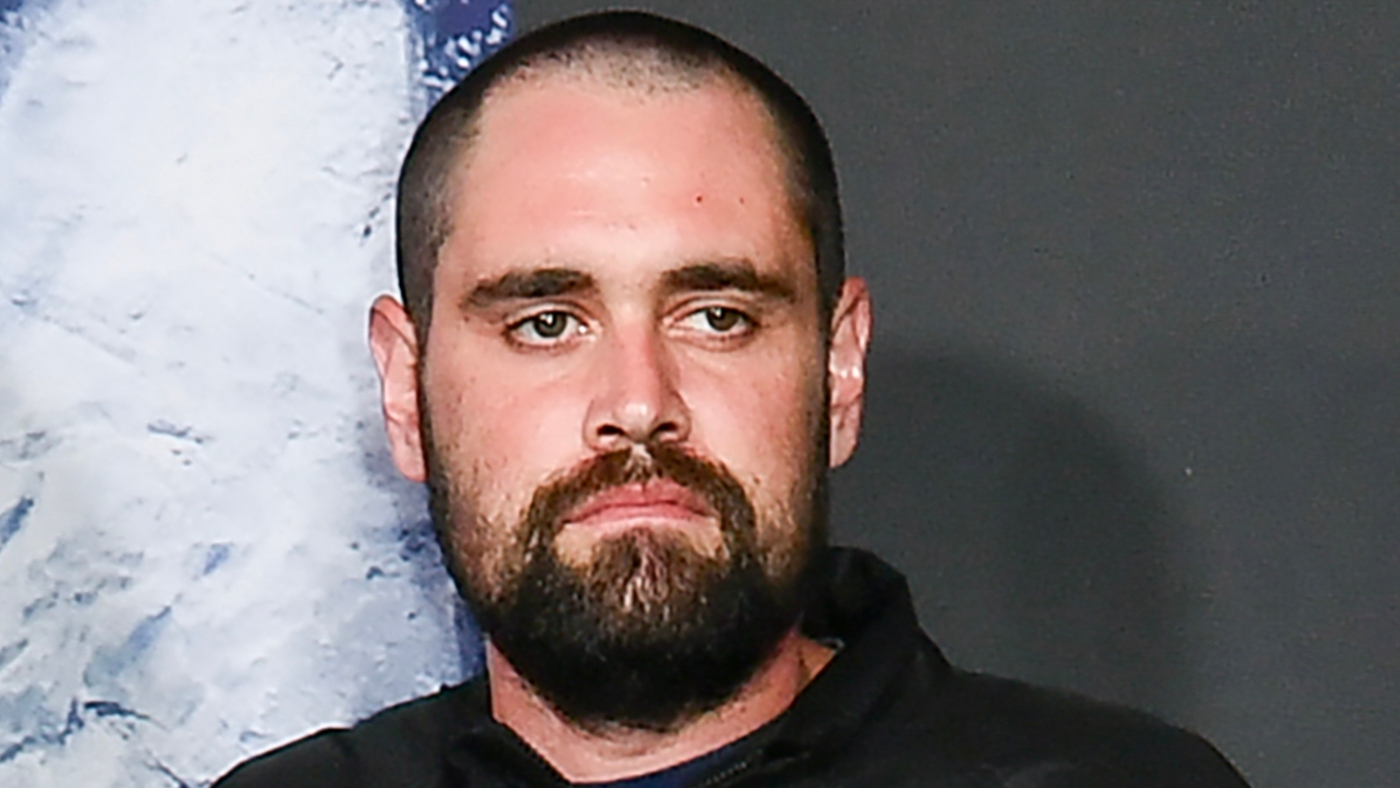
Nick Reiner arrives at the premiere of Spinal Tap II: The End Continues on Tuesday, Sept. 9, 2025, in Los Angeles.
Richard Shotwell/Invision/AP
hide caption
toggle caption
Richard Shotwell/Invision/AP
LOS ANGELES – Alan Jackson, the high-power attorney representing Nick Reiner in the stabbing death of his parents, producer-actor-director Rob Reiner and photographer Michele Singer Reiner, withdrew from the case Wednesday.
Reiner will now be represented by public defender Kimberly Greene.
Wearing a brown jumpsuit, Reiner, 32, didn’t enter a plea during the brief hearing. A judge has rescheduled his arraignment for Feb. 23.
Following the hearing, defense attorney Alan Jackson told a throng of reporters that Reiner is not guilty of murder.
“We’ve investigated this matter top to bottom, back to front. What we’ve learned and you can take this to the bank, is that pursuant to the law of this state, pursuant to the law in California, Nick Reiner is not guilty of murder,” he said.

Reiner is charged with first-degree murder, with special circumstances, in the stabbing deaths of his parents – father Rob, 78, and mother Michele, 70.
The Los Angeles coroner ruled that the two died from injuries inflicted by a knife.
The charges carry a maximum sentence of death. LA County District Attorney Nathan Hochman said he has not decided whether to seek the death penalty.
“We are fully confident that a jury will convict Nick Reiner beyond a reasonable doubt of the brutal murder of his parents — Rob Reiner and Michele Singer Reiner … and do so unanimously,” he said.

Last month, after Reiner’s initial court appearance, Jackson said, “There are very, very complex and serious issues that are associated with this case. These need to be thoroughly but very carefully dealt with and examined and looked at and analyzed. We ask that during this process, you allow the system to move forward – not with a rush to judgment, not with jumping to conclusions.”
The younger Reiner had a long history of substance abuse and attempts at rehabilitation.
His parents had become increasingly alarmed about his behavior in the weeks before the killings.
Legal experts say there is a possibility that Reiner’s legal team could attempt to use an insanity defense.
Defense attorney Dmitry Gorin, a former LA County prosecutor, said claiming insanity or mental impairment presents a major challenge for any defense team.

He told The Los Angeles Times, “The burden of proof is on the defense in an insanity case, and the jury may see the defense as an excuse for committing a serious crime.“
“The jury sets a very high bar on the defendant because it understands that it will release him from legal responsibility,” Gorin added.
The death of Rob Reiner, who first won fame as part of the legendary 1970s sitcom All in the Family, playing the role of Michael “Meathead” Stivic, was a beloved figure in Hollywood and his death sent shockwaves through the community.
After All in the Family, Reiner achieved even more fame as a director of films such as A Few Good Men, Stand By Me, The Princess Bride and When Harry Met Sally. He was nominated for four Golden Globe Awards in the best director category.
Rob Reiner came from a show business pedigree. His father, Carl Reiner, was a legendary pioneer in television who created the iconic 1960s comedy, The Dick Van Dyke Show.

Video: Hochul and Mamdani Announce Plan for Universal Child Care

Tarik Skubal, Tigers can’t agree on 2026 salary. Here’s what happens

San Francisco celebrates drop in traffic deaths

Anti-ICE protest outside Dallas City Hall follows deadly shooting in Minneapolis

Ole Miss S Nick Cull’s targeting call reversed vs Miami in Peach Bowl

Florida High School Football Rankings: Top 25 teams – Oct. 21

Cleary's 21 help Le Moyne down Central Connecticut State 69-64 in OT

How old is Bo Nix? What to know about Oregon quarterback ahead of 2024 NFL Draft

99th annual Pony Swim held in Virginia

Video: ‘It Didn’t Have to Happen This Way:’ U.Va. Faculty Call for Review of Police Response to Protests

Video: What Trump Told Us About the ICE Shooting

Trump calls for $1.5T defense budget to build ‘dream military’
Belgium open to housing foreign prisoners in other countries, minister says

Community reacts to ICE shooting in Minnesota. And, RFK Jr. unveils new food pyramid

Video: Minnesota Governor Condemns ICE Shooting
-

 Detroit, MI5 days ago
2 hospitalized after shooting on Lodge Freeway in Detroit
-

 Technology2 days ago
Power bank feature creep is out of control
-

 Dallas, TX4 days ago
Defensive coordinator candidates who could improve Cowboys’ brutal secondary in 2026
-

 Health4 days ago
Viral New Year reset routine is helping people adopt healthier habits
-

 Nebraska2 days ago
Oregon State LB transfer Dexter Foster commits to Nebraska
-

 Iowa2 days ago
Pat McAfee praises Audi Crooks, plays hype song for Iowa State star
-
 Nebraska2 days ago
Nebraska-based pizza chain Godfather’s Pizza is set to open a new location in Queen Creek
-
 Entertainment1 day ago
Spotify digs in on podcasts with new Hollywood studios