Lifestyle
Academic lectures have invaded L.A. bars and tickets are selling out in minutes


On a nippy Monday night at the Zebulon in Frogtown, a man wearing a Jason Voorhees T-shirt steps onto a purple-lighted stage and stands next to a drum set. Audience members, seated in neat rows and cradling cocktails, enthusiastically applaud.
Then they look toward a glowing projector screen. Some clutch their pens, ready to take notes.
“In cinema, three elements can move: objects, the camera itself and the audience’s point of attention,” Drew McClellan says to the crowd before showing an example on the projector screen. The clip is a memorable scene from Jordan’s Peele’s 2017 film, “Get Out,” when the protagonist (Daniel Kaluuya) goes out for a late-night smoke and sees the groundskeeper sprinting toward him — in the direction of the camera and the viewer — before abruptly changing direction at the last second.
During his talk, McClellan screened several movie clips to illustrate key points.
(Emil Ravelo / For The Times)
“Someone running at you full speed with perfect track form, you can’t tell me that’s not terrifying,” McClellan says laughing with the audience.
McClellan is an adjunct professor at the USC School of Cinematic Arts and the cinematic arts department chair at the Los Angeles County High School for the Arts (LACHSA). He’s presenting on two of the seven core visual components of cinema — tone and movement — as part of Lectures on Tap, an event series that turns neighborhood bars and venues into makeshift classrooms. Attendees hear thought-provoking talks from experts on wide-ranging topics such as Taylor Swift’s use of storytelling in her music, how AI technology is being used to detect cardiovascular diseases, the psychology of deception and the quest for alien megastructures — all in a fun, low-stakes environment. And rest assured: No grades are given. It’s a formula that’s been working.
“I hunted for these tickets,” says Noa Kretchmer, 30, who’s attended multiple Lectures on Tap events since it debuted in Los Angeles in August. “They sell out within less than an hour.”
Wife-and-husband duo Felecia and Ty Freely dreamed up Lectures on Tap last summer after moving to New York City where Ty was studying psychology at Columbia University. Hungry to find a community of people who were just as “nerdy” as they are, they decided to create a laidback space where people could enjoy engaging lectures typically reserved for college lecture halls and conferences.

Founders Felecia and Ty Freely pose for a photo with Drew McClellan (center) after his presentation.
(Emil Ravelo / For The Times)
“At the end of every lecture, people always come up to us and [say] “I hated college when I was in it, but now that I’m not, I would love to come to a lecture and have access to these experts without having to feel pressured to get a good grade,’” says Felecia, who makes “brainy content” on social media, like explaining the phenomenon of closed-eye visualizations.
Lectures on Tap, which also hosts events in San Francisco, Boston and Chicago, is the latest iteration of gatherings that pair alcoholic beverages with academic talks. Other similar events include Profs and Pints, which launched in 2017 in Washington, D.C., and Nerd Nite, which came to L.A. in 2011 and takes place at a brewery in Glendale. At a time when the federal government is moving closer to dismantling the U.S. Department of Education, AI is impacting people’s ability to think critically, attention spans are shrinking and literacy rates are down, events like Lectures on Tap are becoming more than just a place to learn about an interesting new topic.
“I think folks are passionate about keeping intellectualism alive especially in this age that is kind of demonizing that,” Felecia says. “We’re in the age of people not trusting experts so everyone out there who still does wants to be in a room with their people.”
“And there are a lot of them,” adds Ty. “It is actually alive and well, just maybe not mainstream.”
“In a weird way, this is kind of counterculture,” Felecia chimes in.

Wensu Ng introduces the speaker for the night.
(Emil Ravelo / For The Times)
During his presentation, McClellan broke down key film concepts in layman’s terms for the diverse audience who were mostly composed of film lovers and people who were simply interested in the topic. (Though there were some writers in the crowd as well.) To illustrate his points, he played several movie clips including the 1931 version of “Frankenstein” and Juan Carlos Fresnadillo’s “28 Weeks Later,” both of which made several people in the audience, including myself, jump in fear.
“This is how you scare the crap out of people,” he said while explaining why seeing a lighted-up character staring into an abyss of darkness is impactful.
Though some patrons like to go to Lectures on Tap events for specific topics they find interesting, others say they would attend regardless of the subject matter.
“I felt really comfortable and I loved the social aspect of it,” says Andrew Guerrero, 26, in between sips of wine. “It felt more like a communal vibe, but at the same time, I miss learning.”

Attendees mingle at the bar.
(Emil Ravelo / For The Times)
He adds, “I can absorb [the information] more because I’m not pressured to really retain it and because of that, I actually do retain it.”
After weeks of trying to secure tickets, which cost $35, Ieva Vizgirdaite took her fiancé, Drake Garber, to the event to celebrate his birthday.
“I didn’t go to college so I don’t have any prior experience with lecturing,” says Garber, 29, adding that he’s interested in film production and is a “big horror fan.” But the fact that “I get to sit and learn about something that I love doing with a pint? Like, that’s amazing.”
The relaxed environment allows the speakers to let their guard down as well.
“I can play with certain elements that I maybe haven’t used in the classroom,” says McClellan, who made jokes throughout his presentation. “It’s definitely looser and getting around people who’ve been drinking, they’ll ask more questions and different types of questions.”

“It’s kind of like mushing up the education into your applesauce — mushing it up in the beer,” says Drew McClellan.
(Emil Ravelo / For The Times)
After the talk is over, bar staff quickly remove the rows of chairs and clear the stage for a concert that’s happening next. Several Lectures on Tap attendees, including the founders, transition to the back patio to mingle. McClellan stays after to answer more questions over drinks.
“This is a nontraditional environment to be enjoying yourself but also learning at the same time,” he says. “It’s kind of like mushing up the education into your applesauce — mushing it up in the beer.”


Can you say no to a friend’s wedding?
Getty Images/Getty images
hide caption
toggle caption
Getty Images/Getty images
Are we spending too much on other people’s weddings?
Going to a friend’s weddings can be so fun and meaningful… but it can also really hurt your wallet. A survey by LendingTree found that 31% of people who had been to a wedding in the past five years had accrued debt to attend. So what’s driving up the cost of weddings for guests? And what makes it so hard to say no to these expenses?
Brittany breaks it down with Allyson Rees, senior analyst at trend forecasting firm WGSN, and Annie Joy Williams, assistant editor at The Atlantic.
This episode was produced by Liam McBain, with additional support from Corey Antonio Rose. It was edited by Neena Pathak. Our Supervising Producer is Cher Vincent. Our Executive Producer is Barton Girdwood. Our VP of Programming is Yolanda Sangweni.
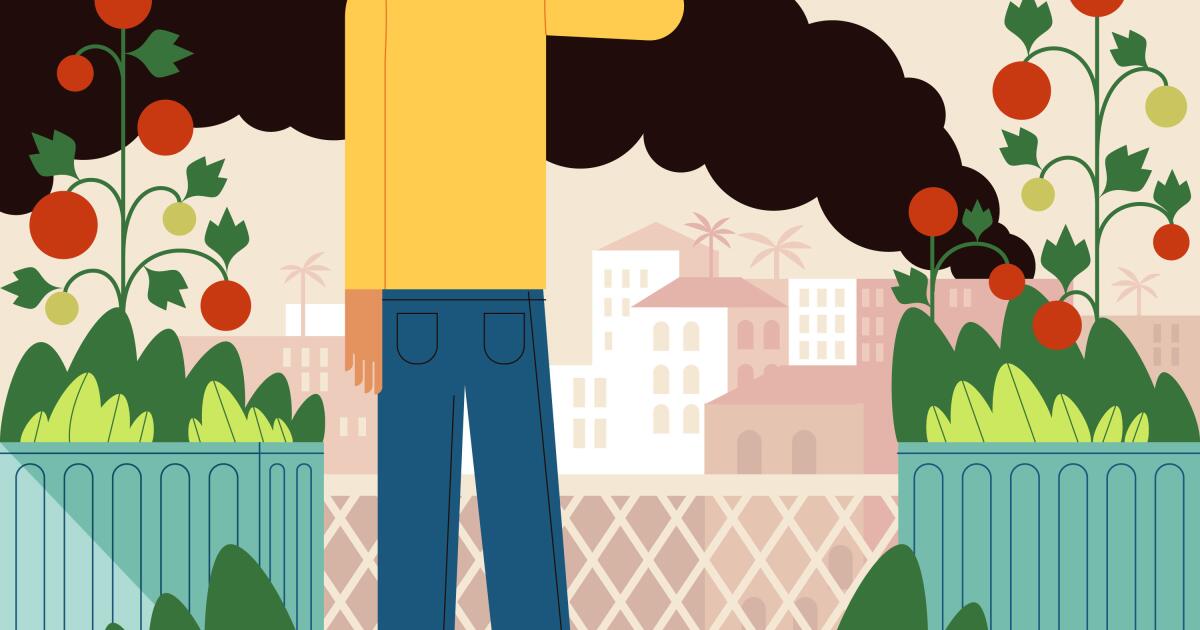
After the eight-day-long fire in a 500,000-square-foot Boyle Heights warehouse, eastern Los Angeles residents are contending with putrid smells, soot and potentially hazardous airborne chemicals after heavy plumes of smoke spread throughout the city. But those who grow food in nearby neighborhoods may also be wondering: How will the fires affect the plants and produce in my garden?
The Boyle Heights warehouse, owned by Lineage — a global temperature-controlled storage facility operator — housed 85 million pounds of frozen food and other products. In the days since the fire, local emergency visits for smoke inhalation and throat pain spiked while agencies still scramble to measure the amount of PM 2.5 — harmful fine particles — and heavy metals, like lead and arsenic, in the air.
According to researchers, any toxic airborne chemicals would likely stem from the charred foam insulation, metal exterior, burned solar panels and any lithium batteries that might have been present inside the warehouse.
After a fire, heavy metal particles can spread through ash and smoke over gardens and inhibit growth, said Olukayode Jegede, an agricultural toxicologist and assistant professor at UC Davis. Since the warehouse fire is so recent and cleanup has just begun, Jegede said the precise impact on gardens can’t be measured until comprehensive soil tests are conducted in the area.
While the L.A. city government hasn’t announced plans for soil testing, the Contaminant Level Evaluation and Analysis for Neighborhoods project at USC is offering free contaminant testing for Boyle Heights and East L.A. residents. Residents can collect soil samples and deliver them to Boyle Heights City Hall and other locations for an evaluation of lead, arsenic, chromium and mercury levels.
The good news is produce, plants and roots can still be preserved. According to Jegede, many of the soil tests conducted last year in the Altadena area after the Eaton fire showed that gardens and poultry were not as contaminated as one might expect.
“Quite a number of the soils we tested [in Altadena] were not really contaminated,” Jegede said. “We weren’t seeing many soils with concerning elevated levels of metal, so gardeners should not be too alarmed when these things happen.”
Nevertheless, there are several measures that gardeners can take to keep themselves, their children, plants and produce safe from potentially harmful contaminants stemming from the fire. Researchers, gardening experts and horticulturists offered some guidance on the handling, recultivation and cleanup that can keep you and your garden in good health.
How do I remove ash and contaminants from my garden?
Altadena horticulturist Leigh Adams said Boyle Heights plants and produce already live in a difficult environment, surrounded by industrial warehouses that spread contaminants daily.
“That area has been used industrially for 100 years, and the soil is impacted by many, many, many things,” Adams said. “Low-income neighborhoods and gardens usually don’t have a lot of resistance against dominant manufacturing.”
This means that the contamination of gardens in eastern L.A. won’t be as catastrophic as compared with those in Altadena, a more suburban environment, Adams said. But fallen ash still poses major health risks if ingested or inhaled.
An advisory from University of California Agricultural and Natural Resources last year recommended suiting up in an N95/KN95 mask, long sleeves, pants, close-toed shoes and gloves before attempting to deal with ash in the garden to limit exposure to potentially toxic contaminants. The advisory added that individuals should make sure all of this gear is cleaned thoroughly before bringing it back inside.
Once in the proper gear, Adams recommends removing the top two inches of topsoil from gardens, where the highest concentration of contaminants will settle after a fire. Using a plastic bag to collect the soil and disposing of it in the garbage — not green yard waste bins — will help to reduce the spread of airborne chemicals.
Gardeners with raised beds are advised to remove approximately six inches of soil, because excess ash can raise the pH level and prevent nutrients from soaking into the soil bed.
After this, watering the garden gently but plentifully will help to promote soil health and get rid of most of the ash present on plant leaves and stems. Adams said replacing the top two inches of soil with store-bought mulch or straw will help to contain any remaining ash and prevent it from spreading any further.
Experts say to avoid using leaf blowers if ash is present in the garden because they can send particles airborne. Doing so will increase the likelihood of heavy metal particles, which can carry lung irritants and carcinogens, being spread and inhaled.
A Boyle Heights resident keep a watchful eye on the fire at the 5,000-square-foot commercial building, which stores 85 million pounds of frozen food.
(Genaro Molina / Los Angeles Times)
Is it safe for me to eat produce from my garden?
Several studies, including one from the UC Cooperative Extension of Sonoma County, have shown that consuming produce in a fire-affected area poses minimal health risks.
Jegede said most root vegetables like potatoes and carrots, along with any fruit that has an outer layer, can be washed to remove potential contaminants, even if they were covered in ash. Peeling the outer layer of your produce can also help to reduce potential risks, he said.
Lettuce and other leafy foods with multiple layers pose a higher risk of contamination, but with a vigorous wash and peeling the outer layers, even the greens can be saved. The County of Los Angeles Department of Public Health recommends soaking leafy produce and fuzzy fruits like peaches in a 10% white vinegar and 90% water mixture.
Jegede said if the leaves or fruit are too delicate to wash or ash is still visible, it would be best to dispose of the produce.
How can I tell if my soil is contaminated?
After ridding your garden of visible ash, you might wonder how to tell if your plants will still thrive in the soil.
At-home soil tests that measure for alkaline, fertility and pH levels are widely available and can be purchased for $15 to $100 (for more detailed results) online. But Jegede said these tests can’t tell the full story of soil health.
Comprehensive soil testing is “something you can’t do properly at home,” Jegede said. “In labs, we are testing for metals like lithium and zinc, stuff that an at-home test will not show … If it comes to the point that you’re worried about your soil, I would just send it out to a lab.”
Wallace Laboratories in El Segundo, Babcock Laboratories in Riverside, Waypoint Analytical in Anaheim and other labs offer more detailed soil tests that measure heavy metal particles in addition to other fertility factors. Prices at Wallace Laboratories can range from $115 to $295 for a complete compost test.
The soil below two inches should be unharmed, Adams said, so long as new compost is set and plants are watered plentifully, which will promote natural biological cycles.
“What you’re doing is capping the soil, so that moisture stays in there, and instead of being dirt, it’s a living system called soil,” Adams said. “The more carbon we can get into our soil, the better.”
What can I do to help my soil recover?
For the last 12 years, Adams has been working with Metabolic Studio, a Los Angeles-based art and research hub focused on environmentalism, on methods for bioremediation, the practice of using additional fungi, plants and compost to decontaminate ash and break down contaminants.
Adams said straw, mushrooms, corn, rye and sunflowers are great bioremediators that can help to repair damage to soils. She said certain samples she’s worked on with Metabolic Studio have gone from testing at high heavy metal levels to nearly contaminant-free.
But for a more immediate fix, wash your produce, water your plants and have a little patience during ash cleanups. Your garden should look better in no time, Adams and Jegede said.

Inde Navarrette and Michael Johnston in Obsession.
Focus Features
hide caption
toggle caption
Focus Features
Two big horror films, Obsession and Backrooms, just smashed all box office expectations. So much of their success has been driven by Gen Z, which is now the biggest moviegoing demographic. But what makes a movie a Gen Z movie? Today we’re bringing you an episode of NPR’s It’s Been a Minute. Host Brittany Luse talks about this trend with Sam Adams and Reanna Cruz.
If you want to hear more about these movies, check out these episodes:
In ‘Obsession,’ love hurts. It really, really, really hurts.
‘Backrooms’ brings YouTube horror to the big screen
Zendaya brings ‘The Drama,’ we bring the spoilers
Connect with Pop Culture Happy Hour:
Letterboxd / Facebook
Our weekly newsletter
Support Pop Culture Happy Hour+
-
 Alabama2 minutes ago
Mac Jones asked who was his craziest teammate at Alabama
-

 Alaska9 minutes ago
Climate Change Is Helping an Invasive Predator Wreak Havoc on Iconic Alaskan Fish
-

 Arizona12 minutes ago
Arizona man pleads guilty after illegally living in forest for years among ‘1,000lbs of trash’
-

 Arkansas17 minutes ago
Army names intelligence facility for Arkansas Tech graduate
-

 California24 minutes ago
How California Effectively Legalized an Open-Air Sex Market
-

 Colorado27 minutes ago
Julian Lewis Says Deion Sanders’ Colorado ‘Wasn’t Really Looking at Defenses Much’ Last Season
-
 Idaho32 minutes ago
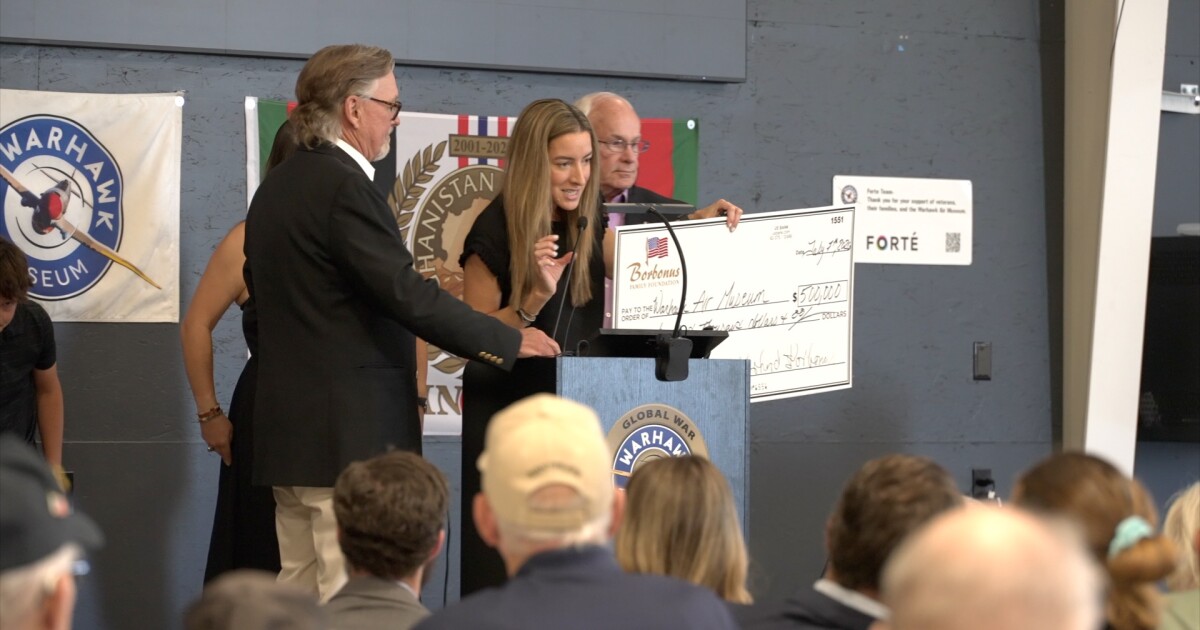
Warhawk Air Museum receives $500K grant honoring fallen Idaho soldier
-

 Connecticut32 minutes ago
Several beaches closed to swimming due to potential bacteria in the water

