Lifestyle
12 California experiences to add to your bucket list, one for every month of the year


Has it occurred to you that civilization might be overrated?
Me too. So I’ve been thinking about the natural world — actually, the many natural worlds contained within California, and how whole they can make us feel.
With that and the new year in mind, here are a dozen seasonally suitable classic California adventures. These are places where you can huddle with a loved one or steer clear of people entirely.
If you’ve been in the state a while, you’ve probably tried a few of them. Maybe you’ve meant to try a few more. And maybe 2025 is the year to act on that idea.
January: Spy on whales off San Diego

A gray whale swims in San Diego Bay.
(Birch Aquarium at Scripps Institution of Oceanography)
Gray whales migrate along the California coast from December through May, prompting winter whale-watching boats to head out regularly from harbors up and down the state. San Diego has a hefty supply of them, including Adventure Whale Watching (which uses rigid inflatable boats that are smaller and faster than the catamarans and other vessels most companies use), H&M Landing, San Diego Whale Watch, Oceanside Whale Watching and City Cruises by Hornblower. Excursions typically last two to four hours and cost $40 to $109 per adult.
On any of those boats, you should hear plenty about the wonders of Eschrichtius robustus (the gray whale), which gets up to 49 feet long, often migrating 10,000 miles (round trip) in a year.
Meanwhile, you may come across pods of dolphins — sometimes hundreds — leaping in the surf. Several dolphin species are common in these waters.
BTW: San Diego also has a few strong spots for whale watching from land, especially Torrey Pines State Natural Reserve in La Jolla and Cabrillo National Monument on Point Loma. If you don’t get around to chasing whales this winter, blue whales and fin whales swim through the same coastal waters May through November, and humpback and minke whales may be seen year-round.
February: Zip down Mammoth Mountain
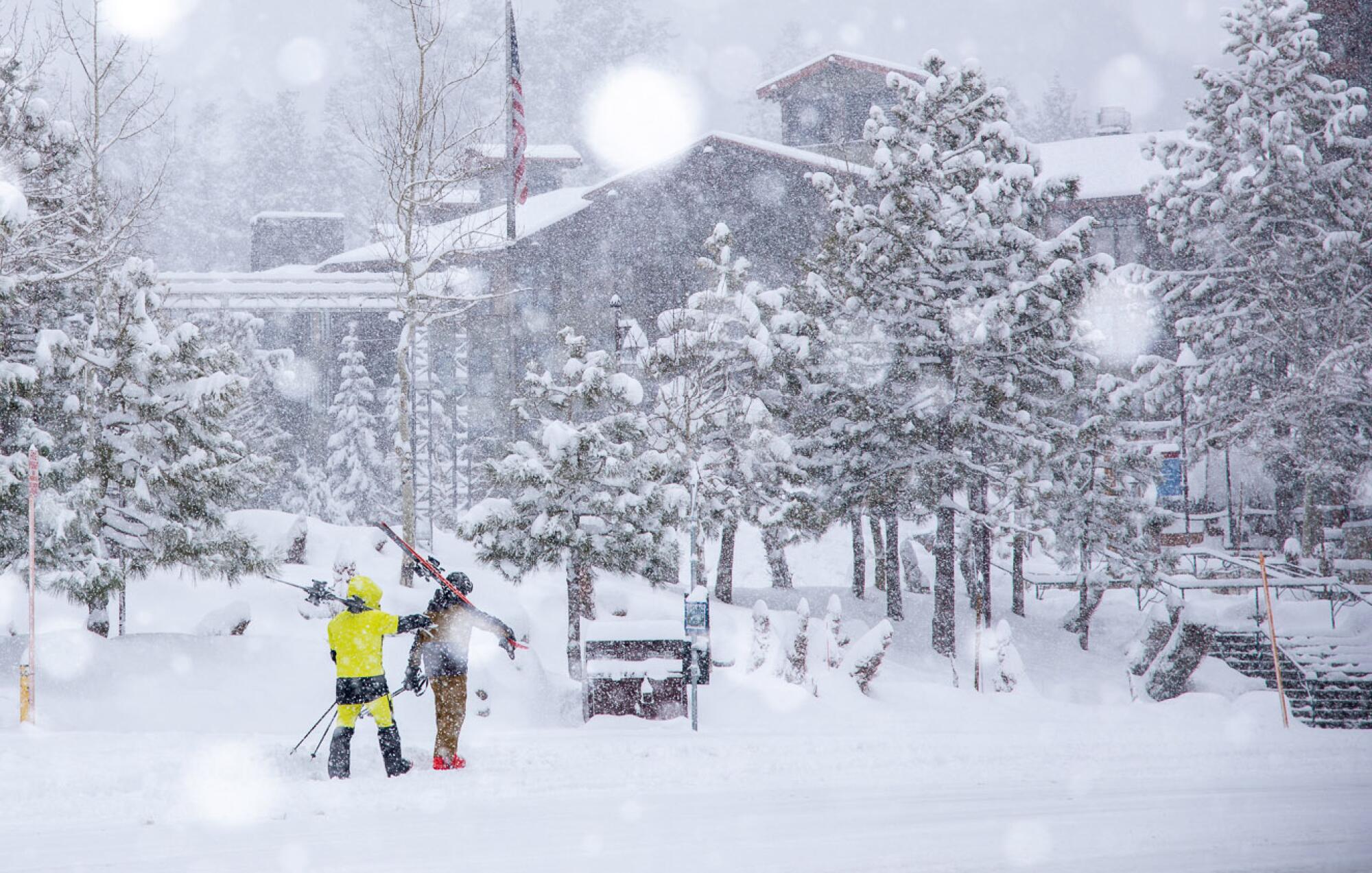
Skiers walking by the lodge at Mammoth Mountain in February.
(Samantha Lindberg / Visit Mammoth)
Every winter, legions zoom up from Southern California for winter sports at Mammoth Mountain (and many more come in other seasons for hiking, fishing and mountain biking). The ski and snowboarding operation, which includes 25 lifts, 3,500 skiable acres and a season that usually runs November through June, was founded in 1953 by a moonlighting hydrologist named Dave McCoy.
The mountain also has 19 miles of cross-country skiing based at the rustic lakeside Tamarack Lodge (which has the resort’s fanciest restaurant, the Lakefront) and 1,500 acres of beginner-friendly territory at nearby June Mountain (where kids 12 and under ski or ride for free).
BTW: To break up the 300-mile L.A. to Mammoth drive, detour into the rugged Alabama Hills near Lone Pine, where dozens of movies and TV shows have been filmed, including the first “Lone Ranger” film from 1938. Check out Lone Pine’s Museum of Western Film History. Farther up the road you’ll hit Bishop, the best place for a bite or overnight on the way to Mammoth.
March: Roam among Antelope Valley poppies

Visitors walk on a meandering path in the Antelope Valley California Poppy Reserve.
(Francine Orr / Los Angeles Times)
The Antelope Valley California Poppy Reserve’s rolling hills go orange in spring, usually March to May. The poppy bloom, which varies widely from year to year, can blanket the slopes. Purple lupine and other wildflowers may show up too. This 1,781-acre preserve ($10 per car to enter) includes eight miles of broad, smooth paths for walking among the flowers. (A portion, just west of the visitor center, is wheelchair-accessible.) Don’t pick any poppies or go tromping off-trail. But you can lead your friends to a high spot, such as Antelope Butte Vista Point to the east or Tehachapi Vista Point to the west, and then casually mention that Eschscholzia californica has been the state flower since 1903.
BTW: In years like 2019, when a superbloom attracted thousands of visitors, the reserve’s parking lot isn’t nearly big enough. (In 2024, the parking was easy because the blooms were subpar.) Bear in mind that many poppies bloom on roadside slopes outside the reserve. If you can do so safely, legally park on a shoulder along or near Lancaster Road and you might save $10.
April: Hear Burney Falls roar
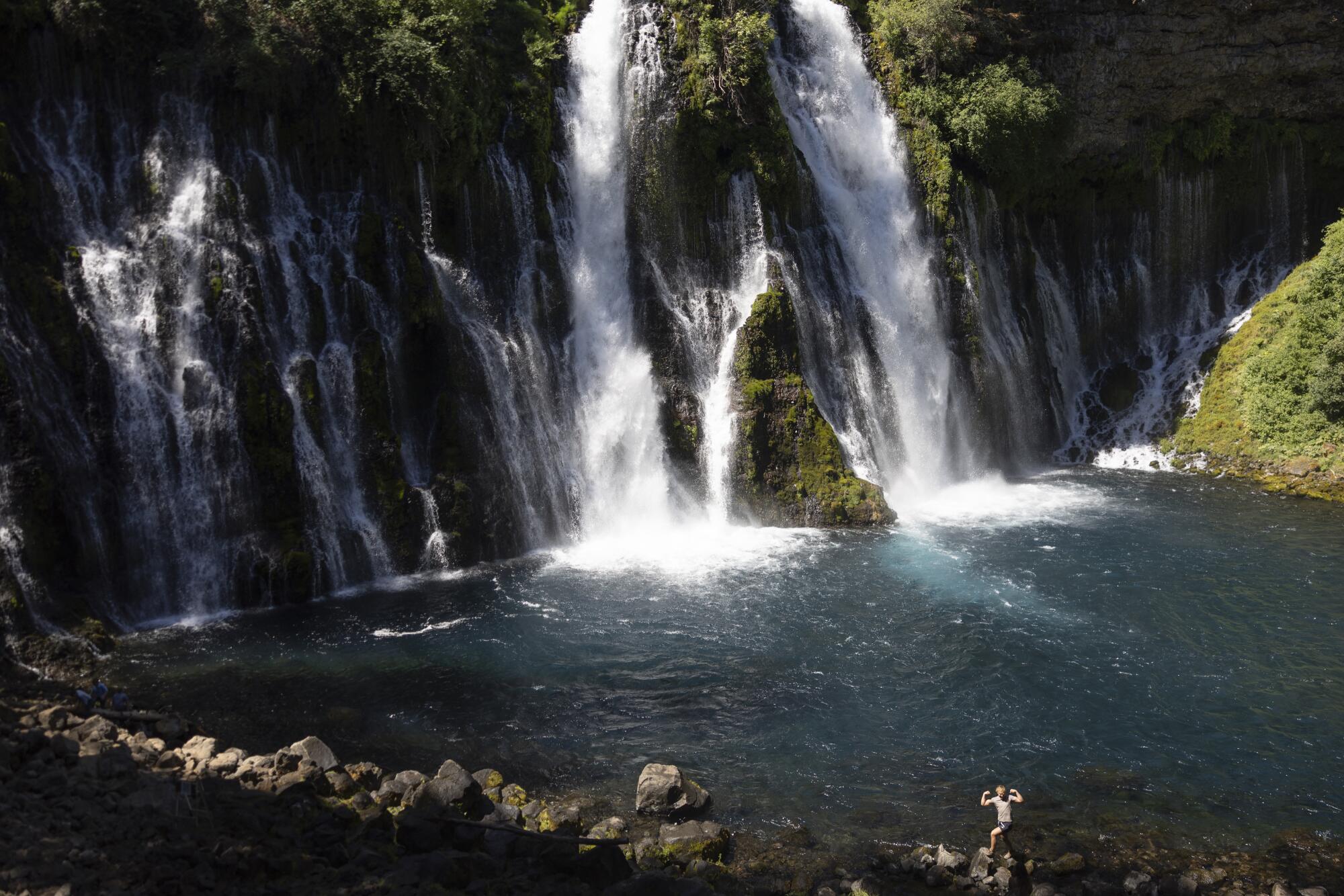
A visitor stands beside Burney Falls in California’s Shasta County.
(Paul Kuroda / For The Times)
Near the northern edge of California, you can see four or more waterfalls in a day. But some get crowded on summer weekends, so a visit in spring (especially on a weekday) will give you more elbow room. The big one is Burney Falls, 129 feet high, with a wide, thundering cascade. It’s the headliner at McArthur-Burney Falls Memorial State Park, about 65 miles northeast of Redding ($10 to enter; note that some trails, including the Falls Loop Trail, have been closed for long-term maintenance work).
Next, head to McCloud Falls, a series of three cascades about 45 miles northwest of Burney Falls along California 89. It’s seven miles round trip to hike the trail connecting the three cascades; all are part of Shasta-Trinity National Forest, with campgrounds nearby.
May: See green along Highway 46, west of Paso Robles

A sightseer stands along Highway 46, west of Paso Robles.
(Christopher Reynolds / Los Angeles Times)
So long as it rains just a little in spring, the drive along Highway 46 between Paso Robles and the San Luis Obispo County coast is 22 miles of scenery so green and gorgeous, it’s a traffic hazard. Verdant hills. Grizzled oaks. Grapevines in formation like troops about to march. Country roads that will take you to tasting rooms. As you head west, you’ll glimpse Morro Rock and the blue Pacific in the distance. When you reach the traffic circle at Vineyard Drive, about 4.6 miles west of Highway 101, you may be tempted to wander off on Vineyard for a few miles of low-speed bucolic splendor. Do it. When you’re westbound on 46 again, you’ll find several scenic turnout spots as it twists and swoops to its end at Highway 1. From there, you’ll be choosing between Cambria (4 miles north) and Cayucos (11 miles south), with the hamlet of Harmony on the way.
BTW: If you’re overnighting in Paso Robles, consider Sensorio, a walk-through display of ever-changing lights, most of it concocted by artist Bruce Munro. Imagine electric flowers with a dimmer switch. (And in some displays, the changing colors are set to music.) It’s generally open Thursday through Sunday nights. Adult all-access passes start at $65.
June: Raft the American River’s South Fork
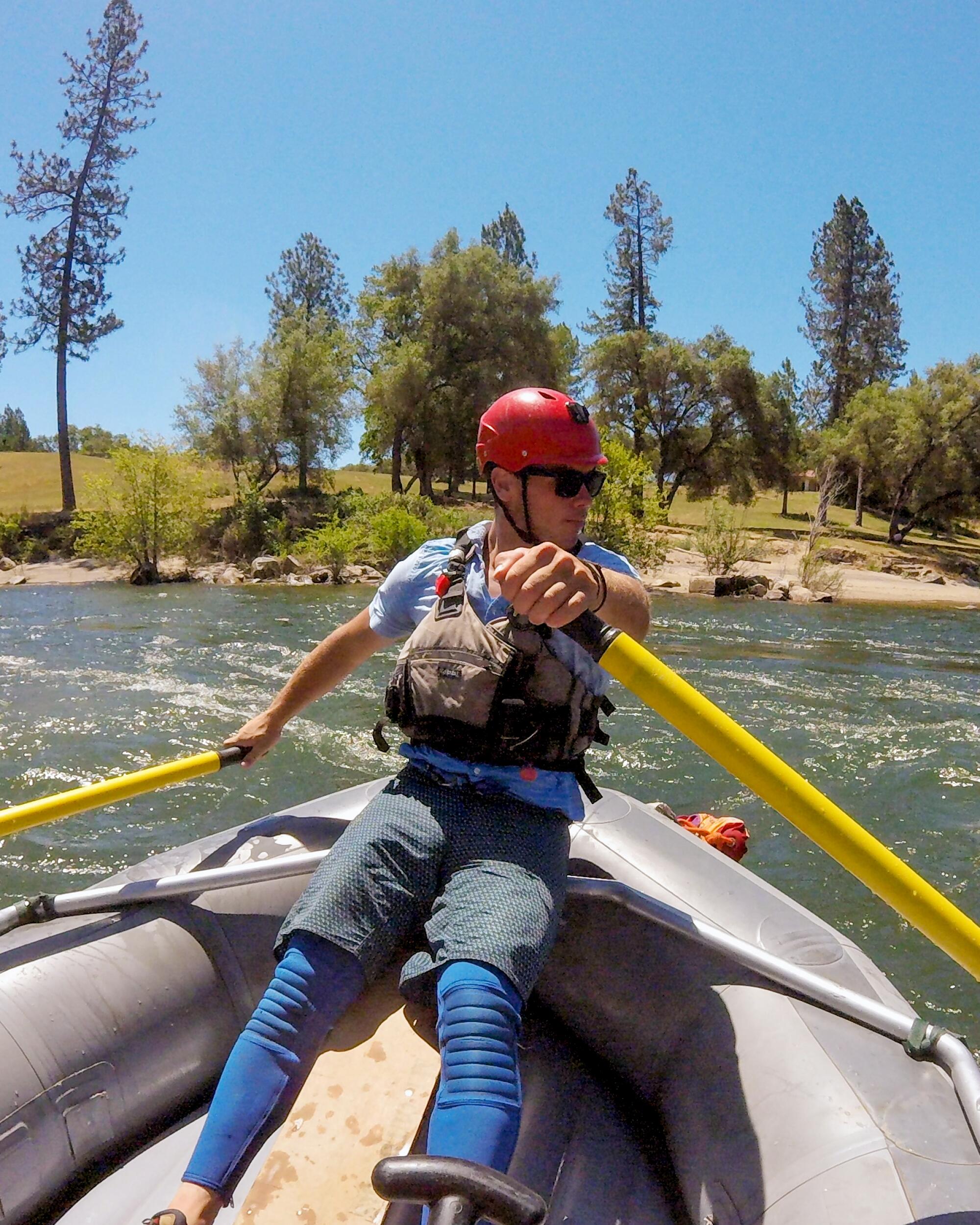
River guide Kyle Brazil navigates the South Fork of the American River, near Coloma.
(Christopher Reynolds / Los Angeles Times)
Running a river is a signature thrill in California’s Gold Country — and if it’s early summer, you can expect a few splashes of cold water on your face. Guides say the South Fork of the American River is a perfect introduction to river rafting, thanks to its evocative scenery, relatively mild Class III rapids and proximity to campgrounds and the pleasant town of Placerville.
Rookies should sign on with a licensed, experienced company. Family-friendly river floats typically begin north of Placerville, below the Chili Bar Reservoir, near Coloma. All-day rafting trips typically cost $100 to $180 per person. Half-day trips also are often available.
BTW: Marshall Gold Discovery State Historic Park, where the Gold Rush began, is less than a mile from many of Coloma’s whitewater rafting outfitters along California 49.
July: Soar (or stand by) at the Torrey Pines Gliderport

Torrey Pines Gliderport sits on a cliff top in La Jolla next to the UC San Diego campus.
(Christopher Reynolds / Los Angeles Times)
This is the place to see people jump off a cliff, then rise on the updraft. The gliderport sits between the UC San Diego campus and the Pacific, sending skyward a steady stream of paraglider pilots and the occasional model airplane. Grab breakfast or lunch at the Cliffhanger Cafe (where none of the soup or sandwiches costs more than $11.25), settle in at a picnic table and watch the action in the air. (On Saturday afternoons in summer, there’s usually live music.)
Sail planes were taking off here as early as the 1920s. In 1930, Charles Lindbergh glided on these winds. Hang gliders joined in the 1970s, then paragliders, then tandem paraglider flights (bookable for $200). See the shoreline about 200 feet below? That’s Black’s Beach, accessible by a steep, half-mile trail. (The beach also has a nude zone.)
BTW: For a smoother hike to the beach and equally amazing views, try the Torrey Pines State Natural Reserve. For straight-up beach time, head for the sand beneath the cliffs at Torrey Pines State Beach.
August: Camp or kayak at Santa Cruz Island

The tide laps at Scorpion Anchorage on Santa Cruz Island, Channel Islands National Park.
(Christopher Reynolds / Los Angeles Times)
On a clear day, you might glimpse the silhouette of Santa Cruz Island from the California mainland. But it takes a boat ride out there — ideally followed by a night of camping — to appreciate the island’s rugged bluffs, flowery meadows, raw beaches and sea caves. It’s the largest section of the chronically under-visited Channel Islands National Park.
The island’s Scorpion Anchorage, where most visitors arrive, is about an hour’s boat ride via Island Packers from Ventura Harbor. You can do a day trip or camp. Either way, you can snorkel and kayak in sea caves with a guide and rented vessel from Channel Islands Adventure Co. Or hike to Smugglers Cove. On your way, keep an eye out for island foxes, once endangered, now plentiful and skilled in campsite food thievery. (Island Packers, which has sailed among the Channel Islands for decades, is the National Park Service’s concessionaire for transport to and from the mainland.)
Once, the island’s hills and valleys were home to 11 Chumash villages (and Santa Cruz served as a sheep ranch as recently as 1984). Nowadays, there’s one 31-site campground about half a mile’s walk from Scorpion Anchorage. The park service controls about a quarter of Santa Cruz. The rest, owned by the Nature Conservancy, is off-limits.
BTW: If you only have time for a day trip, consider nearby Anacapa Island, home to a 1932 lighthouse, spectacular views and two miles of trails. But maybe wait another month. During the March-through-August nesting season, that island sees enough swooping, shrieking, pooping seabirds to trouble Alfred Hitchcock’s dreams.
September: Hike Yosemite, far from cars
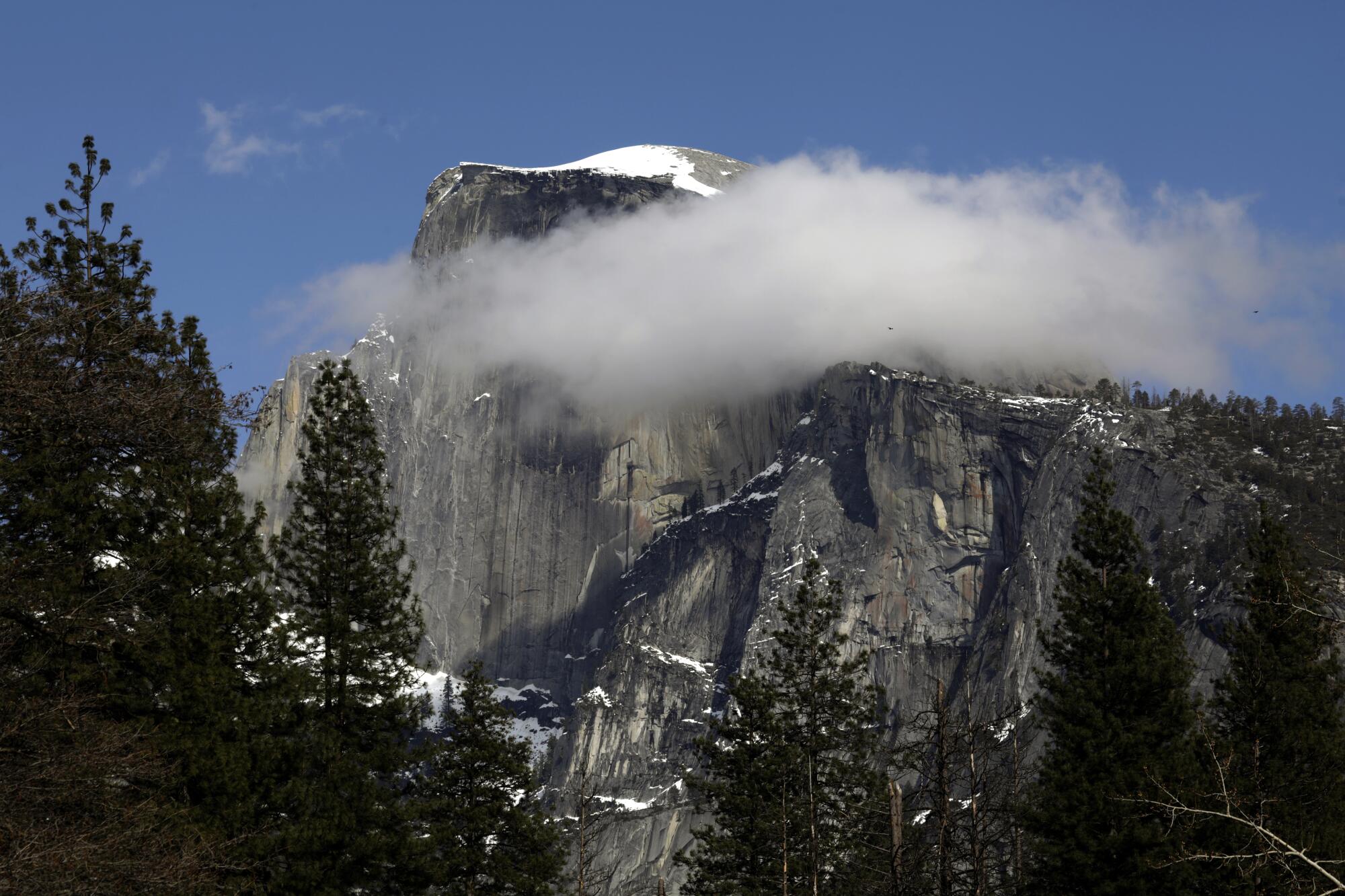
Yosemite National Park’s Half Dome, dusted with snow, rises above Yosemite Valley.
(Carolyn Cole / Los Angeles Times)
Yosemite National Park is vast, gorgeous and busy in summer, even when there’s a day-trip reservation requirement in place. But if you wait until the second half of September, when most kids have gone back to school, the chaos is reduced. And as soon as you get one mile from the nearest road, chances are you’ll see a lot more trees than people. Be sure to check reservation requirements well ahead.
Once there, if you’re a newbie, head for Yosemite Falls, the great spigot of Yosemite Valley and North America’s tallest waterfall, a 2,425-foot medley of cascades down granite walls. Later maybe climb the Yosemite Falls Trail to Columbia Rock (two miles round trip). Or try the Mist Trail to the top of Vernal Falls.
But remember, the valley is six square miles in a 1,187-square-mile park. From there, you could drive into the high country and catch the panorama from Glacier Point. You could check out the Hetch Hetchy Valley. You could take Tioga Road (which usually closes for the winter in November, reopening in late May or June) to Olmsted Point, Tuolumne Meadows and Tenaya Lake.
BTW: Lodging options inside the park have shrunk with the indefinite closure of the Wawona Hotel on Dec. 2. Also bear in mind: An extensive seismic retrofit was due to continue at the Ahwahnee Hotel through the end of 2024; and Aramark, the concession company whose subsidiary runs the Ahwahnee and other Yosemite operations, has been faulted by parks officials for multiple operational lapses in the last two years.
October: See trees at Prairie Creek Redwoods State Park
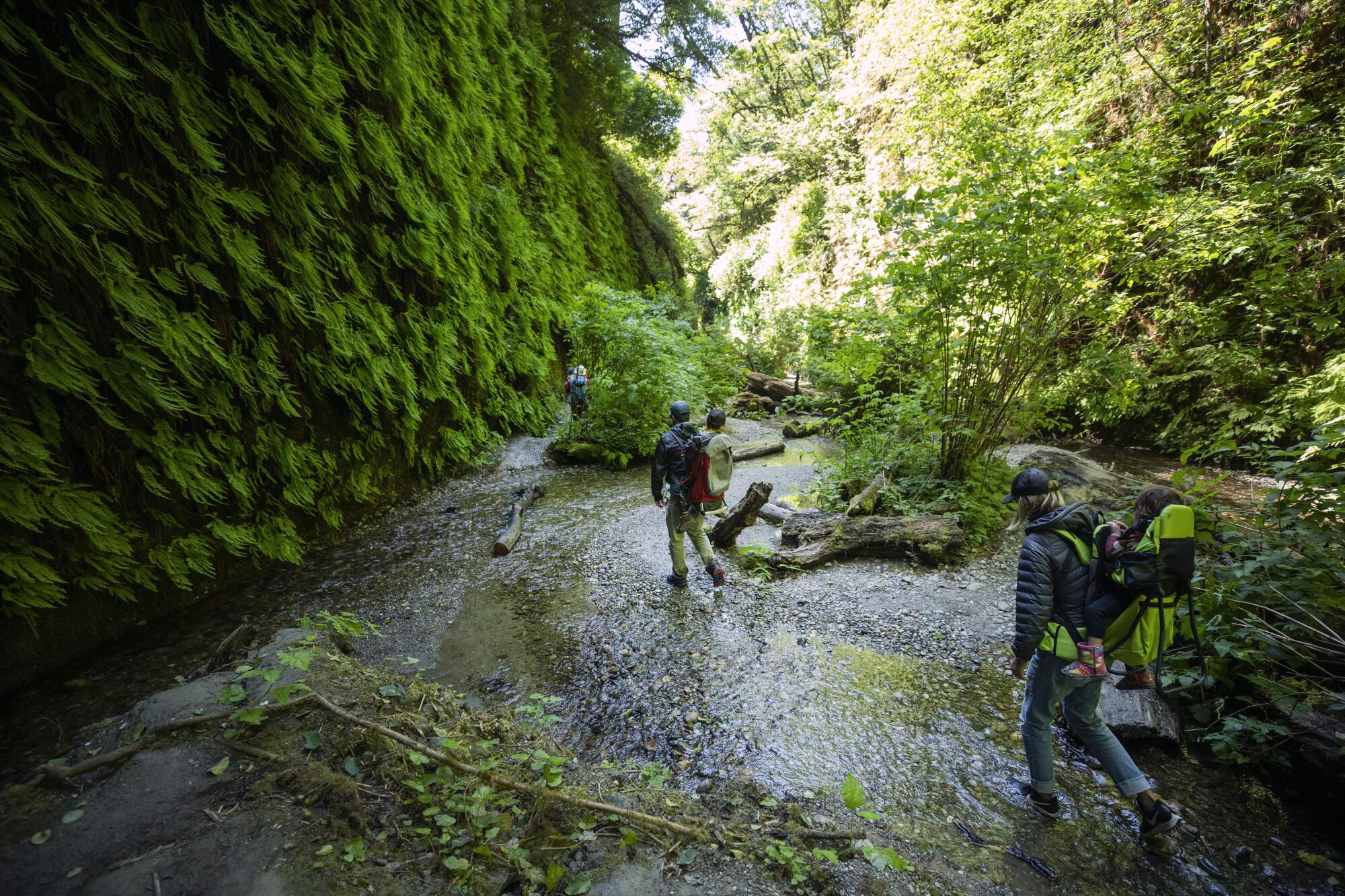
Fern Canyon Trail in Prairie Creek Redwoods State Park greets visitors with 50-foot fern-covered walls.
(Myung J. Chun / Los Angeles Times)
In Prairie Creek Redwoods State Park, about 50 miles north of Eureka, Prairie Creek Trail leads hikers through a grove of implausibly tall old trees. The park’s Elk Prairie and Gold Bluffs Beach campgrounds also are popular, and its mile-long Fern Canyon trail is famed as a shooting location for the “Jurassic Park” movie “The Lost World.”
The surrounding Redwoods National and State Parks include miles of trails and coastline north and south of the Klamath River estuary, including the rocky coastal view from High Bluff Overlook. Even in summer, this territory is relatively uncrowded. In fall, that will be doubly true. (Del Norte County’s population is less than 30,000.) Just be ready to be cool and damp. If you need a bed or breakfast, consider the Historic Requa Inn, a rustic landmark alongside the Klamath River that dates to 1914.
November: Gather driftwood at Moonstone Beach
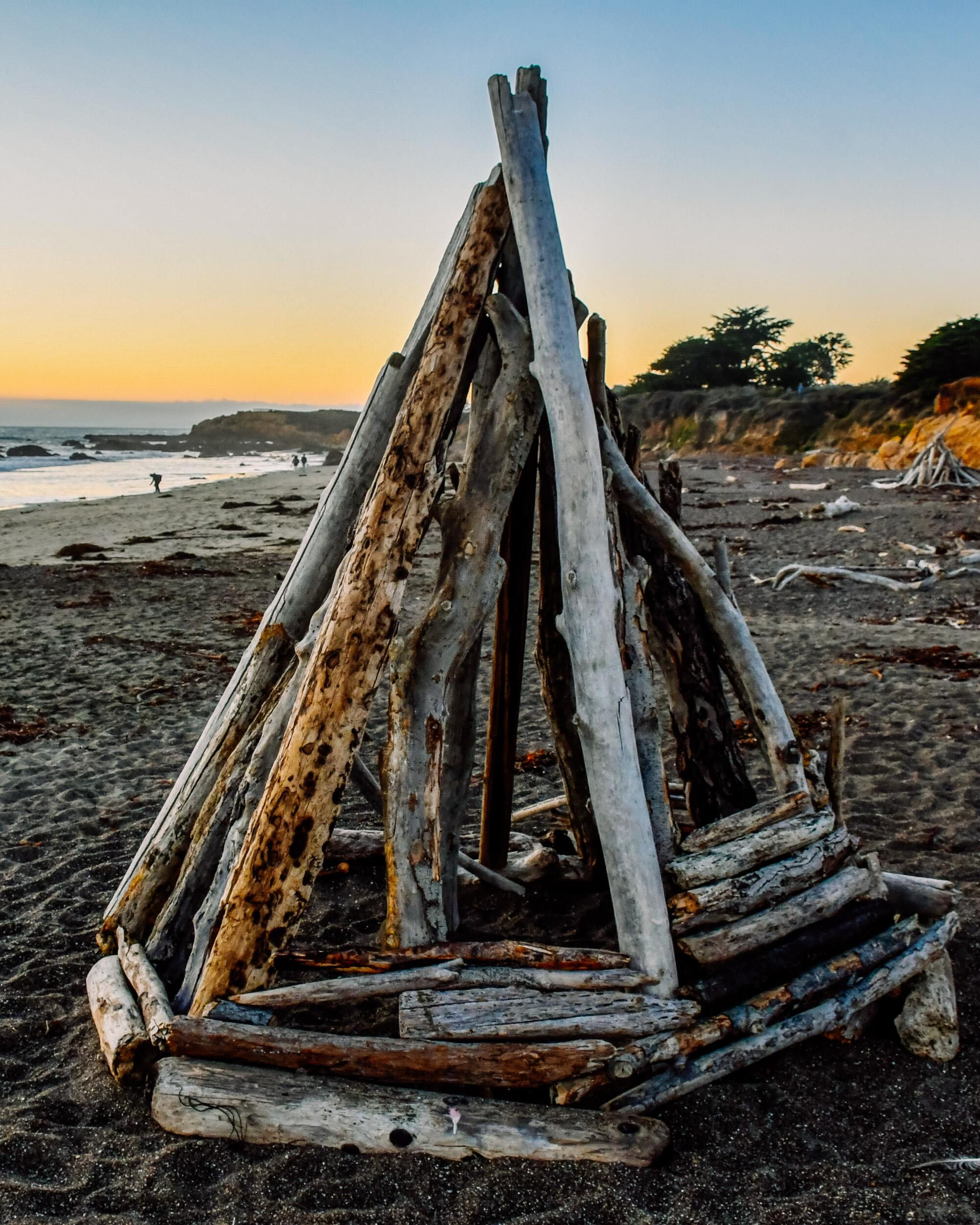
Cambria’s Moonstone Beach Drive features rocky coastline and abundant driftwood.
(Christopher Reynolds / Los Angeles Times)
Cambria is a coastal town for all seasons. The shoreline is mostly rugged and rocky, with pines marching up steep, often-foggy slopes. In the midst of this waits Moonstone Beach, often strewn with driftwood, and Moonstone Beach Drive, which is lined by about a dozen inns and boutique hotels.
Stroll the mile-long Moonstone Beach Boardwalk. Make a fort out of some driftwood. Hike on the Fiscalini Ranch Preserve‘s Bluff Trail. Sample the eclectic menu at Robin’s Restaurant (a mainstay for more than 25 years), dig into olallieberry pie at Linn’s Restaurant (more than 30 years). Or stand in line for seafood at the cash-only, no-reservations Sea Chest Oyster Bar, which turns 50 in 2025.
BTW: Remember to visit San Simeon and Hearst Castle, about nine miles up the road. Also remember that you can’t continue up Highway 1 to Big Sur. The highway is closed two miles north of Lucia for major repairs. Caltrans officials say they expect to reopen some time in 2025, with a date to be determined.
December: Hug a boulder in Joshua Tree’s Hidden Valley
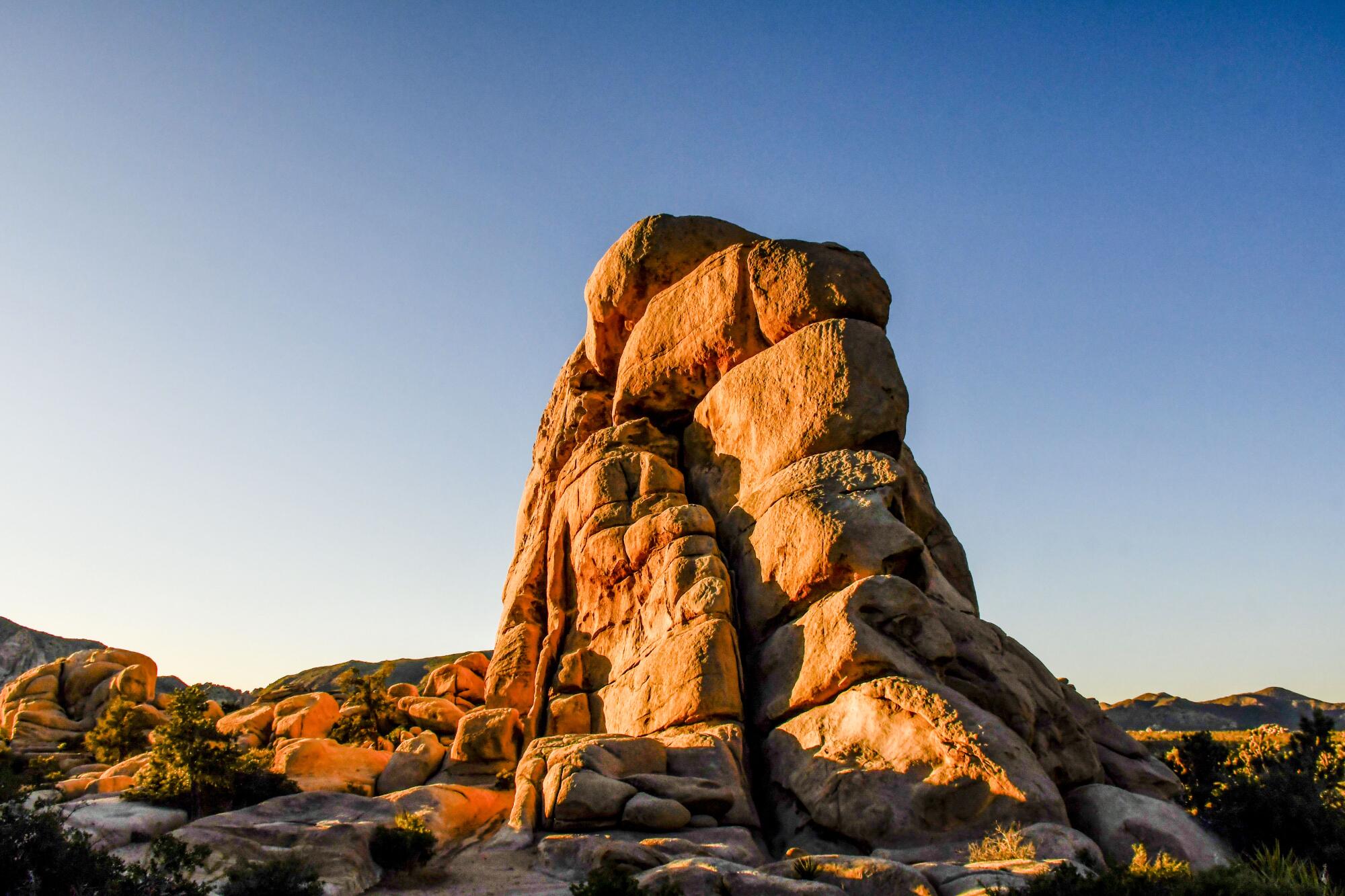
Climbers and campers revere Hidden Valley in Joshua Tree National Park.
(Christopher Reynolds / Los Angeles Times)
Hidden Valley in Joshua Tree National Park draws climbers, boulderers, desert campers and geology geeks from all over. Hidden Valley has 44 first-come, first-served campsites (Joshua Tree has about 500 campsites total) and no water — but those rocks! They look even more amazing when reflected in the water that sometimes accumulates at nearby Barker Dam. There’s also prime stargazing and edgy art around the fringes of the park, courtesy of Noah Purifoy, High Desert Test Sites, Desert X and others.
BTW: If you don’t know much about singer-songwriter Gram Parsons’ life and death, you could book the Joshua Tree Inn, where Parsons spent his last night in Room 8.

For Iris van Herpen, couture is a laboratory as much as a runway. Our chief fashion critic, Vanessa Friedman, takes us inside this Dutch designer’s latest Paris show — from sci-fi-inspired gowns to an audacious attempt at a dress made of charged plasma.
Lifestyle
The BoF Podcast | Decoding Paris Haute Couture: Wonder, Restraint and the Call of the Void


-
Lifestyle9 minutes ago
Iris van Herpen Reaches for the Stars
-

 Technology21 minutes ago
No, Flock isn’t threatening people for debating surveillance
-

 World23 minutes ago
Israel signals readiness for another Iran strike as Trump declares ceasefire over
-

 Politics29 minutes ago
Kelley Paul: America’s Founders were the ‘first civil rights heroes’
-

 Health36 minutes ago
Your resting heart rate could reveal more about your health than you think, doctors say
-

 Sports39 minutes ago
Shohei Ohtani ruled out of MLB All-Star Game as Dodgers plan to manage nagging injury
-

 Technology51 minutes ago
Fake VA shoe offer targets veterans
-
 Business54 minutes ago
Los Angeles hotels saved by last-minute surge in World Cup bookings

