Lifestyle
10 gifts and experiences L.A. Times staffers are giving from the 2024 Gift Guide

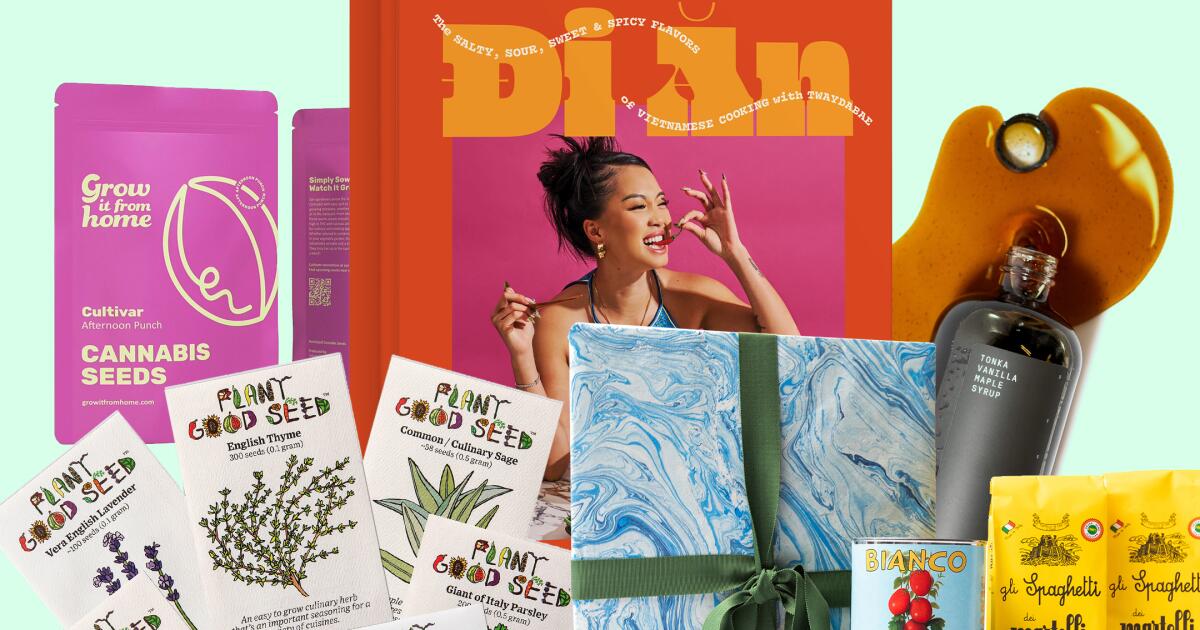
What gifts might our Gift Guide pickers pick if they were guided to pick gifts from the lists of the other gift pickers to give? Asking that question aloud might be hard to do (go ahead, we’ll wait), but answering it isn’t. That’s because this year, once our collective of elfin scribes finished sourcing all manner of gifts, goodies, gadgets and gear — organized around the theme of celebrating all that Los Angeles has to offer (and the Golden State at large, too) — we asked them to take one last look at the fruits of one another’s labors and pick some newly discovered bit of holiday wonderment they’d be likely to gift or love to be gifted this year.

On our first-ever list of curated curators’ curations, you’ll find suggestions of tasty treats (think boxes of mole, bottles of maple syrup, a box of pasta fixings), wishing dolls, lucky beans (no cow trade-in required), herb seeds (to grow both mind-altering greenery and not) and even a few local places to go and browse the shelves yourselves. And that’s just for starters.
So read on to discover what other gifts these L.A. Times gift pickers (and some of their editors) picked to give.

(Jason Armond / Los Angeles Times)
Vanilla-tonka bean maple syrup from Destroyer
I have a friend who’s obsessed with maple syrup — “real maple syrup, no additives!” as he says. He used to carry a tiny flask of it in his man purse to dribble onto meals at restaurants. For years, I’d gift him different types of maple syrup for holidays — golden one year, dark another. But then I stopped, because: predictable. Thank you L.A. Times Food team for tipping me off about the vanilla-tonka bean maple syrup available at Destroyer. I plan to resurrect our holiday tradition this year — and might even gift him a bottle of it over the Culver City cafe’s strawberry French toast. — Deborah Vankin

(Allen J. Schaben / Los Angeles Times)
Goodies
How does a Southern California retailer survive with a price cap of $25? Especially one whose home goods (made of stone, ceramic, glass and fiber) show so much style? Even though there are five Goodies stores in L.A. and Orange counties, I’d never encountered one before this week (when Lisa Boone illuminated me with her staggeringly thorough guide to 90 local gift shops). Now, with holidays and birthdays coming up, I’m heading out to inspect mugs, spoons, dishes, bookends, coasters, vases and so on at the Goodies location in Atwater Village. — Christopher Reynolds

Mole gift boxes at Guelaguetza
For my longtime best friend Laura, a fantastic cook and former Californian who misses Mexican food, Christmas isn’t Christmas without tamales. So this year, I will send her Guelaguetza’s Mole Jar Gift Box from our Food staff’s gift picks, which includes 12-ounce jars of mole negro, Rojo and Coloradito and comes wrapped in a pretty Oaxacan tea towel. Now, she can replicate the James Beard Award winner’s much-heralded banana-leaf-wrapped mole tamales just in time for the holidays. Sadly, I won’t be there to sample them with her. — Lisa Boone

(Taylor Arthur / Los Angeles Times)
Pasta Club gift box or 3-month subscription at Bucatini
In my opinion, the best gifts are edible, so there was a wealth of temptation in this year’s Gift Guide (salsa macha, pizza, coffee beans, oh my!), and I’m not saying I’m not going back for more. But the Bucatini holiday gift box offers up pasta staples with festive flair, and I don’t even have to wrap it. My Italian mom will be over the moon … well, unless I decide to keep it for myself. (Then there’s a subscription to the Pasta Club, which grants two bags of pasta and other goodies to a lucky recipient for three straight months. It’s a holiday gift that literally keeps giving.) — Jen Doll

Knotwork LA Mini Daruma Wishing Dolls
I’m not a superstitious person. But the stresses of modern life — be it finances, work, vet visits, the news, finding time for so-called “self-care” — sometimes has me wanting to believe there are other forces at play in this universe. And I do love a good knickknack, especially one that doubles as a work of art. So I was immediately drawn to these mini good luck charms from ceramist Linda Hsiao, mainly as a $30 treat to myself. Inspired by the Japanese tradition of daruma dolls, these Altadena-crafted beauties come in an assortment of cozy colors, with their smooshed, hand-crafted faces seemingly cheering us on. And they’re interactive of sorts. Color in one eye when you make a wish. And when that wish comes true — I love that sense of optimism — color in the other eye. And if it doesn’t, just consider it a reminder to never stop dreaming. — Todd Martens

Rancho Gordo black-eyed peas
Rancho Gordo’s black-eyed peas helped save a family tradition. When we bought the “Joy of Cooking” in the 1980s, my late husband insisted we try the black-eyed peas recipe (aka Hoppin’ John) for luck on New Year’s Day. To my surprise, I learned those hard, funny-looking nuggets could cook into a creamy, delicious dish laced with lots of pork fat. The problem was that supermarket dried beans were often old and tough, so the prep time was enormous. Then my husband tried buying black-eyed peas in cans, which cut the prep to nearly nothing. His recipe was so popular that our friends started making it too, until one accidentally poisoned us and the rest of her dinner party by using a can that had gone bad. After 72 hours of horrific sickness, it was a long time before we were willing to eat anything from a can, but we did miss our New Year’s tradition, especially after my husband became a vegetarian. Enter Rancho Gordo’s dried beans! They’re so fresh, every batch cooks up succulent, even without soaking or animal fat. My husband created a meatless version with whole tomatoes, olive oil, onions, bay leaves and lots of garlic that was just as yummy as his old recipe. It’s what I cook today, and at $6.25 a bag, I can afford to give friends and family a pound of good luck from our dear departed family chef. — Jeanette Marantos

(Lisa Boone / Los Angeles Times)
Leanna Lin’s Wonderland
I am on the hunt for a unique Christmas gift for my 8-year-old niece in Oklahoma, and thanks to my colleague Lisa Boone’s list of 90 special L.A. shops, I discovered Leanna Lin’s Wonderland, where my options runneth over. Should I get my niece the stamp carving kit? She loves the little round cat Pusheen, so I could get her one of several plushies, including one that’s strawberry scented. That’s kind of magical! Or I could go with one of several surprise boxes where she could end up with any number of silly cat-themed toys. While browsing, I also spotted gifts for other folks on my list, including my butter-loving friend Bob, who will get a real kick out of socks that honor their favorite condiment. I’m so glad to have discovered a local place with high-quality gifts! — Jaclyn Cosgrove

(The Plant Good Seed Co.)
The Plant Good Seed Co.’s Culinary Basil seed collection
Does it count as a gift if I aim to be the beneficiary? I have a couple of gardeners in my family who also happen to be great cooks, and this year they’ll be getting the seed assortment from the Plant Good Seed Co. that includes six types of basil. Now, whether these folks invite me over for dinner once that basil becomes pesto or Caprese salad … that’s up to them. Here’s hoping. — Philip Gray

Di An: The Salty, Sour, Sweet and Spicy Flavors of Vietnamese Cooking With TwayDaBae
My best friend, Nneoma, has been in her cooking era lately. Many of our recent catch-ups have included her sharing stories about baking a rotisserie chicken for the first time or mastering some other restaurant-worthy dish. So in the spirit of experimenting with new dishes, I am strongly considering gifting her TwayDaBae’s book, “Di An: The Salty, Sour, Sweet and Spicy Flavors of Vietnamese Cooking With TwayDaBae,” thanks to Bethanne Patrick’s recommendation. Not only is the cookbook filled with pages and pages of delicious looking recipes, the hardcover book would look beautiful in Nneoma’s colorful kitchen. Also, I’m unashamedly looking forward to playing taste tester. — Kailyn Brown
(Christopher Reynolds / Los Angeles Times)
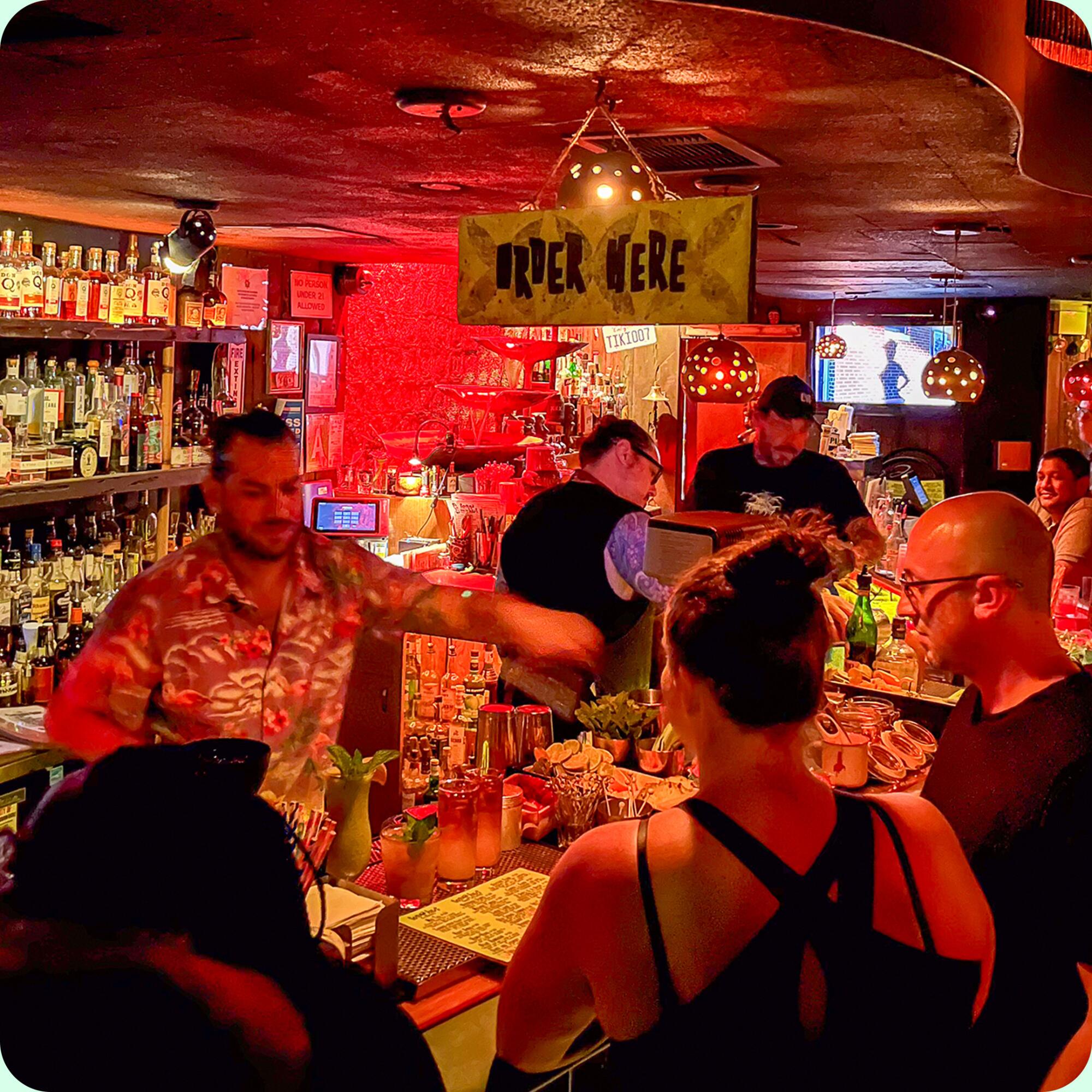
Try tacos and a Nutty Chi Chi at the Tonga Hut
In an era of peak materialism, there’s something about giving an experience instead of an object that really appeals to me this gifting season. That’s why I’m taking my colleague Christopher Reynolds’ advice to surprise a special someone with an evening at North Hollywood’s Tonga Hut (L.A.’s oldest tiki bar) for a food-and-grog adventure, complete with a gift card worth a couple rounds of tiki drinks and a few Durango’s tacos. And as an avowed tikiphile, that would sort of make it a win-win for me. Another experiential gift on my nice-list radar is Fig Earth Supply’s cannabis gardening bundle, which you’ll find among the offerings on Jeanette Marantos’ roundup of gifts for L.A. gardeners and plant parents. It includes a pair of classes scheduled for February, a packet of seeds and a copy of Penny Barthel’s book “The Cannabis Gardener.” I’ve taken both of those classes, grown those seeds and read that book, and it’s everything I needed to go from nervous newbie to confident ganja green thumb. And who wouldn’t want to inspire — or be gifted — that kind of confidence? And finally, if I did want to stuff something in someone’s stocking, it would probably be a pair of made-in-Vermont Darn Tough socks (stockings stuffed in stockings is so meta) like the ones recommended by my trail-hiking, wilderness-wandering, coyote-hazing colleague Jaclyn Cosgrove, who offers their full-throated endorsement of the Coolmax Hiker Boot mid-weight hiking sock. I don’t know anything about hiking, but love everything about this brand’s foot-cushioning, wears-like-iron hosiery from my home state. And that means the pals I’m gifting (and their feet) will love them too. — Adam Tschorn


Students walk on the Stanford University campus on March 14, 2019, in Stanford, Calif.
Ben Margot/AP
hide caption
toggle caption
Ben Margot/AP
When Theo Baker arrived at Stanford University a few years ago, he joined the student newspaper, following the path of his journalist parents, Peter Baker, a White House correspondent for The New York Times, and Susan Glasser, a writer for The New Yorker.
Through his reporting as a student journalist, he eventually broke a story about manipulated data in Stanford President Marc Tessier-Lavigne’s neuroscience research that helped lead to the university president’s resignation.
Theo Baker’s book, How to Rule the World: An Education in Power at Stanford University was released May 19. In it, Baker describes Stanford as a place where proximity to Silicon Valley gives rise to a parallel system of influence, recruitment and money, with investors looking to identify promising students almost as soon as they arrive on campus.
He told Morning Edition host Steve Inskeep there was “a sort of Stanford inside Stanford,” where elite students are drawn into an “alternate reality” of excess and access to cut corners.
In the interview, he discusses how Stanford is not just a university but also a pipeline where status and power can matter as much as ideas.
We reached out to Stanford University for comment and have not heard back.
Listen to the interview by clicking play on the blue box above.


The scoreboard shows the results of the women’s singles final match between Iga Swiatek of Poland and Amanda Anisimova of the U.S. at the Wimbledon Tennis Championships in London, Saturday, July 12, 2025.
Kirsty Wigglesworth/AP
hide caption
toggle caption
Kirsty Wigglesworth/AP
Fifteen points in tennis? Nice. Thirty, 40 — even better. Advantage — that sounds good. “Love” — that also must be great, right? Well, not quite.
As the French Open rolls on and Serena Williams has announced her return to the sport, maybe you’ve been paying a little more attention to tennis. The sport’s scoring system is notably distinct, and can sometimes be hard to grasp for newcomers. But even tennis aficionados might not know why, or how, “love” became the unmistakable callout for zero points. For this installment of NPR’s Word of the Week, we’re exploring how a word that signifies trailing behind got such a sweet name.
“Love” comes from the heart — or an egg?
It’s hard to pinpoint when the first tennis ball went over the net. Tennis is a derivative of lots of other sports, such as “jeu de paume,” a handball game played in France, said JT Buzanga, the collections manager at the International Tennis Hall of Fame museum.

But tennis became a patented, official sport in 1874, said Steve Flink, a journalist whose tennis coverage got him inducted into the International Tennis Hall of Fame. It has retained its unique, mysterious scoring system ever since.
“By and large, the original system has held up almost entirely,” Flink said.
The use of “love” goes back to the late 18th century, said Jesse Sheidlower, a lexicographer. But it was used earlier than that in card games such as whist and bridge. Before the term made its way to tennis, the sport favored plain old “nothing,” or “nil,” he said.
Why love in the first place, though? Historians don’t really know for sure, but there are a few theories.
The French could have something to do with it. Some historians believe “love” derives from “l’oeuf,” which means “the egg” in French. Because eggs are shaped like zeros, terms such as “goose egg” and “duck’s egg” have been used in other contexts to mean zero, Sheidlower said.
It’s also possible English speakers mispronounced l’oeuf as “love.” But Sheidlower isn’t convinced that’s the answer.
“It’s the French equivalent of an English expression. But since that expression doesn’t appear in French, the French word wouldn’t have been used,” he said.
To be sure, France has had a lot of influence on tennis culture, Buzanga said. For example, “deuce” or a game tied at 40 points, comes from the French word for “two”: “deux.” But he prefers another prominent theory: that “love” comes from the idiom “for the love of the game.” Even if a player hasn’t scored, it doesn’t matter, because their heart is in it. It’s the theory Sheidlower said is the most plausible, because the idiom was used by the English before tennis was popularized.

Another variation of the “love of the game” theory is that the word could have come from the Dutch “lof,” or “honor” — or the Latin “amare,” meaning “to love,” Flink said.
But if tennis’ “love” doesn’t come from a French word, the theory at least has a French sensibility.
“I think the ‘for the love of the game’ is kind of romantic,” Buzanga said.
“Love” probably isn’t going anywhere
Tennis used to be a sport of leisure. The style of play has changed a lot over the years; players are more athletic and competitive, for instance, Flink said. But the rules of the sport are more steadfast, he said.
“There’s this incredible, enduring respect for tradition in tennis,” he said. “Changes are not made easily.”
There has been one major change in modern history: the tie-break. Matches can go on and on because players have to score two consecutive points to break a deuce, or by two games to break a tied set. But the onset of television meant matches would have to get shorter if the sport wanted to capture a larger audience, Flink said.

Change even came for “love.” An alternative sprouted up in the 1970s, and is still used today: “bagel,” named for its zero shape, Sheidlower said. Novices may say “zero,” and insiders will understand what they mean, but they “will needle them about it,” Flink said.
But “love” still prevails.
“People kind of like it,” Flink said. “It’s different. Why say zero when you can say love?”
-

 Los Angeles, Ca53 minutes ago
'Top Gun: Maverick' actor identified as victim stabbed to death in Tarzana
-

 Detroit, MI1 hour ago
Storm chances return, which could impact Motor City Pride, graduations this weekend across Metro Detroit
-

 San Francisco, CA1 hour ago
Hilton campaigns in San Francisco as California primary votes still being counted
-

 Dallas, TX2 hours ago
Crews cover up AT&T branding as stadium becomes
-

 Miami, FL2 hours ago
Miami leaders gather for FIFA World Cup Host Committee Gala
-

 Boston, MA2 hours ago
Package fire outside Boston’s Museum of African American History under investigation
-

 Denver, CO2 hours ago
Rockies beat reporter Patrick Saunders to leave Denver Post
-

 Seattle, WA2 hours ago
Seattle granted NFL Franchise on this day 52 years ago

