Fitness
Why Riders Need to Exercise – The Plaid Horse Magazine


By LAURA CRUMP ANDERSON
I feel like I have had this conversation until I am blue in the face: riders should exercise outside of the tack. With top athletes like McClain Ward and Boyd Martin exercising regularly outside of the tack, it’s clear that fitness will improve your riding. Exercise outside of riding isn’t just for the elite; rider fitness has a huge impact on every rider’s success in the saddle.
Time Spent in the Tack

While unmounted exercise is important, time spent in the tack is the best way to improve your riding. The sport-specific skill you develop in your seat/core, legs, arms, and hands cannot be recreated by any exercise program. Correct timing and knowing when to reward and when to push is not going to come from box jumps. As a lifelong equestrian, my timing and feel is not something I have developed in the gym.
Benefits of Exercise Out of the Tack
Exercising outside of the tack can reduce your chance of injury. Strengthening muscles that are not worked during riding creates a healthier, more stable body. Working out can improve your ability to tell where you are in space, improve your body composition, improve your mobility, and even help fight depression and anxiety. Exercise can also improve your sleep, which is an essential part of rest and recovery.
Who Am I and What Gives Me The Right To Say This
I am a lifelong equestrian. I started riding bareback on the trails on my Shetland Miniature cross. I got into a hunter jumper barn when I was eight and have competed locally and well as at a few rated shows like Upperville. I found the sport of eventing when I was 12 years old and have been hooked ever since. That has not stopped me from working in grand prix dressage and showjumping barns as well. I believe that in this sport, you can always be learning.

When I was 14, I was told by an orthopedic surgeon that I had a severe overtraining injury even though I’d never set foot in the gym. I was in so much pain I had to quit riding for almost 6 months. Through physical therapy, I was back to competing less than a year later.
That was when I dedicated my life to helping riders take their fitness seriously outside of the tack. I went on to get my degree in Kinesiology with a concentration in exercise science, did an internship under the tutelage of an equestrian who was also a physical therapist, and became certified as a Personal Trainer by the American College of Sports Medicine. I am also a 200-hour yoga teacher and mat Pilates certified. I have done this all with the purpose of finding the best routine for riders. I am still learning but I have created a great program.
In 2022, my book “Ultimate Exercise Routines for Riders” was published by Trafalgar Square. I created my company, Hidden Heights Fitness, to train riders to be the best equestrian they can be. I have worked with five star event riders, Grand Prix dressage riders, polo riders, show jumpers, hunter riders, equestrian endurance athletes, and fox hunters. Even a 60-year-old barrel racer reached out to tell me how much of difference my book has made in her riding. This stuff really works and if you are not exercising you really should consider it.
Balancing Exercise With an Equestrian Life

Equestrians are already physically active, with an incredibly demanding schedule. I recommend finding ways to train anywhere, at any time. The exercises in my book only need a space the size of a yoga mat, once or twice a week. As a personal trainer, I do sessions on Zoom so my clients don’t have to worry about a commute or parking. There are ways to exercise while saving time to live the life you love. Your body, and your horse, will thank you.
Laura Crump Anderson is a lifelong equestrian and a personal trainer. Find out more about her programs on https://www.hiddenheightsfitness.com/.


While many of us are far from becoming top-ranked athletes, there’s plenty to learn from the pros when it comes to optimising our health and fitness. From Janik Sinnner’s muscle-building techniques to Novak Djokovic’s devotion to longevity, dig into these tennis pros’ secrets for peak performance.
CARLOS ALCARAZ
Fitness Game Changer:
Sand Footwork Drills
Any pro tennis player has to play with agility, but Alcaraz can move. To do so at a high level, the 21-year-old performs lateral movement drills in the sand, teaching his feet to drive up from an unstable surface. This can help prevent ankle injuries and build strength in his calves and shin muscles.


JANNIK SINNER
Fitness Game Changer:
Landmine Rotations
Sinner has historically lacked the physical prowess of his competitors, so the 23-year-old has gone all in on strength and mobility work. He does landmine rotational exercises such as the hollow body landmine press, which builds upper-body power.

NOVAK DJOKOVIC
Fitness Game Changer:
Devotion to Longevity
He’s been around this long for a reason. Djokovic, 37, eliminated gluten and dairy from his diet, started practising mindfulness techniques like conscious breathing and visualisation, and even brought a hyperbaric chamber to the 2019 US Open.

BEN SHELTON
Fitness Game Changer:
Explosive Strength Moves
Known for his consistently fast serves, Shelton, 22, relies on single-leg training, using dumbbells to do lateral lunges, step-ups, and even Bulgarian split squats. He focuses on exploding upward on every rep so he’s ready to attack the ball on each serve.

FRANCES TIAFOE
Fitness Game Changer:
Overcoming Isometrics
Tiafoe spent last off-season doing overcoming isometrics: exercises that force the 27-year-old to hold a position against a load he can’t move. This aids in boosting power and strength and can improve joint health.

If there’s one thing Kori Sampson knows, it’s how to optimise your body composition for performance. To tap into his knowledge as an elite athlete and coach, we asked him to create a 4-week plan to help you move faster, recover quicker and keep pushing when the fatigue sets in – all while improving your muscle-to-fat ratio.
Ready to build muscle, burn fat and come out the other side looking, feeling and performing better? Click here to get 14 days of free access to the plan via the Men’s Health app.

Andrew Gutman, NASM-CPT is a journalist with a decade of experience covering fitness and nutrition. His work has been published in Men’s Health, Men’s Journal, Muscle & Fitness, and Gear Patrol. Outside of writing, Andrew trains in Brazilian Jiu-Jitsu, helps coach his gym’s kickboxing team, and enjoys reading and cooking.

There’s more to your core than you might realize. There are the muscles that make up the visible topmost layer of abs — the ones responsible for the chiseled six-pack — and then there are the deep core muscles.
Among these deep core muscles is the transversus abdominis, the deepest layer of the abdominals. Think of them like a corset that wraps around your entire midsection, explains personal trainer, TODAY.com health editor and Start TODAY producer Brianna Steinhilber.
The muscles of the transversus abdominis control your posture and the way you move, TODAY.com previously reported. They act as the foundation for the rest of your abdominal muscles, supporting mobility and functional strength across the entire body. For that reason, they deserve as much attention as the superficial ab muscles that tend to get all the glory.
“Working these deep core muscles is really what’s going to help you lose inches off your waist, build core strength and stability, and even reduce lower back pain,” says Steinhilber. Improve your strength and stability with the one deep core move that stands out above the rest.
Fitness Tip of the Day: Perfect Your Pelvic Tilt for a Strong Deep Core
While there are many exercises that target the transversus abdominis, the “pelvic tilt is definitely the most important thing to master before doing any other ab exercise or, arguably, any exercise,” says Steinhilber.
Why It Matters
On its own, the pelvic tilt strengthens the innermost ab muscles, but it also acts as the foundation for every other workout you do.
“It’s a position that should become second nature,” says Steinhilber, because it stabilizes and braces your core whether you’re doing an abs circuit, Pilates or strength training.
By activating and engaging your deep core muscle with a pelvic tilt, you’ll be recruiting these innermost ab muscles to protect your back, prevent injury and support your posture with every move you do, TODAY.com previously reported.
How To Get Started
Start by lying on your back with your knees bent and your feet hip-width apart, TODAY.com previously reported. Place your arms at your side and point them toward your heels. Inhale, then, as you exhale, “think about pulling your belly button to your spine and tucking the tailbone under,” says Steinhilber.
It can help initially to exaggerate the movement by rounding your lower back so that it touches the ground as your tailbone remains in place. Then, tilt your pelvis toward your ribs. Repeat these pelvic tilts forward and back 10 times.
When performing other exercises, whether or not they require you to lie on your back, maintain the pelvic tilt position to ward off injury and make the workout more effective, TODAY.com previously reported.
TODAY’s Expert Tip of the Day series is all about simple strategies to make life a little easier. Every Monday through Friday, different qualified experts share their best advice on diet, fitness, heart health, mental wellness and more.

Everyone knows the importance of staying active as you age, with those who exercise more likely to improve their longevity by staying fitter and healthier. But new research suggests exercise variety counts for a lot, too.
It might be time to add a bit more spice to your activity mix.
The Study
The study, published in BMJ Medicine, tracked the weekly exercise habits of 110,000 people – 70,000 men and 40,000 women – over the course of 30 years. Researchers wanted to determine whether there was an association between variation in physical activity and risk of death.
Participants reported how much time per week they spent doing activities such as walking, running, cycling, swimming, rowing, strength training, playing sports, lower-intensity exercises like yoga, outdoor work such as gardening or chopping wood, and even climbing the stairs. Researchers then scored participants according to the variety of physical activity they undertook, which was only measured if it was something they engaged in consistently – playing badminton just once a year doesn’t quite count here.
The Results
Those who engaged in the greatest variety of exercise had a 19% lower risk of all-cause mortality than those who engaged in the least variety. The relationship also held true at every level of physical activity – for example, someone who took part in four different activities had a lower mortality risk than someone who completed only three.
Researchers also highlighted that people who resistance trained for 120 minutes or more per week saw their mortality risk plateau, regardless of exercise variety.
What Does This Mean for You?
It’s all about variety. The research suggests taking part in a wide range of activities is better for you than doing the same amount of exercise in just one discipline, so start mixing things up and reap the benefits. Rather than being extremely regimented week to week and sticking to the same one or two activities, this approach gives you greater freedom to try new things, safe in the knowledge that doing so may be better for your overall health. But don’t go all guns blazing just yet.
‘For people who are less active, the key message is that small amounts can still matter,’ the researchers say. ‘Building a routine gradually may be more important than trying to do a lot at once.’
It’s also fair to assume that combining strength training with cardiovascular exercise, such as running or hiking, will help optimise those benefits even further. Both are associated with greater longevity, so pairing them together is likely to help keep you fitter and healthier for longer.
That said, total exercise volume is still king when it comes to longevity – five hours of strength training beats four hours split between swimming, running and cycling, for example. The NHS recommends that adults over 65 do at least 150 minutes of moderate-intensity activity, or 75 minutes of vigorous-intensity activity, each week to improve health and reduce the risk of heart disease and stroke.
The main message? Lift some weights, get outside as much as you can, and keep your heart pumping with a bit of intensity each week – it’ll help you stay in rude health.
If there’s one thing Kori Sampson knows, it’s how to optimise your body composition for performance. To tap into his knowledge as an elite athlete and coach, we asked him to create a 4-week plan to help you move faster, recover quicker and keep pushing when the fatigue sets in – all while improving your muscle-to-fat ratio.
Ready to build muscle, burn fat and come out the other side looking, feeling and performing better? Click here to get 14 days of free access to the plan via the Men’s Health app.
Ryan is a Senior Writer at Men’s Health UK with a passion for storytelling, health and fitness. Having graduated from Cardiff University in 2020, and later obtaining his NCTJ qualification, Ryan started his career as a Trainee News Writer for sports titles Golf Monthly, Cycling Weekly and Rugby World before progressing to Staff Writer and subsequently Senior Writer with football magazine FourFourTwo.
During his two-and-a-half years there he wrote news stories for the website and features for the magazine, while he also interviewed names such as Les Ferdinand, Ally McCoist, Jamie Redknapp and Antonio Rudiger, among many others. His standout memory, though, came when getting the opportunity to speak to then-Plymouth Argyle manager Steven Schumacher as the club won League One in 2023.
Having grown up a keen footballer and playing for his boyhood side until the age of 16, Ryan got the opportunity to represent Northern Ireland national futsal team eight times, scoring three goals against England, Scotland and Gibraltar. Now past his peak, Ryan prefers to mix weightlifting with running – he achieved a marathon PB of 3:31:49 at Manchester in April 2025, but credits the heat for failing to get below the coveted 3:30 mark…
You can follow Ryan on Instagram or on X
-
 Lifestyle13 seconds ago
But first, coffee: The drink that energized the American Revolution
-

 Technology8 minutes ago
NASA launched an emergency mission to stop the Swift Observatory from crashing to Earth
-

 World15 minutes ago
Tens of thousands of far-left protesters clash with police in anti-conservative party riots
-

 Politics18 minutes ago
Trump set to deliver ‘historic’ speech celebrating America’s 250th anniversary
-

 Health23 minutes ago
The ‘1776 Diet’: What Americans really ate during the nation’s founding
-

 Sports30 minutes ago
Kylian Mbappé’s seventh goal of the World Cup lifts France past Paraguay in physical Round of 16 match
-
 Business38 minutes ago
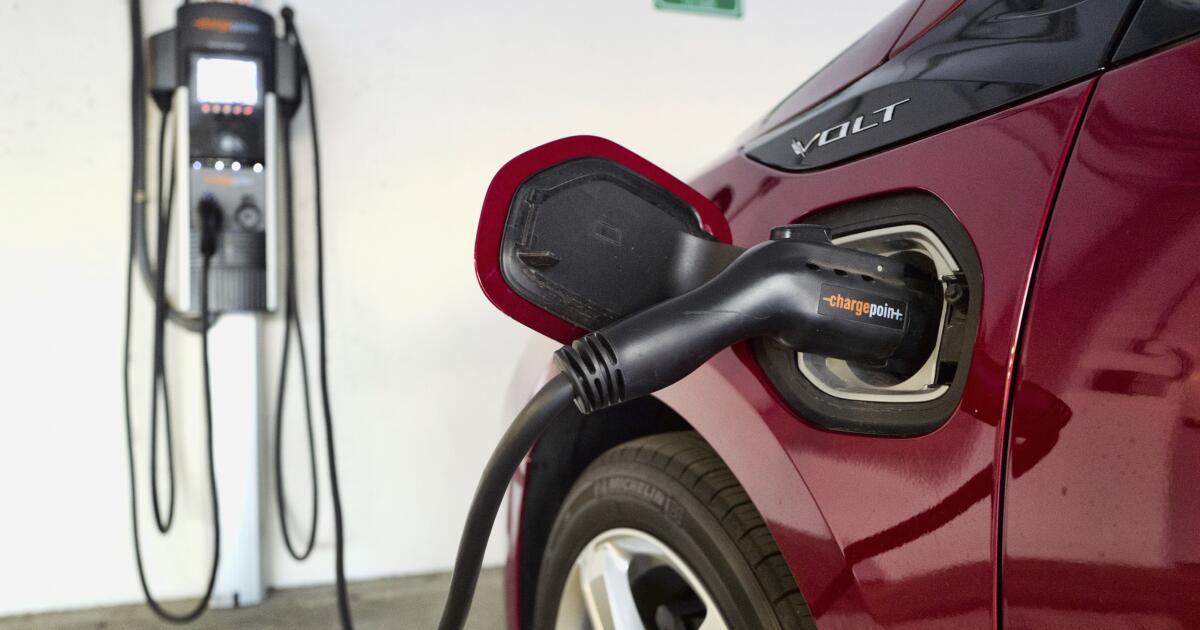
California is bringing back EV rebates. This is how to get one
-
 Entertainment45 minutes ago
Comedy saved her life. Now Teruko Nakajima’s ‘Made in America’ is saving others

