As technology continues to intertwine with our daily lives, the realm of health and fitness has seen a significant transformation with the advent of smart bands. These innovative wearable devices go beyond traditional fitness trackers, offering a plethora of features designed to monitor various aspects of health and provide actionable insights.
In the UAE, where a culture of wellness is thriving, these smart bands have gained immense popularity among individuals seeking to optimize their health routines. From sleek designs to advanced features like heart rate monitoring, sleep tracking, and activity analysis, these wearables offer comprehensive insights to users about their lifestyles. Delve into the top 10 smart bands that are leading the charge in revolutionizing health and fitness practices.
List of top fitness bands in UAE online
1. Xiaomi Smart Band 8 Pro
Team ProductLine
Xiaomi Smart Band 8 Pro boasts a stunning 1.74″ AMOLED screen with a 60Hz high refresh rate and 336 PPI resolution. Encased in Corning GG3 cover glass for enhanced durability, this smart band features an ambient light sensor for automatic brightness adjustment. With advanced 4-channel monitoring, including all-day SpO2 level tracking, continuous sleep monitoring, and 24-hour heart rate monitoring, it offers unparalleled health insights. Offering 150+ workout modes and 10 on-wrist running courses, it motivates with vibration reminders. With built-in GNSS for precise positioning, up to 14-day battery life, and 5ATM water resistance, it’s your ultimate fitness companion. Features –
Advertisement
1.74” AMOLED screen
60Hz high refresh rate
336PPI Corning GG3 cover glass
Ambient light sensor
Automatic display brightness adjustment
All-day SpO2 level tracking
Continuous sleep monitoring
24-hour heart rate monitoring
Sleep breathing monitoring
150+ workout modes
10 on-wrist running courses
Built-in GNSS
Up to 14-day battery life
5ATM water resistance
Support for 5-star positioning system (Beidou, GPS, GLONASS, Galileo, qzss)
4-channel monitoring for increased heart rate and blood oxygen
Buy Xiaomi Smart Band 8 Pro
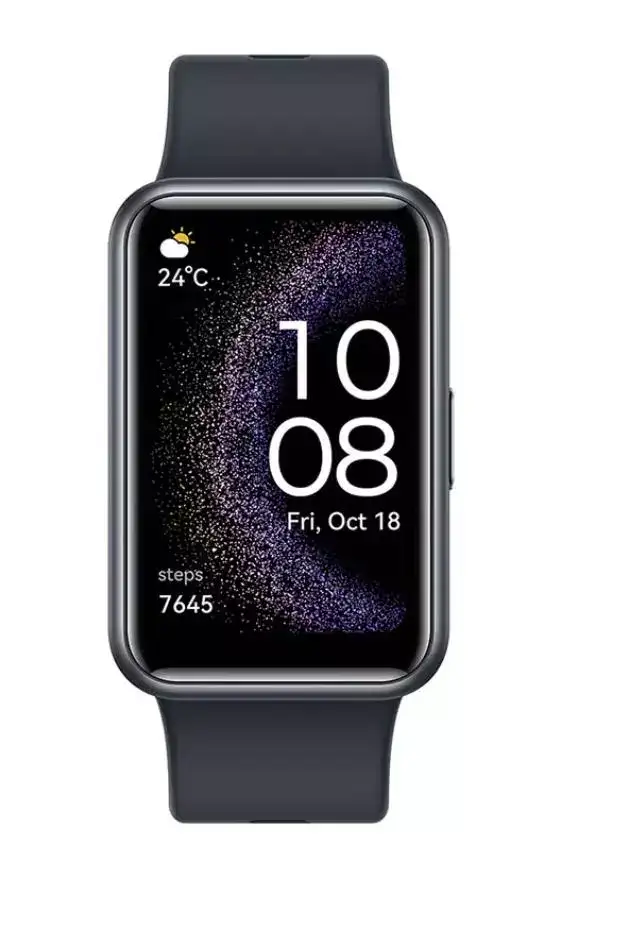
2. Huawei WATCH FIT Special Edition Smart Watch
Team ProductLine
With a bright 1.64-inch HD AMOLED display for clear images, we present the Huawei Watch Fit SE in Starry Black. It provides accurate position tracking and comprehensive health tracking with built-in GPS and automated SpO2 monitoring. Its long-lasting polycarbonate construction guarantees longevity, and its adjustable band offers a comfortable fit for all users. It improves communication while on the go and is compatible with both iOS and Android smartphones. It also offers quick replies for third-party apps. Features –
1.64-inch HD AMOLED display
Automatic SpO2 monitoring
Built-in GPS
Polycarbonate material
GPS connection type
Color: Starry Black
One size adjustable band
Huawei Watch Fit trending
Smartwatch dial size: 1.64 inches
Buy Huawei WATCH FIT Special Edition Smart Watch
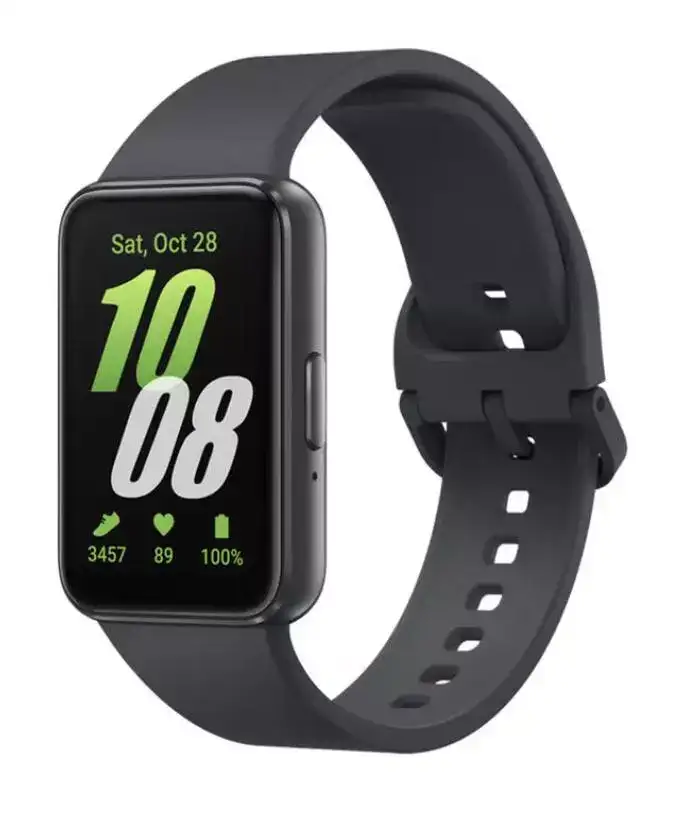
3. Samsung Fit 3 Smartwatch
Team ProductLine
The Samsung Fit 3 Smartwatch in Gray boasts a suite of sensors including accelerometer, barometer, gyro sensor, optical heart rate sensor, and light sensor for comprehensive activity tracking. With Bluetooth v5.4 connectivity, it ensures seamless synchronization with compatible devices. Notifications are discreetly delivered through vibration alerts. This sleek wearable combines functionality with style, providing users with real-time health insights and notifications to keep them informed and motivated throughout the day. Features –
Amoled Display
Accelerometer
Barometer
Gyro Sensor
Optical Heart Rate Sensor
Light Sensor
Bluetooth version: Bluetooth v5.4
Notification type – Vibrate
Buy Samsung Fit 3 Smartwatch
4. Xiaomi Band 7 Pro
Team ProductLine
The Xiaomi Mi Smart Band 7 Pro impresses with its 1.64-inch AMOLED screen, offering vibrant visuals at 280×456 pixels resolution with 326PPI and an Always-on display feature. With over 180 built-in watch faces, users can personalize their experience. This smart bracelet is equipped with built-in GPS, NFC, GLONASS, Galileo, Beidou, and QZSS for precise tracking. Additionally, features like Wrist Voice Assistant Xiao AI, Quick Call Reply, and 5 ATM waterproofing make it a versatile companion for daily activities. Features –
AMOLED Screen
GPS
Blood Oxygen Monitoring
Fitness Tracking
Waterproof (5 ATM)
Wrist Voice Assistant Xiao AI
Quick Call Reply
Buy Xiaomi Band 7 Pro
5. Huawei Smart Band 7
Team ProductLine
The HUAWEI Smart Band 7 in Graphite Black features a 1.47-inch AMOLED FullView display, offering a 148% larger viewable area and a 64% screen-to-body ratio. With a high-resolution 194 x 368 display and 282 PPI, it delivers stunning visuals. The band boasts 2 weeks of battery life, 96 different exercise modes, and continuous SpO2 monitoring. Its customizable watch faces and interchangeable straps ensure a personalized experience, while features like heart rate monitoring and smartphone unlocking enhance usability and convenience. Features –
Personal Activity Intelligence (PAI) Vitality Index
Buy Huawei Smart Band 7
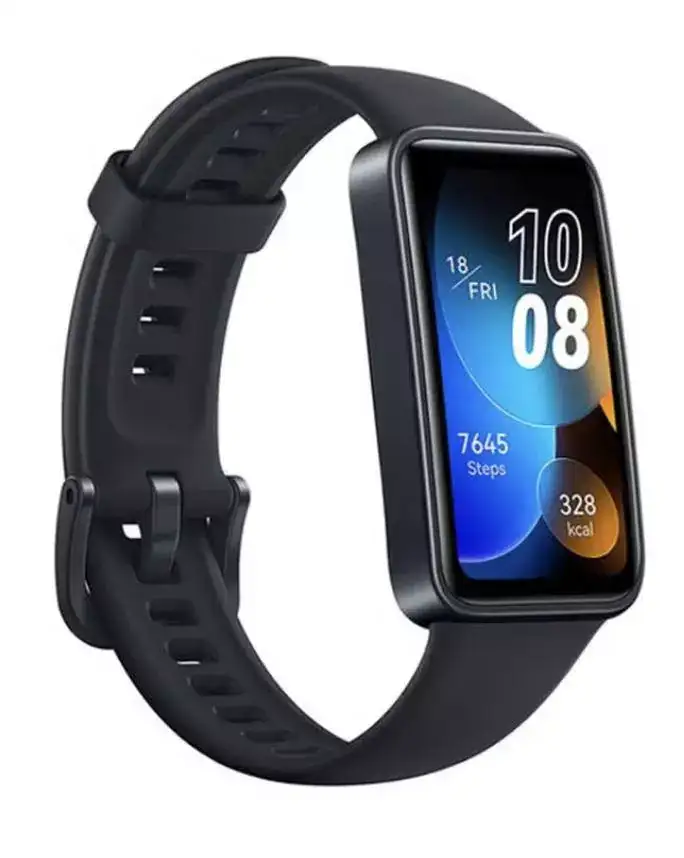
6. Huawei Band 8 Smart Watch
Team ProductLine
The HUAWEI Band 8 epitomizes sophistication with its ultra-thin design, scientific sleep tracking capabilities, and long-lasting battery life. Its AMOLED bezel-less screen and angular design exude elegance, showcasing that style goes beyond mere aesthetics. Despite its sleek profile, this smartwatch offers a wealth of features that enhance both style and functionality. With its minimalist yet powerful design, the HUAWEI Band 8 is the epitome of elegance and innovation, seamlessly blending into your everyday lifestyle. Features –
Ultra-thin design
Scientific sleep tracking
Long battery life
Bezel-less screen
Angular design
Ultra-Thin Design
Scientific Sleeping Tracking
Buy Huawei Band 8 Smart Watch
7. Xiaomi Smart Band 7
Team ProductLine
Xiaomi Smart Band 7 in sleek black features a vibrant 1.62″ AMOLED screen with 24% more visible area than its predecessor. With a new UI/UX design, it displays detailed information on every page, enhanced by a new generation chipset for smoother animations. Enjoy up to 14 days of battery life for normal daily use and a 5ATM waterproof rating for swimming. This stylish accessory adds flair to any look and is effortlessly portable for your on-the-go lifestyle. Features –
1.62″ AMOLED screen
24% larger visible area than mi smart band 6
New UI/UX design
New generation chipset
Smoother animation effects
Up to 14-days battery life
5ATM waterproof level
Suitable for swimming
Adds style to your look and easy to carry everywhere
Buy Xiaomi Smart Band 7
8. Xiaomi Smart Band 8
Team ProductLine
The Xiaomi Smart Band 8 in Graphite Black boasts a vibrant 1.62-inch AMOLED display with a resolution of 490×192 pixels and 326 ppi, offering crisp visuals at a smooth 60 Hz refresh rate. With over 200 custom watch faces, users can personalize their device to suit their style. Featuring heart rate and sleep monitoring, as well as 150+ workout modes, it provides comprehensive health and fitness tracking. With an impressive battery life of up to 16 days and Bluetooth 5.1 BLE connectivity, it ensures long-lasting performance and seamless connectivity. Features –
1.62 Inch AMOLED
490 x 192 pixels
326 ppi
60 Hz
200+ Custom watch faces
Heart rate and sleep monitoring
150+ Workout modes
Up to 16 days battery life
Bluetooth 5.1 BLE connectivity
Buy Xiaomi Smart Band 8
9. Xiaomi Smart Band 8 Active
Team ProductLine
Xiaomi Smart Band 8 Active features a vibrant 1.47″ TFT display for easy viewing of information. With its ultra-slim body measuring just 9.99mm, it offers a lightweight and comfortable wearing experience. Enjoy full-scale fitness tracking with features like all-day heart rate monitoring, advanced sleep tracking, and all-day SpO2 monitoring. Customize your style with colorful TPU straps and over 100 watch faces, while its 5ATM water resistance allows for swimming. With up to 14 days of battery life and 50+ workout modes, including 10 professional modes, it caters to sports beginners and enthusiasts alike. Features –
Vibrant 1.47″ TFT display
Light 9.99 mm ultra-slim body
Full-scale fitness tracking
All-day heart rate monitoring
Advanced sleep tracking
All-day SpO2 monitoring
3 colorful TPU straps
100+ watch faces
Customizable photo display
Water resistant up to 50m (5ATM)
Up to 14-days for normal daily use
50+ Workout modes
Buy Xiaomi Smart Band 8 Active
10. Xiaomi Redmi Smart Band 2
Team ProductLine
Experience fitness in a big way with the Xiaomi Redmi Smart Band 2, featuring a vibrant 1.47″ TFT display that provides clear and vivid visuals. With over 30 sports modes, it offers versatility to match various fitness activities. Plus, with water resistance up to 50m, it’s perfect for swimming and water sports. Enjoy uninterrupted tracking with up to 14 days of battery life, ensuring you stay connected to your fitness journey for longer periods. Features –
Vibrant 1.47″ TFT display
30+ sports modes
Water resistant up to 50m
14 days Battery Life
Water Resistant Up To 50 m
Adjustable Band
Buy Xiaomi Redmi Smart Band 2
FAQs about best smart bands in UAE
Q1. What are the key features to consider when choosing a smart band?
Ans. When choosing a smart band, consider factors such as display type, battery life, health tracking capabilities (including heart rate monitoring, sleep tracking, and activity tracking), water resistance, compatibility with your smartphone, and additional features like GPS and smartphone notifications.
Q2. Do smart bands have GPS capabilities for accurate location tracking?
Ans. Some smart bands come with built-in GPS capabilities for accurate location tracking, while others rely on connected GPS through your smartphone. If GPS tracking is important to you, make sure to choose a smart band that offers this feature.
Q3. What are some of the most popular brands of smart bands available in the UAE?
Ans. Some popular smart band brands in the UAE include Xiaomi, Huawei, Samsung, Fitbit, and Garmin. Popular models may vary depending on features, price, and user preferences.
Q4. Can smart bands display smartphone notifications such as calls and messages?
Ans. Yes, many smart bands can display smartphone notifications, including calls, messages, emails, and app notifications. However, the level of notification support may vary between different models.
Disclaimer : The above content is non-editorial and produced by a third party advertiser. Times Internet Limited/ Economic Times does not guarantee, vouch for or endorse any of the content or its genuineness. The product prices mentioned in the article are subject to change including depending upon offers given by Amazon.
To help you do this, we’ve tapped our Start TODAY experts for simple tips to lighten up meals, move in ways that boost metabolism and and refocus our mindset to get motivated to keep working toward your goals. Apply their strategies and finish the month feeling lighter, more energized and motivated to move forward. Here’s the plan to make it happen:
>>Download the 31-day calendar here
31-Day HIIT & Walking Challenge
This month’s workout plan is focused on short workouts that pack a punch. “HIIT workouts give you a bigger bang for your workout buck! They provide a more efficient workout because you’re alternating the pace and intensity rather than sticking to a steady, moderate pace,” says Mansour. “Changing things up with HIIT prevents boredom and keeps your muscles guessing. This is how we can get the body to change — whether that change is speeding up your metabolism, burning more calories, building muscle, losing weight, or just improving overall health — keeping your body guessing is the magic ticket to seeing results!”
Active recovery days include stretching to improve flexibility and walking for a cardiovascular workout that aids muscle recovery. When weather permits, Mansour encourages people to get outside on walking days. “Walking outdoors isn’t just a workout, it’s a chance to breathe in fresh air and get out of the house to change your environment,” she says. “Each time you go outside on a walk, even if you go on the same path, you’ll see or feel something different. Maybe it’s a change in weather, plants or flowers, people or things. Prioritizing taking your walk outside can hugely benefit your mental health. Getting out of your regular environment and into nature can be a form of meditation, too.”
Get the full 31-day workout plan with unique workouts sent to you daily — plus, walking podcasts, healthy spring recipes and mindfulness tools — in the Start TODAY app!
Advertisement
Lighten up comfort food favorites by adding seasonal ingredients, like in this Spring Asparagus Pasta.
3 Simple Spring Diet Tips
In addition to mixing up your workout routine, use spring as an opportunity to start lightening up your meals by packing them with seasonal ingredients. Start TODAY dietitian Natalie Rizzo shares her top tips:
Incorporate more seasonal foods. After a long winter of eating the same foods, your palate is ready for a change! Aim to add at least one spring fruit or vegetable to your meals each day, like asparagus, peas, spinach, radishes, citrus or strawberries. This Spring Asparagus Pasta is a simple weeknight dinner that feels both light and comforting. Seasonal produce is fresher, more flavorful, and an easy way to naturally boost vitamins and fiber. Plus, seasonal produce is more affordable than other items in the produce section.
Use fresh herbs to brighten up your dishes. Fresh herbs like basil, cilantro, parsley, mint, or dill can instantly upgrade simple meals without extra salt or heavy sauces. Sprinkle them on salads, roasted veggies, eggs, soups, or grain bowls for a burst of spring flavor. Cilantro is the perfect finish to this Mexican Stuffed Sweet Potato, while herbs are blended into cottage cheese in this Herby Cottage Cheese Toast with Tomato recipe for a pop of fresh flavor.
Shift from heavy comfort meals to balanced plates. As the weather warms up, it’s time to move away from heavy comfort foods and embrace lightened up spring dishes. Build plates with a mix of lean protein, whole grains or starchy veggies, and plenty of colorful produce. Think roasted veggie grain bowls, hearty salads like this BBQ Chicken Quinoa Salad, or simple stir-fries instead of creamy casseroles or heavy stews.
A sprinkle of fresh cilantro is the perfect finish to this Mexican Stuffed Sweet Potato.
Spring Clean Your Mindset with This Mental Health Exercise
Yes, we are working to propel ourselves forward toward our health goals, but an important part of that process is slowing down and reflecting.
Getting permission not to rush in a world that feels like it’s moving faster than we can keep up is a reminder that most of us need.
Yasmine Cheyenne, start TODAY mindfulness expert
“Getting permission not to rush in a world that feels like it’s moving faster than we can keep up is a reminder that most of us need, but how often would we admit that?” says Cheyenne. “ When the to-do list feels long, and we’re trying to get everything done, we often say the opposite, disregarding how we feel, and push ourselves. Yes, we all have deadlines and things that need to be done. But we also need the reminder to take care while handling our responsibilities.”
This can be easier said than done. So Cheyenne offers up a simple exercise to help: Write down the words you need to hear each day to make yourself a priority and work toward your goals. Put them somewhere you see often, like your fridge or bathroom mirror, and recite them out loud daily.
“This is a perfect example of a reminder that seems small, but can come at the perfect time and help us care for ourselves,” she explains. “One of my favorite examples is: Take it slow and don’t rush, your nervous system deserves peace.”
Advertisement
“When you tell yourself the thing you’ve been needing to hear, it allows you to admit the quiet rumbling within you and take the steps you need. It might be admitting ‘I’m tired and will give myself an early night this week.’ Or you’re saying ‘I’m so proud of the way I’ve committed to moving my body everyday.’ Whether you’re cheering yourself on or reminding yourself of what you need, we don’t always slow down enough to hear what we need from ourselves, and this practice is a great way to start.”
Talking out loud to yourself may feel strange at first, but Cheyenne says over time it will help shift your mindset and translate those words into action. “When we hear ourselves recite these words, it’s like we’re planting positive seeds within us. The more we say what we need, the more we remember it, and we’re more likely to follow through and care for ourselves,” she says. “Our actions really start with the words we say to ourselves. Reading them out loud helps us rewire the way we talk to ourselves and that inner shift is exactly what opens the door to transformation.”
Join our live “Spring Reset Workshop” on March 22 to get one-on-one coaching from Yasmine Cheyenne and connect with other Start TODAY members. Sign up here!
If you’ve ever wanted to lose weight, you’ve probably heard the phrase ‘calories in versus calories out’. While it’s true to a degree, losing weight in menopause isn’t about eating less, but rather eating differently.
Speaking to fitness coach Loretta Hogg, Dr Stacy Sims says: “One of the first things that women often do, because we grew up in an era of calories in, calories out, less calories means fat loss. That is not true because if you are not eating enough, your body holds on to fat.”
This is called the ‘starvation response’, and it’s the body’s way of protecting itself when food is restricted. Metabolism slows down, hunger hormones increase, and fat stores are preserved for survival.
“Staying adequately fuelled” and strength training regularly is what’s actually needed to lose weight while managing our hormone levels in menopause. “When we’re looking at how we’re going to budge some of the meno-pot, we really want to focus on getting strong and building that muscle because if we are working on muscle and our whole focus is muscle and bone, then we end up eating accordingly.”
Advertisement
Fibre and protein are the food groups to focus on, she says. They are filling, aid muscle growth (and so help maintain a healthy metabolism), help reduce food cravings, and provide us with the key nutrients our body needs when oestrogen levels fall.
We know there’s a huge market for protein powders, bars and other supplements, but actually, most of us can get what we need from eating high-protein foods.
The amount of protein you need in menopause depends on your weight. “The recommended protein intake for women over 45 is approximately 1 to 1.5g of protein per kilogram of body weight per day, which is higher than the general recommendation for younger adults,” Dr Nadira Awal, a Doctify-rated GP who specialises in women’s health and menopause, previously told woman&home. You can work out your personal recommendation using menopause specialist Dr Mary Claire Haver’s perimenopause protein calculator.
Sign up to our free daily email for the latest royal and entertainment news, interesting opinion, expert advice on styling and beauty trends, and no-nonsense guides to the health and wellness questions you want answered.
Dr Sims says many women are “afraid of abundance” when it comes to eating, but emphasises that “without abundance we can’t lose fat”. “Let’s change the focus on not what we want to lose, but what we want to gain. We want to gain bone, we want to gain muscle. We want to fuel for that, so then the body fat comes off,” she tells Loretta.
Advertisement
Dr Sims says the best way for us to gain this muscle and bone growth is through strength training. “We need to focus on heavy lifting,” she explains in another video on her Instagram account. “The caveat here is that most perimenopausal women haven’t had a long history in strength training, and it’s a learned skill.” She says consistency is key, and starting off small, even just focusing on movement without weights, before you start adding some load. “But the goal is to get into heavy resistance training, where we have low reps with a heavy weight,” she says.
Dr Sims says it’s “absolutely safe” for women to lift heavy during perimenopause and menopause – and it’s something we should all be doing. She is keen to emphasise that it’s never too late to start, and that “what matters is your form and your function”.
If you’re new to lifting weights, try a simple dumbbell workout at home and work your way up from there. If you have the means, consult a personal trainer for guidance on developing a workout plan.
Sleep is another lifestyle aspect that Dr Sims says says may affect how you lose weight. She says poor sleep “creates metabolic disturbance and dysfunction and increases fat gain”. Improving our sleep quality can lead to body composition improvements in as little as two to three weeks. High levels of cortisol, caused by poor sleep and ongoing stress, also makes fat loss harder as our bodies hold onto energy rather than using it.
Some key ways to improve sleep include going to bed and waking up at the same time every day, limiting blue light exposure at bedtime, and cutting down on your alcohol and caffeine intake.
Editor’s note: This article is the seventh in an eight-part series led by retired General James Mingus, the thirty-ninth vice chief of staff of the Army, on transforming the Army to meet the challenges of tomorrow’s battlefield. You can read other articles in the series here.
The battlefield in America’s next war will offer no sanctuary. The war won’t be fought from forward operating bases equipped with elaborate gyms, contractor-provided dining facilities, or coffee shops. The battlefield will be austere, harsh, and unrelentingly violent, with victory only possible by combining physical strength, endurance, and a will to prepare.
The Army’s Holistic Health and Fitness (H2F) program is the bedrock upon which this preparation begins. Winning America’s next war requires an Army that can get to the fight, win the fight, and get home from the fight—a mission profile that demands not just fit soldiers built for endurance, but warrior athletes built for endurance and able to leverage strength, speed, and power, and grounded in sound sleep and nutrition.
Culture Shift Begins with Mindset Shift
For the last several decades, the Army took pride in fielding formations rooted in a physical fitness culture relying heavily on push-ups, sit-ups, and miles of running and ruck marching. Physical training began predictably after saluting the flag at 0630 and ended promptly when the basic exercises, calisthenics, and formation run were complete. It was one-dimensional, unimaginative, boring, and, ironically, lazy. Army fitness during this period was solely focused on physical endurance.
Advertisement
In the early 2000s, however, Army fitness began to change, led by special operations units like the 75th Ranger Regiment, which began experimenting with trending fitness regimens like Gym Jones, CrossFit, and Mountain Athlete. By combining emerging principles from several of these programs, special operations units began designing their own programs, such as the Ranger Athlete Warrior program. The rest of the active Army quickly started to model these programs, and the first H2F pilot kicked off in 2018.
Advances in exercise science and twenty years of war helped reframe the Army’s fitness mindset to encompass mental, physical, nutritional, and sleep dimensions. This mindset shift forms the basis of the H2F culture, changing how we train and care for soldiers. The focus is now on building strength and resilience like professional athletes—or more fittingly, warrior athletes. Where mission endurance was the goal before, tactical athleticism is now the goal, with an emphasis on strength, speed, power, and agility.
You Can’t Fake Results
A key part of any fitness program is the ability to measure its effectiveness, and in only a few short years, the return on investment for the H2F program has been profound. Currently sixty-six brigades have an H2F performance team, which consists of twenty-two professionals: a program director, dietitian, physical therapist, and occupational therapist; seven strength and conditioning coaches; four athletic trainers; one cognitive performance specialist; and six military personnel. By 2029, the program will expand to cover the entire active Army, as well as four states of Army National Guard and two Army Reserve commands.
According to analysis from the US Army Research Institute of Environmental Medicine, if H2F had been implemented across the entire Army, over a five-year period it would have added 1,080 deployable soldiers to the fighting force. If that’s not compelling enough, also consider these complementary H2F data points compiled by the Center for Initial Military Training Research and Analysis team after analyzing data from 2019 to 2023:
Advertisement
61 percent decrease in musculoskeletal injury referrals
44 percent decrease in behavioral health profiles
79 percent decrease in substance abuse cases
22 percent decrease in fitness test failures
33 percent increase in expert rifle marksmanship qualification
Expanding the Tools
As part of continuous transformation, the Army is looking for unique ways to leverage technology to enhance the H2F program. Several units are experimenting with wearables like rings and watches that measure sleep efficiency, heart rate variability, and blood oxygen saturation—providing rich data to inform approaches to physical, nutritional, and sleep aspects of fitness. Today, entire Army divisions are turning physiological data into leader decision-making information. A company commander who knows his or her soldiers’ sleep scores, for example, is equipped with data to combine with other information to help select the most well-rested platoon to lead a dangerous mission. Individual soldiers will also learn the correlations that exist between their fueling, recovery, and performance habits, which will help in multiple facets of their personal lives.
The Army is also continually working to improve facilities and services that support H2F. Most units now have access to twenty-four-hour functional fitness gyms on post and many units utilize fitness containers—effectively, gyms in a box. Plans are also in place to build additional facilities to ensure soldiers at every post have adequate equipment to train. To improve nutrition, the Army is experimenting with campus-style dining facilities that will supplement, and in some cases replace, traditional dining facilities—affording soldiers a myriad of quick, 24/7 accessible healthy food options. A no excuse not to work out and no excuse not to eat healthy mentality now abounds across the Army.
Soldiering has no offseason and no time-outs, and wars wait on no one. When America calls, the Army responds. Unlike professional athletes who can vary training volume, intensity, and specific exercises over planned cycles or offseasons, a practice known as performance periodization, soldiers have no such luxury. Tactical athleticism via compound periodization is the goal for soldiers—ensuring peak performance at all times by developing key physical attributes (e.g., strength, endurance, and power) year-round to maximize efficiency, prevent burnout, and improve overall warfighting readiness. The H2F tools highlighted above aid in measuring and maximizing this readiness.
What’s Next?
Imagine two Army squads ascending Colorado’s Pikes Peak carrying fifty-pound fighting loads. Squad A trained to get to the top through push-ups, sit-ups, and miles of running. The soldiers of Squad B are warrior athletes who took the H2F approach. When Squad A’s soldiers finally struggle to the top, they’re just happy to be mission complete and they flop on the ground. The soldiers of Squad B assault the mountain, and when they get to the top, they still have enough juice to rip the arms off their adversaries and steamroll into the next mission. In their post-hike squad photo, they’re all standing tall—straight backs, satisfied smiles, and trap muscles extending inches above their shoulders so they almost appear to have no necks. For them the mission is just getting started, and their smirks seem to say, “Is that it? What’s next?”
Advertisement
Welcome to the No Neck Army.
Retired General James Mingus served as the thirty-ninth vice chief of staff of the Army.
Colonel Graham White is an infantry officer and the executive officer to the vice chief of staff of the Army.
The views expressed are those of the authors and do not reflect the official position of the United States Military Academy, Department of the Army, or Department of Defense.