
As technology continues to intertwine with our daily lives, the realm of health and fitness has seen a significant transformation with the advent of smart bands. These innovative wearable devices go beyond traditional fitness trackers, offering a plethora of features designed to monitor various aspects of health and provide actionable insights.
In the UAE, where a culture of wellness is thriving, these smart bands have gained immense popularity among individuals seeking to optimize their health routines. From sleek designs to advanced features like heart rate monitoring, sleep tracking, and activity analysis, these wearables offer comprehensive insights to users about their lifestyles. Delve into the top 10 smart bands that are leading the charge in revolutionizing health and fitness practices.
List of top fitness bands in UAE online
1. Xiaomi Smart Band 8 Pro
Team ProductLine
Xiaomi Smart Band 8 Pro boasts a stunning 1.74″ AMOLED screen with a 60Hz high refresh rate and 336 PPI resolution. Encased in Corning GG3 cover glass for enhanced durability, this smart band features an ambient light sensor for automatic brightness adjustment. With advanced 4-channel monitoring, including all-day SpO2 level tracking, continuous sleep monitoring, and 24-hour heart rate monitoring, it offers unparalleled health insights. Offering 150+ workout modes and 10 on-wrist running courses, it motivates with vibration reminders. With built-in GNSS for precise positioning, up to 14-day battery life, and 5ATM water resistance, it’s your ultimate fitness companion. Features –
Advertisement
1.74” AMOLED screen
60Hz high refresh rate
336PPI Corning GG3 cover glass
Ambient light sensor
Automatic display brightness adjustment
All-day SpO2 level tracking
Continuous sleep monitoring
24-hour heart rate monitoring
Sleep breathing monitoring
150+ workout modes
10 on-wrist running courses
Built-in GNSS
Up to 14-day battery life
5ATM water resistance
Support for 5-star positioning system (Beidou, GPS, GLONASS, Galileo, qzss)
4-channel monitoring for increased heart rate and blood oxygen
Buy Xiaomi Smart Band 8 Pro
2. Huawei WATCH FIT Special Edition Smart Watch
Team ProductLine
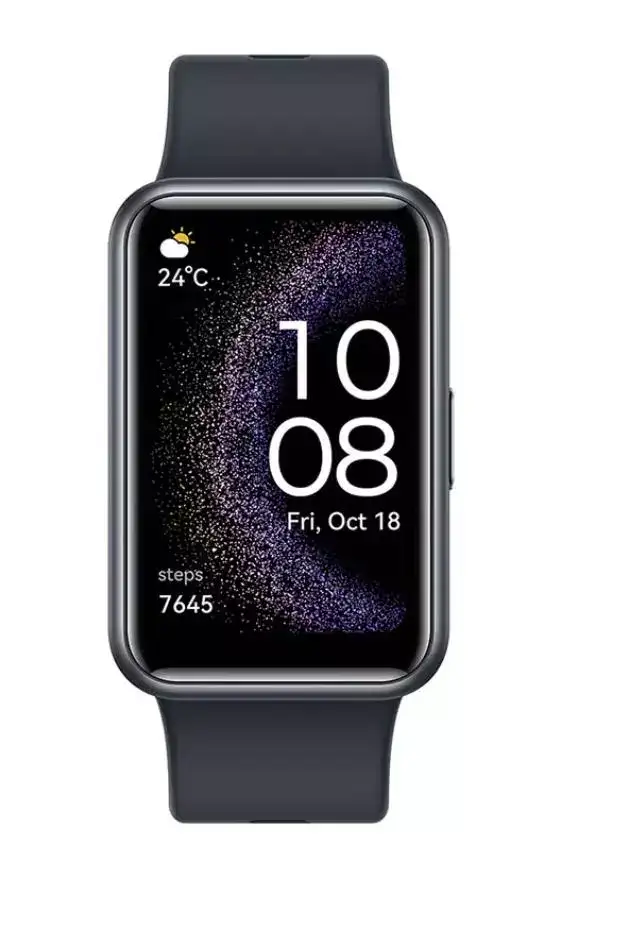
With a bright 1.64-inch HD AMOLED display for clear images, we present the Huawei Watch Fit SE in Starry Black. It provides accurate position tracking and comprehensive health tracking with built-in GPS and automated SpO2 monitoring. Its long-lasting polycarbonate construction guarantees longevity, and its adjustable band offers a comfortable fit for all users. It improves communication while on the go and is compatible with both iOS and Android smartphones. It also offers quick replies for third-party apps. Features –
1.64-inch HD AMOLED display
Automatic SpO2 monitoring
Built-in GPS
Polycarbonate material
GPS connection type
Color: Starry Black
One size adjustable band
Huawei Watch Fit trending
Smartwatch dial size: 1.64 inches
Buy Huawei WATCH FIT Special Edition Smart Watch
3. Samsung Fit 3 Smartwatch
Team ProductLine
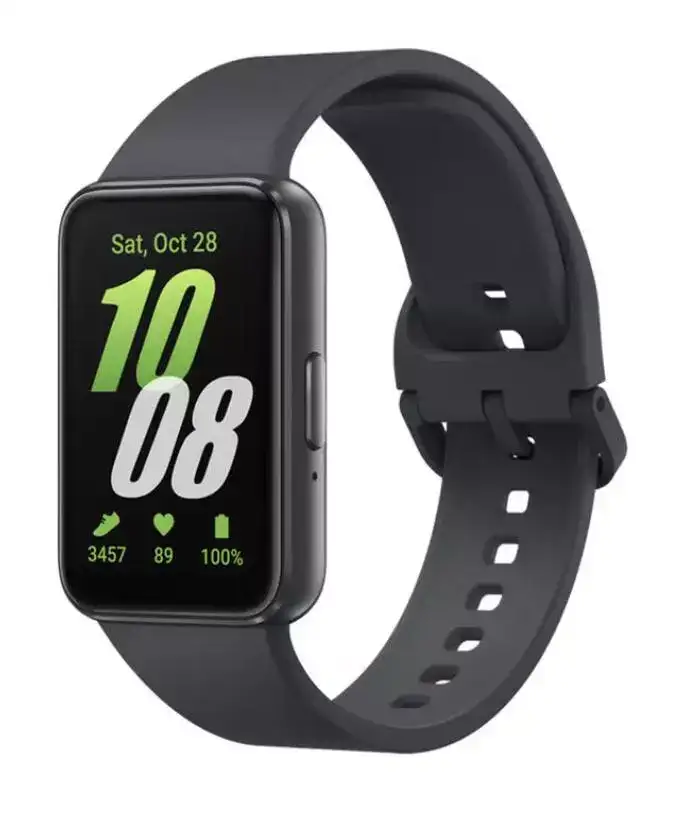
The Samsung Fit 3 Smartwatch in Gray boasts a suite of sensors including accelerometer, barometer, gyro sensor, optical heart rate sensor, and light sensor for comprehensive activity tracking. With Bluetooth v5.4 connectivity, it ensures seamless synchronization with compatible devices. Notifications are discreetly delivered through vibration alerts. This sleek wearable combines functionality with style, providing users with real-time health insights and notifications to keep them informed and motivated throughout the day. Features –
Amoled Display
Accelerometer
Barometer
Gyro Sensor
Optical Heart Rate Sensor
Light Sensor
Bluetooth version: Bluetooth v5.4
Notification type – Vibrate
Buy Samsung Fit 3 Smartwatch
4. Xiaomi Band 7 Pro
Team ProductLine
The Xiaomi Mi Smart Band 7 Pro impresses with its 1.64-inch AMOLED screen, offering vibrant visuals at 280×456 pixels resolution with 326PPI and an Always-on display feature. With over 180 built-in watch faces, users can personalize their experience. This smart bracelet is equipped with built-in GPS, NFC, GLONASS, Galileo, Beidou, and QZSS for precise tracking. Additionally, features like Wrist Voice Assistant Xiao AI, Quick Call Reply, and 5 ATM waterproofing make it a versatile companion for daily activities. Features –
AMOLED Screen
GPS
Blood Oxygen Monitoring
Fitness Tracking
Waterproof (5 ATM)
Wrist Voice Assistant Xiao AI
Quick Call Reply
Buy Xiaomi Band 7 Pro
5. Huawei Smart Band 7
Team ProductLine
The HUAWEI Smart Band 7 in Graphite Black features a 1.47-inch AMOLED FullView display, offering a 148% larger viewable area and a 64% screen-to-body ratio. With a high-resolution 194 x 368 display and 282 PPI, it delivers stunning visuals. The band boasts 2 weeks of battery life, 96 different exercise modes, and continuous SpO2 monitoring. Its customizable watch faces and interchangeable straps ensure a personalized experience, while features like heart rate monitoring and smartphone unlocking enhance usability and convenience. Features –
Personal Activity Intelligence (PAI) Vitality Index
Buy Huawei Smart Band 7
6. Huawei Band 8 Smart Watch
Team ProductLine
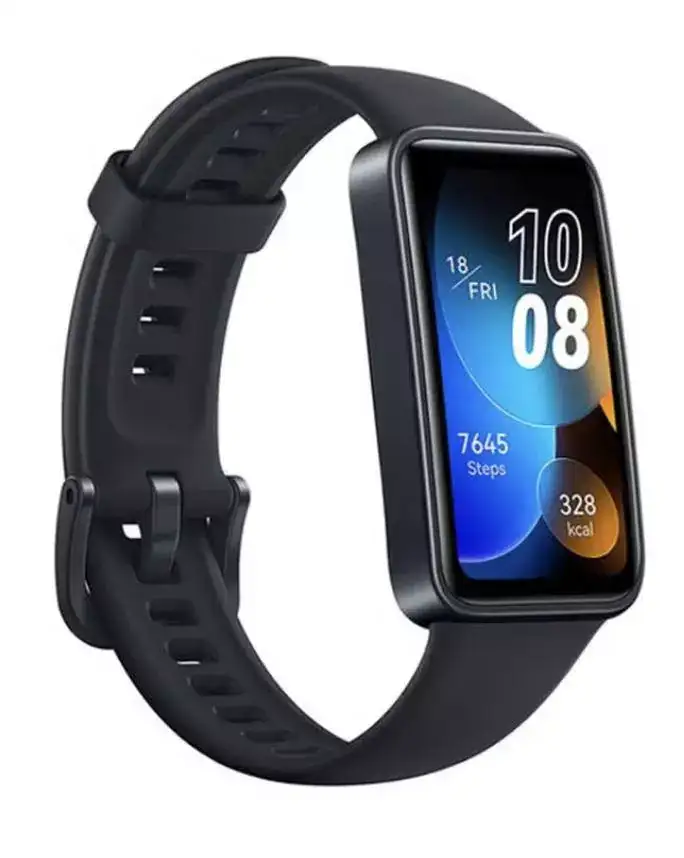
The HUAWEI Band 8 epitomizes sophistication with its ultra-thin design, scientific sleep tracking capabilities, and long-lasting battery life. Its AMOLED bezel-less screen and angular design exude elegance, showcasing that style goes beyond mere aesthetics. Despite its sleek profile, this smartwatch offers a wealth of features that enhance both style and functionality. With its minimalist yet powerful design, the HUAWEI Band 8 is the epitome of elegance and innovation, seamlessly blending into your everyday lifestyle. Features –
Ultra-thin design
Scientific sleep tracking
Long battery life
Bezel-less screen
Angular design
Ultra-Thin Design
Scientific Sleeping Tracking
Buy Huawei Band 8 Smart Watch
7. Xiaomi Smart Band 7
Team ProductLine
Xiaomi Smart Band 7 in sleek black features a vibrant 1.62″ AMOLED screen with 24% more visible area than its predecessor. With a new UI/UX design, it displays detailed information on every page, enhanced by a new generation chipset for smoother animations. Enjoy up to 14 days of battery life for normal daily use and a 5ATM waterproof rating for swimming. This stylish accessory adds flair to any look and is effortlessly portable for your on-the-go lifestyle. Features –
1.62″ AMOLED screen
24% larger visible area than mi smart band 6
New UI/UX design
New generation chipset
Smoother animation effects
Up to 14-days battery life
5ATM waterproof level
Suitable for swimming
Adds style to your look and easy to carry everywhere
Buy Xiaomi Smart Band 7
8. Xiaomi Smart Band 8
Team ProductLine
The Xiaomi Smart Band 8 in Graphite Black boasts a vibrant 1.62-inch AMOLED display with a resolution of 490×192 pixels and 326 ppi, offering crisp visuals at a smooth 60 Hz refresh rate. With over 200 custom watch faces, users can personalize their device to suit their style. Featuring heart rate and sleep monitoring, as well as 150+ workout modes, it provides comprehensive health and fitness tracking. With an impressive battery life of up to 16 days and Bluetooth 5.1 BLE connectivity, it ensures long-lasting performance and seamless connectivity. Features –
1.62 Inch AMOLED
490 x 192 pixels
326 ppi
60 Hz
200+ Custom watch faces
Heart rate and sleep monitoring
150+ Workout modes
Up to 16 days battery life
Bluetooth 5.1 BLE connectivity
Buy Xiaomi Smart Band 8
9. Xiaomi Smart Band 8 Active
Team ProductLine
Xiaomi Smart Band 8 Active features a vibrant 1.47″ TFT display for easy viewing of information. With its ultra-slim body measuring just 9.99mm, it offers a lightweight and comfortable wearing experience. Enjoy full-scale fitness tracking with features like all-day heart rate monitoring, advanced sleep tracking, and all-day SpO2 monitoring. Customize your style with colorful TPU straps and over 100 watch faces, while its 5ATM water resistance allows for swimming. With up to 14 days of battery life and 50+ workout modes, including 10 professional modes, it caters to sports beginners and enthusiasts alike. Features –
Vibrant 1.47″ TFT display
Light 9.99 mm ultra-slim body
Full-scale fitness tracking
All-day heart rate monitoring
Advanced sleep tracking
All-day SpO2 monitoring
3 colorful TPU straps
100+ watch faces
Customizable photo display
Water resistant up to 50m (5ATM)
Up to 14-days for normal daily use
50+ Workout modes
Buy Xiaomi Smart Band 8 Active
10. Xiaomi Redmi Smart Band 2
Team ProductLine
Experience fitness in a big way with the Xiaomi Redmi Smart Band 2, featuring a vibrant 1.47″ TFT display that provides clear and vivid visuals. With over 30 sports modes, it offers versatility to match various fitness activities. Plus, with water resistance up to 50m, it’s perfect for swimming and water sports. Enjoy uninterrupted tracking with up to 14 days of battery life, ensuring you stay connected to your fitness journey for longer periods. Features –
Vibrant 1.47″ TFT display
30+ sports modes
Water resistant up to 50m
14 days Battery Life
Water Resistant Up To 50 m
Adjustable Band
Buy Xiaomi Redmi Smart Band 2
FAQs about best smart bands in UAE
Q1. What are the key features to consider when choosing a smart band?
Ans. When choosing a smart band, consider factors such as display type, battery life, health tracking capabilities (including heart rate monitoring, sleep tracking, and activity tracking), water resistance, compatibility with your smartphone, and additional features like GPS and smartphone notifications.
Q2. Do smart bands have GPS capabilities for accurate location tracking?
Ans. Some smart bands come with built-in GPS capabilities for accurate location tracking, while others rely on connected GPS through your smartphone. If GPS tracking is important to you, make sure to choose a smart band that offers this feature.
Q3. What are some of the most popular brands of smart bands available in the UAE?
Ans. Some popular smart band brands in the UAE include Xiaomi, Huawei, Samsung, Fitbit, and Garmin. Popular models may vary depending on features, price, and user preferences.
Q4. Can smart bands display smartphone notifications such as calls and messages?
Ans. Yes, many smart bands can display smartphone notifications, including calls, messages, emails, and app notifications. However, the level of notification support may vary between different models.
Disclaimer : The above content is non-editorial and produced by a third party advertiser. Times Internet Limited/ Economic Times does not guarantee, vouch for or endorse any of the content or its genuineness. The product prices mentioned in the article are subject to change including depending upon offers given by Amazon.
In a groundbreaking advancement poised to revolutionize dementia care, researchers have announced a comprehensive study protocol examining the influence of community-based structured group exercise programs on both cognitive and physical functions in older adults living with dementia. This randomized controlled trial, detailed in a recent publication slated for BMC Geriatrics in 2026, aims to explore the untapped potential of structured physical activity as a non-pharmacological intervention to slow cognitive decline and improve overall quality of life.
Dementia, a progressive neurodegenerative condition characterized by deteriorating memory, thinking, and motor skills, remains one of the most pressing global health challenges, especially as populations age worldwide. Traditional approaches have primarily focused on symptom management and pharmacological treatments, which often come with limited efficacy and undesirable side effects. Against this backdrop, physical exercise has emerged as a promising avenue, backed by neurobiological theories suggesting that physical activity may promote neuronal plasticity, enhanced cerebral blood flow, and reduced neuroinflammation.
The study underlines the importance of a community-based framework, which holds immense promise for scalability, accessibility, and sustained engagement. Community-based interventions leverage social support, environmental context, and local resources, creating an ecosystem that encourages consistency and motivation among older adults. It also introduces structured group exercise as opposed to individual exercise routines—infusing a social and interactive element believed to synergistically bolster cognitive engagement alongside physical exertion.
At its core, this research protocol delineates a comprehensive systematic design featuring randomization — the gold standard for clinical trials — ensuring that participants are evenly distributed among intervention and control groups to minimize bias. The intervention includes carefully tailored exercise regimens that combine aerobic, resistance, balance, and flexibility training. These multifaceted routines aim to target various physiological systems implicated in dementia progression, from cardiovascular health to motor coordination and muscle strength.
Emerging studies have shown that aerobic activities stimulate hippocampal neurogenesis, critical for memory and learning processes often impaired in dementia. Resistance training, meanwhile, supports muscular strength essential for daily activities, reducing fall risk and enhancing autonomy. Balance and flexibility exercises further contribute by improving proprioception and joint mobility, thereby mitigating mobility-related comorbidities. By integrating these elements into structured group calendars, researchers anticipate synergistic effects accumulating over the trial timeline.
Advertisement
Cognitively, the engagement associated with group exercise acts as a dual catalyst. Beyond the direct neuroprotective benefits of physical activity, the social interaction inherent in group settings stimulates cognitive domains such as attention, executive functions, and emotional regulation. Social isolation and loneliness have been consistently linked to accelerated cognitive decline; thus, group dynamics within this exercise framework may serve as a potent protective factor by nurturing community bonds and meaningful interpersonal connections.
The outcome measures designed for this trial span a range of validated neuropsychological and physical assessments. Cognitive outcomes include evaluations of global cognition, memory, executive function, and processing speed conducted via standardized instruments like the Mini-Mental State Examination (MMSE) and the Montreal Cognitive Assessment (MoCA). Physical parameters are meticulously assessed using tests such as gait speed, handgrip strength, and the Timed Up and Go (TUG) test, presenting a multidimensional view of functional status.
Importantly, the protocol emphasizes longitudinal follow-up to determine the persistence of any cognitive and physical benefits post-intervention, which is pivotal in discerning sustainable impacts rather than transient improvements. Additionally, the researchers have accounted for confounding variables including baseline physical activity levels, comorbidities, and medication use, thereby ensuring the robustness and generalizability of the findings.
The implications of positive outcomes from such a trial are vast. Demonstrated efficacy could reshape public health policies and clinical guidelines, reinforcing physical activity as an essential component of dementia management. Community centers, healthcare providers, and caregiving organizations might adapt to include tailored structured group exercise programs, thus democratizing access to an affordable, scalable intervention with minimal side effects.
Moreover, this research aligns with growing interdisciplinary perspectives that advocate for holistic management approaches — ones that incorporate biological, psychological, and social determinants of health. The integration of physical activity into care plans reinforces a paradigm shift from reactive to proactive and preventative models that empower older adults with dementia to maintain independence and dignity.
Advertisement
While challenges remain in delivering consistent, well-supervised exercise programs adapted to heterogeneous patient needs and functional capacities, this trial’s community-rooted design mitigates many logistical and motivational barriers. Leveraging local infrastructure and peer support creates a dynamic environment conducive to sustained participation—a crucial factor given historically high dropout rates in exercise interventions.
From a neurobiological standpoint, this initiative supports the evolving understanding of dementia as a modifiable disorder where lifestyle and environmental factors play significant roles. The interplay between exercise-induced neurotrophic factors such as brain-derived neurotrophic factor (BDNF), reduced oxidative stress, and enhanced cerebral angiogenesis may offer mechanistic insights into how structured physical activity slows neurodegenerative processes.
In conclusion, the launch of this randomized controlled trial heralds a promising avenue for dementia intervention research by meticulously investigating the dual benefits of physical exercise on cognitive and physical realms in a structured, community-based setting. Its innovative combination of rigorous scientific methodology and practical community implementation presents an exciting frontier in mitigating the global dementia burden.
For families, caregivers, healthcare professionals, and policymakers alike, this trial offers hope through a vision of dementia care that transcends pharmacological limitations and centers on empowering individuals via movement, social connection, and holistic well-being. The ultimate testament to this research will be its translation from protocol to practice—transforming insights into real-world impact.
Subject of Research: Effects of a community-based structured group exercise program on cognitive and physical function among older adults with dementia.
Advertisement
Article Title: Effects of a community-based structured group exercise program on cognitive and physical function among older adults with dementia: a randomized controlled trial study protocol.
Article References: Amin, A., Hossain, K.M.A., Uddin, M.R. et al. Effects of a community-based structured group exercise program on cognitive and physical function among older adults with dementia: a randomized controlled trial study protocol. BMC Geriatr (2026). https://doi.org/10.1186/s12877-026-07631-3
Image Credits: AI Generated
Tags: cerebral blood flow and cognitioncognitive improvement in dementiacommunity-based exercise programsdementia care innovationgroup exercise for dementianeuroinflammation reduction through exerciseneuroplasticity and exercisenon-pharmacological dementia interventionsphysical fitness in older adultsrandomized controlled trial dementiascalable dementia interventionssocial support in dementia care
A Shift in Scientific Understanding Reveals That the ‘Runner’s High’ Stems from a Complex Cocktail of Chemicals, Including Endocannabinoids, Which Can Be Triggered by Adjusting Duration and Social Context. The widely reported phenomenon of exercise-induced euphoria—often known as the “runner’s high”—is rooted in specific alterations to neurochemistry that generate feelings of hope, calmness, and social […]
Hip soreness is a terribly common issue—it’s something that I certainly suffer with—so I’m always trying to get to the bottom of where this soreness originates from and what you can do about it.
According to Dr Shady Hassan, MD, an interventional pain and sports medicine physician and the founder of NefraHealth, immobility is the root cause of this discomfort.
“Most immobility comes from two extremes: sustained stillness and repetitive overuse,” Hassan tells Fit&Well.
Latest Videos From
“For the average professional [desk worker], sitting for eight to 10 hours a day keeps the hip flexors in a shortened state. This is essentially a sitting penalty—the physical cost of a sedentary lifestyle.”
As a sports medicine specialist, Hassan sees the other extreme too, athletes with hip pain stemming from overuse.
Advertisement
“Soreness often stems from repetitive loading without adequate recovery, leading to micro-trauma in the labrum or surrounding tendons,” says Hassan.
Additionally, “when the muscles around the joint—like the psoas or glutes—become imbalanced, the brain locks down the joint to protect it, which we perceive as tightness.”
Start your week with achievable workout ideas, health tips and wellbeing advice in your inbox.
It’s not worth putting up with sore hips, because Hassan has seen how it can have a knock-on effect in other areas of the body.
“If your hips don’t move, your body will find that movement elsewhere,” he says.
Advertisement
He explains that the nearest joints—the lumbar spine and knees—are often the ones that take the strain.
“When the hips are locked, the lower back is forced to over-rotate or over-extend to compensate,” he says.
“Think of it like a rusty hinge on a door: if the hinge won’t move, the doorframe eventually starts to warp and crack under the pressure.”
“Stiff hips are a leading cause of disc herniations and facet joint pain because the spine is doing work it wasn’t designed to do.”
Advertisement
But Hassan is a specialist in injury prevention and offered a starting point for keeping your hips in good working order.
How to improve your hip mobility
Hassan says that the best way to prevent hip soreness is to consistently strengthen and stretch your hips in all the ways they can move.
“You have to train the hip in all three planes of motion,” he says. That means moving forward and backward (through the sagittal plane), side to side (the frontal plane) and rotating them (the transverse plane).
“Strengthening the gluteus medius is also non-negotiable—a stable pelvis protects the hip joint from unnecessary shearing forces,” he adds.
Hassan suggests the following three exercises if you are experiencing limited hip mobility.
Advertisement
1. 90/90 stretch
How to do a 90/90 Hip Stretch properly – CORRECT FORM IS ESSENTIAL – YouTube
Watch On
Time: 30-60sec each side
Why Hassan recommends it: “This is the gold standard for addressing both internal and external rotation simultaneously.”
How to do it:
Sit on the floor with your right leg in front of you, knee bent to 90°, and your left leg out to the side, with your knee bent to 90°.
Without bending your spine, lean slightly forward from your hips over your front shin—you should feel a stretch in your outer hip.
Hold for time, then repeat on the other side.
2. World’s greatest stretch
The World’s Greatest Stretch (Mobility Exercise) by Squat University – YouTube
Watch On
Time: 30-60sec each side
Why Hassan recommends it: “This is a dynamic movement that hits the hip flexors, hamstrings and thoracic spine.
How to do it:
Start in a high plank position, with your shoulders over your hands and your body in a straight line from head to heels.
Step your right foot to the outside of your right hand.
Lower your right elbow to the instep of your right foot.
Raise your right hand straight up, rotate your torso to face right and look up at your hand.
Continue for time, alternating between your elbow by your instep and your hand above you.
Return to the high plank position, then repeat on the other side.
3. Couch stretch
The Couch Stretch Done Correctly – YouTube
Watch On
Time: 30-60sec each side
Why Hassan recommends it: “Most people stretch their hip flexors incorrectly by arching their back—this version fixes that.”
Advertisement
How to do it:
Kneel with a couch behind you.
Place the top of your right foot on the couch keeping your right knee on the floor, then step your left foot in front of you.
Adjust your position so your left knee is bent to 90° and is directly above your left foot.
Tuck your tailbone under (posterior pelvic tilt) and squeeze your left glutes.
Raise your torso, lifting your hands off the floor—you should feel a stretch in the top of your right thigh.
Hold for time, then repeat on the other side.
Dr Shady Hassan MD
Dr Shady Hassan MD is the founder of NefraHealth, an interventional pain and sports medicine practice. He is board-certified in physical medicine and rehabilitation with subspecialty certification in both interventional pain medicine and sports medicine.
He completed his fellowship in interventional spine and sports medicine at Alabama Orthopedic Spine and Sports Medicine Associates. He also served as chief resident during his residency at SUNY Downstate Medical Center in Brooklyn.
