Fitness
The 13 Best Exercises To Lose Belly Fat & Slow Aging


As you grow older, your body begins to change quickly—and these changes are challenging to accept. Gaining extra girth around your belly, for instance, is far from the best feeling. After all, you want to live your best life—and look like it, too. An annual physical can be stressful just by stepping onto the scale. But there are some crucial tweaks you can make in your daily regimen to turn back the clock and slim down. We have some of the best exercises to lose belly fat and slow aging that trainers highly recommend adding to your routine.
Killing two birds with one stone always sounds appealing when it comes to maintaining your physical fitness and leading an overall healthy lifestyle. You’re likely aware of the benefits of staying fit as you age. You lose lean muscle mass and may experience health issues such as osteoporosis, osteoarthritis, and back pain as you get older, OrthoInfo reports. Regular physical activity can help strengthen your bones and lessen muscle and joint pain. So, we’re here to share some pretty stellar exercises that’ll help you lose belly fat and slow aging. What’s better than that?
Keep reading to learn more, and when you’re finished, be sure to check out these 11 Strength Exercises To Regain Muscle Mass as You Age.
Barbell Landmine Squats
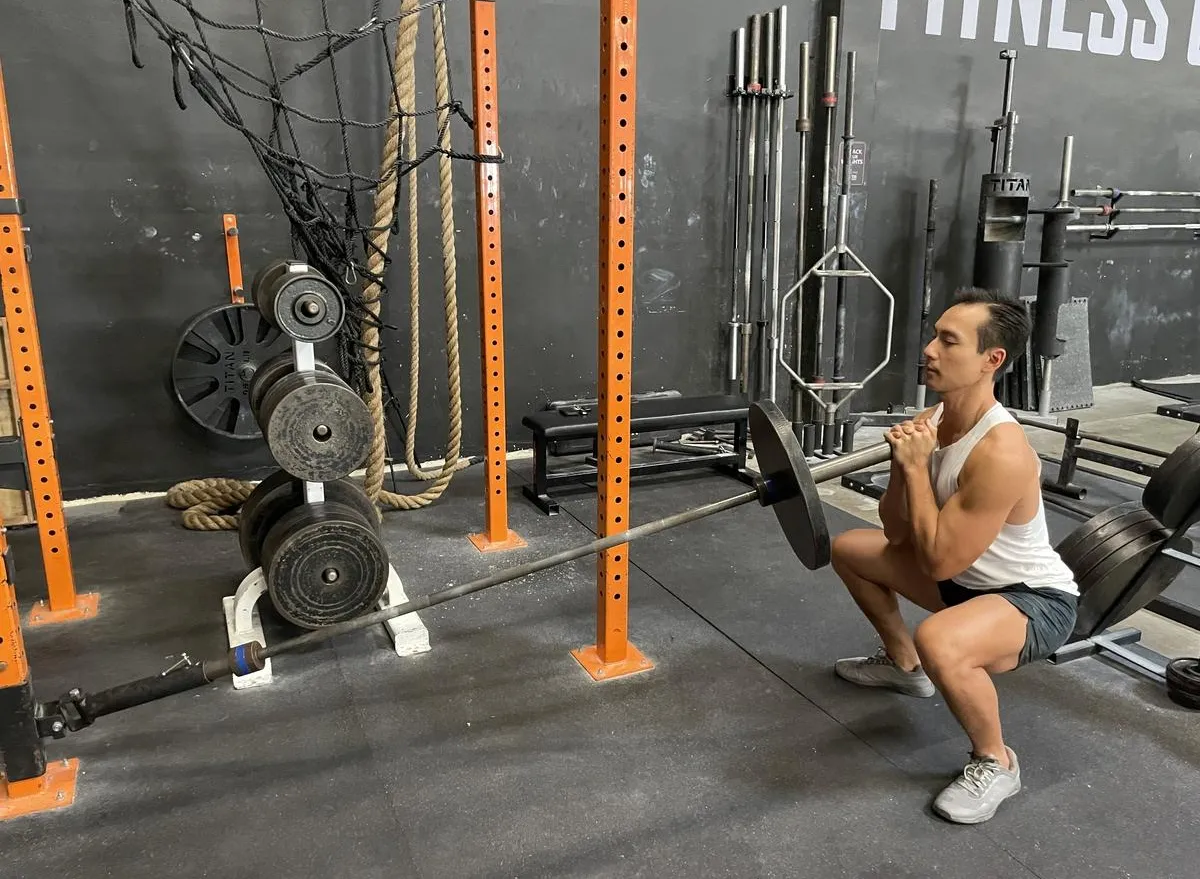
Ready to lose belly fat and slow down aging? Start this first exercise by positioning a barbell inside a landmine attachment. If you don’t have one, anchor the end of the barbell against a wall for the same effect. Pick up the barbell, and grip the end of it with both hands. Take a tiny step back. Keep your chest tall and your core tight. Lower into a squat by pushing your hips back and sitting down until your thighs are parallel to the floor. Drive through your heels to rise up, flexing your quads and glutes to finish. Perform three to four sets of 10 reps.
Chest-Supported Dumbbell Rows
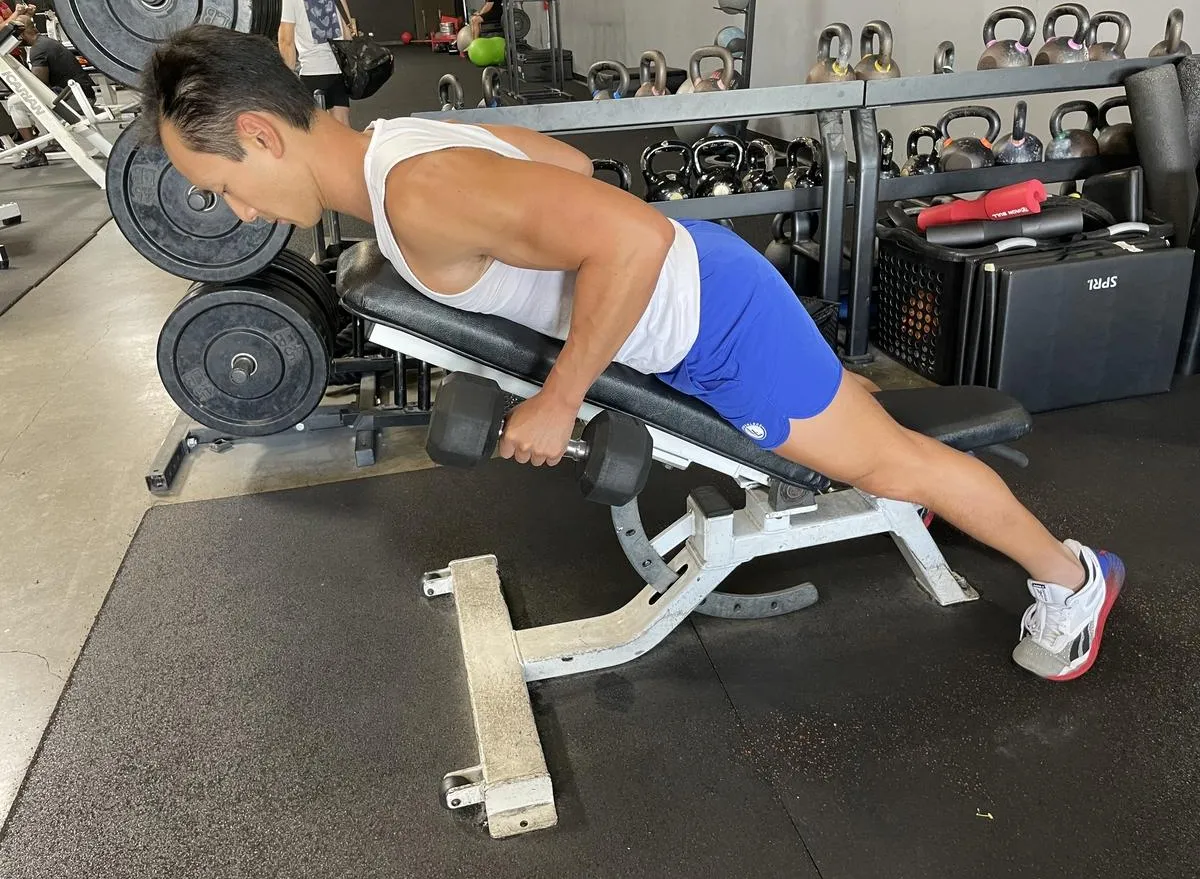
Adjust the bench to an incline (at least 30 to 45 degrees). Grab two dumbbells, position your chest on the pad, and keep your knees on the seat of the bench. Straighten your arms, and begin pulling the two dumbbells in with your elbows, squeezing your lats at the end of the motion. Lower the dumbbells down for the full stretch before the next rep. Perform three to four sets of 10 to 12 reps.
Barbell Split Squats (Between Legs)
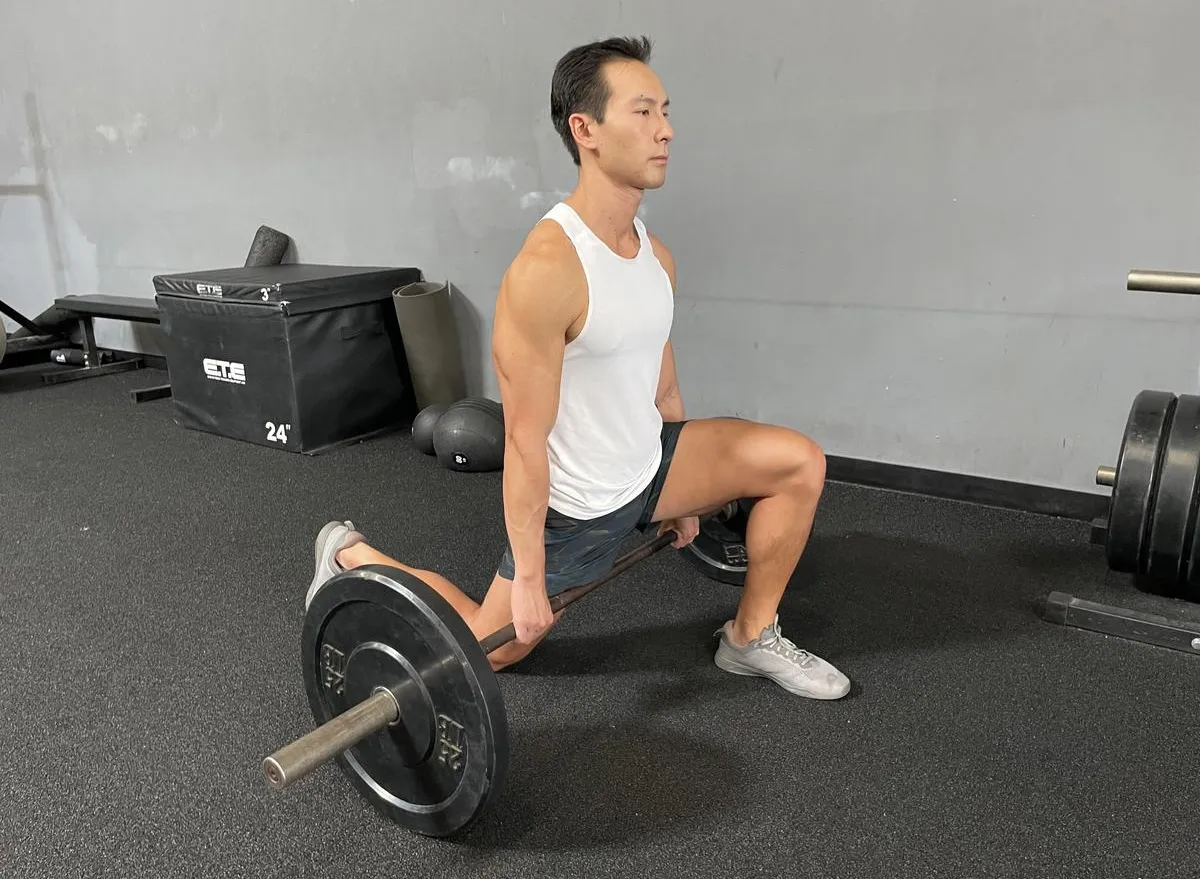
Assume a standard split squat position with a barbell between your legs. Keeping your chest tall and your core tight, squat down, reach down, and grab the bar with both your hands. Stand tall by driving through with the front heel of the leg, flexing your quad and glute to finish. Come down and all the way back up with each rep. Finish all reps on one side before switching over to the other. Perform three to four sets of 10 reps per leg.
Landmine Shoulder Press
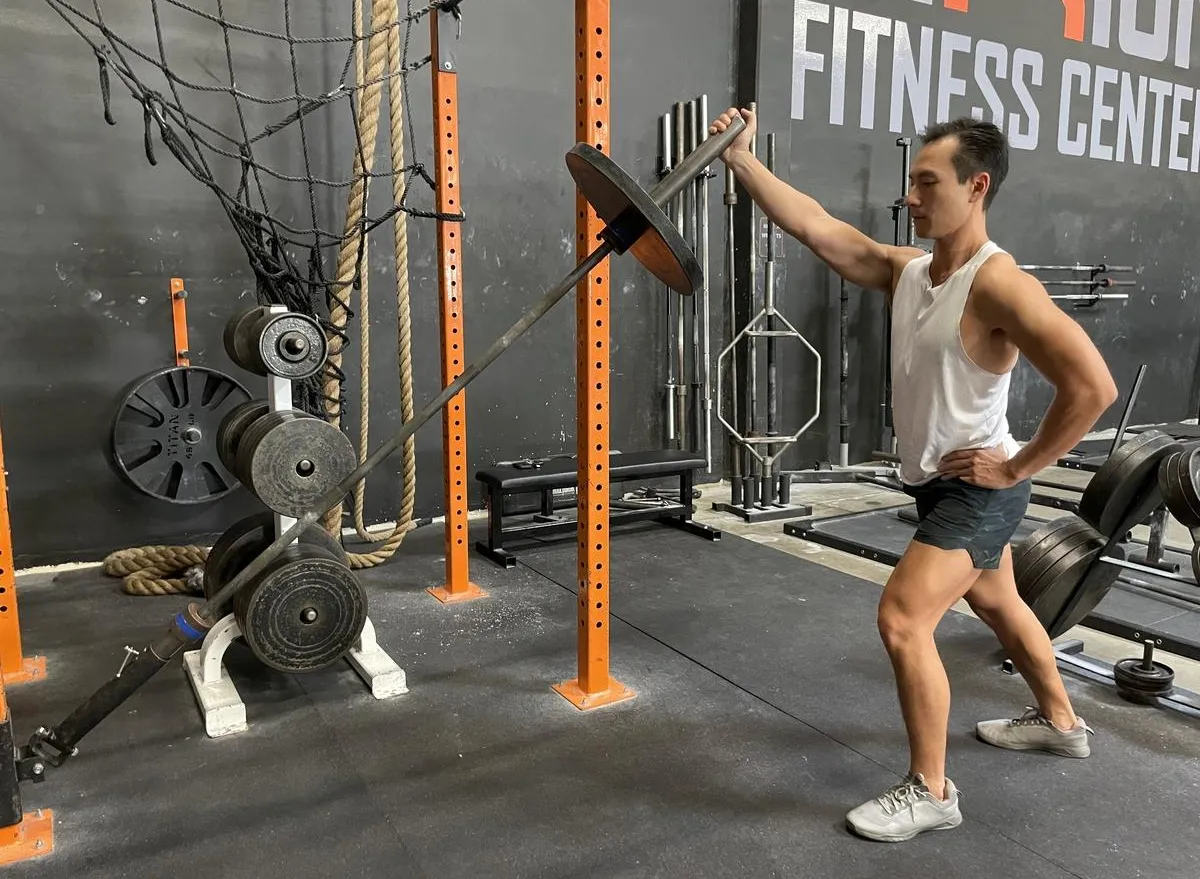
Place a barbell inside a landmine attachment. If you don’t have access to a landmine, stick a barbell to a corner of a wall to get the same effect. Assume a staggered stance with one foot forward and one foot back. Grab the bar, keeping your chest tall and your core tight, then press it forward. Flex your tricep and shoulder hard at the top, then bring the weight back to the starting position. Perform all reps on one side before switching over. Complete three to four sets of 10 reps for each arm.
Dumbbell Goblet Squats
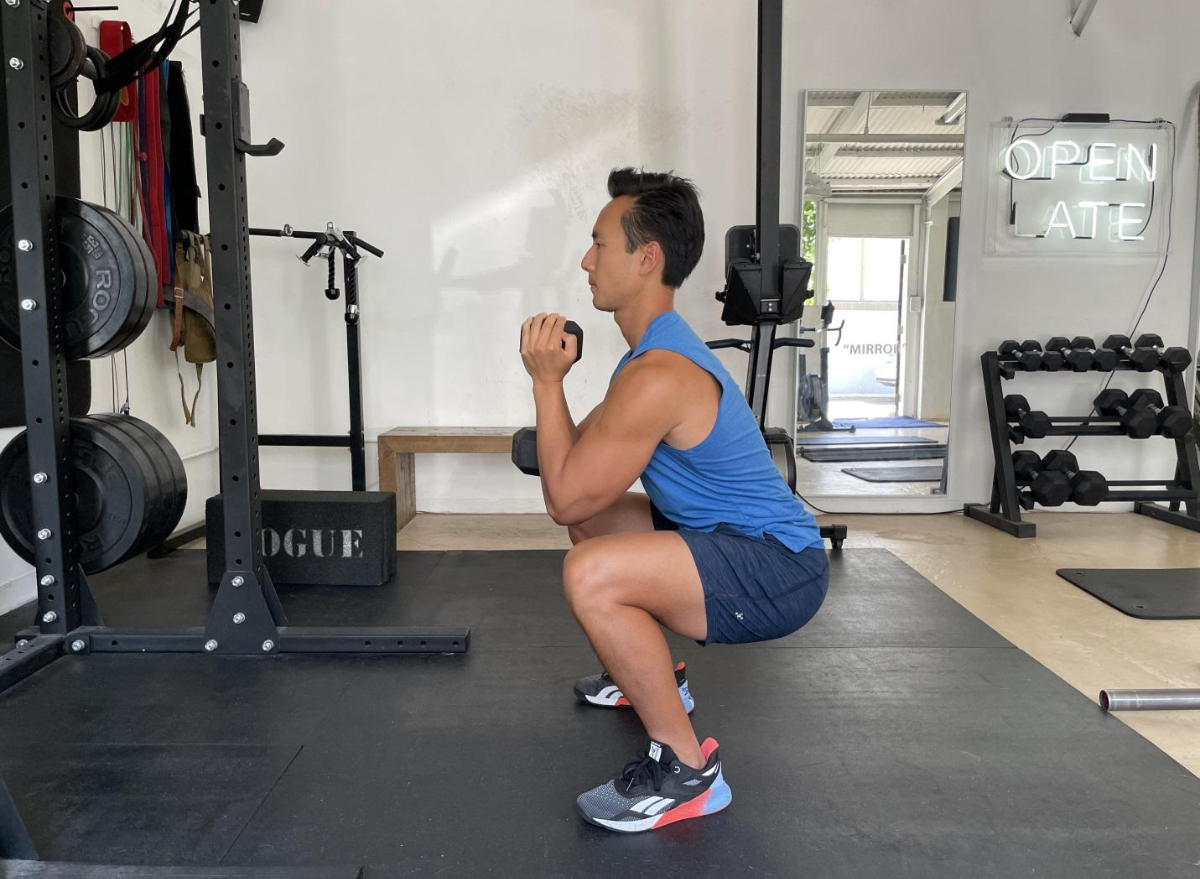
Vertically hold one dumbbell with both hands in front of your chest. Keep your core tight, push your hips back, and squat down until your thighs are parallel to the floor. Then, drive through your heels and hips to stand back up, flexing your quads and glutes to finish. Complete three sets of eight to 10 reps.
Barbell Romanian Deadlifts
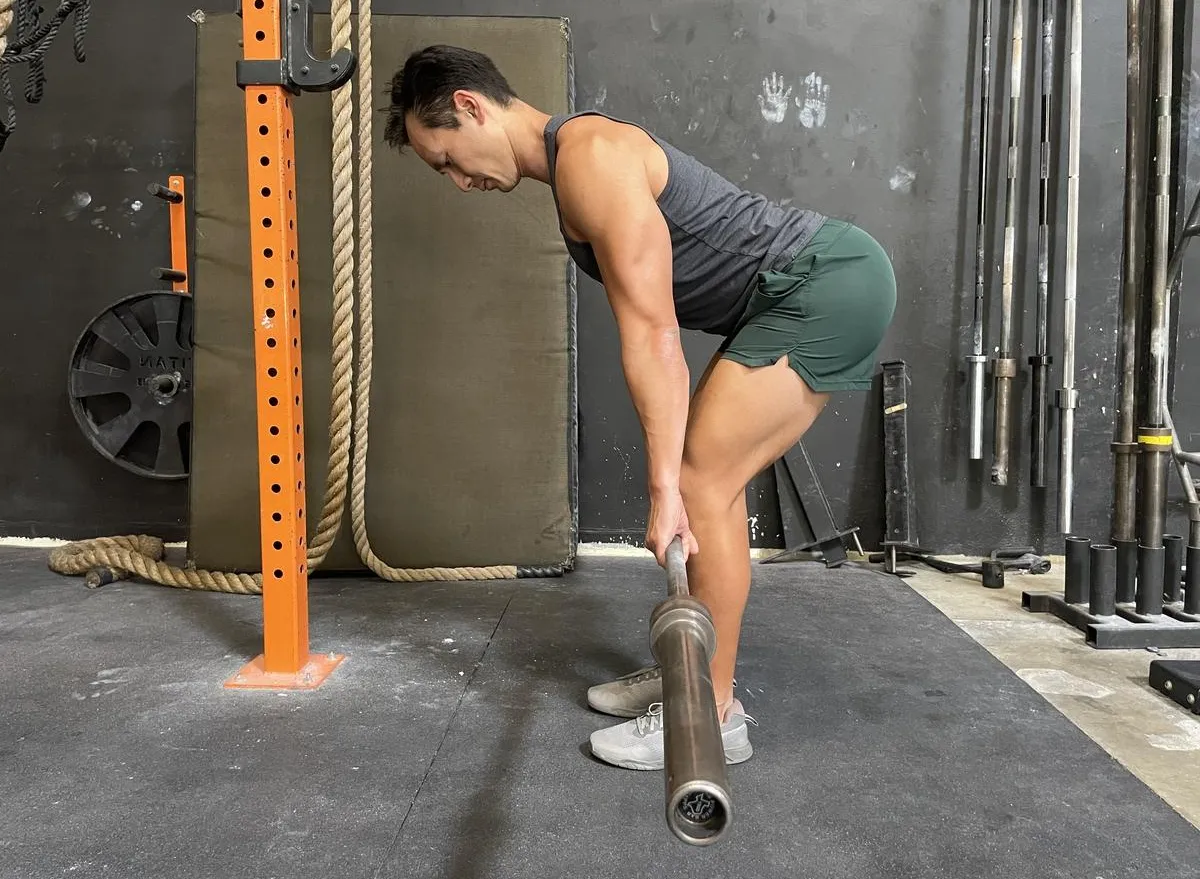
Grab a barbell, and position it right in front of your body. Keeping your chest tall and your knees soft, push your hips back while dragging the barbell down your thigh. Once you feel a solid hamstring stretch, drive your hips forward, squeezing your glutes to finish. Complete three sets of 10 to 12 reps.
Incline Dumbbell Bench Press
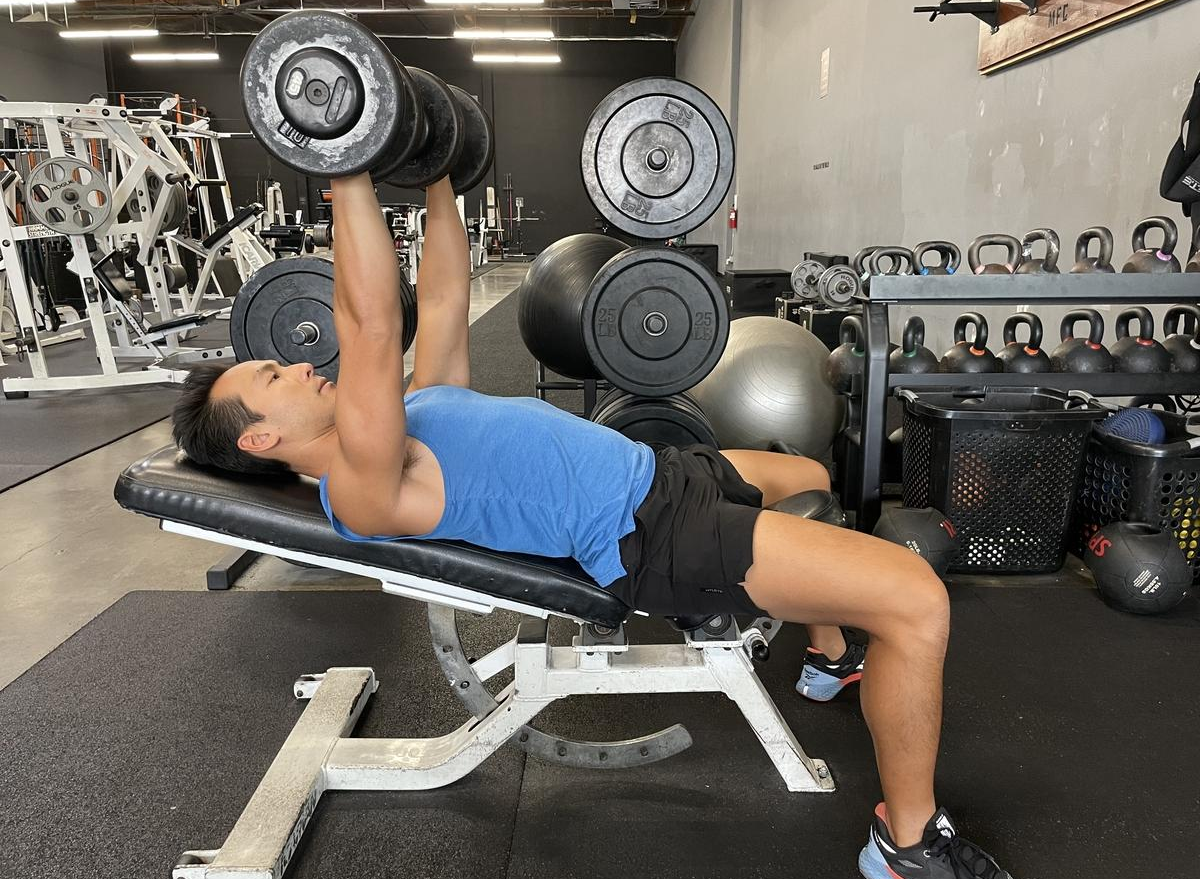
Lie down on an incline bench with a dumbbell in each hand. Hold the weights straight up above you with your arms fully extended. Pull your shoulder blades back and down onto the bench as you lower the weights toward your chest. Get a solid chest stretch at the bottom, then press the weights up to the starting position, squeezing your upper pecs and triceps at the top. Perform three sets of eight to 10 reps.
Cable Rows
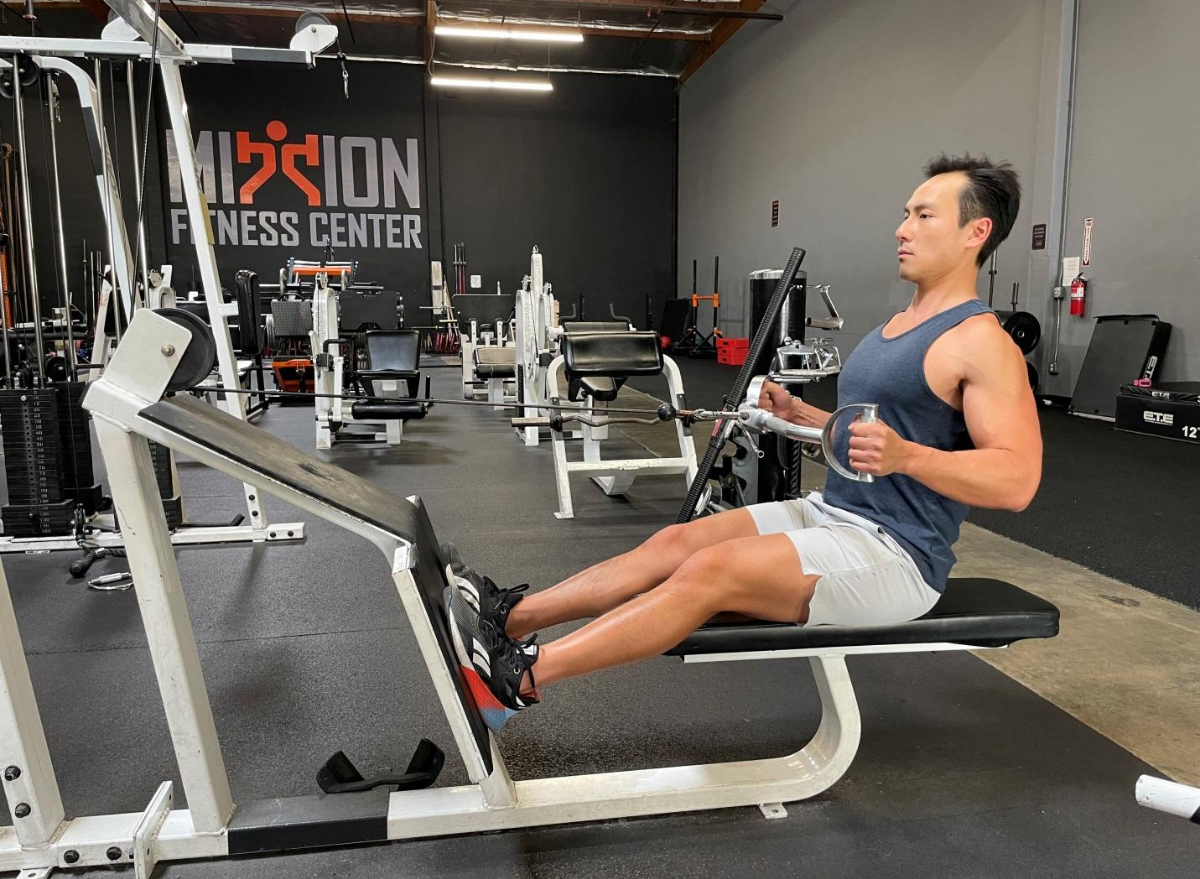
Grab the attachment on a seated row machine, and place your feet firmly on the footpad. Pull the handle out, then completely straighten your legs. Make sure your chest remains tall as you drive your elbows back to your hips, squeezing your back and lats hard to finish. Straighten your arms, and get a solid stretch in your shoulder blades before performing another rep. Perform three sets of 10 to 12 reps.
Dumbbell Reverse Lunges
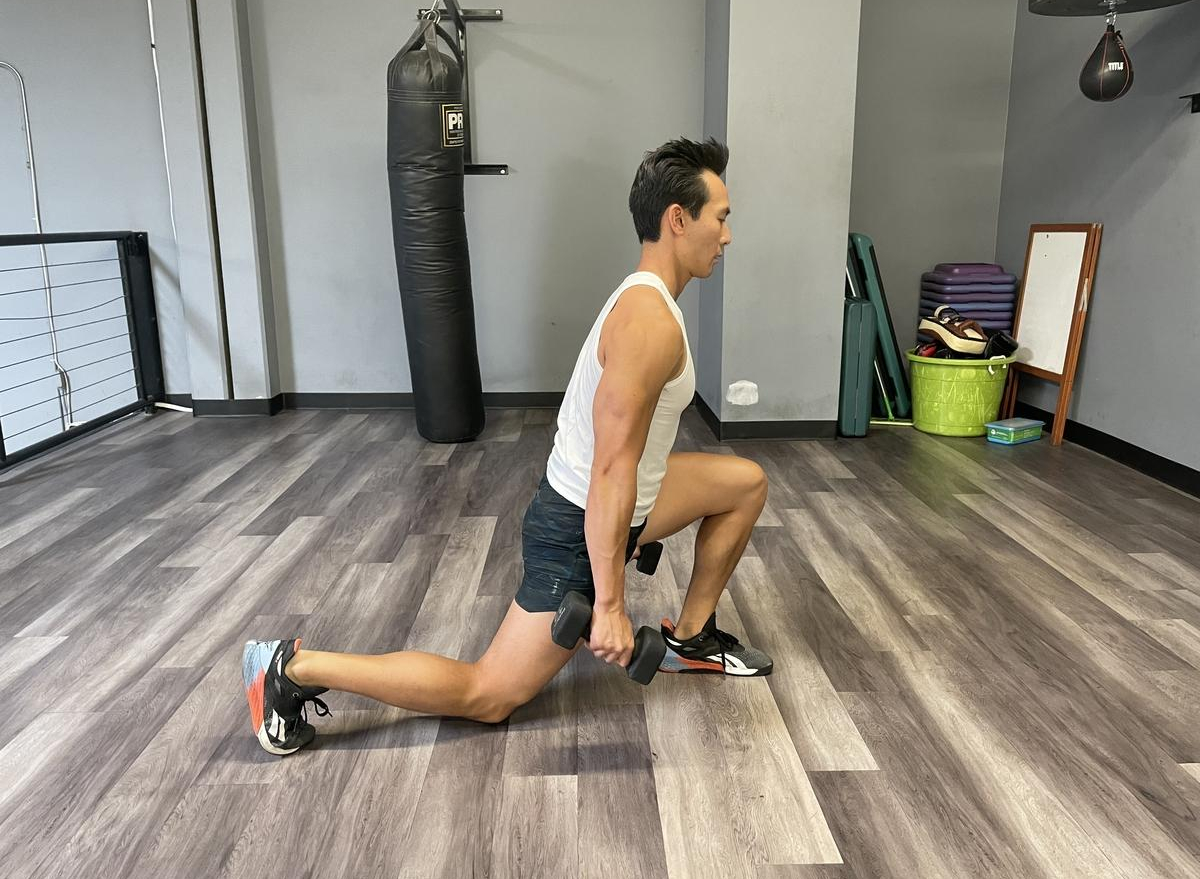
Hold a dumbbell in each hand. Take a long stride back with one leg. Firmly plant your heel down into the floor, then lower yourself until your back knee touches the ground. Push through with your front leg to come back up, then repeat with the other side. Complete three sets of 10 reps for each leg.
Incline Treadmill Walk
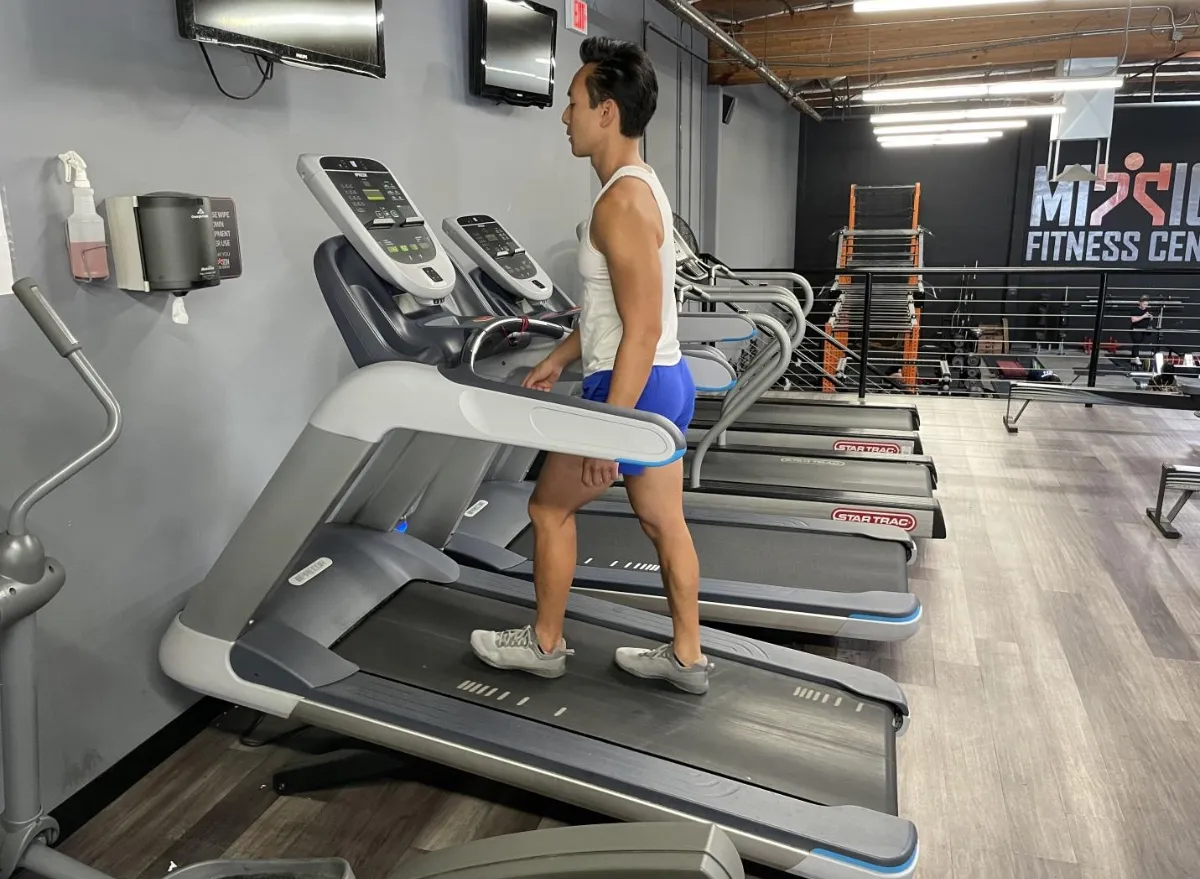
To perform this steady-state exercise, set your treadmill at the highest incline (usually 15 degrees), and set the speed at 2.5 to 3.5 mph. Walk at this pace and incline for at least 20 minutes, and watch your heart rate go up!
Climbing
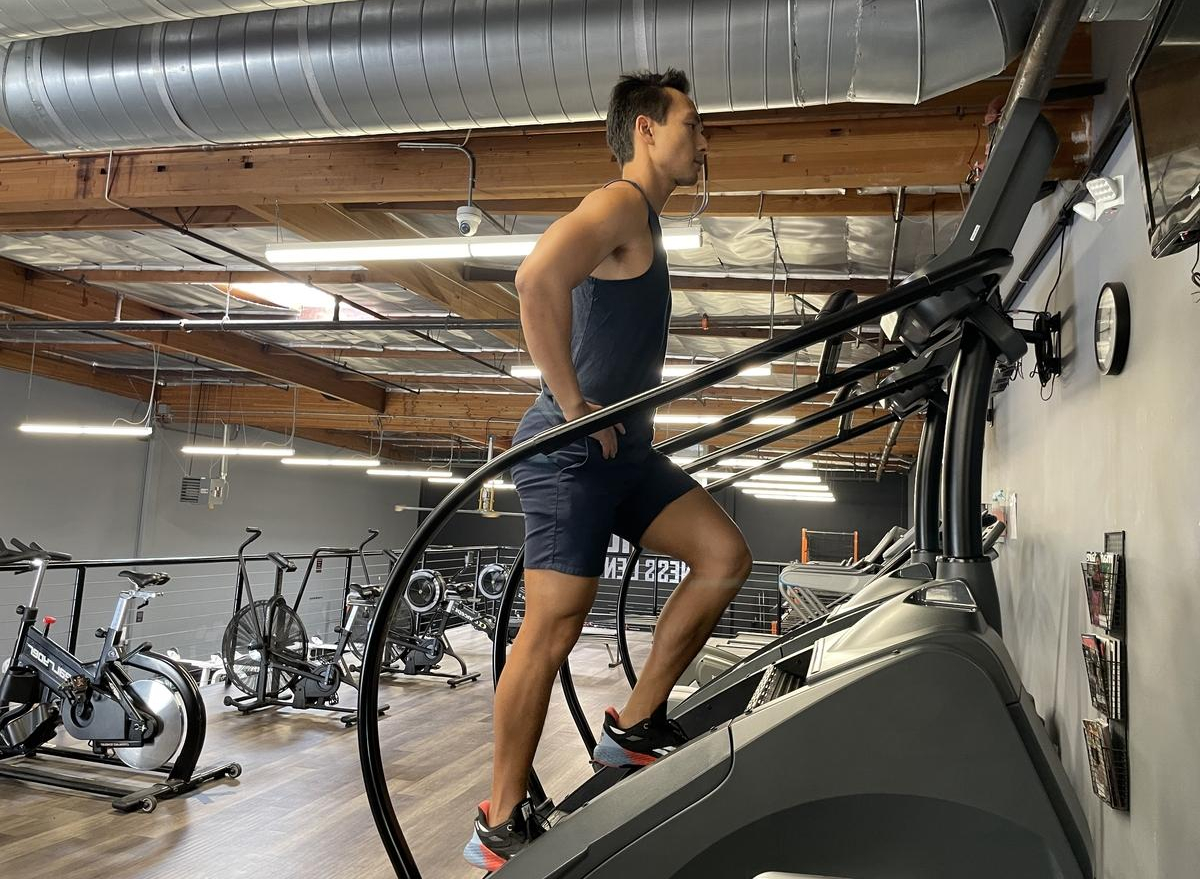
Begin climbing on the stair climber. If you’re a first-timer, go at a comfortable pace you’re able to maintain for at least 15 to 20 minutes. Once you build up more endurance (or if you’re a bit more of an intermediate level), crank up the speed, or climb for at least 30 minutes.
Incline Treadmill Runs
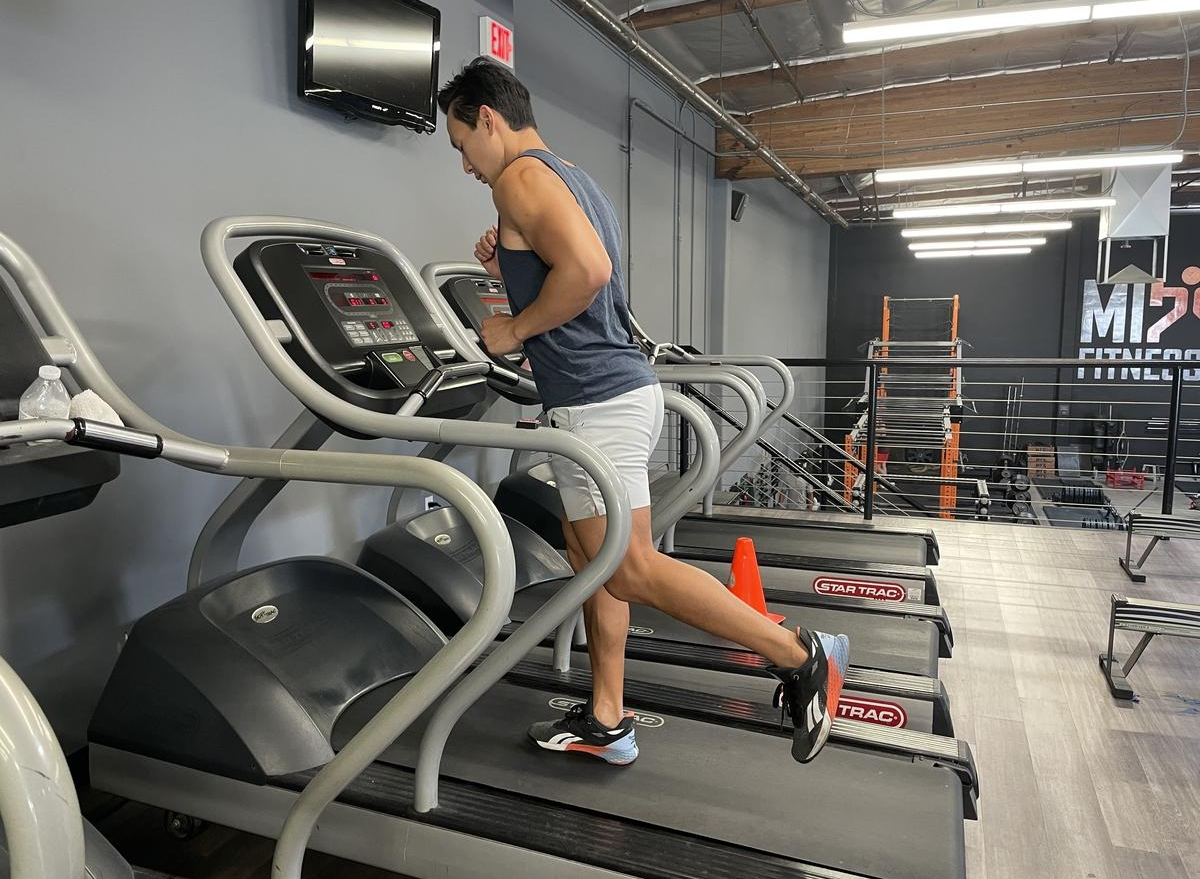
Stand with your legs outside of the belt. Set your treadmill to a 10% incline and the speed a little higher than your typical jog pace. Once the incline and speed are set, hop onto the belt, and sprint hard for 30 seconds. Once you sprint for 30 seconds, grab the handles on the side, and carefully jump back onto the stable non-moving part of the treadmill. Rest for 30 seconds, and then repeat this workout for 10 rounds.
Bike Sprints
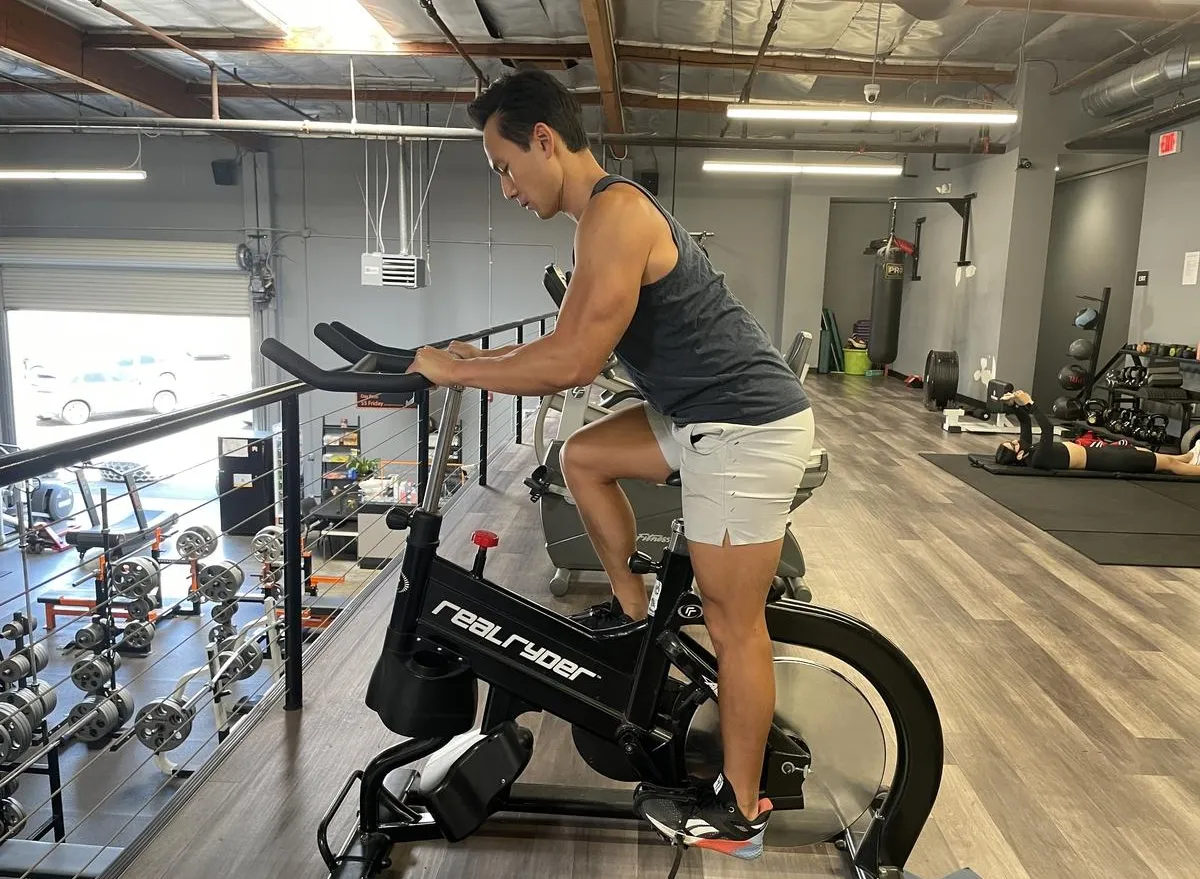
Hop on the exercise bike, and begin pedaling hard for 20 to 30 seconds. Once you sprint the prescribed amount of time, cruise at a slower pace for 30 to 45 seconds before sprinting again. Aim for eight to 10 rounds total.

Sign up for our newsletter!



Fitness
Fitness coach debunks 8 ‘crazy’ exercise myths women still believe: From periods and workouts to weightlifting

Despite growing awareness around fitness and women’s health, several outdated exercise myths continue to persist. From misconceptions about strength training to beliefs surrounding periods, pregnancy and weight loss, many women still receive advice that isn’t backed by science. These myths can not only slow progress but also discourage women from prioritising their health and fitness. (Also read: Can eating too much protein be harmful? Experts explain why excess intake may do more harm than good )
Fitness coach Zoe recently addressed some of the most common misconceptions women continue to hear in a June 12 Instagram post titled, “craziest exercise myths women still hear.” Here’s what she had to say:
1. Periods mean complete bed rest
According to Zoe, menstruation does not mean you need to stop exercising altogether. “No. You can train. Just adjust intensity if needed,” she wrote, explaining that while energy levels may fluctuate during different phases of the menstrual cycle, movement and exercise can still be beneficial.
2. After marriage or kids, fitness is not important
Many women are often made to feel that fitness should take a back seat after major life changes such as marriage or motherhood. Zoe strongly disagrees. “That is exactly when it becomes more important,” she said, highlighting the need to maintain strength, mobility and overall health while navigating increased responsibilities.
3. A C-section means your core is gone forever
Recovering from a Caesarean delivery can be challenging, but Zoe says it doesn’t mean women should give up on rebuilding strength. “Wrong. It means you need rebuilding, not giving up,” she wrote, emphasising that gradual rehabilitation and proper training can help restore core function.
4. Walking around the house is enough exercise
While daily movement is important, Zoe points out that it isn’t the same as a structured workout. “No. That is movement, not full training,” she explained, noting that a balanced fitness routine should include strength, mobility and cardiovascular exercises.
5. Sweating more means more fat loss
Many people associate excessive sweating with effective fat burning, but Zoe says that’s a common misunderstanding. “No. It means you are hot,” she wrote. Sweat is the body’s cooling mechanism and does not necessarily reflect the number of calories burned or fat lost.
6. Running will ruin your uterus, boobs or joints
This long-standing myth often discourages women from running or high-impact activities. “No. Poor preparation and weak support is the issue,” Zoe said, stressing the importance of proper training, supportive gear and gradually building endurance.
7. Women should only do yoga, not weights
Strength training is still viewed by some as a male-dominated form of exercise, but Zoe believes women benefit greatly from lifting weights. “Women need strength too,” she wrote, highlighting how resistance training supports muscle mass, bone health, metabolism and overall fitness.
8. Carbs at night make you fat
Carbohydrates often get unfairly blamed for weight gain, especially when eaten in the evening. “No. Overeating does,” Zoe explained, pointing out that overall calorie intake and dietary patterns matter far more than the timing of carbohydrate consumption.
Note to readers: This article is for informational purposes only and not a substitute for professional medical advice. Always seek the advice of your doctor with any questions about a medical condition.
This report is based on user-generated content from social media. HT.com has not independently verified the claims and does not endorse them.

For Hobart teacher Mary Holton, health means everything.
She started feeling the squeeze from cost-of-living pressures when fuel prices spiked again.
“Going out for just fitness alone was a bit much,”
she said.
Mary Holton says since joining the group, her fitness across the board has improved. (ABC News: Jake Grant)
Many Tasmanians are feeling cost-of-living pressures in a very physical way, with locals saying exercise routines are being dropped, health appointments delayed and wellbeing pushed to the bottom of the list as budgets tighten.
Ms Holton relies on multiple physiotherapy sessions each week, but says paid fitness classes simply are not an option.
“That costs … so to actually go to other classes as well, it’s out of my budget really.“
Ollie Mathewson conducts a free workout session. (ABC News: Jake Grant)
National data shows that almost half of Australians already fall short of minimum physical activity guidelines, and rising prices are making even basic care unaffordable for many.
Consultant clinical psychologist academic Kimberley Norris says this is exactly how unhealthy patterns begin.
“We tend to focus on the most stressful thing first … and health is one of those things we don’t think about until things go wrong,”
Professor Norris said.
Kimberley Norris says humans tend to focus on alleviating stress first and foremost, and warns de-prioritising health can become a cycle. (ABC News: Jake Grant)
For Ms Holton, going to a free workout group in her local community was a game-changer.
“Came down and absolutely loved it. It’s really nice to have a group and it just keeps growing,” she said.
Finding a free exercise group has drastically improved her health, as noted by her GP, and she is part of a growing trend.
Free exercise classes become a lifeline
At a community exercise class in South Arm, south-east of Hobart, the mood is upbeat, with laughter, movement, and a sense of relief.
Participation has more than doubled in the past year, with more than 100 Tasmanians now involved.
Trainer Ollie Mathewson said the surge was unmistakable.
“It’s free of charge for everybody … and over the last 12 months I’ve noticed a lot more people starting to come along,”
he said.
Ollie Mathewson says attendance at his classes has almost doubled over the past year. (ABC News: Jake Grant)
Across greater Hobart, free and low-cost alternatives are multiplying and include walking groups, community-run circuits, and morning and afternoon fitness meet-ups.
Tasmanians are increasingly organising their own solutions.
Mr Mathewson said connections drive outcomes.
“A lot of people talk about weight and strength, which are obviously insanely important, having other people there to push you single every week makes it a hundred times easier.“
Professor Norris said one’s health can be prioritised for free.
“What we know about health is, it’s more about sustainable wellbeing, it’s about quality of life,” she said.
“So rather than focusing on how much you can deadlift, how far you can run, it’s about how your life has improved and how close your life is to the way you want to live it.”
She said free options were vital because once people stop moving, it becomes harder to start again.
“If we develop routines in which health is not a priority, then we almost get stuck in this cycle of health always being last.“
Health appointments being delayed or dropped
For some Tasmanians, the financial pressure is forcing even tougher choices.
Amy Dakin says she can’t even think about getting a gym membership with all the other costs of living on her mind. (ABC News: Jake Grant)
Amy Dakin, who lives with a compromised immune system, often has no choice but to delay essential care.
“My health needs to be prioritised, but your bills come first, really,” she said.
Jordyn Rowbottom says she’s not the only one changing her hobbies to save on costs. (ABC News: Jake Grant)
Jordyn Rowbottom has seen the same pattern around her.
“People are being forced to cut what they can access,”
she said.
Professor Norris warns that these short-term decisions can create long-term harm, not just for individuals, but for the broader health system.
She said the combination of financial pressure and reduced physical activity would create a public health challenge.
Trainers adapting to shrinking budgets
Personal trainer Nickola Orr works with clients across different income levels, ages and needs.
She said affordability now shapes almost every program she designs.
“You want to make sure they can get as much help as they can within their price range,”
she said.
Nickola Orr is concerned about access to fitness and health services in the face of rising cost pressures. (ABC News: Jake Grant)
With the median individual spend on fitness in Tasmania sitting at almost $600 last year, Ms Orr said the warning signs were already visible.
“We’re going to see more results of long-term neglect; higher injuries, more need for mental health assistance. It’s going to snowball.”
Her concerns echo Professor Norris’s academic findings that once healthy routines break down, the consequences ripple for years.
“The changes are very small … while they add up over time, there is no immediate impact,”
Ms Orr said.
Calls for more free and low-cost options
Mr Mathewson hopes the success of free community classes will inspire governments and private operators to expand accessible fitness programs.
“More free options would be a great thing. There are a few now, but there should be more,” he said.
The Tasmanian government has said it will release its 20-year preventive health strategy this month, titled The Health Revolution.
A Department of Health spokesperson said the strategy “will address the broader social, economic, and environmental factors that influence health and wellbeing”.
“Specific issues about access to health services and programs are being considered through the Access to Health Services project, a Commonwealth-State partnership.
“The Health Revolution will complement that project by addressing the root causes of poor health and the underlying conditions to make it easier for Tasmanians to live well.“

If you’ve been faithfully logging your 30 minutes of moderate exercise most days of the week, you’re getting the recommended weekly about of cardio. But a new study1 suggests that for women in midlife, that standard benchmark may not be moving the needle on cardiovascular fitness as much as we’ve assumed. Here’s what you need to know.
-

 Fitness5 minutes ago
Fitness coach debunks 8 ‘crazy’ exercise myths women still believe: From periods and workouts to weightlifting
-

 Movie Reviews12 minutes ago
Movie Review: ‘Sacred Heart: His Reign Has No End’ – Catholic Review
-

 World22 minutes ago
Video: A Death at the Epicenter of Ebola
-

 News28 minutes ago
Map: 5.1-Magnitude Earthquake Strikes off the Coast of California
-

 Politics34 minutes ago
Video: Steve Hilton Holds Slim Early Lead in California Governor’s Race
-
 Lifestyle1 hour ago
We’re having a main character summer. Are you? : It’s Been a Minute
-

 Technology1 hour ago
Microsoft AI chief Mustafa Suleyman says there are three labs that matter — and he wants Microsoft to be the fourth.
-

 World1 hour ago
US ally Kuwait condemns ‘brutal and ongoing Iranian attacks’ after airport was hit

