Fitness
Lower your blood pressure by swapping just a few minutes of sitting for exercise


Adding short bursts of exercise to your daily routine, such as cycling to the shops for 15 minutes or taking the stairs, lowers blood pressure, a study has found.
Increasing exercise habits – instead of say, watching a bit more TV or extending a snooze – is good for the heart, researchers said.
However, they warned that people may need to do more than simple walking to really see changes.
Published in the scientific journal Circulation, the study emphasised that everyday activities that raise the heart rate, such as cycling, climbing stairs or short bursts of running, have the biggest benefits.
Led by scientists from University College London (UCL) in Britain and the University of Sydney in Australia, the research looked at data for 14,761 people who wore activity trackers for 24 hours in a bid to explore the relationship between daily movement and blood pressure.
On average over the 24 hours, people spent around seven hours asleep, 10 hours in sedentary behaviour such as sitting, three hours standing, one hour slow walking, one hour fast walking, and 16 minutes taking exercise that increased their heart rate, such as running and cycling.
The study found that an extra five minutes of exercise that raises the heart rate, such as stair-climbing, running or cycling – in exchange of any of the other behaviours – could lower systolic blood pressure by 0.68 millimetres of mercury (mmHg) and diastolic blood pressure by 0.54mmHg.
Systolic is the “top number” in a blood pressure reading and represents pressure when the heart pushes blood out around the body.
Diastolic is the “bottom number” and is the pressure when the heart rests between beats.
At a population level, a 2mmHg reduction in systolic blood pressure and a 1mmHg reduction in diastolic blood pressure is equivalent to an approximately 10% reduction in the risk of heart disease, the researchers said.
To achieve such clinically meaningful improvements, people would need to reallocate 20-27 minutes from other behaviours to proper exercise for the top number, and 10-15 minutes for the bottom number, the study found.
For example, with systolic blood pressure, swapping 21 minutes of sedentary time, 22 minutes of standing or 26 minutes of slow walking for exercise such as cycling or jogging, would have this effect.
For diastolic blood pressure, the benefits would arise from swapping 10 minutes of fast walking, 11 minutes of sedentary time or 13 minutes of sleeping for proper exercise.
Study first author and UCL Department of Targeted Intervention senior research fellow Dr Jo Blodgett said: “Our findings suggest that, for most people, exercise is key to reducing blood pressure, rather than less strenuous forms of movement such as walking.
“The good news is that, whatever your physical ability, it doesn’t take long to have a positive effect on blood pressure.
“What’s unique about our exercise variable is that it includes all exercise-like activities, from climbing the stairs to a short cycling errand – many of which can be integrated into daily routines.
“For those who don’t do a lot of exercise, walking did still have some positive benefits for blood pressure.
“But if you want to change your blood pressure, putting more demand on the cardiovascular system through exercise will have the greatest effect.”
Consistently high blood pressure is one of the biggest causes of premature death globally and can lead to stroke, heart attack, heart failure and kidney damage.
The study was funded by the British Heart Foundation.
Its chief scientific officer Professor Dr Bryan Williams said: “We know that exercise can have real benefits for your cardiovascular health and also helps to lower blood pressure.
“We recommend doing 150 minutes of physical activity each week, and this interesting study shows that incorporating just a few extra minutes of physical activity each day could help further lower your blood pressure, albeit by a modest amount.
“Anything that gets your heart rate up can help.
“Incorporating short bursts of activity, such as walking while taking phone calls or setting an alarm to get up and move around every hour, are great ways to start building activity into your day.
“These small changes will help get you in the habit of living a healthier, more active lifestyle.” – By Jane Kirby/PA Media/dpa



Special promotional content provided by White Plains Hospital
There is no time like the present to get your fitness routine back on track—or start one for the first time, advises Dr. Michael Schwartz, an Orthopedic Surgeon and Sports Medicine Physician at White Plains Hospital Physician Associates.
Here’s what Dr. Schwartz wants you to keep in mind as you get moving this summer.

” data-image-caption=”<p>(PHOTO: Dr. Michael Schwartz, orthopedic surgeon and sports medicine physician at White Plains Hospital Physician Associates.)
” data-large-file=”https://i3.wp.com/myrye.com/wp-content/uploads/2026/06/schwartz-683×1024.png?ssl=1″ fifu-data-src=”https://i3.wp.com/myrye.com/wp-content/uploads/2026/06/schwartz-683×1024.png?ssl=1″ alt=”headshot photo” class=”wp-image-86488″ srcset=”https://i3.wp.com/myrye.com/wp-content/uploads/2026/06/schwartz-683×1024.png?ssl=1 683w, https://myrye.com/wp-content/uploads/2026/06/schwartz-200×300.png 200w, https://myrye.com/wp-content/uploads/2026/06/schwartz-768×1151.png 768w, https://myrye.com/wp-content/uploads/2026/06/schwartz-1024×1536.png 1024w, https://myrye.com/wp-content/uploads/2026/06/schwartz-1366×2048.png 1366w, https://myrye.com/wp-content/uploads/2026/06/schwartz-1200×1799.png 1200w, https://myrye.com/wp-content/uploads/2026/06/schwartz-2000×2999.png 2000w, https://myrye.com/wp-content/uploads/2026/06/schwartz-780×1169.png 780w, https://myrye.com/wp-content/uploads/2026/06/schwartz-400×600.png 400w, https://myrye.com/wp-content/uploads/2026/06/schwartz-706×1059.png 706w, https://myrye.com/wp-content/uploads/2026/06/schwartz-scaled.png 1707w” sizes=”(max-width: 683px) 100vw, 683px”/><figcaption class=) (PHOTO: Dr. Michael Schwartz, orthopedic surgeon and sports medicine physician at White Plains Hospital Physician Associates.) Credit: Contributed.
(PHOTO: Dr. Michael Schwartz, orthopedic surgeon and sports medicine physician at White Plains Hospital Physician Associates.) Credit: Contributed.Q: If I’m completely new to exercise or have taken considerable time off, how can I get started again this summer?
A: It’s important to start slow, maybe two to three days a week. The Centers for Disease Control and Prevention recommends that most people get about 150 minutes of physical activity a week, along with at least two days of strength training. And remember:
- Those minutes can be broken up throughout the week to help make the task more manageable.
- You can follow the recommended amount of time, but you don’t want to go too hard or too fast when you first start out.
- If you’re not used to running, start with a walk and then work your way up to more intense workouts. You can also do a lot of simple strength training at home with just a chair—search online for videos or apps to find the right routine for you.
- You should rest between exercises to give your muscles time to recover, repair, and rebuild.
Q: I hear a lot about overuse injuries. How can I avoid that?
A: These injuries can be common, which is why I often advise a combination of cardiovascular activities like running, rowing, and biking. If you switch up what you’re doing, then you’ll be using different muscle groups and hopefully not working one of them too hard.
Q: Workout trends seem to come and go. Is there one that you think is more beneficial than others?
A: People were really into their bikes when the pandemic hit and that was great. Some people enjoy Pilates, some like HIIT (high intensity interval training) workouts—these are great because they balance strength and cardiovascular focuses. This also benefits your metabolic function, which is great for your overall health. The best exercise routine to follow is one that you are actually going to do consistently: Find something you like, and then work it into your routine.
Q: Knowing the importance of both cardio and strength training, is there a way for a person to determine how much of each they need?
A: This is going to be unique for each person. It’s certainly something that you could talk to a personal trainer about if you’d like a personal assessment and one-on-one guidance. For most people, it’s about doing what you can.
For instance, walking is a great way to get a workout without fancy equipment or hiring a personal trainer. Just put on some sneakers and go. And, eventually, you can turn those walks into more intense workouts by adding hills, hiking on different terrains, or even rucking, adding weight to a backpack so you can turn your walk into a strength-training routine.
Q: How might a person’s approach to fitness change as they age?
A: When we’re younger, it’s important to build a strong foundation through cardio and strength training to develop muscle, endurance, and overall fitness. This sets us up for long-term health. But as we age—often starting in our 40s—muscle and bone density naturally begin to decline. That’s when strength training becomes even more essential, particularly for women navigating changes during and after menopause. Maintaining strength helps preserve mobility, balance, and core stability as we continue to age, which are critical for preventing falls and staying active without pain.
Q: We’ve all heard the phrase, “No pain, no gain.” But how can you tell the difference between healthy soreness and an injury?
A: Some soreness following exercise is normal, and it is important to allow your body rest periods for your muscles to recover. On the same note, you also need to be in tune with your body. An acute pain could mean that you pulled or otherwise injured something and you should see an orthopedist. Regular muscle soreness shouldn’t last more than a few days.
Dr. Michael Schwartz is an Orthopedic Surgeon and Sports Medicine Physician at White Plains Hospital Physician Associates. To schedule an appointment, call 914.849.7897.
This article originally appeared on Health Matters, a White Plains Hospital publication.
Related
Fitness
How Kaye Adams’ varied exercise routine keeps her fit at 63 – and why she swapped HIIT for walking

Journalist and presenter Kaye Adams has regularly spoken about her health and fitness habits over the years. And while some of those have changed with age, it doesn’t mean strength and fitness don’t remain a priority. In fact, her podcast, How to be 60, champions the idea that ‘turning 60 isn’t about slowing down – it’s about shaking things up’.
Below, we take a look at Kaye’s approach to fitness in midlife and why it’s so effective.
She walks as much as possible
Kaye told The Sunday Post that having a dog has been a great way of ensuring she gets out for a walk (shoutout Bea the cockapoo!) every day, and that she’s ‘at my happiest walking my dog’.
While it might sound simple, walking really is one of the best things you can do for your health. One scientific review of research on walking concluded that ‘the evidence overwhelmingly supports walking as a powerful anti-ageing intervention that can reduce the risk of chronic age-related diseases such as cardiovascular disease, hypertension, type 2 diabetes and cancer.’
Even a short 10-minute walk after eating has been found to have tangible health benefits. One study found that a 10-minute walk straight after eating helps suppress blood sugar spikes – eliciting similar effects to those seen after a 30-minute walk.
She does a variety of physical activities
‘I also play tennis, run and do spin classes, as I have done for years,’ Kaye added in The Sunday Post interview. She also recently told The Sun, that she also does what she calls ‘disco Pilates’ – reformer with ‘bright lights and music’.
While all of these activities are effective individually (one study involving more than 8,000 participants found that those who played tennis lived on average for a decade longer), the science also suggests benefits come from mixing it up, too – with a recent landmark study finding that exercise diversity is key for longevity.
Researchers found that compared with the lowest variety group, participants in the highest physical activity variety group had a 19% lower risk of death from any cause, and a 13-41% lower risk of dying from cardiovascular disease, cancer, respiratory disease and other causes.
She’s ditched higher-intensity training
After sustaining an injury at a HIIT class, Kaye told The Sun that she feels she’s ‘too old for them. It’s heavy duty circuit training, weights, burpees, all that sort of stuff’.
But as she’s shown, age doesn’t have to mean slowing down, but rather, finding a way of moving that works for you.
One of our most frequently asked questions here at Women’s Health? How to build muscle and burn fat at the same time. So, we asked superstar trainer Oyinda Okunowo exactly how to do it. In this 4-week plan – created exclusively for Women’s Health COLLECTIVE members – you’ll get the workouts and nutrition guidance needed to help you on your way to better body composition. Tap the link below to unlock 14 days of free access to Oyinda’s plan and start training today.
Get the plan

Hannah Bradfield is a Senior Health and Fitness Writer for Women’s Health UK. An NCTJ-accredited journalist, Hannah graduated from Loughborough University with a BA in English and Sport Science and an MA in Media and Cultural Analysis. She has been covering sports, health and fitness for the last five years and has created content for outlets including BBC Sport, BBC Sounds, Runner’s World and Stylist. She especially enjoys interviewing those working within the community to improve access to sport, exercise and wellness. Hannah is a 2024 John Schofield Trust Fellow and was also named a 2022 Rising Star in Journalism by The Printing Charity. A keen runner, Hannah was firmly a sprinter growing up (also dabbling in long jump) but has since transitioned to longer-distance running. While 10K is her favoured race distance, she loves running or volunteering at parkrun every Saturday, followed, of course, by pastries. She’s always looking for fun new runs and races to do and brunch spots to try.

Sorry to break it to you: Lack of equipment isn’t a surefire excuse to skip your workout. When you’re on the road or too busy to make it to the gym, bodyweight exercises are the always-ready tool you can turn to—and they might even challenge you more than your typical weighted workouts.
“Don’t underestimate the impact of bodyweight workouts because you will be quickly humbled,” says Kim Perry, CPT, a certified personal trainer and pregnancy coach. Bodyweight exercises are typically compound movements, meaning they activate more than one muscle group at a time. As a result, a bodyweight workout can help improve your balance, core strength, cardio, mobility, and flexibility, Perry says.
Plus, bodyweight exercises are especially great for those who are just starting off their fitness journey, says Claudette Sariya, CPT, founding instructor of SOLE Fitness. Nailing an exercise with only your bodyweight first allows you to really understand the fundamentals of a movement before loading up the weight.
Meet the experts: Kim Perry, CPT, is a certified personal trainer and pregnancy coach. Claudette Sariya, CPT, is the founding instructor at SOLE Fitness and a coach at LifeTime.
Ready to break a sweat using only your bod? Here are the 50 best bodyweight exercises to build strength, muscle, and boost your heart health, according to Perry and Sariya.
Instructions: Choose five to six moves that target the area of the body you want to hit. For a full body experience, select two upper body exercises, two lower body exercises, and two core exercises. Perform each move for 40 seconds, then rest for 20 seconds. After one round, rest for 60 seconds, then repeat two or three more rounds.
1. Hollow Body Hold
Movement pattern: Core
Why it rocks: The hollow body hold is even more challenging than a plank (trust us), and requires full-body activation. Pro tip: Press your back into the floor and squeeze your core while doing this move. If you feel your lower back is rising off the floor, bend your knees to 90 degrees, says Sariya.
How to:
- Start lying on back with with arms extended overhead on floor and legs straight resting on mat.
- At the same time, and with control, lift arms, head, shoulder blades, and legs a few inches off the floor.
- Hold the elevated position, ensuring your low back is still glued to the ground.
2. Plank
Movement pattern: Core
Why it rocks: Planks are a great way to build total body strength. They’re a type of isometric hold, which takes a lot of effort and builds both stamina and endurance. Plus, they can easily be modified by planking on your knees or elevating your hands until you can do them all-out.
How to:
- Start on all fours with shins and palms flat on mat.
- Step back onto the on balls of your feet, creating a straight line from heels through the top of your head. Keep your gaze to the floor.
- Squeeze your glutes and abs to keep hips inline with your shoulders. Hold here as long as you can.
3. Bird Dog
Movement pattern: Core
Why it rocks: This is a great move to practice coordination, and builds core stability and balance.
How to:
- Start on all fours with wrists directly under shoulders and knees under hips. Keep back flat, core engaged, and a slight bend in elbows.
- Extend left arm out in front at shoulder height and right leg straight behind at hip height.
- Bend leg and arm and bring to midline under torso until elbow and knee touch. That’s 1 rep. Alternate sides.
4. Reverse Crunch
Movement pattern: Core
Why it rocks: This move builds strength and control through your core abs. Make sure you’re using your lower abs—and not momentum—to perform this movement. If you’re struggling, imagine you’re pushing your heels to the ceiling, Sariya says.
How to:
- Start lying on back with arms by sides and feet lifted off the ground, legs extended, and toes pointed.
- Squeeze your core to pull your hips off the ground. Do your best to push your toes up towards the ceiling instead of back towards your head.
- Slowly return to start. That’s 1 rep.
5. Russian Twist
Movement pattern: Core
Why it rocks: This move builds rotational strength. Make sure you have the proper form when doing this oblique-working move: Puff out your chest and keep a long line from your tailbone to your shoulder.
How to:
- Start seated with upper body leaned back until abs are engaged, legs lifted and bent, arms bent, hands clasped, and elbows wide. For an extra challenge, lift heels up off the floor.
- Rotate torso to right side so that right elbow is hovering off mat.
- Keeping lower body still throughout, rotate the upper body to the left side. That’s 1 rep.
6. Inchworm
Movement pattern: Core
Why it rocks: This move fires up both your core and upper body, making it a great warmup move for your upper body days.
How to:
- Start standing with feet hips-width apart.
- Hinge at hips and lower down until hands reach the ground, focusing on core activation and spine alignment, keeping legs as straight as possible.
- Crawl forward lifting one hand at a time with legs straight and hips lifted until in a high plank. Try to keep hips as square to the ground as you can throughout the move.
- Walk hands one by one back to feet.
- Reverse motion to return to standing tall. That’s 1 rep.
7. Superman Arm Extension
Movement pattern: Upper Body
Why it rocks: This is a great move for people who want to strengthen their posterior chain (or all the muscles on the back side of your body!). It can even help improve posture, says Sariya.
How to:
- Start lying facedown on a mat, legs extended, elbows tucked at sides.
- Squeeze glutes to lift legs and extend arms overhead simultaneously, pulling thighs and chest off the floor.
- Pause, then lower legs and bend arms to sides to return to starting position. That’s 1 rep.
8. Triceps Dip
Movement Pattern: Upper Body
Why it rocks: This move isolates the triceps. Pro tip: Make sure your hands are right outside your hips and your elbows are pointing behind you in order to really target the back of your arms. To make it more challenging, straighten out your legs.
How to:
- Sit in a chair (or on a box/step) and grip the front edges with hands.
- Scoot butt forward until it’s hovering just off the seat and legs form a 90-degree angle and straighten arms.
- Lower body down until biceps are parallel to floor.
- Engage triceps to press back to start. That’s 1 rep.
9. Superwoman Isometric Hold
Movement Pattern: Upper Body
Why it rocks: This move works the back muscles that stabilize and support your spine, making everyday movement easier, says Sariya.
How to:
- Lie facedown on the mat, with arms and legs stretched out.
- Squeeze glutes and lift torso and legs up as far as you can. Imagine reaching out with arms and legs.
- Pause at the top and hold.
10. Incline Pushup
Movement Pattern: Upper Body
Why it rocks: This is a great move for people working their way up to a flat pushup.
How to:
- Start in an incline plank position with hands on a chair, bench, or step and feet on floor with head to heels aligned.
- Lower down, with elbows pointing 45-degrees away from body, until arms bend to 90-degrees.
- Press back up keeping body in a straight line. That’s 1 rep.
11. Pushup To Plank Row
Movement Pattern: Upper Body
Why it rocks: This exercise targets your chest and back at the same time. Once you get comfortable with the move, add a resistance band around your hands for a little more back challenge. Or, you can also pop into a high plank position for a full pushup.
How to:
- Start in a modified plank position, knees on ground, wrists under shoulders. Maintain a long spine with knees to head aligned.
- Lower into a pushup so chest hovers just above the floor, and elbows are close to sides.
- Push up from ground to return to modified plank position, then drive right elbow toward sky, performing a row.
- Return right hand to ground.
- Repeat row with left arm.
- Return left hand to ground. That’s 1 rep.
12. Air Squat
Movement Pattern: Lower Body
Why it rocks: The squat is one of the gold standard lower body exercises, and doing it with just your bodyweight is a great way to prime the move before adding load. Plus, you can incorporate it into a dynamic warm up to wake up your quads and glutes.
How to:
- Start standing with feet shoulder-width apart and arms at sides.
- Bend knees, sit hips back, and lower butt down until thighs are parallel with the floor. Bring arms forward and keep the torso upright.
- Rise back up to start, squeezing glutes at the top until your hips are just under your shoulders. That’s 1 rep.
13. Forward Lunge
Movement Pattern: Lower Body
Why it rocks: This move is great for core stability, balance, and building quad and glute strength.
How to:
- Start standing at the back of the mat with feet under hips.
- Take a large step forward with right leg, and lower down until thigh is parallel with the floor and both legs bend to 90 degrees. (Bring left hand forward and right arm back for help with balance.)
- Stand up and step right foot back to meet left.
- Repeat with left leg. That’s 1 rep.
14. Alternating Lateral Lunge
Movement Pattern: Lower Body
Why it rocks: This move builds unilateral (single leg strength) in your glutes and quads—important for fixing strength discrepancies. Pro tip: Make sure your chest stays lifted, so you can drive all your weight into your heel for maximum effectiveness. Be sure to place your toes on the same line.
How to:
- Stand with feet wider than hip-width apart.
- Bend right knee and push hips back and lower as deep as you can, aiming for at least a 90-degree bend in the knee. The left leg should be extended.
- Drive through right heel to return back to start.
- Repeat on left side. That’s 1 rep.
15. Curtsy Lunge
Movement Pattern: Lower Body
Why it rocks: This move works your glutes, and Sariya loves to add it to a superset because it’s easy to transition to from either deadlifts or squats. Pro tip: Make sure your knees are tracking toward your toes and keep your torso upright and hips and shoulders as square as possible.
How to:
- Stand with feet hip-width apart and arms at sides.
- Take a step back with left leg, crossing it behind right. Bend knees and lower hips until right thigh is nearly parallel to the floor.
- Return to start.
- Take a step back with right leg, crossing it behind left. Bend knees and lower hips until left thigh is nearly parallel to the floor. That’s 1 rep.
16. Fire Hydrant
Movement Pattern: Lower Body
Why it rocks: This is a great move for strengthening your glutes. Pro tip: Once you’ve mastered this move, add a resistance band to up the ante.
How to:
- Start on all fours with wrists stacked directly under shoulders and knees over hips.
- Draw belly button to spine and, keeping back flat, lift the right knee out to the side so it is in line with the right hip.
- Lower with control. That’s 1 rep.
- After 20 seconds, switch to the other side and repeat.
17. Glute Bridge
Movement Pattern: Lower Body
Why it rocks: Glute bridges will give you a sculpted booty, says Sariya. They also work your hamstrings.
How to:
- Lie on back with feet flat against the floor and knees bent, arms at sides.
- Squeeze glutes and lift hips off the floor until your body forms a straight line from knees to shoulders.
- Pause at the top, then lower back down to starting position. That’s 1 rep.
18. Glute Kickback
Movement Pattern: Lower Body
Why it rocks: This move challenges both your core and your glutes. Pro tip: As you kick your leg back, make sure your hips are pointing down toward the floor, says Sariya.
How to:
- Start on hands and knees, with knees under hips and hands under shoulders.
- While keeping your abs tight, contract the glutes slowly, and kick the right leg back until it’s straight.
- At full extension, squeeze the glutes for an extra second. Carefully bring it back down. That’s 1 rep.
- Switch sides and repeat.
19. Jumping Jacks
Movement pattern: Cardio/Agility
Why it rocks: This move is great for getting the blood flowing and upping your heart rate. You can also use it as part of a warm up.
How to:
- Start standing with feet together and arms at sides.
- Then, simultaneously raise arms out and overhead while jumping feet out wide past shoulders.
- Without pausing, quickly reverse the movement jumping back to narrow stance and swinging arms to sides. That’s 1 rep.
20. Jump Squat
Movement pattern: Cardio/Agility
Why it rocks: Jump squats help you build power in your lower body, and they’re a great way to end a leg day with your heart rate up, says Sariya.
How to:
- Stand with feet hip-width apart, toes slightly turned out, and arms by sides.
- Bend knees and sink hips to lower into a squat, then press through feet to explosively jump as high as you can into the air.
- Land softly on the balls of feet and immediately lower into next squat. That’s 1 rep.
21. High Knees
Movement pattern: Cardio/Agility
Why it rocks: High knees are a great warm up for quads, hip flexors, and calves, especially before a run—or a great addition to a cardio day.
How to:
- Start standing on the mat with arms bent at 90-degrees, elbows close to sides, and hands at hip height in front of body.
- Bend right leg and lift right knee up to tap palm.
- Return the right knee to the floor and quickly repeat on the left side. Stay up on balls of feet throughout movement. That’s 1 rep.
22. Knee Drive
Movement pattern: Cardio/Agility
Why it rocks: A knee drive gets your heart rate up and is good for the core.
How to:
- Start standing with feet under hips.
- Step right foot a couple feet behind left foot.
- Bend back knee and drive it forward and up as high as you can. At the same time, swing arms with the opposite leg, like you’re running.
- That’s 1 rep. Complete on the opposite side.
Andi Breitowich is a freelance writer who covers health, fitness, relationships, beauty, and smart living. She is a graduate of Emory University and Northwestern University’s Medill School of Journalism. Her work has appeared in Women’s Health, POPSUGAR, Food & Wine, What To Expect, Cosmopolitan, Men’s Health, and elsewhere. As a former collegiate pole vaulter, she loves all things fitness and has yet to meet a group workout class she doesn’t like.
Olivia Luppino is an associate editor at Women’s Health. She spends most of her time interviewing expert sources about the latest fitness trends, nutrition tips, and practical advice for living a healthier life. Olivia previously wrote for New York Magazine’s The Cut, PS (formerly POPSUGAR), and Salon, where she also did on-camera interviews with celebrity guests. She recently ran the New York City Marathon.
Cori Ritchey, C.S.C.S., is the fitness editor at Women’s Health, as well as a certified strength and condition coach and group fitness instructor. She’s reported on topics regarding health, nutrition, mental health, fitness, sex, and relationships for several years. You can find more of her work in Men’s Health, HealthCentral, Livestrong, Self, and others.
-
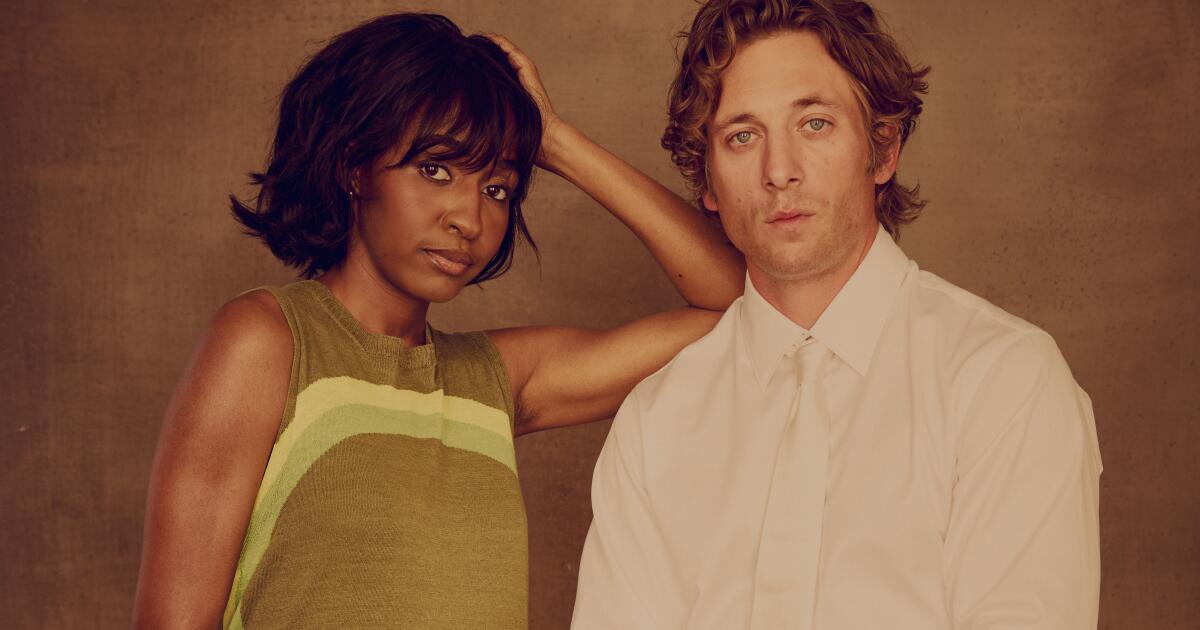 Entertainment5 minutes ago
‘The Bear’ at closing time: Ayo Edebiri and Jeremy Allen White reflect on five seasons
-
 Lifestyle12 minutes ago
L.A. Affairs: After decades of near-misses, I finally told him: ‘I’m not leaving here without you’
-
 Politics15 minutes ago
Trump budget request omits funds for L.A. fire relief, prompting criticism from senators
-
 Science20 minutes ago
EPA touts crackdown on smuggled pesticides in L.A. visit
-
 Sports27 minutes ago
Commentary: Did Padres curse themselves by messing with that anti-Dodgers FTD burger?
-

 World35 minutes ago
Copernicus lead warns extreme heat measures needed or deaths to ensue
-

 News60 minutes ago
“It’s blood money”: Family of exonerated man in Texas yogurt shop murders speaks out after settlement
-

 Los Angeles, Ca2 hours ago
Woman ambushed, violently attacked by robber in downtown Long Beach

