Entertainment
Why Alanis Morissette believes she could write the celebrity survival handbook the industry needs


If you are not prepared for it, fame can be downright deadly. Alanis Morissette knows that better than anyone. Thirty years ago, she released her third studio album, “Jagged Little Pill,” which won five Grammys, including album of the year and best rock album, and went on to sell 33 million copies.
So, Morissette has a complicated relationship with fame. Now, she will be examining that and many other dimensions of her incredible three-decade career in a new Vegas residency at Caesars Palace that begins Wednesday and runs until Nov. 2.
As Morissette explained in a wide-ranging talk with The Times, the Vegas show will be much more than a concert. The show will take on a narrative feel that will showcase her humor, improv, wellness and all the other traits that have defined her over the years.
I love that you paired with Carly Simon on the song “Coming Around Again” because I see such a kinship based on you two over generations. There is so much in common between “You’re So Vain” and “You Oughta Know.” Not the least of which is I am sure you are both beyond over being asked, “Who is the song really about?”
Right, because what people don’t understand, and I can’t speak for Carly, but there’s a difference between revenge and revenge fantasy. I’m all about the revenge fantasy and punching pillows and gyrating and sweating and losing your s— in art. And Lord knows I’m unmeasured in other areas day-to-day, too, so it’s not like I’m some paragon of containment, but yeah, just the revenge thing, there’s a lot of schoolyard stuff going on. That’s all I’ll say for the moment.
Obviously, this is 30 years of “Jagged Little Pill.” I remember seeing Bruce Springsteen in ’88, when he did “Born to Run” acoustic. Every night when he introduced it, he would say, “I was thinking about how much that song was me, and how much I don’t want it to be me.” And I thought that was so interesting because, of course, there are songs you want to be you. So, what songs did you want to be you?
Yeah, there are so many songs that I would write about potential. So, I’d be in a relationship, and I would be writing about what I wanted to the point where whomever I may have been dating at the time, if I shared the song with them, sometimes they would say, “Who’s this about? This can’t possibly be about me.” I’m like, “Well, you know what? You’re onto something there. This is about what I wish we could be.” I think about also a song, because I’m working on the Vegas show, so we’re integrating so much. And I think the song “Not the Doctor” is probably one of the ones that I realized the naivety of having written, like, your issues just get away from me. Having been married now for 15 years, I realized that your partner’s challenges, you take each other on — all of it. So, there’s a little bit of knowledge now that makes “Not the Doctor” funny to sing.
And then “Incomplete” is a song that is a manifestation, as you just described, that I would be good. It’s like a prayer manifestation. There’s a song, “Knees of My Bees,” that I wrote about what I wished. In praise of the vulnerable man, it was what I wished. So yes, there’s some composites being made where I take seven people whom I had a similar pattern repeat, and I just lop them all into one song as one person and unify the communication; there’s no holds barred.
Has there been talk about extending the show? It does sound like you are putting a crazy amount of work into a show that right now lasts little more than a week.
For a long time — and a lot of journalists have said, “Yeah, right,” when I say this — but my energy doesn’t go into outcome. Whether the show is seen three times or 300,000 times, that’s not up to me in this moment. I’m creating stories and sharing parts of myself that I have hidden for the ’90s imperative of staying in your lane or it’s career suicide. So, I’m still unlearning that, which is the reductiveness of the ’90s, where you have to stay one thing. Then, well, what is one supposed to do if they have multiple talents or multiple intelligences dying to be expressed? We’re going to contain that so that we can keep the ’90s credo going. So, over the years, it’s just been, can I bring these other aspects of self into the whole expression of me through academia, through movement, through channeling, through live shows, through interviews right now? There are so many ways to express, and the ’90s really did say, “You do it one or two ways; you step out of that and your career is over.” Thank God that messaging is softened.
How have you seen culture and values change over your career?
It used to be “I want to be a millionaire,” and now everyone wants to be a billionaire. It used to be “I want to look 21 forever,” now it’s “I want to look 14 forever.” And then it used to be “I want to have fame as a means to an end for activism.” Now it’s just “I want fame as an end,” so it’s an interesting value system snapshot right now. And so many of us are flying in the face of it, so I’m not really worried about that. But the value system has gotten smaller almost, as though fame in and of itself is going to correct our attachment wounds. It doesn’t work, and I’m constantly raising my hand going, I thought fame would result in this profound sense of community that I’d be amongst my people and we’d be petting each other’s heads by the fire. That was not the case.
I think for anyone who comes out the other side of fame, there has to be a tremendous sense of gratitude that you survive it.
That’s a big piece of this Vegas show without me nailing it on the head or belaboring the point. It’s like, “How are some of us still here?”
How do you express that in the show? And it is interesting given your passion for wellness and mental health, it is in Vegas. Which has never been known for either.
Yeah, Vegas has been known for addiction and gambling, acting out, sexual acting out. What is Vegas known for? “What happens in Vegas stays in Vegas.” It’s been known for that, but I believe that there’s a whole seismic shift going on. I have never underestimated people who come to my shows. Even in workshops, people are like, “Alanis, it’s too much.” And my thought is, “No, it’s not.” People can close their eyes, they can walk out, they can shut the radio off, they can take a break in the cafeteria. Part of why I love that it’s Vegas is that there’s this ceilinglessness in terms of no holds barred again, like I want to wear a boa. You want to do a backflip. Apparently, we’re doing a backflip. What has happened over the years is that again, it was this one-lane push, stay in your lane. And while this was all happening, there were all these other archetypal imperatives getting at me, like what about dancing? What about comedy? What about article writing? What about keynote speaking? What about workshop leading? What about channeling? There are all these other forms of expression that I live for. So, in some ways, I was cultivating them maybe privately. That’s just who I am. And I integrated it into every lyric.
Sinéad [O’Connor] said this perfectly, I don’t know word for word what she said, but the essence was you love the art, but you hate the artist. She said something about, “I appreciate that my audience wants everyone to hear more angry emotions from me through my songs, but then I have to be angry. And no one takes that into consideration.” I was like, “Yeah, because we’re used in the best way possible.” Artists are used as a screen upon which people identify themselves or people find who they are by hating and loving and trolling and attacking and it’s all projection, everything’s f— projection. So yeah, I just think people who are in the public eye have an experience inside of a social construct that is so violently unusual. And there’s no empathy afforded to them for that, other than maybe from people like you and me.

“There are all these other forms of expression that I live for,” says Alanis Morissette. “So, in some ways, I was cultivating them maybe privately. That’s just who I am. And I integrated it into every lyric.”
(Shervin Lainez)
How did you learn to deal with it? Unfortunately for Sinéad, she never was able to handle the fact that people were so hateful toward her, even though it had nothing to do with her.
I know, and basically that is the lack of handbook that is egregious, because so many people who were in the public eye are now physically gone. So much of it is their temperament, and I used to do talks at the neurobiology conferences at UCLA, and I would bring up the idea of temperament needing to be taken into consideration, whether it’s around suicidality or anything. Most artists are highly sensitive empaths. That is a version of neurodivergence over excitability, high-achieving, profound subtle awareness and attunement. All of these qualities that make the sweetest artists. And yet that temperament in a world that is doing what you just described Sinéad receiving, which is projecting hate, hate, hate, hate, hate. There’s no handbook on how to go, “Hey, we’re going to do shadow work here. We’re going to talk about rejection. We’re going to talk about if anyone’s saying anything that brings something up for you, bring it into therapy. Look at that part. Look at what they’re saying.” Also, always from me, look at the opposite. If you’re being invited to look at the part of you that is an a—. Always also look at the part of you that is deeply, deeply kind. For me, that’s the wholeness journey.
Being older, what have you learned about how to deal with all this?
I really do believe, Steve, that I could write a f— handbook now. I feel like if you and I got together, I could write the handbook, and we just hand it out to all the new celebs.
Do you now feel a responsibility to be able to pass your wisdom on to the new generation like Billie Eilish and Olivia Rodrigo?
I feel great passion about it. I happen to be someone who is hilariously conscientious and intensely empathic. I’m always blown away by them, and then I see people like Olivia and I just think, “Oh, everything’s going to be okay. We’re all going to be okay if Olivia exists; we’re good.” [laughs]
What happened to your book?
What’s interesting is I did two years worth of narrative storytelling that we recorded. Initially it was for a memoir, or some version of what was being asked for was a memoir. That’s kind of a hard “no” for me because we’re using all the pieces that feel relevant to this particular story. The reason I didn’t want to do the memoir is ’cause there’s no way to articulate a life. There’s way to articulate snapshots. There’s a way to articulate chapters, maybe. But there’s no way to articulate, like, this is my sentimental life story. It’s not possible. So that’s why songs are so great. It’s like four minutes of a moment. Let’s just keep writing these moments and capturing these moments and that’s what Vegas is for me: a moment.

One of the things I’ve talked about with artists that they love so much about Vegas residency is you get to mix it up night to night. But it sounds like you’re going to have a show, so are you going to be incorporating different stuff or is it going to be more of a narrative story?
Both. For me as an actor, I’ve always enjoyed improv. I love it when there’s a general sense of structure for something, but then go off within it. This is the way I’ve always been, both sides of the brain. I want some structure and predictability and some version of a set list, which we already have. But then within some of the interstitial stuff and the scenes and the comedy and the physicality and the movement, yeah, it’s a movable feast. We’ll see what happens. I am completely out of my wheelhouse publicly, not privately, because I was in improv teams since I was 14. And I think comedy is one of the best forms of activism art, I really do, maybe even above music. So, we’re integrating all these forms of art. And I’m not thinking about any outcome. It’s really amazing to write a record, write a song, write an email, frankly, with no agenda. The agenda is just “let’s express ourselves.” And that’s plenty.
Do you feel like you’re having more fun now at this point in your career than any other point?
I have the most fun with collaborating. So, I can’t say this is any more fun, but I can say that there’s more people. So, in the past, it’s been me alone writing or me and my bestie writing or me and Glen [Ballard] writing. So, in some ways it was insulated, isolated and with the musical and with Vegas, let’s multiply those collaborators by at least five. What I’ve said a few times, and I still stand by it, is that for me, the happiest place is in this communal “can’t swing a dirty sock without hitting a master” kind of environment, and it is truly six plus six is a thousand for us.
Do you feel like, as you’re getting older, people are embracing you more?
Yeah, I make more sense. There was a period of time where I didn’t make any sense and perhaps there wasn’t that much resonance. And then 25, 30 years later, I feel like I’m starting to make sense to the world in a way that I didn’t expect to happen. I just always thought, “Oh, I’ll be on that smallest part of the bell-shaped curve forever and I’ll probably be kind of lonely there. And that’s just what it is in this lifetime.” But here I am 30 years later and I’m starting to get a sense that what I’ve been talking about this whole time is resonant for people. And I can’t tell you how healing that is for me.



In contrast to other sci-fi heroes, like Interstellar’s Cooper, who ventures into the unknown for the sake of humanity and discovery, knowing the sacrifice of giving up his family, Grace is externally a cynical coward. With no family to call his own, you’d think he’d have the will to go into space for the sake of the planet’s future. Nope, he’s got no courage because the man is a cowardly dog. However, Goddard’s script feels strikingly reflective of our moment. Grace has the tools to make a difference; the Earth flashbacks center on him working towards a solution to the antimatter issue, replete with occasionally confusing but never alienating dialogue. He initially lacks the conviction, embodying a cynicism and hopelessness that many people fall into today.
The film threads this idea effectively through flashbacks that reveal his reluctance, giving the story a tragic undercurrent. Yet, it also makes his relationship with Rocky, the first living thing he truly learns to care for, ever more beautiful.
When paired with Rocky, Gosling enters the rare “puppet scene partner” hall of fame alongside Michael Caine in The Muppet Christmas Carol, never letting the fact that he’s acting opposite a puppet disrupt the sincerity of his performance. His commitment to building a gradual, affectionate friendship with this animatronic creation feels completely natural, and the chemistry translates beautifully on screen. It stands as one of the stronger performances of his career.
Project Hail Mary is overly long, and while it can be deeply affecting, the film leans on a few emotional fake-outs that become repetitive in the latter half. By the third time it deploys the same sentimental beat, the effect begins to feel cloying, slightly dulling the powerful emotions it built earlier. The constant intercutting between past and present can also feel thematically uneven at times, occasionally undercutting the narrative momentum. At 2 hours and 36 minutes, the film feels like it’s stretching itself to meet a blockbuster runtime when a tighter cut might have served better.
FINAL STATEMENT
Project Hail Mary is a meticulously crafted, hopeful, and dazzling space epic that proves the most moving friendship in film this year might just be between Ryan Gosling and a rock.
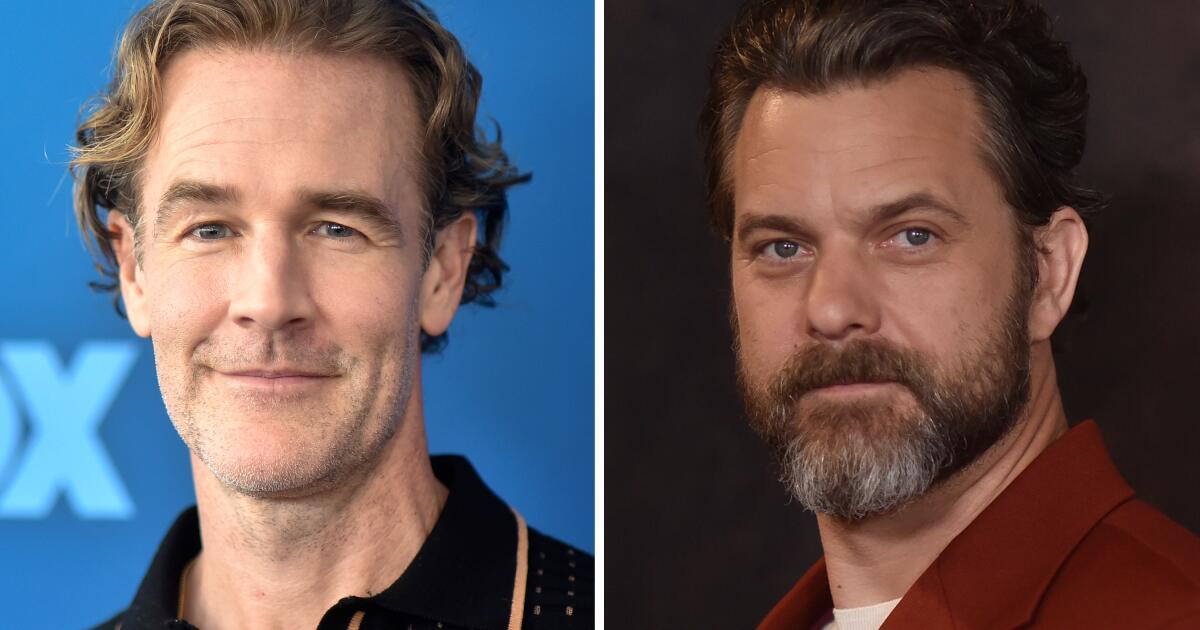
Joshua Jackson says he knows he was “really just a footnote” in James Van Der Beek’s life, despite the “amazing” time they spent together as stars of the series “Dawson’s Creek.”
The star of “The Affair” is reflecting publicly for the first time about his former castmate, who died Feb. 11 at age 48 after a battle with colorectal cancer.
The time they shared on set was “formational” for them, Jackson said on “Today.” When the “Dawson’s Creek” pilot aired in January 1998, he was 19 and Van Der Beek was almost 21, playing characters who were 15.
“I know both of us look back on that time with great fondness, but I will also say that I know that I’m really just a footnote in what he actually accomplished in his life.”
Jackson spoke with great respect for his friend, who he said “became what we used to just call a good man, a man of the kind of belief, the kind of faith that allowed him to face the impossible with grace, an unbelievable partner and husband, just a real man who showed up for his family and a beautiful, kind, curious, interested, dedicated father.”
On the one hand, the 47-year-old said, “that’s beautiful.” On the other, “The tragedy of that loss for his family is enormous.”
Since Jackson and Van Der Beek played Pacey Witter and Dawson Leery three decades ago, both men had kids of their own — a 5-year-old daughter for Jackson, born during the pandemic with ex-wife Jodie Turner-Smith, and six kids for Van Der Beek with second wife Kimberly Brook. The latter couple’s children — two boys and four girls, ranging in age from 4 to 15 — were what Van Der Beek said changed everything for him.
“Your life becomes shared, and your joys become shared joys in a really beautiful way that expands your level of circuitry out to other people instead of just keeping it all for your own gratification,” the actor told “Good Morning America” in May 2023. “And the lessons, they keep on coming. It’s the craziest, craziest thing I’ve ever done, and it’s the thing that’s made me happiest.”
Knowing his colleague’s love for his family, Jackson said on “Today” that “for me as a father now, I think the enormity of that tragedy hits me in a very different way than just as a colleague, so I think the processing [of Van Der Beek’s death] is ongoing.”
The “Little Fires Everywhere” actor was on the morning show Tuesday to bring attention to colorectal cancer screenings.
Van Der Beek’s diagnosis, which went public in November 2024, was among the factors prompting Jackson to get involved with drugmaker AstraZeneca’s “Get Body Checked Against Cancer” campaign, which takes a lighter approach to a serious subject — cancer screening — through a partnership with Jackson, the National Hockey League and the Philadelphia Flyers’ furry orange mascot, Gritty.
“It is … true, the earlier you find something,” said “The Mighty Ducks” actor, “the better your possible outcomes are.”

DAN WEBSTER:
It may now seem like ancient history, especially to younger listeners, but it was only 26 years ago when the streets of Seattle were filled with protesters, police and—ultimately—scenes of what ended up looking like pure chaos.
It is those scenes—put together to form a portrait of what would become known as the “Battle of Seattle” —that documentary filmmaker Ian Bell captures in his powerful documentary feature WTO/99.
We’ve seen any number of documentaries over the decades that report on every kind of social and cultural event from rock concerts to war. And the majority of them follow a typical format: archival footage blended with interviews, both with participants and with experts who provide an informational, often intellectual, perspective.
WTO/99 is something different. Like The Perfect Neighbor, a 2026 Oscar-nominated documentary feature, Bell’s film consists of what could be called found footage. What he has done is amass a series of news reports and personal video recordings into an hour-and-42-minute collection of individual scenes, mostly focused on a several-block area of downtown Seattle.
That is where a meeting of the WTO, the World Trade Organization, was set to be held between Nov. 30 and Dec. 3, 1999. Delegates from around the world planned to negotiate trade agreements (what else?) at the Washington State Convention and Trade Center.
Months before the meeting, however, a loose coalition of groups—including NGOs, labor unions, student organizations and various others—began their own series of meetings. Their objective was to form ways to protest not just the WTO but, to some of them, the whole idea of a world order they saw as a threat to the economic independence of individual countries.
Bell’s film doesn’t provide much context for all this. What we mostly see are individuals arguing their points of view as they prepare to stop the delegates from even entering the convention center. Meanwhile, Seattle authorities such as then-Mayor Paul Schell and then-Police Chief Norm Stamper—with brief appearances by Gov. Gary Locke and King County Executive Ron Sims—discuss counter measures, with Schell eventually imposing a curfew.
That decision comes, though, after what Bell’s film shows is a peaceful protest evolving into a street fight between people parading and chanting, others chained together and splinter groups intent on smashing the storefronts of businesses owned by what they see as corporate criminals. One intense scene involves a young woman begging those breaking windows to stop and asking them why they’re resorting to violence. In response a lone voice yells their reasoning: “Self-defense.”
Even more intense, though, are the actions of the Seattle police. We see officers using pepper spray, tear gas, flash grenades and other “non-lethal” means such as firing rubber pellets into the crowd. In one scene, a uniformed guy—not identified as a police officer but definitely part of the security crowd, which included National Guardsmen—is shown kicking a guy in the crotch.
The media, too, can’t avoid criticism. Though we see broadcast reporters trying to capture what was happening—with some affected like everybody else by the tear gas that filled the streets like a winter fog—the reports they air seem sketchy, as if they’re doctors trying to diagnose a serious illness by focusing on individual cells. And the images they capture tend to highlight the violence over the well-meaning actions of the vast majority of protesters.
Reactions to what Bell has put on the screen are bound to vary, based on each viewer’s personal politics. Bell revels his own stance by choosing selectively from among thousands of hours of video coverage to form the narrative he feels best captures what happened those two decades-and-change ago.
If nothing else, WTO/99 does reveal a more comprehensive picture of what happened than we got at the time. And, too, it should prepare us for the future. The way this country is going, we’re bound to see a lot more of the same.
Call it the “Battle for America.”
For Spokane Public Radio, I’m Dan Webster.
——
Movies 101 host Dan Webster is the senior film critic for Spokane Public Radio.

Unique migration: Mole salamanders are back in Northeast Ohio

Severe weather threat increasing for Oklahoma tonight

Oregon gas prices highest since Sept. 2025 as oil surges on Hormuz disruptions

Fire crews try moving burning barge to shallow water in Delaware Bay

Thousands drop public health insurance coverage in RI after premiums spike

Florida High School Football Rankings: Top 25 teams – Oct. 21

How old is Bo Nix? What to know about Oregon quarterback ahead of 2024 NFL Draft

Cleary's 21 help Le Moyne down Central Connecticut State 69-64 in OT

99th annual Pony Swim held in Virginia

Indiana Members Credit Union announced as new anchor tenant at Bottleworks District

Map: 2.3-Magnitude Earthquake Reported North of New York City

Trump stirs GOP primary drama with visit to Massie’s Kentucky home turf

Israeli air strike targets building in south Lebanon

Ed Martin, outspoken Justice Department lawyer, is formally accused of ethical violations | CNN Politics

Trump reveals top issues GOP should focus on to secure midterms victory: ‘I’ve never been more confident’
-

 Wisconsin1 week ago
Setting sail on iceboats across a frozen lake in Wisconsin
-

 Massachusetts1 week ago
Massachusetts man awaits word from family in Iran after attacks
-

 Maryland1 week ago
AM showers Sunday in Maryland
-

 Pennsylvania5 days ago
Pa. man found guilty of raping teen girl who he took to Mexico
-

 Florida1 week ago
Florida man rescued after being stuck in shoulder-deep mud for days
-

 Sports6 days ago
Keith Olbermann under fire for calling Lou Holtz a ‘scumbag’ after legendary coach’s death
-

 Virginia6 days ago
Giants will hold 2026 training camp in West Virginia
-

 Detroit, MI4 days ago
U.S. Postal Service could run out of money within a year