
Entertainment
What to know about the Disney, ESPN blackout on DirecTV
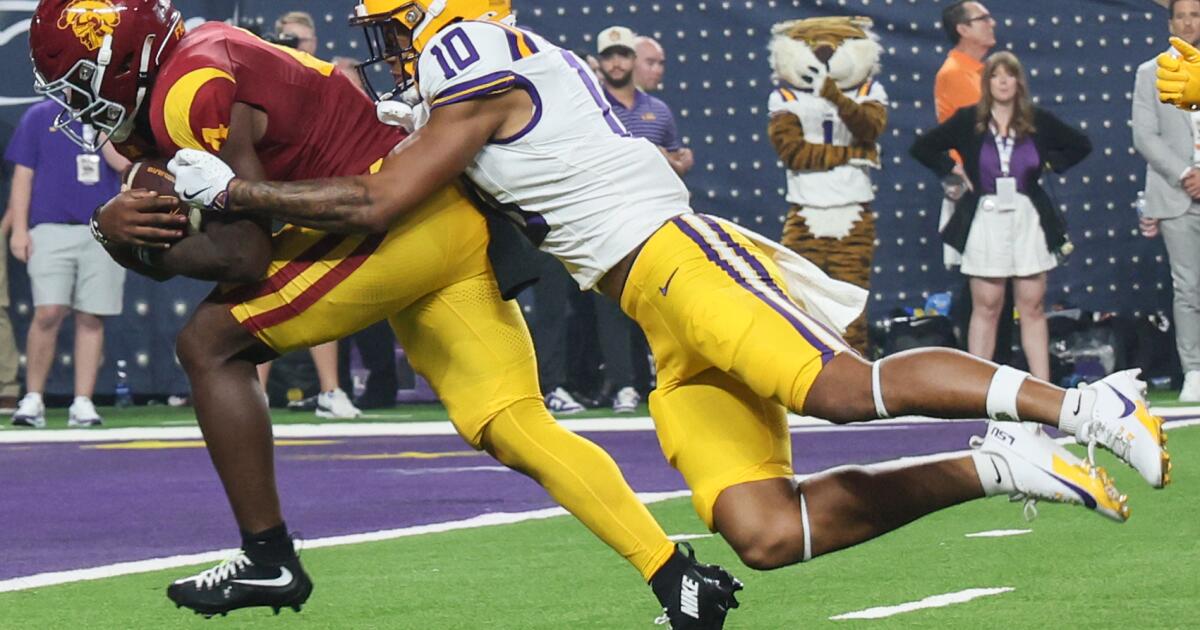
Walt Disney Co. on Sunday pulled ESPN and other channels from DirecTV minutes before the kick off of a high-profile USC football game and during the U.S. Open tennis tournament — infuriating sports fans who found themselves in the middle of a contentious contract dispute.
More than 10 million DirecTV and U-Verse video customers were swept up in the feud when DirecTV lost its rights to carry Disney programming — including Disney-owned ABC television stations.
The two companies had been negotiating at DirecTV’s El Segundo headquarters for weeks, but failed to agree on a new licensing deal by the Sept. 1 deadline.
The blackout is the latest sign of strain facing traditional television companies as customers shift to streaming.
“Consumers are going to blame somebody but, really, it took both of these companies to get into this position,” Emarketer senior analyst Ross Benes said recently.
Here’s what to know about the dispute:
Why is this happening?
Pay-TV providers, including DirecTV, have absorbed stiff increases in the costs of licensing programming as their customer base has eroded because of cord-cutting. TV distributors are struggling to make money on their video channel businesses and fear that big rate increases will only drive away more customers.
The cost of carrying broadcast channels (ABC, CBS, Fox and NBC) and sports channels, including ESPN, has been skyrocketing as the programmers look to pass along the increases they have agreed to pay sports leagues and conferences. Increasingly, the shrinking pool of traditional pay-TV subscribers has been asked to shoulder these increases.
DirecTV asked Disney for flexibility to offer smaller, genre-themed packages. Disney has long required pay-TV companies to carry its cable channels, including ESPN, in most of its customers’ homes. ESPN is the most expensive basic cable channel, costing distributors nearly $10 per month per subscriber home.
That has led to one of the thorniest issues in the current dispute: Disney’s requirements for “minimum penetration” for its channels, including ESPN. Disney requires that ESPN must be delivered to about 82% of DirecTV’s subscribers.
Over the years, the minimum penetration practice has enabled Disney to collect huge fees, including from subscribers who don’t watch much sports. Pay-TV companies must pay penalties if they don’t meet the minimum threshold.
DirecTV argues that that since fewer than 40% of its customers regularly watch Disney sports content, it is unfair to burden those subscribers with the high costs of sports programming. Disney counters that it invests heavily in high-quality programming and has offered its channels, including ESPN, to DirecTV at market rates.
DirecTV is trying to relax those penetration rates, and the fees that it must pay when it doesn’t meet the threshold.
DirecTV satellite dishes in Culver City.
(Allen J. Schaben / Los Angeles Times)
The satellite provider also notes that only 10% of its customer base regularly tunes in to kids programming — but more than 80% of its subscribers are paying for those channels.
In addition, DirecTV and other distributors also have been chafing over efforts by Disney and other entertainment giants to build their own streaming services, which compete with their longtime partners, the pay-TV companies. Disney, Warner Bros. Discovery and Fox Corp. this year teamed up to build a sports streaming service, Venu, as an alternative to companies such as DirecTV. The effort was challenged in court, and a federal judge in New York granted a preliminary injunction that temporarily blocks Venu’s launch.
How long will this dispute last?
That’s unclear.
A year ago, a similar dispute between Disney and Charter Communications, which operates the Spectrum service, lasted 12 days.
After that contentious struggle, Charter dropped some smaller Disney-owned channels, including Freeform, and gained the right to offer Disney streaming services, including Disney+, as part of its bundle. However, the outage proved costly to Charter, which lost more subscribers than it anticipated.
The blackout ended just as ESPN’s first “Monday Night Football” game of the season was getting underway.
Typically, a dispute ends when both sides feel the economic pain.
“There’s always a lot at stake,” Benes said. “But if [DirecTV doesn’t] have ESPN channels for the next three months, that will lead to even more cord-cutting. It could be another nail in the coffin.”
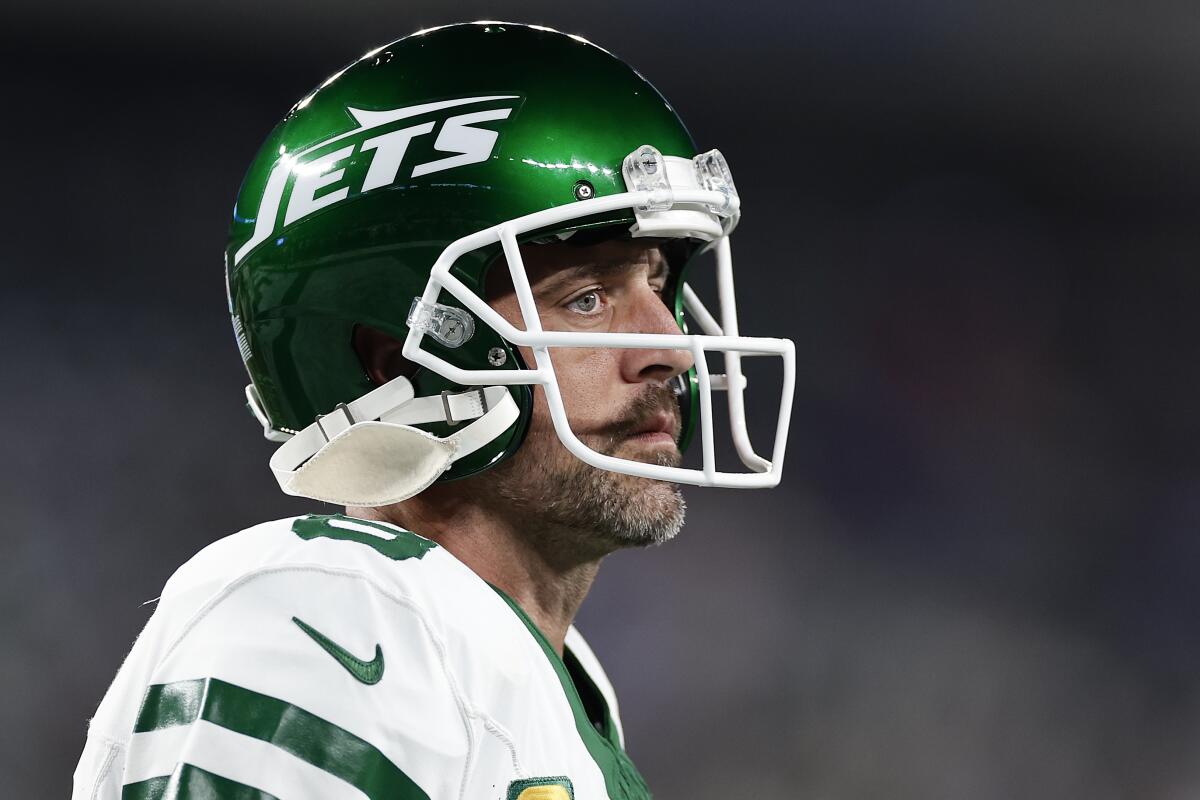
New York Jets quarterback Aaron Rodgers is expected to return on Sept. 9 for a “Monday Night Football” game after tearing his left Achilles tendon in last year’s New York Jets’ season opener.
(Adam Hunger / Associated Press)
What programs might be affected?
Customers who live in cities served by a Disney-owned ABC television station, including KABC-TV Channel 7 in Los Angeles, will see an interruption in some of their favorite programming, including “Good Morning America,” “Jeopardy” and local newscasts. Disney owns eight ABC stations, including in San Francisco, Fresno, New York, Chicago, Houston, Philadelphia and Raleigh-Durham.
For now, much of the pain is being felt by sports fans. College football fans are still miffed that they missed the USC – Louisiana State University clash on Sunday, which saw the 23rd-ranked Trojans execute a thrilling last-minute victory over the No. 13-ranked Tigers.
ESPN has rights to the U.S. Open tennis tournament, which is in the latter rounds with the men’s and women’s quarter-finals and semifinals. The championships are this weekend.
College football is also huge on ABC and ESPN.
Monday marks the kickoff of “Monday Night Football” on ESPN and ABC, with a prominent pairing of the New York Jets against the San Francisco 49ers, two markets served by ABC-owned stations. The game is slated to feature the return of Jets quarterback Aaron Rodgers, who suffered a season-ending injury in last year’s “MNF” opener.
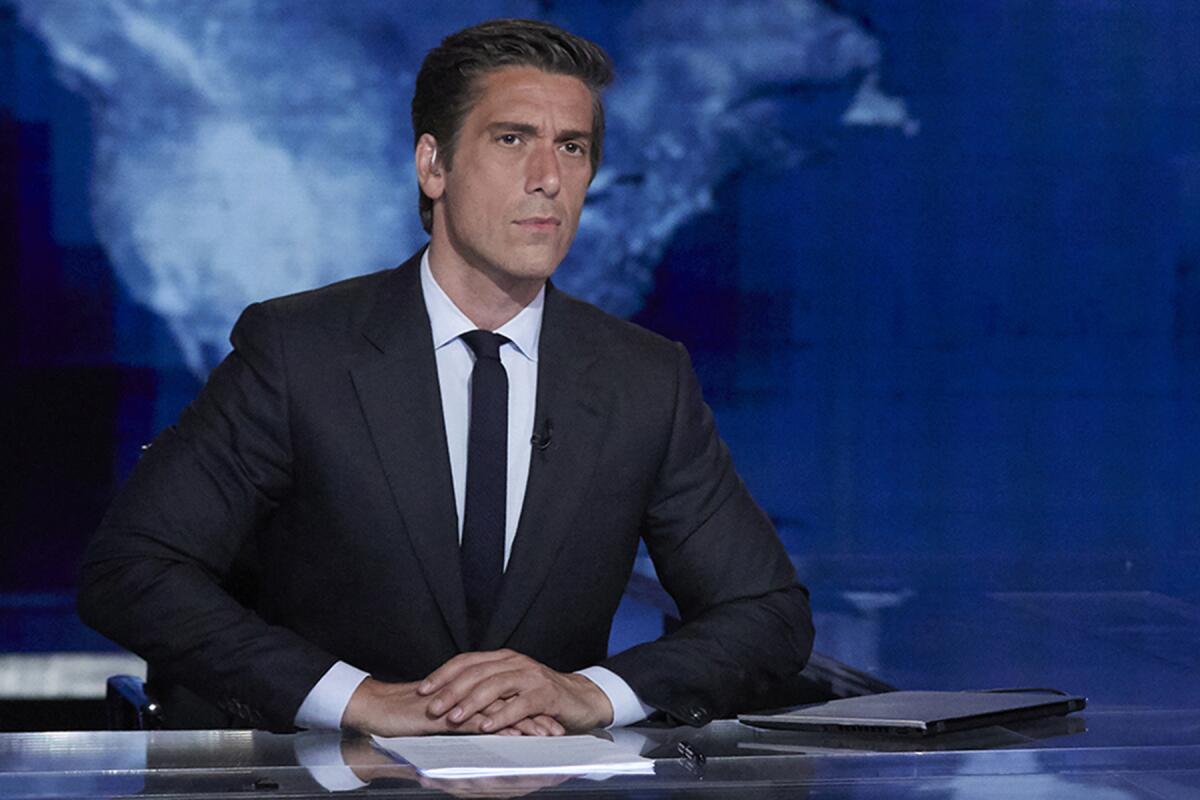
“World News Tonight with David Muir” is among ABC’s programs.
(Heidi Gutman / ABC News)
ABC is also hosting the first presidential debate between Vice President Kamala Harris and former President Trump on Sept. 10. However, other networks are carrying ABC’s feed for the debate.
The Disney-owned network also will broadcast the 76th Primetime Emmy Awards show Sept. 15, so millions of customers won’t be able to watch the TV fan fest — hosted by father-and-son comedy duo Eugene and Dan Levy — if the dispute drags on for two weeks.
Is there a work-around?
Viewers can access ABC signals through a digital over-the-air antenna. But that won’t help viewers of Disney’s cable channels, ESPN, ESPN2, Disney Channel, FX or National Geographic.
Competing services offer the Disney cable channels, including YouTube TV, Sling TV, Hulu + Live TV (owned by Disney), FuboTV and traditional cable and satellite providers, including Charter Spectrum, Cox Communications, Comcast and Dish Networks.
Can I get a refund?
Yes, sort of. DirecTV is offering customers $20 credits to compensate for the disruption. Customers must apply for the credit on an upcoming bill.
Entertainment
Kathy Hilton won’t be WeHo Pride’s grand marshal after backlash from community
Kathy Hilton will no longer be the grand marshal of West Hollywood’s pride parade.
The city and WeHo Pride on Wednesday released a joint statement, announcing that “The Real Housewives of Beverly Hills” star would no longer serve as the Grand Marshal Icon for the 2026 WeHo Pride Parade. The event is scheduled for Sunday.
“After thoughtful discussions, the City of West Hollywood, the WeHo Pride production team, and Kathy Hilton have determined that the 2026 WeHo Pride Parade will not designate a Grand Marshal Icon honoree,” read the statement.
The decision comes less than a week after Hilton was announced. That May 28 announcement was met with swift backlash from the LGBTQ+ community and allies, who called out Hilton’s ties to President Trump and alleged MAGA-leaning politics. Critics also cited accusations that the socialite had used a homophobic slur while on a trip with other cast members of “The Real Housewives of Beverly Hills,” an action she has previously denied.
In their joint statement, West Hollywood and the WeHo Pride team expressed their appreciation for “the respectful and sincere dialogue” around both the event and the “role and significance” of Pride honorees.
“The City of West Hollywood has always believed that Pride belongs to the community,” the joint statement said. “Since its earliest days, Pride has served as both a celebration and a platform for activism, visibility, resilience, and the ongoing pursuit of equality, dignity, and justice for LGBTQ+ people. … These conversations reflect the passion people have for WeHo Pride and underscore the importance of ensuring that WeHo Pride continues to honor the history, values, and diverse voices of the LGBTQ+ community.”
In a statement, Hilton expressed gratitude for being considered for grand marshal and reaffirmed her commitment to the LGBTQ+ community and causes.
“My reason for wanting to be involved in this year’s WeHo Pride weekend was simple: to celebrate, support, and share in the joy of a community that means a great deal to so many people,” Hilton said. “Pride is, and always will be, about celebrating and uplifting LGBTQ+ voices, experiences, and achievements. … My support for the community and WeHo Pride is unwavering.”
She also mentioned several queer advocacy organizations and events she has supported over the years, including GLAAD, the Elton John AIDS Foundation, the Elizabeth Taylor AIDS Foundation, Dr. Mathilde Krim, God’s Love We Deliver and Project Angel Food.
The latest Pride-related dust-up follows the abrupt cancellation of the Long Beach Pride Festival in May. The city’s Pride Parade took place as planned.
Both snafus have occurred as conservative politicians and advocates continue to attack LGBTQ+ rights and visibility nationwide. Some Republican governors have even pushed for conservative alternatives to Pride month festivities. A recent Gallup poll has found that after years of steady gains, support for marriage equality and same-sex relationships has slipped, particularly among Republicans.
Movie Reviews
Movie Review: Travolta’s “Propeller: One-Way Night Coach” is One for the Ages — All Ages
Back in the good ol’days — the ’90s — John Travolta would love to get off the topic of “Michael,” “Pulp Fiction” or “Get Shorty” in interviews with film journalists like me and regale us with how utterly besotted he had been with his first flying experience, how that drove his passion for piloting and buying planes and airfield-adjacent luxury houses.
He didn’t even seem to mind having to move house when this or that development balked at him flying his Boeing 707 out of there on the way to locations.
Travolta would tell any journalist who asked that he was writing a kid-friendly book, “Propeller: One Way Night Coach,” based on his first flights as a child in old propeller driven airliners — cheap red-eye overnight treks with too many connections for your average jet age traveller to tolerate.
I remember picking up the book when it came out later in the ’90s — at an airport gift shop — and thinking “Well, that’s as cute as I figured.”
And now, decades later and trapped in the B-movie hell of his post “Gotti” career, Travolta’s turned that cute book into the most delightful, fanciful and colorful bon bon of a movie.
“One Way Night Coach” is a child’s fantasy of flight and flying the way it used to be — with pristine, uncrowded, futuristic airports, an early ’60s era of jets and prop planes with over-uniformed stewardesses in white gloves, the days “Back before every Joe Sweatsock could wedge himself behind a lunch tray and jet off to Raleigh-Durham,” as Sideshow Bob memorably sneered on “The Simpsons’.”
It’s a fictionalized account of Travolta’s childhood about an only child (at least two Travolta siblings have bit parts in this movie) of a never-made-it/never-will actress/single-mom (Kelly Eviston-Quinnett) who indulges her aviation-obsessed eight-year-old with a cheap cross-country overnight flight.
Little Jeff (Clark Shotwell) will revel in almost every Idlewild to Pittsburgh to Dayton to Chicago to Kansas City to Denver and Los Angeles minute. He strolls into the cockpit to meet pilots, charms the stewardesses and checks out the sleeping bunks on the TWA Lockheed Super Constellation, loving even the delays if not the Chicken Cordon Bleu he’s offered on legs of the journey that offer a meal.
And as he’s an observant child, he comments (Travolta narrates) on his 50ish mother’s vamping and posing, her choice of cigarettes (Newports) and drinks, the solo traveling men whose attention she pursues and earns.
“I was her best audience,” adult Jeff remembers of the mother who’d read him plays as bedtime stories and delusionally hopes that this trip to Los Angeles might be her “big break” even though she’s pushing 50.
“Hollywood called,” she’d explain about their overnight cheap flight arrangements to ticket agents and crew. “They told me to take the next flight!”
At every turn, Jeff meets or sees kindness — stewardesses who indulge his many questions and bump them up to first class on the mostly-empty planes, a captain who fixes his toy model of a Constellation, a mentally ill flyer who flips out but is calmed by a flight attendant who isn’t overworked and frazzled in jet-powered tin-can jammed with Joe and Jane Sweatsocks who think nothing of traveling in their pajamas.
Normally, I cringe at pictures this reliant on voice-over narration. I recoil from stars who populate their picture with Sandler etc. offspring. But “Propeller” is unfailingly sweet and never cloying.
Sure, it’s fictionalized. But if you’ve followed Travolta’s life and career, a lot of him is in this — his raptoruous engagement with flying, an indulged child who developed a taste for fine food and creature comforts, a mother who was his guiding star as an actor.
I get why there are less adoring reviews than mine floating around “Propeller.” It’s unfailingly sweet. Mom’s man-hunting is seriously dated. This TWA tale is decorated with Gershwin’s majestic “Rhapsody in Blue” — United Airlines’ signature tune. And Travolta’s been around long enough for recent generations to come up and not feel a connection to the “Saturday Night Fever/Get Shorty” star whose career has fallen off and life has been visited by too much tragedy.
But I’d hate to be seated next to anybody who doesn’t appreciate this adorable, pristine and nearly perfect aviation fantasy on any flight, much less an overnight one.
Rating: TV-PG
Cast: Clark Shotwell, Kelly Eviston-Quinnett, Ellen Travolta, Ella Beau Travolta, Olga Hoffmann and John Travolta.
Credits: Scripted and directed by John Travolta, based on his book. An Apple TV+ release.
Running time: 1:01
Entertainment
After ‘Barbie’ success, Mattel looks to He-Man for another box-office lift
Three years ago, Mattel Inc. struck box-office gold — or rather, pink — with the billion-dollar success of “Barbie.”
In its first return to theaters since the female-forward phenomenon, the El Segundo toymaker is turning to the brawny He-Man for another box-office lift.
Its latest film, “Masters of the Universe,” opens this weekend, as Mattel looks to build on that previous success and continue extending its signature toy brands into the entertainment arena.
“The movie is very much in tune with culture,” said Mattel Chief Executive Ynon Kreiz. “Everything is much more contemporary relative to what was created more than 40 years ago, but it’s still very true to the origin story and to the DNA of the brand.”
The new film arrives at a pivotal time for Mattel, which is facing pressure from investors to grow its business. The maker of Hot Wheels, American Girl and Uno has recently confronted a challenging market for toys, beset by tariffs on goods produced overseas and weaker-than-expected demand for Barbie dolls and Fisher-Price preschool products.
Amid uncertainty in the toy market and the fallout from tariffs, Mattel’s net income dropped 25% to $398 million in 2025. And since the company announced disappointing holiday sales totals in February, its stock has dropped more than 30%, closing at $14.34 on Wednesday.
“Masters of the Universe” toys at Mattel headquarters in El Segundo.
(Myung J. Chun / Los Angeles Times)
The share price slide prompted investor Southeastern Asset Management to send a letter last month to Mattel leadership suggesting the toy maker should sell itself and go private. Southeastern manages about 4% of the company’s stock on behalf of its clients.
“The frustration among investors has been the fact that if you look at the business from 2021 through 2025 and even this year … the business really hasn’t grown,” said Eric Handler, a Roth Capital senior media and entertainment analyst, referring to Mattel. “This is a company that needed something fresh in the portfolio, and there’s a wide range of investments being made, of which ‘Masters of the Universe’ is one part.”
Kreiz pushed back on the idea that the company is not growing. In the fourth quarter of 2025, net sales were up 7% to $1.8 billion, though the result was not as strong as the company expected.
Mattel has spent $1.2 billion in the last three years to buy back shares, with an additional $1.5-billion share repurchase planned for the next three years.
“We’re investing in our own stock because we believe it is undervalued,” he told The Times in an interview at his office, which has floor-to-ceiling windows that give an expansive view of El Segundo. “We absolutely agree that the share price doesn’t reflect the progress that we’ve achieved over the last few years financially, operationally, our place in culture, the strength of our brands, and the continued expansion of the business. And more importantly, the potential that we have down the road.”
“Masters of the Universe” is a key variable in that equation.
Ynon Kreiz, chief executive of Mattel.
(Myung J. Chun / Los Angeles Times)
The movie, which had a budget of roughly $170 million, is expected to bring in $25 million to $35 million in the U.S. and Canada during its debut weekend. That’s a far cry from the $162-million opening haul of “Barbie,” but box-office analysts say that film captured the cultural zeitgeist in a way that’s hard to replicate.
The ‘80s-era “Masters of the Universe” is “a property that was famous with a certain group of fans, but it hasn’t had much of a pop culture presence,” said Shawn Robbins, who directs movie analytics at Fandango and founded the forecasting site Box Office Theory. The movie has notched a respectable 74% approval rating from critics on aggregator Rotten Tomatoes.
“There’s been so many callbacks to nostalgic franchises,” he said. “Some people are always on board for them, and maybe the positive reviews bring people in who were on the fence. But people are also ready for something fresh and new and exciting.”
Kreiz said he’s often asked how the company will match the success of “Barbie.”
“The answer is, we don’t need to match ‘Barbie’s’ success for movies to have a meaningful economic impact on the company,” he said. “Not every movie will be ‘Barbie.’ If we create quality content that people want to watch and create quality experiences that people are engaged with, good things happen, and these brands will resonate and will be here for years to come.”
While theatrical revenue is important, the measure of success for “Masters of the Universe” could also include its eventual reception on streaming platforms and, of course, toy sales, analysts said.
There are hundreds of products tied to the movie, from collectible action figures of Nicholas Galitzine’s He-Man and Camila Mendes’ Teela, to branded Uno decks, Legos, clothing and skateboards.
Skeletor from “Masters of the Universe.”
(Myung J. Chun / Los Angeles Times)
“For us, it’s a huge win already,” said Robbie Brenner, president of Mattel Studios and chief content officer, who also served as a producer on the film. “We have reinvigorated and relaunched this brand that has been around for decades … and done it in a way with just the best-in-class toys. Obviously that’s our bread and butter. And then to have made an epic, incredible movie … is a huge win.”
While Mattel does not yet have sales totals for its “Masters of the Universe” toys, executives said during an earnings call in late April that product sales were “growing double digits” amid strong customer demand, particularly from adults.
When Kreiz was named CEO in 2018, he saw the potential for Mattel to expand beyond toys. In an entertainment landscape dominated by known franchises and intellectual property, the former TV and media executive wanted to leverage the company’s IP in new ways to attract consumers.
Hence, Mattel has expanded into real-world experiences such as a Barbie pop-up at Coachella or a traveling Hot Wheels monster truck show. In February, the company fully acquired Mattel163 mobile game studio after buying out a stake held by Chinese tech firm NetEase. The studio has released games based on Uno, Skip-Bo and other Mattel intellectual property.
And on the film and television front, the Mattel Studios division now has 51 people — most of whom are based in El Segundo — focused on projects across platforms.
After “Masters of the Universe,” Mattel Studios plans to release a “Matchbox” streaming movie in October. The division has more than a dozen films in development that have been announced, including an American Girl movie with Paramount, Polly Pocket with Amazon MGM Studios, as well as a live-action Magic 8 Ball series from M. Night Shyamalan.
“The journey for the company was to evolve from being a toy manufacturer that was making items to become an IP company that is managing franchises,” Kreiz said. “It’s not that we’re not creating toys — it’s obviously a big part of our business — but the opportunity is to expand so much more than the physical product.”
“Masters of the Universe” was in development for years at several different studios before it was picked up by Amazon MGM.
That partnership stemmed from Mattel’s work on the “Barbie” movie with Courtenay Valenti, then president of production and development at Warner Bros. Pictures who is now head of film at Amazon MGM.
“Masters of the Universe” felt like a good property for Mattel to bet on because of its nostalgia factor and deep bench of colorful characters, from the green tiger Battle Cat to the heavily armored Ram Man and ever meme-able Skeletor, which the company hopes will attract new audiences, Brenner said.
The movie is directed by Travis Knight — chief executive of stop-motion studio Laika who also led the 2018 “Transformers” spin-off “Bumblebee” — who Brenner said “nailed” the narrative’s tone. (It didn’t hurt that Knight was already a fan of the franchise and had sported the He-Man haircut as a child.)
“It’s a property that’s kind of out there,” said Brenner, who grew up watching He-Man and his twin sister She-Ra. “It’s got all these crazy characters. But just riding that line between what is funny and kind of irreverent and then kind of heartfelt, that is a very hard thing to put in a blender and to get right.”
-
Lifestyle7 minutes ago‘How to Rule the World’ explores education and power at Stanford University
-
Technology19 minutes agoCyberdecks used to look like little laptops, but now they’re getting more personal
-
World22 minutes agoPete Hegseth warns narco-terrorists as U.S. backs Bolivia’s government amid coup warnings
-
Politics27 minutes agoDemocrats split over Tlaib’s Lebanon measure as Republicans seize on Hezbollah omission
-
Health34 minutes agoPopular weight-loss diet shows surprising impact on serious mental health condition
-
Sports37 minutes agoNBA bans two fans for life after court invasion during Knicks-Spurs Game 1
-
Technology42 minutes agoCharter breach warning: What customers should know
-
Business49 minutes agoTrump announces new coal export terminal in Oakland
