Entertainment
San Diego's renovated symphony hall looks great, but how does it sound?

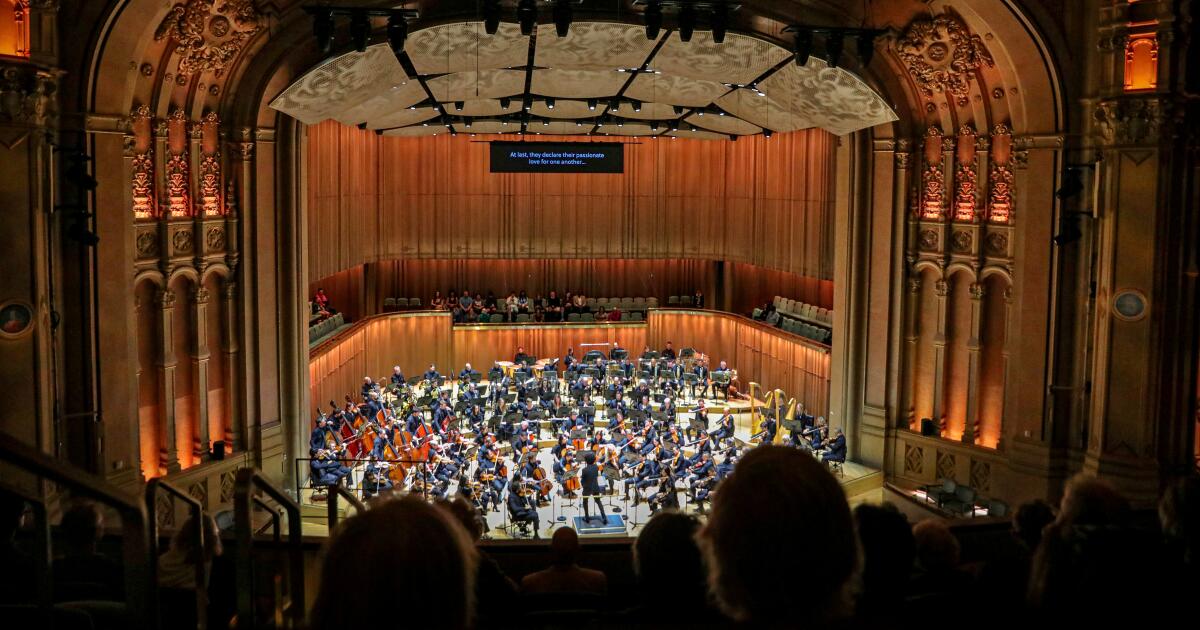
There are many reasons for the current rage in renovating concert halls. It is usually cheaper than building something new. The science, as well as the art, of acoustics has advanced. Renovation can be a good way to save a historic hall. But an argument can also be made for simply starting over.
In the case of San Diego Symphony, starting over might have seemed the best option. No American orchestra of San Diego’s merit or promise under its rising star music director, Rafael Payare, had been stuck in so dismaying a venue as Symphony Towers.
Buried in a bland mixed-use skyscraper in the dreary Financial District downtown, an aging, if glamorous, 1929 movie palace with rotten acoustics long served as the San Diego Symphony’s disagreeable home. The first job the orchestra had in giving concerts was to raise your spirits after your having traipsed through a seemingly bureaucratic building in a neighborhood dead at night and on weekends when concerts are given.
But miraculously, the San Diego Symphony has made the dreary become a destination with its renovation by architectural firm HGA and acoustician Paul Scarbrough. The Symphony Towers have turned astonishingly welcoming. The acoustics shine in what had come to be known as Copley Symphony Hall, now named Jacobs Music Center. Even the neighborhood has picked up considerably as the new hall encourages more restaurants to remain open. Parking is easy.
The Jacobs entrance puts you directly in an actual concert hall foyer. The first thing you encounter is a superb artisan bakery where coffee, pastries, sandwiches and the like are half the price and four times the quality of the catering at the Music Center in Los Angeles. Perhaps a few who come to the bakery (which has regular hours) to pick up a loaf of sourdough will be tempted to buy a concert ticket too. The hall is spruced up with new seats and looks lovely.
The one visual downer is the stage, which is no longer wood. It’s covered in what appears to be acoustic material, giving it a cool industrial look that doesn’t reflect colored stage lighting as pleasingly as it does the orchestral sound, which has a combination of warmth and clarity.
Giving the musicians a couple of weeks to settle in (they need, in any new acoustic, a good year or more), I heard the Sunday matinee concluding the second week of regular symphony concerts. Payare’s program, moreover, demonstrated both how the orchestra could come across in a traditional Beethoven concerto as well as in an orchestral showpiece.
The program was to have been Brahms’ Violin Concerto and Schoenberg’s tonally kaleidoscopic, over-the-top early tone poem “Pelleas und Melisande.” Payare recently and spectacularly recorded the latter with the Montreal Symphony, where he also is music director. But when the young violinist Sergey Khachatryan was unable to get his visa approved, a last-minute change was made with the seasoned Pinchas Zukerman in Beethoven’s Violin Concerto.
Violinist Pinchas Zukerman, a late substitute, and music director Rafael Payare performing Beethoven’s Violin Concerto with the San Diego Symphony in Jacobs Music Center.
(Sandy Huffaker / San Diego Symphony)
At 76, the Israeli violinist is more commonly encountered as a conductor, but he made a strong impression at the amplified Hollywood Bowl last summer playing a Mozart concerto with the L.A. Phil led by Zubin Mehta. His tone may not be as strong as it once was, and he needed time to warm up at Jacobs, but he brought a controlled elegance and depth to Beethoven.
From my seat in the balcony there was a refined presence to his tone and a sharp immediacy to every section in the orchestra. When Zukerman returned onstage for an encore, he began by speaking (clearly heard in the hall without a microphone) about the meaning of Brahms’ beloved lullaby.
“I’m hurting,” he said. “The world is upside down. Enough is enough. Bibi!” The only way he knew to calm down an impossible situation, he explained, was to play this lullaby, which he did very softly, with the kind of shocking beauty that only a great artist in an ideally sensitive acoustic could movingly capture.
Schoenberg’s “Pelleas und Melisande” was written 1903 by a 29-year-old composer on the verge of revolutionizing music but still finding his way out of 19th century romanticism. The composer, whose 150th birthday last month is being celebrated this season, employs a huge orchestra for a flamboyant palette of instrumental colors and effects in a vast array of dramatic gestures. A vital storyteller, he thrillingly illustrates Maurice Maeterlinck’s original play, as thoughtfully used surtitles made especially apparent.
So, for his part, did Payare, who has a flare for Schoenberg. He is a conductor of considerable grace and considerable swagger, making the two go unusually yet inexorably together. That meant broad sweeping gestures illuminated tiny details and bursts of wild excitement stayed controlled.
It was a test of not only the orchestra but also the acoustics. Clarity here became the dominant trait. There was neither the glare in high notes that mildly plague the New York Philharmonic’s restored David Geffen Hall, for which Scarbrough also was acoustician, nor quite the richness of Geffen’s base. But Jacobs expertly handles ear-crushing climaxes as well as it does a lullaby. The hall should, over time, open up sonically and, with luck, mellow.
For now, though, it is a place made for excitement. All that’s left is for San Diegans to wake up and smell the coffee on the way in and divine the music inside. On but the second week in the hall, too many of the 1,831 seats were empty.


Christopher Nolan delivers his boldest and most visually stunning film to date.
TOP FIVE OF “THE ODYSSEY”
5. Nolan’s Astounding Script
As a writer-director, Nolan has evolved in substantial ways over the course of his career. He has always been a strong, concept-oriented writer who could sell the ever-living shit out of a great narrative hook, but in recent years, he has reached another level of craftsmanship, especially when it comes to the emotional depth of his work. His take on The Odyssey has the unenviable task of condensing Homer’s sprawling, lyrical epic into a feature-length runtime, yet he manages to turn that challenge into a strength rather than a weakness. From the very first frame, Nolan engages in a fascinating conversation with the original text.
The screenplay merges elements of both Homer’s The Iliad and The Odyssey in articulate and insightful ways that should excite scholars and newcomers alike. Nolan’s film is so efficient that it remains completely accessible to those unfamiliar with the stories, while also serving as a fascinatingly complex and deeply thoughtful adaptation that will keep longtime fans captivated until the very end. Somehow, he accomplishes all of this while crafting one of his most personal works to date. The film is explicitly rooted in many of Nolan’s recurring thematic interests, including time, familial bonds, and the inherent guilt of achievement, while pushing each of those ideas to new depths. This is my favorite Nolan screenplay to date, and an incredible accomplishment.
4. The Insane Ensemble
The cast Nolan assembles for The Odyssey is as sprawling as Homer’s epic itself. The ensemble is a blend of longtime Nolan collaborators and newcomers, all of whom come together to form a richly woven tapestry of fully realized performances. For my money, there isn’t a weak link in the group. If anything, it’s remarkable to see acclaimed actors like Charlize Theron, Lupita Nyong’o, and Zendaya appear for only a few minutes each and still leave a lasting impression.
There are, however, several standout performances, particularly from Matt Damon, Samantha Morton, Robert Pattinson, Anne Hathaway, and Elliot Page. Each actor is utterly magnetic, possessing the screen presence and charisma to command Nolan’s signature IMAX frames in breathtaking fashion. Tom Holland also deserves special recognition, delivering what is arguably the best performance of his career. By the film’s end, it genuinely feels like he’s entering an entirely new chapter as an actor. Altogether, the performances are phenomenal, filled with emotion, pathos, and deeply affecting, soulful work.
3. The Horror Sequences
It’s astonishing how much of Homer’s epic Nolan manages to fit into this film without ever making it feel rushed or condensed. For me, though, the most exhilarating moments come when he fully embraces the story’s fantastical elements through a distinctly unsettling, dread-filled lens. The Cyclops sequence feels like Nolan casually inserted a masterful horror short into the middle of the film’s first act. Even more impressive is the Circe-centered sequence later in the runtime, which pushes the film into even more delirious and mesmerizing territory while employing a similarly immersive approach.
These sequences give Nolan the opportunity to apply many of his signature filmmaking techniques in entirely fresh ways. The craftsmanship on display feels deeply rooted in his established style, incorporating everything from practical on-screen light sources and a thunderous blend of diegetic and non-diegetic sound to his trademark cross-cutting. Yet, when placed within these mythological and fantasy-driven settings, those familiar techniques feel completely revitalized, creating some of the most visually and emotionally striking moments of Nolan’s career.
2. An All-Encompassing Cinematic Experience
Which brings us to the culmination of all this extraordinary craftsmanship: The Odyssey is simply a transportive experience, one that can only be compared to one other Christopher Nolan film, his masterpiece, Dunkirk. From Hoyte van Hoytema’s breathtaking cinematography and Richard King’s immersive sound design to Ludwig Göransson’s soaring score, every element of the film pulls you deeper into its world. Sitting in an IMAX theater, surrounded by this level of cinematic precision and commitment, while witnessing the remarkable performances and Nolan’s grand creative vision, results in something truly monumental.
It was a theatrical experience I won’t soon forget, one that felt epic in every sense of the word.
1. The Obscenely Satisfying Final Act
The final thirty minutes of The Odyssey feel like watching a magic trick unfold before your eyes. As gripping and immersive as the film is from the very beginning, it becomes clear that Nolan has been meticulously setting up layers upon layers of narrative and thematic dominoes, all so he can knock them down in spectacular fashion during the final act. The sheer number of satisfying payoffs that arrive in rapid succession throughout this closing stretch is nothing short of astonishing.
At three hours long, The Odyssey never feels like it’s wasting a single moment. Instead, Nolan creates an experience that makes you feel as though you’ve genuinely embarked on this journey alongside the characters. By the time the film reaches its conclusion and everything comes full circle with such precision and emotional weight, it’s difficult to put into words just how deeply moving it all is. I genuinely sat there with my jaw on the floor. It’s phenomenal filmmaking.
RGM GRADE
(A)
Over the past few decades, Christopher Nolan has established himself as one of the defining filmmakers of his generation. From early works like the critically acclaimed cult classic Memento to blockbuster landmarks like The Dark Knight and Inception, and most recently the Academy Award-winning Oppenheimer, Nolan has remained one of the most influential voices in modern cinema. That made the question of what he would do after winning Best Picture and Best Director for Oppenheimer especially compelling. What kind of film does a director who seemingly can do anything choose to make at the absolute height of his creative powers?
The answer is The Odyssey, an adaptation of Homer’s seminal, genre-defining epic. The choice of source material wasn’t entirely unexpected, given Nolan’s long-documented fascination with the story. He nearly directed Troy back in 2004 before pivoting to Batman Begins, a decision that ultimately launched the extraordinary run of films that followed. What is surprising, however, is the sheer ambition and fearless conviction with which he tackles the material. In a post-Oppenheimer world, Nolan clearly feels emboldened to take even bigger, bolder, and more daring creative swings. The result is a staggering achievement. The Odyssey is unlike anything else in modern blockbuster filmmaking and stands among the finest accomplishments of Nolan’s career.
Ultimately, it’s almost unbelievable that a film like this exists: a massive-budget, three-hour, R-rated epic that finds Christopher Nolan pushing himself further than ever before while embracing his unique storytelling instincts in deeply thoughtful and compelling ways. For a filmmaker whose work has often felt meticulously controlled, The Odyssey crashes over you like a roaring sea, occasionally threatening to overwhelm even its creator, yet becoming all the more exhilarating because of it. It’s a breathtaking, enthralling, and profoundly insightful cinematic achievement. I cannot recommend it highly enough.

Discover more from RGM
Subscribe to get the latest posts sent to your email.
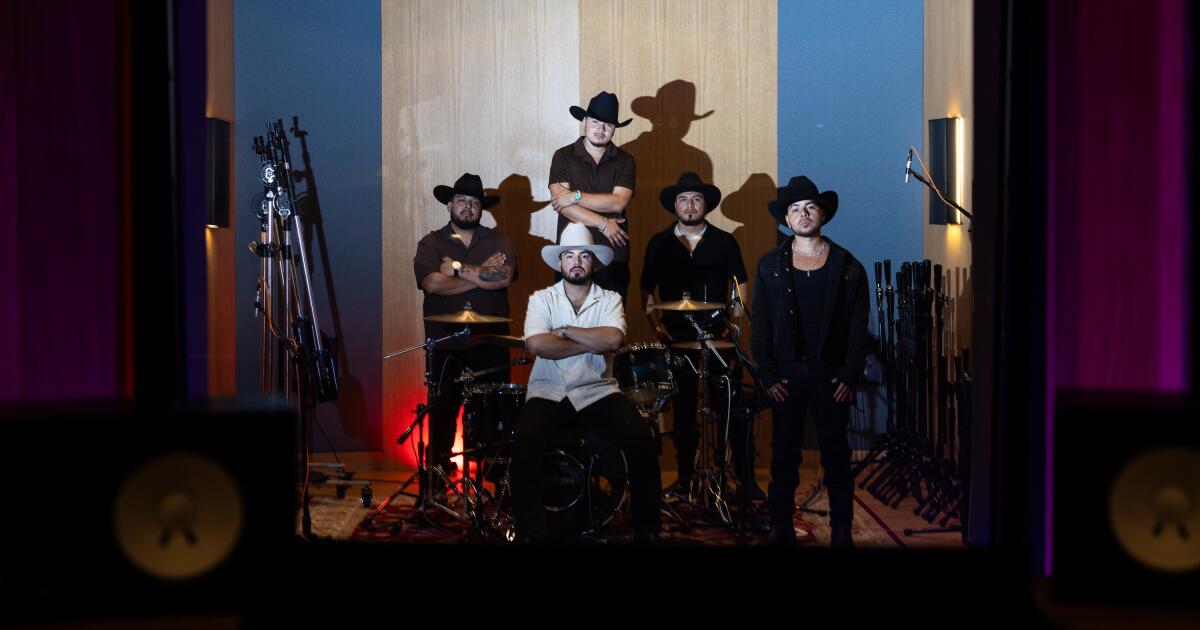
When you walk into a room with Los Primos del Este, the happy-go-lucky guys immediately make you feel like part of the family. What they first cultivate with silly banter and lighthearted ad-libs eases into a more vulnerable, introspective atmosphere, comparable to a cathartic therapy session.
When I met the norteño-sax band in at Interscope Records — the major label that signed them in early 2023 — it was just a couple of hours before the official release of Los Primos’ new album, “Dulce Amargo,” on Thursday.
For a young band of players in their early 20s, they play it cool; “Dulce Amargo” is their eighth LP to date. The project feels thoroughly chiseled to their refined sonic tastes (influenced by Julión Álvarez, Legado 7 and Remmy Valenzuela) inflected with raw, sentimental lyricism and a wailing saxophone that commands each track with the spirit of an electric guitar.
“Play it back to back and actually start understanding the sound more and realize there’s new sounds being created,” said lead vocalist Geovanni Flores. “Because a lot of people get stuck in their old ways.”
Made up of five members — Flores, bassist and supporting vocalist Ariel Jesus Lopez, accordionist Juan Luis Hernandez, drummer Alejandro Tellez and saxophonist David Tellez — the group has built a steady momentum in the música mexicana genre. They’ve championed the resurgence of norteño-sax, a subgenre that fuses the accordion sounds of norteño music with an invigorating alto saxophone, made popular by legendary groups like Conjunto Primavera.
Since forming in 2017, the North Carolina-based band has gained over 2 million listeners on Spotify through catchy norteño-sax songs like “No Es Mentira (Version Norteña),” “Poema” and “Mami” — drawn together by a polka-like beat that has made them a staple of Mexican dance venues.
In 2024 alone, the subgenre grew by 39% in both the U.S. and Mexico, per Spotify.
Los Primos del Este formed in 2017 out of North Carolina.
(Arwen Clemans / Los Angeles Times)
The band took a few years to find its groove. Its 2020 debut album, “PDE,” experimented more with the prickly, sad sierreño sound popularized by acts like Eslabon Armado and DannyLux — as well as trap-infused corridos tumbados with a thumping tololoche. Still, this was music one could bop their head to, even if dance parties were limited during the global pandemic. With norteño-sax, the group could incorporate contemporary dating themes into songs that bring people physically closer to one another on the dance floor.
“There’s been a sense of maturity that’s happened within the group. In the past, we would just make music to make music and release it,” said Flores. “ We thought about every single detail now, even down to the album cover.”
Before getting into the thick of their recent music catalog, Los Primos del Este quickly unfurled details of the album cover, which shows the group sprawled across the flatbed of a white truck. The image was inspired by Alejandro Cartagena, a Dominican Republic-born Mexican creative who photographed carpooling laborers on the flatbeds along a highway in Monterrey, Mexico, in 2012. The project was a visual representation of how everyday people — often marginalized individuals — navigate transit in a sprawling suburban area.
Such an open stance on community issues appears to be a norteño-sax speciality. In 2000, their forefathers Conjunto Primavera previously told The Times that they make music for working-class audiences: “Wealthy people don’t like what we do.”
“Personally, I found myself in the bed of a truck at one point, low-income, trying to make something out of nothing,” said Lopez. “That’s the world I grew up in, and that’s the world I wanna show everybody. It’s not all sweet, you know?”
The band also nods to injustices faced by immigrant communities — including the recent fatal shootings of 52-year-old Lorenzo Salgado Araujo and 26-year-old Johan Sebastian Duran Guerrero by Immigration and Customs Enforcement agents in Texas and Maine, respectively.
“We’re willing to take the heat,” said Lopez, referring to the band’s pro-immigrant stance. “The community looks at us as a negative presence, but in reality, we’re hard-working, dedicated family people.”
It is both that honesty and vulnerability that are etched into the 14-track LP “Dulce Amargo,” which translates to “bittersweet” in English. The band shared that each member contributed details of his own personal experience to the brainstorming sessions — a process they likened to therapy.
“We were comfortable enough with each other to let [our] stories be heard,” said Lopez. “In the Latino community, there is kinda like that stereotype [that] you have to be strong. I think this message goes out to everybody — if you’re feeling something, specifically the men, it’s OK to just let it out.”

(Arwen Clemans/Los Angeles Times)
The hazy love melody “Tremenda,” for example, underscores an intense yearning for connection. Written after Lopez was starstruck by a woman, its first lyrics begin in wondrous marvel: “Tal vez fue tu mirada,” or, “Perhaps it was your gaze.”
“What’s the first thing you do when you look at somebody? I look at the eyes,” said Lopez. “They say the eyes are the doors to the soul.”
Alejandro Tellez’s contribution came with the punchy “Linda Sonrisa,” that pleads for someone to realize the realities of the mistreatment they’re facing with another lover.
“How many times are you gonna let him do you wrong until you realize that you have the right guy in front of you?” said Alejandro Tellez in a sing-song twang. “That’s a story that I went through in high school.”
For Flores, the EDM-fused, echoing melody “Mejor Sin Ti,” struck a personal chord; could a relationship be the only thing standing in your way to personal success? “Some people do hold you back, some people tie you down — that’s what I felt,” said Flores.
Hernandez gets a bit teary-eyed when talking about his favorite song, “Sentimientos,” a whirling polka-driven ballad about an avoidant situationship, he said. “To me, it’s like we both kinda love each other already, but we’re kind of afraid to say it,” he explained. “A lot of people are afraid of falling in love again, so that song hits close to home.”
The concept behind “Mereces Mejor,” a trance-inducing ode with floating melodies that implores a loved one to recognize their self-worth, was inspired by David Tellez’s own experience with unrequited love: “She’s trying to go to the bad guy, and I’m over here giving everything I got.”
As the five artists prepare to take their new album on the road — including an upcoming performance at the Lone Star State’s Truck Show Texas Fest on July 25 — they want to make clear that norteño-sax is not a stagnant subgenre. Like most of música mexicana, it, too, is evolving, both in sound and lyricism, encapsulating today’s complex dating culture. Their emotional vulnerability is welcome in a field flooded with artists that may otherwise shrink away from such honesty — perhaps due to the stigma of mental health issues in the Latino community, especially among men.
“We understand that changing the sound may not be for everybody, but we’re making music for the next generation,” said Lopez. “Who knows? Maybe their parents might end up liking this too.”
Movie Reviews
‘3 Weeks After’ Review: A High-School Field Trip Goes Off the Rails in a Skillful but Sadistic Serbian Shocker

The kids are not alright, or even right in the head in Serbian drama 3 Weeks After. This skillfully made but mean-spirited exercise revolves around a high-school trip to the countryside that turns extra dark when nearly everyone takes to bullying one kid among them: a boy, Zoza (Jovan Ginic), who just happens to have been the best friend of another kid they all bullied into committing suicide three weeks before, hence the title.
Imagine an especially vicious adaptation of Lord of the Flies or a remake of Gus Van Sant’s Elephant but directed by Gaspar Noé. Indeed, there’s even an extended sequence in which the teens get high and dance to techno, recalling Noé’s Climax. Unfortunately, 3 Weeks is way less fun and has a sadly deflated final stretch. More importantly, for all that director Miroslav Terzic (Redemption Street, Stitches) has talked up basing this loosely on actual events and discussing peer-on-peer violence with his young cast, the film offers an absurdly bleak portrait of Gen Z that just doesn’t ring true.
3 Weeks After
The Bottom Line Nasty beyond belief.
Venue: Karlovy Vary Film Festival
Cast: Jovan Ginic, Klara Karaulic, Andjela Alavirevic, Tihana Lazovic, Branislav Trifunovic, Andrija Markovic
Director: Miroslav Terzic
Screenwriters: Vladimir Arsenijevic, Bojan Vuletic, Miroslav Terzic
1 hour 35 minutes
The picture opens with a sledgehammer of a visual metaphor: a building on a housing estate is fully engulfed in flames, but there are no firefighters on the scene, no victims screaming from windows, and not even any gawking spectators except for Zoza. Even he seems pretty unbothered about the inferno. Seemingly having had his fill of conflagration watching, Zoza heads off with his backpack, joined en route by classmate Darija (Andjela Alavirevic), who expresses her surprise that he’s going on the school trip to Bulgaria so soon after “what happened.” This traumatic three-weeks-old inciting incident — wherein Zoza’s friend Andrija killed himself in order to escape bullying from his schoolmates — is only gradually explained as the film unfolds, with nasty little details dropped like breadcrumbs along the way.
It turns out that Zoza was also somewhat culpable for Andrija’s death, although nowhere near as much as those who actually beat and humiliated the late teen until he could bear it no longer. As the kids sit on the hired coach in little cliques and subgroups, it becomes clear that they’ve decided Zoza will be the next victim, partly because he knows what happened to Andrija and partly just because he’s quiet, a bit of a loner and not a morally benumbed sociopath like the rest of the class.
At a rest stop along the way, head sociopath Milos Bogdanovic (Andrija Markovic), who has been banned from the trip while the circumstances of Andrija’s death are investigated, sneaks aboard so he can be with his queen bee girlfriend Milica (Klara Karaulic). Somehow neither the two chaperone teachers on the trip, flighty Viktorija (Tihana Lazovic) and lumpish Markus (Branislav Trifunovic), nor the coach’s driver notice Bogdanovic’s arrival. His presence is only detected when the bus is forced to stop on the way due to a landslide-blocked route and a tire is punctured while trying to turn around on the narrow mountain road.
Perhaps that’s all also meant to be further visual metaphors. Certainly, there’s very little that’s metaphorical about the way the script, by Terzic, Vladimir Arsenijevic and Bojan Vuletic, has Viktorija and Markus negligently putting on noise-muffling headphones as they go to bed in the sprawling remote hotel the whole party has checked into. Having spent a little time griping to each other about how awful kids are these days, they both make themselves about as useful as nipples on cockroaches by electively shutting up their ears. With no adult supervision (the hotel staff is mysteriously absent too, as it’s meant to be the end of the season), the teens raid the beer supply and begin hunting down Zoza, who’s lured out by the one person he semi-trusts.
As repellent as the scenes that follow are — especially one in which a child is brutalized out of frame while Milica scrolls her phone with a blank affect, complaining that she’s bored when the atrocity is finished — there’s no denying that Terzic and his team have skills. The chase of Zoza through the forest and caves beyond the hotel is well-wrought, coherently mapped out spatially, and filmed by cinematographer Damjan Radovanovic and his team with just enough light and the right filters to allow us to work out what’s going on. That said, this probably won’t be even faintly legible on a home entertainment system, let alone the handheld gadgets that kids like the ones seen here prefer to watch entertainment on these days.
But this movie isn’t meant for teenagers, or really anyone who has more than a passing acquaintance with young people of this generation. Maybe things are worse in Serbia, which suffered a war a generation ago that left deep scars, but it rather beggars belief that this cohort could be, right down to every single child, quite this pathologically cruel and morally bereft. Likewise, it seems very farfetched that the morning after every single one of them would be so catatonically hungover, passed out in puppy piles in their clothes with not a drop of vomit in sight, that they wouldn’t wake and hear the ominous things going on. Is it another kind of metaphor that Terzic cuts abruptly to black instead of showing us the climactic combustion we’ve been set up to expect? Maybe, but really who cares?
-

 Detroit, MI4 minutes ago
DER Weekends: Pathways for first-gen students at the University of Detroit Mercy – WDET 101.9 FM
-

 San Francisco, CA16 minutes ago
“There is no ceiling”: Welcome to Area AI
-

 Dallas, TX22 minutes ago
Cowboys news: Dak Prescott embraces high expectations in Dallas
-

 Miami, FL28 minutes ago
How to watch France vs. England in the third-place FIFA World Cup match: TV channel, streaming, kickoff time
-

 Boston, MA34 minutes ago
Police investigating deadly shooting in Allston – Boston News, Weather, Sports | WHDH 7News
-

 Denver, CO40 minutes ago
Former strip club owner selling Castle Pines mansion for $8M
-

 Seattle, WA46 minutes ago
‘Imagine you crushed a raccoon like a can’: Curley describes viral deformed ‘mutant’ Jimothy – MyNorthwest.com
-

 San Diego, CA52 minutes ago
More than 800 birds rescued from Valley Center property

