Entertainment
Review: Unnecessary 'Mufasa' shows the Lion King franchise to be running out of lives

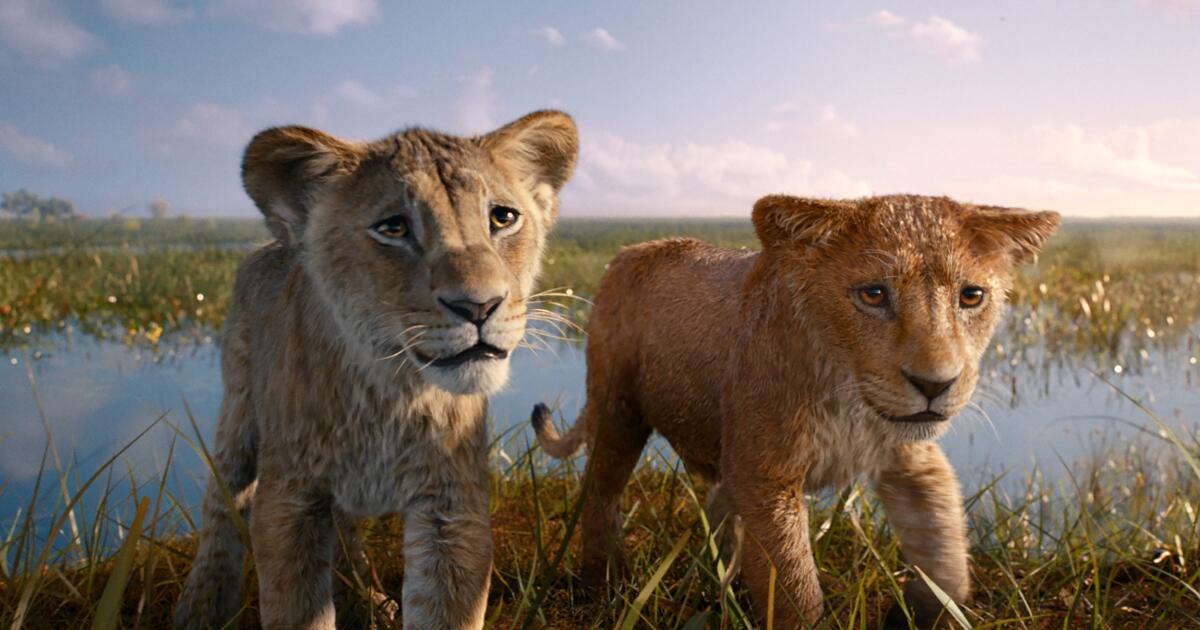
Barry Jenkins signing on to direct a spin-off to “The Lion King” sounds like a joke you’d crack after “Moonlight” won the Oscar for best picture, less at the filmmaker’s expense than at an industry that’s gotten cagey about funding his kind of heart-driven talent. In the ’90s, Hollywood might have handed him its checkbook. This decade, though, just getting a big movie green-lit takes a cat fight. “Mufasa: The Lion King,” from a script by Jeff Nathanson, has taken up a substantial amount of Jenkins’ bandwidth — it was first announced in 2020. You stalk the film trying to find him in it, but there’s not much more than an ethereal interlude in which three lions flirt in the grass.
This is a guaranteed blockbuster that nobody needed except studio accountants and parents. I’ll accept it on those terms because it’s a good thing when any kid-pleaser gets children in the habit of going to the movie theater. Yes, it’s easy and necessary to mock Disney for squeezing every last drop out of a franchise. Heck, Disney’s even learned that it can be lucrative to make fun of itself, which happens here when one animal groans, “Please don’t mention the play again.” And now, the company’s zeal for prequels has resulted in a movie about two kittens who we’ve all seen meet a grisly death. To my morbid delight, “Mufasa” starts off by killing one of them again.
The framing device is that Simba and Nala (Donald Glover and Beyoncé Knowles-Carter) have handed their daughter cub, Kiara (Blue Ivy Carter), to three familiar babysitters: Pumbaa the warthog (Seth Rogen), Timon the meerkat (Billy Eichner) and Rafiki the psychic mandrill (John Kani), who insists repeatedly that he is not a baboon. Rafiki recounts the origin story of Kiara’s grandfather while, at a cadence that ticks like a nervous executive’s pacemaker, Pumbaa and Timon interrupt for atonal comic relief: “Less childhood trauma, more meerkat!” Timon wails.
Mostly, we’re roaming Tanzania with an orphaned whelp named Mufasa (voiced in his youth by Braelyn and Brielle Rankins, and in his prime by Aaron Pierre) and his adopted brother Taka (Theo Somolu and later Kelvin Harrison Jr.), who hails from a royal lineage. My quibble with the original “Lion King” and its 2019 remake is that Simba is a one-note brat. Mufasa is even worse — he’s flat-out flawless — and the other characters can’t resist commenting on it. “You are the lion who can do everything,” purrs one female in heat (Tiffany Boone). That’s no exaggeration. Among his innate gifts, Mufasa proves to be an expert in elephant migration patterns and botany.
To further the hagiography, the script flubs its own plot points. Early on, there’s a fight where, apparently, Mufasa murders an unnamed lion. Except you wouldn’t know that happened from anything onscreen until a follow-up beat where the dead lion’s father, Kiros (Mads Mikkelsen), learns that his child died of his injuries at some point between scenes. Kiros’ quest for vengeance is a through-line of the film, and the kill is Mufasa’s first blood (though it won’t be his last). Yet the moral impact doesn’t seem to occur to our noble hero at all.
The line readings are flat-footed. Mufasa and most of the other lions sound like theme-park animatronics with voices set to “Soothe.” Adding to the homogeneity, the core characters — and I’m referring to a half-dozen-plus beasts here — share the same backstory: They miss their families. The daddy/mommy/brother issues become so repetitive that it’s a relief when Zazu (Preston Nyman) the hornbill never mentions a long-lost egg.
Taka, the more cowardly lion, will eventually earn a name that isn’t going to surprise anybody. The bigger jaw-dropper is: Why wasn’t this movie pitched as “Scar”? This innately good-hearted princeling is the only compelling character. From his point of view, Taka can make a legitimate case that a golden god like Mufasa is exasperating to be around — this stray has literally destroyed his pride. Plus, Taka’s voice actors, Somolu and Harrison Jr., deliver dynamic performances with mercurial emotions and a delightful Cockney accent. During the song, “I Always Wanted a Brother,” the photorealistic lion croons about his “bruvaah” with the surreal gusto of Growltiger in “Cats.”
The subtlest animation looks the best, especially when sunlight dapples upon fur or felines flex their claws to assert power. (I write this while struggling to keep a 20-pound Maine Coon off my desk.) There are opportunities for dreamlike images: a flock of birds zooming like warplanes, a herd of antelope emerging from a horror-movie mist, and an unexpected amount of gorgeous and terrifying swimming sequences as these so-called kings of the jungle are continually bested by gravity and water. Occasionally, the look goes gonzo for viewers watching the movie in 3D. Think a slow-motion raindrop hurtling toward your face, or shots of the animals racing around like they’ve got a GoPro camera on their collar.
The ending feels similarly rushed, although there’s nothing in particular I’d rather spend more time with than the songs by Lin-Manuel Miranda. The cast belts them at a terrific, breathless, breakneck pace, scaling octaves as demanded. There are only a few numbers, but most of them are marvelous constructions with sinewy arrangements and overlapping harmonies that tangle around each other during duets. Good luck pulling them off at karaoke. But it’s hard to call any one song a showstopper. They aren’t built for bombast, and none are as in-the-moment ear-wormy as “Hakuna Matata,” although there’s a slithery villain’s ditty by Mads Mikkelson that became my favorite once I came around to the lyrics: “Cause I’m gonna be / the last thing you see / before you go / bye-bye.” I still think this prequel didn’t need to exist, but at least I left humming.
‘Mufasa: The Lion King’
Rated: PG for action/violence, peril and some thematic elements.
Running time: 1 hour, 58 minutes
Playing: In wide release Friday, Dec. 20

Movie Reviews
Bandar Movie Review: Bobby Deol roars in Anurag Kashyap’s unsettling legal thriller that refuses to spoon-feed

Name: Bandar
Director: Anurag Kashyap
Cast: Bobby Deol, Sanya Malhotra, Sapna Pabbi, Saba Azad, Jitendra Joshi, Raj B Shetty
Writer: Sudip Sharma, Abhishek Banerjee
Rating: 3.5/5
Plot:
Bandar follows Sameer Mehra’s character, essayed by Bobby Deol, a fading star who is desperately clinging to his past glory. Just as he attempts to rebuild his life and finds solace in a new relationship, his world comes crashing down. A former girlfriend files a heinous allegation against him, dragging him into a vicious, high-profile legal battle. Written by Sudip Sharma and Abhishek Banerjee, the film moves away from standard Bollywood courtroom setups. Instead, it dives straight into the murky waters of social media trials, public perception, and a sluggish judicial system where the truth gets buried under layers of gray.
What works:
Known for his chaotic energy, Anurag Kashyap takes a remarkably mature and controlled approach here. He avoids sensationalizing a highly sensitive topic, choosing instead to focus on the psychological claustrophobia of the protagonist. The prison sequences are exceptionally well-shot. They create a suffocating, raw atmosphere that makes you feel the weight of the character’s confinement. The script successfully avoids preachy, black-and-white monologues. It bravely forces the audience to confront their own biases regarding modern-day public trials and the digital judge-and-jury culture.
What doesn’t:
Clocking in at nearly two hours and twenty minutes, Bandar feels heavily weighed down in the second half. The narrative stretches thin, and a few subplots demand too much patience, making you wish for a tighter edit. The film stubbornly refuses to take a definitive moral stance or offer a neat resolution. While film enthusiasts might appreciate the complexity, mainstream viewers looking for a clear-cut ending or emotional payoff might walk away feeling detached and frustrated.
Performances:
- Bobby Deol is the beating heart of this film. Stripping away the massive macho swagger and menacing villainy of his recent hits, he delivers a deeply vulnerable, understated performance. He plays Samar with a mix of arrogance, confusion, and raw helplessness, proving his immense range.
- Sanya Malhotra anchors her screen time with her trademark reliability, turning in a grounded and impactful performance.
- Saba Azad and Sapna Pabbi excel in their respective roles, bringing genuine nuance to characters that could have easily been sidelined.
- Jitendra Joshi is an absolute scene-stealer, commanding your attention every single time he steps into the frame.
- Indrajith Sukumaran and Raj B Shetty are absolute show stealers with their raw acting.
Final Verdict:
Bandar is an unsettling, morally complex thriller that refuses to spoon-feed its audience. It isn’t a comfortable watch, nor does it try to be. While the sluggish pacing in the second half prevents it from being an absolute masterpiece, it is worth a watch for Bobby Deol’s spectacular acting reinvention and Anurag Kashyap’s gritty, thought-provoking storytelling.
Disclaimer: The views and opinions expressed in this article are solely those of the author and do not reflect the official policy or position of Pinkvilla. No statement in this article is intended to defame, harm, or malign any individual or entity.
ALSO READ: Maa Behen Movie Review: Madhuri Dixit, Triptii Dimri, and Dharna Durga save a slow-burning mystery
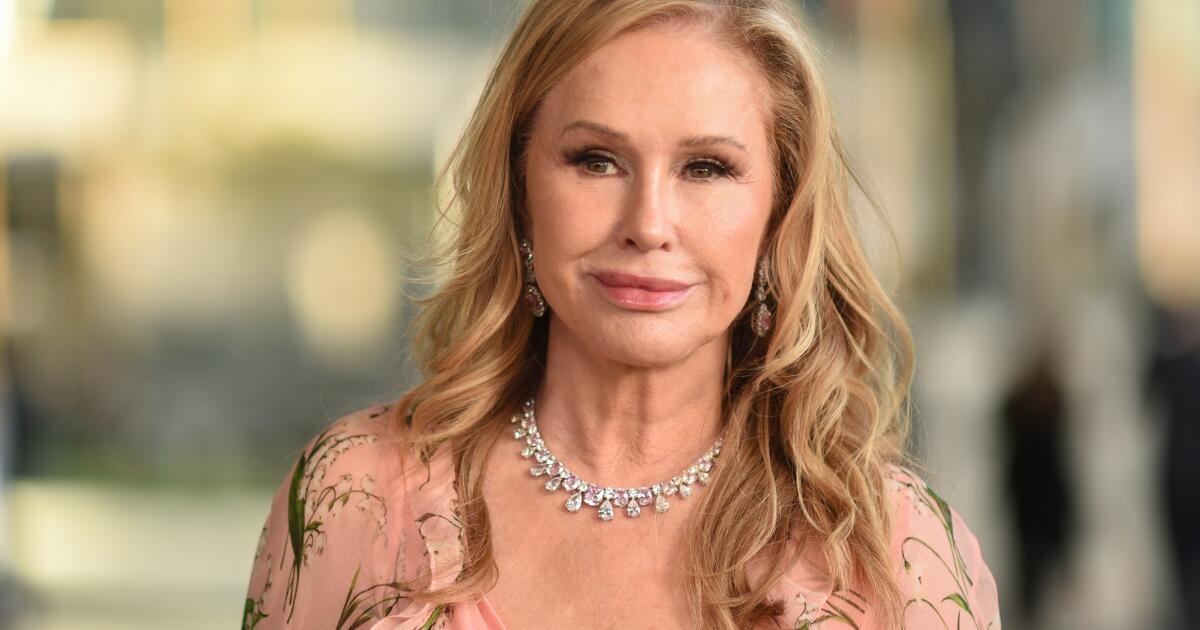
Kathy Hilton will no longer be the grand marshal of West Hollywood’s pride parade.
The city and WeHo Pride on Wednesday released a joint statement, announcing that “The Real Housewives of Beverly Hills” star would no longer serve as the Grand Marshal Icon for the 2026 WeHo Pride Parade. The event is scheduled for Sunday.
“After thoughtful discussions, the City of West Hollywood, the WeHo Pride production team, and Kathy Hilton have determined that the 2026 WeHo Pride Parade will not designate a Grand Marshal Icon honoree,” read the statement.
The decision comes less than a week after Hilton was announced. That May 28 announcement was met with swift backlash from the LGBTQ+ community and allies, who called out Hilton’s ties to President Trump and alleged MAGA-leaning politics. Critics also cited accusations that the socialite had used a homophobic slur while on a trip with other cast members of “The Real Housewives of Beverly Hills,” an action she has previously denied.
In their joint statement, West Hollywood and the WeHo Pride team expressed their appreciation for “the respectful and sincere dialogue” around both the event and the “role and significance” of Pride honorees.
“The City of West Hollywood has always believed that Pride belongs to the community,” the joint statement said. “Since its earliest days, Pride has served as both a celebration and a platform for activism, visibility, resilience, and the ongoing pursuit of equality, dignity, and justice for LGBTQ+ people. … These conversations reflect the passion people have for WeHo Pride and underscore the importance of ensuring that WeHo Pride continues to honor the history, values, and diverse voices of the LGBTQ+ community.”
In a statement, Hilton expressed gratitude for being considered for grand marshal and reaffirmed her commitment to the LGBTQ+ community and causes.
“My reason for wanting to be involved in this year’s WeHo Pride weekend was simple: to celebrate, support, and share in the joy of a community that means a great deal to so many people,” Hilton said. “Pride is, and always will be, about celebrating and uplifting LGBTQ+ voices, experiences, and achievements. … My support for the community and WeHo Pride is unwavering.”
She also mentioned several queer advocacy organizations and events she has supported over the years, including GLAAD, the Elton John AIDS Foundation, the Elizabeth Taylor AIDS Foundation, Dr. Mathilde Krim, God’s Love We Deliver and Project Angel Food.
The latest Pride-related dust-up follows the abrupt cancellation of the Long Beach Pride Festival in May. The city’s Pride Parade took place as planned.
Both snafus have occurred as conservative politicians and advocates continue to attack LGBTQ+ rights and visibility nationwide. Some Republican governors have even pushed for conservative alternatives to Pride month festivities. A recent Gallup poll has found that after years of steady gains, support for marriage equality and same-sex relationships has slipped, particularly among Republicans.
Movie Reviews
Movie Review: Travolta’s “Propeller: One-Way Night Coach” is One for the Ages — All Ages

Back in the good ol’days — the ’90s — John Travolta would love to get off the topic of “Michael,” “Pulp Fiction” or “Get Shorty” in interviews with film journalists like me and regale us with how utterly besotted he had been with his first flying experience, how that drove his passion for piloting and buying planes and airfield-adjacent luxury houses.
He didn’t even seem to mind having to move house when this or that development balked at him flying his Boeing 707 out of there on the way to locations.
Travolta would tell any journalist who asked that he was writing a kid-friendly book, “Propeller: One Way Night Coach,” based on his first flights as a child in old propeller driven airliners — cheap red-eye overnight treks with too many connections for your average jet age traveller to tolerate.
I remember picking up the book when it came out later in the ’90s — at an airport gift shop — and thinking “Well, that’s as cute as I figured.”
And now, decades later and trapped in the B-movie hell of his post “Gotti” career, Travolta’s turned that cute book into the most delightful, fanciful and colorful bon bon of a movie.
“One Way Night Coach” is a child’s fantasy of flight and flying the way it used to be — with pristine, uncrowded, futuristic airports, an early ’60s era of jets and prop planes with over-uniformed stewardesses in white gloves, the days “Back before every Joe Sweatsock could wedge himself behind a lunch tray and jet off to Raleigh-Durham,” as Sideshow Bob memorably sneered on “The Simpsons’.”
It’s a fictionalized account of Travolta’s childhood about an only child (at least two Travolta siblings have bit parts in this movie) of a never-made-it/never-will actress/single-mom (Kelly Eviston-Quinnett) who indulges her aviation-obsessed eight-year-old with a cheap cross-country overnight flight.
Little Jeff (Clark Shotwell) will revel in almost every Idlewild to Pittsburgh to Dayton to Chicago to Kansas City to Denver and Los Angeles minute. He strolls into the cockpit to meet pilots, charms the stewardesses and checks out the sleeping bunks on the TWA Lockheed Super Constellation, loving even the delays if not the Chicken Cordon Bleu he’s offered on legs of the journey that offer a meal.
And as he’s an observant child, he comments (Travolta narrates) on his 50ish mother’s vamping and posing, her choice of cigarettes (Newports) and drinks, the solo traveling men whose attention she pursues and earns.
“I was her best audience,” adult Jeff remembers of the mother who’d read him plays as bedtime stories and delusionally hopes that this trip to Los Angeles might be her “big break” even though she’s pushing 50.
“Hollywood called,” she’d explain about their overnight cheap flight arrangements to ticket agents and crew. “They told me to take the next flight!”
At every turn, Jeff meets or sees kindness — stewardesses who indulge his many questions and bump them up to first class on the mostly-empty planes, a captain who fixes his toy model of a Constellation, a mentally ill flyer who flips out but is calmed by a flight attendant who isn’t overworked and frazzled in jet-powered tin-can jammed with Joe and Jane Sweatsocks who think nothing of traveling in their pajamas.
Normally, I cringe at pictures this reliant on voice-over narration. I recoil from stars who populate their picture with Sandler etc. offspring. But “Propeller” is unfailingly sweet and never cloying.
Sure, it’s fictionalized. But if you’ve followed Travolta’s life and career, a lot of him is in this — his raptoruous engagement with flying, an indulged child who developed a taste for fine food and creature comforts, a mother who was his guiding star as an actor.
I get why there are less adoring reviews than mine floating around “Propeller.” It’s unfailingly sweet. Mom’s man-hunting is seriously dated. This TWA tale is decorated with Gershwin’s majestic “Rhapsody in Blue” — United Airlines’ signature tune. And Travolta’s been around long enough for recent generations to come up and not feel a connection to the “Saturday Night Fever/Get Shorty” star whose career has fallen off and life has been visited by too much tragedy.
But I’d hate to be seated next to anybody who doesn’t appreciate this adorable, pristine and nearly perfect aviation fantasy on any flight, much less an overnight one.
Rating: TV-PG
Cast: Clark Shotwell, Kelly Eviston-Quinnett, Ellen Travolta, Ella Beau Travolta, Olga Hoffmann and John Travolta.
Credits: Scripted and directed by John Travolta, based on his book. An Apple TV+ release.
Running time: 1:01

-

 Indiana3 minutes ago
Kelsey Mitchell eclipses 5,000 career points in Fever victory.
-

 Iowa8 minutes ago
Doctor fights sanctions, saying he’ll be ‘run out of practice’ by Iowa board
-

 Kentucky18 minutes ago
Kentucky sees improvement in drought conditions
-

 Louisiana23 minutes ago
Louisiana Tech launches Center for Literacy and Learning to support students, educators
-

 Maine30 minutes ago
Pilots aboard hydrogen balloon are attempting to cross Atlantic Ocean from Maine
-

 Maryland33 minutes ago
Maryland troopers attend high school graduation of student whose dad died in line of duty
-

 Michigan38 minutes ago
Michigan football beats out Alabama, Texas for 4-star DB Blake Jenkins
-

 Massachusetts45 minutes ago
Cheers! Mass. House passes proposal to extend bar hours to 3 a.m. during World Cup, putting bill on fast track. – The Boston Globe

