Entertainment
Rep. Joaquin Castro says ‘Blood In, Blood Out’ should be added to the National Film Registry

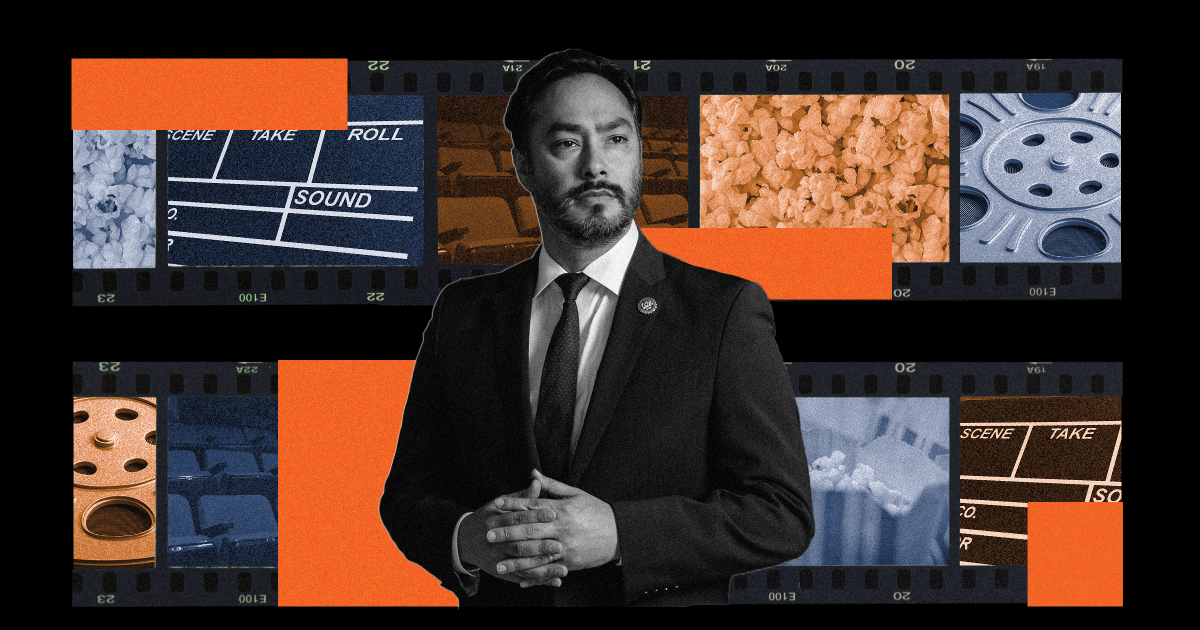
As part of his work to champion Latino inclusion in Hollywood, U.S. Rep. Joaquin Castro (D-Texas) has recommended that the crime dramas “Blood In Blood Out” and “American Me” be entered into the Library of Congress’ National Film Registry for 2024.
“Both movies were able to show the humanity in the Latino community, even within very flawed characters,” he said, while acknowledging that the films depict characters as gang members — a long-held stereotype in media. “It was an exploration of a certain life. I’ve always thought, at least one of those deserves to go in there.”
This is the third year the congressman has sent a letter to the National Film Preservation Board recommending a list of “Latino-driven” stories for the registry. It’s part of his ongoing campaign to memorialize the ethnic group’s contributions in media and push for continued representation in American culture.
He believes the entertainment industry is one of the largest “narrative-creating” institutions and its decisions to portray negative tropes are harmful.
Every year, the board adds 25 titles to the registry. So far, three of Castro’s more than 50 nominations have been selected, including the biopic “Selena” starring Jennifer Lopez, based on the life of the iconic Tejana singer Selena Quintanilla. For the congressman, it’s still insufficient considering the artistic contributions to movies by Latinos.
The registry’s goal, according to its website, is to ensure that selected films are conserved to increase public awareness and accessibility for educational purposes. Anyone can submit a nomination.
However, according to Brenda Victoria Castillo, president of the National Hispanic Media Coalition and a recently appointed member of the National Film Preservation Board, less than 5% of the 875 films preserved are Latino-themed.
“The Latine community, along with its films and unique stories, has a significant impact on the cultural history of the U.S., making it essential that we preserve them for future generations,” Castillo said.
The ethnic group is one of the largest consumers of media, according to a McKinsey & Co. report earlier this year, as the firm purports the highest per capita theater attendance rate at an average of 3.3 times a year. The report found that films with a Latino producer, director or lead earned 58% more between 2013 to 2022.
Yet, they are historically underrepresented both behind and in front of the camera, according to two reports from USC Annenberg School of Communication and Journalism. The first found that, between 2007 and 2019, 3.5% of leads in films were Latino. The second found that, between 2007 to 2022, 3.7% of directors were of Latin descent.
Felix Sanchez, a co-founder of the National Hispanic Foundation for the Arts, said that adding films from Castro’s list to the registry will help families find titles told with unique cultural perspectives.
“It’s very hard to have big numbers when you have small content,” Sanchez said. “We can only nominate what we have and the numbers are small in terms of what’s possible for the registry.”
He added that the list of nominees can also be used as a tool to showcase the continued success of these narratives to Hollywood executives who might be cautious about investing in projects.
Castro has called out Hollywood executives for their “pervasive lack” of positive representation in a 2020 Variety article. He lauded “Blue Beetle” for being the first live-action Latin superhero depicted in a feature film and said he looks forward to the growing number of nomination options in the coming years from the public once those movies reach the required 10-year eligibility mark.
“Those contributions, I expect, will receive even greater recognition,” he said.
The official list of films added to the registry will be announced in December. Public submissions for this year are closed, but nominations for the registry’s 2025 list are now open until Aug. 15.
Castro’s 2024 list of nominations:
1. “Blood in Blood Out” (1993)
2. “Frida” (2002)
3. “Like Water for Chocolate” (1992)
4. “Mi Familia” (1995)
5. “Y Tu Mamá También” (2001)
6. “La Misma Luna” (2007)
7. “American Me” (1992)
8. “Tortilla Soup” (2001)
9. “The Milagro Beanfield War” (1988)
10. “Cesar Chavez” (2014)
11. “Pan’s Labyrinth” (2006)
12. “Motorcycle Diaries” (2004)
13. “Mi Vida Loca” (1994)
14. “Instructions Not Included” (2013)
15. “Chicano I & II: The Mexican American Heritage Series” (1971)
16. “La Mission” (2010)
17. “Babel” (2006)
18. “125 Franco’s Blvd” (2010)
19. “Don’t Let Me Drown” (2009)
20. “Bless Me, Ultima” (2012)
21. “Walkout” (2006)
22. “Gotta Kick It Up!” (2002)
23. “Mosquita y Mari” (2012)
24. “Gun Hill Road” (2011)
25. “American Experience: Roberto Clemente” (2008)



“Lethal Weapon” star Danny Glover has revealed he has been living with Alzheimer’s disease for years.
In an interview with NBC’s Lester Holt that aired on the “Today” show on Wednesday, the 79-year-old actor and activist opened up about living with the disease. According to People, he received his diagnosis in 2023, which was not long after he was awarded an honorary Oscar in 2022.
“I could live with it, in a sense,” Glover says of his condition, which has been affecting his movement, speech and memory. “I’m sure as it advances, things are going to be different and changing.”
A neurodegenerative disease, Alzheimer’s is a type of dementia that affects memory, thinking and behavior and worsens over time, according to the Alzheimer’s Assn. Holt reports that more than 7 million Americans over 65 are living with Alzheimer’s, with Black men suffering at a rate double the national average.
Glover and his family say the Hollywood icon is sharing his story now to “have ownership of his life” and to help remove the stigma around the disease.
“They’ve got my back,” Glover says of his family’s support.
Besides his portrayal of L.A. police Det. Roger Murtaugh in the “Lethal Weapon” film series, Glover is known for roles in movies including “Places in the Heart” (1984), “The Color Purple” (1985), “To Sleep With Anger” (1990), “Angels in the Outfield” (1994), “Dreamgirls” (2006) and “The Last Black Man in San Francisco” (2019). He’s also been a vocal advocate for social justice and humanitarian causes both in the U.S. and abroad.
He was the recipient of the Academy of Motion Picture Arts and Sciences’ Jean Hersholt Humanitarian Award in 2022.
“I don’t feel like it’s the end of my life,” he said in his interview with People about living with Alzheimer’s. “There’s work to do.”

Enter your email and we’ll send a secure one-click link to sign in.
WKRN is provided by Nexstar Media Inc., and uses the My Nexstar sign-in, which works across our media network.
Nexstar Media Inc. is a leading, diversified media company that produces and distributes engaging local and national news, sports, and entertainment content across its television and digital platforms. The My Nexstar sign-in works across the Nexstar network—including The CW, NewsNation, The Hill, and more. Learn more at nexstar.tv/privacy-policy.
On the Shelf
Come Undone: A Novel
By Eddie Huang
One World: 240 pages, $29
If you buy books linked on our site, The Times may earn a commission from Bookshop.org, whose fees support independent bookstores.
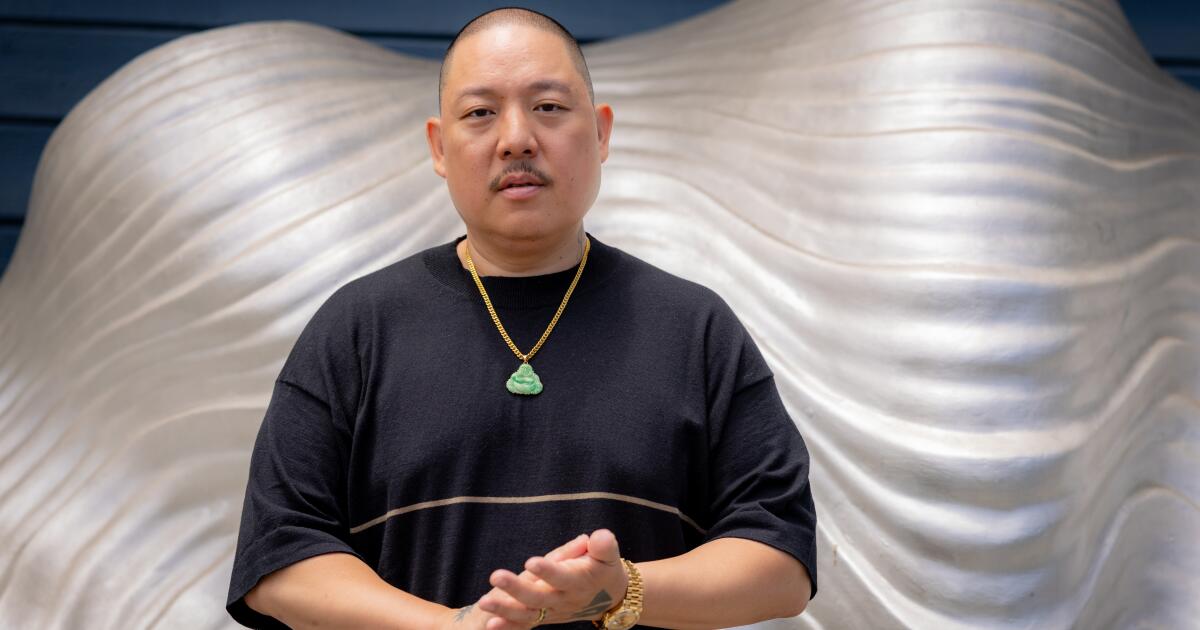
Eddie Huang has never felt lighter. Last month, after his debut novel, “Come Undone,” finally released, something shifted.
“I have a family. I feel healed,” he said over coffee and short ribs in Santa Monica hours ahead of a live talk with Ottessa Moshfegh, the bestselling, critically acclaimed author of Huang’s favorite book, “My Year of Rest and Relaxation.”
“People always write me off as a personality or a multi-hyphenate,” he said. “It’s a nice way of saying I’m not really good at anything. But I didn’t have any of that this time.” He leaned forward, serious. “I have to be honest. I do think the Knicks are a big, big part of it.”
His beloved Knicks winning the championship, he said, kept him from spiraling over the book. In person, Huang subdues his ironic braggadocio with polite eye contact and rolling belly laughs at his own jokes. For years, audiences have watched Huang resist whatever box you put him in. His particular brand of cultural fluency — a rapid-fire mix of food, fashion, basketball, politics and pop culture — is what made the “Gua Bao Bad Boy” impossible to categorize.
For most of his career, Huang has seemed constitutionally incapable of standing still. Chef. Memoirist. TV host. Filmmaker. Lawyer. Comic. Podcaster. His first book, “Fresh Off the Boat,” became the longest-running network sitcom centered on an Asian American family, even as Huang publicly distanced himself from the show. Since leaving post-fires L.A. for New York, he’s reopened Baohaus — returning to the kitchen that built his career. Waiting for him at home after the book tour is his wife, Natashia Perrotti, and their 2-year-old son.
Now there’s “Come Undone,” fiction that Huang called his most honest — and vulnerable — work to date.
“It’s sort of this next-gen auto fiction type thing that is creating its own rules,” Moshfegh said ahead of their Q-and-A. “It made me think about my own appreciation for the experience of male heterosexuality and how much it’s been commodified.”
The book follows Hubie, a globe-trotting food-show host drifting through Chateau Marmont, Madeo, Nobu and other “dirtbag L.A” (as Huang coins) spots. He meets Janine, his equal in appetite and id, sending him into a tailspin of yearning and loops of Sky Ferreira’s “Everything Is Embarrassing” on sadboi walks. The “two walking red flags” decide to try to make it work.
Huang called the novel an “autofictional riddle.” The puzzle isn’t especially difficult if you’ve followed his relationship with Perrotti, who co-hosts their podcast, “Canal Street Dreams.” Marrying a writer, she’s learned, often means finding out what he feels by reading it. “We’ll get into a fight,” she said, “and I’ll wake up to a Substack article about it.”
It’s also part of the private life she’s since conceded. “It’s annoying,” she added. “But now I can read it, and maybe understand him a little bit better. He’s trying to communicate through the writing, like sending somebody a song and saying, ‘I want you to listen to these lyrics.’”
The novel goes further, drawing from experiences the couple has never discussed publicly. In the novel, Hubie and Janine’s relationship pivots after an ectopic pregnancy ends in loss. Perrotti said the scene is fictionalized but mirrors a similar experience they had early in their own relationship.
“It brought us closer together,” she said. “It was the catalyst for us realizing we were serious.”
Before Huang could finish the book, the life he was writing about had to fall apart. “This book was very much about breaking up with your family to start your own,” he said. “There was a lot of anger in the book that had not been resolved.”
By the end of 2024, Huang had stopped speaking to his mother. The break followed what he described as a blowup at a Cheesecake Factory. It also unlocked the ending he’d been chasing.

Eddie Huang.
(Jason Armond / Los Angeles Times)
Looking back, Huang thinks the earlier versions failed because he was still arguing with her. He’s still trying, in some way, to communicate with her through his writing. “If there’s one person I wish would read the book,” he said, “it would be my mom.”
There were other chapters he had to close the book on, mainly Hollywood. His foray into fiction coincided with the writers’ strike, drying up all his income and future projects. That same year, he became a father. “I had to accept and realize that my value was not in making money,” he said. “Because for three years, I couldn’t.”
He recalled a particular low point researching life insurance policies. “I had to rebuild my whole self. Really love myself despite not being able to offer anybody anything.”
That new certainty didn’t make Huang any less willing to pick fights. Last year, as his documentary “Vice Is Broke” — an autopsy of the media company behind “Huang’s World” and its eventual bankruptcy — awaited release, Huang said distributor Mubi shelved the film after he boycotted the company over Sequoia Capital’s investment in an Israeli defense technology startup. (Mubi denied this and said it still planned to distribute the film.)
The ghost of Vice still lingers in today’s media ecosystem in what he called our “era of cartel journalism:” creators navigating a world of blurred incentives and corporate interests. He traced this instinct to challenge those systems back to Socrates’ “gadfly” — the person whose job was to annoy power. “As a writer, you should be challenging people,” he said. “If your memoir can be turned into a sitcom, it probably wasn’t challenging.”

Eddie Huang.
(Jason Armond / Los Angeles Times)
After the 2025 L.A. fires drove his new family back to New York, Huang went back to cooking. He worked pop-ups, reopened Baohaus and found himself alongside line cooks half his age. In March 2025, he rewrote the novel in five days. That same month “was the first month I didn’t overdraft my credit card,” he said, with the majority of his income today coming from the restaurant. It’s allowed him to make films, write books and walk away from deals he doesn’t believe in. “Being a chef is the anchor that allows me to maintain my artistic integrity.”
For years, comparisons to Anthony Bourdain followed Huang everywhere. The two eventually became friends.
“He was one of the few people who was as advertised,” Huang said. “Nicer and more generous in person. And wounded.”
Bourdain is the only real person who appears in “Come Undone” under his own name.
When Huang mentions him, he stops talking. He covers his face. Tears come.
“I don’t believe in God,” he said, “but I asked the universe why for many, many years.”
Bourdain’s suicide, he said, was one of the reasons he walked away from “Huang’s World” in 2018. At the time, few people understood why. “It was Tony. It was family. It was everything.”

Eddie Huang.
(Jason Armond / Los Angeles Times)
Now, looking back, Huang thinks he was writing “Come Undone” toward a different ending than the one he’d imagined.
“This book is a guy saying, ‘I don’t want to be like my biological father,’” he said. “And, in the most respectful, loving way, I don’t want to go out like Tony.”
He paused. “I needed to name the sadness in me. I needed to allow myself to be loved.”
Huang is already writing another memoir about getting back into the kitchen. Still, he said, these days, he’d rather write fiction.
Rudi, an L.A. native, is a freelance art and culture writer. She’s at work on her debut novel about a stuttering student journalist.
-
World10 minutes ago
Bereaved South Koreans try AI-generated videos of deceased loved ones
-

 News15 minutes ago
How a Nation of Immigrants Traces Its Roots
-

 Health36 minutes ago
What Is Retatrutide? Dr. Dubrow Calls It the Most Powerful Weight-Loss Drug
-
 Lifestyle51 minutes ago
How World Cup fans reflect America back at us : It’s Been a Minute
-

 Technology59 minutes ago
Apple’s entry-level MacBook Pro could be up for a redesign
-

 World1 hour ago
Khamenei body in cold storage as feared Basij mobilizes ahead of historic Iran funeral
-

 Politics1 hour ago
Coalition of 25 states sues Trump admin over Medicaid work rule designed to prevent fraud
-

 Health1 hour ago
West Nile virus detected in southern state as health officials warn residents about mosquitoes

