Entertainment
'No Other Land' filmmaker Hamdan Ballal detained by Israeli forces after he was allegedly attacked by settlers


Filmmaker Hamdan Ballal, one of the two Palestinian co-directors behind the Oscar-winning documentary “No Other Land,” was detained Monday in the occupied West Bank by the Israeli military after he was allegedly brutally attacked by settlers.
Israeli journalist Yuval Abraham, who co-directed “No Other Land,” wrote Monday on X that “a group of settlers just lynched” his collaborator. “They beat him and he has injuries in his head and stomach, bleeding.”
“Soldiers invaded the ambulance he called, and took him,” Abraham added in his post, which was shared in English and Hebrew. “No sign of him since.”
Anna Lippman, a delegate for the activist group Center for Jewish Nonviolence who recorded and shared video of the attack Monday, told The Times via social media that more than a dozen settlers attacked the Palestinian village Susiya in the Masafer Yatta area, destroying property. During the attack Monday evening, Ballal was “injured by settlers.” He was receiving treatment in an ambulance for injuries to his head, which included swelling and bleeding, when “soldiers came and took him and two other Palestinian men from Susiya,” Lippman said.
“We do not know where he is or his condition,” she added Monday.
The Center for Jewish Nonviolence shared dashcam footage on Bluesky of someone shoving three people and punching one member of the group. The video later shows a person — whose face is covered by a mask — joined by several others, picking an object from the ground and hurling it at the vehicle, destroying the windshield. Video recorded and shared by Lippman shows an alternate angle of the confrontation.
Activist Josh Kimelman, who was present during the confrontation, told the Associated Press Monday, “We don’t know where Hamdan is because he was taken away in a blindfold.”
Abraham did not immediately respond to The Times’ request for additional comment.
In a statement shared to The Times, a spokesperson for the Israel Defense Forces said a “violent confrontation” broke out in Susiya after several people it described as “terrorists” allegedly hurled rocks at Israeli citizens and damaged their vehicles. The incident involved “mutual rock-hurling between Palestinians and Israelis at the scene,” the statement said. IDF said its members and Israel police responded “to disperse the confrontation,” and that the people it described as “terrorists” allegedly started hurling rocks their way.
IDF and Israel police detained three Palestinians and an Israeli person allegedly involved in the confrontation. The four detainees were taken for further questioning by Israel police and one Israeli person was evacuated to receive medical treatment, according to the statement. IDF also denied allegations that a Palestinian was detained from inside an ambulance.
The Times has confirmed that Ballal was indeed among the three people detained Monday evening. He was detained on suspicion of hurling rocks at IDF and police.
Support for Ballal poured in Monday afternoon as news of his detainment spread. Palestinian activist Basel Adra, who also co-directed and appears in “No Other Land,” tweeted about Ballal’s apprehension and shared a photo of a person with both hands behind their back being escorted into a vehicle adorned with an Israeli flag. He said his collaborator “is still missing after soldiers abducted him, injured and bleeding.”
He added: “This is how they erase Masafer Yatta.”
The International Documentary Assn. released a statement in support of Ballal, who they allege was “violently attacked and kidnapped in the West Bank,” and urged his release. The missive also demanded that the filmmaker’s family and community “be informed about his condition, location, and the justification for his detention.”
“No Other Land,” directed by Abraham, Ballal, Adra and Israeli filmmaker Rachel Szor, is a harrowing documentary that chronicles Israel’s demolition of Palestinian villages in Masafer Yatta to make way for an Israeli military training ground, displacing families and communities. The film won the documentary award at the 2025 Academy Awards.
Recently, “No Other Land” found itself in the center of tension in the Miami Beach cinema scene. Earlier this month, Miami Beach Mayor Steven Meiner threatened to pull grant funding from the O Cinema and end its lease on city-owned property if it screened the documentary. In a letter sent to the movie house, Meiner called the film “a one-sided propaganda attack on the Jewish people that is not consistent with the values of our City and residents.”
Meiner withdrew his threats last week.
In a statement, Abraham hit back at Meiner’s previous criticism that “No Other Land” was “egregiously antisemitic.”
“When the mayor uses the word ‘antisemitism’ to silence Palestinians and Israelis who proudly oppose occupation and apartheid together, fighting for justice and equality, he is emptying it out of meaning. I find that to be very dangerous.
“Censorship is always wrong,” Abraham added. “We made this film to reach U.S. audiences from a wide variety of political views. I believe that once you see the harsh reality of occupation in Masafer Yatta in the West Bank, it becomes impossible to justify it, and that’s why the mayor is so afraid of ‘No Other Land.’ It won’t work. Banning a film only makes people more determined to see it.”
Times staff writer Mark Olsen contributed to this report.



In contrast to other sci-fi heroes, like Interstellar’s Cooper, who ventures into the unknown for the sake of humanity and discovery, knowing the sacrifice of giving up his family, Grace is externally a cynical coward. With no family to call his own, you’d think he’d have the will to go into space for the sake of the planet’s future. Nope, he’s got no courage because the man is a cowardly dog. However, Goddard’s script feels strikingly reflective of our moment. Grace has the tools to make a difference; the Earth flashbacks center on him working towards a solution to the antimatter issue, replete with occasionally confusing but never alienating dialogue. He initially lacks the conviction, embodying a cynicism and hopelessness that many people fall into today.
The film threads this idea effectively through flashbacks that reveal his reluctance, giving the story a tragic undercurrent. Yet, it also makes his relationship with Rocky, the first living thing he truly learns to care for, ever more beautiful.
When paired with Rocky, Gosling enters the rare “puppet scene partner” hall of fame alongside Michael Caine in The Muppet Christmas Carol, never letting the fact that he’s acting opposite a puppet disrupt the sincerity of his performance. His commitment to building a gradual, affectionate friendship with this animatronic creation feels completely natural, and the chemistry translates beautifully on screen. It stands as one of the stronger performances of his career.
Project Hail Mary is overly long, and while it can be deeply affecting, the film leans on a few emotional fake-outs that become repetitive in the latter half. By the third time it deploys the same sentimental beat, the effect begins to feel cloying, slightly dulling the powerful emotions it built earlier. The constant intercutting between past and present can also feel thematically uneven at times, occasionally undercutting the narrative momentum. At 2 hours and 36 minutes, the film feels like it’s stretching itself to meet a blockbuster runtime when a tighter cut might have served better.
FINAL STATEMENT
Project Hail Mary is a meticulously crafted, hopeful, and dazzling space epic that proves the most moving friendship in film this year might just be between Ryan Gosling and a rock.
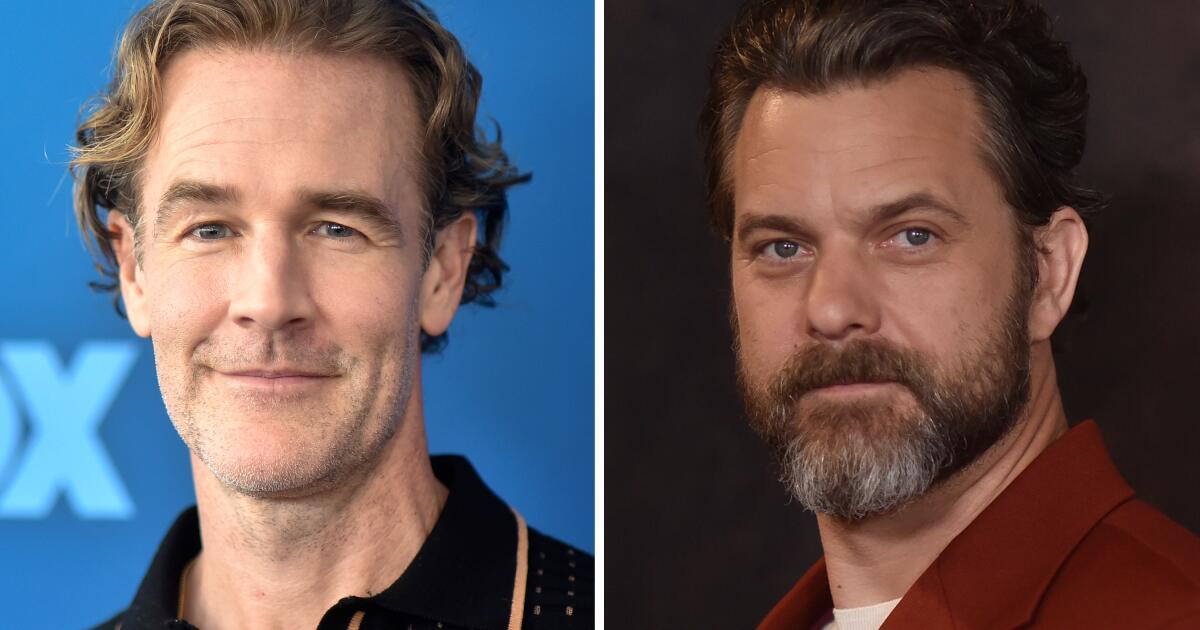
Joshua Jackson says he knows he was “really just a footnote” in James Van Der Beek’s life, despite the “amazing” time they spent together as stars of the series “Dawson’s Creek.”
The star of “The Affair” is reflecting publicly for the first time about his former castmate, who died Feb. 11 at age 48 after a battle with colorectal cancer.
The time they shared on set was “formational” for them, Jackson said on “Today.” When the “Dawson’s Creek” pilot aired in January 1998, he was 19 and Van Der Beek was almost 21, playing characters who were 15.
“I know both of us look back on that time with great fondness, but I will also say that I know that I’m really just a footnote in what he actually accomplished in his life.”
Jackson spoke with great respect for his friend, who he said “became what we used to just call a good man, a man of the kind of belief, the kind of faith that allowed him to face the impossible with grace, an unbelievable partner and husband, just a real man who showed up for his family and a beautiful, kind, curious, interested, dedicated father.”
On the one hand, the 47-year-old said, “that’s beautiful.” On the other, “The tragedy of that loss for his family is enormous.”
Since Jackson and Van Der Beek played Pacey Witter and Dawson Leery three decades ago, both men had kids of their own — a 5-year-old daughter for Jackson, born during the pandemic with ex-wife Jodie Turner-Smith, and six kids for Van Der Beek with second wife Kimberly Brook. The latter couple’s children — two boys and four girls, ranging in age from 4 to 15 — were what Van Der Beek said changed everything for him.
“Your life becomes shared, and your joys become shared joys in a really beautiful way that expands your level of circuitry out to other people instead of just keeping it all for your own gratification,” the actor told “Good Morning America” in May 2023. “And the lessons, they keep on coming. It’s the craziest, craziest thing I’ve ever done, and it’s the thing that’s made me happiest.”
Knowing his colleague’s love for his family, Jackson said on “Today” that “for me as a father now, I think the enormity of that tragedy hits me in a very different way than just as a colleague, so I think the processing [of Van Der Beek’s death] is ongoing.”
The “Little Fires Everywhere” actor was on the morning show Tuesday to bring attention to colorectal cancer screenings.
Van Der Beek’s diagnosis, which went public in November 2024, was among the factors prompting Jackson to get involved with drugmaker AstraZeneca’s “Get Body Checked Against Cancer” campaign, which takes a lighter approach to a serious subject — cancer screening — through a partnership with Jackson, the National Hockey League and the Philadelphia Flyers’ furry orange mascot, Gritty.
“It is … true, the earlier you find something,” said “The Mighty Ducks” actor, “the better your possible outcomes are.”

DAN WEBSTER:
It may now seem like ancient history, especially to younger listeners, but it was only 26 years ago when the streets of Seattle were filled with protesters, police and—ultimately—scenes of what ended up looking like pure chaos.
It is those scenes—put together to form a portrait of what would become known as the “Battle of Seattle” —that documentary filmmaker Ian Bell captures in his powerful documentary feature WTO/99.
We’ve seen any number of documentaries over the decades that report on every kind of social and cultural event from rock concerts to war. And the majority of them follow a typical format: archival footage blended with interviews, both with participants and with experts who provide an informational, often intellectual, perspective.
WTO/99 is something different. Like The Perfect Neighbor, a 2026 Oscar-nominated documentary feature, Bell’s film consists of what could be called found footage. What he has done is amass a series of news reports and personal video recordings into an hour-and-42-minute collection of individual scenes, mostly focused on a several-block area of downtown Seattle.
That is where a meeting of the WTO, the World Trade Organization, was set to be held between Nov. 30 and Dec. 3, 1999. Delegates from around the world planned to negotiate trade agreements (what else?) at the Washington State Convention and Trade Center.
Months before the meeting, however, a loose coalition of groups—including NGOs, labor unions, student organizations and various others—began their own series of meetings. Their objective was to form ways to protest not just the WTO but, to some of them, the whole idea of a world order they saw as a threat to the economic independence of individual countries.
Bell’s film doesn’t provide much context for all this. What we mostly see are individuals arguing their points of view as they prepare to stop the delegates from even entering the convention center. Meanwhile, Seattle authorities such as then-Mayor Paul Schell and then-Police Chief Norm Stamper—with brief appearances by Gov. Gary Locke and King County Executive Ron Sims—discuss counter measures, with Schell eventually imposing a curfew.
That decision comes, though, after what Bell’s film shows is a peaceful protest evolving into a street fight between people parading and chanting, others chained together and splinter groups intent on smashing the storefronts of businesses owned by what they see as corporate criminals. One intense scene involves a young woman begging those breaking windows to stop and asking them why they’re resorting to violence. In response a lone voice yells their reasoning: “Self-defense.”
Even more intense, though, are the actions of the Seattle police. We see officers using pepper spray, tear gas, flash grenades and other “non-lethal” means such as firing rubber pellets into the crowd. In one scene, a uniformed guy—not identified as a police officer but definitely part of the security crowd, which included National Guardsmen—is shown kicking a guy in the crotch.
The media, too, can’t avoid criticism. Though we see broadcast reporters trying to capture what was happening—with some affected like everybody else by the tear gas that filled the streets like a winter fog—the reports they air seem sketchy, as if they’re doctors trying to diagnose a serious illness by focusing on individual cells. And the images they capture tend to highlight the violence over the well-meaning actions of the vast majority of protesters.
Reactions to what Bell has put on the screen are bound to vary, based on each viewer’s personal politics. Bell revels his own stance by choosing selectively from among thousands of hours of video coverage to form the narrative he feels best captures what happened those two decades-and-change ago.
If nothing else, WTO/99 does reveal a more comprehensive picture of what happened than we got at the time. And, too, it should prepare us for the future. The way this country is going, we’re bound to see a lot more of the same.
Call it the “Battle for America.”
For Spokane Public Radio, I’m Dan Webster.
——
Movies 101 host Dan Webster is the senior film critic for Spokane Public Radio.

Virginia lawmakers criticize anti-redistricting mailer with Jim Crow-era images – WTOP News

Wisconsin Lawmakers Propose Ranked Choice Voting for All Elections

New laws establish a statewide literacy program

Current price of Bitcoin for March 10, 2026 | Fortune

When should kids start learning about money? Advice from local financial advisor

Florida High School Football Rankings: Top 25 teams – Oct. 21

Cleary's 21 help Le Moyne down Central Connecticut State 69-64 in OT

How old is Bo Nix? What to know about Oregon quarterback ahead of 2024 NFL Draft

99th annual Pony Swim held in Virginia

Indiana Members Credit Union announced as new anchor tenant at Bottleworks District

Map: 2.3-Magnitude Earthquake Reported North of New York City

Trump stirs GOP primary drama with visit to Massie’s Kentucky home turf

Israeli air strike targets building in south Lebanon

Ed Martin, outspoken Justice Department lawyer, is formally accused of ethical violations | CNN Politics

Trump reveals top issues GOP should focus on to secure midterms victory: ‘I’ve never been more confident’
-

 Wisconsin1 week ago
Setting sail on iceboats across a frozen lake in Wisconsin
-

 Massachusetts1 week ago
Massachusetts man awaits word from family in Iran after attacks
-

 Maryland1 week ago
AM showers Sunday in Maryland
-

 Pennsylvania5 days ago
Pa. man found guilty of raping teen girl who he took to Mexico
-

 Florida1 week ago
Florida man rescued after being stuck in shoulder-deep mud for days
-

 Sports6 days ago
Keith Olbermann under fire for calling Lou Holtz a ‘scumbag’ after legendary coach’s death
-

 Virginia6 days ago
Giants will hold 2026 training camp in West Virginia
-

 Politics1 week ago
Mamdani’s response to Trump’s Iran strike sparks conservative backlash: ‘Rooting for the ayatollah’