Entertainment
Mystery writers reveal their go-to books for holiday gift-giving


Dying to Know
4 mystery writers answer burning questions
If you buy books linked on our site, The Times may earn a commission from Bookshop.org, whose fees support independent bookstores.
Ring out the old year and bring in the new with four outstanding mysteries and discover each author’s lists of surefire, gift-worthy books.
Pip Drysdale, author of “The Close-Up.”
(Katie Kaars / Gallery Books)
The Close-Up
By Pip Drysdale
Gallery Books: 352 pages; $29
Out now
Sydney-based Pip Drysdale nails novelists, actors and other fame-hungry strivers perfectly in this dark thriller, her fifth, centered on a young author desperate for a second bite of the apple. Londoner Zoe Ann Weiss has spent the advance from her first failed thriller — about a woman being stalked by a virtual stranger — and is now working at a Venice florist shop to make ends meet while she dodges emails from her agent and struggles to write that second book in order to avoid repaying a $250,000 advance. On her 30th birthday, she is delivering flowers for a Hollywood talent manager’s party when she unexpectedly runs into blue-eyed charmer Zach Hamilton, a former bartender-actor and fling from three years before. Now People magazine’s Sexiest Man Alive, Zach is still humble enough to recognize Zoe and cop to his bad behavior in ghosting her. He convinces her to drive him to a party, where he promises to connect her with a producer friend, but not before signing a nondisclosure agreement sent en route by Zach’s manager, standard procedure for the scandal-averse breakout star of the first entry of a planned action trilogy. Soon, Zoe’s breathing the rare air of L.A. dreamers — with their “designer jeans, stilettos and injectables” — and Zach’s familiar musk and earth scent, experienced up close during an after-party skinny dip and more at his Hollywood Hills home. Though painfully aware of how far her reality is from his, Zoe thrills to secretly dating Zach, stirring old feelings and an insidious idea: why not base her next thriller on Zach and his world, NDA be damned? When aerial photos are leaked of the couple in Zach’s pool and a stalker takes aim at Zoe, re-creating creepy scenes from her first novel, her idea has a plot that presents both legal and romantic dilemmas. References to F. Scott Fitzgerald’s “The Great Gatsby,” Joan Didion’s “Play It as It Lays” and other classics lend literary resonance to Drysdale’s warped tale of fame and revenge that manages to deliver some real surprises as it answers the question posed by Zoe’s stalker: “R U willing to die for him?”
What parts of Zoe Ann Weiss resonated most deeply for you?
Zoe and I both experienced failure and had to come back from it. We’ve both experienced writer’s block, staring at the blank page, and have both read and reread the classics in case we learn tricks via osmosis. And, unfortunately, we’ve both had stalkers. In writing “The Close-Up,” I especially wanted to follow a character’s emotional journey through being a victim of stalking in a way that felt true to me — with all the illogical choices, feelings and thoughts one might not expect but which are nonetheless true.
You write with a gimlet-eyed love of L.A. locations. Given you were writing from a distance, how did you capture L.A. so faithfully?
I love L.A.! Spending time with people who live there over the years, I picked up this sense of hope in the air that clung to me, that told me dreams could come true in L.A. That energy got me halfway through the first draft of this book. But then I took a research trip specifically for “The Close-Up” that allowed me to gather more specific sensory information. I walked Zoe’s route to her local grocery store (and saw the fabled Chateau Marmont right there, taunting her). And wandered around in the alleyway behind her florist job in Venice.
What books are you giving this holiday season?
I have two: “Red River Road” by Anna Downes, a twisty and unexpected missing-sister thriller set in the Australian outback. The other is “When Cicadas Cry” by Caroline Cleveland. I loved the Southern Gothic vibe in this legal whodunit set in a small community outside Charleston, S.C.

Christopher Bollen, author of “Havoc.”
(Jack Pierson / Harper)
Havoc
By Christopher Bollen
Harper: 256 pages, $30
Out now
In Christopher Bollen’s accomplished sixth novel, Maggie Burkhardt is an 81-year-old widow whose peripatetic travels to Europe’s grand hotels come to an abrupt end when COVID sidelines her in Egypt at Luxor’s less-than-regal Royal Karnak Palace Hotel. As she gossips poolside with a gay couple, one of whom is an Egyptologist studying the museum’s ancient artifacts, and insinuates herself into the hotel’s daily rituals, there are hints that Maggie is not as nice, nor as well-intentioned, as her first-person patter would suggest. Meddling in the affairs of a married couple she decides need to be broken up — part of her mission to “change people’s lives for the better” — Maggie’s caught outside their room after planting incriminating evidence of the husband’s nonexistent affair by Otto, a precocious 8-year-old who’s mysteriously arrived at the hotel from Paris with his mother. When Otto boldly blackmails Maggie into paying for a room upgrade in exchange for his silence, it’s not just a matter of game recognizing game. Soon the two are involved in a tit-for-tat escalation that has dire consequences for everyone in their orbit and reveals Otto as Maggie’s formidable “Bad Seed” foe. Using the sultry Egyptian climate and locales to great effect, L.A. Times Book Prize nominee Bollen (for “A Beautiful Crime”) has pulled out all the stops in delivering a sinister thriller with resonances to classic literature such as Henry James’ “Turn of the Screw,” Helene Tursten’s “An Elderly Lady” series or the best of Patricia Highsmith.
How did you create Maggie Burkhardt?
I slipped into the shoes of a maniacal 81-year-old widow so effortlessly it was almost frightening. I just managed to get the voice of Maggie down from the start. We hear so often, “write what you know,” but it was actually diving into a character who was, on the surface, so unlike me that really gave me a sense of freedom to explore.
Some of my favorites among your novels are those set in foreign countries. What’s the appeal of foreign versus U.S. settings, and why Egypt for “Havoc”?
Since I love to travel, I fall in love with locations, and they seem to burst with opportunities for interesting plots. I didn’t intend to revisit Egypt, but before I set sail up the Nile in April 2021, I stayed at an old grand hotel in Luxor and Maggie’s story just jumped out of me — and went for the throat.
What books are you giving this holiday season?
I’m giving myself the Javier Marías novel “The Infatuations,” since I’ve never read the late, great Spanish literary crime writer. For friends, I’m giving Lucy Foley’s “The Midnight Feast” and I’m also giving pre-order gifts for Katy Hays’ upcoming thriller “Saltwater,” set on Capri.

Alex Segura, author of “Alter Ego.”
(Irina Peschan / Flatiron)
Alter Ego
By Alex Segura
Flatiron Books: 320 pages, $29
Out now
Alex Segura brought all of his passion and knowledge of mystery and comic book writing to 2022’s “Secret Identity,” a fictional story set in the mid-1970s about a Cuban American finding her voice as both comic book artist and a queer woman. The L.A. Times Book Prize winner broke barriers by including panels from “The Legendary Lynx” series created by Carmen Valdez for Triumph Comics before her withdrawal from the industry after a murder and the theft of her intellectual property. Now, “Alter Ego” surpasses the achievements of “Secret Identity” by deepening the themes of artistic freedom and control and reclaiming women’s voices in comics. Annie Bustamante is a single mother and acclaimed filmmaker whose roots as a comic book artist include a childhood passion for fellow Cubana Valdez’s work. After a shelved movie project stalls her career, Annie is presented with an opportunity to use the secret cache of Lynx illustrations she’s been drawing (sprinkled throughout the novel) to reboot the almost-forgotten series. Her partners are a shady trio of collaborators — including the Triumph Comics’ heir, his shady business partner and an aging, #MeToo-exiled film director. The result is a deadly battle — Art versus Commerce — that threatens Annie’s life, her quest to find Carmen Valdez and reinvigorate her dynamic hero: “I wanted her to thrive and to remind the world why they needed someone like the Lynx,” Annie writes of the Lynx’s alter ego, Claudia Calla. “A woman who realized her power and potential and used it to help others like her. Especially these days — as our power, our own bodily autonomy, was being systematically stripped away and chipped at by those in power.”
Why did you frame the story around Annie Bustamante?
When I realized there was another story to tell in the universe established in “Secret Identity,” I knew I wanted it to be different — a companion piece more than a sequel. Both Carmen and Annie are presented with dream projects at different points in comic book history. Through Annie, I wanted to show how the comic book and entertainment industry have evolved over the intervening years, which then poses the question: How far will Annie go to protect the character that pulled her into comics, and then the person responsible for creating that story?
When Annie writes about her hopes for the Lynx’s alter ego, is she talking about Claudia Calla, Carmen Valdez or herself?
I think it’s relevant to all of them. In these times, where reproductive rights, LGBTQ rights and many of our freedoms are being threatened, it’s important to speak up and not sit idly by. I think for Annie, the quest to reclaim the Lynx and elevate Carmen’s legacy wove into those deeper feelings of rage and frustration, which fueled her journey to uncover the truth.
The Legendary Lynx artwork included in “Alter Ego,” is a beautiful extension of the mythic story begun in “Secret Identify.” It makes me wistful for a real Lynx comic book.
Well, there is a series now: “The Legendary Lynx,” just published by Mad Cave and featuring the art of Sandy Jarrell. Sandy is the artist behind the comic book sequences in “Secret Identity” and “Alter Ego” and is really the unsung hero of this saga. A true craftsman with a love for the medium and flexibility that’s truly unmatched in comics. He breathes life into Carmen and Annie’s ideas in ways I could only imagine.

Jonathan Ames, author of “Karma Doll.”
(Mulholland Books)
Karma Doll
By Jonathan Ames
Mulholland Books: 240 pages, $27
Jan. 14
L.A.-based writer Jonathan Ames (novels and HBO’s excellent “Bored to Death”) has been delighting readers of California noir with the darkly comic, bloody adventures of ex-cop and PI Happy Doll since his debut in 2021’s “A Man Named Doll.” A 21st century reimagining of Raymond Chandler’s iconic Philip Marlowe, Doll pursues thugs, organ harvesters and other miscreants down the mean streets of Southern California and other points West “in search of a hidden truth,” as Chandler describes the Marlowe stories in “The Simple Art of Murder.” For Doll, that hidden truth is Buddhism, which he begins to study in “The Wheel of Doll”; by “Karma Doll,” which follows directly after, he’s applying the principles of karma to his own violent actions and trying to find an enlightened solution. The novel opens with Doll decamped to Mexico with George, his half-Chihuahua, half-terrier sidekick, to get his shoulder patched up and a new face at an illegal hospital after injuries suffered at the hands of a criminal he kills after stealing $60,000 in cash from a Jalisco drug cartel’s bagman. But trouble seems to follow the PI wherever he goes; in Mexico, it’s a drugged-out gangster patient who attacks the doctor and his nurses, and whom Doll kills, with great regret: “Diablo was the eighth man I had killed,” the investigator reflects later, “and it was always in self-defense, in situations in which I could have also been killed, but each time I had done it I had felt the sickening pull of the abyss, of becoming a shadow human impervious to the suffering of others.” Doll’s action unleashes a cascade of karmic consequences, most of them violent and some perpetrated by him, that culminate in the investigator being set up to take the fall for the killing of a young female tourist and being pursued by bounty hunters sent by that cartel bagman. Set on exacting retribution, Doll hightails it back to his home in Los Angeles to even the score with the real murderer and the cartel’s bagman, all while keeping nominally true to Buddhist principles. While the setup may seem a bit different for noir fiction, Ames’ expert plotting and spot-on descriptions of Mexican and stateside environs and denizens makes “Karma Doll” another excellent installment of what is, happily, proving to be a long-running series.
Were iconic Southern California PIs like Philip Marlowe and Lew Archer on your mind when you first started writing Happy Doll?
They weren’t directly on my mind, but both characters are deeply embedded in my literary muscle memory, as it were. I’ve happily read every Marlowe and Archer story there is, and, unconsciously, Doll may have some of Marlowe’s penchant for comedy and some of Archer’s love of nature (Ross MacDonald writes beautifully about the sea). I will say that Doll is not quite as accomplished as those two sleuths — he may have a touch of a hard-boiled Clouseau in him — but he does get the bad guy in the end.
Why was Doll’s deepening study of Buddhism and imperfect practice of the religion important?
As the series has progressed, Doll grapples ever more with the violence he has perpetrated in the pursuit of justice. He’s very disturbed by what he has done, and so he turns to Buddhism to understand his suffering and he comes to see that he is the main cause of his “bad karma.” He learns that he must take responsibility for his actions and change his behavior if he wants to lessen his suffering and the suffering he causes others. But he’s in a tough profession for this. As he says in the fourth Doll novel, which I’m currently writing: “Bad karma is my business model.”
What books are you giving as gifts this holiday season?
I always give Pema Chödrön’s books as gifts. She’s a Buddhist nun who writes with great clarity and wisdom about life, and I have found her books incredibly helpful over the years. Two of my favorites are “The Compassion Book: Teachings for Awakening the Heart,” which contain slogans with interpretations you can read every day, and “Living Beautifully: With Uncertainty and Change.”
A member of the National Book Critics Circle, Woods is the editor of several anthologies and author of four novels in the “Charlotte Justice” mystery series.



Movie Reviews
‘Greenland 2: Migration’ Review: Gerard Butler in a Post-Apocalyptic Sequel That’s Exactly What You Expect

Desperate migrants are forced to leave Greenland after a malevolent force makes their island uninhabitable. No, it’s not tomorrow’s headline about Donald Trump, but rather the sequel to Ric Roman Waugh’s 2020 post-apocalyptic survival thriller. That film starring Gerard Butler and Morena Baccarin had the misfortune of opening during the pandemic and going straight to VOD. Greenland 2: Migration (now there’s a catchy title) has the benefit of opening in theaters, but it truly feels like an unnecessary follow-up. After all, how many travails can one poor family take?
That family consists of John Garrity (Butler), whose structural engineering skills designated him a governmental candidate for survival in the wake of an interstellar comet dubbed “Clarke” wreaking worldwide destruction; his wife Allison (Baccarin); and their son Nathan (now played by Roman Griffin Davis). At the end of the first film, the clan had endured numerous life-threatening crises as they made their way to the underground bunker in Greenland where survivors will attempt to make a new life.
Greenland 2: Migration
The Bottom Line It’s the end of the world as we know it…again.
Release date: Friday, January 9
Cast: Gerard Butler, Morena Baccarin, Roman Griffin Davis, Amber Rose Revah, Sophie Thompson, Trond Fausa Aurvag, William Abadie
Director: Ric Roman Waugh
Screenwriters: Mitchell LaFortune, Chris Sparling
Rated PG-13,
1 hour 38 minutes
Five years later, things aren’t going so well. Fragments of the comet continue to rain down on the planet, causing catastrophic destruction. The contaminated air prevents people from going outside, and resources are becoming increasingly scarce. But there are some plus sides, such as the bunker’s inhabitants still being able to dance to yacht rock.
When their safe haven in Greenland is destroyed, the Garritys, along with a few other survivors, are forced to flee. Their destination is France, where there are rumors of an oasis at the comet’s original crash site. And at the very least, the food is bound to be better.
It’s a perilous journey, but anyone who saw the first film knows what to expect. The Garritys, along with the bunker’s Dr. Casey (Amber Rose Revah), run into some very bad people, undergoing a series of life-threatening trials and tribulations.
Unfortunately, while the thriller mechanics are reasonably well orchestrated by director Waugh (Angel Has Fallen, Kandahar) in his fourth collaboration with Butler, Greenland 2: Migration feels as redundant as its title. While the first film featured a relatively original premise and some genuine emotional dynamics in its suspenseful situations, this one just feels rote. And while it’s made clear that the crisis has resulted in people resorting to cutthroat, deadly means to ensure their survival, the Garritys have it relatively easy. All John has to do is adopt a puppy-dog look, put a pleading tone in his voice, beg for his family’s help, and people inevitably comply.
To be fair, the film contains some genuinely arresting scenes, including one set in a practically submerged Liverpool and another in a dried-up English Channel. The latter provides the opportunity for a harrowing sequence in which the family is forced to cross a giant ravine on a treacherously fragile rope ladder.
Butler remains a sturdy screen presence, his Everyman quality lending gravitas to his character. Baccarin, whose character serves as the story’s moral conscience (early in the proceedings she spearheads a fight to open the shelter to more refugees despite the lack of resources, delivering a not-so-subtle message), more than matches his impact. William Abadie (of Emily in Paris) also makes a strong impression as a Frenchman who briefly takes the family in and begs them to take his daughter Camille (Nelia Valery de Costa) along with them.
Resembling the sort of B-movie fantasy adventure, with serviceable but unremarkable special effects, that used to populate multiplexes in the early ‘70s, Greenland 2: Migration is adequate January filler programming. The only thing it’s missing is dinosaurs.
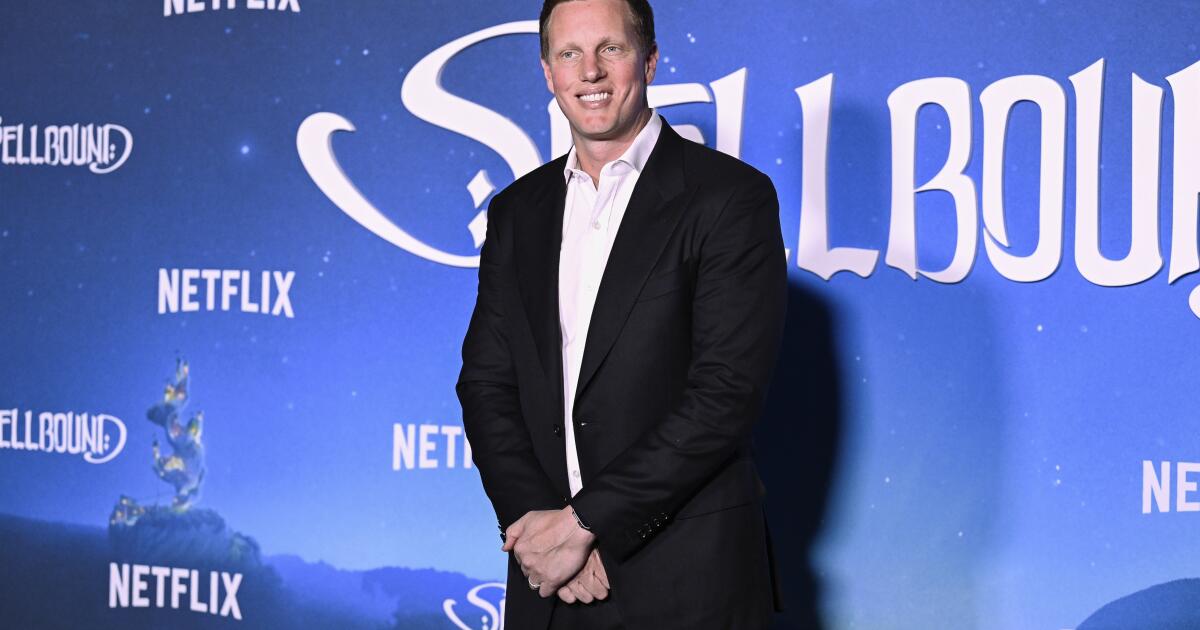
Paramount is staying the course on its $30-a-share bid for Warner Bros. Discovery, again appealing directly to shareholders.
The move comes after Warner Bros. Discovery’s board voted unanimously this week to reject Paramount’s revised bid, in which billionaire Larry Ellison agreed to personally guarantee the equity portion of his son’s firm’s financing package.
Paramount Skydance, in a Thursday statement, sidestepped Warner’s latest complaints about the enormous debt load that Paramount would need to pull off a takeover. Paramount instead said the appeal of its bid should be obvious: $30 a share in cash for all of Warner Bros. Discovery, including its large portfolio of cable channels, including CNN, HGTV, TBS and Animal Planet.
Warner board members have countered that Netflix’s $27.75 cash and stock bid for much of the company is superior because Netflix is a stronger company. Warner also has complained that it would have to incur billions in costs, including a $2.8-billion break-up fee, if it were to abandon the deal it signed with Netflix on Dec. 4.
The streaming giant has agreed to buy HBO, HBO Max and the Warner Bros. film and television studios, leaving Warner to spin off its basic cable channels into a separate company later this year.
The murky value of Warner’s cable channel portfolio has become a bone of contention in the company’s sale.
“Our offer clearly provides WBD investors greater value and a more certain, expedited path to completion,” Paramount Chief Executive David Ellison said in Thursday’s statement. Paramount said it had resolved all the concerns that Warner had raised last month, “most notably by providing an irrevocable personal guarantee by Larry Ellison for the equity portion of the financing.”
Paramount is gambling that Warner investors will evaluate the two offers and sell their shares to Paramount. Stockholders have until Jan. 21 to tender their Warner shares, although Paramount could extend that deadline.
The Netflix transaction offers Warner shareholders $23.25 in cash, $4.50 in Netflix stock and shares in the new cable channel company, Discovery Global, which Warner hopes to create this summer.
Comcast spun off most of its NBCUniversal cable channels this month, including CNBC and MS NOW, creating a new company called Versant. The result hasn’t been pretty. Versant shares have plunged about 25% from Monday’s $45.17 opening price. On Thursday, Versant shares were selling for about $32.50. (Versant has said it expected volatility earlyon as large index funds sold shares to rebalance their portfolios).
Paramount has argued that fluctuations in Netflix’s stock also reduces the value of the Netflix offer.
“Throughout this process, we have worked hard for WBD shareholders and remain committed to engaging with them on the merits of our superior bid and advancing our ongoing regulatory review process,” Ellison said.
Paramount is relying on equity backing from three Middle Eastern sovereign wealth funds, including Saudi Arabia. It turned to Apollo Global for much of its debt financing. Warner said this week that Paramount’s proposed $94 billion debt and equity financing package would make its proposed takeover of Warner the largest leveraged buyout ever.
Amid the stalemate, Paramount and Warner stock held steady. Paramount was trading around $12.36, while Warner shares are hovering around $28.50 on Thursday.
Movie Reviews
Movie Review: A real-life ’70s hostage drama crackles in Gus Van Sant’s ‘Dead Man’s Wire’

It plays a little loose with facts but the righteous rage of “Dog Day Afternoon” is present enough in Gus Van Sant’s “Dead Man’s Wire,” a based-on-a-true-tale hostage thriller that’s as deeply 1970s as it is contemporary.
In February 1977, Tony Kiritsis walked into the Meridian Mortgage Company in downtown Indianapolis and took one of its executives, Dick Hall, hostage. Kiritsis held a sawed-off shotgun to the back of Hall’s head and draped a wire around his neck that connected to the gun. If he moved too much, he would die.
The subsequent standoff moved to Kiritsis’ apartment and eventually concluded in a live televised news conference. The whole ordeal received some renewed attention in a 2022 podcast dramatization starring Jon Hamm.
But in “Dead Man’s Wire,” starring Bill Skarsgård as Kiritsis, these events are vividly brought to life by Van Sant. It’s been seven years since Van Sant directed, following 2018’s “Don’t Worry, He Won’t Get Far on Foot,” and one of the prevailing takeaways of his new film is that that’s too long of a break for a filmmaker of Van Sant’s caliber.
Working from a script by Austin Kolodney, the filmmaker of “My Own Private Idaho” and “Good Will Hunting” turns “Dead Man’s Wire” into not a period-piece time capsule but a bracingly relevant drama of outrage and inequality. Tony feels aggrieved by his mortgage company over a land deal the bank, he claims, blocked. We’re never given many specifics, but at the same time, there’s little doubt in “Dead Man’s Wire” that Tony’s cause is just. His means might be desperate and abhorrent, but the movie is very definitely on his side.
That’s owed significantly to Skarsgård, who gives one of his finest and least adorned performances. While best known for films like “It,” “The Crow” and “Nosferatu,” here Skarsgård has little more than some green polyester and a very ’70s mustache to alter his looks. The straightforward, jittery intensity of his performance propels “Dead Man’s Wire.”
Yet Van Sant’s film aspires to be a larger ensemble drama, which it only partially succeeds at. Tony’s plight is far from a solitary one, as numerous threads suggest in Kolodney’s fast-paced script. First and foremost is Colman Domingo as a local DJ named Fred Temple. (If ever there were an actor suited, with a smooth baritone, to play a ’70s radio DJ, it’s Domingo.) Tony, a fan, calls Fred to air his demands. But it’s not just a media outlet for him. Fred touts himself as “the voice of the people.”
Something similar could be said of Tony, who rapidly emerges as a kind of folk hero. As much as he tortures his hostage (a very good Dacre Montgomery), he’s kind to the police officers surrounding him. And as he and Dick spend more time together, Dick emerges as a kind of victim, himself. It’s his father’s bank, and when Tony gets M.L. Hall (Al Pacino) on the phone, he sounds painfully insensitive, sooner ready to sacrifice his son than acknowledge any wrongdoing.
Pacino’s presence in “Dead Man’s Wire” is a nod to “Dog Day Afternoon,” a movie that may be far better — but, then again, that’s true of most films in comparison to Sidney Lumet’s unsurpassed 1975 classic. Still, Van Sant’s film bears some of the same rage and disillusionment with the meatgrinder of capitalism as “Dog Day.”
There’s also a telling, if not entirely successful subplot of a local TV news reporter (Myha’la) struggling against stereotypes. Even when she gets the goods on the unspooling news story, the way her producer says to “chop it up” and put it on air makes it clear: Whatever Tony is rebelling against, it’s him, not his plight, that will be served up on a prime-time plate.
It doesn’t take recent similar cases of national fascination, such as Luigi Mangione, charged with killing a healthcare executive, to see contemporary echoes of Kiritsis’ tale. The real story is more complicated and less metaphor-ready, of course, than the movie, which detracts some from the film’s gritty sense of verisimilitude. Staying closer to the truth might have produced a more dynamic movie.
But “Dead Man’s Wire” still works. In the film, Tony’s demands are $5 million and an apology. It’s clear the latter means more to him than the money. The tragedy in “Dead Man’s Wire” is just how elusive “I’m sorry” can be.
“Dead Man’s Wire,” a Row K Entertainment release, is rated R for language throughout. Running time: 105 minutes. Three stars out of four.

Video: Hochul and Mamdani Announce Plan for Universal Child Care

Tarik Skubal, Tigers can’t agree on 2026 salary. Here’s what happens

San Francisco celebrates drop in traffic deaths

Anti-ICE protest outside Dallas City Hall follows deadly shooting in Minneapolis

Ole Miss S Nick Cull’s targeting call reversed vs Miami in Peach Bowl

Florida High School Football Rankings: Top 25 teams – Oct. 21

Cleary's 21 help Le Moyne down Central Connecticut State 69-64 in OT

How old is Bo Nix? What to know about Oregon quarterback ahead of 2024 NFL Draft

99th annual Pony Swim held in Virginia

Video: ‘It Didn’t Have to Happen This Way:’ U.Va. Faculty Call for Review of Police Response to Protests

Video: What Trump Told Us About the ICE Shooting

Trump calls for $1.5T defense budget to build ‘dream military’
Belgium open to housing foreign prisoners in other countries, minister says

Community reacts to ICE shooting in Minnesota. And, RFK Jr. unveils new food pyramid

Video: Minnesota Governor Condemns ICE Shooting
-

 Detroit, MI5 days ago
2 hospitalized after shooting on Lodge Freeway in Detroit
-

 Technology2 days ago
Power bank feature creep is out of control
-

 Dallas, TX4 days ago
Defensive coordinator candidates who could improve Cowboys’ brutal secondary in 2026
-

 Health4 days ago
Viral New Year reset routine is helping people adopt healthier habits
-

 Nebraska2 days ago
Oregon State LB transfer Dexter Foster commits to Nebraska
-

 Iowa2 days ago
Pat McAfee praises Audi Crooks, plays hype song for Iowa State star
-
 Nebraska2 days ago
Nebraska-based pizza chain Godfather’s Pizza is set to open a new location in Queen Creek
-
 Entertainment1 day ago
Spotify digs in on podcasts with new Hollywood studios