Movie Reviews
‘The Woman in the Yard’ is Not What You Think it Is – Review


Finally made it to theaters to see The Woman in the Yard, though I ended up leaving the theater with more questions than answers.
For as long as I’ve been going to see movies (and that is a long time), I’ve never quite known how to feel about movies that leave me feeling confused. It’s easy to talk about a film when it’s excellent, even easier when the film is horrible and you can rip it apart at will. But then there’s the middle ground, where you don’t like a movie, nor do you hate it. Instead, there’s just…confusion.
Such is the dilemma I have with The Woman in the Yard.
On the surface, the story seemed straightforward enough. The story ostensibly follows a mother and her two kids as they find themselves terrorized by a mysterious woman sitting in the yard who will only tell the mother “Today is the day.” It was clear from the trailers that the mother knew more than she was letting on, but the question was, what?
I feel like the people in charge of promoting The Woman in the Yard made some big mistakes. The way the trailers are put together, one goes in expecting a horror story filled with scares and tension around what this mysterious entity wants. And while there is tension around that question, that’s not what the bulk of the story revolves around. Due to spoilers, I can’t say what that something is, except to say it isn’t even remotely hinted at in any of the advertising for this film. One might almost accuse the film of a bait and switch except I believe the director was coming from a place of good intentions, except the execution didn’t quite hit the mark.
Make no mistake, there is a good idea at the core of The Woman in the Yard. The director is trying to use horror as a means to shed light on some extremely dark and sensitive topics. This would all be well and good except by the time these revelations come to light, the film is almost over and the ground hasn’t really been prepared, in a manner of speaking, for the audience to even come close to accepting this as a proper explanation of what’s been going on. It all felt very anti-climactic.

That being said, the standout in this film by a mile is Okwui Okpokwasili as the titular woman. From the moment she first appears, there’s an air of something “other” about her character. Part of this is due to the veil that obscures her face for most of the film, the other part is how she holds herself. It’s the type of performance where you can tell the character is something very not human pretending to be human.
The performance I struggled with the most, in contrast, is that of Danielle Deadwyler as Ramona. I’m reasonably certain we’re supposed to sympathize with Ramona, at least that’s what the trailers led me to believe. But in the film itself, honestly I couldn’t sympathize with Ramona at all. If anything, I was waiting for the Woman to “get” her before I realized it ultimately wasn’t that kind of film.
In the end, I have to say The Woman in the Yard had a number of elements that, if used properly, could have made it a good film. However, as I hinted before, a number of story elements aren’t executed properly, leading to a story that is clearly trying to be told, but doesn’t communicate what needs to all that well. Watch at your own risk, your mileage will definitely vary with this one.


By ABBIE BERNSTEIN / Staff Writer
Posted: March 8th, 2026 / 08:00 PM
THE BRIDE movie poster | ©2026 Warner Bros.
Rating: R
Stars: Jessie Buckley, Christian Bale, Annette Bening, Jake Gyllenhaal, Peter Sarsgaard, Penelope Cruz, Jeannie Berlin, Zlatko Burić
Writer: Maggie Gyllenhaal, based on characters created by Mary Shelley and William Hurlbut and John Balderston
Director: Maggie Gyllenhaal
Distributor: Warner Bros.
Release Date: March 6, 2026
“THE BRIDE!” (as with the recent “WUTHERING HEIGHTS,” the quotation marks are part of the title) is awash in homages, and not just the ones we might reasonably expect in a movie that takes its most obvious inspiration from 1935’s BRIDE OF FRANKENSTEIN.
There’s that, of course, plus its source, Mary Shelley’s 1818 novel FRANKENSTEIN; OR THE MODERN PROMETHEUS, and its sober 1931 film adaptation FRANKENSTEIN. But there are also big nods to wilder takes on the legend, including YOUNG FRANKENSTEIN and THE ROCKY HORROR PICTURE SHOW and even movies that have nothing to do with FRANKENSTEIN, like BONNIE AND CLYDE.
Writer/director Maggie Gyllenhaal casts a wide net in metaphors and ideas and looks. Sometimes “THE BRIDE!” is a comedy, sometimes it’s a crime drama, sometimes it’s a love story, occasionally, it’s even a musical.
Mary Shelley (Jessie Buckley) narrates the tale to us from beyond the grave. She is haughty and naughty, intoxicated by verbiage and her own literary genius. She is going to tell us a story, she says, that she didn’t even dare imagine while alive.
We’re in 1930s Chicago, where a young escort (also Buckley) is having a really awful evening out at a fancy restaurant with some of her peers and a bunch of crass gangsters. Shelley dubs the woman “Ida” and takes possession of her, causing her to speak and act in ways that get her escorted outside. There she stumbles and takes a fatal fall.
The two goons who were with Ida are happy to describe her tumble as the result of their intentional actions to their horrible gangster boss (Zlatko Burić). Ida was suspected of talking to the cops.
Around the same time, Frankenstein’s creation (Christian Bale) – let’s just call him “Frank,” like everybody else does – comes to Chicago to seek out the groundbreaking scientist Dr. Euphronious (Annette Bening), whose published works he has read.
Frank wants the doctor to create a companion for him. His appearance is unusual, but the most alarming injuries are covered by clothing, so he’s not as extreme-looking as, say, Boris Karloff in the role. This isn’t about sex, Frank explains when Euphronious asks why he doesn’t just hire a prostitute. After over a century of loneliness, he seeks a soulmate, and he is sure this can only be achieved by reviving a corpse.
So, Euphronious and Frank dig up the grave that turns out to belong to Ida (we never do learn how they know it belongs to a soulmate candidate as opposed to a shot-and-dumped male gangster). Euphronius revives her. Ida remembers how to walk and talk, but not who she is or what happened, so Frank and the doc tell her she’s been in an accident.
Even without Ida’s beauty, Frank is already devoted to the very notion of her. A more accommodating suitor would be hard to find. Frank has another passion, the musical films of Ronnie Reed (Jake Gyllenhaal, the filmmaker’s brother), a Fred Astaire-like star. Frank imagines himself in the midst of those dance routines, and we get some more within “THE BRIDE!”’s “real” action.
One thing leads to another, Frank and Ida go on the run, leaving a trail of bodies in their wake. They are pursued all over the country. Among those seeking them are sad-eyed police detective Jake Wiles (Peter Sarsgaard) and his secretary Myrna Mallow (Penélope Cruz), who’s better at this whole crime-solving business than he is.
It’s all very kaleidoscopic and energetic, occasionally impressive and sometimes very funny. Bening as the frazzled, worldly Euphronious has some great moments. Buckley, currently and justifiably Oscar-nominated leading performance in HAMNET, juggles the very unalike personas of Mary and Ida with impact.
Oddly, Bale underplays Frank. We get that he is trying his hardest not to spook Ida (or anyone else), but it seems like he should have a bit more spark. Cruz, going for a snappy ‘30s working woman, has her own style that works.
But in addition to being entertaining and eye-catching, Gyllenhaal has a message that gets very muddled. This is less because it’s so familiar by now that it feels a little redundant, and more because a crucial part of the set-up collides head-on with the feminist slant.
Ida seeks to be her own person, but she is literally bodily controlled by Mary Shelley, who puts her creation in danger with her outbursts. This may help get Ida out of the clutches of the mob, but it is possession, the aftereffects of which the character understandably finds confusing and upsetting.
If Gyllenhaal wanted to discuss or dramatize the clash between what Mary, as a woman, is doing to this other woman, that would make sense, but it seems we’re just meant to somehow overlook this while being immersed in how men control women. The resulting cognitive dissonance adds another layer to a movie that already has more than it can comfortably service.
Additionally, when Mary has one of her outbursts while inhabiting Ida, the plot comes to a screeching halt until she’s finished. Many viewers will wish Mary would stop declaiming and just let Ida be herself.
“THE BRIDE!” succeeds in being trippy and some of it is memorable. By the end, though, it is more disjointed than even a movie about experiments and a character made up of multiple people’s body parts ought to be.
Related: Movie Review: NFT: CURSED IMAGESRelated: Movie Review: SCREAM 7
Related: Movie Review: OPERATION TACO GARY’S
Related: Movie Review: ANACORETA
Related: Movie Review: THIS IS NOT A TEST
Related: Movie Review: GHOST TRAIN
Related: Movie Review: COLD STORAGE
Related: Movie Review: THE HAUNTED FOREST
Related: Movie Review: “WUTHERING HEIGHTS”
Related: Movie Review: THE MORTUARY ASSISTANT
Related: Movie Review: THE STRANGERS: CHAPTER 3
Related: Movie Review: PILLION
Related: Movie Review: JIMPA
Related: Movie Review: ISLANDS
Related: Movie Review: WORLDBREAKER
Related: Movie Review: MOTHER OF FLIES
Related: Movie Review: 28 YEARS LATER: THE BONE TEMPLE
Related: Movie Review: NIGHT PATROL
Related: Movie Review: THE CONFESSION (2026)
Related: Movie Review: WE BURY THE DEAD
Related: Movie Review: ANACONDA
Related: Movie Review: AVATAR: FIRE AND ICE
Related: Movie Review: IS THIS THING ON?
Related: Movie Review: MANOR OF DARKNESS
Related: Movie Review: DUST BUNNY
Follow us on Twitter at ASSIGNMENT X
Like us on Facebook at ASSIGNMENT X
Article Source: Assignment X
Article: Movie Review: “THE BRIDE!”
Related
Related Posts:
Movie Reviews
‘Heel’ Review: Why Did Stephen Graham and Andrea Riseborough Sign on for This Contrived Debacle?

The original title of “Heel” was “Good Boy.” The new title is probably more accurate, though an even more accurate title might be “Painfully Annoying Punk Idiot.” I jest (a bit), since the title of “Heel” is actually a verb. The film wants to tell the story of a budding hooligan who needs to be brought to heel. That said, does anyone seriously want to see a movie about a 19-year-old British sociopath who gets chained up in a basement so that the weird upper-middle-class couple who’ve kidnapped him can modify his behavior? “Heel” is like “A Clockwork Orange” remade as the year’s worst Sundance movie.
The opening sequence is actually promising. It depicts, in rapidly edited documentary-like montage, a reckless night out on the town by Tommy (Anson Boon) and his friends. They’re hopped-up club kids, and Tommy is their snarling, curly-haired, sexually coercive wastrel ringleader, living in the moment, pouring drinks down his throat, snorting coke and popping pills, dancing and carousing and puking and rutting in the bathroom, pushing himself to a higher and higher high, until he winds up collapsed on the sidewalk — a ritual, we gather, that has happened many times before. Only this time his crumpled body is gathered up by a mysterious stranger.
When Tommy wakes up, he’s in the basement of a stately stone house somewhere in the British countryside. He’s got a metal collar around his neck, and it’s chained to the ceiling. The film has barely gotten started, and already it’s cut to the second half of “A Clockwork Orange”: Can this monster delinquent be rehabilitated? Theoretically, that’s an interesting question, except that the way this happens is so garishly contrived that we can only go with the movie by putting any plea for reality on permanent hold.
Who are the people who have kidnapped Tommy? Chris (Stephen Graham) is a mild chap in a toupee who goes about his mission with a puckish vengeance disguised as gentility. His wife, Kathryn (Andrea Riseborough), is so neurasthenic she’s like a ghost. (She has suffered some trauma that isn’t colored in.) The two have a cherubic preteen son they call Sunshine (Kit Rakusen). And why, exactly, are they doing what they’re doing? We have no idea. Trying to make a bad person into a good person is not, in itself, a terrible notion, but the conceit of “Heel” — that Tommy is locked in a dungeon, being treated like a dog, because that’s what it will take to change him — is like a toxic right-wing fantasy that the film somehow reconfigures into an implausible liberal “family” allegory.
Ah, plausibility! How unhip to gripe about the absence of it. Yet watching “Heel,” I found it impossible to suspend my disbelief for two seconds. The entire movie, directed by the Polish filmmaker Jan Komasa (“Corpus Christie”) from a script by Bartek Bartosik and Naqqash Khalid, is just a grimy monotonous conceit. It’s been thought out thematically but not in terms of recognizable human behavior. It’s like a film-student short stretched out to an agonizing 110 minutes.
Anson Boon, a charismatic actor who did an okay job of playing Johnny Rotten in Danny Boyle’s TV miniseries “Pistol” (though he never conjured Rotten’s homicidal gleam), infuses Tommy with a loutish energy that in the early scenes, at least, makes him a convincing candidate for either prison or the contemporary equivalent of shock therapy. And yet the character is exhaustingly obnoxious. As a filmmaker, Komasa doesn’t dramatize — he uses one-note traits to clobber the audience. Stephen Graham’s Chris is as quiet and circumspect as Tommy is abrasive. He tries to train Tommy by showing him motivational tapes, and by subjecting him to Tommy’s own depraved TikToks. He then rigs up an elaborate system of gutters on the ceiling so that Tommy, in his metal leash, can wander around the house, a sign that he’s been housebroken.
Tommy has to grow and change, since there wouldn’t be a movie otherwise. In the process, he gets less annoying but also less interesting, because “Heel” sentimentalizes his transformation. Komasa seems to have missed the key irony of “A Clockwork Orange”: that the behavior modification of Alex is as brutalizing as his original state of punk anarchy. In “Heel,” Tommy’s evolution is singularly unconvincing — by the end, he’s practically ready to be the suitor in a Jane Austen drama. But that’s all of a piece with a movie so false it puts the audience in the doghouse.

The act of judging — of assigning value to someone or something based on performance — is probably as old as humanity itself. You can safely assume that even cavemen were sizing each other up: Who hunts better? Who builds the sturdier shelter? Who’s pulling their weight?
Formalized systems came much later. The Roman Empire famously popularized the thumbs up/thumbs down gesture during gladiatorial games — a blunt but effective metric. By the 18th century, academic institutions began standardizing numerical grading systems. The 19th century introduced letter grades. And by the early 20th century, film criticism had entered the chat, with newspapers like the New York Daily publishing some of the earliest recorded movie grades (at least according to a quick Google dive — so take that with a grain of salt).
Fast forward to the 1970s, and modern film criticism as we know it began to crystallize. Roger Ebert popularized the four-star system, while he and Gene Siskel turned the thumbs up/thumbs down into a cultural mainstay on their television show — perhaps subconsciously echoing those ancient Roman gestures.
Now, I could theoretically try to confirm whether the Roman inspiration was intentional. But seeing as both critics have passed on, the only way to do that would involve a séance — and if horror movies have taught us anything, that never ends well. Sure, some people claim they’ve used an Ouija board, and nothing happened. Good for them. With my luck, I’d end up summoning Pazuzu, Candyman, a Djinn, and Satan all at once. So that’s a hard pass.
Jokes aside, in the past decade — arguably since the moment movie ratings were invented — people have increasingly questioned their value in entertainment and beyond. Albums, films, TV shows, books: every score feels like a potential battleground. (I don’t spend much time in Goodreads comment sections, but I can only imagine.)
But where did it all probably begin?
The Rotten Tomatoes Effect
I still remember the first time I heard about Rotten Tomatoes. It was on a radio show I used to catch after school called La Hora Señalada (the Spanish title for “High Noon”), where two veteran critics would break down new releases and revisit older classics. Before every discussion, they’d reference “the Rotten Tomatoes score,” like it was some cinematic barometer of truth.
I didn’t actually visit the site back then. Internet access at home was spotty — dial-up at best, nonexistent at worst — and not exactly a priority when my family had bigger concerns. But even without browsing it myself, I grew up watching cinephiles treat the Tomatometer like gospel. A high percentage meant “good.” A low one meant “bad.” Simple as that.
Over the past decade, that perception seems to have intensified. The site has been around since 1998, but the explosion of high-speed internet, social media platforms like Twitter and Facebook, and the rise of online fandom culture amplified its influence. Suddenly, that big red or green number wasn’t just a reference point — it became ammunition in arguments.
So, how much should we actually care about it?
The answer isn’t straightforward.
First, it’s important to understand what that percentage represents. The Tomatometer isn’t an average movie rating — it’s the percentage of critics who gave the film a “fresh” (positive) review. That means a movie sitting at 80% doesn’t necessarily have critics raving about it. Many of those positive reviews could be modest 7/10s or 3.5/5s. The more telling metric is the smaller average rating number listed beneath the percentage — but let’s be honest, most people fixate on the big, bold score.
Filmmakers have criticized the site for oversimplifying complex critical opinions into a binary fresh/rotten system. And that critique isn’t entirely unfair. When nuanced reviews get distilled into a single color-coded badge, context gets lost.
Then there’s the audience score — which, at least historically, has been vulnerable to manipulation. The most infamous example came during the release of “Captain Marvel,” when organized groups review-bombed the film largely due to backlash against Brie Larson. The score plummeted before most people had even seen the movie. To their credit, Rotten Tomatoes implemented changes afterward to curb that kind of coordinated sabotage. Of course, the opposite phenomenon exists too: fans artificially inflating scores for films they love.

All of this reinforces one simple idea: the site is a reference point, not a verdict.
It can be useful — a quick snapshot of critical consensus — but it shouldn’t live on a pedestal. It can mislead. It can misrepresent nuance. And it absolutely may not reflect your own taste. There are plenty of low-rated films I adore. “Max Keeble’s Big Move” sits at 27%, and I’ll defend that gem every, any, what, where, why, when, and however time.
Another factor people rarely consider: critics are individuals with specific tastes. If a horror skeptic reviews a slasher or a rom-com enthusiast tackles an austere arthouse drama, their reaction may not align with your own sensibilities. That doesn’t make them wrong — it just means taste is subjective.
I believe the healthiest approach is to treat Rotten Tomatoes as a starting point. Read individual reviews. Seek out critics whose tastes align with yours. Cross-reference with other aggregators like Metacritic, which uses a weighted average system rather than a binary model. (Full disclosure: I haven’t relied on it heavily myself, but many cinephiles prefer its methodology.)
In the end, no percentage can replace your own experience. The most reliable metric will always be the one you assign after the credits roll.
Also Related to Movie Rating Dilemma: The Death of the Opening Weekend: What Actually Defines Success in Film Now
The Value
In preparation for this article, I ran a small poll — and the results were both surprising and completely predictable. Much like politics (and, frankly, everything else these days), people are deeply divided on how much value they place on ratings. What caught me off guard, though, was that after hundreds of votes, the majority leaned toward the “don’t care” camp.
That lines up with a noticeable trend on platforms like Letterboxd, where more and more users are ditching the traditional star system in favor of a simple “heart” — or nothing at all.
So why is that happening?
From the responses and patterns I observed, one recurring reason is fluidity. Many people say their film ratings change constantly in their heads. A movie that felt like a four yesterday might feel like a three-and-a-half next month. Updating scores repeatedly can become tedious, even exhausting. But the bigger issue seems to be perception. People worry — sometimes rightly so— that their ratings will be misinterpreted. For some, three stars is a solid, positive endorsement. For others, anything below four feels like a dismissal. That disconnect can spiral into unnecessary debates — or worse, online pile-ons.
Which brings me to what I like to call the comparison game.
This is where things get absurd. It’s when someone compares potatoes to lettuce. Sure, they both grow from the ground. They might share space on a burger plate. But beyond that? Completely different textures, flavors, and purposes.
Recently, I rated “Dhurandhar” four stars — the same score I gave “One Battle After Another.” A follower asked how I could possibly see those films as equals. But that’s the assumption baked into the comparison game: that identical ratings equal identical value. They don’t. One film might be a potato, the other a lettuce — or an apple. What do they meaningfully have to do with each other?
The root issue seems simple: people take their favorite art personally. If I love X and give it four stars, you’d better love it just as much — or at least rate it the “correct” way. Otherwise, the pitchforks come out. Disagreement isn’t just disagreement; it becomes a perceived attack.


And that’s where ratings shift from being shorthand expressions of personal taste to symbols people defend as if they were moral positions. In theory, a rating is just a snapshot of how something worked for one individual at one moment in time. In practice, it can feel like a referendum on identity.
Which says less about the numbers themselves — and more about how much we’ve invested in them.
When you rate a movie, do you stop and cross-reference every prior rating to ensure consistency across unrelated genres? The only time that kind of comparative calibration makes sense to me is within a contained body of work — ranking a director’s filmography, an actor’s performances, or entries in a franchise.
There are even stranger edge cases. I’ve given “The Room” a perfect score — not because it’s “objectively” great in a traditional sense, but because, for what it is, and what it accidentally achieves, it feels like a specific kind of perfection. Meanwhile, others might rate it a two-star disaster and still love it just as passionately. The number doesn’t always tell the whole emotional truth.
Now, for the positives.
As one commenter on the site put it, “rating forces us to confront the tough question: how much did this film really work for me?” A rating compels clarity. It forces you to distill your feelings into a decision.
In a way, this circles back to the heart-versus-stars debate. Clicking a heart on Letterboxd leaves a lot open to interpretation. Say you heart both “Dog Day Afternoon” and “12 Angry Men.” Great — but do you value them equally? Which one affected you more? Which one would you revisit first? Without a rating (or a detailed review), we’re left guessing.
And that ties into another undeniable reality: we’re living in a low-attention-span era. You can write a thoughtful, beautifully argued review — and many people simply won’t read it. On fast-scrolling platforms, especially, the rating becomes a kind of headline. A shorthand signal. It tells followers, at a glance, whether you found something worthwhile.
Conclusion
Personally, I’ll always champion ratings.
Yes, they’re a double-edged sword. They can flatten nuance, spark unnecessary outrage, or reduce complex feelings to a tidy number. But they can also serve a practical purpose — if we’re willing to understand how to read them. There’s probably an argument to be made that audiences need a bit more education on interpreting ratings as shorthand rather than gospel.
Some critics have come up with creative systems that embrace that shorthand in interesting ways. Roger Ebert and Gene Siskel boiled it down to the now-iconic thumbs metric — elegantly simple, instantly readable. Dan Murrell leans into a more textual breakdown, while Cody Leach blends a numbered score with contextual explanation. Different approaches, same goal: distilling a reaction into something digestible without (ideally) stripping it of meaning.
It’s not easy. The more you think about cinema as art — deeply personal, highly subjective — the more assigning it a number can start to feel reductive. For some critics, the very act of rating becomes a burden, as if they’re forced to quantify something that resists quantification.
Are ratings imperfect? Absolutely. Are they reductive? Sometimes. But they’re also efficient, clarifying, and — when used thoughtfully — a meaningful extension of the conversation rather than its replacement. In a media landscape built on quick takes and endless content, ratings function as a kind of necessary evil. They’re a snapshot, not the whole portrait. When used responsibly — and interpreted thoughtfully — they don’t have to replace the conversation. They can simply be the entry point to it.
Similar Read Around Movie Rating Dilemma: 9 Biggest Hollywood Box Office Bombs of 2025: Movies That Lost Millions Despite Huge Budgets

How Many of These Epic 1,000-Page Novels Do You Know?
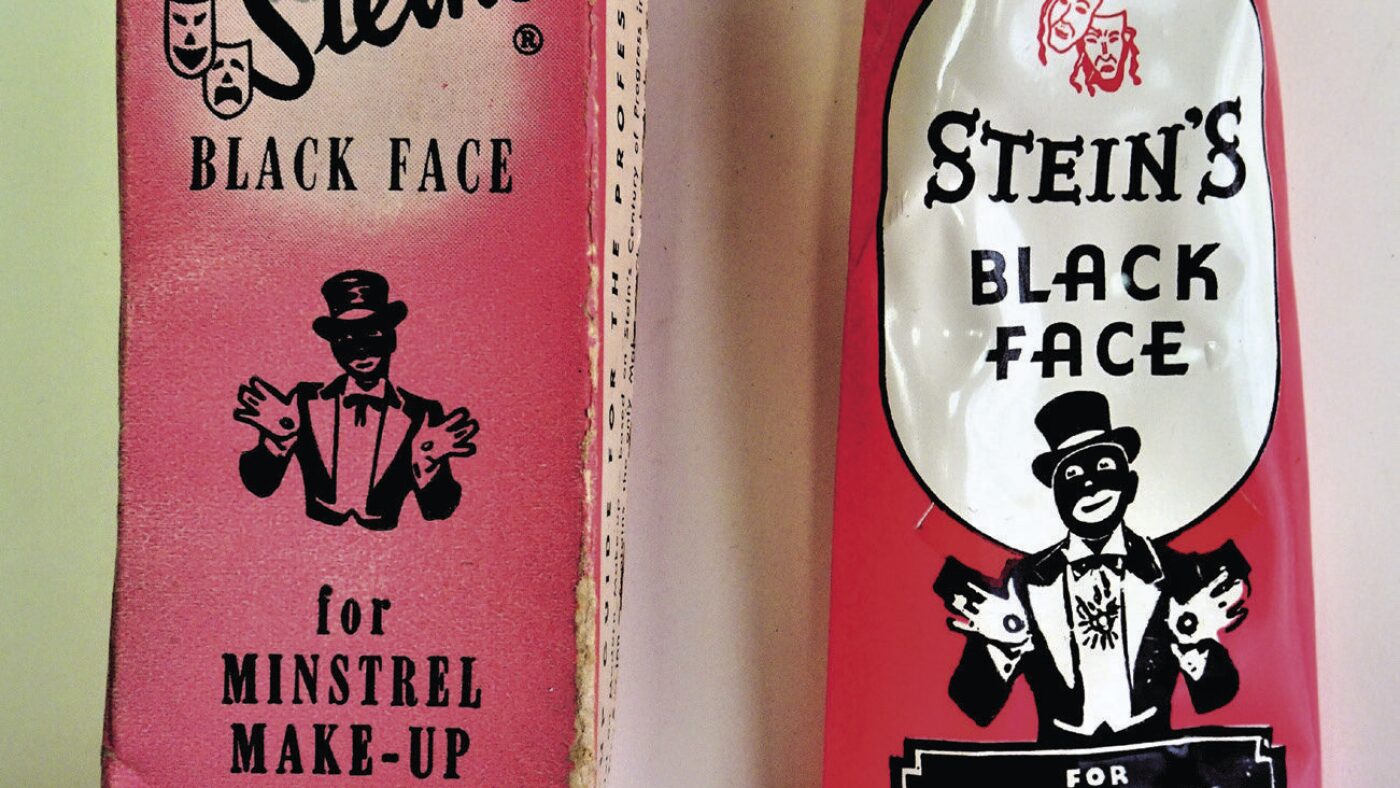
This historian dug up the hidden history of ‘amateur’ blackface in America

Google’s latest Pixel Watches have fallen to their lowest prices ever

Hegseth warns ‘more casualties’ expected in Operation Epic Fury against Iran

China-linked birth tourism under scrutiny as GOP lawmakers press Trump admin for answers

Florida High School Football Rankings: Top 25 teams – Oct. 21

Cleary's 21 help Le Moyne down Central Connecticut State 69-64 in OT

How old is Bo Nix? What to know about Oregon quarterback ahead of 2024 NFL Draft

99th annual Pony Swim held in Virginia

Indiana Members Credit Union announced as new anchor tenant at Bottleworks District
China-linked birth tourism under scrutiny as GOP lawmakers press Trump admin for answers

What defence support could Ukraine offer Middle East states amid Iran war?

Warrants served in New Jersey, Pennsylvania as feds look into possible NYC terrorism

Video: Airports Struggle to Staff T.S.A. During Partial Government Shutdown

Before-and-after satellite imagery offers a rare look at damage inside Iran
-

 Wisconsin1 week ago
Setting sail on iceboats across a frozen lake in Wisconsin
-

 Massachusetts6 days ago
Massachusetts man awaits word from family in Iran after attacks
-

 Maryland1 week ago
AM showers Sunday in Maryland
-

 Florida1 week ago
Florida man rescued after being stuck in shoulder-deep mud for days
-

 Pennsylvania4 days ago
Pa. man found guilty of raping teen girl who he took to Mexico
-

 News1 week ago
2 Survivors Describe the Terror and Tragedy of the Tahoe Avalanche
-

 Sports5 days ago
Keith Olbermann under fire for calling Lou Holtz a ‘scumbag’ after legendary coach’s death
-

 Virginia5 days ago
Giants will hold 2026 training camp in West Virginia