Movie Reviews
Critic’s Notebook: In Praise of Frederick Wiseman, America’s Greatest Living Filmmaker


Every so often, the work of a filmmaker is given a major critical and public reassessment, allowing them to enter the pantheon of great directors.
It happened in the 1950s, when French critics declared that Howard Hawks, Alfred Hitchcock and Samuel Fuller were not only skillful helmers of genre flicks, but auteurs with distinct personal visions. Later, John Ford was revisited by Peter Bogdanovich and Lindsay Anderson, in books claiming he was more than just a maker of great Westerns. In the 1990s, the Polish director Krzysztof Kieslowski and the Iranian Abbas Kiarostami, both of whom had been working steadily in their homelands since the 70s, were finally celebrated abroad. More recently, the filmography of Agnès Varda was excavated in retrospectives and festivals, shining a light on a forgotten member of the New Wave.
It’s time the same thing happened for Frederick Wiseman.
First off, let’s not kid ourselves: The 95-year-old Boston native is already considered one of the greatest, if not the greatest of all, documentary filmmakers. With 46 features in nearly 60 years, he’s widely recognized as the major chronicler of American institutions, as well as a few French ones.
His movies, which have running times ranging from 75 to 358 minutes, have all been self-produced through his company Zipporah Films (named after the director’s late wife), with funding coming from PBS and other public outlets in the U.S. and, more recently, in France. They tend to have banal titles — Basic Training, Meat, Zoo, City Hall and State Legislature, to name a few — which do a clever job masking what they really are: veritable human comedies of the late 20th and early 21st centuries, populated by people from all races, classes and walks of life struggling within systems they never fully control.
Over the last decade or so, Wiseman’s true greatness has been acknowledged on a bigger scale. A New York Times Magazine piece from 2020, titled “What if the Great American Novelist Didn’t Write Novels?”, argued that his output isn’t merely a collection of institutional portraits, but a series of “long, strange and uncompromising” films made by an “artist of extraordinary vision.” A year later, Shawn Glinis and Arlin Golden launched the excellent Wiseman Podcast, celebrating each movie with in-depth analyses and interviews, including one with the man himself. And back in 2010, a MoMA retrospective featured a catalogue in which Wiseman’s work was praised by artists and intellectuals outside the documentary realm.
With career-spanning retrospectives taking place this past year in New York, Los Angeles and Paris, including 33 works restored through the support of Steven Spielberg, a new generation of moviegoers has had the chance to not only discover or rediscover his films in pristine form, but to grasp the profound scope of his ambition.
I’ve personally sat through 20 or so of his movies in Paris since September, presenting a few of them to packed theaters. And with each new screening, I became increasingly attuned to the fact that Wiseman is not simply a great documentary filmmaker, which is a label he’s always rejected. He’s a great filmmaker, period. And to my mind, he’s the greatest American filmmaker living right now (even if he currently resides in France).
His films, which are set in schools, libraries, museums, offices, police precincts, department stores, museums and other public or private places, are not just faceless, factual accounts of bureaucracies and those employed by them. They are carefully structured narratives marked by moments of high drama, dark comedy and raw emotion, all starring real people giving some of the best natural performances you’ll ever see on screen.
To cite some examples: the finale of High School, during which a teacher reads the letter of a former student proudly fighting in Vietnam; the scene in Welfare in which a man compares his humiliating experience to Beckett’s Waiting for Godot; the moment in Missile when two female Air Force trainees give each other high-fives after launching a mock nuclear attack; the epic leg surgery of a thoroughbred horse in Racetrack; the drugged-out hipster in Hospital who has a vomiting fit worthy of The Exorcist; the NATO exercises in Manoeuvre that become surreal war games; the adorable little girl walking with her cane for the first time in Blind; a wolf getting shot point blank in Belfast, Maine; the heartbreaking scene in Public Housing where an elderly man is evicted from his apartment, unaware of where he’ll go next.
Wiseman of course didn’t direct any of these scenes, at least in the traditional sense of calling “action” and “cut.” But he captured them, operating sound while regular cameramen William Brayne and John Davey handled the cinematography, then shaped them afterwards into moments of pure cinema.
For those unfamiliar with his process, his movies are usually shot in stretches lasting from six to ten weeks, then edited by the director for roughly nine months to a year. If editing is what separates cinema from other art forms, offering the ability to mold time and events as one chooses, then Wiseman’s genius lies in the way he’s been able to create layered, emotional works out of all the footage he’s culled together. It’s not quite direct cinema or cinéma vérité — two documentary forms that preceded him — but the transformation of raw material into “reality fictions,” as he calls his films.
I would defy, for instance, any director to recreate the emotional power elicited by two remarkable sequences in the Kansas City-set Law and Order: one in which a hot-headed teenager is restrained by a squad of cops, the other in which a female sex worker is sadistically choked by a detective.
Not only are these scenes harrowing in their brutality, but their depictions of Black citizens being violently subdued by white policemen resonate as much in 2025 as they did back in 1969. Each scene in a Wiseman movie is meant to be grasped on two levels — the literal action on the surface and the more symbolic meaning behind it — and those scenes from Law and Order speak volumes about America both then and now.
Which brings us to what makes Wiseman so important today.
We live in a time of major political and social unrest, when the country appears to be changing in ways never imagined. Wiseman’s movies provide lots of clues as to what got us here, unveiling the deep currents of capitalism, patriotism, religious fundamentalism, racism and classism that have always been present, to varying degrees, in the United States.
Despite their warmth and humanism, his films can sometimes seem scathing or pessimistic — tragic comedies sculpted from the granite of American life. Yet they also reinforce a more heartening truth about the country, which is that no matter how individualistic a society we’ve become over the years, we’re still capable of laboring together for a greater cause.
In that sense, perhaps the quintessential Wiseman scene is one of people sitting around a meeting room, debating an issue until they manage to reach a decision. For the director’s detractors, these can be chunks of pure tedium, indicative of his hands-off, fly-on-the wall approach to cinema.
But at a time when our institutions seem to be in great peril, these scenes now appear to be hammering home a theme Wiseman has been slyly emphasizing all along, from decade to decade and from film to film, in a body of work that’s suddenly become more relevant than ever: the everyday miracle, now under threat, of democracy in action.



The Times of India
Apr 07, 2026, 3:24 PM IST
3.0
Super Duperr is a riot in all senses of the word. A wild ride filled with laughter and emotion it presents an unusual matchup of traditional and modern values.Rohit (Lalit Prabhakar) and Isha (Vidula Chougule) are a young couple trying to make their mark in the entertainment industry. They take their relationship to the next level and purchase a flat in Mumbai with their savings. It is here that they realise that they have fallen for a scam when the same house is sold to and currently occupied by a rural family. What follows is a series of clashes and learning moments that test the morality of both parties. The story is a fun take on a series of real world scams and as such has a very interesting premise. The Sameer Asha Patil film however chooses to take a detour in favour of certain stretched out gags and slow motion shots. What could have been a deep exploration of the two worlds colliding, ends up being a formulaic checklist of a wedding song, an action sequence and a few slapstick gags. These are passable of course, but the ho-hum nature of the story’s progression feels under utilized. Super Duperr does offer impactful emotional sequences, notably the equation between the parents (Shashank Shende and Nirmiti Sawant) and his eldest son (Hrishikesh Joshi). The music and cinematography are well executed and add abundantly to the viewing experience. Super Duperr set a rich tapestry only to ultimately doodle in a corner. While it could have benefitted from adding more inter-family interactions, it remains a good watch for this weekend.

The verdict is in, and critics have widely panned The Super Mario Galaxy Movie while audiences have universally praised the family-friendly sequel. This follow-up to the fan-favorite The Super Mario Bros. Movie has been in theaters for about a week since its debut on April 1, and it has already had the best box office opening in 2026, earning more than $190 million over its 5-day domestic weekend. Worldwide, it has amassed $372 million, making it the fifth largest global opening ever for an animated film. Despite the movie being a massive box office hit, however, the review scores are terribly low for the video game adaptation, and there are several reasons why.
Fans vs. critics on The Super Mario Galaxy Movie
As of April 6, The Super Mario Galaxy Movie has a mediocre 42% Tomatometer score from a total of 175 reviews on Rotten Tomatoes while holding a fantastic 89% Popcornmeter score from over 5,000 verified user ratings. That’s a stark 47-point difference between critics and users.
A similarly wide disparity can be found on Metacritic as well, where the sequel has a “generally unfavorable” Metascore of a 37 based on 45 reviews, despite it earning a “generally favorable” user score of a 7.9 (basically, a 42-point difference).
This gulf between professional reviews and user reviews for this sequel likely isn’t too surprising by fans of the original 2023 Super Mario Bros. movie. That film earned a 59% Tomatometer but a 95% Popcornmeter on Rotten Tomatoes, and it has “mixed or average” 46 Metascore but a “universal acclaim” user score of 8.1.
To be fair, the range of critic scores for the film is vast on Metacritic, with about seven reviews above a 60 and fifteen reviews below a 40. ComingSoon’s Jonathan Sim give it a “Good” 7 out of 10 rating, noting that “it doesn’t necessarily deepen the emotional or narrative complexity of the franchise, but it refines what worked before amplifies it on a grander scale.” However, many other reviews are far less kind, particularly the 0 out of 5 rating from The Times that calls the film “ugly, overbranded, lifeless digital marketing vomit” and a review from Vulture that says it’s like being “asphyxiated in a ball pit filled with candy.”
Meanwhile, multiple user reviews on Metacritic are shocked at the reviews. One called the low Metascore “absolutely ridiculous,” while another asked readers to ignore the critics altogether. A different user wrote, “It’s wild to see professional critics giving this a zero. It feels like they’ve never actually picked up a controller.” And to that person’s credit, we did find that a few critics who gave low scores admitting that the film wasn’t meant for them or that they had never played a Mario game before. Indeed, the movie is chock full of Nintendo references and easter eggs, something that Mario fans will appreciate far more than anyone who doesn’t know or care about the difference between a Super Mushroom and a Fire Flower.
More broadly speaking, The Super Mario Galaxy Movie has more than several traits that critics tend to dislike but that audiences enjoy. The first is that it’s a quick-paced, action-packed film, which features a handful of battles with Mario, Luigi, Yoshi, Princess Peach, Toad, Fox McCloud, Bowser, Bowser Jr., and Wart. Another is that it’s a comedic adventure with cartoonish gags that are age-appropriate for kids and humorous to Mario fans who are in on the joke. On top of that, the film is a family-friendly video game adaptation, a genre that doesn’t usually score well from critics. A Minecraft Movie, another box office smash that earned $960 million worldwide (and also starred Jack Black), was equally slammed by critics with a 47% Tomatometer but lauded by audiences with an 84% Popcornmeter.
Taken altogether, the movie was almost made in a lab for reviewers to despise and for audiences to praise as a nostalgic love letter to Nintendo. Regardless, despite how critics feel, they’ll need to brace themselves for more, since the Nintendo Cinematic Universe is looking like it will come sooner than later.

Watch I Know Exactly How I Die on VOD
The director of I Know Exactly How I Die is Alexandra Spieth, who ensures a tight pace and some gorgeous shots. She previously directed Stag and created and starred in the web-series [Blank] My Life. The screenplay comes from Mike Corey, and I do really like the plot and evolution of this story.
As already mentioned, the star Rushabh Patel is the executive producer. As a result, this movie is billed as “Rushabh Patel’s I Know Exactly How I Die“, which I am not a fan of. Unless Rushabh Patel is famous in ways I am not familiar with – nor is IMDb, as this is his first and so far only credit there.
This is like people wondering if Something Very Bad Is Going to Happen is connected to Stranger Things, because the media keeps referring to it as a new show from The Duffer Brothers. Sure, they produced it, but Haley Z. Boston created the original story and wrote the screenplay. And she’s not even a newcomer.
Okay, rant over, but I just don’t understand the marketing and press decisions of it all.
Anyway, as already mentioned, the practical effects in I Know Exactly How I Die are gorgeous. Any slasher fan should enjoy the concept of the plot as well as those amazing practical effects. And yet, you will have to endure a little terrible CGI, but this is an indie production, so budget restraints come into play. Of course, so does choosing the best talent, and that did not happen for CGI here!
I Know Exactly How You Die is out on VOD from April 7, 2026. You can rent it on Digital HD from your preferred platform, including Prime Video and Fandango at Home. The film will also be available on DVD.

Hate self-checkout at the grocery store? A RI bill to limit it is back.

Former South Dakota AutoZone workers say they were bilked out of overtime pay

Tennessee Basketball Loses A Freshman Guard To The Transfer Portal | Rocky Top Insider

Gov. DeSantis to join Texas governor for Texas Stock Exchange event in Miami

Taylor Frankie Paul faces protective order hearing in Utah after ‘Bachelorette’ cancellation

Florida High School Football Rankings: Top 25 teams – Oct. 21

How old is Bo Nix? What to know about Oregon quarterback ahead of 2024 NFL Draft

Cleary's 21 help Le Moyne down Central Connecticut State 69-64 in OT

99th annual Pony Swim held in Virginia

Indiana Members Credit Union announced as new anchor tenant at Bottleworks District

Ilhan Omar calls Trump an ‘unhinged lunatic,’ urges booting him out of office
Between Budapest and Brussels: Péter Magyar’s political tightrope
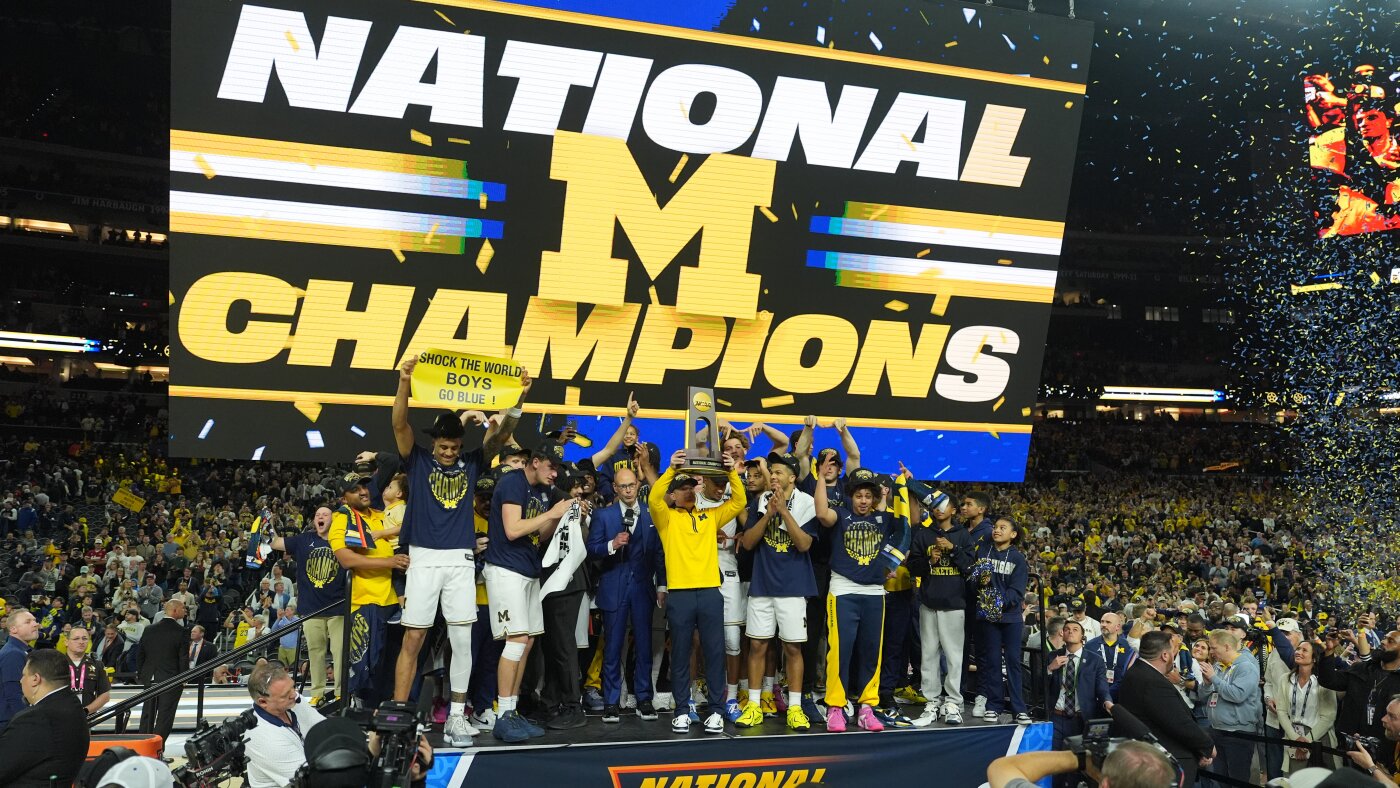
Michigan muscles its way to program’s 2nd NCAA basketball title, beating UConn

Map: Minor Earthquake Strikes Near San Diego

Trump claims he’d win as the president of Venezuela — just needs to ‘quickly’ learn Spanish
-

 Atlanta, GA2 days ago
1 teenage girl killed, another injured in shooting at Piedmont Park, police say
-

 South-Carolina1 week ago
South Carolina vs TCU predictions for Elite Eight game in March Madness
-

 Movie Reviews5 days ago
Vaazha 2 first half review: Hashir anchors a lively, chaos-filled teen tale
-

 Vermont1 week ago
Skier dies after fall at Sugarbush Resort
-

 Politics1 week ago
Trump’s Ballroom Design Has Barely Been Scrutinized
-

 Politics1 week ago
JD Vance says he was ‘obsessed’ with UFOs, believes aliens are actually ‘demons’
-
 Entertainment5 days ago
Inside Ye’s first comeback show at SoFi Stadium
-

 Politics1 week ago
Jeffries declines to break with indicted Democrat after ethics panel’s guilty verdict