Movie Reviews
‘Blue Sun Palace’ Review: An Intimate, Affecting and Dogma-Free Portrait of Chinese Immigrants in Working-Class New York


It’s become something of a movie fashion to forestall the title credits until well after an establishing sequence, if not deeper into the film. But when the title appears onscreen in Blue Sun Palace, at the half-hour point, there’s nothing self-consciously stylish about it: It marks a dramatic, ground-shifting change in perspective, a gut-punch of a narrative fracture, and one that writer-director Constance Tsang executes with assurance.
At the helm of her first feature, Tsang has made a sharp and tender story about dislocation, centering on a trio of hardworking Chinese immigrants in New York. In the movie’s first 30 minutes, Tsang draws us into the intimate orbit of her expatriate characters: a construction company employee and two colleagues at a massage parlor. Then, the sudden absence of one of them sets everything askew. Absence is the current that drives the narrative: absence from family, from homeland, from purpose. The world these characters inhabit, within an enclave of Flushing, Queens, is a place of in-between, captured in the evocative half-light of Norm Li’s cinematography, suggesting the cool-hot glow of the title’s blue sun. The poignant chords of Sami Jano’s elegantly lean score further fuel the angsty mood.
Blue Sun Palace
The Bottom Line Low-key and gripping.
Venue: Cannes Film Festival (Critics’ Week)
Cast: Wu Ke-Xi, Lee Kang Sheng, Xu Haipeng
Director-screenwriter: Constance Tsang
1 hour 57 minutes
The Blue Sun Palace is a restaurant outside the movie’s main New York setting, making its appearance late in the proceedings. It’s in another, unnamed restaurant that the film kicks off, without ceremony, in a remarkable sequence. The eatery itself is barely seen, Li’s camera moving between Hunan native Didi (Xu Haipeng) and Cheung (Lee Kang Sheng), from Taiwan, holding them close as they dig into spicy chicken and fall into each other’s gaze.
It will be a while before we know their names, or who they are to each other. There’s a sense of established emotional intimacy between them, but at the same time they’re still getting to know each other. Eventually, the likely deduction is that he’s been a client of hers at the massage parlor she runs. When he speaks of his loneliness, his words are muted and restrained, and her eyes well with compassion, the play of feeling on Xu’s face breathtaking. This is not your standard first date. But it is a turning point, the infatuation deepening during an entranced karaoke duet. Didi and Cheung’s morning-after pillow talk is a beautifully played depiction of awakening and connection, mischievous and light even as it delves into the weightier territory of hopes and dreams, a conversational turn sparked by a calendar photo on Didi’s wall.
For Didi, some of those dreams involve Amy (Wu Ke-Xi), her closest friend at the massage parlor and the third key character. Amy is a gifted cook, and she and Didi talk of opening a restaurant together. In the meantime, they, along with Josie (Murielle Hsieh) and Fei (Zheng Lisha), spend their days and nights massaging the bodies of their male customers. A sign on the front door warns, “No Sexual Services,” but exceptions are made — sometimes grudgingly. And, as one tense scene demonstrates, not every client is respectful, to put it mildly.
As to the business’ unseen proprietor — it’s unlikely that the four women have ownership stakes — the movie offers no information or hints. There are a couple of other instances where Tsang could have made the narrative details less hazy, although these lingering questions don’t unmoor the story or lessen its impact.
What is clear is the bond among the parlor’s four women, the sisterly humor that gets them through the workaday hours and helps them withstand the overall sense of displacement. In ways both obvious and offhand, they nurture one another. The feast Amy prepares for Lunar New Year evokes fond and tearful memories of home for Josie. In the here and now, Didi’s maternal warmth is the glue holding everything together. But things break apart, and, as one character notes, “It’s funny how quickly the people you love become strangers.”
Picking up the story after a specific cataclysm and an unspecified length of time, Tsang turns her focus to the question of how to go on, and whether devotedness can devolve into clinging to what’s gone. Amy, obsessed with repairing a ceiling leak, worries it like a wound. Cheung, who has only one friend at work (Leo Chen), fields mirthless calls from his wife and daughter in Taiwan that are always about money, nothing else. When he takes Amy to the restaurant from the opening scene, you might call it a dramatic version of an Annie Hall joke, the bit where Alvy’s attempt to duplicate the romantic hilarity of a lobster dinner with Annie falls numbingly flat with another woman. Cheung’s disappointment aside, for Amy the fraught dinner gives way to the simplest and most difficult realization of all: “I just need to change something.”
While Xu’s compelling vibrancy suffuses Blue Sun Palace, her co-stars offer thornier portrayals. Playing in an unpredictable register, Wu (Nina Wu) gives pulsing life to Amy’s wary brittleness and its eventual melting. Lee, the longtime muse of Taiwanese director Tsai Ming-liang, carries Cheung’s yearning and joy, his guilt and sorrow, in a performance that’s all the more gripping for being measured and contained.
As to the resolution of these characters’ story, it remains an open question in the subtly moving final scenes. In massage parlor reception areas and backrooms, working-class restaurants and karaoke bars, Tsang and her strong cast, with superb contributions from production designer Evaline Wu Huang, have captured something evanescent and life-giving, and grounded it in kitchen clatter and workplace chatter, the gritty day-to-day.



The Times of India
Apr 07, 2026, 3:24 PM IST
3.0
Super Duperr is a riot in all senses of the word. A wild ride filled with laughter and emotion it presents an unusual matchup of traditional and modern values.Rohit (Lalit Prabhakar) and Isha (Vidula Chougule) are a young couple trying to make their mark in the entertainment industry. They take their relationship to the next level and purchase a flat in Mumbai with their savings. It is here that they realise that they have fallen for a scam when the same house is sold to and currently occupied by a rural family. What follows is a series of clashes and learning moments that test the morality of both parties. The story is a fun take on a series of real world scams and as such has a very interesting premise. The Sameer Asha Patil film however chooses to take a detour in favour of certain stretched out gags and slow motion shots. What could have been a deep exploration of the two worlds colliding, ends up being a formulaic checklist of a wedding song, an action sequence and a few slapstick gags. These are passable of course, but the ho-hum nature of the story’s progression feels under utilized. Super Duperr does offer impactful emotional sequences, notably the equation between the parents (Shashank Shende and Nirmiti Sawant) and his eldest son (Hrishikesh Joshi). The music and cinematography are well executed and add abundantly to the viewing experience. Super Duperr set a rich tapestry only to ultimately doodle in a corner. While it could have benefitted from adding more inter-family interactions, it remains a good watch for this weekend.

The verdict is in, and critics have widely panned The Super Mario Galaxy Movie while audiences have universally praised the family-friendly sequel. This follow-up to the fan-favorite The Super Mario Bros. Movie has been in theaters for about a week since its debut on April 1, and it has already had the best box office opening in 2026, earning more than $190 million over its 5-day domestic weekend. Worldwide, it has amassed $372 million, making it the fifth largest global opening ever for an animated film. Despite the movie being a massive box office hit, however, the review scores are terribly low for the video game adaptation, and there are several reasons why.
Fans vs. critics on The Super Mario Galaxy Movie
As of April 6, The Super Mario Galaxy Movie has a mediocre 42% Tomatometer score from a total of 175 reviews on Rotten Tomatoes while holding a fantastic 89% Popcornmeter score from over 5,000 verified user ratings. That’s a stark 47-point difference between critics and users.
A similarly wide disparity can be found on Metacritic as well, where the sequel has a “generally unfavorable” Metascore of a 37 based on 45 reviews, despite it earning a “generally favorable” user score of a 7.9 (basically, a 42-point difference).
This gulf between professional reviews and user reviews for this sequel likely isn’t too surprising by fans of the original 2023 Super Mario Bros. movie. That film earned a 59% Tomatometer but a 95% Popcornmeter on Rotten Tomatoes, and it has “mixed or average” 46 Metascore but a “universal acclaim” user score of 8.1.
To be fair, the range of critic scores for the film is vast on Metacritic, with about seven reviews above a 60 and fifteen reviews below a 40. ComingSoon’s Jonathan Sim give it a “Good” 7 out of 10 rating, noting that “it doesn’t necessarily deepen the emotional or narrative complexity of the franchise, but it refines what worked before amplifies it on a grander scale.” However, many other reviews are far less kind, particularly the 0 out of 5 rating from The Times that calls the film “ugly, overbranded, lifeless digital marketing vomit” and a review from Vulture that says it’s like being “asphyxiated in a ball pit filled with candy.”
Meanwhile, multiple user reviews on Metacritic are shocked at the reviews. One called the low Metascore “absolutely ridiculous,” while another asked readers to ignore the critics altogether. A different user wrote, “It’s wild to see professional critics giving this a zero. It feels like they’ve never actually picked up a controller.” And to that person’s credit, we did find that a few critics who gave low scores admitting that the film wasn’t meant for them or that they had never played a Mario game before. Indeed, the movie is chock full of Nintendo references and easter eggs, something that Mario fans will appreciate far more than anyone who doesn’t know or care about the difference between a Super Mushroom and a Fire Flower.
More broadly speaking, The Super Mario Galaxy Movie has more than several traits that critics tend to dislike but that audiences enjoy. The first is that it’s a quick-paced, action-packed film, which features a handful of battles with Mario, Luigi, Yoshi, Princess Peach, Toad, Fox McCloud, Bowser, Bowser Jr., and Wart. Another is that it’s a comedic adventure with cartoonish gags that are age-appropriate for kids and humorous to Mario fans who are in on the joke. On top of that, the film is a family-friendly video game adaptation, a genre that doesn’t usually score well from critics. A Minecraft Movie, another box office smash that earned $960 million worldwide (and also starred Jack Black), was equally slammed by critics with a 47% Tomatometer but lauded by audiences with an 84% Popcornmeter.
Taken altogether, the movie was almost made in a lab for reviewers to despise and for audiences to praise as a nostalgic love letter to Nintendo. Regardless, despite how critics feel, they’ll need to brace themselves for more, since the Nintendo Cinematic Universe is looking like it will come sooner than later.

Watch I Know Exactly How I Die on VOD
The director of I Know Exactly How I Die is Alexandra Spieth, who ensures a tight pace and some gorgeous shots. She previously directed Stag and created and starred in the web-series [Blank] My Life. The screenplay comes from Mike Corey, and I do really like the plot and evolution of this story.
As already mentioned, the star Rushabh Patel is the executive producer. As a result, this movie is billed as “Rushabh Patel’s I Know Exactly How I Die“, which I am not a fan of. Unless Rushabh Patel is famous in ways I am not familiar with – nor is IMDb, as this is his first and so far only credit there.
This is like people wondering if Something Very Bad Is Going to Happen is connected to Stranger Things, because the media keeps referring to it as a new show from The Duffer Brothers. Sure, they produced it, but Haley Z. Boston created the original story and wrote the screenplay. And she’s not even a newcomer.
Okay, rant over, but I just don’t understand the marketing and press decisions of it all.
Anyway, as already mentioned, the practical effects in I Know Exactly How I Die are gorgeous. Any slasher fan should enjoy the concept of the plot as well as those amazing practical effects. And yet, you will have to endure a little terrible CGI, but this is an indie production, so budget restraints come into play. Of course, so does choosing the best talent, and that did not happen for CGI here!
I Know Exactly How You Die is out on VOD from April 7, 2026. You can rent it on Digital HD from your preferred platform, including Prime Video and Fandango at Home. The film will also be available on DVD.

North Dakota approves certificate of site compatibility for 400MWh BESS from NextEra Energy Resources

Commitment 2026: Key races, dates ahead of Ohio, Kentucky, Indiana elections

Fire damages apartment complex in northwest Oklahoma town

Kentucky showing interest in Oregon forward Kwame Evans Jr.

Pa. data centers: How lawmakers are responding, from electricity and water use to tax breaks

Florida High School Football Rankings: Top 25 teams – Oct. 21

How old is Bo Nix? What to know about Oregon quarterback ahead of 2024 NFL Draft

Cleary's 21 help Le Moyne down Central Connecticut State 69-64 in OT

99th annual Pony Swim held in Virginia

Indiana Members Credit Union announced as new anchor tenant at Bottleworks District

Ilhan Omar calls Trump an ‘unhinged lunatic,’ urges booting him out of office
Between Budapest and Brussels: Péter Magyar’s political tightrope
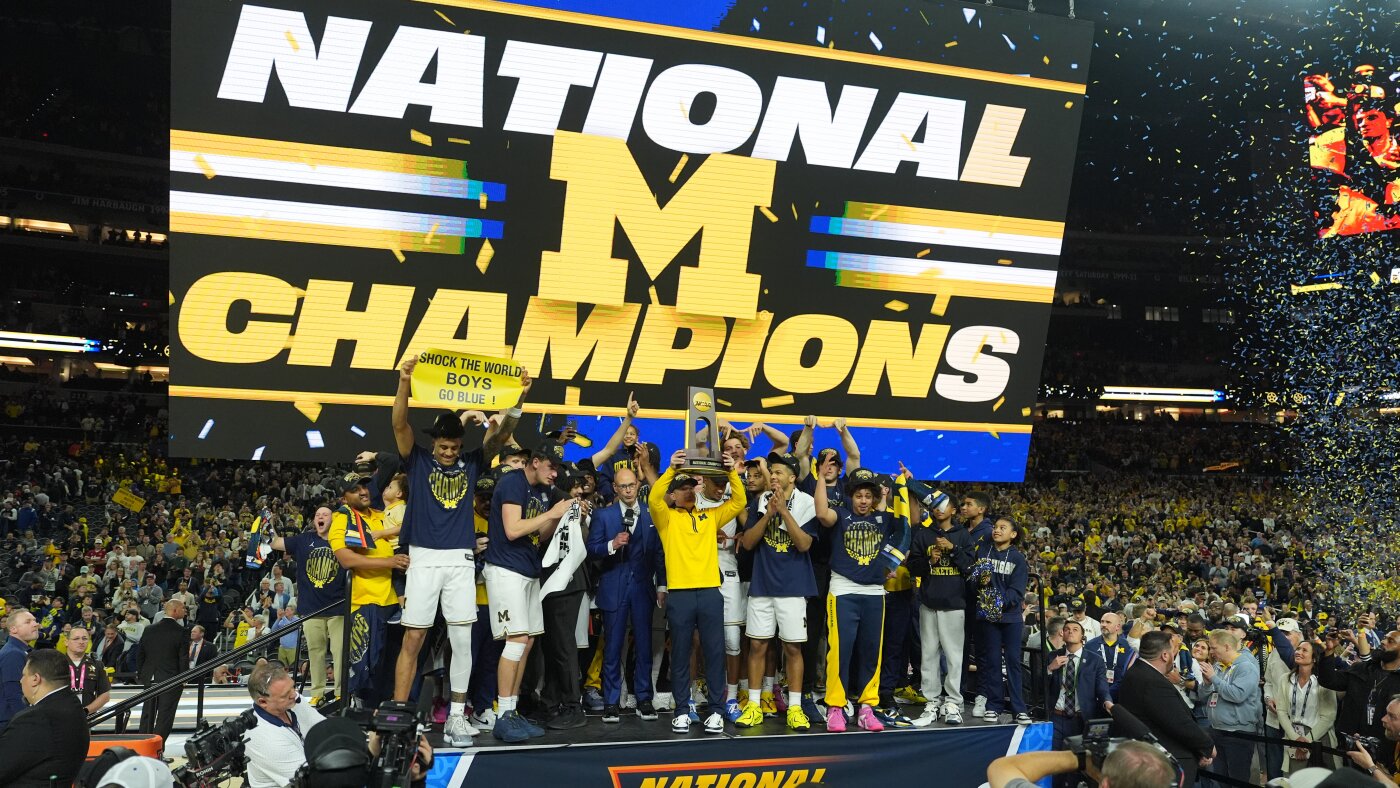
Michigan muscles its way to program’s 2nd NCAA basketball title, beating UConn

Map: Minor Earthquake Strikes Near San Diego

Trump claims he’d win as the president of Venezuela — just needs to ‘quickly’ learn Spanish
-

 Atlanta, GA2 days ago
1 teenage girl killed, another injured in shooting at Piedmont Park, police say
-

 South-Carolina1 week ago
South Carolina vs TCU predictions for Elite Eight game in March Madness
-

 Movie Reviews5 days ago
Vaazha 2 first half review: Hashir anchors a lively, chaos-filled teen tale
-

 Vermont1 week ago
Skier dies after fall at Sugarbush Resort
-

 Politics1 week ago
Trump’s Ballroom Design Has Barely Been Scrutinized
-

 Politics1 week ago
JD Vance says he was ‘obsessed’ with UFOs, believes aliens are actually ‘demons’
-

 Politics1 week ago
Jeffries declines to break with indicted Democrat after ethics panel’s guilty verdict
-
 Entertainment5 days ago
Inside Ye’s first comeback show at SoFi Stadium