Movie Reviews
‘Bhool Bhulaiyaa 3’ Review: A Slapdash Sequel Suggests It’s Time To Lay This Hindi Horror-Comedy Franchise To Rest


The kindest thing that can be said about Bhool Bhulaiyaa 3 is that it’s unpredictable. There is little in it to prepare you for a climactic twist which is, in equal measure, audacious and ridiculous. While well-intentioned, it’s staged so clumsily that it fails to evoke the required empathy. But I will say — I did not see it coming.
Otherwise, we are back in familiar territory. The Bhool Bhulaiyaa franchise started with the classic 1993 Malayalam film Manichitrathazhu, which was remade in Hindi in 2007. Both versions delivered a skillful cocktail of laughs and scares without true paranormal activity. In each, the real culprit causing the leading lady to turn into Manjulika, the unhinged spirit of a royal dancer, was eventually identified as dissociative identity disorder.
Bhool Bhulaiyaa 3
The Bottom Line A lurching and disjointed follow-up.
Release date: Friday, Nov. 1
Cast: Kartik Aaryan, Vidya Balan, Madhuri Dixit, Triptii Dimri, Rajpal Yadav, Vijay Raaz, Sanjay Mishra, Manish Wadhwa, Rajesh Sharma, Ashwini Kalsekar, Arun Khushwah
Director: Anees Bazmee
Screenwriter: Aakash Kaushik
2 hours 38 minutes
But when director Anees Bazmee took over the reins with the 2022 reboot, the horror became real. Black magic, spirits, jump scares, ominous backgrounds and, of course, Shreya Ghoshal’s magical rendition of the song “Ami Je Tomar” were all part of the mix, as well as a cheerful lowbrow humor. My favorite bit was Rajpal Yadav’s Chhote Pandit and Sanjay Mishra’s Bade Pandit mistaking Manjulika for the latter’s wife, Panditayeen, and asking her to make daal (lentils), only to get slapped hard by the ghost.
In the third installment, Bazmee retains the tropes of the first two Hindi films: a sprawling palatial mansion in which one room has been locked for years because it’s believed that a specter resides there; a royal family hiding secrets; the mysterious dancing Manjulika. The popular title track returns, along with “Ami Je Tomar.” And, of course, there are the atmospherics — long empty corridors, darkened skies, spooky sounds and enough CG crows to populate a sequel to Alfred Hitchcock’s The Birds.
Once again, Kartik Aaryan plays Ruhaan (a.k.a. Rooh Baba), a fraudulent ghostbuster who makes money by exploiting people’s fear of the supernatural. He is summoned to a castle somewhere in West Bengal where, oddly, the locals seem to recognize him. And there begins a tale that includes punar janam (reincarnation); a poor raja desperate to sell his palace; several characters speaking in terrible Bengali accents; sibling rivalry; and the oversized shadow of Manjulika, no longer pining for her murdered lover.
Among the picture’s highlights is the return of Vidya Balan, whose terrific performance as Avni, an archaeologist who believes that she is Manjulika, was key to the success of the 2007 movie. Her dance, with disheveled hair, frantic eyes and red vermillion spread across her forehead, was truly chilling. This time she plays Mallika, a restoration expert who may or may not be Manjulika, and her performance is pitched to match the overall hamminess of the film.
In fact, Bazmee has not one but two trump cards here. Madhuri Dixit also enters the franchise as Mandira, a potential buyer for the mansion who is clearly hiding something. At one point, Balan and Dixit have a face-off in which they are ready to strangle each other. At another, they have a dance-off in the palace. The clash of two of Hindi cinema’s finest actors should be riveting.
But the screenplay, written by Aakash Kaushik, is so disjointed that it’s difficult for characters to make an impact. Bhool Bhulaiyaa 3 does not follow any internal logic, playing as a slapdash assortment of jokes, scares, exposition, songs and set pieces strung together in the hope that it will add up to a coherent and compelling narrative. Mandira and Mallika trade barbs or giggle together maniacally, seemingly at random, or it’s all revealed to be a dream. Dixit is billed as a special appearance, which perhaps explains why the part is so underwritten that I started focusing on her expansive collection of saris and the size of her jewelry — Mandira loves dressing up.
I also wondered what the late Saroj Khan might have done with an opportunity like the dance duel. While Dixit and Balan are superb in the Chinni Prakash-choreographed sequence, there’s little about it as memorable as the dance-off between Dixit and Aishwarya Rai Bachchan in Devdas.
Mostly, Bhool Bhulaiyaa 3 lurches along. Two romantic songs are bunged in, perhaps to give Triptii Dimri something to do; otherwise, she is mostly tasked with looking lovely. Vijay Raaz and Rajesh Sharma, both actors with solid comic chops, are relegated to the ornate background — though I did smile when Raaz, as the poor raja, says he’s willing to take on the ghost in the palace but not live another day in poverty.
Aaryan is front and center, and he does it all: being charming and funny, romancing and dancing, defeating the spooks. I like that the actor is willing to poke holes in the trend of hyper-masculine Bollywood heroes. Ruhaan scares easily and, just like in the second film, when things get too daunting, he tries to run away. But the copious energy he invests is sabotaged by the flat writing. The jokes just aren’t funny enough — though there is one killer line about Shehzada, which was one of Aaryan’s major flops — and the scares aren’t terrifying enough.
Perhaps it’s time to give Manjulika a rest. After all, there’s only so far you can take a vengeful ghost and two terrific songs.



Blue Heron, 2025.
Written and Directed by Sophy Romvari.
Starring Eylul Guven, Iringó Réti, Ádám Tompa, Edik Beddoes, Amy Zimmer, Liam Serg, Preston Drabble, Lucy Turnbull, and Jecca Beauchamp.
SYNOPSIS:
A family of six settles into their new home on Vancouver Island as internal dynamics are slowly revealed through the eyes of the youngest child.

At one point in writer/director Sophy Romvari’s meta-reflective and profoundly personal 1990s-set Blue Heron, young Sasha (Eylul Guven) asks her mother (credited as such and played by Iringó Réti) if her friends can come over and play outside (the film primarily takes place during a warm, breezy summer filled with swimming and bursting water balloons), only to be told that it’s not a good idea. It could be” embarrassing”, even, given that her older brother Jeremy (the eldest child, played by a truly unknowable and unsettling Edik Beddoes) has a behavioral disorder that is gradually becoming more erratic, unstable, volatile, and dangerous to himself and those around him.
More than a film that convincingly portrays such a condition, and the lack of systemic resources and knowledge among psychologists and social services to properly help, Blue Heron approaches it from the narrative and cinematic perspective of a child eavesdropping on her parents (her father, played by Ádám Tompa mostly sticks to his computer-based work, avoiding what’s happening until that is no longer possible). Roughly halfway through, Sophy Romvari adds another layer, this time an experimental aspect in the present day that takes everything from the past and puts it under a new microscopic lens, juxtaposing those experiences and how Sasha feels as an adult (now played by Amy Zimmer), making films to reach a greater understanding of her brother and the rocky dynamic they had.

In some respects, it’s about a child’s first exposure to a disability or some type of condition destabilizing socially acceptable behavior, the frustrations that come with that from not only navigating it at such a young age, but during a time when adults also didn’t have much of an answer, later squared up against the fleeting happy memories, the reality of the situation, regret, and an adult perspective. At times, the film brilliantly and beautifully fuses the older perspective with the childhood memories and scenes, creating genuinely innovative emotional poignancy.
Much of this is elevated by striking cinematography (courtesy of Maya Bankovic) that is doing more than simply observing family interactions and dialogue through Sasha, but also sometimes utilizing tracking shots from an outdoor point of view following characters walking across the home, as if reappearing into something deeply personal on a narrative level and a similar sense regarding the filmmaker. The photography also makes use of reflections in numerous scenes, with the additional twist of characters sometimes reflecting back at one another, or of eerie ghosting that seemingly duplicates faces. Nearly everything about the filmmaking approach contributes to the reflexive nature of the story being told, a contemplation of whether something more or better could have been done to help Jeremy.

Then there is Jeremy (practically nonverbal, blonde-haired, sporting glasses, generally giving off quietly unhinged, emotionally distant vibes) who isn’t treated as a cheap caricature, but a real person who, at some point, changed (some family history is revealed providing fascinating context) and now teeters between serene moments of gentleness (most notably with Sasha at a beach) and outbursts that start off relatively harmless but blossom into full-blown threats of burning the house down (it’s also important to point out that the threat itself is kept offscreen, which is a smart decision so as not to exploit the behavior for misguided suspense; it’s not about whether or not he will follow through on any of this).
It should go without saying that these performances are nuanced, layered, and extraordinary across the board. However, it is that inventive second-half turn that elevates Blue Heron into a truly original work that takes the exploration of a condition and a child’s initial experiences around it, or how the entire situation alters and breaks apart the family dynamic into something far more profound regarding memory, sibling bonds, and systemic failings.
Flickering Myth Rating – Film: ★ ★ ★ ★ / Movie: ★ ★ ★ ★
Robert Kojder
https://www.youtube.com/watch?v=embed/playlist

Vague Visages’ Undertone review contains minor spoilers. Ian Tuason’s 2025 movie features Nina Kiri, Adam DiMarco and Michèle Duquet. Check out the VV home page for more film criticism, movie reviews and film essays.
Sound design is paramount in horror. Without it, things that go bump in the night simply won’t. Creative sound design can make a great movie truly legendary. Consider Blair Witch (2016), whose unique and expertly constructed soundscapes took it from a throwaway requel to a nightmare-inducing must-watch. Undertone, the feature debut from Canadian writer-director Ian Tuason, is being marketed as “the scariest movie you’ll ever hear,” which is a gamble considering genre cinema is built on terrifying imagery. Although that pull-quote might put off snooty hardcore fans, it genuinely might be true.
Undertone’s action is confined to a single location — the dated childhood home in which Evy (Nina Kiri, phenomenal) watches her elderly mother (Michèle Duquet as Mama) slowly fade away in real time. While trying to keep the dying woman alive, the protagonist records a creepypasta-themed podcast with Justin (Adam DiMarco), who lives across the pond in London. Because of the time difference, the duo typically records at 3 a.m. aka “the witching hour.” Given their subject matter, it’s unsurprising that Justin, whom Evy snarks is a “Santa Claus believer,” frequently gets creeped out. His co-host, a proud skeptic, is much harder to shake.
Undertone Review: Related — Review: Corin Hardy’s ‘Whistle’
Undertone Review: Related — Review: The Adams Family’s ‘Mother of Flies’
As a result, Undertone never feels hokey or derivative. By focusing almost entirely on Evy, Tuason takes a massive risk. Indeed, for most of the movie, she’s the only character onscreen, with Mama, as she’s billed, unresponsive upstairs in bed. The first-time filmmaker consistently draws eyes to the dark, empty spaces behind Evy — particularly an empty doorway that feels like it’s encroaching upon her — as she records with Justin, the camera creeping around corners or simply hanging around back there, as though somebody is always watching. And yet, nothing happens when one expects it to, which only adds to the unnerving atmosphere and increasingly excruciating tension. Shots are frequently tilted at bizarre angles, which adds to the impression that everything is slightly off kilter.
Undertone Review: Related — Review: Alice Maio Mackay’s ‘The Serpent’s Skin’ Undertone Review: Related — Review: Zach Cregger’s ‘Weapons’
Tuason infuses Undertone with Catholic guilt, right down to a bottle of Irish whiskey that Evy — a possible alcoholic — pulls out of a liquor cabinet in a moment of desperation. The filmmaker’s suffocating feature debut adeptly tackles thorny themes of postpartum depression and guilt, and all while stoking a constricting feeling of loneliness for the protagonist. The atmosphere starts off chilly, and by Undertone’s closing moments, it’s downright ice-cold. The movie cleverly emulates the effect of wearing noise-cancelling headphones each time Evy puts hers on, which forces the audience to focus solely on what she hears. The soundscapes are truly exceptional: layered, considered and beautifully composed to capture every little crackle and hum, while repetitive recordings — seemingly full of hidden meanings — similarly encourage viewers to pay closer attention, which makes Undertone’s darkest moments hit even harder.
Undertone Review: Related — Review: Drew Hancock’s ‘Companion’ Undertone Review: Related — Review: Pascal Plante’s ‘Red Rooms’
The great tragedy of Undertone is that poor Evy unwittingly invites something even worse into her mother’s home, which already feels haunted thanks to the almost-dead woman upstairs, as well as the wealth of troubled childhood memories seeping out of its walls. There’s a wonderful piquancy to the movie — Tuason takes his time ratcheting up the tension, but Undertone doesn’t let up once it gets going. Moments of respite are few and far between, with Evy’s growing isolation becoming increasingly obvious to the audience, if not to her. It’s tough to capture the idea of feeling unsafe in your own home, but Undertone manages to achieve this without any obvious jump scares or visual shocks. It’s all about sound, including during the movie’s stomach-churning final moments, which play out against a black screen, further solidifying the power of sound.
Undertone Review: Related — Review: Kurtis David Harder’s ‘Influencers’ Undertone released digitally on April 14, 2026.
Joey Keogh (@JoeyLDG) is a writer from Dublin, Ireland with an unhealthy appetite for horror movies and Judge Judy. In stark contrast with every other Irish person ever, she’s straight edge. Hello to Jason Isaacs. Thank you for reading film criticism, movie reviews and film reviews at Vague Visages.
Undertone Review: Related — Why Criticism: Dismantling the Boys’ Club in Horror
Categories: 2020s, 2026 Film Reviews, 2026 Horror Reviews, Featured, Film, Folk Horror, Horror, Movies, Psychological Horror, Science Fiction, Supernatural Horror, Thriller
 That all changes when Justin receives a mysterious email containing 10 audio clips of an expectant young couple going through some kind of demonic possession. Evy instantly dismisses it as a hoax, even as spooky things also start happening to her. But, as they listen to each one, it gradually becomes impossible to deny that something very strange is going on. Fortunately, the experience of listening to these 10 little snippets of a life being shared by two people who, like Justin, never appear onscreen, isn’t a slog. Demonic possession is a total cliché at this point, but Tuason puts a nasty twist on it by focusing on a particularly horrible ghoul who targets pregnant people and new mothers, with the intention of killing them and their babies (trigger warning for any parents planning to watch).
Likewise, Graham Beasley’s evocative cinematography utilizes a moody color palette comprised predominantly of greys and navy blues. Evy leaves the house just once, and the camera doesn’t go with her, so it’s hard to identify the season, but Undertone certainly feels like a wintry film. It helps that Mama’s house isn’t the most welcoming environment, as religious iconography fills every available spot, including a cross hanging on the dying character’s bedroom door and a variety of different statues that loom ominously behind the podcaster as she records. Evy repeatedly listens to an old voicemail from her mother, in which Mama intones “I’m praying for you.” At first, it seems like a sweet sentiment, but as the story progresses, the idea curdles into something closer to a threat.
Undertone is a slow burn, and there will be those who complain that nothing happens, but the scares are interlaced throughout the narrative, increasing in frequency and intensity as it goes on. Unlike Skinamarink (2022), which has little to offer hardcore horror fans, Tuason’s movie builds the tension deliberately, with an acute attention to detail that pays off the closer one looks and listens. The resonant sound design echoes Kiri’s skilled performance in the lead role, as she acts predominantly by herself, often wordlessly communicating Evy’s disbelief, fear and confusion as the character grapples with her horrifying predicament alongside handling her mother’s rapidly deteriorating condition (and a surprise pregnancy to boot). Tuason keeps the camera tight on her face, emphasizing the presumed safety of Evy’s headphones as she disappears into the world of the titular podcast, which usually gives the struggling young woman a break from her normal life.
Podcasters typically don’t fare well in horror movies, with the most infamous example being those hideous Brits in Halloween (2018) who get exactly what they deserve. However, Evy is an empathetic yet flawed character — kind of a mess doing her best. It’s notable that being a skeptic doesn’t necessarily protect her from evil forces, but Tuason also doesn’t punish his protagonist for refusing to believe. Instead, he leaves it up to the audience to decide whether Evy, and to a lesser extent Justin, is being targeted or just unlucky. Tuason’s feature directorial debut proves once and for all that less really is more when it comes to crafting scares that resonate far beyond the frame (listening to a podcast immediately after a watch is a disconcerting experience). Undertone is inspired, unnerving and truly a future classic.
That all changes when Justin receives a mysterious email containing 10 audio clips of an expectant young couple going through some kind of demonic possession. Evy instantly dismisses it as a hoax, even as spooky things also start happening to her. But, as they listen to each one, it gradually becomes impossible to deny that something very strange is going on. Fortunately, the experience of listening to these 10 little snippets of a life being shared by two people who, like Justin, never appear onscreen, isn’t a slog. Demonic possession is a total cliché at this point, but Tuason puts a nasty twist on it by focusing on a particularly horrible ghoul who targets pregnant people and new mothers, with the intention of killing them and their babies (trigger warning for any parents planning to watch).
Likewise, Graham Beasley’s evocative cinematography utilizes a moody color palette comprised predominantly of greys and navy blues. Evy leaves the house just once, and the camera doesn’t go with her, so it’s hard to identify the season, but Undertone certainly feels like a wintry film. It helps that Mama’s house isn’t the most welcoming environment, as religious iconography fills every available spot, including a cross hanging on the dying character’s bedroom door and a variety of different statues that loom ominously behind the podcaster as she records. Evy repeatedly listens to an old voicemail from her mother, in which Mama intones “I’m praying for you.” At first, it seems like a sweet sentiment, but as the story progresses, the idea curdles into something closer to a threat.
Undertone is a slow burn, and there will be those who complain that nothing happens, but the scares are interlaced throughout the narrative, increasing in frequency and intensity as it goes on. Unlike Skinamarink (2022), which has little to offer hardcore horror fans, Tuason’s movie builds the tension deliberately, with an acute attention to detail that pays off the closer one looks and listens. The resonant sound design echoes Kiri’s skilled performance in the lead role, as she acts predominantly by herself, often wordlessly communicating Evy’s disbelief, fear and confusion as the character grapples with her horrifying predicament alongside handling her mother’s rapidly deteriorating condition (and a surprise pregnancy to boot). Tuason keeps the camera tight on her face, emphasizing the presumed safety of Evy’s headphones as she disappears into the world of the titular podcast, which usually gives the struggling young woman a break from her normal life.
Podcasters typically don’t fare well in horror movies, with the most infamous example being those hideous Brits in Halloween (2018) who get exactly what they deserve. However, Evy is an empathetic yet flawed character — kind of a mess doing her best. It’s notable that being a skeptic doesn’t necessarily protect her from evil forces, but Tuason also doesn’t punish his protagonist for refusing to believe. Instead, he leaves it up to the audience to decide whether Evy, and to a lesser extent Justin, is being targeted or just unlucky. Tuason’s feature directorial debut proves once and for all that less really is more when it comes to crafting scares that resonate far beyond the frame (listening to a podcast immediately after a watch is a disconcerting experience). Undertone is inspired, unnerving and truly a future classic.
Related

Wasteman, 2025.
Directed by Cal McMau.
Starring David Jonsson, Tom Blyth, Alex Hassell, Neil Linpow, Paul Hilton, Corin Silva, Layton Blake, Jack Barker, Fred Muthui, Lunga Skosana, Robert Rhodes, Keaton Ancona-Francis, and Cole Martin.
SYNOPSIS:
Follows parolee Taylor whose fresh start hopes are jeopardized by cellmate Dee’s arrival. As Dee takes Taylor under his wing, a vicious attack tests their bond, forcing Taylor to choose between protecting Dee and his own parole chances.

Backing up its intentions and messaging with real spliced-in cell phone footage of rowdy, uncontrollable prison behavior in an understaffed British penitentiary, director Cal McMau’s narrative debut feature Wasteman (from a screenplay by Eoin Doran and Hunter Andrews) is often purposely, effectively disorienting. That’s not merely limited to be incorporated leaked footage (this is a prison that, in some respects, is more of a recreational facility than one for rehabilitation, since the guards are in such low quantity, all while the incarcerated are rather easily smuggling drugs through drone technology while typically unbothered in their jail cells playing video games in between hard partying or fighting one another), but the brutality as well, with claustrophobic, tilted camera angles and a shakiness that lends a visceral grime to that physicality.
The exception to this disorder seems to be rising star David Jonsson’s Taylor, still using drugs but also consistently avoiding any such drama. He is quiet and timid to the point where he not only comes across empathetic, but one wonders how he became locked up alongside an otherwise degenerate bunch. It turns out that due to a new law going into effect, some prisoners will be released on good behavior, which, in Taylor’s case, means that he is far from a problem here despite abusing drugs. Nevertheless, he is nervously excited about the possibility of reconnecting with his teenage son, even if a phone call with his separated ex-partner makes it clear that she is firmly against such a reunion.

There also wouldn’t be a film here without a wrench being thrown into that impending release back into society, which is where the introduction of new cellmate Dee (a manipulative and psychotic Tom Blyth) enters as an inmate more concerned with taking over the in-house drug dealing hierarchy rather than fronting anything remotely close to good behavior. By extension, this jeopardizes Taylor’s chances of being released. That’s also not to say Dee doesn’t have his friendly moments, such as letting Taylor use his phone to reconnect with his son on social media.
Where Wasteman makes up for in familiar plotting is its sense of authenticity, which comes through not only in the previously mentioned cuts to rowdy cell phone footage but also in the decision to work with a charity and round out the rest of the ensemble with formerly incarcerated individuals who are now reformed. One gets a full sense of the microcosmic incarceration society, the pecking order, and just how low on the rung Taylor is, since he isn’t like most of the others. There is also a full-blown riot at one point that parallels and mirrors the clips of authentic footage. It’s scripted, somehow almost feeling as dangerous.

When Wasteman inevitably comes down to a bond tested between Taylor and Dee, that too is less about thrills and more to do with capturing rawness; part of a brawl here contains one character vomiting on another, driving home just how dirty, literally and figuratively, the film gets in its unflinching depictions of life on the inside for this particular penitentiary. It’s fiction with a dash of documentary, each with bracing importance. It’s enough to ensure the film doesn’t go to waste for its minor shortcomings.
Flickering Myth Rating – Film: ★ ★ ★ / Movie: ★ ★ ★
Robert Kojder
https://www.youtube.com/watch?v=embed/playlist

https://www.youtube.com/watch?v=oI7cuqCZ7hw

Movie Review – Blue Heron (2025)

Cuba's top destinations deserted, without power or fuel under US sanctions

Video: Vance Gets Heckled at Turning Point Event and Pushes Back Against Pope
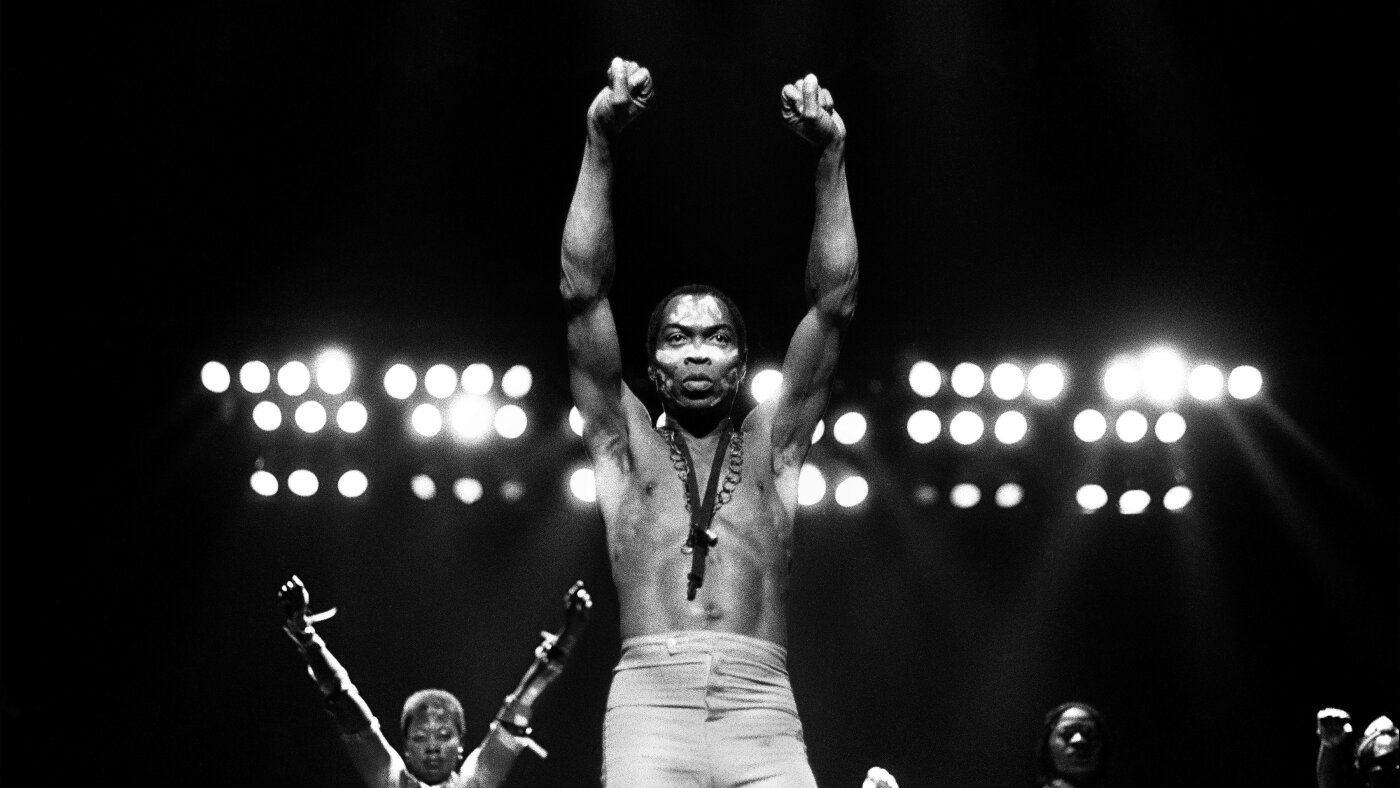
Fela Kuti is the first African artist to enter the Rock & Roll Hall of Fame

Florida High School Football Rankings: Top 25 teams – Oct. 21

How old is Bo Nix? What to know about Oregon quarterback ahead of 2024 NFL Draft

Cleary's 21 help Le Moyne down Central Connecticut State 69-64 in OT

99th annual Pony Swim held in Virginia

Indiana Members Credit Union announced as new anchor tenant at Bottleworks District

Spanberger signs gun bills, makes a proposed gun ban even harsher

Magyar calls on Orbán to lift veto on Ukraine loan before his exit

‘No peace’: Nearly a year after her son’s death, she learned that ICE was responsible

Dem fundraising giant in the hot seat as GOP lawmakers demand answers over dodged subpoena

Fifth woman accuses former US lawmaker Eric Swalwell of sexual misconduct
-

 Ohio22 hours ago
‘Little Rascals’ star Bug Hall arrested in Ohio
-

 Georgia1 week ago
Georgia House Special Runoff Election 2026 Live Results
-

 Arkansas5 days ago
Arkansas TV meteorologist Melinda Mayo retires after nearly four decades on air
-

 Pennsylvania1 week ago
Parents charged after toddler injured by wolf at Pennsylvania zoo
-
 Milwaukee, WI1 week ago
Potawatomi Casino Hotel evacuated after fire breaks out in rooftop HVAC system
-

 Austin, TX1 week ago
ABC Kite Fest Returns to Austin for Annual Celebration – Austin Today
-

 Culture1 week ago
Can You Name These Novels Based on Their Characters?
-

 Pittsburg, PA1 week ago
Primanti Bros. closes Monroeville and North Versailles locations