Movie Reviews
10 Great Movies Panned Upon Release, From ‘The Thing’ to ‘Twin Peaks: Fire Walk With Me’


Nowadays, it seems almost any movie released to positive reviews gets some buzz as an “instant classic.” But a lot of classics aren’t dubbed as such upon release — quite the opposite, actually. Sometimes, the movies that go on to endure the longest and find the most devoted of followings are the ones completely dismissed upon their premiere.
Hindsight is a fickle, fickle beast, and nowhere is it more powerful than in the world of film criticism, where the instant reactions of a movie don’t always measure up to what the movie’s legacy will be years and decades down the line. There are plenty of well-reviewed, commercially successful, and even Oscar-winning films that have, from the passage of time, lost their luster in some way or another — whether it’s just because of taste changing (see: “Out of Africa”) or some broader backlash and controversy (see: “American Beauty.”)
Then, there are times where the exact opposite has happened. If a film is ahead of its time, sometimes it’s difficult for those looking at it then to see its virtues. Across film history there have been movies that have bombed at the box office, gone ignored by the Oscars, and — most dispiriting of all — gotten savaged by film critics, that have since received major reappraisals in their legacies. Sometimes, those reevaluations are led by filmmakers, others by future critics digging up an underrated gem. Regardless, it’s a phenomenon that happens often enough to remind one that a film’s reputation isn’t set in stone, but a living thing that can undergo a metamorphosis, degrading or growing with the years.
Oftentimes, these films are on the stranger or less conventional side, with singular aesthetics or styles that audiences can’t really appreciate because they’re so new — pioneering works like “The Night of the Hunter” and “Metropolis” fit into this category. Others are panned by critics who find their actual content objectionable; it’s no surprise a decent amount of these films are in the horror genre, which often stirs controversy and criticism for its violence, sex, and explicit content. Whatever the reason, these 10 films got, at best, mixed reactions from professional critics in their day — but today? They’ve secured reputations as some of the most acclaimed movies ever. Read on for 10 great films that were panned by critics upon release.
-
“Metropolis” (1927)
Image Credit: Courtesy Everett Collection Today, Fritz Lang’s “Metropolis” is regarded as one of the greatest achievements of the silent film period, and a pioneering science fiction work with themes of class warfare and human nature that would influence many works to come. But, while German expressionist work received some positive reviews, reception was mixed at best upon release. Variety wrote that “so much really artistic work was wasted on this manufactured story” in their dispatch at the time. Mordaunt Hall of The New York Times called it a “Technical marvel with feet of clay.” The most damning pan came from English science fiction writer H.G. Wells, who accused the film of “foolishness, cliché, platitude, and muddlement about mechanical progress and progress in general,” and compared it unfavorably to other science fiction works, most notably Mary Shelley’s original “Frankenstein” novel.
-
“The Night of the Hunter” (1955)

Image Credit: Courtesy Everett Collection Based on a novel of the same name, Charles Laughton’s “The Night of the Hunter” is a stark black and white fairy tale starring Robert Mitchum in his most iconic role as a serial killer who poses as a preacher to manipulate and torment a widowed woman and her two children. At the time of its release in 1955, reviews had some nice things to say, but largely considered the film a failure. Bosley Crowther of the New York Times called the movie a “weird and intriguing endeavor,” but criticized Laughton’s direction and the allegorical elements of the film. Gene Arneel of Variety said the film was “bewitching at times,” but “loses sustained drive via too many offbeat touches that have a misty effect.”
Laughton took the failure of the film hard, and never made a movie again. However, by the ’70s — as a result of TV screenings, art house showings, and reappraisals from critics like Roger Ebert — it had been reevaluated as a masterpiece, and one of the greatest thrillers ever made.
-
“Vertigo” (1958)
Image Credit: Everett Collection / Everett Collection Alfred Hitchcock was a director who enjoyed plenty of critical acclaim during his career as a filmmaker. But upon its release, “Vertigo” — his 1958 film starring James Stewart as a private detective with acrophobia who becomes obsessed with the woman (Kim Novak) he’s assigned to trail — wasn’t one of them. The film received some positive reviews, but most were tepid at best. Variety called the movie “only a psychological murder mystery” and criticized its length and pacing. Bosley Crowther of the New York Times gave the movie some qualified praise, but called the twist “devilishly far-fetched,” while John McCarten of The New Yorker was extremely critical, writing that Hitchcock had “never before indulged in such farfetched nonsense.” In the years following its initial release, “Vertigo” quickly rose in reputation, and now it’s commonly considered Hitchcock’s masterwork, and even topped the Sight & Sound Greatest Films of All Time poll.
-
“Bonnie and Clyde” (1967)
Image Credit: Courtesy Everett Collection Arthur Penn’s “Bonnie and Clyde,” a romantic account of the notorious 1930s outlaws, was very controversial at its time for its graphic violence and perceived glorification of its subjects, and the reviews of the day were appropriately divided. Roger Ebert was highly positive, giving the film one of its major raves. Other critics were less kind. Dave Kaufman of Variety criticized Penn’s direction as uneven, while Joe Morgenstern of Newsweek called the film a “squalid shoot-’em-up,” but later reevaluated it upon a second watch. The most notorious pan, however, came from Bosley Crowther of The New York Times, who wrote in his review that the film was “a cheap piece of bald-faced slapstick comedy that treats the hideous depredations of that sleazy, moronic pair as though they were as full of fun and frolic as the jazz-age cutups in ‘Thoroughly Modern Millie.’” Even as the film became a financial success and eventually attracted more positive criticism, Crowther remained vehemently opposed to it, and was replaced as the Times’ chief critic a year later at least partially because of the controversy. The film would ultimately receive 10 Oscar nominations, and is nowadays credited with ushering in the New Hollywood revolution of the late ’60s and ’70s.
-
“The Rocky Horror Picture Show” (1975)
Image Credit: ©20thCentFox/Courtesy Everett Collection Early reviews of “The Rocky Horror Picture Show,” a film version of Richard O’Brien and Jim Sharman’s cult classic British musical, were largely negative. Reviewers from Variety called it “labored,” the San Francisco Chronicle said it lacked “charm and dramatic impact,” while Newsweek wrote that it was “tasteless, plotless, and pointless.” The movie also flopped upon its initial release, but slowly picked up an audience through midnight movie screenings. That audience only grew through the years, and the film is now a beloved queer cult film, one that continues to be screened year round to this day.
-
“Sorcerer” (1977)
Image Credit: Courtesy Everett Collection A remake of the 1953 French film “The Wages of Fear,” William Friedkin’s “Sorcerer” stars Roy Scheider, Bruno Cremer, Francisco Rabal, and Amidou as four men living in Central America who get hired to transport two trucks loaded with dynamite 200 miles to an oil well. Made under grueling conditions that escalated its budget, the film was a massive box office bomb upon release, and reviews weren’t much better. Although a few critics like Roger Ebert and Vincent Canby gave the movie decent notices, many other reviewers unfavorably compared it to “The Wages of Fear” and criticized Friedkin for perceived poor craftsmanship. In a review for The Village Voice, Andrew Sarris went as far as to call it “a visual and aural textbook on everything that is wrong with current movies.” In the years since, however, the film has largely been reevaluated, and is regularly seen as one of Friedkin’s best projects and one of the best movies of the ’70s.
-
“The Shining” (1980)
Image Credit: ©Warner Bros/Courtesy Everett Collection At the time of its release, Stanley Kubrick’s “The Shining” was largely received very negatively by both audiences (earning a “C+” Cinemascore) and critics. Many reviewers criticized the film’s slow pacing, its deviations from the original Stephen King novel it was based upon, and its perceived lack of emotional impact. Janet Maslin of the New York Times said “even the film’s most startling horrific images seem overbearing and perhaps even irrelevant,” while Pauline Kael wrote “Again and again, the movie leads us to expect something – almost promises it – and then disappoints us.” Both Gene Siskel and Roger Ebert were negative in their reviews of the film, with Siskel calling it a “a crashing disappointment” that “contains effectively no thrills” while Ebert wrote in his review that it was impossible to connect with the film’s characters. At the first Golden Raspberry Awards, Kubrick was nominated for Worst Director. In the long run, though, “The Shining” was criticially appraised as one of the best horror films ever — and, in contrast to what critics said at the time, one of the absolute scariest.
-
“Possession” (1981)
Image Credit: Courtesy Everett Collection Another horror film that critics didn’t know what to make of upon its release, “Possession” — Andrzej Żuławski’s oblique film about the deteriorating marriage between a spy (Sam Neill) and his unraveling wife (Isabelle Adjani) — was received with lukewarm response upon its U.S. release, in part due to edits made from the original cut. Harry Haun of the New York Daily News wrote that the film was “outlandishly unhinged” and a “mess,” while Leonard Maltin called it a “confusing drama of murder, horror, intrigue.” In his review, New York Times critic Vincent Canby wrote that “New York audiences might be reduced to helpless laughter” by the film. Thanks to the original cut coming to America, and some critical appraisal, the fiendish marital drama is now largely regarded today as one of the best horror movies ever made.
-
“The Thing” (1982)
Image Credit: ©Universal/Courtesy Everett Collection A commercial failure upon release, John Carpenter’s “The Thing” was also widely negatively received by critics, with many responding poorly to the film’s cynical, anti-authoritarian themes. In a brutal pan, Vincent Canby referred to the film as a “foolish, depressing, overproduced movie that mixes horror with science fiction to make something that is fun as neither one thing or the other,” calling it a “moron movie” and “instant junk.” Other critics such as Linda Gross wrote that the film was “bereft, despairing, and nihilistic,” claiming that the tone prevented the deaths of the characters from having any impact. The visual effects were largely praised, but many critics also had a problem with their gore and excess. Home video helped the movie pick up a cult audience, and by the ’90s, the film had been reevaluated as a classic.
-
“Twin Peaks: Fire Walk With Me” (1992)
Image Credit: ©New Line Cinema/Courtesy Everett Collection Premiering a year after the original TV run of “Twin Peaks” endedthe story of Dale Cooper (Kyle MacLachlan) on a massive cliffhanger, “Twin Peaks: Fire Walk With Me” was greeted with revulsion from both fans and critics, at least partially because it was instead a prequel about the final days of haunted prom queen Laura Palmer (Sheryl Lee). At its premiere at the Cannes Film Festival, Lynch recalled the film getting booed by audiences, while critics referred to the film as “shockingly bad” (Roger Ebert) and “pathologically unpleasant” (Janet Maslin). Reviews upon its American release were just as negative: Vincent Canby wrote “It’s not the worst movie ever made; it just seems to be” while Owen Gleiberman called it “a true folly” in which “almost nothing adds up.”
Through the ’90s and 2000s, as Lynch repaired his reputation through masterpieces like “Mulholland Drive” and “Twin Peaks” was evaluated as a canonical, defining TV show, more defenders of “Fire Walk With Me” have emerged, with critics praising Lee’s performance as Laura Palmer and the film’s unvarnished depiction of abuse. By 2017, when the sequel series to “Twin Peaks” “The Return” premiered to massive critical acclaim, the film’s reputation had been restored completely, and it’s now viewed as a classic.





The Times of India
Apr 07, 2026, 3:24 PM IST
3.0
Super Duperr is a riot in all senses of the word. A wild ride filled with laughter and emotion it presents an unusual matchup of traditional and modern values.Rohit (Lalit Prabhakar) and Isha (Vidula Chougule) are a young couple trying to make their mark in the entertainment industry. They take their relationship to the next level and purchase a flat in Mumbai with their savings. It is here that they realise that they have fallen for a scam when the same house is sold to and currently occupied by a rural family. What follows is a series of clashes and learning moments that test the morality of both parties. The story is a fun take on a series of real world scams and as such has a very interesting premise. The Sameer Asha Patil film however chooses to take a detour in favour of certain stretched out gags and slow motion shots. What could have been a deep exploration of the two worlds colliding, ends up being a formulaic checklist of a wedding song, an action sequence and a few slapstick gags. These are passable of course, but the ho-hum nature of the story’s progression feels under utilized. Super Duperr does offer impactful emotional sequences, notably the equation between the parents (Shashank Shende and Nirmiti Sawant) and his eldest son (Hrishikesh Joshi). The music and cinematography are well executed and add abundantly to the viewing experience. Super Duperr set a rich tapestry only to ultimately doodle in a corner. While it could have benefitted from adding more inter-family interactions, it remains a good watch for this weekend.

The verdict is in, and critics have widely panned The Super Mario Galaxy Movie while audiences have universally praised the family-friendly sequel. This follow-up to the fan-favorite The Super Mario Bros. Movie has been in theaters for about a week since its debut on April 1, and it has already had the best box office opening in 2026, earning more than $190 million over its 5-day domestic weekend. Worldwide, it has amassed $372 million, making it the fifth largest global opening ever for an animated film. Despite the movie being a massive box office hit, however, the review scores are terribly low for the video game adaptation, and there are several reasons why.
Fans vs. critics on The Super Mario Galaxy Movie
As of April 6, The Super Mario Galaxy Movie has a mediocre 42% Tomatometer score from a total of 175 reviews on Rotten Tomatoes while holding a fantastic 89% Popcornmeter score from over 5,000 verified user ratings. That’s a stark 47-point difference between critics and users.
A similarly wide disparity can be found on Metacritic as well, where the sequel has a “generally unfavorable” Metascore of a 37 based on 45 reviews, despite it earning a “generally favorable” user score of a 7.9 (basically, a 42-point difference).
This gulf between professional reviews and user reviews for this sequel likely isn’t too surprising by fans of the original 2023 Super Mario Bros. movie. That film earned a 59% Tomatometer but a 95% Popcornmeter on Rotten Tomatoes, and it has “mixed or average” 46 Metascore but a “universal acclaim” user score of 8.1.
To be fair, the range of critic scores for the film is vast on Metacritic, with about seven reviews above a 60 and fifteen reviews below a 40. ComingSoon’s Jonathan Sim give it a “Good” 7 out of 10 rating, noting that “it doesn’t necessarily deepen the emotional or narrative complexity of the franchise, but it refines what worked before amplifies it on a grander scale.” However, many other reviews are far less kind, particularly the 0 out of 5 rating from The Times that calls the film “ugly, overbranded, lifeless digital marketing vomit” and a review from Vulture that says it’s like being “asphyxiated in a ball pit filled with candy.”
Meanwhile, multiple user reviews on Metacritic are shocked at the reviews. One called the low Metascore “absolutely ridiculous,” while another asked readers to ignore the critics altogether. A different user wrote, “It’s wild to see professional critics giving this a zero. It feels like they’ve never actually picked up a controller.” And to that person’s credit, we did find that a few critics who gave low scores admitting that the film wasn’t meant for them or that they had never played a Mario game before. Indeed, the movie is chock full of Nintendo references and easter eggs, something that Mario fans will appreciate far more than anyone who doesn’t know or care about the difference between a Super Mushroom and a Fire Flower.
More broadly speaking, The Super Mario Galaxy Movie has more than several traits that critics tend to dislike but that audiences enjoy. The first is that it’s a quick-paced, action-packed film, which features a handful of battles with Mario, Luigi, Yoshi, Princess Peach, Toad, Fox McCloud, Bowser, Bowser Jr., and Wart. Another is that it’s a comedic adventure with cartoonish gags that are age-appropriate for kids and humorous to Mario fans who are in on the joke. On top of that, the film is a family-friendly video game adaptation, a genre that doesn’t usually score well from critics. A Minecraft Movie, another box office smash that earned $960 million worldwide (and also starred Jack Black), was equally slammed by critics with a 47% Tomatometer but lauded by audiences with an 84% Popcornmeter.
Taken altogether, the movie was almost made in a lab for reviewers to despise and for audiences to praise as a nostalgic love letter to Nintendo. Regardless, despite how critics feel, they’ll need to brace themselves for more, since the Nintendo Cinematic Universe is looking like it will come sooner than later.

Watch I Know Exactly How I Die on VOD
The director of I Know Exactly How I Die is Alexandra Spieth, who ensures a tight pace and some gorgeous shots. She previously directed Stag and created and starred in the web-series [Blank] My Life. The screenplay comes from Mike Corey, and I do really like the plot and evolution of this story.
As already mentioned, the star Rushabh Patel is the executive producer. As a result, this movie is billed as “Rushabh Patel’s I Know Exactly How I Die“, which I am not a fan of. Unless Rushabh Patel is famous in ways I am not familiar with – nor is IMDb, as this is his first and so far only credit there.
This is like people wondering if Something Very Bad Is Going to Happen is connected to Stranger Things, because the media keeps referring to it as a new show from The Duffer Brothers. Sure, they produced it, but Haley Z. Boston created the original story and wrote the screenplay. And she’s not even a newcomer.
Okay, rant over, but I just don’t understand the marketing and press decisions of it all.
Anyway, as already mentioned, the practical effects in I Know Exactly How I Die are gorgeous. Any slasher fan should enjoy the concept of the plot as well as those amazing practical effects. And yet, you will have to endure a little terrible CGI, but this is an indie production, so budget restraints come into play. Of course, so does choosing the best talent, and that did not happen for CGI here!
I Know Exactly How You Die is out on VOD from April 7, 2026. You can rent it on Digital HD from your preferred platform, including Prime Video and Fandango at Home. The film will also be available on DVD.

Hate self-checkout at the grocery store? A RI bill to limit it is back.

Former South Dakota AutoZone workers say they were bilked out of overtime pay

Tennessee Basketball Loses A Freshman Guard To The Transfer Portal | Rocky Top Insider

Gov. DeSantis to join Texas governor for Texas Stock Exchange event in Miami

Taylor Frankie Paul faces protective order hearing in Utah after ‘Bachelorette’ cancellation

Florida High School Football Rankings: Top 25 teams – Oct. 21

How old is Bo Nix? What to know about Oregon quarterback ahead of 2024 NFL Draft

Cleary's 21 help Le Moyne down Central Connecticut State 69-64 in OT

99th annual Pony Swim held in Virginia

Indiana Members Credit Union announced as new anchor tenant at Bottleworks District

Ilhan Omar calls Trump an ‘unhinged lunatic,’ urges booting him out of office
Between Budapest and Brussels: Péter Magyar’s political tightrope
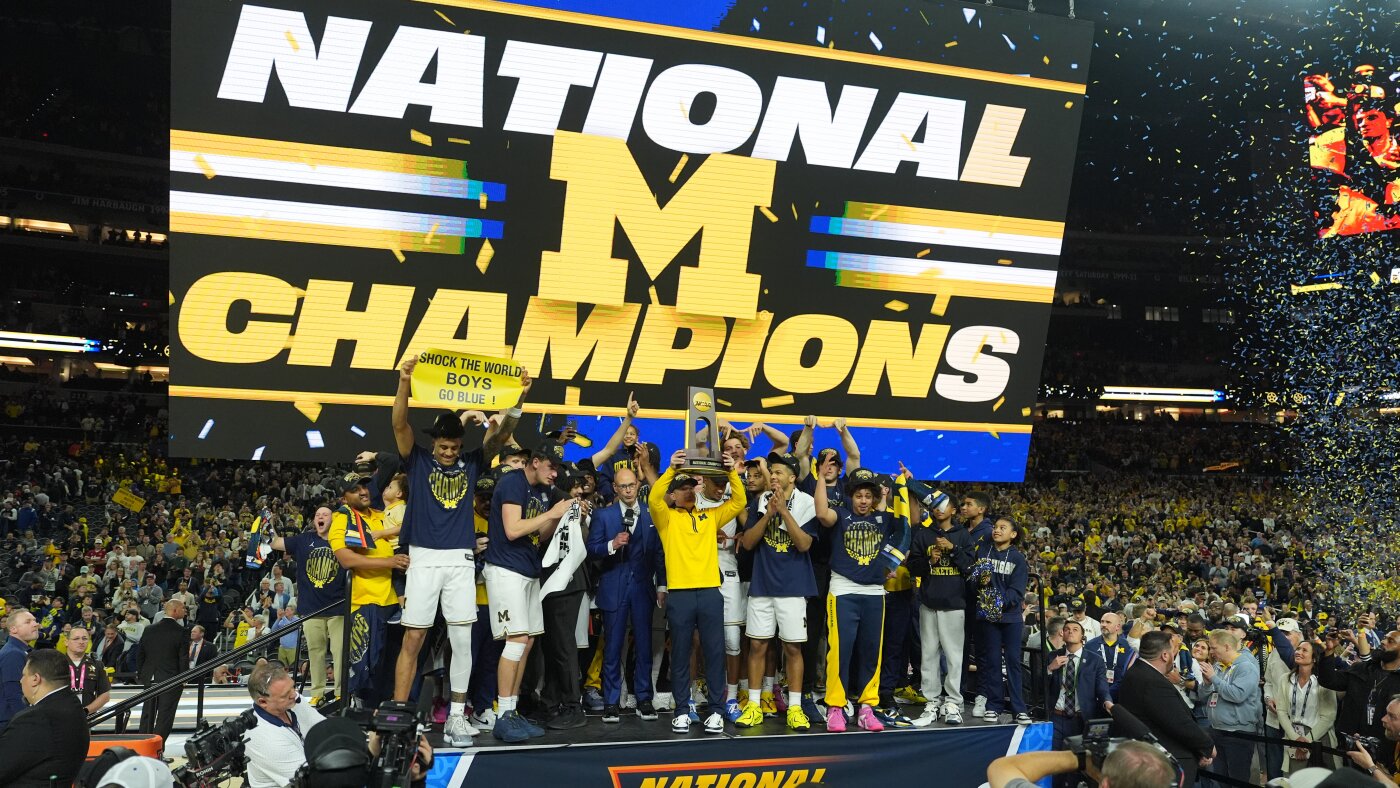
Michigan muscles its way to program’s 2nd NCAA basketball title, beating UConn

Map: Minor Earthquake Strikes Near San Diego

Trump claims he’d win as the president of Venezuela — just needs to ‘quickly’ learn Spanish
-

 Atlanta, GA2 days ago
1 teenage girl killed, another injured in shooting at Piedmont Park, police say
-

 South-Carolina1 week ago
South Carolina vs TCU predictions for Elite Eight game in March Madness
-

 Movie Reviews5 days ago
Vaazha 2 first half review: Hashir anchors a lively, chaos-filled teen tale
-

 Vermont1 week ago
Skier dies after fall at Sugarbush Resort
-

 Politics1 week ago
Trump’s Ballroom Design Has Barely Been Scrutinized
-

 Politics1 week ago
JD Vance says he was ‘obsessed’ with UFOs, believes aliens are actually ‘demons’
-
 Entertainment5 days ago
Inside Ye’s first comeback show at SoFi Stadium
-

 Politics1 week ago
Jeffries declines to break with indicted Democrat after ethics panel’s guilty verdict