Entertainment
'Love is Blind' finally gets political. Is supporting Trump a relationship dealbreaker?

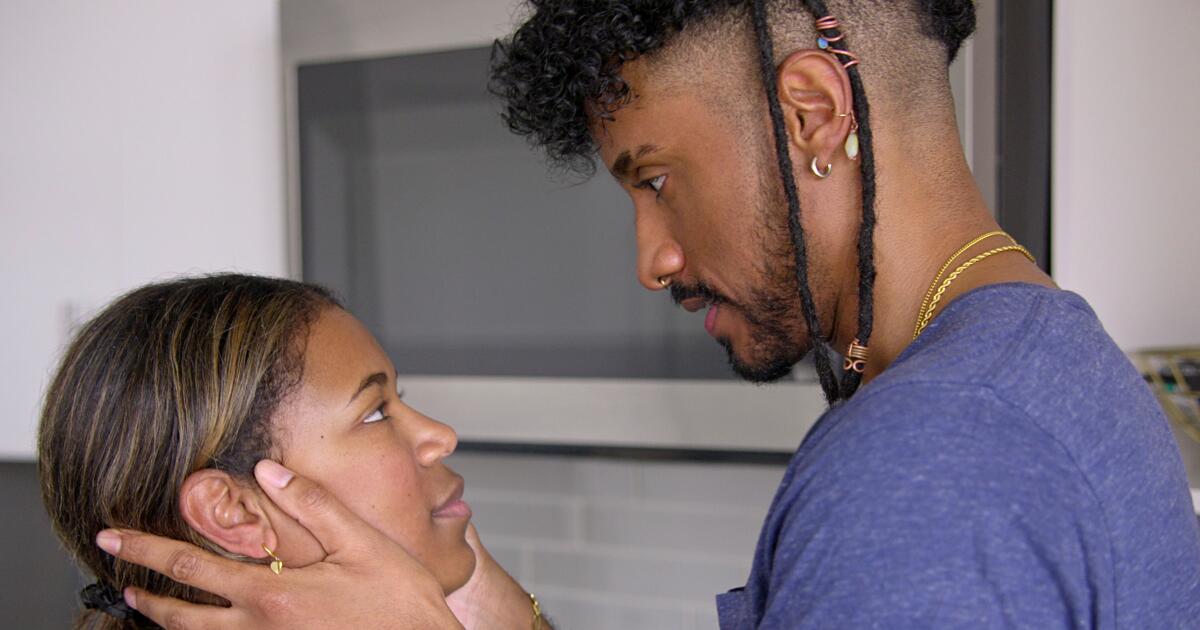
Over seven seasons, contestants on “Love Is Blind” have shared difficult, sometimes deal-breaking conversations about issues like race, religion, money, birth control and abortion.
But one subject has been largely absent from conversation in the “pods,” despite being virtually unavoidable in the real world: politics. We never saw any would-be couples asking each other explicitly how they voted. And even though “Love Is Blind” premiered in 2020, at the tail end of President Trump’s divisive term in office, his name was never uttered onscreen.
Then came Season 7, set in Washington, D.C.
The latest installment of the dating experiment, as the show markets itself, follows singles from the Capitol region and arrives in the final stretch of yet another contentious presidential race. It also happens to be the first season in which contestants discuss their personal political beliefs in partisan terms.
“OK, let’s start with this,” Monica Davis, a 36-year-old sales executive, asks Stephen, a 33-year-old electrician, during an early pod date. “Did you vote in the last presidential election? And the election before that?” Stephen Richardson explains that in 2016, he voted for Trump “because I didn’t like Hillary [Clinton].” But he came to “despise” the way Trump handled himself in office, and voted for now President Biden in 2020.
“I will happily admit that my first vote wasn’t the most educated vote,” he tells Monica, who (briefly) becomes his fiancée, until she catches him sending racy text messages to another woman.
It’s not the only mention the former president receives in the pods. Bohdan Olinares, 36, and Marissa George, 32, both military veterans, bond over their shared liberal views. Marissa confesses that she dated a Trump supporter for three years but found that “there’s just a difference in thinking about how our society works.”
”When it comes down to it, are you gonna vote for a guy who tried to overthrow the government?” Bohdan says. “I’m never gonna agree with that.”
“I’m not gonna vote for a rapist, right?” she replies.
Marissa ultimately gets engaged to Ramses Prashad, 34, who works at a justice nonprofit and may be the most performatively woke person who has ever appeared on the show. With hair that Marissa’s brother compared to that of ’80s R&B singer El DeBarge and a wardrobe of leather pants and Coogi sweaters, Ramses also is the first person on “Love Is Blind” to quote James Baldwin or use the phrase “hammer of American imperialism” between sips from a golden goblet. When Marissa tells him that the movie “Barbie” made her realize she couldn’t be with someone who supported the patriarchy, he scoffs, “It took ‘Barbie’ to make you realize that?” He also is openly disdainful of Marissa’s military service, and tells her he’d break up with her if she reenlisted. (Meanwhile, the only thing he should be judging Marissa for is her belief that Adam Sandler is funnier than Will Ferrell, but I digress.)
On one hand, this season’s political bent should not be surprising. Washington, D.C., is one of the most overwhelmingly Democratic places in the country: Biden won 93% of the vote there in 2020. The entire region is full of people who work in government, advocacy, lobbying and the military. And while there are no congressional staffers in the cast this season, there are numerous veterans and at least one “clean energy policy consultant,” Taylor Krause, who recently published a white paper about hydrogen.
Ramses Prashad and Marrisa George eventually get engaged.
(Netflix)
Yet previously, it often felt like the producers of “Love Is Blind” were going out of their way to elide overtly partisan conversations, or the discussions were so vague that they were almost incomprehensible. (In Season 1, Giannina Gibeli and Damian Powers got in what seemed to be an argument about Trump but no one knew for sure.) The singles in “Love Is Blind” seem to exist in a parallel universe, curiously devoid of the intense polarization that consumes the rest of the country and compels many Americans to size up their neighbors, prospective romantic partners, athletes and favorite pop stars based on how they vote.
There have been a few coded dog whistles (e.g., Season 6’s Sarah Ann Bick, who described herself as a “patriot,” meaning “Republican”). But for the most part, viewers have been left to draw conclusions about contestants’ political leanings based on circumstantial evidence such as their social media history or predilection for star-spangled clothing.
All of which makes Season 7, with its frank, uncomfortable discussions about the role of politics in people’s intimate lives, feel like a watershed moment for “Love Is Blind” as it finally bursts its escapist bubble. It also feels like an overdue acknowledgment of our hyperpartisan reality, particularly as we approach an election in which issues like abortion, IVF and childcare will be central to how people cast their vote, especially women, who have been most affected by the fall of Roe vs. Wade and bear the brunt of child rearing. Many pundits expect that this election will feature a bigger-than-ever gender gap between women, mobilized to support Vice President Kamala Harris because of her stance on abortion, and men, drawn to Trump’s blustering machismo.
But as we see with Ramses and Marissa, there is more to being compatible than mutual disdain for Trump or a shared support for liberal ideas. The couple’s initially blissful relationship begins to fray as they return to D.C. and realize their personal values don’t necessarily align, even if their politics kinda-sorta do.
The first signs of trouble appear when Ramses expresses reservations about Marissa’s military service — which he was aware of when they got engaged. “I don’t view politics and those types of things as something that exists in a vacuum,” he says. “These ideas, they affect real people.”
In other words, the personal is political. It’s true, especially when it comes to marriage and family, but for Ramses, it increasingly appears to be an empty, self-serving slogan. In last week’s batch of episodes, he and Marissa shared a tense and infuriating conversation about birth control. (The Infuriating Conversation About Family Planning has become something of a “Love Is Blind” trope.) She says she doesn’t want to go on the pill, but he balks at the idea of using a condom during sex “because it’s not enjoyable” even though he is also adamant about not starting a family for several years. (Here’s where I ask, not for the first time: Has anyone on this show heard of an IUD?) Ramses — or at least the edited version of him we see on the show — is a hypocrite, someone who boasts that he “doesn’t try to follow traditional expectations of what masculinity should look like” and yet gives his fiancée a hard time for making choices about her body that create minor inconveniences for him.
This week, we witness yet another painful fight: After Marissa apparently turns Ramses down for sex because she’s sick, exhausted and has a nasty case of PMS, he gives her a guilt trip over the lack of physical affection. He even implies he’s having second thoughts about getting married because of this single rejection. Usually bubbly and upbeat, Marissa is visibly deflated and worn down by her partner’s demands. She listens to his concerns, then counters that in the future, she may not want or be able to have sex for any number of reasons — like, for instance, if she just gave birth. “This is probably going to come up multiple times in our relationship. Is this going to be an issue for you?” she asks.
“That’s a fair question,” he replies.
It’s also one he isn’t ready to answer, because for all his liberal posturing, he still can’t quite accept his fiancée’s bodily autonomy. The “Love Is Blind” fandom has already started to turn on Ramses, slamming him as a toxic “gaslighter.” We still have a finale and a reunion to go, so Ramses has a chance to redeem himself — or at least provide some context for his cringe-inducing conversations with Marissa. But this season has already made it clear that while love may be blind, relationships are always political.

Entertainment
Emily Ratajkowski’s viral essay on sex life as a single mom scores her a seven-figure book deal
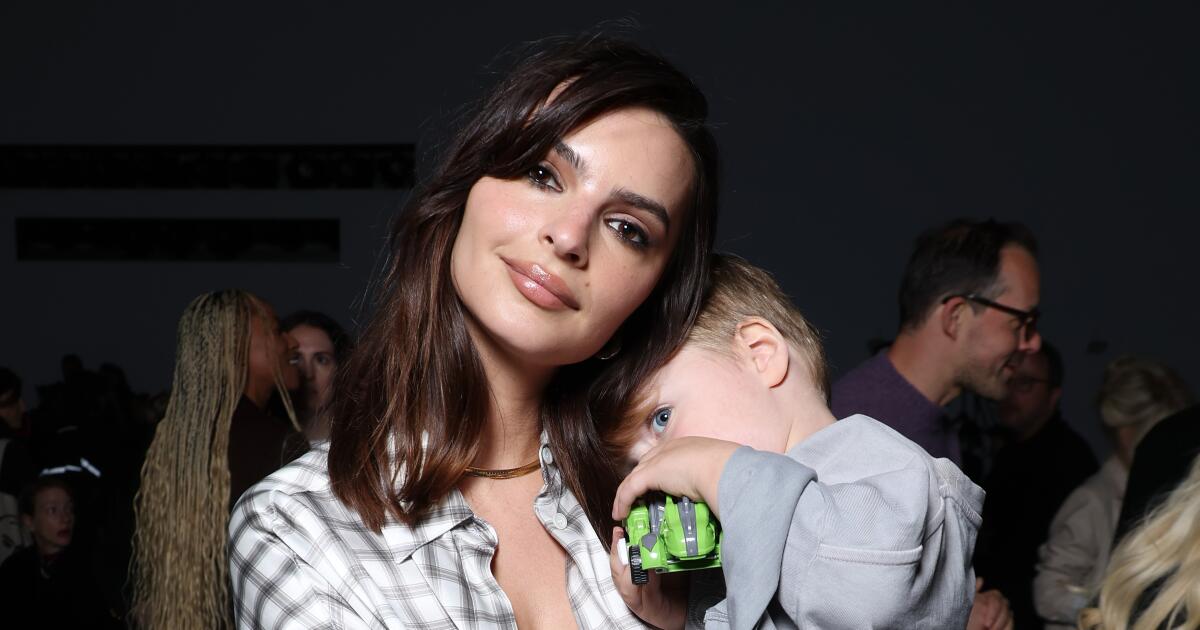
Emily Ratajkowski’s viral essay detailing her sex life as a single mom just landed her a seven-figure book deal.
According to Page Six, the model’s essay in the Cut had publishers champing at the bit in a 12-way bidding war that culminated in the hefty pay day. Editor Helen Rouner at Penguin Press — who also edited Lauren Christensen’s memoir “Firstborn” and Michael W. Clune’s novel “Pan” — reportedly landed the deal.
Penguin Press did not immediately respond to The Times’ request for comment Friday.
Publishers Marketplace announced the forthcoming memoir, describing it as “an examination of modern female identity through the story of the author’s own efforts as a newly single mother in New York City to discover what really constitutes a good life for a woman.”
The essay, which dropped a month ago and quickly broke the internet, drops the veil on EmRata’s sexual adventures (or maybe misadventures) since she and her former husband, Sebastian Bear-McClard, split in 2022.
“It was a violent transition into a new reality of screaming baby on my aching tit and ring on my swollen finger,” Ratajkowski writes of new motherhood. “And then, in a time period that felt both instant and excruciatingly slow, my marriage collapsed. Six months after my son was born, my husband and I stopped having sex. Less than a year later, we separated.”
In the missive, the model interrogates her sexuality — is she a Madonna or a whore? — while untangling bigger questions around gender, power and self-actualization. If Carrie Bradshaw wrote about “Sex and the City,” then Ratajkowski is writing about sex, the city and single motherhood. And naturally, her fleeting paramours have vague monikers: “Vegan Graffiti Artist,” “Spanish Gen-Zer” and “Son of a Billionaire.”
“And then there was the Elder Millennial: obsessed with dental hygiene, psychedelics, and dirty talk,” she writes. “He had approached the subject coyly at first, like it was something he was kind of embarrassed about — the way a kid will test you to see if you’ll talk to them about their dorky obsession of the moment. Do you like Godzilla? What about Star Wars?”
Would-be sleuths with Ratajkowski’s essay and a gossip rag handy will have their work cut out for them.
This will be Ratajkowski’s second book. The first, “My Body,” dropped in 2021 and was a bestselling collection of essays exploring gender, power dynamics, sexuality and the commodification of female beauty in the modeling and entertainment industries.
Ratajkowski’s foray into the spotlight came more than a decade ago when Robin Thicke’s controversial “Blurred Lines” music video made the model an overnight star. She was cast in David Fincher’s adaptation of “Gone Girl,” which hit theaters the following year, and catapulted to top fashion runways — Marc Jacobs, Versace, Victoria’s Secret and Dolce & Gabbana, to name a few. She she’s been romantically linked to Harry Styles, Eric Andre, Shaboozey, Brad Pitt and Pete Davidson, among others.
In 2023, she moonlighted as the host of the “High Low With EmRata” podcast, where she interviewed sex workers, investigated ethical nonmonogamy and pondered the etymology of the word “toxic.” The same year, she told The Times that she was coming into herself post-divorce, “Being able to assert what I want — that feels like it just started: My life as a creator and not as a muse.”

Wainheads will be delighted to see his alums in cameos: Kerri Kenney-Silver, Michael Ian Black, Thomas Lennon, and supporting roles for Zickel and Truglio. A large portion of the cast are his homies. But with Deutch, Gutierrez-Riley, Wang, Slattery, Impacciatore, and yes, Hamm, it’s as if they’re being inducted into a new mad family. Wain and Marino are basically catching Pokémon and hoping they can hold onto the roster (by that logic, yes, Paul Rudd is a legendary Pokémon). The film is anchored by Zoey — everything everywhere all this summer with Voicemails From Isabelle to Minions & Monsters — Deutch in the Dorothy Gale role, exuding a high level of perkiness consistent with the character’s can-do, wide-eyed, midwestern charm and heart.
A major standout, Ben Wang finally gets to show off his comedic abilities, portraying a self-assured, quick-witted agent who makes me laugh every time he reveals his sheltered upbringing in snappy whines at every inconvenience. Sabrina Impacciatore, who has proven to be a comedic juggernaut in The Paper, is having so much fun hamming it up as the mob boss-esque wicked witch counterpart, torturing her henchmen and deliciously chewing up the scenery whenever onscreen. I don’t think they use her to the height of her comedic prowess, but she’s a delight nonetheless. John Slattery is the film’s comedic MVP. The way the writers use his over-the-top character for comedy is downright hilarious every time. They use him as either a punchline or a force of nature, and he’s great. This movie is like Mad Men propaganda, and by God, it works. As someone who’s never seen it, Gail allowed me a better appreciation for Slattery and Hamm.
Man, we don’t deserve Jon Hamm. This is the second time I’ve seen him play a silly, fictionalized version of himself this year (the other being the SXSW crowd-pleasing rom-com Wishful Thinking, which Gail distributor Sony Pictures Classics acquired), and he also voice-acted in his comedic Mayor Jerry role in Hoppers. Maybe working with Wain in 2007’s The Ten was the canon event, but I consider his weird little sex scene with Kristen Wiig in Bridesmaids his awakening. Since then, I’ve only seen him as unserious, and it’s delightful. Oz-like in appearance, he’s funny and befitting the film’s overall light, joyful nature.
LAST STATEMENT
Ultimately, Gail Daughtry and the Celebrity Sex Pass is a campy, delightful romp that succeeds as both a distinctive Hollywood‑centric riff and a Wizard of Oz reimagining, retaining a loving, twisted, demented charm. It’s a weird description, but it’s so high‑spirited and light‑hearted despite being strangely ultraviolent. It might as well be a live‑action episode of Smiling Friends (RIP), yet it’s everything the theatrical market needs today. Ten years ago, this would’ve been a studio production rather than an indie Sundance acquisition, but thank God it exists for the big screen. More absurdist Gail Daughtrys for cinemas (not streaming), please, because this is the most fun to be had in a theater all summer, if not the year thus far.
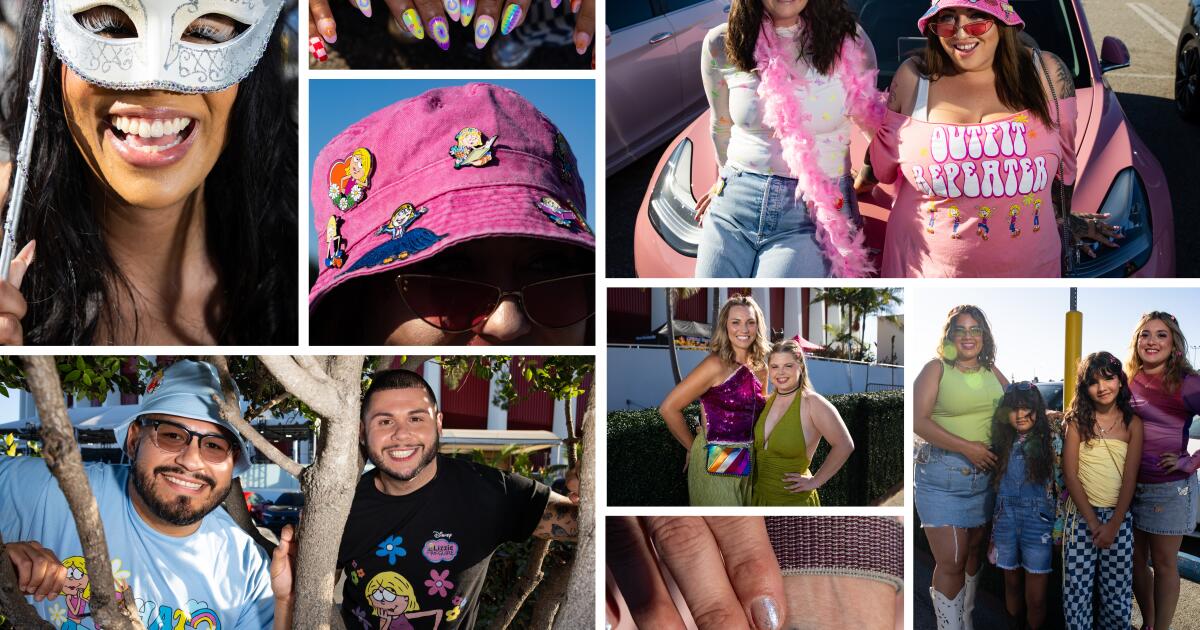
Chunky platform sandals, fitted baby tees, butterfly clips on perfectly crimped hair, brightly patterned skirts and tons of sparkles. Pure Y2K-fueled nostalgia filled the Kia Forum on Wednesday night in celebration of all things Hilary Duff.
-
Share via
Duff graced the stage at the Inglewood venue as part of her Lucky Me tour, her first global headlining tour in nearly two decades. And her fans couldn’t have been more thrilled. The pop singer and actor, who released her sixth studio album “Luck… or Something” in February, performed two back-to-back sold-out shows.
Before the final L.A. show, we caught up with fans to talk about their outfits (many of which were inspired by Duff’s most famous roles such as Sam in “A Cinderella Story” and the title role in “The Lizzie McGuire Movie”), the memories her music brings up for them and why her work still resonates with them. Here’s what they had to say.

(Kayla Bartkowski/Los Angeles Times)
Tristan Hallam, 36, of Chicago
Tell us about your outfit.
This is my wedding dress that I had stuffed in a suitcase. She’s been in a suitcase for 10 years, and I still fit into her, which is nice. People ask me why I keep stuff and this is exactly why: You might get divorced and use it as a costume. My outfit is inspired by “A Cinderella Story.” It’s my favorite Hilary Duff movie. She plays diner girl Cinderella. She disguises herself with a mask and a L.A. Dodgers cap. I did have a tiara, but I didn’t bring it because I didn’t want to be too much. So I figured, you know what, why not buy an apron and a little black crop top, and rep L.A.
I have a tattoo of her signature. It’s a little faded because it’s like 10 years old, maybe older than that now. It was at a book signing at Barnes and Noble at like the Grove or something. I asked her if she would initial my wrist, and I got it tattooed the same night. I literally drove to the tattoo shop on Hollywood Boulevard with my arm out the window because I’m so clumsy and I didn’t want to smudge it. Then the next time I saw her, she asked me, what did your parents say? I said, “My mom asked me how long I kept the Sharpie on so long.”
How long have you been a fan?
I think I was like 8 or 9 years old when I saw “Casper Meets Wendy” for the first time. My grandma took me to like a K-Mart or something, and told me that I could get any movie that I wanted. Then I was into “Lizzie McGuire,” but as soon as Hilary started doing all her like movies and independent work, obviously the music is great. I used to live in L.A., so I went to a bunch of her book signings. I’ve done a lot of meet and greets for her concerts, and right now I’m traveling around. I’m going to 18, technically 19 shows now, and I’m gonna see her in New Zealand, Australia and some other places. I’m actually really excited because one of my friends, I met her in a Hilary Duff fan club chat room in 2005 on MSN Messenger, and we are still friends, so we are going to a ton of shows together.
Why does her work still resonate with you today?
The fact that we’re around the same age, there’s been a lot of relationship similarities. I don’t have any kids, but the struggles with family, with your dad, with your siblings. She’s got some songs that are more mature and relatable for people our age. People who have gone through ups and downs in relationships, struggles with family and figuring out who your real family is, not just by blood but who your chosen family is. I think that’s really important.

(Kayla Bartkowski / Los Angeles Times)
Leilanie Martinez, 30, of South Gate
Tell us about your outfit and the inspiration behind it?
It’s my quinceañera dress. It’s supposedly very traditional to wear a white dress, like young women coming of age. For mine, I wanted to wear something that I didn’t see a lot of people wearing and I was very firm that if I didn’t find the love of my life, I was going to wear a white dress and this was my moment. My quinceañera was such a precious time. It really was a labor of love, and I think it’s one those memories I hold very near and dear. I think it’s an ode to her history, her legacy.
How long have you been a fan?
I remember I was 5 and I was running around in my neighborhood, playing with Barbies and watching “Lizzie McGuire.” I’m here today with my neighborhood and childhood friends. We used to watch it together and now we’re reliving our nostalgia and childhood.
Thinking back on when you first fell in love with her work, why does it still resonate with you today?
There’s a lot of power in her being a woman and she’s going through so many milestones that a lot of people my age are going through like having children and growing her career. Sometimes I think people “wash out” and I think it’s wonderful how she’s combating that narrative in so many ways, and that people are out here supporting her. I think there’s a lot of beauty in being able to be together as young women and relive some of these memories, but also cheer her on as she continues developing further.

(Kayla Bartkowski / Los Angeles Times)
Crystal Chesher, 33, of Mar Vista and Isabella Sanchez, 33, of Culver City
Tell us about your outfit.
Sanchez: We’re channeling “The Lizzie McGuire Movie.” My actual name is Isabella. She gives more Lizzie vibes and I give more Isabella vibes. It’s funny because I’ve literally saved [looks] of Isabella and Lizzie on my Pinterest board and I’ve always wanted to dress up like this. It’s not 100% of what I wanted, but it’s giving what it’s supposed to.
How long have you been a fan?
Chesher: Since I was little. I remember watching “Lizzie McGuire” since the age of 10 at the very least so I’ve been growing up with her movies and shows. She’s definitely my idol.
Sanchez: Same. Growing up, I was bullied so she was a very big part of me being more positive about myself. I can relate to her and she really helped me. It just feels full circle to be able to see her at 33 when I wanted to see her when I was like 10.
Thinking back on when you first fell in love with her work, why does it still resonate with you today?
Chesher: She has a heavy influence in the LGBT community as well especially with the [anti-gay speech campaign]. I loved that. With her movies and her music, it’s all relatable and it resonates with you, the lyrics, the storyline and even her new album that just came out.
Sanchez: She’s just that girl. I’ve never even met her, but I feel like she’s so genuine and real and she’s always stayed consistent with who she is. She’s not like your typical celebrity. She’s just awesome. I’m literally probably going to tear up seeing her on stage.

(Kayla Bartkowski / Los Angeles Times)
Lucca Petrucci, 33, of Santa Monica
Tell us about your outfit.
This is a last-minute choice. It’s very like ’70s or retro. I feel like I’ve seen her wear something like this. I’m wearing wide-legged pants, Doc Martens, platform, new haircut, facial. The inspiration for this fit was elegant pop star like confidence, grounded, a baddie. I’m a baddie who knows my worth and that’s what I wanted to embrace. I feel like she’s like doing that. She has a lyric that’s like ‘I look in the mirror, like I’m a bad b—.”
How long have you been a fan?
Since third grade. I thought she was my crush, but I think I just wanted to be her. So many of my core childhood memories are with her.
Why was tonight a non-negotiable for you?
I wanted to experience with my bestie and her sister. I feel like as a kid I didn’t allow myself to fully embrace it because it would be too girly, too much, too gay. So I feel like as a 33-year-old, I’m reclaiming that experience. I’m so excited just to hear everybody in the Forum sing “So Yesterday” and “Come Clean.” She has always been my number one pop star, to this day, and I’ve never seen her perform.
Why does her work still resonate with you today?
I feel like, especially when she was on “Lizzie McGuire,” she was figuring out who she was, but was open to being her authentic self. So I think that just like hit me when I was like in third and fourth grade, like figuring out myself. I felt so seen by her, and her music just brings back like such good feelings. Younger version of me, life wasn’t always great, but, I don’t know, she made things better.

(Kayla Bartkowski/Los Angeles Times)
Liv Guardado, 8, Priscilla Cruz, 38, Ava Guardado, 10 and Jezelle Velasco of Costa Mesa
Tell us about your outfit.
Cruz: We went thrifting for the first time for this. I’m plus-size, so thrifting is not easy in my size, so we did what we could. We got some overalls from Goodwill. And then we got some cowboy boots because we just wanted to be comfy.
Velasco: I probably stressed the most. I ordered so many pieces and it just kind of came together. I think the nails took the longest. One of my friends did my nails. It took some time but we got it done.
How long have you been a fan?
Velasco: Probably since I was their age. I never got to go to a concert, so this is my first time seeing her live.
Cruz: I definitely got inspired around middle school. I had a friend who was like Lizzie, and I was the best friend, Miranda. People would always say I was Miranda. I was a little older than [my girls], but I definitely have kept tabs on her life, and we love her.
Why does her work still resonate with you today?
Cruz: It definitely feels like memories and home when you think of her music from back then. And now she’s obviously stepped into a different phase of her life, and it matches where we’re at in our phase too so it’s nice.
Velasco: It just brings back the nostalgia from back when we were younger and now being parents, and being able to relate to her and her new music.

(Kayla Bartkowski/Los Angeles Times)
Paige Beard, 34, and Tayler Nelson, 27, of Bakersfield
Tell us about your outfits.
Beard: I was supposed to be wearing purple and she was going to wear green, and we were going to do the Isabella and Lizzie look at the end of “The Lizzie McGuire Movie.” It turned out more pink, but we ran with it.
Nelson: I was all about that performance, so I was like green. Gotta go green. We’ve been planning for a while, like two months.
How long have you been a fan?
Beard: I’ve been a fan for a long, long time, probably since “Casper Meets Wendy.” I was also a really big “Lizzie McGuire” fan, so I got into her acting as well as her music.
Nelson: Same. I was all about the Cinderella movie though, so it’s probably been 10 years for me.
Why does her work still resonate with you today?
Beard: I was telling my sister that I really liked “Lizzie McGuire” because it was one of the first times I saw somebody’s inner dialogue acted out in cartoon form. It showed me that I’m not too much. She’s a little bit older than me and I see her crying on stage and I’m like “OK, it’s OK.”
Nelson: “The Lizzie McGuire Movie” was a big turning point for me. I just loved how she expressed herself with what she wore and how she acted. I feel like I understood her in different ways. I enjoyed the dancing and the singing for sure. She felt free and I’m like, “Dang, I want that.”

(Kayla Bartkowski/Los Angeles Times)
Freddy Lopez, 38, and Raymond Lockwood, 36, of San Bernardino
Tell us about your outfits.
Lopez: Just a ’90s vibe. I guess a little old-school.
Lockwood: The outfits are a little last-minute because we were like we should’ve done diner girl [from “A Cinderella Story”] or one of her other movies, but we chose the little cartoon character from the show.
How long have you been a fan?
Lopez: I’ve been a fan since “Lizzie McGuire” and her movies.
Lockwood: For the past 20 something years. We grew up watching “Lizzie McGuire” and got introduced to Hilary Duff when she started singing.
Why was tonight a non-negotiable for you?
Lopez: We don’t know if she’s going to come back after this, so you’ve gotta take every opportunity. There’s other artists who cannot come back to perform right now. So when she said I’m coming back, we had to.
Lockwood: We’re healing our inner child. As a kid, we didn’t know she was having tours or we couldn’t afford to come out. Now, we’re like we don’t have to ask our mom and dad for anything.
Why does her work still resonate with you today?
Lockwood: For me, it’s being a teenager, watching the “Lizzie McGuire” show and watching the movie and then learning her songs. My favorite song is from the movie, “What Dreams Are Made Of.” It’s just us getting to live back in the past and kind of understanding it a little bit more. As a kid, our dreams are not what they realistically are today. I ended up becoming a nurse. As a kid, I didn’t sit on the couch like “Oh, I’m going to be a nurse,” but that’s what my dream ended up being.
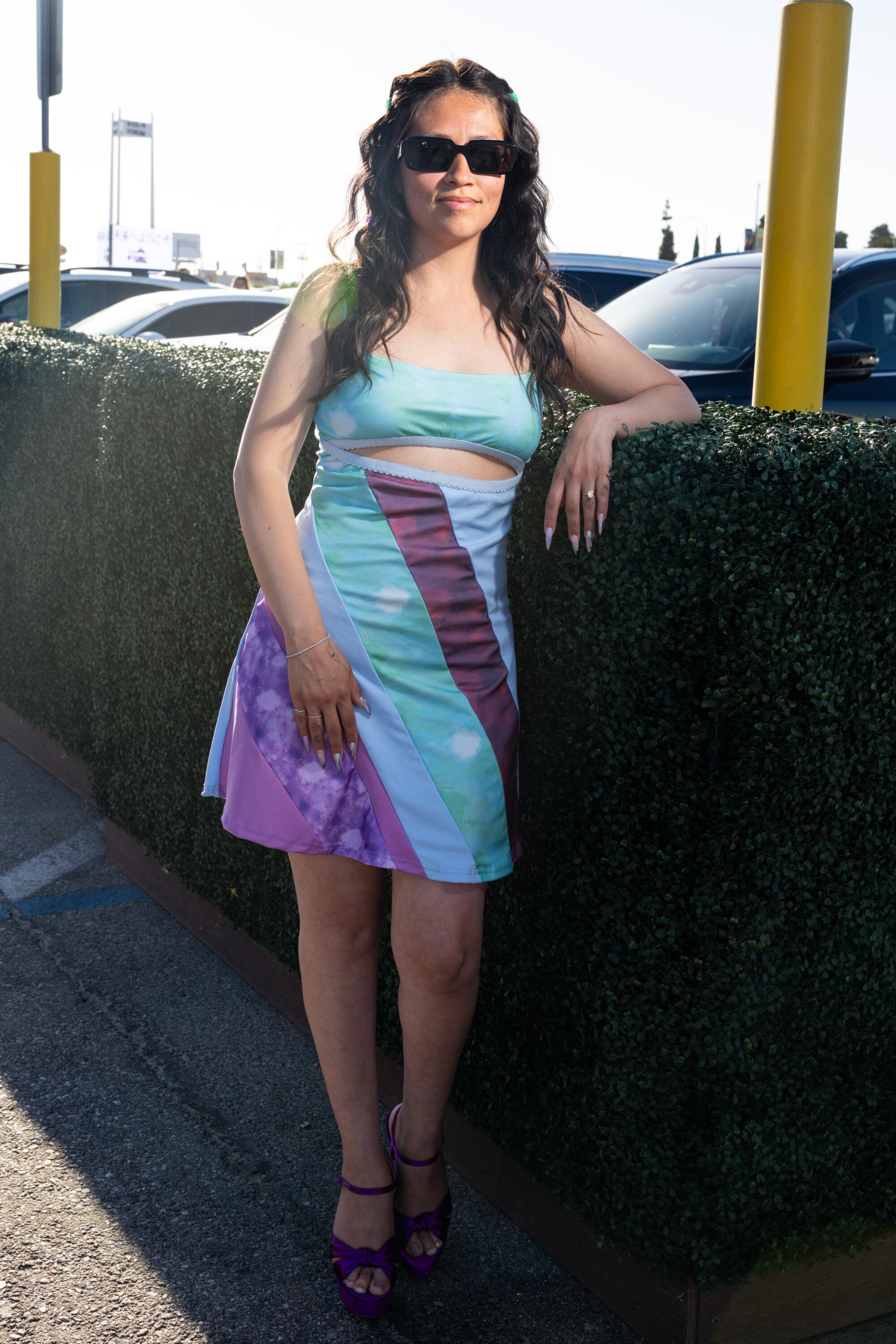
(Kayla Bartkowski/Los Angeles Times)
Stephanie Rodriguez, 32, High Desert
Tell us about your outfit.
If you ask my fiancé, I was hunting for outfits and last-minute I was like, “I’m just gonna order something on Amazon.” When I saw this, I was like, “That’s it.” Total nostalgia with “13 Going on 30.” We went shoe shopping at the South Coast Plaza over the weekend. The metallic is pulling it all together and the butterfly clips.
How long have you been a fan?
Probably since I was like 8 or younger, pretty much very much obsessed. All of my holiday gifts were Hilary Duff. I had her K-Mart home products. Any magazines she was in, I got. Any outfits that I could try and replicate, I would. My first Hilary show was either Wango Tango or a Jingle Ball with KIIS-FM, so it was just a festival with a bunch of different artists but I went specifically for her.
Why does her work still resonate with you today?
I think a lot of us feel like we grew up with Hilary, so all of her music resonated with us then, and now, now that we’re older, through relationships or divorces or motherhood. It’s pretty cool to see just how we’re all kind of growing up together. The first time I think I found out about her was at the Glendale Galleria. I was recently telling my fiancé that my dad had me on his shoulders because she did a meet and greet and the entire mall was packed.

(Kayla Bartkowski/Los Angeles Times)
Kelsie Wagner, 35, of Temecula and Tyler Walsh, 35, of Long Beach
Tell us about your outfit.
Wagner: I’m channeling Lizzie McGuire. My favorite part is the butterfly clips.
Walsh: This is from Company D, which is a discount store for Disneyland. I was like let me get the biggest shirt and make it into a dress, but I’m wearing shorts — it’s still appropriate. I have like six authentic Disney pins here. This is about $200 on my hat. I was like I have to do something that represents. It’s a big hobby, pin trading, that I picked up in 2023. Then I wore my Lisa Franks. I figured I would channel everything from the ’90s and 2000s.
How long have you been a fan?
Wagner: Whenever the “Lizzie McGuire” show came out.
Walsh: I remember going to sleepovers with all of my friends and we would do Lizzie nights. I was on a soccer team and on Saturday nights, we’d go watch the newest episode. It was just so fun because I feel like I had a little clan that loved Lizzie. We went to her concert at the Grove together and it was back when you paid $50 to get in. We were front row and we like smelled her. It was wonderful.
Why does her work still resonate with you today?
Wagner: For me, especially her new album, she talks about marriage, relationships, motherhood, so it’s still relatable in that sense of that stage of life that we’re in.
Walsh: For me, it’s just nostalgia, because I’m not married, I have no kids, like I’m that fun aunt. And I will say, like, because she goes to Disneyland a lot, so I luckily got to meet her too. I asked her for a picture, and she’s like “Yeah, of course, honey.” It’s the most embarrassing photo of me ever though.
Wagner: I told her she should get it printed and wear it to the concert.
Walsh: I should have.
-

 Technology5 minutes ago
No, Flock isn’t threatening people for debating surveillance
-

 World8 minutes ago
Israel signals readiness for another Iran strike as Trump declares ceasefire over
-

 Politics13 minutes ago
Kelley Paul: America’s Founders were the ‘first civil rights heroes’
-

 Health20 minutes ago
Your resting heart rate could reveal more about your health than you think, doctors say
-

 Sports23 minutes ago
Shohei Ohtani ruled out of MLB All-Star Game as Dodgers plan to manage nagging injury
-

 Technology35 minutes ago
Fake VA shoe offer targets veterans
-
 Business38 minutes ago
Los Angeles hotels saved by last-minute surge in World Cup bookings
-
Entertainment43 minutes ago
Emily Ratajkowski’s viral essay on sex life as a single mom scores her a seven-figure book deal

