Entertainment
Jorge Garcia looks back at 'Lost' 20 years later and the role of a lifetime


In the spring of 2004, actor Jorge Garcia was riding in the back of a van along Oahu’s Mokulē’ia Beach, trying to process the uncanny scene he was approaching. Scattered across the sand was the wreckage of a massive passenger jet; one wing from the mangled fuselage pointed up toward the sky, all surrounded in a haze of smoke and fire. He started laughing to himself — his involuntary response to any kind of discomfort. Still, there was a feeling he couldn’t shake: “This job is so much bigger than me.”
He was right. As Hugo “Hurley” Reyes, the cursed lottery winner and crash survivor of Oceanic Flight 815, Garcia became part of the television juggernaut known as “Lost.” Over the course of six seasons, the show drew in millions of viewers by delivering something unlike anything else in the mid-2000s TV landscape: a compelling mystery centered on the interwoven lives of a diverse ensemble all fighting for survival. There were love triangles, villains, antiheroes, flashbacks, flash-sideways and a trail of clues that fans eagerly pieced together in an attempt to understand the cryptic island at the center of the show.
Though he might’ve had an inkling of what was to come when he stepped on Mokulē’ia Beach 20 years ago, Garcia couldn’t have known how it would all end. In honor of the show’s 20th anniversary (it premiered Sept. 22, 2004), the actor spoke with De Los about his memories of filming the pilot, the show’s legacy and his reflections on Hurley’s journey from (spoilers ahead!) an unlucky but kindhearted fan favorite to the inheritor of the island.
This interview has been lightly edited for clarity.
Showrunners Damon Lindelof and Carlton Cuse hadn’t fully sketched out the character of Hurley when the casting process began. What was your experience like auditioning?
There was a breakdown with a character called Hurley, and he was listed as something along the lines of a 50-year-old redneck. [Laughs] I remember specifically reading in the description that he was described as a “redshirt,” which I’m guessing meant that he wasn’t going to survive the pilot. But they called me in, and the only material they had for the guys were Boone (Ian Somerhalder) sides and Sawyer [Josh Holloway] sides, so they had me read the Sawyer sides.
How much did you know about Hurley when it came time to shoot the first season?
I didn’t know anything about his back story, just what you see in the pilot. During that first summer, there was a small circle of writers assigned to come up with back stories for the characters, and Javier Grillo-Marxuach was one of them. He’s the one who decided to make Hurley a nickname, and make his real name Hugo Reyes, since I was going to be playing him. He came up with this idea that Hurley was a repo man who was just so charming and good at his job that people would just end up giving their stuff back.
It didn’t end up being his back story, but it’s funny how certain ideas still made their way into the show. Like when Jack (Matthew Fox) doesn’t want people to know he’s a doctor, he says he’s a repo man. Or how Hurley was described as a bit of a redneck, but Sawyer ended up being more of that role. Originally, I think he was more of a slick New Yorker in the initial description.
The show obviously ended up becoming this huge phenomenon, but what were your impressions going into the first season?
When I got the job all I knew was that [executive producer and director of the pilot] J.J. Abrams had a pretty good track record and that it was going to be shot in Hawaii, so the worst outcome was that I would get a bit of a Hawaiian vacation. When we started filming, I remember we were going to have to run away with an explosion going off behind us. I was thinking, “Are we going to do that thing where we dive after the explosion? Does that happen in real life or just in the movies?” Then, J.J. gets on the megaphone and says, “OK, after the explosion, dive into the sand.” We were high-fiving each other that we were getting to do such an action movie thing.
In a show that could get pretty heavy and intense, Hurley provided a lot of comedic relief, especially through his dynamic with Sawyer. What do you think made him such a fan favorite?
In Season 1, there was definitely this dynamic established where Hurley started taking on the voice of the audience. He would be the one asking, “What’s that in the woods shaking the trees?” Later, when things started getting more complex, they wrote that scene where Hurley is trying to understand time travel on the island, and they’re just getting frustrated trying to explain that to him. [Laughs] So I think that role kind of endeared him to the audience, and a lot of people gravitated toward him because of that.
In my house, we would always look forward to the Hurley episodes, not just because of the comedy, but because the dynamic between him and his Latino family felt so familiar.
That’s really nice to hear, because when you’re in the middle of doing it, you’re not thinking about the impact it might have on a Latin household. So to hear that families were looking forward to that just really means a lot. I mean, that first summer of shooting the show, we had no idea if we were going to find our audience; all we knew was that we were doing something that wasn’t being done on TV right now. Like that first Sun (Yunjin Kim) and Jin (Daniel Dae Kim) episode, more than half of it was subtitled.
It wasn’t just Hurley, but his parents, played by Lillian Hurst and Cheech Marin, who provided a ton of laughs. What did you enjoy about their relationship?
Oh man, when I found out they cast [Cheech Marin], I thought that was such an inspired choice. It was just great getting to hang out with him, because he’s been in the business for such a long time that he had stories for days. But the dynamic with Hurley and his mom? I always think about that scene where she’s hooking up with his dad again, and she turns away the statue of Jesus and says, “I have needs.”
How did your family respond to the frenzy the show created?
They definitely weren’t in the circle of viewers who went deep trying to figure out what everything meant. But that was the first job I had that my mom was kind of proud of, and bragged about. I got a job on “Becker” where I did 13 episodes, and that was the job that made her feel like I could actually do this for a living. But “Lost” was the real pride job. Once my mom saw that the show had such a great fandom and fervor around it, she was into the idea of being Hurley’s mom for sure. [Laughs]
So much of the show is told in flashbacks that either build on or completely reframe the characters as we know them on the island. What was it like as an actor getting new information like that as you go?
My approach to Hurley was always to take the information I did have about the character and then fill in the blanks myself. I remember having discussions with other people on the show where, when they would find out something new, they would be like, “Oh, well if I had known that, I would have done this differently.” But I enjoyed that, because I feel like those contradictions are what make people human. Those inconsistencies are interesting, and that’s what makes a character feel like a real person. So for me, in Season 1, people’s characters were already getting second episodes, and I was thinking “We’re never gonna find out what my angle is.” Then Damon [Lindleof] called me and told me that Hurley was a lottery winner, and was actually really rich. I remember thinking, “Cool, but where’s ‘The Twilight Zone’ part of this?” And finally, I got the script of the episode, and that’s when I got the reveal of the numbers.
In Season 2, Hurley has this great romance play out with Libby (Cynthia Watros) that kind of comes full circle in the end. What was it like to play out that part of his story?
To get to have a romance, even as tragic as it ended up being, is just not the kind of thing that a character like mine usually gets to do. Hurley is not the type of guy who gets to have a kiss on top of a cliff top, so I just never expected to get to do that. But also, a crazy part of doing this was that we relocated to Hawaii to be part of a show where people were always getting killed off. So, from one day to the next, your friends and cast mates wouldn’t be there anymore. I got to do this great work with Cynthia in Season 2, then I didn’t see her again for years, and so when we did reunite, it was so great. That whole final season, there were so many mini reunions. By the time we got to the church scene where we were all together, it was so special.
In a show that was famous for its twists and turns, people were on the edge of their seats trying to figure out how it would all end. Do you remember reading that final script?
I do remember because they called me and said they wanted to do an extra DVD feature where they show how the script gets made and delivered to us when it’s ready. They were so secretive about the scripts. I mean, every season, for the finale, there would be a huge chunk missing, and those scenes would only go to the people who were in them. But near the end, when Damon and Carlton would come out to Hawaii, they would pull people aside periodically, and tell them what happened in the secret pages.
So when they brought in the script, they had a guy come in to shoot some B-roll for the DVD. I started reading through my copy, and as I’m going through it, I think the people in the room started to notice a change in the energy. Suddenly, the camera guy started rolling, and he captured me kind of welling up.
We learn in the last season that Hurley is one of the candidates who might become the caretaker of the island. What was your reaction when you realized he had been chosen?
I was really moved because it was such a huge reward for his whole journey to get to do that. To have the island handed over to him? I wasn’t expecting that at all. This was Jack’s story. It starts with his eyes opening, and ends with his eyes closing. It always felt like he was the sun and we were the planets revolving around his experience. So to have Hurley step up into that role — I don’t know, I’m grateful that they did it one step at a time because just sitting back and thinking about it, if they had explained this as his arc, it would’ve been unfathomable. I can’t imagine they knew that from the beginning. I was speechless, just completely at a loss for words at how the Hurley story wrapped up.
Looking back 20 years later, what are some of the highlights you look back on from this experience?
There were so many incredible opportunities that “Lost” created. There was a great joy in the fact that we got to do it in Hawaii. There was this feeling, especially early on, where it felt like we were the tinkers in “A Midsummer Night’s Dream.” We’d just go off into the jungle, work on our little show, send it over to the mainland and let them deal with the rest of it. We didn’t think about it, until suddenly, here you were getting an invite to go to the Golden Globes to represent the show.
Do you have any plans for a rewatch?
You know, we used to have this tradition that started in the first season where, if an episode was featuring your character’s back story, we’d all go to your house and potluck when it was airing so we could watch it together and celebrate. I’ve seen pieces of the show, and discovered that the parts that really bring me back are the blooper reels. The second someone screws up and drops character, it was like, “Ah, that’s the person I know. That’s who I remember. That’s who I sat under a tent with and hung out with while we waited for our next scene.”
I was just recently doing something where I was rewatching some of the show’s iconic moments, actually, and when I saw the scene where we jump-start the van, it actually gave me goosebumps. The way they held out the suspense for so long, Michael Giacchino’s score comes in, and then Three Dog Night kicks in? That made me think I need to go back and rewatch the show. It’s just insane that 20 years went by so fast. I’m grateful that I’m still working, still in the business, but it just feels incredibly lucky to me to have been a part of something so special.
Cat Cardenas is a writer and photographer based in Austin. Her work has appeared in Rolling Stone, New York Magazine, Harper’s Bazaar, GQ and other publications.



(Credits: Far Out / Elevation Pictures)
Maxime Giroux – ‘In Cold Light’
The action is relentless in the complex thriller In Cold Light, a tense combination of crime and fugitive tale and family drama. It is the third feature and first English language film by Maxime Giroux, best known for a very different kind of film, the critically acclaimed 2014 drama Felix & Meira.
The tension and high energy of In Cold Light almost overwhelm the film, but are relieved, barely, by moments of character development and introspection that keep the audience pulling for the restrained and outwardly cold main character.
Speaking at the film’s Canadian premiere, director Giroux admitted he found creating an action film a challenge. Part of his approach was using very minimal dialogue, especially for the central character, letting the action speak for itself, and allowing silence to intensify suspense. Giroux has said he likes the lack of dialogue and speaks highly of the importance of silence in cinema; he prefers using “physical aspects of communication” in his films.
Young Ava Bly (Maika Monroe) is a competent and businesslike drug dealer, working in partnership with her brother Tom (Jesse Irving) and a small team. As the film begins, Ava has just been released from a brief prison sentence. She is hoping to return to her former position, but her brother’s associates consider her a risk due to her recent incarceration. While she works to re-establish herself, a shocking encounter with a corrupt police officer sends Ava’s life into chaos and forces her to go on the run.
Ava’s fugitive experience introduces a new character, to whom Ava turns for help: her father, Will Bly, played by Troy Kotsur, known for his excellent performance in CODA. Their first interaction is handled in a fascinating way, as Will is deaf and the two communicate through sign language. This, of course, provides another form of the silent interaction the director prefers; he explained that much of the father-daughter interaction was rewritten with the actor in mind. Their conflict is nicely expressed through a scene in which their initial conversation is intermittently cut off by a faulty light which goes out periodically, making communication through sign momentarily impossible, nicely expressing the rift between father and daughter.
As Ava continues to evade danger, her escape becomes complicated by new information, placing her in a painful dilemma. We gradually learn more about Ava, her background, and her character through occasional flashbacks and glimpses of her dreams. The plot becomes more complex and more poignant, and gains features of a mystery as well as an action tale, as she is pressed to choose from among equally unacceptable alternatives.
The climax of her efforts to protect both herself and those close to her comes to a head as she meets with the director of a rival drug gang. Veteran actress Helen Hunt is perfect in the minor but significant role of Claire, the rival drug lord, who plays odd mind games with Ava in an intriguing psychological fencing match. It’s an unusual scene, in which Ava’s personality is made clearer, and Claire’s understated dominance and casual speech do not quite conceal the threat she represents.
The frantic pace and emotional turmoil are enhanced by the camera work, which tends to focus tightly on Ava, and by a harsh, minimal musical score that sets the tone without distracting from the action. Giroux chose to shoot the film in Super 60; he describes digital as “too perfect” for the look he was going for, and since “Ava is rough,” the film portrays her better. The director describes the entire movie as “rough,” in fact, and deliberately chose a dark, washed-out look for much of the footage, occasionally using light and colour, in the form of fireworks, lightning, or a colourful carnival, to both relieve and emphasise the darkness.
The dynamic, intense story holds the attention in spite of the lengthy, sometimes repetitive chase scenes and subdued dialogue. Ava’s predicament, and the difficult decisions she is forced to make, are made surprisingly relatable, from the initial disaster that starts the action to the surprising flash-forward that concludes the film, on as high a note as the situation could allow. Fans of action movies will definitely enjoy this one.

The House of Pies, a Los Feliz institution, is bustling on a chilly January morning.
It wouldn’t be shocking if some of the patrons here for breakfast were casually chit-chatting about the cultural behemoth that “KPop Demon Hunters” has become. After all, the 2025 animated saga about three music stars fighting otherworldly foes is now the most-watched movie ever on Netflix; “Golden,” its showstopping track, has since become the first Korean pop song to ever win a Grammy.
But for Danya Jimenez, 29, who sits across from me sipping coffee, the reception to the movie she began writing on back in 2020 isn’t entirely surprising, but certainly delayed.
“When we first started working on it, I was like, ‘People are going to be obsessed with this. It’s going to be the best thing ever,’” she recalls. But as several years passed, and she and her writing partner and best friend Hannah McMechan, 30, moved on to other projects. They weren’t sure if “KPop” would ever see the light of day. Production for animation takes time.
It wasn’t until she learned that her Mexican parents were organically aware of the movie that Jimenez considered it could actually live up to the potential she initially had hoped for.
“Without me saying anything, my parents were like, ‘People are talking about this’ — like my dad’s co-workers or my aunt’s friends — that’s when I started to realize, ‘This might be something big,’” she says.
“But never in my life did I think it would be at this scale.”
“KPop Demon Hunters” is now nominated for two Academy Awards: animated feature and original song. And that’s on top of how ubiquitous the characters — Rumi, Mira and Zoey — already are.
“Everyone sends me photos of knockoff ‘KPop Demon Hunters’ dolls from across the border,” Jimenez says laughing. “My friend got me a shirt from Mexicali with the three girls, but they do not look anything like themselves. She even got my name on it, which was awesome.”
After graduating from Loyola Marymount University in 2018, Jimenez and McMechan quickly found their footing in the industry, as well as representation. But it was their still unproduced screenplay, “Luna Likes,” about a Mexican American teenage girl obsessed with the late chef and author Anthony Bourdain, that tangentially put them on the “KPop” path.
“Luna Likes” earned the pair a spot at the prestigious Sundance Screenwriters Lab, where Nicole Perlman, who co-wrote “Guardians of the Galaxy,” served as one of their advisors. Perlman, credited as a production consultant on “KPop,” thought they would be a good fit.
Jimenez didn’t see the connection between her R-rated comedy about a moody Mexican American teen and a PG animated feature set in the world of K-pop music, but the duo still pitched. Their idea more closely resembled an indie dramedy than an epic action flick.
“If [our version of ‘KPop’] were live-action, it would’ve been a million-dollar budget. It was the smallest movie ever. Our big finale was a pool party,” Jimenez says. “We had all of the girls and the boys with instruments, which obviously is not a thing in K-pop, and everyone was making out.”
Even though their original pitch wouldn’t work for the film, Maggie Kang, the co-director and also a co-writer, believed their voices as two young women who were best friends, roommates and creative collaborators could help the movie’s heroines feel more authentic.
“Maggie had already interviewed all of the more established writers, especially older men,” Jimenez says. “She knows the culture. She knew K-pop, she’s an animator. She just needed the girls’ voices to come through, so I think that’s why we got hired.”
Kang confirms this via email: “It’s always great to collaborate with writers who are the actual age of your characters! Hannah and Danya were exactly that,” she says. “They were very helpful in bringing a fresh, young voice to HUNTR/X.”
Neither Jimenez nor McMechan were K-pop fans at the time. As part of their research, they both started watching K-pop videos, but it was McMechan who got “sucked into the K-hole” first. Still, it didn’t take long until the video for BTS’ “Life Goes On” entranced Jimenez.
“K-pop is a river that you fall into, and it just takes you,” Jimenez says. BTS and Got7 are her favorite groups. For McMechan, the ensemble that captivates her most is Stray Kids.
In writing the trio of demon hunters, the co-writers modeled them after themselves. The characters’ propensity for ugly faces, silliness and a bit of grossness too, stems from the portrayals of girlhood and young womanhood that appeal to them. Jimenez, who says she was an angsty teen, most closely identifies with the rebellious Mira.
“I have a monotone vibe,” says Jimenez. “People always think that I’m a bitch just because I have a resting bitch face,” she says. “But as you can see in the movie, Mira cares so much about having everyone be really close. I feel like that’s how I’m with all my friends.”
Characters with strong personalities that are not simplistically likable feel the truest to Jimenez. In “Luna Likes,” the prickly protagonist is directly inspired by her experiences growing up, as well as the bond she shared with her dad over Bourdain’s “Parts Unknown” show.
“There’s a pressure to show that Mexicans are nice people and we’re hard workers. I was like, ‘Let’s make her kind of bitchy and very flawed,’” Jimenez says about Luna. “She’s a teenager in America and she should be given all the same opportunities — and also the forgiveness for being an ass— and [as] selfish at that age as anybody else.”

Hannah McMechan, left, and Danya Jimenez, co-writers of “KPop Demon Hunters,” met in college.
(Carlin Stiehl / For The Times)
Though their upbringings were markedly different, it was their shared comedic sensibilities that connected Jimenez and McMechan when they met in college. The two were close long before deciding to pen stories together. “Having a writing partner is the best. I feel bad for people who don’t have a writing partner, no offense to them,” says Jimenez.
McMechan explains that their writing partnership works because it’s grounded on true friendship. And she believes they would not have gotten this far without each other. While McMechan’s strong suit is looking at the bigger picture, Jimenez finds humor in the details.
“Danya is definitely funnier than me,” says McMechan. “It’s really hard to write comedy in dialogue versus comedy in a situation because if you’re putting the comedy in the dialogue, it can sound so forced and cringey. But she’s really good at making it sound natural but still really funny.”
Though she had been writing stories for herself as a teen, Jimenez didn’t consider it a career path until as a high schooler she watched the romantic comedy “No Strings Attached,” in which Ashton Kutcher plays a production assistant for a TV series.
“He is having a horrible time. But I was so obsessed with movies and TV, and I was like, ‘That looks incredible. I want to be doing what he’s doing,’” she recalls. “And my dad was like, ‘That’s a job.’”

Danya Jimenez grew up in Orange County.
(Carlin Stiehl / For The Times)
As an infant, Jimenez spent some time living in Tijuana, where her parents are from, until the family settled back in San Diego, where she was born. And when she was around 5 years old, Jimenez, an only child, and her parents relocated to Orange County. Until then, Jimenez mostly spoke Spanish, which made for a tricky transition when starting school.
“I knew English, but it just wasn’t a habit,” she recalls. “I would raise my hand and accidentally speak Spanish in class. My teachers would be like, ‘We’re worried about her vocabulary.’ That was always an issue, so it’s really funny that I turned out to be a writer.”
As she points out in her professional bio, it was movies and TV that helped with her English vocabulary, especially the Disney sitcom “Lizzie McGuire.”
Jimenez describes growing up in Orange County with few Latinos around outside of her family as an alienating experience. She admits to feeling great shame for some of her behaviors as a teenager afraid of being treated differently and desperate to fit in.
“I would speak Spanish to my mom like in a corner because I didn’t want everyone else to hear me speak Spanish,” Jimenez confesses. “If my mom pulled up to school to drop me off playing Spanish hits from the ‘80s or banda, I was like, ‘Can you turn it down please?’”
Like a lot of young Latinos, she’s now taking steps to connect with her heritage, and, in a way, atone for those moments where she let what others might think rob her of her pride.
“During the pandemic I cornered my grandma to make all of her recipes again so I could write them down,” she recalls. “Now I have them all written down on a website. Or if my mom corrects me for something that I’m saying in Spanish, I now listen.”
At the risk of angering her, Jimenez describes her mother as a “cool mom,” and compares her to Amy Poehler’s character in “Mean Girls.” Raised in a household without financial struggles, Jimenez doesn’t often relate to stories about Latinos in the U.S. that make it to film and TV. Her hope is to expand Latino storytelling beyond the tropes.
“That’s very important to me, to just tell Latino stories or Mexican stories in a way that’s just authentic to me and hopefully someone else is like, ‘Yes, that’s me,’” she says. “A lot of people have certain expectations for Latino stories that I’m not willing to compromise on.”
Though they still would like to make “Luna Likes” if given the chance, for now, Jimenez and McMechan will continue their rapid ascent.
They’re “goin’ up, up, up” because it is their “moment.” They recently wrapped the Apple TV show “Brothers” starring Matthew McConaughey and Woody Harrelson that filmed in Texas. They are also writing the feature “Attack of the Fifty Foot Woman” for Tim Burton to direct, with Margot Robbie in talks to star.
“I feel like I’ve just been operating in a state of shock for the past, I don’t know how many months since June,” says Jimenez in her signature deadpan affect. “But if I think about it too much, I’d be a nervous wreck.”

PopHorror had the chance to check out Anacoreta (2022) ahead of its streaming release! Does this meta-horror flick provide interesting story telling or is it a confusing mess.
Let’s have a look…
Synopsis
A group of friends heads to a secluded woodland cabin for a weekend getaway, planning to film an experimental horror movie. As the shoot progresses, the project begins to fall apart—until a real and terrifying presence emerges from the darkness.
Anacoreta is directed by Jeremy Schuetze. It was written by Jeremy Schuetze and Matt Visser. The film stars Antonia Thomas (Bagman 2024), Jesse Stanley (Raf 2019), Jeremy Schuetze (Jennifer’s Body 2009), and Matt Visser (A Lot Like Christmas 2021)
My Thoughts
Antonia Thomas delivered an outstanding performance as the female lead in Anacoreta. It was remarkable to watch her convey such a wide range of emotions with authenticity and depth. I was continually impressed by her ability to switch seamlessly between different dialects. I absolutely loved her delivery of the dialogue of telling The Scorpion and the Frog fable.
Anacoreta employs a distinctive, meta-horror style of storytelling. The narrative follows a group of friends creating a “scripted reality” horror film, and as the plot unfolds, the boundary between their staged production and their actual lives becomes increasingly blurred. This was interesting, but at the same time frustrating as a viewer.

Check out Anacoreta on Prime Video and let us know your thoughts!

Bruce Johnston Retiring From The Beach Boys After 61 Years

Senate rejects war powers measure to withdraw forces from Iran

A virus without a vaccine or treatment is hitting California. What you need to know
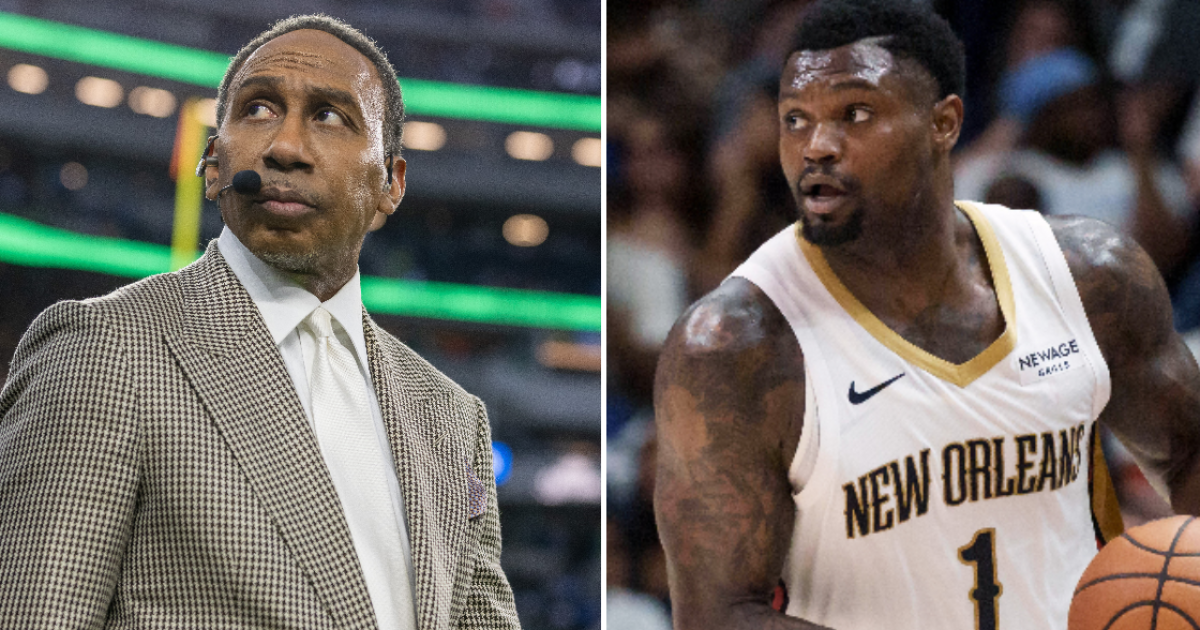
Stephen A. Smith called Zion Williamson a ‘food addict,’ is now feuding with the Pelicans on social

Sánchez defies Trump in political gamble as Madrid say no to war

Florida High School Football Rankings: Top 25 teams – Oct. 21

Cleary's 21 help Le Moyne down Central Connecticut State 69-64 in OT

How old is Bo Nix? What to know about Oregon quarterback ahead of 2024 NFL Draft

99th annual Pony Swim held in Virginia

Indiana Members Credit Union announced as new anchor tenant at Bottleworks District
Sánchez defies Trump in political gamble as Madrid say no to war

Satellite images show Iran school strike hit more buildings than earlier reported

US submarine sinks Iranian warship by torpedo in a first since World War II

Which oil and gas facilities in the Gulf have been attacked?

Mojtaba Khamenei, son of former supreme leader, tipped to become Iran’s next head of state
-

 World7 days ago
Exclusive: DeepSeek withholds latest AI model from US chipmakers including Nvidia, sources say
-

 Massachusetts1 week ago
Mother and daughter injured in Taunton house explosion
-

 Wisconsin3 days ago
Setting sail on iceboats across a frozen lake in Wisconsin
-

 Denver, CO1 week ago
10 acres charred, 5 injured in Thornton grass fire, evacuation orders lifted
-

 Maryland4 days ago
AM showers Sunday in Maryland
-

 Louisiana1 week ago
Wildfire near Gum Swamp Road in Livingston Parish now under control; more than 200 acres burned
-

 Florida4 days ago
Florida man rescued after being stuck in shoulder-deep mud for days
-

 Oregon5 days ago
2026 OSAA Oregon Wrestling State Championship Results And Brackets – FloWrestling