Entertainment
'John Malkovich isn't me': John Malkovich remembers 'Being John Malkovich'


Even now, 25 years later, the premise is outrageous, odd and quite clever. On floor 7½ of an antiquated New York City office building, hidden behind a filing cabinet, is a small portal that leads into the head of actor John Malkovich.
There was something random — and ingenious — in the choice of Malkovich, by then a two-time Oscar nominee and a widely respected performer of stage and screen who did not have a signature role: He was the kind of actor people knew they knew but could not always quite place.
Yet “Being John Malkovich” is much more than an inside-out and upside-down high-concept gimmick. The film’s inventive visual style made the surreal seem mundane and everyday. While it is very funny, it is also rife with melancholy, a yearning for emotional connection and a sense that people are often unknowable, most of all to themselves. The film is less about the flash of celebrity and more about a deeper sense of self-discovery and personal identity.

The 1999 Project
All year we’ll be marking the 25th anniversary of pop culture milestones that remade the world as we knew it then and created the world we live in now. Welcome to The 1999 Project, from the Los Angeles Times.
Screenwriter Charlie Kaufman had been a television comedy writer on shows such as “Get a Life” and “The Dana Carvey Show,” with “Being John Malkovich” his first produced film script. Director Spike Jonze, who had some notoriety for his music videos and commercials, also made his feature film debut with “Malkovich.”
The cast included John Cusack as a down-on-his luck puppeteer who discovers the portal, Cameron Diaz as his patient but dissatisfied girlfriend and Catherine Keener as the cynical colleague looking to take advantage of the situation. Orson Bean, Mary Kay Place and Charlie Sheen all have supporting roles; Brad Pitt, Sean Penn and Winona Ryder have brief cameos; and director David Fincher makes an uncredited appearance as the national arts editor of the Los Angeles Times. And, of course, John Malkovich plays the role of John Malkovich.
The film would be nominated for three Academy Awards: Jonze for director, Kaufman for original screenplay and Keener for supporting actress. In the years since, Kaufman has won an Oscar for the screenplay to “Eternal Sunshine of the Spotless Mind” and launched himself as a director. Jonze has continued his commercial work while also directing three feature films and the documentary “Beastie Boys Story.” Jonze also won an Oscar for the screenplay to his 2013 film “Her.”
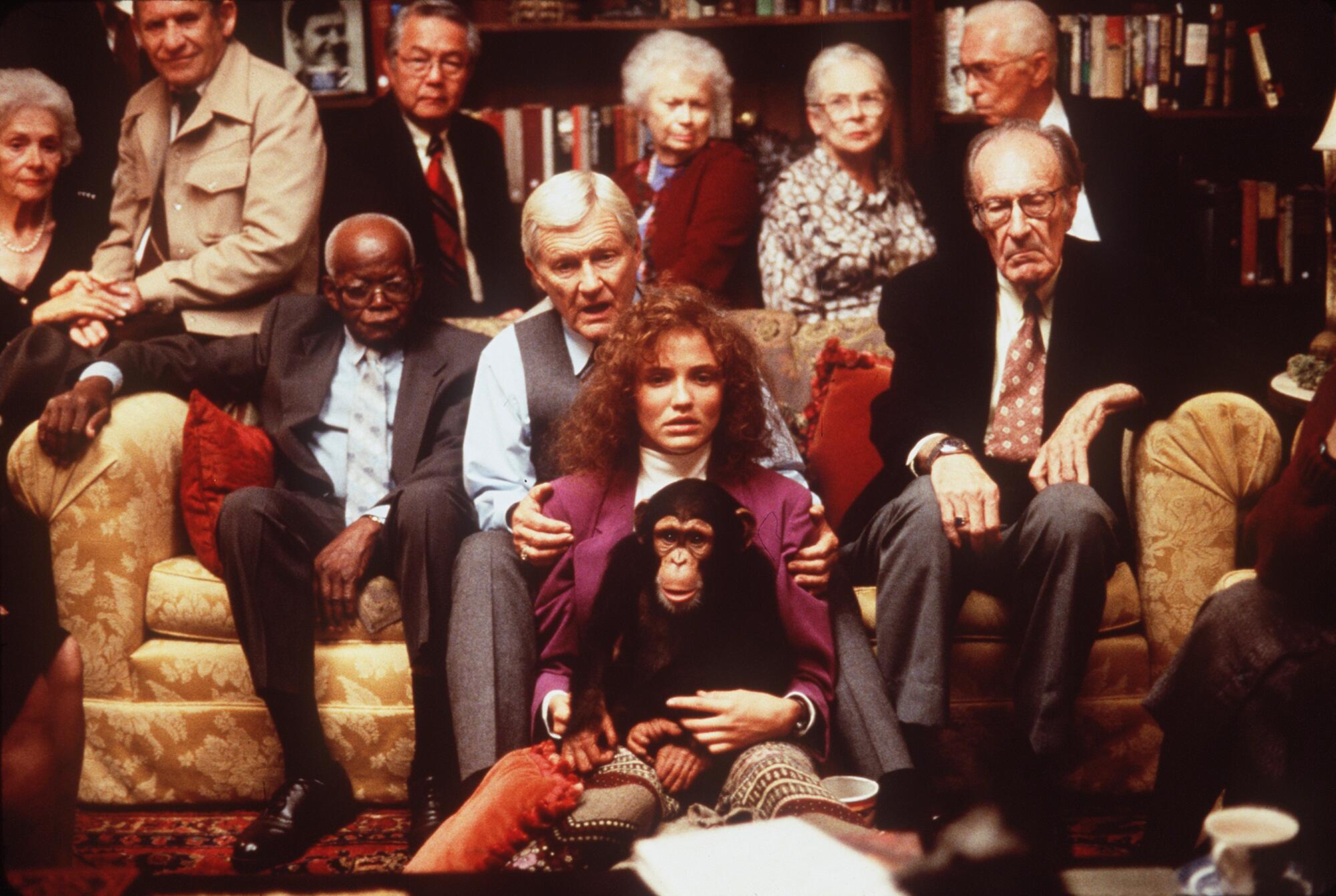
Orson Bean and Cameron Diaz, center, in “Being John Malkovich.”
(Melissa Moseley / Universal Pictures)
In one of the bonus features on the 2012 Criterion Collection edition of the film Jonze said, “Me and Charlie always think of Malkovich as the guy who made this all possible, not just the movie but everything that’s come after that. … Not only did he not have to do this movie, it was almost insane for him to do this movie.”
For the film’s anniversary, I reached out to Jonze, Kaufman and Malkovich for their memories of this pivotal project. Through a representative, Jonze declined to comment. Kaufman’s reps never responded. But Malkovich, in Bulgaria to direct a stage production of George Bernard Shaw’s 1894 play “Arms and the Man,” got on a Zoom call to talk about the film.
You have often said that from the very beginning you knew that by having your name in the title, you would have to live with this movie more than anybody else. And 25 years on that seems to be completely true.
It was such an odd idea, I was aware that it would exist in kind of another dimension. And that’s been the case. Although my first reaction to having read this script was wanting to direct it and make it about someone else. But Charlie Kaufman wasn’t interested in that. So that didn’t happen for some years. And as I’ve said before, whenever I happened to be in L.A., which hasn’t been very often in my life or career, people would say, “Why aren’t you doing this? Why aren’t you doing that film?” They would just wander by in a restaurant, like it was my fault or something. It never occurred to me it would actually get made.
Probably a few years passed after I read it, then I got a call from Francis Coppola asking me if I’d go meet this person called Spike Jonze up in Paris. And I said, “Yeah, sure, fine.” And then Spike asked me to be in it, which no one had ever really officially asked me to do, and which I had doubts about. But I said, “Well, let’s see what kind of cast we get.” And then not long after, he got Johnny Cusack on board and Cameron and Keener, and then I said, “OK, well, let’s do it.”

Director Spike Jonze, left, and John Malkovich photographed at the Royal Hotel in New York City for Times coverage of the film’s release.
(Jim Cooper / For The Times)
When you had that initial response to direct it but to change the character, what was it that appealed to you?
I loved the script. To me it wasn’t really important — it’s a great title in that it’s very unexpected, it’s very meta, it’s a memorable title name because it’s such an unmemorable name. But really I just love the world Charlie created. I didn’t in any way have a reaction to it as far as it applied to quote “me,” whatever that is. It’s never been a big topic of interest for me. It’s not something I ever reflected on much before or after. But I loved Charlie’s writing, so that was my initial interest in it.
Both Charlie and then Spike were so insistent that it be you. Did you ever ask the question, “Why me?”
No. If for no other reason, because I’m really not very curious about myself or my alleged self. Charlie said a very funny thing. It was the first thing he ever said to me. I think we had a breakfast with Spike, and we’d kind of agreed to proceed, and the deal was made and all that stuff. And Charlie, he didn’t say anything at breakfast, and then as we were leaving, [he] said to me, “I just want you to know I’m a big fan.” And I said, “We don’t have to do that. I read the script, thanks.” And that was really it.
But I did know I was kind of crossing a line, because although I was an actor and I had done things that had gotten some degree of attention, I was always really left alone. And I liked that nobody bothered me if I went off to do a play here or there, or direct a play in Bulgaria, or do whatever it is I did. I was allowed a lot of leeway and I always really appreciated that. And I was worried that wouldn’t be the case. In fact, it’s still the case, but it did change a kind of public perception. I thought it was a kind of iffy call. It could have turned out very badly, although I thought the script was a wonderful, pretty near visionary piece of writing, and I thought Spike did a fantastic job directing it.
How did you prepare for the movie? Did you approach this role and the character of John Malkovich the way you would have any other role?
That’s an interesting question. The thing is, there wasn’t that much to search for, because the world is so specific that Charlie created. I remember one day when I did something and Spike Jonze said to me, “John Malkovich wouldn’t do it that way.” And I kind of chuckled, but I said, “Oh, OK. How would he do it?” And I really didn’t think that much of it because anything I do isn’t me. But John Malkovich isn’t me either, any more or less than anything else isn’t me. So if somebody says, “That’s not the way John Malkovich would do it,” maybe they know better than I do.

John Cusack and Catherine Keener in “Being John Malkovich.”
(Melissa Moseley / Universal Pictures)
I wanted to ask you specifically about the scene with “The Dance of Despair and Desperation.” When you unravel it, is it an astonishing moment of performance in that you are playing the character of John Malkovich with a character played by John Cusack supposedly inside of you playing John Malkovich like a puppet. How did you approach that as a physical piece of work?
We had to rehearse a lot, and we had a choreographer and all that. And that was quite involved, I remember. But I never thought about it. I just kind of took Spike’s word for it. Meaning, I’ve done a lot of films and directed one and directed probably a number of them unofficially and written some unofficially. But I think film directing is very, very difficult. And I think it’s a huge weight on directors. And I’m very happy to do what they say. I feel that my job is to help them arrive at, discover, sustain and express a vision of something. I’ve always said from the very beginning of the first film I was in, when you’re in a film, you’re a character in someone else’s dream. It’s not your dream just because it’s called “Being John Malkovich.” It’s Charlie’s dream and Spike’s dream and the rest of us participate. And so my approach to that would be the exact same as my approach to any other film role except that this one has a uniqueness and a quality that’s rare, that’s quite singular.
It was just such an extreme act of generosity on your part toward these two essentially unknown guys, Spike and Charlie, making their first movie. You gave so completely of yourself, of your name, your persona, your celebrity, in so many ways. Did you see it that way?
No. I saw it as just another movie. There was something I liked about Spike. I thought he was hilarious. I always say the first meeting I had with him, I talked to him for an hour or so in Paris at a hotel restaurant and after an hour, I said, “Sorry, are you American?” I thought he was Czech because he has that kind of surfer lingo, which I couldn’t really grasp. And I thought it was a kind of foreign language. I was absolutely convinced that the screenplay was a very unique voice, a real voice. And I had this feeling Spike would put together an excellent cast. I trusted a lot his vision, his sense of humor. But to me, that’s kind of what I do.
This happened to have my name attached in some way, but for me, it’s the same if it was Wolfgang Petersen or Raul Ruiz or Spielberg or Schlöndorff. Making a film is hard. And your job really is to hope to fulfill that vision. And for me, that’s not really a burden. It’s an expectation and it’s a requirement. And if you can’t do that, which sometimes happens, then it’s a failure, at least as far as I’m concerned, on my part anyway.
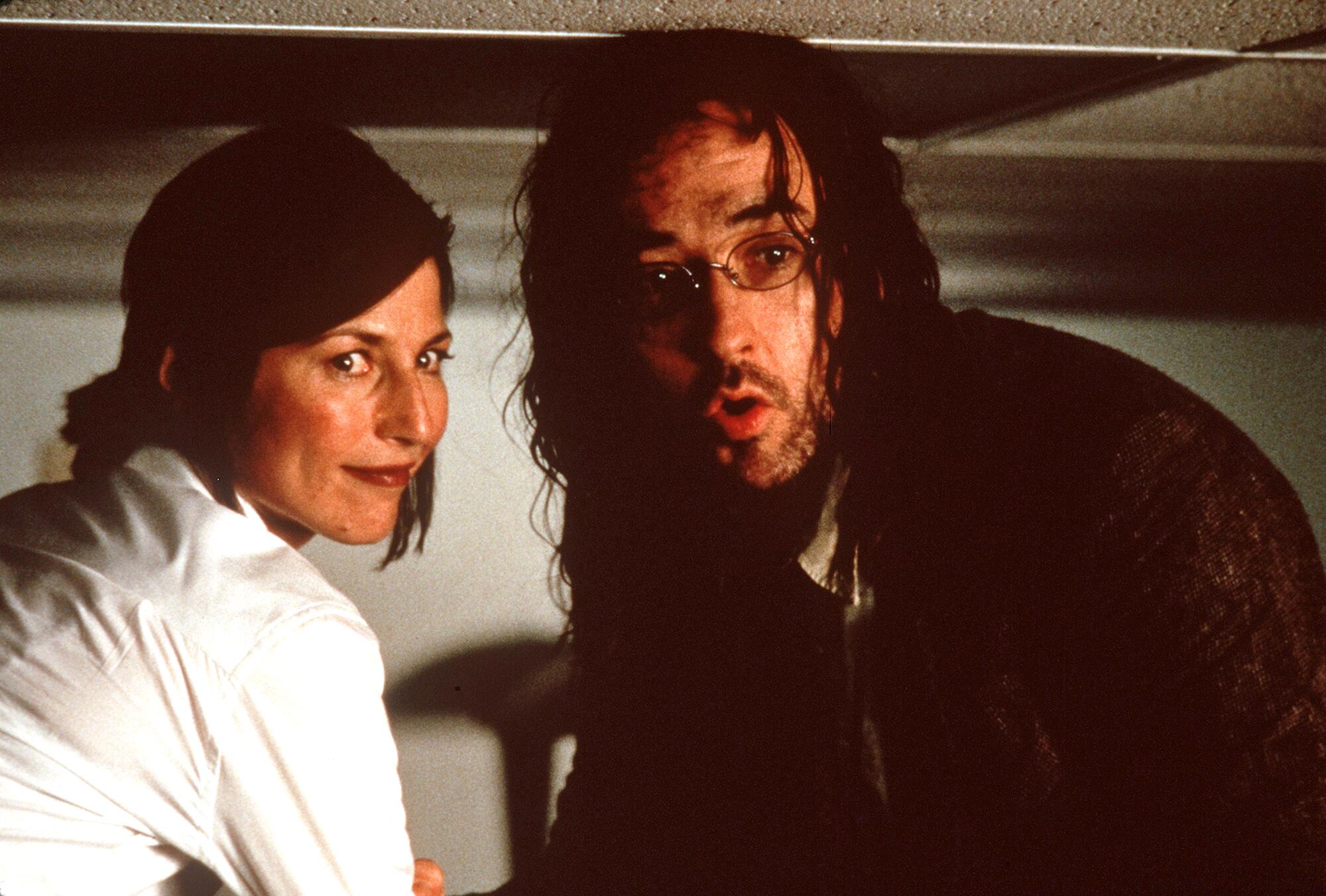
Co-workers Maxine (Catherine Keener) and Craig (John Cusack) make a little extra cash moonlighting out of the office in “Being John Malkovich.”
(Melissa Moseley / Universal Pictures)
Have your feelings about the film and your decision simply to do it, have they changed at all over the years?
Not really. When I saw it — I only saw it once, in Venice at the film festival, and when it was revealed that Charlie Sheen was my best friend, just the idea of that, it was a rolling laugh, kind of 15 minutes long. And then when I tell him I got involved with this coven of lesbian witches, he responds, “Give me their number when you’re through with them,” in a way that’s a line only Charlie Sheen could do. That’s what he does. And you trust him to take care of that for you. And so I thought then, “OK, it’s fine. It’s what it’s set out to be.”
On the extras for the Criterion Collection disc, there’s an interview where you say, “It’s not really about celebrity and it’s not really about me.” So for you, what is the movie about?
I always think back to this, there was some talk about how they were a bit unsatisfied with the ending, and I think it was a call with Charlie, with Spike and with Vince Landay, the producer. And maybe Johnny was there too, Cusack. And it made me think of the phrase, I’ve still never used it, in a piece of writing or play or something I’ve rewritten or written or polished or whatever, the phrase came to me, “What you think is yours, isn’t.” And I think that’s very lifelike, and I think it’s very representative of that film. What you think is yours, isn’t. “Being John Malkovich” does not belong to me. It’s its own thing. And if it belongs to anybody, it much more belongs to Charlie and Spike.
But it’s just a kind of way of looking at the world and how quickly it all passes. Your work goes out into the world and it belongs to the people who watch it, whether they accept it, whether it’s beloved by them or detested by them or rejected by them. You put it out into the world and it isn’t yours anymore. And I think it’s true of the film, my work, my name.
You know, you do all these things. I worked a lot. I did a number of things that got some degree of notoriety or praise and many others that didn’t. But in the end, it’s some things they say I did. And for me, the work was always the same. It was the work. It’s a privilege. It’s a lovely thing to get to do with your life, but it doesn’t belong to me. It belongs to the people who watch it and who want to watch it and want to regard it. And many of the things you do, people don’t want to watch or don’t regard it and don’t care, but that’s OK to me. So that’s how I look at it.

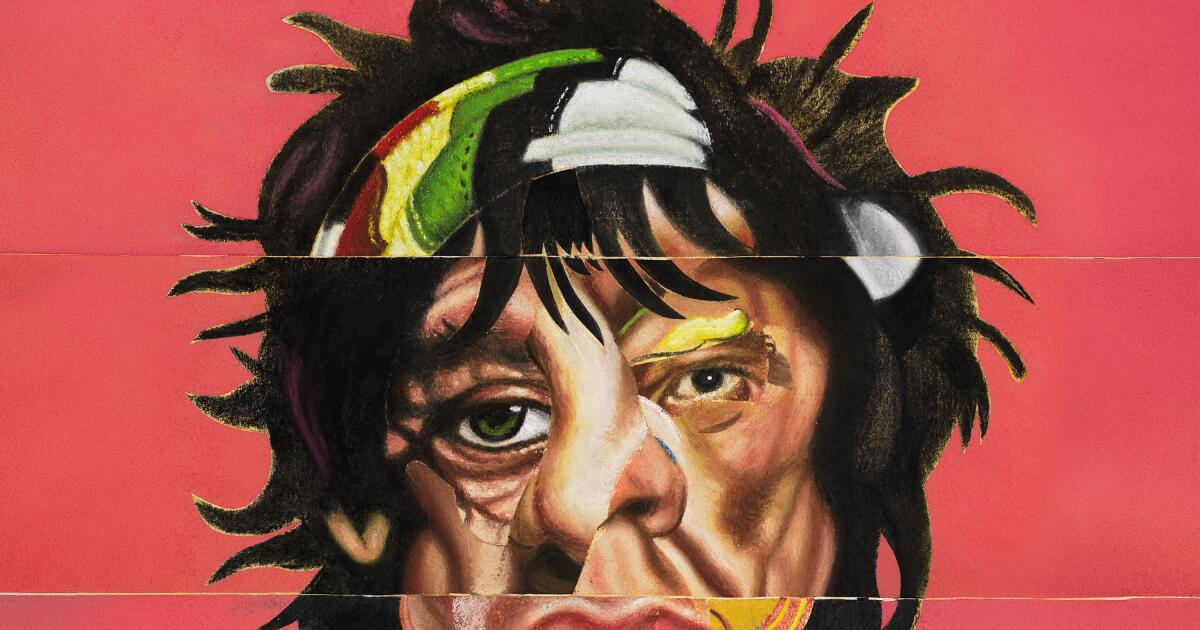
Here’s a terrible-seeming idea: The Rolling Stones should get started on their next album.
Like, now.
After taking nearly two decades to release 2023’s “Hackney Diamonds” — the band’s first set of original material since “A Bigger Bang” in 2005 — the Stones are back this week with a follow-up, “Foreign Tongues,” that took them less than 36 months to get out.
And it’s the better record in every way.
In the old days, of course, two and a half years was all they needed to make “Beggars Banquet,” “Let It Bleed” and “Sticky Fingers.” So let’s not get too carried away by the fact Mick Jagger, Keith Richards and Ronnie Wood are working as fast as they are in their late 70s and early 80s.
Yet to listen to the brisk and sportive “Foreign Tongues” is to hear a band clearly going on instinct rather than overthinking the music à la any number of veteran acts in legacy-maintenance mode. I don’t know if the result is the Stones’ best since 1978’s “Some Girls,” but it’s definitely the funniest, which is actually the more impressive achievement.
“Wake up in the morning and you wanna make me puke,” Jagger sneers in the punky “Hit Me in the Head” — exactly the kind of lyric you’d hope to hear from a band whose only possible reason for still being in the game is to have a gas-gas-gas.
Like “Hackney Diamonds” — and, for that matter, like Paul McCartney’s “The Boys of Dungeon Lane” (to name one recent overthinking-veteran LP) — “Foreign Tongues” was produced by 35-year-old Andrew Watt, who’s made a career of helping boomer icons put a little shine on their late-in-life efforts. And he’s helped the Stones convene an appealingly motley crew of collaborators here, including McCartney (who plays bass on “Covered in You”), the Cure’s Robert Smith (who contributes guitar to “Divine Intervention”), Steve Winwood (who plays piano and organ throughout the album) and Bruno Mars (who’s credited with, uh, cowbell in “Never Wanna Lose You”).
You also get a welcome appearance from the late Charlie Watts in a hard-thwacking performance recorded before his death in 2021. (Steve Jordan otherwise keeps time.)
But none of the stunt casting feels like the point of the album, which instead simply doles out a dozen tunes in the Stones’ various idioms — the bluesy stomp, the country-ish lope, the sleazy disco jam — plus a couple of covers in just over an hour. It’s frisky and lighthearted, even when Jagger is lamenting what he sees as the sorry state of his beloved America in “Ringing Hollow” and when Richards is croaking about love having put him on his knees in “Some of Us.”
And when they go goblin mode, they really lean in: “Mr. Charm” is a demented soul-rock rave-up about how boring money is — OK, Mick — in which Jagger drops a diss of the “mad mogul Mr. Musk” into a verse laying out the delights of staying home and doing anagrams.
In “Divine Intervention,” Jagger offers a colorful travelogue of trips through New York and Los Angeles — “I kept moving on to Silver Lake / To play guitar with a brand new friend of mine” — while Richards and Wood get their guitars slip-sliding all over the place. “Jealous Lover” is gorgeously trashy: a horny little strut that sounds like “Dirty Mind”-era Prince doing “Waiting on a Friend.” (Legitimately loony Mick vocal here.)
For God knows what reason, the Stones offer up a faithful rendition of Amy Winehouse’s “You Know I’m No Good” with Jagger on harmonica. And the album ends with a very ragged take on Chuck Berry’s “Beautiful Delilah,” obviously meant to remind you of how the two lifers at the core of the Stones came together more than half a century ago.
The memory is ancient; the thrill, somehow, is alive.

Comedy is a matter of taste and preference — it’s a deeply personal thing. Which makes it hard for a critic to give a blanket assessment of a specific kind of comedy, especially if it didn’t work for them, but clearly worked for others (the laughter or lack thereof is the indication). “It’s not funny,” the critic says, “well I had fun,” someone else can reply, and then we’re at an impasse.
Which is the dilemma one finds oneself in with “Gail Daughtry and the Celebrity Sex Pass,” a very strange and shaggy Hollywood satire of sorts from David Wain and The State crew, still riding the goodwill of “Wet Hot American Summer” after all these years. If only this were as funny.
“Gail Daughtry” lives in the same world as that iconic summer camp spoof, as well as Wain’s 2014 rom-com parody, “They Came Together,” in that he’s playing with genre convention and expectation, taking well-known norms to the goofiest extremes. But those films hewed more closely to their respective genres, while “Gail Daughtry” is totally scattered, combining crime and spy movie tropes with a fish-out-of-water comedy and a Hollywood send-up. It has far too many ideas for its own good, and yet no ideas that are good enough to sustain this bizarre curio of a comedy.
What’s ironic is that one of the problems driving this wacky plot forward is the characters have to come up with a movie idea to pitch to star Jon Hamm (playing himself of course), leading them to do some pretty inane and shockingly violent things. It’s almost as if Wain and co-writer and co-star Ken Marino had no idea for a movie, then baked their search for an idea into their script, and then turned it into a madcap adventure about a woman on a quest to have sex with Jon Hamm. What an ouroboros!
OK, about the sex quest. Gail Daughtry (Zoey Deutch) is a chipper hairdresser from Kansas born without the part of the brain that recognizes sarcasm or irony. She’s a cheerful, Pollyanna-ish naïf whose literal-mindedness is almost as extreme as Amelia Bedelia. Her childhood sweetheart and fiancé Tom (Michael Cassidy) is the same. She tells him about the concept of the “celebrity sex pass” as a joke, and he promptly boinks Jennifer Aniston at local book reading.
(Nitpicky aside: why didn’t they use the common nomenclature “hall pass”? Is it copyrighted? “Celebrity sex pass” is clunky and sounds like an off-brand version of the well-known slang.)
That infidelity crisis is how Gail ends up in Los Angeles determined to bang Hamm, collecting a motley crew of similarly clueless helpers along the way. There’s her best friend Otto (Miles Guttierez-Riley), her salon bestie; Caleb (Ben Wang), an overly ambitious intern at Creative Artists Agency; Vince (Marino), a screenwriter turned paparazzo with a heart of gold; and John Slattery, as John Slattery, down on his luck. An accidental briefcase swap has a pair of thugs on their tail, in a forgettable and underdeveloped B-plot.
With a parade of celebrity cameos and collaborators in bit parts, “Gail Daughtry” at times feels like an excuse for Wain and co. to make something at home with all of their friends. Fair enough, it’s great to see all these people employed, but what about what we’re watching? Behold, the Los Angeles of the middle-aged working comedian: the CAA lobby, the Chateau Marmont, Griffith Park, etc. And the plot is as half-baked as the pitch they present to Hamm.
What’s actually interesting about this comedy is the distinct streak of despair and even resentment that reveals itself at the climax, a feeling of helplessness and uselessness. Everyone’s been striving to make it in this crazy town: the intern, the actor, the paparazzo. But not even Jon Hamm can help them get a movie made; even he feels inherently powerless. There’s an unexplored anxiety vibrating there that feels the most thematically fruitful, about what it means, some 25 years after bursting onto the scene with a generation-defining comedy, about maintaining the work, the drive, a sense of purpose, after years of strikes, and in the face of a constricting industry. Do they still have it? Is the dream still alive?
Maybe that’s why Wain and Marino need to invent a dreamer stand-in with Gail, a guileless eternal optimist who knows nothing of the craven Los Angeles and accepts everything at face value (though she is filled with a scary bit of rage too). She might behave like she has a head injury, but she’s going to achieve her goal, dammit. “Gail Daughtry and the Celebrity Sex Pass” might not be as funny as “Wet Hot American Summer” (for this critic), but reframed, it serves as a fascinating status update on life in La La Land for this troupe.
‘Gail Daughtry and the Celebrity Sex Pass’
2 stars (out of 4)
MPA rating: R (for sexual content, violence/bloody images and language)
Running time: 1:33
How to watch: In theaters July 10
Entertainment
Emily Ratajkowski’s viral essay on sex life as a single mom scores her a seven-figure book deal

Emily Ratajkowski’s viral essay detailing her sex life as a single mom just landed her a seven-figure book deal.
According to Page Six, the model’s essay in the Cut had publishers champing at the bit in a 12-way bidding war that culminated in the hefty pay day. Editor Helen Rouner at Penguin Press — who also edited Lauren Christensen’s memoir “Firstborn” and Michael W. Clune’s novel “Pan” — reportedly landed the deal.
Penguin Press did not immediately respond to The Times’ request for comment Friday.
Publishers Marketplace announced the forthcoming memoir, describing it as “an examination of modern female identity through the story of the author’s own efforts as a newly single mother in New York City to discover what really constitutes a good life for a woman.”
The essay, which dropped a month ago and quickly broke the internet, drops the veil on EmRata’s sexual adventures (or maybe misadventures) since she and her former husband, Sebastian Bear-McClard, split in 2022.
“It was a violent transition into a new reality of screaming baby on my aching tit and ring on my swollen finger,” Ratajkowski writes of new motherhood. “And then, in a time period that felt both instant and excruciatingly slow, my marriage collapsed. Six months after my son was born, my husband and I stopped having sex. Less than a year later, we separated.”
In the missive, the model interrogates her sexuality — is she a Madonna or a whore? — while untangling bigger questions around gender, power and self-actualization. If Carrie Bradshaw wrote about “Sex and the City,” then Ratajkowski is writing about sex, the city and single motherhood. And naturally, her fleeting paramours have vague monikers: “Vegan Graffiti Artist,” “Spanish Gen-Zer” and “Son of a Billionaire.”
“And then there was the Elder Millennial: obsessed with dental hygiene, psychedelics, and dirty talk,” she writes. “He had approached the subject coyly at first, like it was something he was kind of embarrassed about — the way a kid will test you to see if you’ll talk to them about their dorky obsession of the moment. Do you like Godzilla? What about Star Wars?”
Would-be sleuths with Ratajkowski’s essay and a gossip rag handy will have their work cut out for them.
This will be Ratajkowski’s second book. The first, “My Body,” dropped in 2021 and was a bestselling collection of essays exploring gender, power dynamics, sexuality and the commodification of female beauty in the modeling and entertainment industries.
Ratajkowski’s foray into the spotlight came more than a decade ago when Robin Thicke’s controversial “Blurred Lines” music video made the model an overnight star. She was cast in David Fincher’s adaptation of “Gone Girl,” which hit theaters the following year, and catapulted to top fashion runways — Marc Jacobs, Versace, Victoria’s Secret and Dolce & Gabbana, to name a few. She she’s been romantically linked to Harry Styles, Eric Andre, Shaboozey, Brad Pitt and Pete Davidson, among others.
In 2023, she moonlighted as the host of the “High Low With EmRata” podcast, where she interviewed sex workers, investigated ethical nonmonogamy and pondered the etymology of the word “toxic.” The same year, she told The Times that she was coming into herself post-divorce, “Being able to assert what I want — that feels like it just started: My life as a creator and not as a muse.”
-
 Lifestyle14 minutes ago
Shy on the dance floor? Virtual reality ‘partners’ aim to help you find your groove
-

 Technology26 minutes ago
Are you filthy enough for a $700 portable shower?
-

 World28 minutes ago
Former British MP and reality TV star Ann Widdecombe found dead; man arrested for murder
-

 Politics34 minutes ago
Trump takes unusual step, lets bipartisan housing bill become law unsigned amid SAVE pressure campaign
-

 Health41 minutes ago
Eating common dairy food every day may slow biological aging, study suggests
-

 Sports44 minutes ago
CM Punk to defend Undisputed WWE Championship against Cody Rhodes at SummerSlam
-

 Technology49 minutes ago
Would you pay $8,000 for a robot to fold laundry?
-
 Business56 minutes ago
Legendary Television City may be be sold in further blow to Hollywood

