Entertainment
‘Dora the Explorer’ turns 25 this year. Her legacy transcends generations.

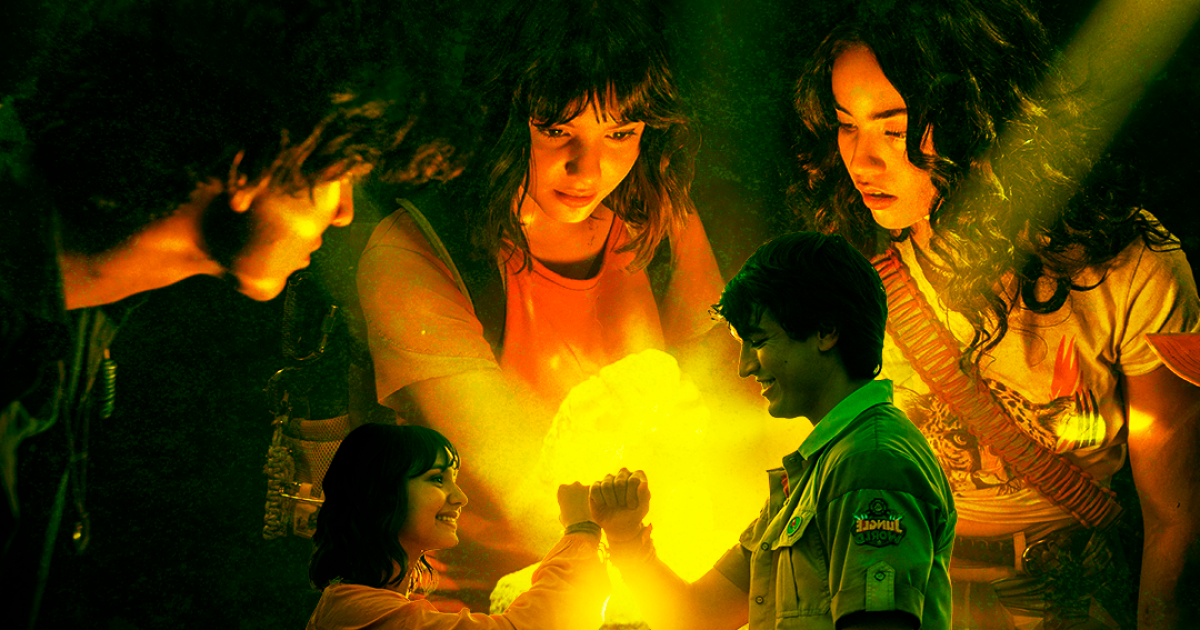
Can you say… Feliz Cumpleaños?
Over the past 25 years, the world has grown to love one of Nickelodeon’s most recognizable characters, Dora Márquez. Whether for her conspicuous bowl cut and pink tee, or her singing anthropomorphic backpack, Dora the Explorer has sparked joy in children for generations.
But what happens when that adventurous girl loses the items that have guided and defined her for so long?
Self-discovery is the end goal of Dora’s latest quest in the new live-action film, “Dora and the Search for Sol Dorado,” which debuted July 2 on Paramount+. The film marks the start of a new journey for a girl who has long existed in the minds of viewers as the adventurous 7-year-old protagonist of the original 2000 animated series “Dora the Explorer” — and later in the short-lived 2014 sequel, “Dora and Friends: Into the City!”
Along with her animal-loving cousin Diego (Jacob Rodriguez) and friends, Dora (Samantha Lorraine) must rediscover who she is while trekking through the treacherous Amazonian jungle in search of Sol Dorado: an ancient treasure that grants one magical wish to whoever locates it. Yet her plans go awry when she finds herself losing one of her most valuable tools.
Although most adults would not rank Dora in the same company as the gritty lead adventurers of “Indiana Jones” or “Tomb Raider,” the film features death-defying scenes that deserve a second look — thanks to the use of real fire and critter-riddled caves in the middle of the Colombian jungle.
Authenticity was key for director Alberto Belli (“The Naughty Nine”), who proposed to studio executives that Dora explore her Andean heritage, including the use of the indigenous language of Quechua, which is spoken by approximately 10 million people in South America.
“This is the first time that we hear Dora speaking Quechua, and we went through great lengths to make sure that the pronunciation was right,” says Belli, who also consulted with Incan culture experts on the Andean kinship principle of “ayllu,” along with the use of “quipu,” a recordkeeping device of knotted cords — both elements which are included in the storyline.
“We’ve seen figures like ‘Indiana Jones’ exploring other cultures, but Dora is the only mainstream [adventurer] exploring her own culture,” says Belli. “And she’s celebrating and interested in the history more than the treasure.”
(PABLO ARELLANO SPATARO/NICKELODEON/PARAMOUNT+)
Dora’s innate curiosity is part of what cultivated her popularity among young children since Nickelodeon launched the series. Who can forget the pip-squeak who broke the fourth wall to reel in preschool audiences with problem-solving questions? Even if its repetitive verbiage drove parents a little mad? (You try saying “Swiper, no swiping!” three times fast!)
But for creators Chris Gifford and Valerie Walsh Valdes, the idea of Dora, as the world has come to love, was not so straightforward. Their early brainstorm sessions, along with Eric Weiner, first sprung up concepts of a little boy bunny who would follow a map toward a final destination — tagging along with him was a red-haired girl named Nina and a pocket-sized mouse named Boots.
Nickelodeon’s executive producer Brown Johnson— creator of the network’s preschool block, Nick Jr. — pitched the idea of the main character being Latina after attending an industry conference that underscored the dearth representation of Latinos in the media. According to the 2000 U.S. census, Latino communities were the nation’s fastest growing ethnic group at the time — and 20% of the kindergarten population across eight states, including California, identified as Latino.
The call for Latino characters was so resounding at the time that it caused some advocacy organizations to launch a weeklong boycott in 1999 to protest the dearth of Latino representation — Latinos made up fewer than 2% of TV characters at that time, despite making up 11% of the population in 1999. “ So we said, okay, how do we do it?” says Gifford.
“One thing that we picked up on very early was using the language in a way to solve problems, almost as a superpower,” says Gifford. “I think that was a huge part of the success of Dora.”
Gifford calls Dora’s use of Spanish a “game changer,” and that certainly seems to be the case — in the show, magical passageways remain locked unless the viewer utters the occasional Spanish phrase or word. At the end of every successful mission, Dora belts out her victorious tune: “We did it, lo hicimos!”
Released on August 14, 2000, the first episode of “Dora the Explorer” moved forward in spite of an English-only movement bubbling up in California politics a few years prior; Proposition 227 passed in 1998 by a large margin, effectively curtailing bilingual education in the state.

(PABLO ARELLANO SPATARO/NICKELODEON/PARAMOUNT+)
“It was not the time that [someone] would think to [make Dora a bilingual character], but of course it was exactly the right time for it to happen,” says Gifford.
The release of “Dora the Explorer” could not be more timely. While political angst pushed against the use of Spanish in the classroom, the country was simultaneously experiencing a “Latin Boom,” a pop culture movement propelled by Hispanic musical acts like Ricky Martin and Enrique Iglesias, who broke ground in the U.S. mainstream with bilingual hit singles like the famed “Livin’ la Vida Loca” and “Bailamos,” respectively. At the same time, actors like Rosie Perez, Salma Hayek and Jennifer Lopez were also making great strides for Latinas in film.
“There was this awareness [that] the Latino talent we have in this country [was] all coming to the forefront,” said Walsh Valdes. “The zeitgeist was there for us.”
But Dora’s appeal did not entirely hinge on her being a Latina character. In fact, she was designed to be ethnically ambiguous for that reason, suggested Carlos Cortés, professor emeritus in history at UC Riverside, who consulted the creative team. “Let’s let everybody be a part of this,” says Walsh Valdes on the choice to write Dora as pan-Latina.
Instead, the focus of the show remained on the missions; whether it was returning a lost baby penguin to the South Pole, or leading aliens back to their purple planet. In its first year, “Dora the Explorer” averaged 1.1 million viewers ages 2 to 5 and 2 million total viewers, according to Nielsen Co. The original show stretched on for almost two decades before closing out on Aug. 9, 2019.

“We saw such excitement from [little kids feeling] empowered by this girl who can go to a place like the city of lost toys… and little kids who can’t tie their own shoes can feel like they’re helping her,” says Gifford.
The Dora world has also expanded into a tween-coded sequel, “Dora and Friends: Into the City!” and the spin-off “Go, Diego, Go!” — the environmental protection and animal rescue show starring Dora’s cousin Diego. Last year, Dora got a reboot on Nickelodeon’s parent company Paramount+, which was a full circle move for Kathleen Herles, who voiced Dora in the original series.
Now, Herles takes on the motherly role of “Mami” in the 2024 animated series, now available to stream on Paramount+. “Talk about going on another adventure,” says Herles in a video call.
Herles still remembers panicking after her audition back in 1998. Gifford, who was in the room, asked to speak to Herles’ mother, a Peruvian immigrant with slim knowledge of the entertainment biz at the time. “Being Latina, at first I [was] like, ‘Oh my God. She’s going to think I got in trouble,’” says Herles.
The opportunity not only changed the course of Herles’ life financially, but it also opened the door for her to travel the world and reenter the realm of entertainment after a brief career in interior design. Coincidentally, at the time of our call, the 34-year-old voice actor was house hunting in Los Angeles, preparing to move from her native New York City so that she can pursue more career opportunities.
“To me that’s really a testament to [the power of] Dora… because Dora’s an explorer, and she gave me the opportunity to explore,” says Herles.
For 18-year old actress Lorraine, who stars as Dora in “Dora and the Search for Sol Dorado,” this marks her first lead role in any film. She fills big shoes; Isabela Merced, who now stars in HBO’s “The Last of Us,” was cast in the first live-action, standalone 2019 film for the franchise, “Dora and the Lost City of Gold.”
“When it comes to Latino representation, [Dora] was a trailblazer for that,” says Lorraine. “Being able to see a Latina woman in charge and taking the lead? We need more of that to this day.”
The Miami-born actor of Cuban descent, who previously starred in the 2023 Netflix movie “You Are So Not Invited to My Bat Mitzvah,” answers the audio call after having just arrived in New York City, where she entertains the possibility of a Broadway career.
Like many young adults her age, Lorraine grew up enchanted by Dora’s adventures — so much that she admittedly got the same bob haircut. “She’s my role model,” says Lorraine. “Every time we would shoot a scene, I would think to myself, ‘What would little Samantha want to watch?’”
Throughout every Dora series and film, courage is the connective tissue in her story. “Dora and the Search for Sol Dorado” reminds audiences that the true navigational force behind the pint-size girl was always within her.
And with a full rollout of fresh Dora content — including the new third season of the rebooted 2024 series “Dora,” and an hour-long special called “Dora & Diego: Rainforest Rescues” — even 25 years after the Latina explorer first appeared on screen, it’s clear that her legacy is enduring.
“She will always be that girl,” says Lorraine. “[She’s] that girl who yearns for adventure and has that curiosity spark in her, and that thirst for knowledge.”


It’s a good year when we get movies like Remarkably Bright Creatures and The Sheep Detectives at the same time. If there’s one type of emotional draw we’ll never say no to when it comes to the fiction we consume, it’s wholesome. The kind of movies and TV shows that leave you with a bit more hope than you expected. The kind of stories that make you believe that humanity isn’t as broken as it really is.
The Sheep Detectives is essentially tailor-made for anyone who loves a good whodunnit that’s rich with nuance and humor. The clever decision to shift the genre into something both kids and adults could appreciate together is no small feat, and that’s largely where its mass appeal lies. Murder is a heavy subject to deal with—as is grief—yet this story makes sitting with the weight of both a little easier. It could kickstart a number of thoughtful conversations while it simultaneously delivers plenty of laughs along the way.
For adults, there’s also a huge appeal in the casting—the voice actors especially. Anyone who knows me knows that Ted Lasso is the kind of show I’ll always put first, so hearing Brett Goldstein voice a sheep is the kind of A+ decision that’s effortless to appreciate. Hugh Jackman, Nicholas Galitzine, Molly Gordon, Nicholas Braun, Emma Thompson, Julia Louis-Dreyfus, Bryan Cranston, Bella Ramsey, Regina Hall, Rhys Darby, Patrick Stewart, Hong Chau, and the whole cast do an exceptional job as well, making every moment of The Sheep Detectives thoroughly entertaining.

It’s hard to imagine anyone coming out of the movie not thinking it’s one of the best things we’ll watch all year, and that’s a high compliment considering 2026 is full of gems like Project Hail Mary and the upcoming The Odyssey. It’s the exact kind of movie we could all use, but more than anything, the kind of story we could use more of. If there’s any sort of sequel, sign me up. Let’s make it a trilogy. Give us more of the sheep.
The cinematography is gorgeous, the writing is sharp, the performances are thrilling, and the message is a gem worth holding onto. The Sheep Detectives is the kind of feel-good treasure that does an excellent job of reminding us why movies like this will always matter. There’s a thoughtful message about how grief is meant to be shared and why it’s so important to carry those who’ve passed with us. Yes, it’d be convenient to forget our pain by sheer mental willpower, but we aren’t meant to do that. As humans and as animals, I imagine that the good, bad, and ugly are all part of what makes life beautiful, and that’s a comforting message to sit with.
The concept of a whodunnit featuring sheep solving a murder sounds so wild on paper, yet everything about it results in the kind of movie that should signal to Hollywood we want more creative approaches to what’s familiar. There’s a reason The Muppets are so popular, and we shouldn’t be afraid of making things that sound a bit too whimsical on paper. In other words, The Sheep Detectives embraces the whimsy, and it’s exactly what makes it so delightful.
The Sheep Detectives is now streaming on Prime Video.
First Featured Image Credit: ©Amazon MGM Studios
Related
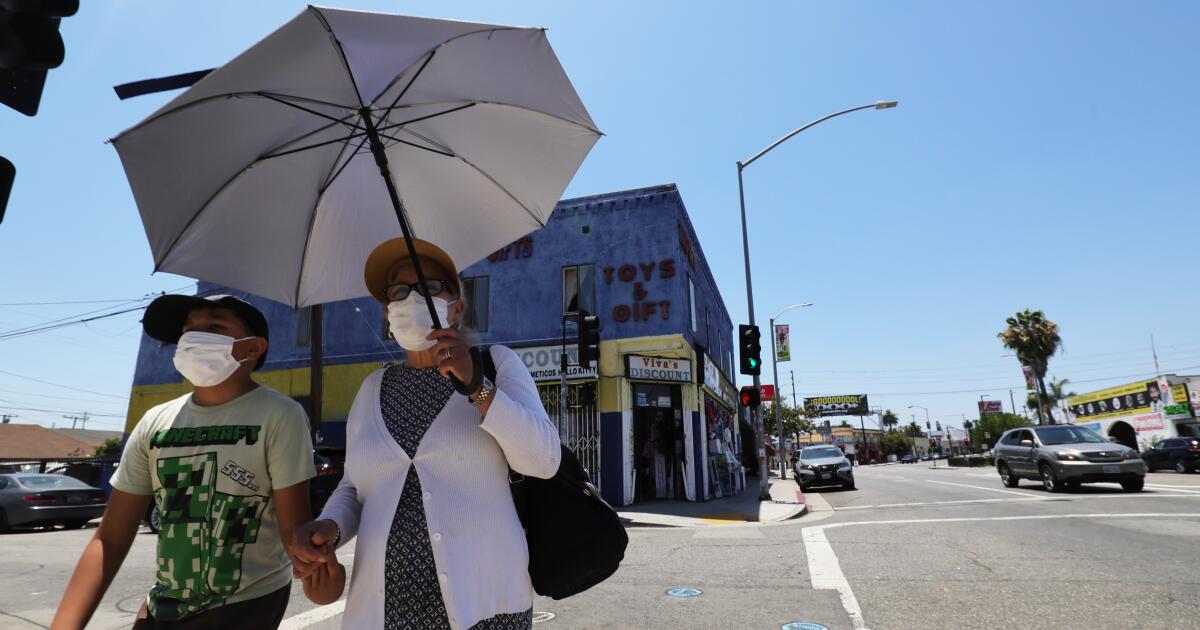
The National Weather Service has issued a heat advisory for this week that includes Los Angeles County and other parts of the Southland, especially in valleys and away from the coast.
Temperatures are expected to rise in the Santa Clarita Valley, the east and west San Fernando Valley, as well as parts of the San Gabriel Valley and northwest L.A. County mountains beginning Tuesday and lasting through Thursday, with warm, seasonably elevated fire weather conditions, according to the National Weather Service.
Forecasts indicate the mercury will reach 90 to 105 degrees in the interior, 80 to 90 degrees in the inland coastal plain — including downtown L.A. — with highs in the 80s and lower 90s in the foothills and canyons of southwest Santa Barbara County.
Rose Schoenfeld, meteorologist with the National Weather Service in Oxnard, said temperatures should be five to 10 degrees above normal for this time of year thanks to a high-pressure system building up over the region.
Though temperatures are expected to drop after Thursday, don’t expect that cooling to last.
“Looking ahead, you might be seeing some outlooks that look pretty favorable, but that heat will linger and redevelop with a pretty impressive heat wave for much of the west, that would be starting next weekend or so,” Schoenfeld said. “It doesn’t seem like we’re out of the woods, even if temperatures start to drop after Thursday.”
The rising mercury coincides a with major marine heat wave across the Pacific Ocean that has the potential to affect weather events around the world, bringing months of warmer oceans, which trigger thunderstorms and extreme heat thousands of miles away.
In recent weeks, record heat waves have baked parts of Europe, with temperatures hitting 104 degrees in some countries. France has reported more than 1,000 heat-related deaths.
In the U.S., record heat has gripped much of the Midwest and East Coast, with temperatures between 110 and 115 degrees in major metropolitan areas, with the National Weather Service issuing an extreme heat warning for much of the Midwest, Mid-Atlantic and Northeast.
The sweltering temperatures have disrupted travel and led to a number of cancellations planned for celebrations over the Fourth of July weekend, including Philadelphia’s Salute to Independence parade. The Great American State Fair, on the National Mall in Washington, was forced to shut down for a few hours.
Amtrak canceled some trains in the Northeast because of excessive heat that could affect the tracks.

The Isolate Thief, 2026.
Directed by John Suits.
Starring Mackenzie Foy, Odeya Rush, Joe Pantoliano, Sean Bean, Jack Kesy, Ty Simpkins, Bryan Martin, and Martin Sensmeier.
SYNOPSIS:
A young woman struggles to conceal the gold she stole from violent outlaws who have seized control of her remote outpost, outwitting them amid a deadly winter where survival becomes a game of cunning and betrayal.

Set at a Union outpost in frigid temperatures, John Suits’ The Isolate Thief transcends what was likely a small budget with a fittingly chilly, oppressive look, and an ensemble that sneaks up on you as not only packed but smartly cast. Front and center is Mackenzie Foy shedding her Twilight and Disney-oriented roots for gritty period-piece work that she handles capably and convincingly, whether it be fending off wolves at the outpost, bandaging a wound, playing a deceitful game for survival, or wielding a firearm.
That’s only the start, though, as Joe Pantoliano shows up as a harmless graverobber only to re-enter the picture as the hostage of a group of Union soldiers led by Sean Bean on a search for gold thought to be discovered by him, which in reality has been hidden away by Mackenzie Foy’s parentless (her father recently died in the war, meaning she is all alone at the outpost), grieving, underestimated caretaker waiting for the right moment to make a break with the gold for San Francisco. The merciless candor with which the Union soldiers are comfortable torturing the drifting graverobber should also be enough to signal that something is off about the group and that our hero probably shouldn’t trust them.

Without giving too much away, Ada (Mackenzie Foy) is up against a violent group of outlaws posing as Union soldiers under orders from Sean Bean’s Fiddler, who will stop at nothing for this gold (accompanied by fellow evildoers played by a range of underappreciated names such as Ty Simpkins and Jack Kesy). In the forest, she also stumbles across a badly injured Emily (Odeya Rush), who has a connection to these outlaws, reduced to being treated as a sex object (they refer to her as an unflattering term for a prostitute, which feels inaccurate given that such a term would imply she has a choice rather than having her agency regularly taken as it is here), so broken by her experiences with them that she advises Ada to give in to their demands as defying them typically results more horrifying outcomes.
Even if the screenplay from Kevin Lefler doesn’t necessarily crackle the way a pressure-cooker story like this should (there’s a lot of The Hateful Eight in the film’s DNA, but without anywhere near that level of character and thematic complexity), the cast elevates the material and provides a quiet intensity simmering underneath the casual conversations and deceptions that we know will eventually blow up in Ada’s face. It’s also a story that isn’t afraid to go to some fairly bleak places and put these women through the wringer as they fight back and try to make it out alive.

What it boils down to is a simplistic cautionary tale of ruthless, misogynistic outlaws underestimating the women they are up against. That is also desperately felt when the women turn the tables in the third act. Effectively accomplishing what it sets out to do. A freezing locale is used for atmospheric advantage (the ground is frozen solid, meaning graves can’t be dug, to give an idea of just how cold it is) while allowing Mackenzie Foy to tap into some new acting tools demonstrating resourcefulness, alongside Sean Bean believably going from calm to terrifying on a dime. The Isolate Thief is a feminist period-piece Western that organically empowers through familiar, albeit competent and engaging, storytelling, culminating in some tense battle-of-the-sexes action.
Flickering Myth Rating – Film: ★ ★ ★ / Movie: ★ ★ ★
Robert Kojder
https://www.youtube.com/watch?v=embed/playlist
-

 New York5 minutes ago
10-Minute Challenge: The Ceiling at Grand Central
-

 Los Angeles, Ca12 minutes ago
1 killed, multiple people injured in Tarzana 4-car crash
-

 Detroit, MI30 minutes ago
Power outage forces flaring at Marathon’s Detroit refinery; portion of Schaefer Road closed
-

 San Francisco, CA42 minutes ago
San Francisco’s fireworks show ends in hours of gridlock involving Waymo cars
-

 Dallas, TX45 minutes ago
FIFA Fan Fest in Dallas paused due to lighting in the area Sunday evening
-

 Miami, FL50 minutes ago
Venezuelan Independence Day: Aid efforts continue after devastating earthquake
-

 Boston, MA57 minutes ago
Timeline: Looking back on Jaylen Brown’s Celtics career – The Boston Globe
-

 Denver, CO60 minutes ago
Denver police arrest suspect in fatal July 4 triple stabbing

