Entertainment
'Despicable Me 4': Mega Minions bring mega bucks to holiday box office


Audiences are going bananas for Universal Pictures’ and Illumination’s “Despicable Me 4.”
The latest installment in the popular family film franchise opened to $27 million Wednesday at the domestic box office, according to estimates from a studio source and measurement firm Comscore. That number is expected to rise to roughly $120 million by the end of the Fourth of July weekend.
Other titles vying for moviegoers’ business this holiday stretch are Disney and Pixar’s “Inside Out 2,” which grossed $7.3 million on Wednesday for a North American cumulative of $496.6 million; Paramount Pictures’ “A Quiet Place: Day One,” which scared up $4.4 million on Wednesday for a North American cumulative of $68.6 million; Sony Pictures’ “Bad Boys: Ride or Die,” which earned $1.2 million on Wednesday for a North American cumulative of $169.1 million; and Warner Bros.’ “Horizon: An American Saga Chapter 1,” which made $1.1 million on Wednesday for a North American cumulative of $14.8 million.
The promising start for “Despicable Me 4” is good news for exhibitors as the 2024 box office appears to be turning a corner thanks to some much-needed breakout hits such as “Bad Boys: Ride or Die” and “Inside Out 2.”
From directing team Chris Renaud and Patrick Delage, “Despicable Me 4” follows the not-so-nefarious Gru (voiced by Steve Carell), his resourceful daughters and his wacky minions on another daring mission to escape from a new nemesis. Rounding out the main voice cast are Kristen Wiig, Miranda Cosgrove, Dana Gaier, Madison Polan, Will Ferrell and Sofía Vergara.
The animated feature received a lackluster 55% rating on review aggregation site Rotten Tomatoes, but pulled an A grade from audiences polled by CinemaScore — proving that fans still can’t get enough of Carell’s curmudgeonly antihero and his babbling yellow entourage.
Film critic Gary Goldstein was not so generous in his review for the Los Angeles Times, writing that “this latest installment of Illumination’s mega-grossing animated franchise jams in a grab-bag of physical and visual gags and anything-goes action, plus a barrage of narrative dead ends, subplots and characters, as it strains to fill its 90 or so minutes of eye-popping, brain-draining mayhem.”
“Despite a few chuckles, some capable voice work and plenty of splashy color,” he adds, “it proves a largely empty and exhausting ride.”
So what keeps audiences coming back to this critically soured saga?
The Times’ Samantha Masunaga has reported that a perfect storm of organic social media phenomena (calling all #Gentleminions), Facebook mom memes and multigenerational nostalgia has kept the franchise relevant and lucrative over the past 14 years. “Despicable Me” debuted at $56.4 million domestically in 2010, “Despicable Me 2” launched at $83.5 million in 2013 and “Despicable Me 3” opened to $72.4 million in 2017, according to Box Office Mojo.
“I’ve been 25 to 28 years in the business. I can’t remember something that created that much excitement for the audiences,” Francisco Schlotterbeck, chief executive of theater chain Maya Cinemas, told The Times.
“The other thing I can compare it to is ‘Toy Story.’”
Coming to theaters Friday is the highly anticipated A24 horror flick “MaXXXine,” followed by the wide releases of Goldove Entertainment’s “Lumina,” Neon’s “Longlegs” and Columbia Pictures’ “Fly Me to the Moon” next weekend.


Heat Advisory
from THU 12:00 PM EDT until THU 8:00 PM EDT, Eastern Montgomery County, Lower Bucks County, Philadelphia County, Delaware County, Eastern Chester County, Gloucester County, Northwestern Burlington County, Camden County, Mercer County, New Castle County
Exploiting racism has been a profitable strategy in Hollywood since the dawn of filmmaking: 111 years ago, D.W. Griffith’s film “The Birth of a Nation” was incredibly popular and influential, while also being so racist that it was considered controversial even in its own day.
The industry saw immediately just how lucrative fear could be. More than a century later, there is always someone in the entertainment media willing to trade in racist tropes for money, as well as an audience ready to receive them.
Two new films, “Citizen Vigilante” and “Run, Fight, Hide: Infidels,” demonstrate that streaming platforms and social media no longer simply distribute controversial content but in fact thrive on content that provokes, polarizes and sustains attention, regardless of the social cost.
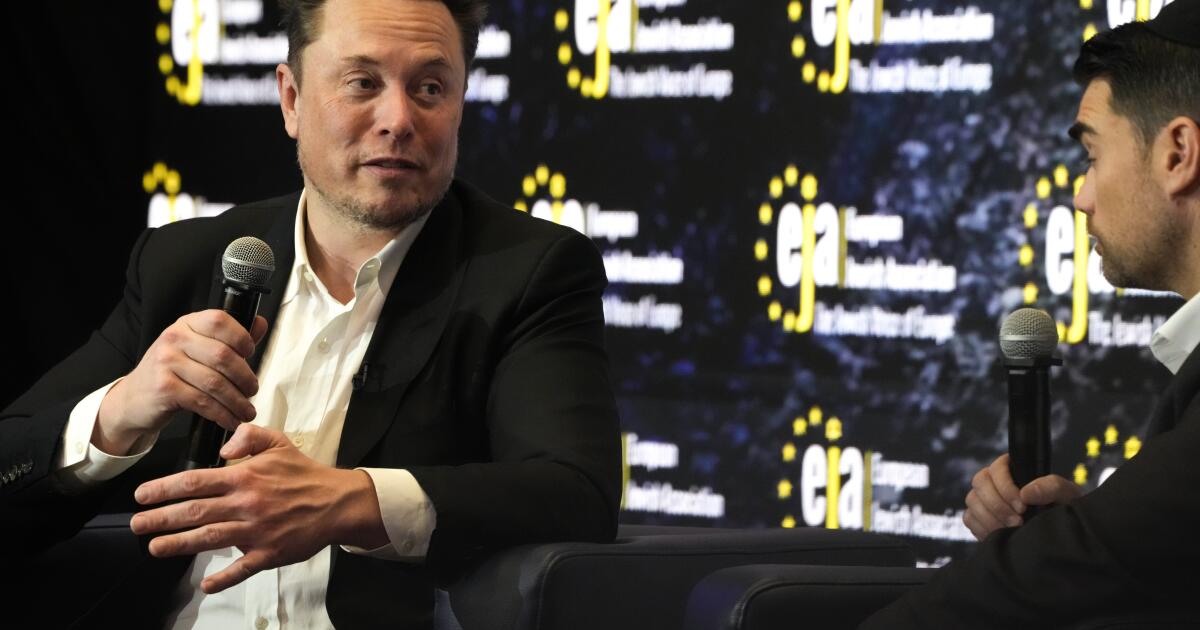
Both of these xenophobic and Islamophobic films are being pushed as “anti-woke” vehicles, deliberately engineered to bypass traditional critical reception and capitalize on a fractured media ecosystem. “Citizen Vigilante,” which features an American protagonist killing dark-skinned immigrants and Muslims in an unnamed European setting, was denied a rating certificate by the German government for inciting violence. Yet despite that determination, the film secured global reach through decentralized digital distribution and high-profile promotion from Elon Musk.
Similarly, “Run, Fight, Hide: Infidels” — a campus siege narrative evoking 1980s action film nostalgia that leans heavily into outdated, post-9/11 anxieties — relies on a built-in conservative media apparatus to guarantee financial returns. The film is produced by the conservative media figure Ben Shapiro and the Daily Wire, which he co-founded. It is a sequel to a 2020 film that was their film company’s premiere.
But while promoters of such films frame their work as a brave rebellion, the reality is much more sinister: rehashing 40-year-old tropes while invoking conspiracy theories of Muslims bringing sharia law to America, because outrage is cheap to produce and easy to monetize.
Stories matter. Stories shape how we see one another. They influence what we love, what we celebrate, whom we trust, whom we understand and whom we fear.
Since January, the Muslim Public Affairs Council has documented a sharp escalation in threats and attacks targeting Muslims and Islamic institutions across the United States, including vandalism, shootings, bomb threats, attempted assassinations and physical assaults. These are not isolated incidents. They reflect a broader climate in which dehumanizing representation increasingly manifests as real-world violence.
Entertainment and politics increasingly employ the same tactic as one another, recycling narratives of fear and “otherness” to mobilize audiences, voters and consumers. When political leaders encourage those narratives, as President Trump recently did by amplifying and commenting on a photo of young Muslim American students in hijab, they further normalize the same stereotypes that entertainment companies have learned to monetize.
Yet while the social costs continue to mount, the economic incentives remain firmly intact. “Citizen Vigilante” earned a 93% audience score on Rotten Tomatoes despite receiving just a 6% critics’ score. More tellingly, it quickly climbed to the top of Amazon’s and Apple TV’s paid video-on-demand charts.
And this isn’t just a Muslim and immigrant issue — and it’s not only about who is portrayed on screens, but also who is not. Representation has been backsliding, and audiences are left with fewer opportunities to see the reality and humanity of diverse communities, making them more vulnerable to fear-based narratives.
According to a 2026 report from the nonprofit Define American, which tracks representation across television and film, Latinos account for only 23% of immigrant characters represented on screen, even though they make up more than 40% of the immigrant population in the United States. In 2020, 50% of immigrants on screen were Latino.
The industry’s defense is that whitewashed and xenophobic films reflect audience demand. But the recent research by Define American challenges this assumption. Data show that nuanced, multidimensional storytelling, in which immigrants and minority characters are woven into the fabric of everyday narratives rather than tokenized or villainized, actually leads to greater audience engagement and deeper systemic understanding.
Entertainment doesn’t simply reflect culture; it teaches us who belongs within it. Studios, distributors, streaming platforms and filmmakers all have a responsibility to reject narratives that portray immigrants as enemies and instead embrace stories that reflect the diversity and complexity of our world. At the same time — as with voters — the power ultimately rests with consumers. The choice to demand storytelling that challenges prejudice rather than profits from it belongs to all of us.
Sue Obeidi is the senior vice president of the Muslim Public Affairs Council Hollywood Bureau. Jose Antonio Vargas is the founder of Define American.

By and large, the zombie subgenre has bitten off more than it can chew in modern times. Between George Romero survival films and camp comedies, the well has become pretty infected. But once in a while, along comes a movie like This Is Not A Test.
Let’s sink our teeth into this new release and see how it stacks up against the classics.
The tone and tenor of this film represent the classic survival movies like Night Of The Living Dead. But the thing that grabs the audience about This Is Not A Test is the trauma of the characters. Holt shines as a withdrawn survivor of an abusive home, trying to cut through the wreckage to reunite with her sister. Each of the main characters have standout traits, and they bathe in strongly acted moments as the stress of the situation changes who they are.
The gore in This Is Not A Test is pretty strong. The attacks spring quickly and when they do, the special effects team does a good job showcasing the battle scars. The camera work is also frenetic in a good way, because the chaos of the chase scenes puts the viewers in a first-person perspective. This film lets you feel like a part of the survivors, so their journeys are interactive.

Longtime fans may say that there’s nothing new in This Is Not A Test, and maybe they’re right. There’s no fresh take on the monsters here, no crazy origin, nothing that we haven’t seen in the past fifty-eight years. But the pacing nails a great balance between getting to know the characters and getting the zombie splatter fest. The mental meltdowns of the characters feel well earned, and the arc of Sloane and her sister brings a lot of heart and investment to the story. Even the most jaded zombie horror fans will find something to appreciate here, even as a background movie.
Adam MacDonald has made another intense hit here, and This Is Not A Test is currently available to stream on Shudder.
-

 World5 minutes ago
China rebukes UK over nationalisation of British Steel
-
 News35 minutes ago
Flood sirens blare in South Central Texas as rivers reach perilous heights
-

 Los Angeles, Ca2 hours ago
Arrest made in deadly shooting at 4th of July gathering in Compton; search for 2nd suspect continues
-

 Detroit, MI3 hours ago
Detroit crime hits decades-low as Michigan governor candidates debate how to keep progress going
-

 San Francisco, CA3 hours ago
Operator of boat that capsized near Alcatraz mourns brother as search continues
-

 Dallas, TX3 hours ago
Mavericks vs Thunder Game Preview and Injury Update
-

 Miami, FL3 hours ago
Miami Dolphins Fans Vs. The Media
-

 Boston, MA3 hours ago
Man who allegedly shot at Boston Police officers arrested after foot chase in Dorchester

