Entertainment
De Los Reads: Here's what we're reading in June


Welcome to “De Los Reads,” a monthly feature dedicated to amplifying the vibrant and diverse voices of Latinx authors.
In a literary landscape hungry for diverse voices, journalist Natasha S. Alford’s debut memoir, “American Negra,” offers a refreshing perspective on what it means to be Afro Latina in the United States.
Alford, who is vice president of digital content for the Grio and a CNN political analyst, explores the complexities of growing up as a bicultural child and discusses her embrace of her Black identity while acknowledging her Puerto Rican heritage.
“To me, saying I was Black was not about downplaying my Puerto Rican roots but about rejecting a system that seemed to have rejected me by default,” she writes in her book. “I didn’t look like the Latinos people expected to see in America — it seemed like everyone had gotten a clear memo. And not only was it fairer skin that made you Latino in America but the ability to speak Spanish.”
Many Latinxs are confronted every day with the idea of “performing their identity” by speaking Spanish or even eating certain foods, she says, arguing that American society has many expectations about what Latinos should be.
“I wrote this book for the Latinos who’ve been asked, oh, how do you speak Spanish so well? People act surprised when they order certain kinds of food or they ask for directions. Even with me not being fluent in Spanish, the little Spanish that I speak, I always get sort of surprised reactions from many fellow Latinos, and it has this feeling of making you feel like an alien, even within your own culture, like you don’t belong.” Alford said.
Reggaeton is another element of Alford’s narrative. The blazing beat that ignites dance floors in Latin America and across the U.S. has served as a voice for marginalized communities, offering a platform for artists to address social issues, celebrate cultural heritage and express personal narratives.
As an undergrad at Harvard, Alford wrote her graduation thesis on reggaeton, questioning — as she shared in the memoir — whether Black feminist consciousness was being expressed in the genre.
“When I found La Sista’s work specifically, that was life-changing for me. … [She] showed what it meant to give a Latina woman, particularly a Latina woman of color, the microphone … [in] a genre where a lot of women were, ‘I can be in the background and the subject of male desires,’” wrote Alford.
In the intersections of race and ethnicity, many Afro Latinxs are cornered by a society that challenges their identities to fit in, she says.
“American Negra is about how you create a career and life path in general where you get to be your full authentic self,” Alford said. “There were times when I perhaps sacrificed certain parts of my identity, or I code switched … We may straighten our hair, we may wear certain clothes. I did all of those things in an attempt to look quote-unquote presentable … utilize respectability politics to fit in. … In moving away from that respectability … that is in honoring your uniqueness and your heritage … [when] you actually can thrive … there’s freedom in that.”
De Los Reads June picks
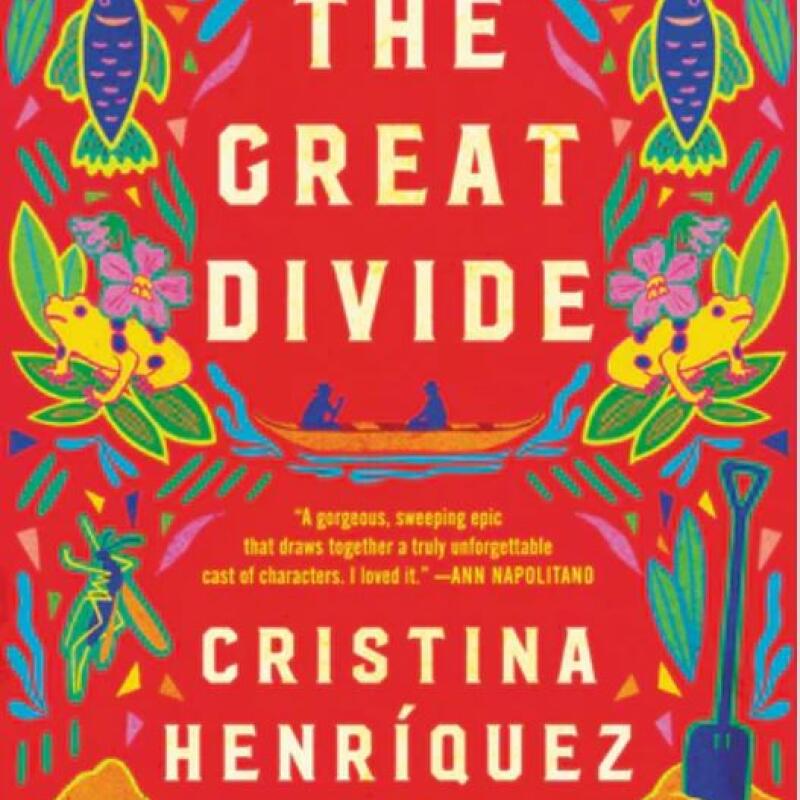
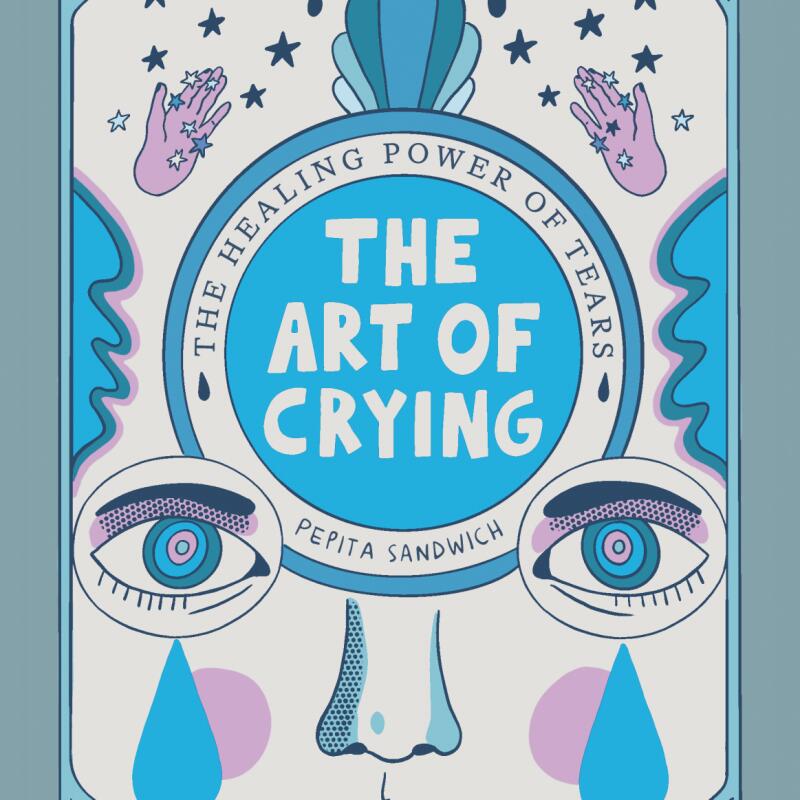
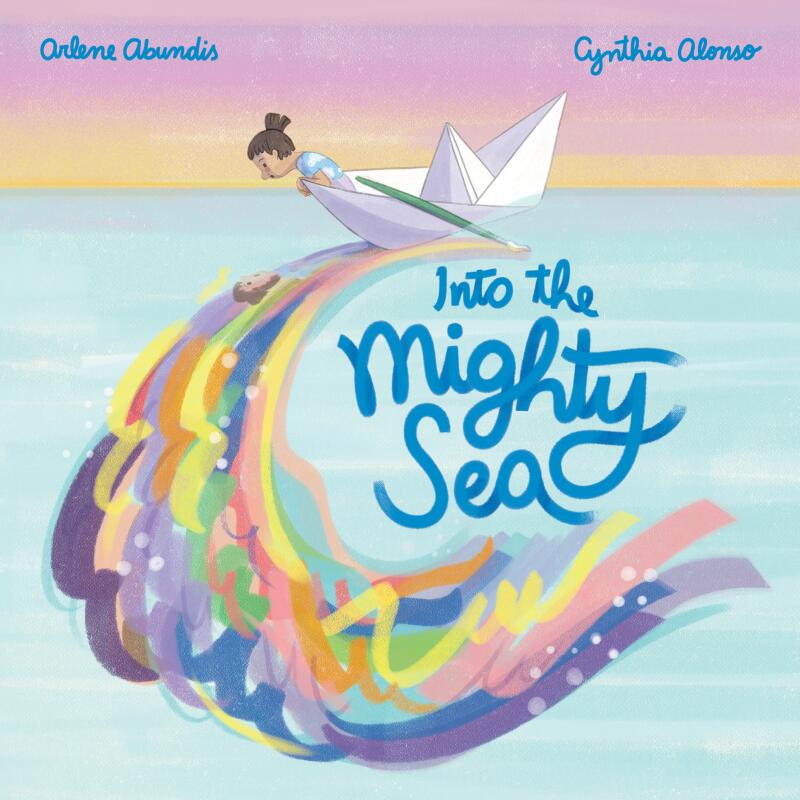
(Ecco) (Voracious) (HarperCollins)
The Great Divide by Cristina Henriquez (Ecco, March)
This captivating historical fiction takes the reader back to 1907, to the bustling world of Panama amid the monumental construction of the Panama Canal. It follows the story of Omar, who defies his father’s wishes to seek companionship and opportunity in the excavation zone, and Ada, a spirited Barbadian teen who travels to Panama seeking a job to pay for her sister’s life-saving surgery. Against the backdrop of historical events, this gripping tale navigates the complexities of human connection and resilience, offering a poignant glimpse into the lives of those who shaped the canal’s legacy.
The Art of Crying. The Healing Power of Tears by Pepita Sandwich (Voracious, April)
In many societies, crying is a sign of vulnerability or weakness. This graphic novel challenges the stigma surrounding tears, presenting them as a powerful act of healing and self-compassion. Through playful illustrations and introspective prose, the author guides readers on a journey of questioning and self-discovery, offering a refreshing perspective on the transformative potential of tears. [Disclaimer: Pepita Sandwich has previously contributed to De Los.]
Into the Mighty Sea by Arlene Abundis, illustrated by Cynthia Alonso (HarperCollins, June)
This picture book is a heartfelt voyage through the turbulent waters of childhood emotions and thoughts. It’s a tender narrative that celebrates the power of familial love and the importance of embracing and accepting strong emotions. The story’s comforting illustrations create a safe harbor where families can explore their feelings together. From moments of joy to those of fear and uncertainty, the story guides readers on a journey toward emotional safety.
Roxsy Lin is a bilingual journalist and illustrator originally from Venezuela. Her work focuses on the pulse of the modern rhythms of Latinidad, arts and culture. @roxsy_lin




Entertainment
Philip Glass canceled a Kennedy Center show, but this conductor brings his work center stage at L.A. Opera
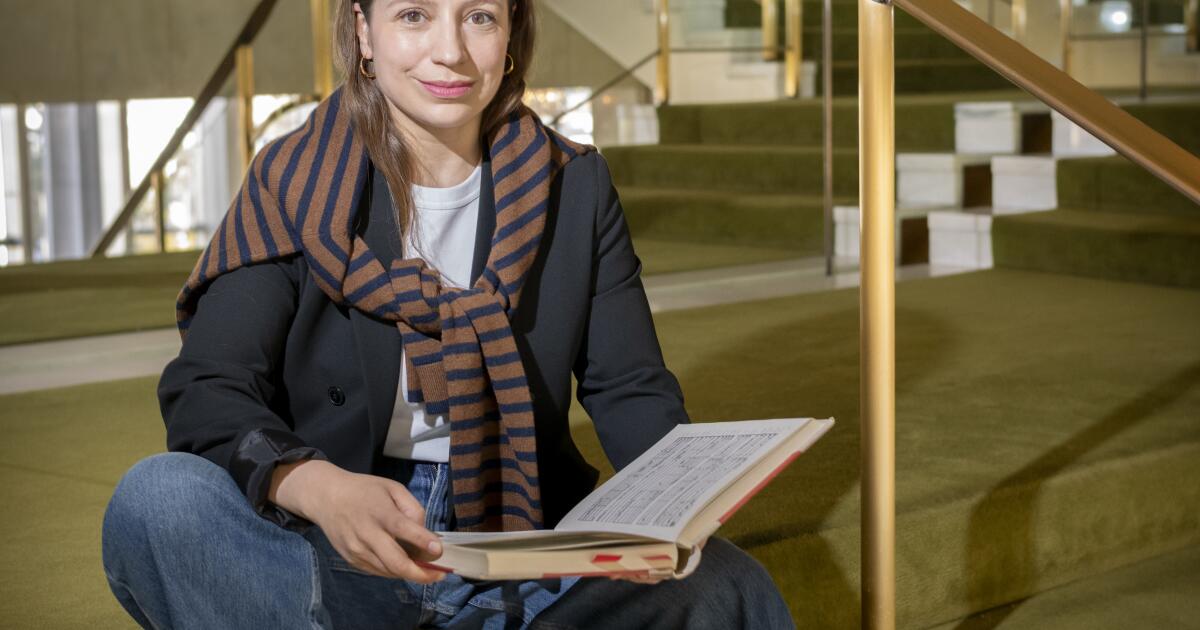
When Dalia Stasevska heard opera music for the first time, it was a moment of profound self-revelation. She was 13, growing up in the factory town of Tampere in the south of Finland, and her school librarian gave her a CD of Puccini’s “Madama Butterfly” along with a translation of its Italian libretto.
“As a teenage girl, this dramatic story touched my soul,” Stasevska says, adding that she still remembers the experience and thinking, “ ‘This music understands me, this is exactly how I feel.’ And that was…when I knew that I wanted to become a musician.”
Stasevska is now chief conductor of Finland’s Lahti Symphony Orchestra and a prodigious conductor of orchestral music in all forms. A busy guest baton with companies around the globe, she will make her L.A. Opera debut this Saturday with a production of “Akhnaten” by Philip Glass, running through late March.
John Holiday in the title role of L.A. Opera’s 2026 production of “Akhnaten.”
(Cory Weaver)
The seminal work by Glass lands at L.A. Opera just a month after the world-famous composer abruptly canceled June’s world premiere of Symphony No. 15 “Lincoln” at the John F. Kennedy Center for the Performing Arts. “While Philip Glass has pulled out of Kennedy Center, his music will be front and center at our production,” a rep for L.A. Opera wrote in an email.
Stasevska, with her razor-sharp appreciation of the power of Glass’ work, is the ideal conductor to bring it there.
Stasevska, 41, walks from the ornate foyer of the Dorothy Chandler Pavilion, with its emerald green carpets and gleaming chandeliers, to the more ordinary hallways and cubicles of L.A. Opera’s offices. She’s been in town rehearsing for a few weeks and jokes with some of the show’s jugglers in a kitchenette, where she makes herself a machine pod coffee.
The conductor is petite with large, expressive eyes and a Cheshire cat’s smile. Her mouth often pulls to the right when she speaks, her admirable non-native English tugged easterly in a Finnish accent.
Opera remains her great love, and it seems a perfect twist of fate that Stasevska was tapped to conduct “Akhnaten.” She saw it for the first time in 2019 at a Helsinki cinema, in a global broadcast of a production by the Met. She couldn’t believe her friend dozed off.
“I was like, ‘How could you fall asleep? This was the best thing I’ve ever seen in my life. I would do anything to conduct this opera,’ ” she recalls saying.
Stasevska was born in 1984, the same year that Glass’ hypnotic, ritualistic opera, about an Egyptian pharaoh who dared to push monotheism onto his polytheistic culture, debuted in Stuttgart, Germany. Eight months later, Stasevska entered the world in the Soviet-controlled city of Kyiv, the child of a Ukrainian father and Finnish mother.

Conductor Dalia Stasevska, who is making her L.A. Opera debut with Philip Glass’ “Akhnaten,” says that opera is her first great love.
(David Butow / For the Times)
It was a fluke that she was born in Ukraine. Her parents, both painters, were living in the Estonian capital of Tallinn, also under Soviet rule, but found themselves in a Kyiv hospital close to family when Stasevska arrived. She’s never lived in Ukraine — she spent her first few years in Tallinn before moving to Finland at age 5— but her life has been infused with its heritage.
Her father, who as a teenager in Tallinn began to rebel against Sovietization, insisted on teaching Stasevska and her two younger brothers to speak Ukrainian at home. Her grandmother, Iryna, lived with the family and was an important caretaker for much of her childhood. Stasevska grew up hearing fantastic stories filled with dreamlike imagery of the homeland.
“She was such a civilized, cultural person,” Stasevska says of her grandmother, adding that she taught her grandkids everything she knew about her home country. That’s why, even though Stasevska was raised in Finland, she grew up eating Ukrainian food and hearing Ukrainian folk tunes. “I know the language and understand the culture,” she says.
Stasevska grew up poor, but music education was mandatory for her and her brothers: “My father said, ‘This is going to be your profession.’ It was no question that this is not a hobby. So we started practicing immediately, very determined. There was maybe some forcing involved,” she says, laughing.
She played the violin from age 8, but it was only after she heard Puccini at 13 that she fell in love with classical music. She became obsessed with the opera and orchestral repertoires and was immediately determined to play in an orchestra. She approached the headmaster at her conservatory who placed her in a string ensemble before advancing her to the symphony orchestra as a violinist.
At 18, Stasevska entered the Sibelius Academy in Helsinki, which is named after Finland’s most famous composer, Jean Sibelius. She couldn’t stop herself from stealing a peek at the school conductor’s score, copying bowings and poring over the details, but she didn’t indulge any dreams of taking the podium herself. “I was going every week to the concerts,” she says, “but it took me so long to see somebody that looked like me.”
She was 20 when she saw a female conductor for the first time, calling it “the second big moment in my life.” When Stasevska expressed interest in trying it herself, she was referred to Jorma Panula, a legendary conductor and teacher in Finland. Panula invited her to attend one of his masterclasses, and on the first downbeat of her first experience conducting, “I knew immediately that this was beyond anything I’ve experienced in my life,” she says. “It became this kind of madness moment.”
She loved the sheer physicality of it, she says, but also “that I can affect the music, and that I can affect the interpretation, because I had so much in my heart that I felt about the music.”
After completing her conducting studies in 2012, Stasevska assisted Panula — who emphasized discovering unique “gestures in such a way that the orchestral musicians know what you mean,” she says. She also worked with her fellow Finn, Esa-Pekka Salonen. Stasevska became principal guest conductor of the BBC Symphony Orchestra in 2019 and chief of the Lahti Symphony in 2020.
When she’s not globetrotting, Stasevska lives in Helsinki with her young daughter and her husband, Lauri Porra — a heavy metal bassist who is also the great-grandson of Sibelius.
She likes to champion new music — her 2024 album, “Dalia’s Mixtape,” featured works by Anna Meredith, Caroline Shaw and other contemporary composers. She is also a vocal supporter of the land where she was born and has spoken out against Russia’s war in Ukraine.

John Holiday as Akhnaten, with So Young Park, at right, as Queen Tye, in L.A. Opera’s 2026 production of “Akhnaten.”
(Cory Weaver)
Stasevska’s L.A. Opera debut arrives on the same week as the fourth anniversary of Russia’s invasion. Both of her brothers — one a film director, the other a journalist — moved to Ukraine and have borne witness to the war, which has given her “another level of experiencing this horror,” she says.
Stasevska has made it her mission to raise funds — more than 250,000 euros to date — to provide basic supplies particularly for children and elders who are without power and huddling in freezing cold homes. She has even driven in supplies herself by truck.
She has also conducted concerts there — and her next album will celebrate the country’s composers in a meaningful way. “Ukrainian Mixtape,” which she recorded with the BBC Symphony Orchestra in London, features works by five composers who range from the 19th century to the 1960s. Three are premiere recordings of artists who have been completely forgotten, which required a year of searching for materials.
“I think that it will not leave anybody cold,” Staveska says, “and I hope that it will inspire everybody to discover Ukrainian music more, and that we will hear it more on main stages of the world — where it deserves to be.”
For now, though, her focus is on ancient Egypt and Philip Glass — and opera. She says her goal, in every concert, is to give audiences the same experience she had when she was 13, that remarkable feeling that the music uniquely understands them.

2.5/5
01 Hrs 59 Mins | Romantic Comedy | 27-02-2026
Cast – Sree Vishnu, Nayana Sarika, Satya, Brahmaji, Praveen, Murali Sharma, Srikanth Iyyengar, Satyam Rajesh, Srinivasa Reddy, Goparaju Ramana and others
Director – Yadunaath Maruthi Rao
Producer – Sumanth Naidu G
Banner – Sree Subrahmanyeshwara Cinemas
Music – Radhan
Since 2023, with three commercial hits and one critically acclaimed film, Sree Vishnu has established himself as a minimum guarantee hero and built a loyal audience. To continue the success streak, he chose yet another romantic comedy film, directed by debutant Yadunaath Maruthi Rao. ‘Aay’ fame, Nayana Sarika, played the female lead role and Radhan, scored the music for the film. After creating enough curiosity among the audience with the teaser and trailer, the film was finally released in theatres today. Did Sree Vishnu, deliver yet another hit with a romantic comedy film? Did Nayan Sarika, score a hit in Telugu, after AAY & KA? How does the debutant director, Yadunaath Maruthi Rao, do? Did the music director, Radhan, come up with memorable songs and score? Let’s figure it out with a detailed analysis.
What is it about?
Vishnu(Sree Vishnu), works as a junior lecturer at a college, where Manisha(Nayan Sarika), works as the head of the department(HOD/faculty). Manisha, with her eccentric characteristics, intrigues Vishnu and both of them eventually fall in love with each other. When everything is going well for the couple to get married, Manisha informs Vishnu about a flaw in her Jathakam. What was the Dosham(flaw) in Manisha’s jathakam? How did it impact her prospects of getting married before meeting, Vishnu? Why did Vishnu initially get reluctant to marry Manisha, after hearing about her Jathaka Dosham? Will the couple sort out all the issues and get married eventually? Forms the rest of the story.
Performances:
Sree Vishnu, with his comedy timing generated a few fun moments that worked in favour of the film. However, in an attempt to appear effortless, he went overboard at times and appeared monotonous at a few places. Nayana Sarika got a good role and she delivered a good performance. She looked good throughout the film and appeared confident.
Satya, got a full-length role and he was able to generate a few laughs here and there with his comedy timing. Srikanth Iyyengar’s performance looked over the top and his portions looked rushed and very artificial. Srinivasa Reddy played a role similar to Mallikarjuna Rao’s role in Raviteja’s movie, Venky. He did an ok job but it seemed like he did dub for his role in the film? The film had Brahmaji, Praveen, Murali Sharma, Satyam Rajesh, Goparaju Ramana and a few others, in character roles. All of them made their presence felt but none of their roles gave the desired impact and extra mileage.
Technicalities:
Cinematography by Sai Sriram, is a major plus to the film. The visuals looked colourful, vibrant and gave a pleasant look to the film throughout. Radhan’s music should have been better. The songs scored by him were below par and the background score was pretty standard. Editing by Karthikeyan Rohini, was alright. He tried to cut the film with a very crisp runtime of around two hours and yet, ended up having a few repetitive sequences. Production values by, Sree Subrahmanyeshwara Cinemas, were decent and were within the limitations of a midrange romantic comedy film. Let’s discuss the work of the writer and the director, Yadunaath Maruthi Rao, in detail in the analysis section.
Positives:
1. First Half
2. Comedy Portions
3. Sree Vishnu & Satya’s Timing
4. Cinematography
Negatives:
1. Second Half
2. Lack of Strong Emotions
3. Music
Analysis:
The debutant writer and the director, Yadunaath Maruthi Rao, wrote a so-called peculiar characterisation of the female lead in the film and tried to generate enough fun moments using the comedy timing of his lead actor, Sree Vishnu and the lead comedian, Satya. Right from the word go, the writer intended only to make the audience laugh at any cost, and in doing so, he succeeded in parts but would have done a better job in other parts, especially the latter part of the second half. The film had at least five to six notable actors but for some reason, the director only concentrated on generating fun by using his lead actor.
The entire first half of the film unfolded without any major complaints. There were enough comedy sequences in the first half that engaged the audience in a fairly decent manner and the revelation of the conflict point during intermission, worked as well. However, after the initial few minutes of the second half, the film got into repetitive mode and the drama during the last thirty minutes was the film was written and executed in a very unexciting manner without any proper emotional depth. The twist during the climax was very predictable and it was narrated in a bland and rushed manner. Better care in writing and execution during the second half would have elevated the film’s overall graph.
The bare minimum that the audience expects from debutant writers and directors is original characters and characterisations, isn’t it? In Vishnu Vinyasam, to a crucial character, it was surprising to see a debutant director use the characterisation of ‘Jagadamba Chowdary’, a character from Ravi Teja’s movie Venky. Also, at just around two hours of runtime, the film makes the audience feel monotonous with a few repetitive sequences. One of the major negative points of the film is the songs. For a romantic comedy film to work, it is necessary to have at least one or two chartbuster songs. Unfortunately, none of the songs composed by, Radhan, helped the film in any way.
Overall, the core point of, Vishnu Vinyasam, has enough potential to become a very engaging romantic drama film. But, the half-hearted effort from the writer, director and the music director, ended up making it a decent watch. You may give it a try watching for a few well-executed comedy portions, Sree Vishnu and Satya’s timing.
Final Verdict – Partly Entertaining
Rating – 2.5/5
Related
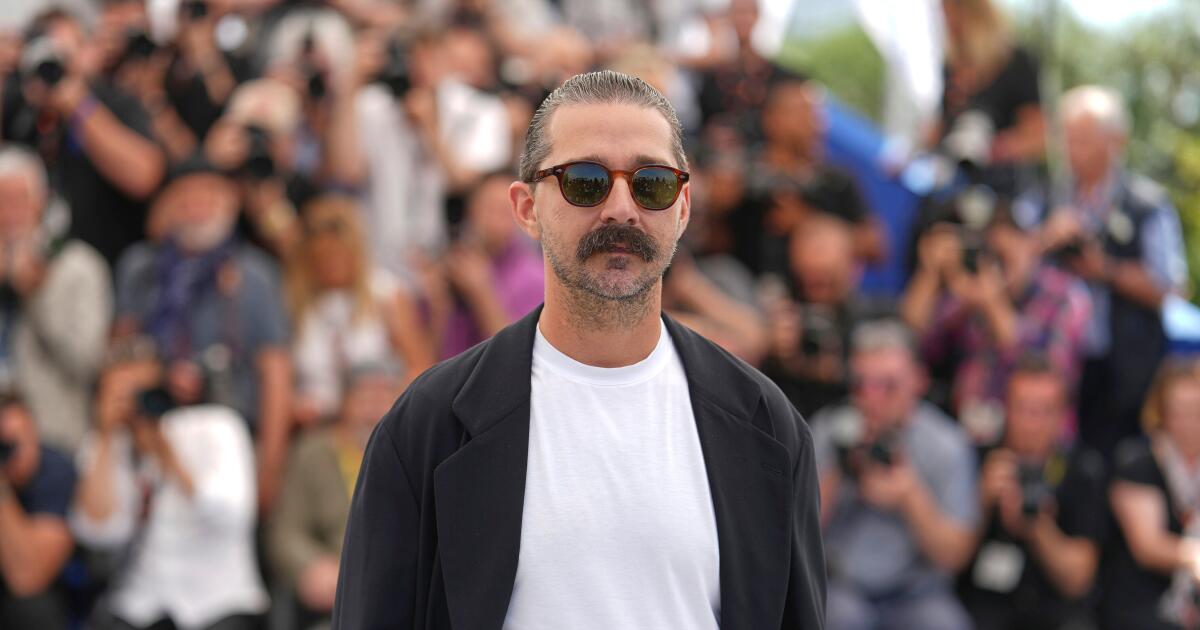
Actor Shia LaBeouf’s raucous Mardi Gras episode in New Orleans earlier this month has now earned him court-ordered drug and alcohol treatment.
A New Orleans judge on Thursday ordered the former Disney Channel star, 39, to begin substance abuse treatment and undergo weekly drug testing after he was arrested on suspicion of assaulting two men in the city’s famed French Quarter. He was charged with two counts of simple battery, the Associated Press reported.
“Transformers” and “Honey Boy” actor LaBeouf agreed to the updated terms of his release, including posting bond of $100,000, and underwent a drug test during his court appearance on Thursday. His attorney said the test did not show illegal substances in the actor’s system.
Orleans Parish Criminal Court judge Simone Levine criticized LaBeouf for his behavior during the Mardi Gras celebrations. In addition to striking the two men at a bar, LaBeouf allegedly yelled homophobic slurs. Levine expressed concern for “the safety of this larger community” and said LaBeouf “does not take his alcohol addiction seriously.”
A legal representative for LaBeouf did not immediately respond to a request for comment but said during the actor’s court appearance that “being drunk on Mardi Gras is not a crime.”
The actor has yet to enter a formal plea to the charges.
The New Orleans Police Department said its officers responded to a report of an assault in the 1400 block of Royal Street. The former “Even Stevens” child star was “causing a disturbance” at the business, leading staff to remove him from the premises, police said. The actor allegedly “used his closed fists” on one of the victims “several times.”
Authorities said LaBeouf left the business but returned, “acting even more aggressive.” According to the incident report, an unspecified number of people tried to subdue him and eventually let him go “in hope that he would leave.” Instead, police said, LaBeouf began assaulting the same man as before, hitting his upper body with closed fists. The actor is accused of punching the second man in the nose.
People held down LaBeouf until officials arrived. He was transported to a hospital and treated for unknown injuries and was arrested and charged upon his release.
An additional police report identified a local entertainer as one of LaBeouf’s alleged victims. The “Megalopolis” actor, whose history of violent behavior has led to previous arrests and other legal troubles, allegedly threatened the man’s life and shouted homophobic slurs.
Levine ordered that LaBeouf refrain from contacting the two victims and visiting the bar at the center of the brawl. She also denied his travel requests.
Hours after news of the brawl and his arrest spread, LaBeouf issued a brief statement on social media.
He posted to X: “Free me.”

Anthony Richardson free to seek trade after injury setbacks amid Colts’ shift to Daniel Jones

300,000 Chrome users hit by fake AI extensions

Commentary: How Trump helped foreign markets outperform U.S. stocks during his first year in office
Philip Glass canceled a Kennedy Center show, but this conductor brings his work center stage at L.A. Opera

L.A. Affairs: Sick of swiping, I tried speed dating. The results surprised me

Florida High School Football Rankings: Top 25 teams – Oct. 21

Cleary's 21 help Le Moyne down Central Connecticut State 69-64 in OT

How old is Bo Nix? What to know about Oregon quarterback ahead of 2024 NFL Draft

99th annual Pony Swim held in Virginia

Indiana Members Credit Union announced as new anchor tenant at Bottleworks District

Has India’s influence in Afghanistan grown under the Taliban?

Bill Clinton to testify before House committee investigating Epstein links

Read Judge Schiltz’s Order

Vulnerable House Dem lashes out at Trump’s ‘racist’ SOTU challenge: ‘That was uncomfortable’

Italy calls for suspension of EU carbon market
-

 World1 day ago
Exclusive: DeepSeek withholds latest AI model from US chipmakers including Nvidia, sources say
-

 Massachusetts2 days ago
Mother and daughter injured in Taunton house explosion
-

 Montana1 week ago
2026 MHSA Montana Wrestling State Championship Brackets And Results – FloWrestling
-

 Oklahoma1 week ago
Wildfires rage in Oklahoma as thousands urged to evacuate a small city
-

 Louisiana4 days ago
Wildfire near Gum Swamp Road in Livingston Parish now under control; more than 200 acres burned
-

 Technology6 days ago
YouTube TV billing scam emails are hitting inboxes
-

 Denver, CO2 days ago
10 acres charred, 5 injured in Thornton grass fire, evacuation orders lifted
-

 Technology6 days ago
Stellantis is in a crisis of its own making