Entertainment
Beyoncé's 'Texas Hold ’Em' rides home on Oklahoma airwaves, but not without a hitch

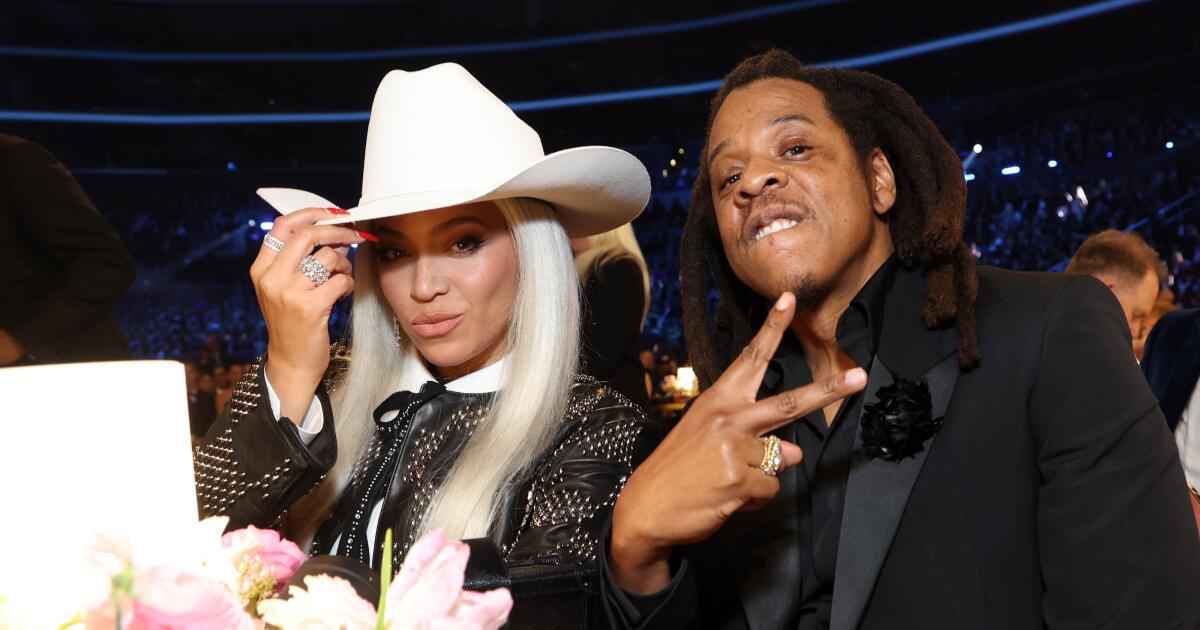
This ain’t Texas. A country music radio station in Oklahoma will indeed be playing Beyoncé’s two new country songs, “Texas Hold ’Em” and “16 Carriages,” after the station cleared up confusion about why the Super Bowl drops weren’t getting airtime.
In a Tuesday missive, the radio station’s general manager, Roger Harris, told a fan requesting the songs that the station does “not play Beyoncé on KYKC as we are a country music station.” And the response — deemed as “blatant racism and discrimination” against Beyoncé — went viral among her buzzing fan base known as the Beyhive, which called on the station to reconsider.
According to Entertainment Weekly, the station suggested that the whole thing was a misunderstanding and they “apparently were targeted in a big campaign to add the song.” A rep for KYKC told EW that the station added the songs to its rotation as soon as it received them, citing a delay from Sony Music, which released the singles under Columbia Records. A representative for the station’s parent company, S.C.O.R.E., added that Harris “didn’t know” that the “Renaissance” artist had entered her country music era by dropping the “Act II” singles.
“[U]p until now, she hasn’t been a ‘country artist.’ So … we responded to the email in the same way we would have responded to someone requesting a Rolling Stones song on our country station,” Harris told EW.
In a follow-up tweet on Tuesday, the Alda, Okla., station said it would play “Texas Hold ’Em” after getting “lots of calls” requesting it.
In a statement to The Times, Harris said that the station “actually didn’t even have the song until around 2 p.m.” Tuesday.
“Because we are a small market station, we don’t get the service provided to the larger radio stations,” Harris added. “We have always played Beyoncé on two of our other stations, KXFC-FM (a Top 40 station) and KADA-FM (an adult hits station) so we are big fans. We just didn’t know about her foray in this genre …. plus as I mentioned, we didn’t even have the song.
“With a lot of effort, we tracked down the song by about 2 p.m. yesterday and it is now in rotation on THREE of our stations, including our country station, KYKC.”
It’s not surprising that even Bey faced some resistance to her latest move. Country music has long had a fraught history with racism and Black artists. Bey herself seemingly experienced that firsthand back in 2016 when her twangy song “Daddy Lessons” — highlighting the Houston native’s Southern roots with lyrics about her father and former manager, Mathew Knowles, references to the Bible, the Second Amendment and shooting guns — was rejected by the Recording Academy’s country music committee for a Grammy Award nomination.
The “Hold Up” and “Single Ladies” singer reportedly had submitted the song, which hailed from her “Lemonade” album, for consideration in the country genre, according to the Associated Press.
Proving that “Daddy Lessons” was unabashedly a country song, Beyoncé performed the track during the 2016 Country Music Assn. Awards alongside the Chicks, and later released a version of the song featuring the country trio.
Meanwhile, in New York, Bey the hitmaker stepped out again, fully committed to wearing her now-signature cowboy hat. She made a surprise appearance in the front row at the Luar fashion show in a sparkling ensemble and was joined by her mother, Tina Knowles, and sister Solange. The trio stepped out in Brooklyn to support Solange’s son, Daniel “Julez” Smith Jr., during his New York Fashion Week modeling debut.



Movie Reviews
‘Scream 7’ Review: Ghostface Trades His Metallic Knife for Plastic in Bloody Embarrassing Slasher Sequel

It’s funny how this film is marketed as the first Scream movie in IMAX, yet it’s their sloppiest work to date. Williamson accomplishes two decent kills. My praise goes to the prosthetic team and gore above anything else. The filmmaking is amateurish, lacking any of the tension build and innovation in set pieces like the Radio Silence or Craven entries. Many slasher sequences consist of terribly spliced editing and incomprehensible camera movement. There was a person at my screening asking if one of the Ghostfaces was killed. I responded, “Yeah, they were shot in the head; you just couldn’t see it because the filmmaking is so damn unintelligible.”
Really, Spyglass? This is the best you can do to “damage control” your series that was perfectly fine?
I’m getting comments from morons right now telling me that I’m biased for speaking “politically” about this movie. Fuck you! This poorly made, bland, and franchise-worst entry is a byproduct of political cowardice.
The production company was so adamant about silencing their outspoken star, who simply stated that she’s against the killing of Palestinian people by an evil totalitarian regime, that they deliberately fired her, conflating her comments to “anti-semintism,” when, and if you read what she said exactly, it wasn’t. Only to reconstruct the buildup made in her arc and settle on a nonsensical, manufactured, nostalgia-based slop fest to appeal to fans who lack genuine film taste in big 2026. To add insult to injury, this movie actively takes potshots at those predecessors, perhaps out of pettiness that Williamson didn’t pen them or a mean-spirited middle finger to the star the studio fired. Truly, fuck you. Take the Barrera aspect out of this, which is still impossible, and Scream 7 is a lazy, sloppy, ill-conceived, no-vision, enshittification of Scream and a bloody embarrassment to the franchise. It took a real, morally upright actress to make Ghostface’s knife go from metal to plastic.
FINAL STATEMENT
You either die a Scream or live long enough to see yourself become a Stab.
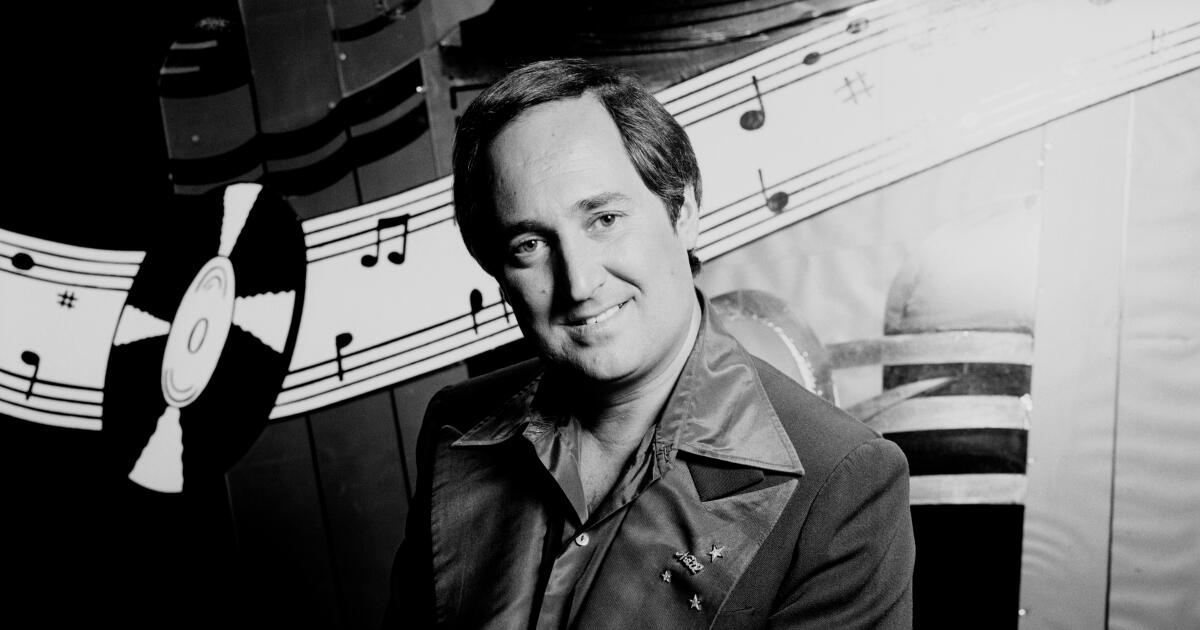
Neil Sedaka, an irrepressible songsmith who parlayed his compositional skills into pop stardom during the height of the Brill Building era in the 1960s and later staged an easy-listening comeback in the 1970s, has died at age 86. No cause of death was immediately available.
“Our family is devastated by the sudden passing of our beloved husband, father and grandfather, Neil Sedaka,” the songwriter’s family wrote in a statement to The Times. “A true rock and roll legend, an inspiration to millions, but most importantly, at least to those of us who were lucky enough to know him, an incredible human being who will be deeply missed.”
A chipper melodicist who never attempted to disguise his sentimental streak, Sedaka emerged at the moment rock ’n’ roll’s initial big bang started to fizzle. As a songwriter and performer, Sedaka treated rock ’n’ roll as another fad to be exploited, crafting cheerful, vivacious tunes targeted at teens who’d bop along to “Stupid Cupid” and swoon to “Where the Boys Are,” to name two songs he and lyricist Howard Greenfield wrote for early-’60s pop idol Connie Francis. Sedaka himself became a star through such bright confections as “Calendar Girl,” “Happy Birthday, Sweet Sixteen” and “Breaking Up Is Hard to Do,” the 1962 chart-topper that became his signature song.
Already falling out of fashion by the time the Beatles arrived in the United States, Sedaka didn’t weather the rise of the British Invasion: By the end of the 1960s, his lack of a record label caused him to leave the States for England. Unlike his Brill Building peer Carole King — he wrote “Oh! Carol,” his first big hit, about her — Sedaka wasn’t able to refashion himself as a hip singer-songwriter. Instead, he relied on showbiz hustle and savvy commercial instincts, teaming up with the musicians that became the iconoclastic hitmakers 10cc on records that positioned Sedaka squarely in the soft-rock mainstream. Elton John signed the veteran vocalist to his fledgling label Rocket and Sedaka immediately had two No. 1 hits with “Laughter in the Rain” and “Bad Blood,” a success compounded by Captain & Tennille taking “Love Will Keep Us Together,” a tune from one of Sedaka’s albums with 10cc, to No. 1 in 1975.
Sedaka’s second stint in the spotlight didn’t last much longer than his first flush of stardom — by 1980, he was no longer a Top 40 artist — but his ’70s comeback cemented his status as a showbiz fixture, allowing him to carve out a career onstage and, at times, onscreen. Occasionally, the world would turn and place Sedaka back in the mainstream, as when he appeared on “American Idol” in the early 2000s or when his 1971 composition “(Is This the Way to) Amarillo?” was rejiggered into the World Cup novelty anthem “(Is This the Way to) The World Cup” in 2006.
Neil Sedaka in 1960.
(Bettmann Archive/Getty Images)
A descendant of Turkish and Ashkenazi Jews, Neil Sedaka was born in Brooklyn, N.Y., on March 13, 1939. Growing up in Brighton Beach, Sedaka exhibited a musical proclivity at an early age, earning a piano scholarship to Juilliard’s children’s division when he was 8 years old. He studied classical piano for the next few years, his ears being drawn to pop music all the while. At the age of 13, he happened to meet a neighbor when they were both vacationing at a Catskills resort. She brought him to meet her son, an aspiring lyricist named Howard Greenfield, and the pair quickly became a songwriting team, with Greenfield writing the words and Sedaka handling the music.
As Sedaka and Greenfield developed their creative partnership, Sedaka sang in the Linc-Tones, a vocal group that evolved into the Tokens just prior to his departure; he left them prior to their hit single “The Lion Sleeps Tonight.” Although he didn’t abandon his dreams of performing, Sedaka concentrated on songwriting with Greenfield. Attempting to gain a foothold in the Brill Building, the pair first caught the attention of Jerry Wexler, who had Clyde McPhatter and LaVern Baker cut a couple of their tunes. Mort Shuman and Doc Pomus suggested to Sedaka and Greenfield that they would have better luck at 1650 Broadway, where Al Nevins and Don Kirshner had just opened their publishing company Aldon Music.
Aldon signed Sedaka and Greenfield to a publishing deal — still a minor, Sedaka needed his mother to sign in his stead — and the pair had their first big hit when Connie Francis took “Stupid Cupid” into the Top 20 in 1958. Not long after, Sedaka signed with RCA Records as a performer. “The Diary,” inspired by Francis refusing Sedaka and Greenfield access to her diary, became Sedaka’s first hit single in 1958 after the doo-wop group Little Anthony and the Imperials passed on the chance to record it first. Sedaka had difficulty delivering a successful sequel to his initial hit for RCA, so he constructed “Oh! Carol” to mimic the lovelorn yet sweet sounds filling the charts in 1959. Sedaka’s gambit paid off: “Oh! Carol” was a Top 10 hit, popular enough to generate an answer record — King’s husband, Gerry Goffin, wrote “Oh! Neil,” which failed to be a hit for King.
With many of rock ’n’ roll’s initial stars waylaid — Elvis Presley was in the Army, Chuck Berry was embroiled in legal problems, Little Richard left the music behind for church, Jerry Lee Lewis’ career imploded — Sedaka stepped into the breach, offering well-scrubbed, buoyant tunes designed to mirror teenage concerns. “Stairway to Heaven,” “Calendar Girl,” “Happy Birthday, Sweet Sixteen,” “Breaking Up Is Hard to Do” and “Next Door to an Angel” all bounced to a bright beat and boasted ornate arrangements that highlighted Sedaka’s youthful cheer.
While he was ensconced in the Top 10, Sedaka continued to write hits for other artists, remaining a regular composer for Francis but also reaching the charts with Jimmy Clanton. He’d occasionally moonlight in the studio too: He plays piano on “Dream Lover,” one of Bobby Darin‘s biggest hits.
By the time the Beatles and the British Invasion took over teen bedrooms and the pop charts in 1964, Sedaka’s hit-making streak had run dry. Panicked, he recorded “It Hurts to Be in Love,” an operatic pop song co-written by Greenfield and Helen Miller. Rushing into a nearby demo studio, Sedaka cut a version that was ready for radio, but RCA refused to release it, on the grounds that it only released records made in its studios. Gene Pitney took the track, subbed his vocals for Sedaka’s and wound up with a Top 10 hit at a time Sedaka couldn’t break the Top 40. Sedaka later claimed, “It was horrible. That would have been my No. 1 song, my comeback song.”
After his deal with RCA expired in 1966, Sedaka started playing hotels in the Catskills and clubs on the East Coast, venues that grew progressively smaller with each passing year. He continued to get work as a songwriter, penning songs for the Monkees (“The Girl I Left Behind Me,” “When Love Comes Knockin’ at Your Door”) with lyricist Carole Bayer, and the 5th Dimension (“Workin’ on a Groovy Thing”) with Roger Atkins.
Faced with dwindling prospects in the United States, Sedaka began to regularly tour England and Australia in the late 1960s. By the dawn of the ’70s, he realized that the times had changed around him: “The era of the singer-songwriter had begun and I was being left behind. I needed to be part of it. I wanted to be a part of it. I wanted it with a vengeance!” He returned to RCA with “Emergence,” a mellow record designed to follow King’s “Tapestry” onto the radio, but that airplay never materialized: Sedaka was still seen as a relic of the early ’60s.
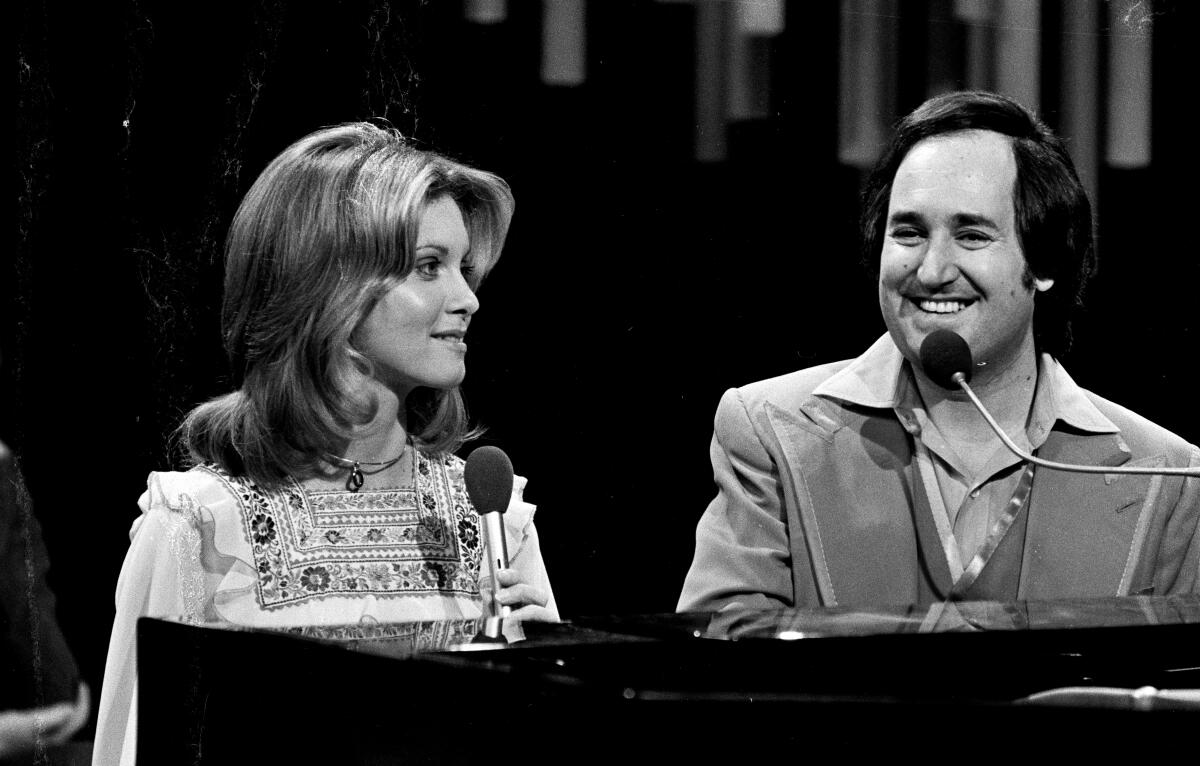
Olivia Newton-John and Neil Sedaka performing in a BBC television studio in 1971.
(Warwick Bedford / Radio Times via Getty Images)
Frustrated with the disinterest in “Emergence,” Sedaka decamped to the U.K., working its club circuit until he was introduced to Eric Stewart, Graham Gouldman, Lol Creme and Kevin Godley, a group of British pop veterans who soon would form the art-pop outfit 10cc. The quartet brought Sedaka into their Strawberry Studios — a place where they recorded a number of bizarre bubble-gum hits under such pseudonyms as Crazy Elephant and Hotlegs — and backed him on 1972’s “Solitaire” album, whose title track was his first collaboration with lyricist Phil Cody; it’d later be covered by Elvis Presley.
“Solitaire” gave Sedaka his first U.K. hit in nearly a decade with “That’s When the Music Takes Me.” Encouraged, the singer-songwriter reunited with 10cc in 1973 for “The Tra-La-La Days are Over,” an album that featured the bubbly “Love Will Keep Us Together.” By the time Sedaka released “Laughter in the Rain” in 1974, he had severed ties with 10cc and found a new benefactor in Elton John.
Then at the height of his phenomenal 1970s popularity, John signed Sedaka to his recently launched American imprint Rocket Records. Rocket repackaged highlights from the 10cc records as “Sedaka’s Back,” adding “Laughter in the Rain” for good measure. The lush number slowly worked its way up the charts, eventually reaching No. 1 on Billboard in 1975. “Bad Blood,” a lively duet with an uncredited Elton John, followed “Laughter in the Rain” to the top of the pop charts later in ’75, arriving just after Captain & Tennille had a No. 1 with “Love Will Keep Us Together.”

Elton John and Neil Sedaka in 1975.
(Richard E. Aaron / Redferns via Getty Images)
Sedaka’s comeback cooled as quickly as it had ignited. He reached the lower rungs of the Top 40 a couple of times in 1976, parted ways with Rocket, then signed to Elektra in 1977, releasing a series of records that found him countering his satiny easy listening with a louche streak on such songs as “Sleazy Love,” “One Night Stand” and “Junkie for Your Love.”
“Should’ve Never Let You Go,” a duet with his daughter, Dara, became his last charting hit in 1980. He published a memoir, “Laughter in the Rain: My Own Story,” in 1982 and was inducted into the Songwriters Hall of Fame in 1983. By the mid-’80s, he had drifted toward the oldies circuit, revisiting his hits in the studio and onstage, turning his songbook into stage productions: The jukebox musical “Breaking Up Is Hard to Do” arrived in 2005, and the musical biography “Laughter in the Rain” followed five years later. He returned to classical music for 1995’s “Classically Sedaka.” He recorded a collection of Yiddish songs, “Brighton Beach Memories,” in 2003, and a children’s album, “Waking Up Is Hard to Do,” in 2009.

Neil Sedaka performing in 2014.
(Robin Little / Redferns via Getty Images)
Occasionally, Sedaka would reemerge on a bigger stage. In 2003, he showed up as a guest judge on the second season of “American Idol,” declaring its runner-up Clay Aiken was “ear delicious.” “(Is This the Way to) Amarillo?,” a bubble-gum song Sedaka wrote and Tony Christie recorded in 1971, was revived in 2006, when it was used as the basis for the novelty “(Is This the Way to) The World Cup?”
On Oct. 26, 2007, Lincoln Center honored Sedaka’s 50 years in showbiz with a gala concert featuring Natalie Cole, David Foster and Clay Aiken. He continued to work steadily over the next two decades, releasing a handful of new records but focusing on concerts. When the COVID-19 pandemic hit in 2020, he took his show online, holding mini-concerts on social media.
Sedaka is survived by his wife, Leba, daughter Dara and son Marc, and three grandchildren.

Mexican writer/director Michel Franco explores the dynamics of money, class and the border through the spiky, unsettling erotic drama “Dreams,” starring Jessica Chastain and Isaac Hernández, a Mexican ballet dancer and actor.
In the languidly paced “Dreams,” Franco presents two individuals in love (or lust?) who experiment with wielding the power at their fingertips against their lover, the violence either state or sexual in nature. The film examines the push-pull of attraction and rejection on a scope both intimate and global, finding the uneasy space where the two meet.
Chastain stars as Jennifer McCarthy, a wealthy San Francisco philanthropist and socialite who runs a foundation that supports a ballet school in Mexico City. But Franco does not center her experience, but that of Fernando (Hernández), whom we meet first, escaping from the back of a box truck filled with migrants crossing the U.S./Mexico border, abandoned in San Antonio on a 100-degree day.
His journey is one of extreme survival, but his destination is the lap of luxury, a modernist San Francisco mansion where he makes himself at home, and where he’s clearly been at home before. A talented ballet dancer who has already once been deported, he’s risked everything to be with his lover, Jennifer, though as a high-profile figure who works with her father and brother (Rupert Friend), she’d rather keep her affair with Fernando under wraps. He’s her dirty little secret, but he’s also a human being who refuses to be kept in the shadows.
As Jennifer and Fernando attempt to navigate what it looks like for them to be together, it seems that larger forces will shatter their connection. In reality, the only real danger is each other.
The storytelling logic of “Dreams” is predicated on watching these characters move through space, the way we watch dancers do. Franco offers some fascinating parallels to juxtapose the wildly varying experiences of Fernando and Jennifer — he enters the States in a box truck, almost dying of thirst and heat stroke; she arrives in Mexico on a private plane, but they both enter empty homes alone, melancholy. During a rift in their relationship, Fernando retreats to a motel while working at a bar, drinking red wine out of plastic cups with a friend in his humble room, ignoring Jennifer’s calls, while she eats alone in her darkened dining room, drinking red wine out of crystal.
These comparisons aren’t exactly nuanced, but they are stark, and for most of the film, Franco just asks us to watch them move together, and apart, in a strange, avoidant pas de deux. Often dwarfed by architecture, their distinctive bodies in space are more important than the sparse dialogue that only serves to fill in crucial gaps in storytelling.
Cinematographer Yves Cape captures it all in crisp, saturated images. The lack of musical score (beyond diegetic music in the ballet scenes) contributes to the dry, flat affect and tone, as these characters enact increasing cruelties — both emotional and physical — upon each other as a means of trying to contain their lover, until it escalates into something truly dark and disturbing.
Franco, frankly, loses the plot of “Dreams” in the third act. What is a rather staid drama about the weight of social expectations on a relationship becomes a dramatically unexpected game of vengeance as Jennifer and Fernando grasp at any power they have over the other. She fetishizes him and he returns the favor, violently.
Ultimately, Franco jettisons his characters for the sake of unearned plot twists that leave the viewer feeling only icky. These events aren’t illuminating, and feel instead like a bleak betrayal. The circumstances of the story might be “timely,” but “Dreams” doesn’t help us understand the situation better, leaving us in the dark about what we’re supposed to take away from this story of sex, violence, money and the state. Anything it suggests we already know.
‘Dreams’
(In English and Spanish with English subtitles)
1.5 stars (out of 4)
No MPA rating (some nudity, sex scenes, swearing, sexual violence)
Running time: 1:35
How to watch: In theaters Feb. 27

RECAP: Detroit’s lack of execution results in 5-2 loss at Carolina | Detroit Red Wings

Sam Smith’s San Francisco Residency Charts New Course for the Castro

Abbott is ramping up protection across Texas after Iran airstrikes

Miami youth trace Bahamian roots in powerful Black History Month journey

MLB notes: New Red Sox pitching directors looking to keep pipeline flowing

Florida High School Football Rankings: Top 25 teams – Oct. 21

Cleary's 21 help Le Moyne down Central Connecticut State 69-64 in OT

How old is Bo Nix? What to know about Oregon quarterback ahead of 2024 NFL Draft

99th annual Pony Swim held in Virginia

Indiana Members Credit Union announced as new anchor tenant at Bottleworks District

Mamdani’s response to Trump’s Iran strike sparks conservative backlash: ‘Rooting for the ayatollah’

Activists hail ‘historic’ EU’s decision on accessible abortion

A long-buried recording and the Supreme Court of old (CT+) : Consider This from NPR

2 Survivors Describe the Terror and Tragedy of the Tahoe Avalanche

Iran fires missiles at US bases across Middle East after American strikes on nuclear, IRGC sites
-

 World3 days ago
Exclusive: DeepSeek withholds latest AI model from US chipmakers including Nvidia, sources say
-

 Massachusetts4 days ago
Mother and daughter injured in Taunton house explosion
-

 Montana1 week ago
2026 MHSA Montana Wrestling State Championship Brackets And Results – FloWrestling
-

 Denver, CO4 days ago
10 acres charred, 5 injured in Thornton grass fire, evacuation orders lifted
-

 Louisiana6 days ago
Wildfire near Gum Swamp Road in Livingston Parish now under control; more than 200 acres burned
-

 Technology1 week ago
YouTube TV billing scam emails are hitting inboxes
-

 Technology1 week ago
Stellantis is in a crisis of its own making
-

 Politics1 week ago
OpenAI didn’t contact police despite employees flagging mass shooter’s concerning chatbot interactions: REPORT