
Connect with us

Entertainment

A look into the decade that defined Brian De Palma could use more critical consideration

Published

on

A look into the decade that defined Brian De Palma could use more critical consideration

Fall Preview Books

The De Palma Decade

By Laurent Bouzereau
Running Press: 320 pages, $30

If you buy books linked on our site, The Times may earn a commission from Bookshop.org, whose fees support independent bookstores.

Advertisement

Martin Scorsese made his name in the 1970s with dramas about characters living on the fringes of society. Francis Ford Coppola, seeking his own personal projects, almost reluctantly struck paydirt with the first two “Godfather” movies. George Lucas, of course, wrote and directed “Star Wars.” But none had a stranger, more expressive decade than Brian De Palma. With a string of sensational, graphic thrillers and horror movies, including “Sisters” (1972), “Carrie” (1976), “The Fury” (1978) and “Dressed to Kill” (1980), De Palma created his own film language — gory and operatic, kinky and depraved, laden with optical effects (find someone who looks at you the way De Palma looks at a split screen) and often comically indebted to Alfred Hitchcock. Many moviegoers loathe De Palma. Many more love him. But very few find him boring.

And yet, “The De Palma Decade,” the new book out now by author and filmmaker Laurent Bouzereau, somehow makes him seem just that. This is less a critical consideration or biography so much as, to borrow the title of the unnerving Frederick Exley novel, a fan’s notes. Bouzereau, who made the recent (and excellent) Faye Dunaway documentary, “Faye,” really, really likes De Palma. He refers to a scene in “Sisters” as “pure cinematic genius.” Michael Caine’s performance as the transgender psychiatrist/murderer in “Dressed to Kill” is “predictably amazing and daring”; that film’s intricately constructed cat-and-mouse seduction sequence at the Metropolitan Museum of Art — the interiors were actually shot at the Philadelphia Museum of Art — is “simply mesmerizing and bewitching.” John Farris’ source novel for “The Fury” is “fascinating.” Even more, er, fascinating is that such anodyne language can be used to describe a filmmaker who has always been determined to jolt the viewer out of any sense of complacency.

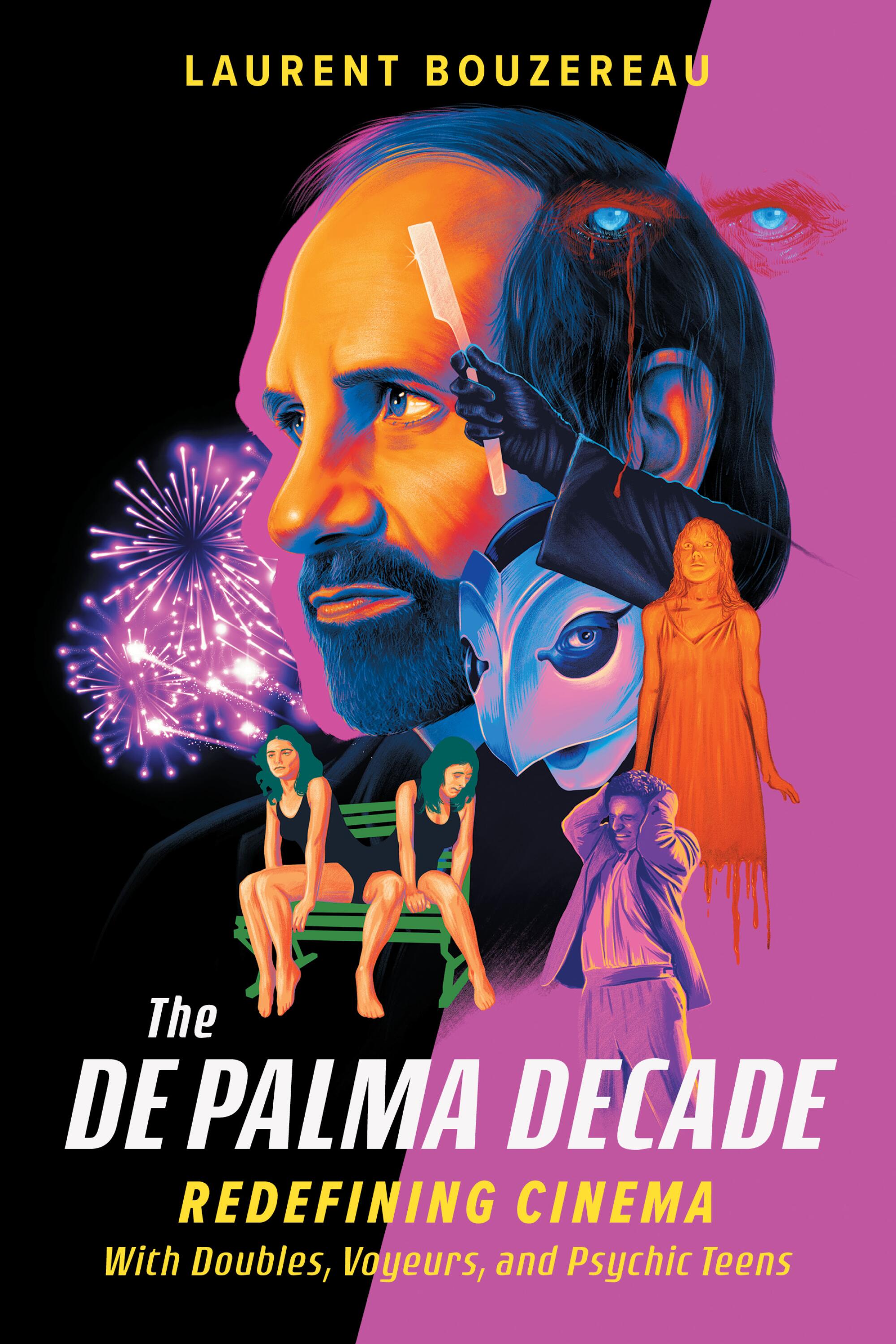
The De Palma Decade book cover

“The De Palma Decade” unfolds as a series of oral histories plus copious plot summary, featuring interviews with De Palma — or, as Bouzereau refers to him near the book’s beginning, “Brian” — and an array of his cast and crew members through the years. Walking through these pages you’ll find the likes of Amy Irving (“Carrie,” “The Fury”), film editor Paul Hirsch (who won an Oscar for cutting “Star Wars”) and Chicago theater veteran Dennis Franz, who, as De Palma devotees know, warmed up for his signature work in “Hill Street Blues” and “NYPD Blue” by playing cops in “The Fury” and, most delightfully, “Dressed to Kill.”

Advertisement

Bouzereau did some reporting, and some of his subjects actually have something to say. De Palma talks about the importance of music in setting the tone for his long, dialogue-free scenes (like that museum sequence). Hirsch riffs on the different approaches taken by “The Fury” stars Kirk Douglas and John Cassavetes: Douglas, who attacked his role with vim, came in hot but fizzled in later takes, while it took Cassavetes, who often booked acting jobs to help pay for the movies he wanted to make himself, about 10 takes to get loose. Nestled between the platitudes of “The De Palma Decade” are some genuine insights into the filmmaking process.

But the author’s unabashed adoration of De Palma can be a hindrance to deeper understanding. Bouzereau touches on the primary controversy surrounding “Dressed to Kill,” that “De Palma conflates transness with mental illness and homicidal behavior.” Caine’s character does indeed come across as a trans person whose conflicted identity leads him to kill. Here we go. Bouzereau is going to ask his hero how he views all of this now. And then … he doesn’t. Instead, De Palma says a little about how his screenplay for “Cruising,” a movie ultimately written and directed by William Friedkin, led to some of his ideas for “Dressed to Kill.” With that, the author lets him skate, onto the next platitude. Early on, Bouzereau writes that he has “no intention here to make a social treaty or statement or defend the controversial aspects of De Palma’s work” (perhaps he means “treatise,” not “treaty”). Fair enough. But the idea of handling such a gleeful provocateur with kid gloves seems to somehow miss the point of De Palma’s work.

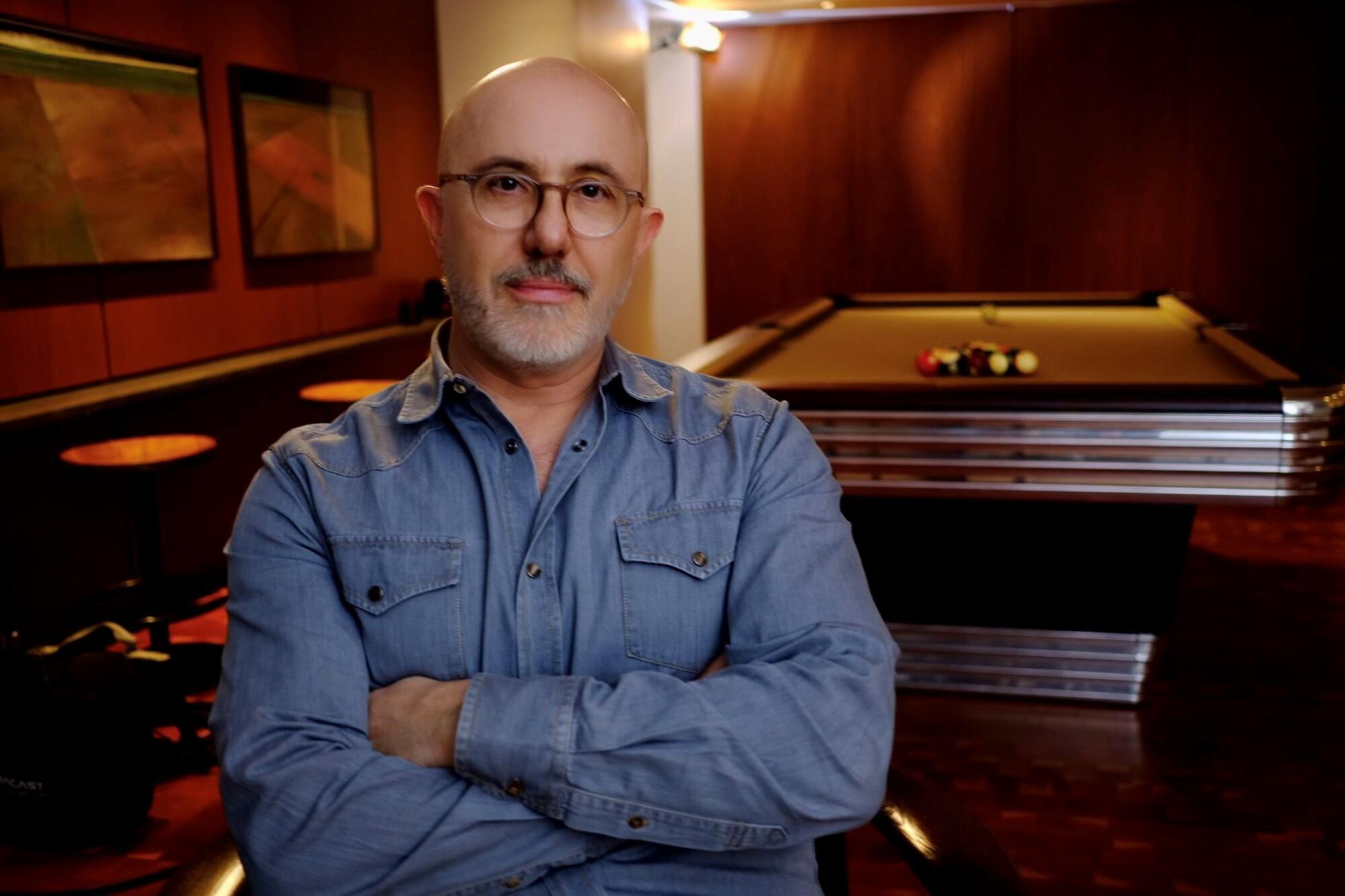
A man folds his arms across his blue shirt and looks straight ahead while sitting in front of a pool table.

Laurent Bouzereau’s unabashed adoration of Brian De Palma can be a hindrance to deeper understanding.

(Travers Jacobs)

The book covers seven films, organized thematically into three sections: The Split (“Sisters” and “Dressed to Kill”), The Power (“Carrie” and “The Fury”) and The Tragedies (“Phantom of the Paradise,” “Obsession” and “Blow Out”). “The Split,” of course, has multiple meanings for De Palma, who used split screens not merely as an aesthetic exercise: Like many an artist of the macabre, going back at least to Edgar Allan Poe, he also made bloody hay out of the theme of doubling, and the terror and instability inherent to the idea of a divided self.

Advertisement

By the time he made “Sisters,” in 1972, De Palma had already done a few scrappy counterculture features, including “Greetings” (1968), “The Wedding Party” (1969) and “Hi, Mom!” (1970). But “Sisters,” a proper freakout starring Margot Kidder, playing conjoined twins, is the first of what we now think of as a De Palma movie: a psychosexual nightmare with madman instincts. Viewed with the hindsight of 52 years, it feels of a piece with other rule-breaking, devil-may-care horror films of the period, including George Romero’s “Night of the Living Dead” (1968), Wes Craven’s “The Last House on the Left” (1972) and David Cronenberg’s “Shivers” (1975).

It is, in other words, the real deal. Paradoxically, it also marks De Palma’s true entry into the sincerest form of flattery, the imitation game. Bouzereau starts his defense early, asking, “Is it fair to label De Palma a copycat? Isn’t he, rather, the legitimate heir to the Hitchcock kingdom?” He may, in fact, be both.

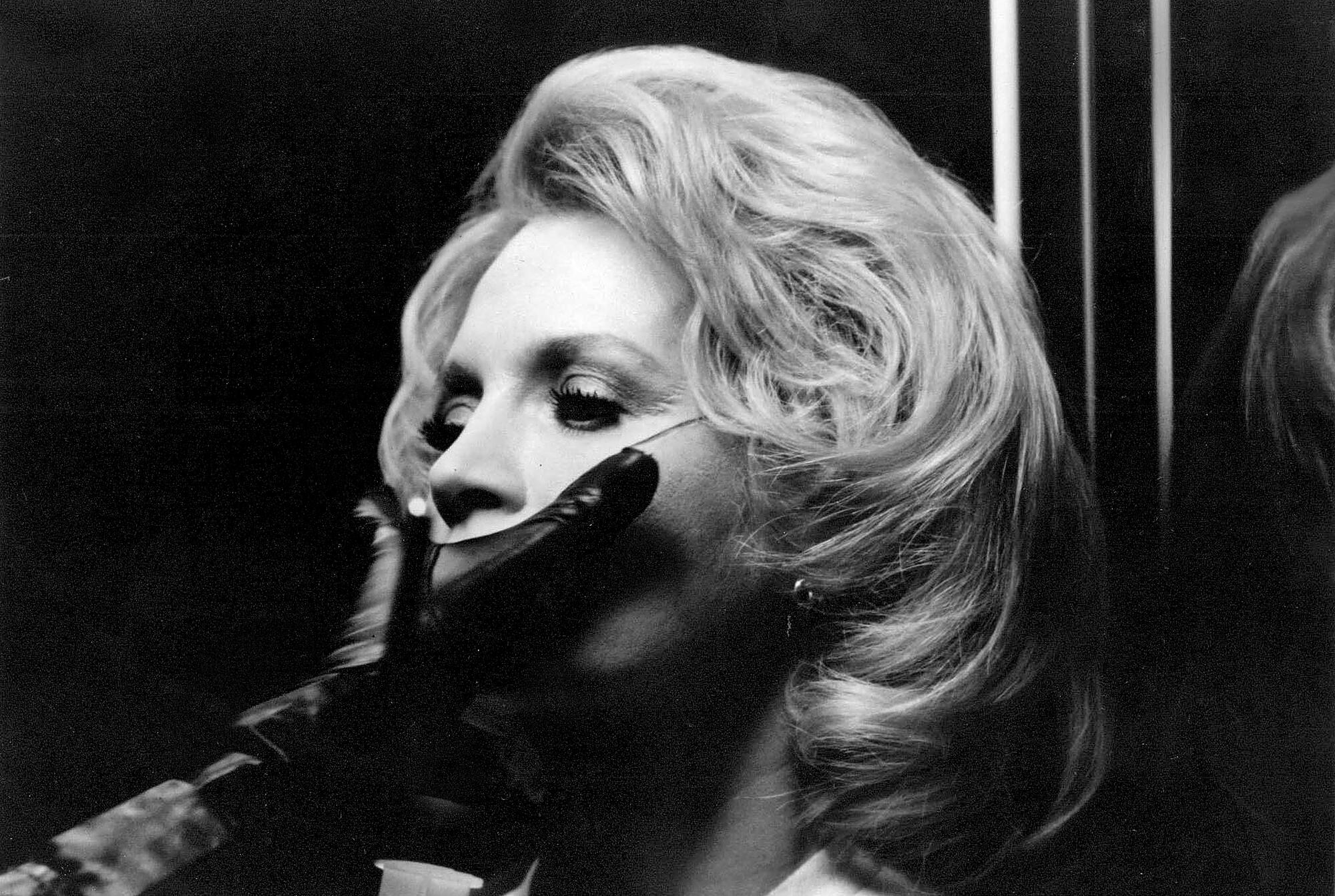
Angie Dickinson's face is held by a black gloved hand.

Angie Dickinson is trapped in an elevator by a psychotic killer in director Brian De Palma’s 1980 movie “Dressed to Kill.”

(Filmways Pictures)

De Palma’s slavish emulation of Hitchcock runs through numerous films, and with notable specificity. Someone witnesses a murder in the apartment across the way, a la “Rear Window” (“Sisters,” “Body Double”). A blond star is murdered in a movie’s first act, as in “Psycho” (“Dressed to Kill,” which also throws in a couple of shower scenes and an obtuse expert explaining why a man dresses as a woman). He bows to “Vertigo” on multiple occasions, including “Blow Out” (man suffers the same tragedy twice, unable to prevent murders he has indirectly enabled) and, more directly, “Obsession,” about a grief-stricken man who reconstructs a lost lover. In these movies De Palma is almost like a hip-hop producer, mixing samples of different songs to create a new whole. He is director as collagist.

Advertisement

By focusing on De Palma’s ‘70s output (“Blow Out” and “Dressed to Kill” are technically early-‘80s movies, but exact decades can be imprecise markers of an artist’s thematic output), the book opts to pull up short of the director’s next, in many ways more eclectic, period. The ‘80s brought, among others, the opulence of “Scarface” (the subject of a pair of recent books, by Glenn Kenny and Nat Segaloff), the undiluted sleaze of “Body Double,” the mainstream success of “The Untouchables” and the underrecognized Vietnam War drama “Casualties of War.” If you seek a more comprehensive study, check out Noah Baumbach and Jake Paltrow’s fine 2015 documentary “De Palma.” In “The De Palma Decade,” the filmmaker gets a more precise spotlight. And he couldn’t have asked for a more devoted fan to shine it.

Movie Reviews

‘Michael’ Review: A Perfect Puzzle With Major Missing Pieces

Published

on

‘Michael’ Review: A Perfect Puzzle With Major Missing Pieces
Lionsgate

SPOILER NOTICE:

The following movie review does not contains direct spoilers for the film Michael, however general information in regards to the plot, characters, key climax points, biographical information and themes explored in the film will be heavily discussed. Please read at your own discretion, or after seeing the film in theaters.

There have been, so far, four films that aim to depict some portion of the beautifully tragic life of late pop music pioneer Michael Jackson, otherwise known to the world as The King Of Pop.

You’ve got The Jacksons: An American Dream, the near-perfect 1992 ABC miniseries that gave MJ, his brothers and verbally abusive father Joe Jackson equal screen time in order to make for a proper origin story. Then there’s Man in the Mirror: The Michael Jackson Story, an abysmal 2004 VH1 TV movie that acts as a spiritual sequel yet truly should’ve never been made. Almost a decade ago we got Michael Jackson: Searching for Neverland, the 2017 Lifetime Network attempt to cover his final years of life, told from the perspective of two bodyguards employed by him for merely two-and-a-half years.

Today (April 24), the world finally gets to see Michael. The 2026 true-to-form biopic boasts the biggest budget compared to the previous three projects, distribution handled by the renowned Lionsgate Films, a director’s chair occupied by Antoine Fuqua (Training Day, Brooklyn’s Finest) and MJ’s own nephew, Jaafar Jackson, starring in the titular role alongside a glowing supporting cast that includes Colman Domingo (Rustin), Nia Long (Love Jones), Miles Teller (Divergent) and Larenz Tate (Menace II Society) just to name a few. Not to mention, it’s got full backing from The Jacksons family and 100% musical clearance to assure his biggest hits are heard on the big screen.

Advertisement

With all that said, you might be expecting a masterpiece that borrows the best aspects from the original and rights the wrongs of the last two. Unfortunately, that’s not the case when it comes to Michael. Thankfully though, there’s so much more to love about this film in addition to a very strong potential for more.

Yes folks, we may very well be getting the first-ever sequel to a biopic sometime in the near future.

RELATED: You, Me & Tuscany Review – Sappy, Sweet, C+ Rom-Com

Before we get ahead of ourselves by discussing a potential sequel, let’s first start off with what you get out of Michael. The film covers Joe’s formation of The Jackson 5 in 1966 and ends with MJ’s iconic 1988 Wembley Stadium stop on the Bad Tour. The filler in-between covers their Chitlin’ Circuit days, the Motown era, run-ins with Gladys Knight and The Pips, finding his voice with Off The Wall, the epic creation of Thriller, the Motown 25 NBC special and the infamous Pepsi burning incident. Each of these scenes are done with great detail and a passion from all involved to get it as close to the real-life moments. However, what’s missing stands out like a sore thumb.

Both Rebbie and Janet are nowhere to be found — they each requested their likeness not be depicted — and neither is MJ’s longtime muse, Diana Ross. It was reported that actress Kat Graham was actually casted in the part, only to later have her scenes cut completely due to legalities. Off The Wall also gets painted as his solo debut of sorts, completely ignoring the four successful solo albums that preceded it when he was just a preteen. Also, while it’s perfectly clear who the movie is about based on the title, it does feel a bit off to see the closest people in his life demoted to barely-speaking supporting characters, save for Domingo’s powerful portrayal as mean ol’ Joe, Long as the ever-caring Mrs. Katherine and longtime bodyguard Bill Bray played by KeiLyn Durrel Jones.

Advertisement

On the positive side, Michael ultimately does more good than confusion. Jaafar is simply captivating when it comes to embodying his late superstar uncle, nailing everything from those easily-recognizable voice inflections to the classic dance moves. The film ends in 1988, right before MJ invests in Neverland Ranch, so don’t expect the heavy topic of his acquitted child sexual abuse allegations from 1993 and 2003 to be brought up either — well, yet anyway.

If in fact a “Jackson” sequel is in the works, we can only hope his full story is told with care, respect and most importantly the truth. Other important aspects we’d hope to see be depicted include an honest look at his vitiligo journey, the toll he suffered mentally as a result of the trials, the marriage, the kids, the dichotomy of balancing unprecedented riches against a substantial amount of debt and, yes, the prescription drug abuse that ultimately ended his life.

Overall, for everything Michael lacks there is something just as good to love about the film, and the potential for a sequel gives us hope that the best is still yet to come.

Watch the trailer for Michael below, and see for yourselves how The King Of Pop’s story began as his latest biopic hits theaters starting today:

Continue Reading

Entertainment

Stagecoach 2026: How to watch Friday’s livestream with Cody Johnson, Ella Langley, Bailey Zimmerman

Published

on

Stagecoach 2026: How to watch Friday’s livestream with Cody Johnson, Ella Langley, Bailey Zimmerman

Choosin’ to stay home instead of trekking out to Indio for this weekend’s Stagecoach festival? Don’t worry, you’ll be able to listen to all the country music your heart desires. You can get your country heartbreak on with Ella Langley, Bailey Zimmerman and Cody Johnson, and then rock out with Counting Crows. If you prefer EDM, you can catch Diplo and Dillstradamus (Dillon Francis and Flosstradamus) as Friday’s closing acts.

The festival will be livestreamed on Amazon Music, Amazon Prime Video and Twitch beginning at 3 p.m. On Sirius XM’s The Highway (channel 56), you can listen to exclusive interviews and live performances along with a special edition of the Music Row Happy Hour. The station Y’Allternative will also be covering the festival on Friday evening.

Here are updated set times for the Stagecoach livestream Friday performances (times presented are PDT):

Channel 1

3:05 p.m. Noah Rinker; 3:25 p.m.; Adrien Nunez; 4 p.m. Ole 60; 4:25 p.m. Avery Anna; 5 p.m. Chase Rice; 5:55 p.m. Nate Smith; 6:50 p.m. Ella Langeley; 7:50 p.m. Bailey Zimmerman; 8:55 p.m. the Red Clay Strays; 10 p.m. Cody Johnson; 11:30 p.m. Diplo

Advertisement

Channel 2

3:05 p.m. Neon Union; 3:25 p.m. Larkin Poe; 4 p.m. Marcus King Band; 4:50 p.m. Lyle Lovett; 5:35 p.m. BigXthaPlug; 6:30 p.m. Noah Cyrus; 7 p.m. Wynonna Judd; 8 p.m. Counting Crows; 8:50 p.m. Sam Barber; 10 p.m. Dan + Shay; 10:45 p.m. Diplo featuring Juicy J; 11:05 p.m. Rebecca Black; 11:45 p.m. Dillstradamus

Sirius XM Music Row Happy Hour

1 p.m. Avery Anna; 2 p.m. Nate Smith; 2:30 p.m. Josh Ross; 3 p.m. Cody Johnson; 3:30 p.m. Gabriella Rose; 5:15 p.m. Nate Smith; 7:50 p.m. Bailey Zimmerman; 9:30 p.m. Cody Johnson; 11 p.m. Diplo

Sirius XM Y’Allternative

5 p.m. Ole 60; 6 p.m. Larkin Poe; 7 p.m. Marcus King Band; 8 p.m. Sam Barber

Advertisement
Continue Reading

Movie Reviews

Movie Review: The Mortuary Assistant – HorrorFuel.com: Reviews, Ratings and Where to Watch the Best Horror Movies & TV Shows

Published

on

Movie Review: The Mortuary Assistant – HorrorFuel.com: Reviews, Ratings and Where to Watch the Best Horror Movies & TV Shows

Forget the “video game movie” curse; The Mortuary Assistant is a bone-chilling triumph that stands entirely on its own two feet. Starring Willa Holland (Arrow) as Rebecca Owens, the film follows a newly certified mortician whose “overtime shift” quickly devolves into a grueling battle for her soul.

What Makes It Work

The film expertly balances the stomach-churning procedural work of embalming with a spiraling demonic nightmare. Alongside a mysterious mentor played by Paul Sparks (Boardwalk Empire), Rebecca is forced to confront both ancient evils and her own buried traumas. And boy, does she have a lot of them.

Thanks to a full-scale, practical River Fields Mortuary set, the film drips with realism, like you can almost smell the rot and bloat of the bodies through the screen.

The skin effects are hauntingly accurate. The way the flesh moves during surgical scenes is so visceral. I’ve seen a lot of flesh wounds in horror films and in real life, and the bodies, skin, and organs. The Mortuary Assistant (especially in the opening scene) looks so real that I skipped supper after watching it. And that’s saying something. Your girl likes to eat.

Co-written by the game’s creator, Brian Clarke, the movie dives deeper into the demonic mythology. Whether you’ve seen every ending or don’t know a scalpel from a trocar, the story is perfectly self-contained. If you’ve never played the game, or played it a hundred times, the film works equally well, which is hard to do when it comes to game adaptations.

Advertisement

Nailed It

This film does a lot of things right, but the isolation of the night shift is suffocating. Between the darkness of the hallways and the “residents” that refuse to stay still, the film delivers a relentlessly immersive experience. And thankfully, although this movie is filled with dark rooms and shadows, it’s easy to see every little thing. Don’t you hate it when a movie is so dark that you can’t see what’s happening? It’s one of my pet peeves.

The oh-so-awesome Jeremiah Kipp directs the film and has made something absolutely nightmare-inducing. Kipp recently joined us for an interview, took us inside the film, discussed its details and the game’s lore, and so much more. I urge you to check out our interview. He’s awesome!

The Verdict

This isn’t just a cash-grab; it’s a high-effort adaptation that respects the source material while elevating the horror genre. With incredible special effects and a powerhouse cast, it’s the kind of movie that will make you rethink working late ever again. Dropping on Friday the 13th, this is a must-watch for horror fans. It’s grisly, intelligent, and genuinely terrifying.

Continue Reading
Advertisement

Trending
