Culture
Where do the 2024 Chicago White Sox rank among the worst teams in any sport?


By Rustin Dodd, Zack Meisel and Andy McCullough
When the Tampa Bay Buccaneers snapped a record 26-game losing streak in December 1977, head coach John McKay tried to look on the bright side.
“Three or four plane crashes and we’re in the playoffs,” he said.
It was hard to blame him. The year before, the Bucs had finished 0-14 in their inaugural season, stamping their place among the worst teams in the history of professional sports.
The list includes the winless, the hopeless, and the talentless. One owner traded all of his good players to his other team. This year, the list includes a new applicant: The 2024 Chicago White Sox.
This year, the South Siders set the modern MLB record for the most losses in a season, topping the 1962 New York Mets Friday night with loss No. 121 — and they’re not done yet. Here’s where the White Sox rank among a baker’s dozen of the worst teams ever.
So awful they were forgettable
13. 2011-12 Charlotte Bobcats, NBA, 7-59, .106
Before the season, the Bobcats’ owner sized up his team’s chances this way: “Who knows how good we can be? We’ve got some good pieces that can help us get to the playoffs. I’m not waiting until next year. I think we have a good quality basketball team this year.”
It was a rare airball from perhaps the greatest basketball player who ever lived. Michael Jordan won six NBA Finals MVP awards. His Bobcats won seven regular season games during the 2011-12 season. Jordan flirted with immortality as a player, and then as an owner he oversaw the perhaps most vincible NBA team ever assembled.
Sure, that season was shortened to 66 games because of a lockout, but the Bobcats weren’t exactly trending well toward the end. They dropped their final 23 games. Otherwise, 7-59 might have become 9-73 or 10-72 or, hell, 7-75.
Their seven wins were one-third the total of the next-worst team. Their 87.0 points per game are the lowest by any team in the last 20 years. They lost by double digits 38 times and by at least 20 points on 22 occasions. Their .106 winning percentage is the worst in NBA history. Their head coach, Paul Silas, reportedly shoved forward Tyrus Thomas “toward his locker” after a loss to the Boston Celtics because Thomas had been “fraternizing” with the opposition. — ZM
12. 2011 Tulsa Shock, WNBA, 3-31, .088
When the WNBA’s Detroit Shock relocated to Tulsa for the 2010 season, legendary former Arkansas coach Nolan Richardson took over as head coach. In 2011, the team put a new spin on “40 Minutes of Hell.”
Gutted by departures, the 2011 Shock began the season with a 1-10 record before Richardson resigned. It didn’t get better. Under new coach Theresa Richards, the team finished 3-31, setting a WNBA record for worst winning percentage (.088). The team finished last in points per game, second to last in points allowed, and set a record for consecutive losses (20) — later matched by the 2023 Indiana Fever. “What can I say?” Richards said. “I’m the one in the seat.”
The Shock lasted just four more seasons in Tulsa before moving to Dallas. — RD
Maybe relegation is a good idea
Derby County’s Steve Howard after yet another loss, this one to Crystal Palace. (Ryan Pierse / Getty Images)
11. 2007-08 Derby County, English Premier League, 1-29-8, .026
In 2023-24, Sheffield United set a Premier League record by allowing 104 goals in 38 games. And yet in terms of sheer awfulness, they can’t touch the Derby County side from 2007-08, which won just one match and accumulated just 11 points, the worst since the league began in 1992.
Manager Billy Davies was out after just 14 matches. His replacement, Paul Jewell, did not experience a win. Neither did anyone during the club’s final 32 matches — a record for top-flight football.
Derby County also set the record for fewest goals (20) and most defeats (29). They were relegated after the season and have never played their way back to the Premier League. As The Athletic’s Duncan Alexander wrote earlier this year, “ … no side will ever go as low as 11 points again, but Derby at least have had the sense to never return.” — RD
There’s no earthly reason they should have been this bad
10. 1972-73 Philadelphia 76ers, NBA, 9-73, .110
In his memoir, Tom Van Arsdale, a 6-5 shooting guard who joined the Sixers in January 1973, compared the team to a “burnt, faded, broken-down used lemon with the sticker price so low it was almost offensive.”
The team set the NBA record for losses with 73.
Their head coach was Roy Rubin, a New Yorker who was hired from Long Island University to replace Jack Ramsay, and then lasted just 51 games, finishing with a 4-47 record. In a 2023 story for ESPN, center John Block described Rubin as “a nice guy, but he really, really had a hard time coaching.”
Block later moved to Florida and operated an IHOP restaurant.
Philadelphia had been in a general state of decline since losing Wilt Chamberlain after the 1967-68 season. But it had never been this woeful. The Sixers endured a 14-game losing streak that started in December, snapped the skid on Jan. 7, 1973, and then promptly lost another 20 games in a row.
The best player on the ‘72-73 Sixers was guard Fred Carter, who doubled as the best story. The upbeat Carter, who hung around Philly for four more seasons, was later credited with helping popularize the fist bump with his Sixers teammates. — RD
9. 2003 Detroit Tigers, MLB, 43-119, .265
This could have been the team the 2024 White Sox were chasing, if not for a miraculous recovery in the final week of the season. The Tigers started the season 1-17. By late September, they were 38-118 and on the verge of eclipsing those ’62 Mets as the most pitiful outfit to ever step foot on a modern big-league diamond.
It wasn’t as though this came out of left field. As team architect Dave Dombrowski recalled to The Athletic last year: “We didn’t expect to have a good season, by any means.” As the club reached triple digits in the loss column in late August, though, they started eyeing that Mets record and computing how they could steer clear of it.
With 20 games remaining, they knew they needed six more wins to avoid infamy. With six games remaining, they still needed five more wins. They surged to the finish line, though, and now, they’re merely a footnote in the annals of baseball ineptitude.
“It was almost like winning the World Series,” said outfielder Craig Monroe about that frantic finish to the season, which included Detroit’s biggest comeback win in 38 years. “Doesn’t that sound crazy as hell?”
Why, yes, it does. — ZM
Expansion? How about contraction instead?
8. 1992-93 Ottawa Senators, NHL, 10-70-4, .119
The headline writers at the Ottawa Citizen could not contain their glee when the Senators returned to town after a 56-year absence: “Maybe Rome was built in a day,” the paper declared after the Sens defeated the Montreal Canadiens in the first game of the season. “10,449 fans went wild, and it was magical,” a sub-hed read.
They were wrong about Rome — and they were wrong about the new hometown team.
Ottawa did not win again until its 23rd game. The rest of the season went about the same way. The team won just once — once! — on the road. And that happened in the 81st game. The club finished with 24 points, 34 points behind the Hartford Whalers in the Adams division. Not ideal. — AM
7. 1974-75 Washington Capitals, NHL, 8-67-5, .100
When the Washington Capitals and Kansas City Scouts joined the NHL for the 1974-75 season and proceeded to have two of the worst years in league history, a general opinion formed around the league: Expansion was a mistake.
The Scouts were awful. The Capitals were even worse, finishing a shocking 8-67-5, including an incredible 1-39 on the road. The Capitals allowed a record 446 goals. They lost four games by at least 10 goals. The reason was simple enough: The NHL had tipped the scales against the new franchises, allowing the league’s incumbent teams to protect all of their good players.
“It’s not fair,” Capitals GM Milt Schmidt told The New York Times in 1974. “We paid $6 million to join the league, and look how little the other teams have left for us.”
When the Capitals did win their one and only road game, they returned to the dressing room and paraded a trash can around the room like it was the Stanley Cup. — RD
6. 1976 Tampa Buccaneers, NFL, 0-14, .000

Head Coach John McKay and his Bucs didn’t have much, but they did have those distinctive uniforms. (Focus on Sport / Getty Images)
Hamstrung by inequitable expansion rules, the Buccaneers had a roster of aging veterans (many of whom would injure their hamstrings) and unproven young players. They set a new standard for professional incompetence.
The Bucs did not score until their third game and did not record a touchdown until their fourth. They did manage to place 17 players on the injured reserve, an unofficial record. In all the Bucs were outscored 412- to-125, including a 42-0 loss at Pittsburgh and a 34-0 loss at the Jets. And before the season opener, head coach John McKay famously got lost in the Astrodome tunnels.
The creamsicle uniforms were nice, but the team plane was not. In an NFL Films segment, future Hall of Famer Lee Roy Selmon — as a rookie, perhaps the team’s lone bright spot — relayed a story about how the Bucs’ old plane, which always seemed to break down, was leased from the owner of a chainsaw company, complete with a chainsaw logo on the side: “Right away,” he said, “I was a little worried.” — RD
5. 1962 New York Mets, MLB, 40-120, .250
“Can’t anybody here play this game?” Mets manager Casey Stengel famously asked.
The answer was no. (Well, Frank Thomas and Richie Ashburn were decent.)
The Mets finished 40-120, setting the modern era record for losses. Their exploits were legendary: Their pitchers posted a team ERA of 5.04. They committed 210 errors. Nearly 25 percent of their wins came during a 9-3 spurt in May. Nineteen players would never play another season in the majors. Perhaps no moment symbolized the 1962 Mets like the day Marv Throneberry missed first base against the Cubs while hitting a potential game-winning RBI triple with two outs. When the Cubs appealed to first and Throneberry was called out, erasing the runs, the umpire had a message for an upset Stengel. “Casey, I hate to tell you this,” he said, “but he also missed second.” — RD
The 0-16 Club

The 2017 Cleveland Browns found themselves looking up at pretty much every team ever. (Patrick Smith / Getty Images)
4. 2017 Cleveland Browns, NFL, 0-16, .000
Hue Jackson guaranteed the Browns would not repeat their 1-15 record from 2016. If that happened, he vowed, he would plunge into the choppy, chilly waters of Lake Erie.
And he was right! The Browns did not produce another 1-15 showing in 2017. No, they went winless.
They ranked last in the league in points per game and second-to-last in points allowed per game. All season, they started a raw second-round pick from Notre Dame, DeShone Kizer, who tossed twice as many interceptions as touchdown passes. Only one player, the bac”kup running back, recorded 400 or more receiving yards.
When the season ended, fans organized a parade to protest the franchise for its annual incompetence. They marched around the stadium in subzero temperatures, shouting: “What do we want? Watchable football! When do we want it? Now!” Some Browns fans sported No. 16 jerseys with the name “Owen” on the back. Some Lions fans made the trip to commiserate with the new members of the winless club.
Jackson finally waded into Lake Erie the following June. “It’s going to be a cleansing of our organization,” he declared. He was fired four months later, leaving Cleveland with a 3-31-1 record. — ZM
3. 2008 Detroit Lions, NFL, 0-16, .000
The question, in retrospect, is one of the funniest in the modern history of American sports press conferences. The Lions had just lost, 42-7, giving up more than 30 points for the 12th time in 15 games. The team’s defensive coordinator, Joe Barry, just so happened to be the son-in-law of head coach Rod Marinelli. As Marinelli spoke to the media, Detroit News columnist Rob Parker could not resist.
“On a light note,” Parker ventured, “do you wish your daughter would have married a better defensive coordinator?”
Enough time has passed that hopefully we can admit it: That’s a good zinger.
The Lions were the first NFL team to ever go winless in a 16-game season. The feat was matched nine years later by the Cleveland Browns. But the 2017 Browns were outscored by 176 points. The 2008 Lions? Try a point-differential of negative-249.
Marinelli, understandably, did not take it well. Parker dealt with plenty of blowback; he was suspended by the newspaper and eventually resigned. But he remains a fixture in the sports media landscape. Marinelli was never a head coach again. — AM
The Applicant
2. 2024 Chicago White Sox, MLB, record unknown
There’s an old adage, often attributed to Mark Twain, that says humor equals tragedy plus time.
There will come a time in the future when the 2024 White Sox will be remembered in a way that most baseball teams are not. Many of the teams on this list have not been assembled or competing for decades, but their exploits will never die.
Two players colliding as the opposing announcer declares the moment “full White Sox?” Andrew Benintendi likening the team to a “dead horse?” A 21-game losing streak that tied the AL record?
At some point, these will be colorful and funny details.
It just takes time.
The White Sox had a 4-40 stretch. They lost 27 of 28 at home. They became the first team since the 1916 A’s to fall 81 games under .500.
You can go on.
History will judge the 2024 White Sox. But they are not the worst team of all time. — RD

The Cleveland Spiders’ legacy lives on. (Quinn Harris / Getty Images)
The Worst Team of All Time
1. 1899 Cleveland Spiders, MLB, 20-134, .130
Frank and Stanley Robison owned both the Cleveland Spiders and St. Louis Perfectos, and believing that St. Louis was the better bet to make money going forward, they stripped the Cleveland roster of all its talent and stacked St. Louis instead. Before the season, they swapped Cy Young and other stars with players who did not eventually have distinguished awards named after them. And so the Spiders became the most futile baseball team of all time, a sad-sack bunch destined to fail before they ever took the field.
The Spiders endured a 24-game losing streak. They lost 40 of their last 41 games. They finished the season with a run differential of minus-723. They trailed first-place Brooklyn by 84 games in the final standings. During the summer-long funeral procession, the Cleveland Plain Dealer stopped referring to them as the Spiders and instead dubbed them the Cleveland Exiles or the Cleveland Forsakens.
Following a 4-2 Spiders win on Aug. 25 against the New York Giants, the Plain Dealer printed: “An eighth wonder has come into the world and the Colossus of Rhodes, the Pyramids, the Statue of Zeus and the rest of the seven wonders had better look to their laurels. Cleveland has won another game. How it happened is beyond explanation. … They put up such a sharp, fast game that the 200 people who had gone out to League Park to get a little fresh air and take a quiet siesta were soon aroused to something very close to enthusiasm.” The Spiders wouldn’t win again for three-and-a-half weeks.
Fans bailed on supporting the intentionally depleted roster, so the club wound up traveling for most of its games. They embarked on a 50-game trip in July and August, on which they went 6-44. Even the team’s uniforms stunk, according to the Plain Dealer, which wrote: “Now they are obliged to wear the castoff uniforms of the St. Louis Browns, all of which are plenteously adorned with patches.”
The Spiders were promptly booted from the National League and disbanded. Cleveland baseball was reborn in 1901 as a charter member of the American League with a franchise that still stands today as the Guardians. — ZM
(Illustration by Meech Robinson / The Athletic; Photos: Quinn Harris / Getty Images, Gregory Shamus / Getty Images, David T. Foster III / Charlotte Observer / MCT)



Welcome to Great Adaptations, the Book Review’s regular multiple-choice quiz about printed works that have gone on to find new life as movies, television shows, theatrical productions and more. With ancient Greek texts back in the cultural conversation — thanks to the new film based on Homer’s “Odyssey” — this week’s challenge highlights screen adaptations of other Greek plays, poems and histories. Just tap or click your answers to the five questions below. Scroll down after you finish the last question for links to the works and their screen versions.
Homer’s “Odyssey” has been translated into English countless times, with versions ranging from contemporary and accessible to highly poetic. A.O. Scott, critic at large for The New York Times Book Review, breaks down three translations and explains which one might be right for you.

Among the many complaints made about the modern American novelist, the loudest, if not the most intelligent, has been the charge that he is not speaking for his country. A few seasons back an editorial in Life magazine asked grandly, “Who speaks for America today?” and was not able to conclude that our novelists, or at least our most gifted ones, did.
This opening paragraph is from an essay titled “The Fiction Writer and His Country” by a writer whose work was influenced by Catholicism, the rural South and peacocks. Who was it?
-

 Los Angeles, Ca1 hour ago
LADWP begins long-term repairs after West Hollywood water main rupture
-

 Detroit, MI2 hours ago
Livestream: Mayor Sheffield, Detroit health chief to address wildfire smoke threat
-
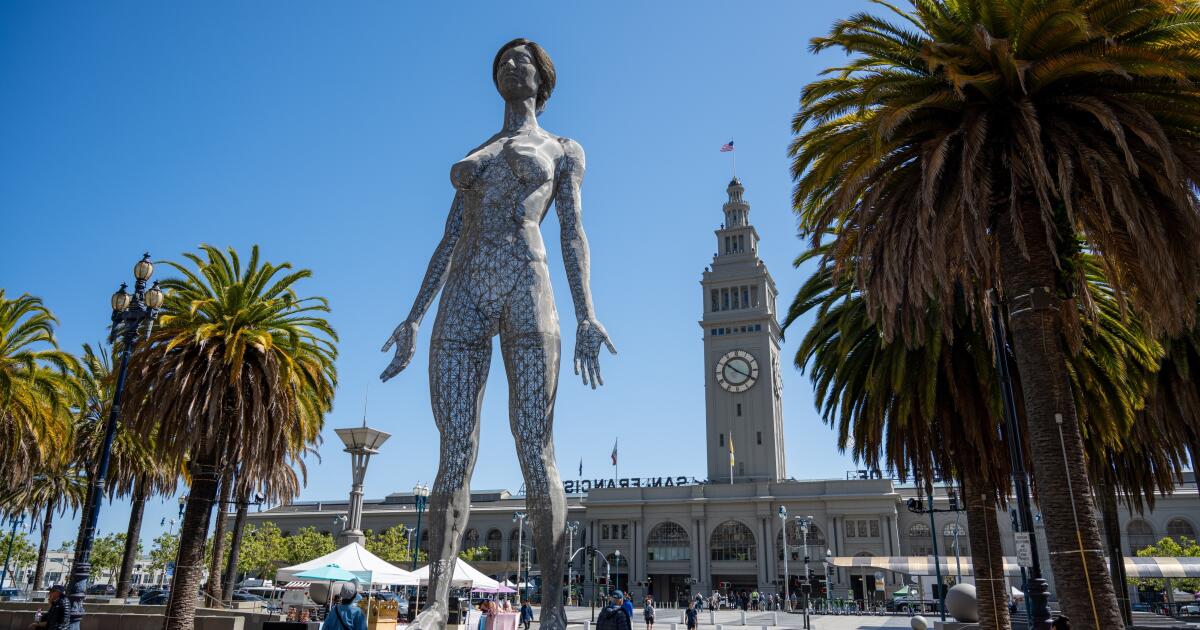 San Francisco, CA2 hours ago
A sculpture of a giant naked woman goes on sale in San Francisco. Bring a crane
-

 Dallas, TX2 hours ago
No ‘straight answer’: Why Pioneer Cemetery is the latest battleground at City Hall
-

 Miami, FL2 hours ago
TSA hosts news conference ahead of World Cup third place match at Miami Stadium
-

 Boston, MA2 hours ago
ICE Boston arrests Barbados national during targeted operations in Attleboro
-

 Denver, CO2 hours ago
Denver Broncos training camp is 2 weeks away
-

 San Diego, CA2 hours ago
Daily Business Report: July 17, 2026, San Diego Metro Magazine

