Culture
Inside the mind of Luis Severino: Mets pitcher breaks down a start pitch by pitch


TORONTO — Luis Severino has just finished his pregame work on a sunny Wednesday in Toronto. This was a simple day, catch, as the right-hander prepares for the 29th and most important start of his season, Saturday in Philadelphia.
Severino’s emergence as a reliable option in the Mets’ rotation is one of the main reasons New York’s starting staff has been a strength. The rotation ERA sits, like the Mets themselves, sixth in the National League with 16 games to go.
Severino is slated to start four of those remaining 16 games: twice against the first-place Phillies, once against rival Atlanta and, if needed, in the season finale against first-place Milwaukee. Few Mets loom as critical down the stretch as the rebound candidate who has been everything they could have wanted.
And to this point, this season has been everything Severino could have wanted.
“I haven’t done it in so long,” Severino says, smiling. “It feels really good. It feels really good to compete at this level and be healthy for so long this year.”
To get a better understanding of how Severino works — before a start and within a start — The Athletic sat down with him, scorecard in hand, to go inning by inning, batter by batter through his last start against the Cincinnati Reds. In Sunday’s 3-1 loss, Severino pitched 6 2/3 innings and allowed one run — the 12th quality start of his season.
It’s a window into the veteran’s mind at the most important juncture of the season.
Pregame
Severino previously faced the Reds in his second start of the season, on April 6. In that game, he went five innings, allowing two runs (one earned) on three hits. His main takeaway from that game was the two walks he issued — he remembered it being a higher number — and how he couldn’t issue the same kind of free passes to Cincinnati this time around.
Severino’s prep work for a start involves a lot of video study — “what they do good, what they do bad, the last 10 at-bats against a righty with my similar arm angle,” he said. “I look at the pitch sequences: What are they looking for behind in the count?”
Who are those pitchers with a similar arm angle?
“I’ve got the Phillies next. (Miami’s Edward) Cabrera threw a good game against Philadelphia — seven scoreless innings. So I’ll go to that,” Severino said. “He’s similar to me. He throws hard, his changeup is like a sinker, he’s got a good slider. I’ll go to that guy and see what he did good and why he was successful.”
Severino then blends his scouting report with one from his catcher — it’s Luis Torrens in this start — to create a game plan. Cincinnati presents one specific challenge.
“They have runners,” Severino said. “Almost everybody runs there, so understanding I have to be quick to the plate. Any hit or any double, they’re going to try to score. I have to keep that in mind. I’d rather them hit the ball hard than walk somebody.”
First inning
Jonathan India is the Reds’ leadoff batter. Severino starts him with a fastball, sweeper and sinker in that order. He likes to establish that sinker and sweeper, in particular, right away.
“It’s like a little message to the hitters: Don’t get comfortable at the plate,” he said. “I’ve got a sinker in and also a sweeper away. If I do that from the beginning, then they have a different idea of how to approach me in the second at-bat.”
He catches India looking on a full-count sinker. Next up is Elly De La Cruz, the Reds’ shortstop sure to get down-ballot MVP votes in his first full season in the majors.
“He’s the main guy there,” Severino said. “He’s the guy who’s got power, he can run. We either make good pitches to this guy or even 3-2, we’re not giving up. We’re going to throw a nasty pitch and he either swings or goes to first base. That’s the guy I don’t want to let beat me.”
He doesn’t in the first inning, as Severino retires the side in order.
Second inning
To start the second inning, Severino retires Ty France and Jake Fraley on one pitch each. Does that change how he attacks Santiago Espinal with two outs?
“I’m going after the third hitter right away,” he said. “It’s going to be a strike. The game has changed a lot, but for me, if the first two pitches are two outs, you have to take at least two strikes. That’s an advantage for me because I’m going to go after you.”
Espinal takes a first-pitch fastball strike, fouls off the next pitch and eventually strikes out on a sweeper. Six up, six down on just 20 pitches for Severino.
Third inning
Noelvi Marte leads off the third. He and France are the two Reds in the lineup Severino has never faced before.
“France and Marte have almost the same approach. I would throw them inside and the report was they were not as good against off-speed,” Severino said. “It was just trying to get ahead in the count and finish it with a breaking ball.”
Severino got ahead of Marte 0-2 with sinkers, then threw six consecutive sweepers. The last of them caught the infielder looking.
Next up is Will Benson, whom Severino had beaten consistently with fastballs last matchup until Benson tripled off him in his third at-bat. Against a hitter like Benson, Severino thinks less about the velocity of his fastball than where he locates it.
“The only spot he can hit the ball is down and in, where he has a lot of power,” he said. “If I hit my spot, if I go up and away, that’s a tough place to hit that ball. It’s not about how hard I can throw; it’s about where I can put that ball.”
Benson works a walk and moves to second on a Luke Maile groundout. In Cincinnati’s first at-bat with a runner in scoring position, Severino reaches back for something extra against India. His 1-2 sinker is clocked at 99.5 mph — the hardest pitch he’s thrown all season. India fouls that pitch off then flies out on a 98 mph sinker.
“If I get men on second or third, I don’t know how it comes to me, but I’m able to reach back and throw a little bit harder in those spots,” Severino said.
Indeed, Severino averages nearly a mile per hour more on his fastball when runners are in scoring position this season.
Fourth inning
Severino is now working through the Reds order for a second time. He threw his first slider last inning to India, and in this inning, he introduces both his changeup and his cutter.
“It’s just looking for a pitch they haven’t seen before, more against the lefties,” he said. “I want to show them not to get comfortable at the plate. Our mindset was cutter in and then changeup down and away. If you can get to those two pitches, you’re a really good hitter.”
True to what he said earlier, Severino doesn’t give in on a full-count offering to De La Cruz, walking him with a sweeper. De La Cruz leads the majors in stolen bases, and Severino throws over to first base right away.
“I’m usually really fast to home plate, so just in that situation, I have to be even quicker,” he said. “I know Torrens has a good arm, so I have to give him a chance to throw that runner out.”
De La Cruz runs on a first-pitch cutter, and Torrens nails him at second. The catcher has caught an incredible 13 of 20 runners this season.
“He was in the minor leagues for two months. I don’t know how you can have someone like that in the minor leagues,” Severino said of Torrens. “He’s so valuable for us right now. I don’t have to worry much about who’s running. It’s about making my pitch and trying to be quick and not trying to do something I’m not used to.”
Spencer Steer pops up to Torrens, and Severino gets a comebacker from France. After France made a first-pitch out on a sinker last time, Severino started him off with a sweeper for a strike.
“If you make a first-pitch out, you don’t give me much to do,” he said. “After that, we had everything in our pocket to get him out.”
Fifth inning
Severino runs into his first real jam of the day in the fifth through little fault of his own. Fraley leads off with a duck-snort double that doesn’t even reach the outfield grass on the fly. Espinal follows with a bloop single to right. Two balls hit under 65 mph, and yet it’s first and third with no outs in a scoreless game.
“It’s tough,” Severino said. “For me, it’s like, ‘OK, this happens. I have to go out there and compete. If I get out of this inning with one run, that’s good.’”
With the count 2-2 on Marte, the Mets call for a pickoff throw to first, which Severino executes in the blink of an eye. With the help of video review, they nab Espinal for a huge first out. At that point, Severino gets greedy.
“After that, let’s go for the strikeout now and try to get out of the inning with no runs,” he said.
He does just that, beating Marte again with a two-strike sweeper, though this time swinging. While Severino’s strikeout rate for the season is a pedestrian 20.7 percent (below the league average for a starting pitcher), that number balloons to 26.7 percent with a runner on third and fewer than two outs — when a strikeout is especially important. (Hitters strike out less often in that spot than they do overall.)
Against Benson, he gets whiffs on both a 1-1 sinker and a 1-2 four-seam fastball to end the threat.
That sinker is essentially a new pitch for Severino this year. How does he like to play it off his traditional four-seam fastball?
“Hitters get used to speed really quick. In this game, everybody throws hard,” he said. “So I like to play with the movement.”
Here’s an example: If Severino throws a four-seamer up and the hitter fouls it off, his expectation is that the hitter will adjust his swing to get on top of the high heater — leaving him susceptible to the sinker.
“That’s played well for me this year,” he said.
The sinker also allows him to work inside to righties more consistently.
“It was just a four-seam I was throwing middle-away, middle-away,” he said of his arsenal in the past. “After working with that sinker, I just do the same thing. I throw it middle and it’s going to go in.
“For me, everything now is about location. I don’t have to do much. I don’t have to aim my pitch. Just throw it in the middle and the pitch will do its job.”
Sixth inning
Severino is about to start his third tour of the Reds order in the sixth inning. As with most starters, that’s when Severino has been hit the hardest (.834 OPS against).
The inning starts with Maile, the ninth hitter.
“The main thing is just trying to get the first guy out,” Severino said. “You’ve got to get that guy out because after that, the best three hitters are coming. Get the first guy out, don’t let him get on base for the good part of the lineup.”
After striking out Maile on a sweeper, he surprises India with a 1-2 changeup for the swinging strikeout. This was Severino’s sixth encounter with India this season, and by the time he’d reached 1-2, he’d thrown him 36 pitches in 2024. The 37th was the first changeup. India almost smirks at the mound after swinging through the pitch.
“Torrens called that pitch there; I thought that was an amazing idea,” Severino said. “Nobody was waiting for that pitch there.”
Severino credited both Torrens and Francisco Alvarez for being active participants throughout the game, even when they’re not playing that day. He’s always seeking input from the two of them.
“The communication is the main thing for a pitcher and catcher, and they communicate really well with everybody,” he said. “Those guys do a good job.”
De La Cruz singles and moves to second when another quick pickoff attempt from Severino sails past Pete Alonso at first base. Severino shrugs it off to face Steer.
“He can steal third base, but I knew there’s two outs,” he said. “I just needed to worry about getting this guy out. We threw a changeup to get a fly ball to left field to get out of that inning.”
Seventh inning
The Mets finally break the seal on a two-out RBI single from Starling Marte in the bottom of the sixth. Now with a lead, Severino is facing the middle of the Cincinnati order having thrown 83 pitches.
France leads off with yet another soft hit, an excuse-me bloop to no man’s land between Alonso, Severino and second baseman José Iglesias. The Mets then just miss turning two on Fraley’s first-pitch grounder to first. Fraley moves to second on a wild pitch, but Severino wins a seven-pitch battle with Espinal with a fastball for a swinging strikeout.
Severino just has to get through Noelvi Marte, whom he’s struck out twice, to record seven shutout innings.
Instead, Marte loops a first-pitch sinker down the right-field line to score Fraley.
“That inning there, I would say I was not lucky enough,” Severino said. “I threw a lot of good pitches, I competed there. I know there’s a lot of things I can’t control, but the stuff I can control I try to do a good job with those.”
Manager Carlos Mendoza took the ball from Severino after 97 pitches.
What’s the right-hander thinking as he walks back to the dugout in a 1-1 game?
“About throwing another pitch (to Marte),” he said. “I could have gone with slider or changeup or fastball up and in. Something else. But at the end you can’t do anything about that.”
Postgame
The Reds rallied for two more runs in the ninth inning against Phil Maton to salvage the finale of the three-game series and snap the Mets’ nine-game winning streak. Severino’s final line included 6 2/3 innings, one run on five hits — only one of which was hit even 80 mph — with eight strikeouts and two walks.
“Just give my team a chance to win,” Severino said. “That’s the main thing for a pitcher. If you go out there and compete and give your team a chance to win, that’s really good.”
He’s done that consistently throughout the season, allowing no more than two runs in 16 of his 28 starts. The Mets will continue to lean on him down the stretch.
“Hopefully I can continue that and keep working hard and keep improving,” Severino said. “Hopefully we make the playoffs this year and I can keep showing everybody what kind of pitcher I am.”
(Photo of Luis Severino: Noah K. Murray / Associated Press)



Welcome to Great Adaptations, the Book Review’s regular multiple-choice quiz about printed works that have gone on to find new life as movies, television shows, theatrical productions and more. With ancient Greek texts back in the cultural conversation — thanks to the new film based on Homer’s “Odyssey” — this week’s challenge highlights screen adaptations of other Greek plays, poems and histories. Just tap or click your answers to the five questions below. Scroll down after you finish the last question for links to the works and their screen versions.
Homer’s “Odyssey” has been translated into English countless times, with versions ranging from contemporary and accessible to highly poetic. A.O. Scott, critic at large for The New York Times Book Review, breaks down three translations and explains which one might be right for you.

Among the many complaints made about the modern American novelist, the loudest, if not the most intelligent, has been the charge that he is not speaking for his country. A few seasons back an editorial in Life magazine asked grandly, “Who speaks for America today?” and was not able to conclude that our novelists, or at least our most gifted ones, did.
This opening paragraph is from an essay titled “The Fiction Writer and His Country” by a writer whose work was influenced by Catholicism, the rural South and peacocks. Who was it?
-

 Los Angeles, Ca1 hour ago
LADWP begins long-term repairs after West Hollywood water main rupture
-

 Detroit, MI2 hours ago
Livestream: Mayor Sheffield, Detroit health chief to address wildfire smoke threat
-
 San Francisco, CA2 hours ago
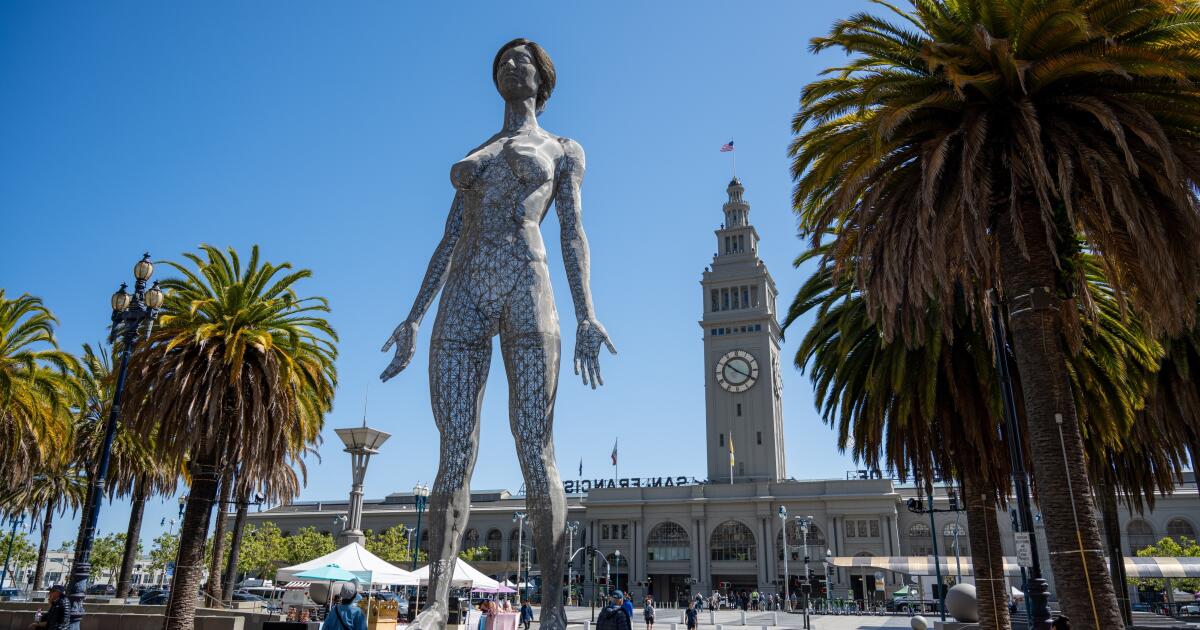
A sculpture of a giant naked woman goes on sale in San Francisco. Bring a crane
-

 Dallas, TX2 hours ago
No ‘straight answer’: Why Pioneer Cemetery is the latest battleground at City Hall
-

 Miami, FL2 hours ago
TSA hosts news conference ahead of World Cup third place match at Miami Stadium
-

 Boston, MA2 hours ago
ICE Boston arrests Barbados national during targeted operations in Attleboro
-

 Denver, CO2 hours ago
Denver Broncos training camp is 2 weeks away
-

 San Diego, CA2 hours ago
Daily Business Report: July 17, 2026, San Diego Metro Magazine

