Culture
How the planned Mets-Braves doubleheader could negatively impact the entire NL wild-card field


The collateral damage from the Great Rainout Debacle could extend to the Milwaukee Brewers and San Diego Padres, two teams that hardly deserve to be disadvantaged.
If the New York Mets and Atlanta Braves need to play a doubleheader Monday to determine one or two of the final National League postseason berths, it will severely compromise them in the wild-card series, forcing either or both clubs to play eight games in seven days.
Rain soaked Truist Park on Wednesday and forced the postponement of the final two games of the Mets-Braves series. (Kevin D. Liles / Atlanta Braves / Getty Images)
But what if the doubleheader is necessary only for seeding, and commissioner Rob Manfred exercises his discretion to cancel it entirely? The Mets and Braves would end up playing 160 games rather than the 162 required of every other club. Which hardly seems fair to the Brewers and Padres, both of whom are on the verge of earning home field advantage for the best-of-three wild-card round.
Seeding is not as inconsequential as some might think. If either or both NL East teams land wild cards, it could have major implications, both for travel and home-field advantage in subsequent rounds.
For starters, the flight from Atlanta to Milwaukee is shorter than the flight from Atlanta to San Diego. And remember two years ago, when the fifth-seeded Padres met the sixth-seeded Philadelphia Phillies in the National League Championship Series? Seeding determined home-field advantage, though the Phillies won the series, anyway.
Manfred would need to consider the entire picture and strive for the fairest outcome. If the Mets and Braves play two fewer games, that’s 18 fewer innings their pitchers must throw, 18 fewer innings their hitters must play. A small thing? Perhaps. But one Brewers person, granted anonymity for his candor, put it like this: “It would not be fair. We should forfeit the last game and not use pitchers in game 162.”
Brewers general manager Matt Arnold was more diplomatic, saying, “We’re focused on controlling what we can control and not worried about who we’ll play or how they get there.”
Padres general manager A.J. Preller did not respond to a request for comment.
Nothing has been decided. The situation is unique, and perhaps was unavoidable. As The Athletic’s Britt Ghiroli wrote, the Mets and Braves acted out of self-interest with their scheduling choices. Neither club, however, imagined it would end up in this position. And while Major League Baseball could have been more proactive, forcing the teams to play earlier in the week, it held out hope, not unreasonably, that the forecast might improve.
The Arizona Diamondbacks potentially face more immediate consequences than the Brewers and Padres. If only one of the Mets or Braves clinches a wild card this weekend, that team could mostly use its reserves and low-leverage pitchers in the one or two games that would take place Monday (it could be one if the outcome of the opener decided the race). The other team, if it is still competing with the Diamondbacks, then would have an easier path to the final spot.
The Mets, Braves and Diamondbacks warrant only so much sympathy — all three teams could have avoided this predicament by winning more games. The same, to a degree, can be said for the Brewers and Padres, who got stuck in the wild-card round by failing to earn a first-round bye.
The Brewers and Padres, however, played well enough to gain home-field advantage in the wild-card series. And that advantage will be mitigated if the Mets and Braves do not play two games on Monday.
— The Athletic’s Jayson Stark contributed to this story.
(Top photo of Pete Alonso, left, and Matt Olson: David J. Griffin / Icon Sportswire via Getty Images)



Welcome to Great Adaptations, the Book Review’s regular multiple-choice quiz about printed works that have gone on to find new life as movies, television shows, theatrical productions and more. With ancient Greek texts back in the cultural conversation — thanks to the new film based on Homer’s “Odyssey” — this week’s challenge highlights screen adaptations of other Greek plays, poems and histories. Just tap or click your answers to the five questions below. Scroll down after you finish the last question for links to the works and their screen versions.
Homer’s “Odyssey” has been translated into English countless times, with versions ranging from contemporary and accessible to highly poetic. A.O. Scott, critic at large for The New York Times Book Review, breaks down three translations and explains which one might be right for you.

Among the many complaints made about the modern American novelist, the loudest, if not the most intelligent, has been the charge that he is not speaking for his country. A few seasons back an editorial in Life magazine asked grandly, “Who speaks for America today?” and was not able to conclude that our novelists, or at least our most gifted ones, did.
This opening paragraph is from an essay titled “The Fiction Writer and His Country” by a writer whose work was influenced by Catholicism, the rural South and peacocks. Who was it?
-
 Sports4 minutes ago
World Cup championship and third-place game: Start times and how to watch
-

 World16 minutes ago
Rule of Law in Hungary shows ‘radical change’ under Magyar, EU says
-

 News46 minutes ago
Where Wildfire Smoke Is The Worst Right Now—And What To Do About It
-

 Los Angeles, Ca2 hours ago
LADWP begins long-term repairs after West Hollywood water main rupture
-

 Detroit, MI3 hours ago
Livestream: Mayor Sheffield, Detroit health chief to address wildfire smoke threat
-
 San Francisco, CA3 hours ago
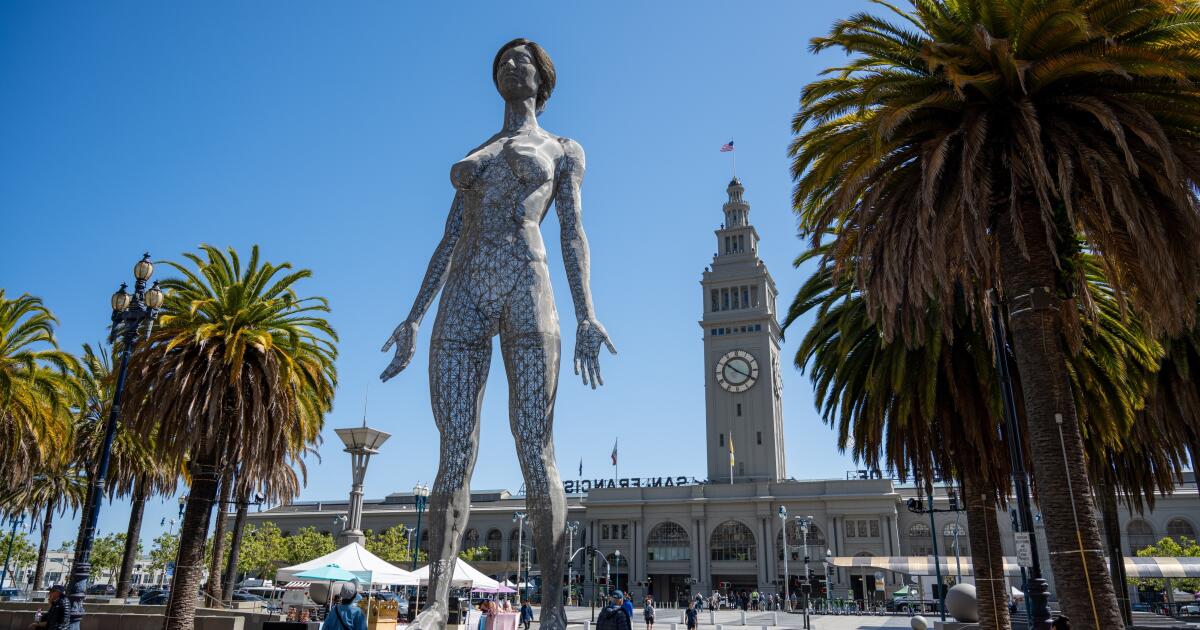
A sculpture of a giant naked woman goes on sale in San Francisco. Bring a crane
-

 Dallas, TX3 hours ago
No ‘straight answer’: Why Pioneer Cemetery is the latest battleground at City Hall
-

 Miami, FL3 hours ago
TSA hosts news conference ahead of World Cup third place match at Miami Stadium

