Crypto
Raoul Pal: The US-China AI Race 2026 Is a War No One Can Win


Key Takeaways
Pal Warns the AI Race Has No Clear Winner
Retired Goldman Sachs hedge fund manager and co-founder of financial media platform Real Vision, Raoul Pal, framed the deepening U.S.-China artificial intelligence (AI) competition in stark terms recently, stating:
“The U.S.-China AI race is a race no one can win and no one can afford to lose. Every great power competition in history was for territory, resources, or weapons. This one is the first that is for none of them. It is a race for the substrate of intelligence itself.”
His comments arrive as the AI race between the two largest economies has reached a critical juncture, with both nations pursuing radically different strategies. While the U.S. retains a clear lead at the technological frontier, particularly in compute scale, model performance, and large language model (LLM) development, China has pivoted toward a model built on efficiency gains, open-source diffusion, and deep integration of AI into physical-world systems.
A May 2026 analysis argued that China is now winning dimensions of the race that Western analysts had underweighted, specifically domestic AI deployment at scale, manufacturing integration, and the ability to build competitive models with significantly less compute than U.S. frontier labs require.
Rather than competing for a single AGI breakthrough, China has fragmented its strategy across multiple simultaneous races, be it model efficiency, AI adoption, or AI-controlled industrial systems.
Why Crypto Ownership and Universal Equity Matter
For Pal, the competitive stakes extend beyond pure technology into economic architecture. Speaking at Consensus 2026 in Miami, he proposed a concept called ‘Universal Basic Equity’ which gives citizens ownership stakes in AI systems as a structural response to the labor displacement expected as AI automates knowledge work at scale.
The proposal seems to align with Pal’s longstanding view that crypto-native ownership models may be better positioned than governments to distribute the economic gains from AI in the long run.
The broader geopolitical backdrop also carries implications for crypto markets in all of this given U.S.-China tech tensions have previously influenced export control regimes, chip access, and the regulatory environment for digital assets operating across both markets. A Brookings Institution analysis noted the competition spans multiple dimensions simultaneously (compute, models, adoption, integration, and deployment), making any single-axis assessment of “who is winning” incomplete.
What Pal’s framing adds to that picture is a philosophical dimension, i.e., the stakes may be unlike anything a geopolitical competition has involved before, since previous rivalries over territory, energy, or weapons were ultimately contests over finite resources. Intelligence and the systems that generate it are not analogous in the same way. That distinction, if Pal is right, can make the outcome of this race structurally different from anything that preceded it.



Good morning. You’re reading the Up First newsletter. Subscribe here to get it delivered to your inbox, and listen to the Up First podcast for all the news you need to start your day.
Today’s top stories
President Trump’s financial disclosures reveal that he and his family earned more than $1 billion through cryptocurrency ventures and other businesses last year, according to a 927-page report filed with the Office of Government Ethics. The report shows that more than $500 million came from the cryptocurrency venture “World Liberty Financial,” which was co-founded by Trump family members. The sale of souvenir “meme” coins featuring Trump’s image generated more than $600 million. Other income included more than $50 million from settlements with media companies and millions in profits from Trump-branded products like Bibles, sneakers and watches. These earnings, which have outpaced his real estate business, have sparked concerns about potential conflicts of interest. The White House released a statement denying any conflicts of interest, and spokesperson Anna Kelly applauded Trump for making the U.S. “the crypto capital of the world.”
President Trump walks to board Air Force One as he departs Bismarck Municipal Airport on July 1, 2026, in Bismarck, North Dakota. Trump traveled to North Dakota to attend the Theodore Roosevelt Presidential Library dedication.
Andrew Harnik/Getty Images
hide caption
toggle caption
Andrew Harnik/Getty Images
- 🎧 Democrats have had a lot to say regarding the president’s earnings, NPR’s Linda Kenyon tells Up First. Sen. Adam Schiff of California suggested Trump has earned more money in the first year of his current term than in the rest of his life combined. Rep. Jason Crow of Colorado referred to the president’s cryptocurrency earnings as another example of what he described as “grift and corruption.” Crow also highlighted that the president took his first flight yesterday on a brand-new Air Force One, a gift from a foreign government valued at roughly $400 million.
The Vatican this morning formalized the excommunications of the bishops and priests of the conservative group known as the Society of St. Pius X, declaring that it has entered schism and broken communion with the pope and the Catholic Church. The group, known as SSPX, celebrates the traditional Latin Mass and opposes some modern church reforms. In the Catholic Church, the appointment of new bishops is the responsibility of the pope. But yesterday, the group defied Pope Leo XIV by consecrating four bishops without his approval. The Society framed its actions as a defense of Catholic tradition. During the ceremony, the Rev. Davide Pagliarani, head of the Society of St. Pius X, described the consecrations as an act of service rather than rebellion. Two of the excommunicated men teach in the U.S., where the group’s membership has been growing, according to the society.
A little over a week has passed since rare double earthquakes struck Venezuela. Thousands of people are feared dead as the official death toll continues to rise and hope diminishes for finding survivors in the rubble. Yesterday, the number of people killed by the quakes reached 2,295, and more than 11,200 people were injured, said Jorge Rodríguez, the president of Venezuela’s National Assembly. Tens of thousands of people remain unaccounted for. The number of people left homeless could be staggering. An analysis of satellite data by Corey Scher and Jamon Van Den Hoek from Oregon State University estimated that 58,870 buildings were likely damaged or destroyed by the earthquakes. The U.N.’s International Organization for Migration has reported that up to 6.8 million people could be affected by the disaster, needing shelter, water, sanitation, healthcare and other relief items. Here are the most significant developments since the tragedy occurred.
The U.S. men’s national team defeated Bosnia-Herzegovina 2-0, marking its first FIFA World Cup knockout round victory since 2002. With this win, the U.S. advances to the Round of 16, where it will face Belgium on July 6. The team will have to play without U.S. forward Folarin Balogun, who will be suspended after receiving a red card for a cleat-first challenge on Bosnian defender Tarik Muharemović. Balogun has scored three goals in three World Cup matches, including the first goal of yesterday’s game. Balogun is currently the top goalscorer for the U.S. team in the 2026 World Cup.
- 🎧 NPR’s Becky Sullivan says it’s hard to know how the U.S. will fare against Belgium next week. The Belgian team easily beat the U.S. 5-2 in a friendly back in March, but Sullivan says Belgium also looks like one of the most beatable “good teams” in the tournament so far. So the U.S. has a good chance, even without Balogun. A win would bring the American men to the quarterfinals, the furthest they’ve ever advanced in a modern World Cup.
Life advice

Got a fridge full of half-eaten food like this rotisserie chicken and not sure what to do with it? Chefs share creative cooking tricks and storage techniques to motivate you to use it all up.
Pulse/Getty Images/Corbis RF Stills
hide caption
toggle caption
Pulse/Getty Images/Corbis RF Stills
Don’t let your leftovers go to waste. According to the nonprofit ReFED, about a quarter of all food products are wasted nationally. Life Kit spoke with chefs who shared clever storage techniques and cooking tips to help you make the most of your food scraps.
- 🍽️ Start with a mindset shift. Consider cooking with leftovers as a creative and experimental exercise rather than a guilt-driven one.
- 🍽️ Develop a collection of flexible, go-to recipes that can use up a variety of ingredients. For example, if you have leftover rice, you can cook it with other ingredients, such as rotisserie chicken and older vegetables, to make fried rice.
- 🍽️ Save yourself the guessing game of wondering what is in your fridge by labeling and dating your leftovers.
- 🍽️ Never throw away herb stems, as they still have the same herby flavor as the leaves. If you blend them with a clove of garlic and olive oil, you can create a base sauce. You can do the same thing with vegetables like broccoli to make soups.
For additional guidance on creative ways to use your leftover odds and ends, listen to this episode of NPR’s Life Kit. Subscribe to the Life Kit newsletter for expert advice on love, money, relationships and more.
Picture show

Garland Jones, recreational therapist and senior program director of the YMCA of South Florida’s special needs program, teaches Mackenzie Wesley, 5, to breathe safely in water by using a ping pong ball as a visual aid.
LA Johnson/NPR
hide caption
toggle caption
LA Johnson/NPR
Children with autism are 160 times more likely to die from drowning compared to their peers, according to a 2017 study from Columbia University. This is largely because about half of autistic children have a tendency to wander away from safe environments. That fact, combined with an attraction to water, can be very dangerous. High-quality swim lessons can be a vital preventative measure to combat this issue. Florida, which has one of the highest childhood drowning rates in the nation, expanded a voucher program this month that puts children ages 1-7 who have autism at the front of the line for subsidized swim lessons. The YMCA of South Florida’s low-cost Swim Buddies program is one of the largest programs specifically designed for children with disabilities in the area. One of its key features is its focus on individualization and one-on-one instruction, rather than traditional group lessons. Staff members assess each child’s needs and tailor the lessons accordingly. Take a look at how this program is helping children with autism.
3 things to know before you go

Photo Illustration of the new Wegovy 1.5 mg and 4 mg semaglutide tablets with injectable prescription weight loss pens on a white background. Its a prescription medicine used with a reduced calorie diet and physical activity. (Photo by: Michael Siluk/UCG/Universal Images Group via Getty Images)
Universal Images Group/Getty Images
hide caption
toggle caption
Universal Images Group/Getty Images
- A Medicare pilot program for GLP-1 drugs launched yesterday, allowing beneficiaries to get a weight loss prescription for $50 a month.
- Kroger is set to acquire the Pittsburgh-based Giant Eagle grocery store chain for $1.65 billion. (via WESA)
- Dozens of states might be responsible for millions of dollars next year to help feed low-income families through the federal Supplemental Nutrition Assistance Program (SNAP). Under the One Big Beautiful Bill Act, states with error rates of 6% or higher will be required to cover 5%, 10% or 15% of SNAP benefits in the coming years. (via KCUR)
This newsletter was edited by Suzanne Nuyen.

Key Takeaways
- Robert Kiyosaki says a guru’s advice pushed him to question whether making money was his real mission.
- He says teaching financial education became his purpose despite failing in school and hating school.
- His unanswered challenge to readers is direct: “What is your spirit’s mission?”
The Question That Changed Robert Kiyosaki’s Path
Robert Kiyosaki, author of the best-selling personal finance book Rich Dad Poor Dad, said the turning point began years ago while listening to an Indian guru. The guru told him, “Your body’s mission is to fulfill your spirit’s mission,” Kiyosaki wrote on X on July 1. He added that the sentence forced him to examine whether his work matched a deeper purpose.
“His words shook me. At the time my body was busy making money,” Kiyosaki said. That conflict became the central issue in his reflection: whether financial success alone could define a life’s work.
Why Teaching Became the Mission
Kiyosaki said the answer took years to understand. “It finally came to me that my spirit’s mission was to teach what my body was to do was to be a teacher… which was the last thing I thought I would ever become… just because I failed in school and hated school.”
He said the realization prompted him to leave manufacturing more than 50 years ago and begin teaching lessons he learned from his “rich dad,” shifting his career from manufacturing to financial education. Instead of focusing on producing goods, he redirected his energy toward sharing financial principles he believed were missing from traditional education.
The acclaimed author said he was ridiculed for years for teaching ideas such as “Savers are losers” and “Debt can make you rich.” Despite the criticism, he said he continued teaching because he believed traditional schools failed to educate people about money.
“My life changed.”
What Question Does Kiyosaki Leave Open
Kiyosaki said one way to find purpose is to ask, “What does my heart want to do to serve humanity?” He said he began teaching for free before the work became commercial.
“That free education turned into a multimillion-dollar business and expanded throughout the world,” he wrote. He closes by encouraging readers to reflect on their own purpose, asking:
“What is your spirit’s mission?”
Beyond discussing purpose, Kiyosaki’s recent posts have continued to focus on economic risks. He has warned of a possible market downturn, advocated owning assets such as gold, silver, bitcoin, and ethereum, and said he is waiting for lower prices before making additional purchases.

As digital assets such as Bitcoin, Ethereum, and other cryptocurrencies become increasingly integrated into financial markets, public pension systems face important questions about whether and how to incorporate them into investment portfolios.
On June 23, a Reason Foundation webinar with leading experts explored how public pension systems should evaluate cryptocurrency investments; how to assess and manage the risk and volatility for public workers, retirees, and taxpayers; and how to provide the public with transparency into these investments.
You can watch the webinar here:
The panelists and moderator of this webinar:
Brad Briner
Brad Briner is the treasurer of North Carolina. Before taking office, he served as co-chief investment officer for Willett Advisors, which manages the philanthropic and personal investment assets of Mike Bloomberg. His prior experience includes roles at Morgan Creek Capital, UNC Management Company, ArcLight Capital, and Goldman Sachs. Briner graduated from the University of North Carolina at Chapel Hill as a Morehead Scholar with a degree in economics with distinction and earned an MBA with distinction from Harvard Business School.
Todd D. Kanaster
Todd D. Kanaster is a director at S&P Global Ratings specializing in municipal pensions and retiree medical benefits. His work includes analyzing issuers, training analysts, and serving as a nationwide specialist on public pension and retiree health care issues within S&P’s local government credit analysis. He is an Associate of the Society of Actuaries, a Member of the American Academy of Actuaries, and a Fellow of the Conference of Consulting Actuaries.
Mariana Trujillo
Mariana Trujillo is managing director of government finance at Reason Foundation. Her research focuses on the fiscal health of federal, state, and local governments, with particular attention to the impact of pension liabilities on government finances and the effect of retirement benefits on public-employee recruitment and retention.
Leonard Gilroy (moderator)
Leonard Gilroy is vice president of government reform at Reason Foundation and senior managing director of Reason’s Pension Integrity Project. Under his leadership, the Pension Integrity Project assists policymakers and other stakeholders in designing, analyzing and implementing public sector pension reforms.
Related policy study:
U.S. public pension and trust fund investment in digital assets
Frequently asked questions about public pensions investing in Bitcoin and other digital assets
-

 San Diego, CA4 minutes ago
Man Stabbed 4 Times Outside San Diego Bar; Suspect Arrested
-

 Milwaukee, WI11 minutes ago
Dominique Noth impacted Milwaukee arts, culture scene for six decades
-

 Atlanta, GA14 minutes ago
FBI orders field offices to send analysts to Atlanta for 2020 election investigation, sources say
-

 Minneapolis, MN17 minutes ago
MN Street Style: Minneapolis People’s Pride 2026 – Racket
-
Indianapolis, IN26 minutes ago
2026 Indianapolis Colts Fantasy Preview: All eyes on Daniel Jones
-

 Pittsburg, PA29 minutes ago
“Mayor of Kingstown” wraps up filming final season in Pittsburgh
-

 Augusta, GA41 minutes ago
Augusta leaders hold public meetings on data center ordinance
-
 Washington, D.C44 minutes ago
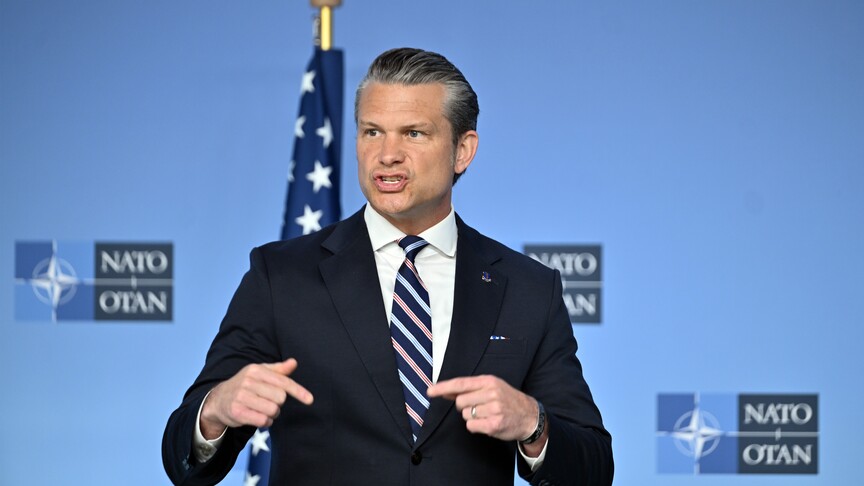
Hegseth faces protests at ‘Safe and Beautiful’ Washington, DC ceremony


