Crypto
Emirates NBD enters cryptocurrency space


Emirates NBD’s digital banking unit Liv has added cryptocurency trading to its mobile banking app.
Editorial
This content has been selected, created and edited by the Finextra editorial team based upon its relevance and interest to our community.
The new offering has been introduced in partnership with Aquanow, a global virtual asset service provider licensed by Dubai’s Virtual Assets Regulatory Authority.
London-based digital asset custodian Zodia will provide custody services for the new venture. Emirates NBD made a strategic investment in Zodia Custody in December.
Upon go live, customers will be able to buy, sell and trade cryptocurrencies within the Liv X app, whilst also managing their day-to-day finances.
The UAE is swiftly evolving to become a progressive crypto hub following landmark crypto-friendly policies and the highest cryptocurrency adoption rates in the world. About 30% of the population owns cryptocurrency and the crypto market is expected to increase by 8% year-on-year over the next four years.
Between July 2023 and June 2024, a Chainalysis report estimates the UAE received over $30 billion in crypto, ranking the country among the top 40 globally in this regard and making it Mena’s third-largest crypto economy.
Marwan Hadi, group head of retail banking and wealth management at Emirates NBD, says: “We are excited to introduce our new cryptocurrency offering on Liv X, in partnership with Aquanow, giving customers the opportunity to buy, sell and trade cryptocurrencies conveniently and securely. Offering cryptocurrency on Liv X is the next step towards the overall vision of Liv being a pioneer in innovation and excellence. With the highest crypto adoption rate in the UAE, we are keen to launch our own virtual asset offering to capitalise on this trend.”



At 8:45 a.m. Eastern Time today, the market price for a single Bitcoin (BTC) is $75,746.90. That’s a $960.86 jump from where it was trading yesterday morning and about $9,200 lower than it was one year ago.
What is Bitcoin?
Bitcoin is widely recognized as the pioneering cryptocurrency and continues to hold the top spot in terms of name recognition and market size. Its market capitalization is roughly $1.33 trillion, putting it far ahead of second-place Ethereum with about $233 billion in market cap.
At a basic level, Bitcoin functions as a decentralized digital currency. Instead of relying on a central authority like a bank or government, it runs on a peer-to-peer network of computers. This design lets people transfer value straight to others without using a traditional financial intermediary.
Many investors turn to Bitcoin as a potential hedge against inflation in the U.S. dollar or as a way to branch out beyond conventional investments. Over the past decade, it has posted stunning gains, often outperforming major stock indexes, which has played a big role in its popularity.
At the same time, Bitcoin shares a key trait with other cryptocurrencies—it can be extremely volatile, with frequent and sometimes dramatic price changes.
Bitcoin price history
Since it was introduced in 2009, Bitcoin has been highly volatile and often headline-grabbing. One early milestone in its history involves developer Laszlo Hanyecz, who famously spent 10,000 Bitcoins on pizza. Today, those coins would be valued at more than 668 million dollars.
Over the last decade or so, Bitcoin’s price has climbed more than 15,000%. This tremendous growth comes with a trade-off, as cryptocurrencies are known for their unpredictability. Bitcoin has undergone severe pullbacks—sometimes dropping tens of thousands of dollars within months—as well as dramatic recoveries. At the close of 2025, it was trading roughly 30% below the all-time high it hit that very October.
What affects Bitcoin’s price?
Several different dynamics can move Bitcoin’s price up or down, including:
- Investor speculation: Like many speculative assets, Bitcoin’s short-term price is heavily driven by trader psychology and buzz. In the near term, prices usually reflect investor beliefs and trading activity more than anything else.
- Adoption by major companies: When large corporations embrace Bitcoin or broader crypto technology, it can help support further growth. For example, Bitcoin’s price rose after companies such as Tesla and Ferrari announced plans to accept Bitcoin as a payment option.
- Economy: Bitcoin doesn’t track inflation figures or central bank decisions in the same way many traditional investments do. Still, it often benefits when the U.S. economy is strong, because people who feel financially secure may be more willing to allocate money to alternative assets that are a bit riskier—like crypto.
- Regulatory developments: As a relatively young asset class, cryptocurrency is still in the process of being fully regulated. New rules or enforcement actions can either instill confidence or create fear. Both cases can significantly affect Bitcoin’s price.
How to buy and invest in Bitcoin
If you’ve decided to invest in Bitcoin, there are multiple ways to do it. Here are some of the main options.
Buy Bitcoin on a cryptocurrency exchange
The most straightforward route is to buy Bitcoin directly. You set up an account with a crypto exchange, connect it to your bank, and then use your deposited cash to buy Bitcoin.
Invest in Bitcoin ETFs
For those who prefer a more traditional investment vehicle, Bitcoin exchange-traded funds are an alternative. A Bitcoin ETF holds Bitcoin on behalf of its shareholders, and its shares trade on standard stock exchanges. This option lets you skip the process of managing your own crypto wallet and can reduce the risk of losing access to your funds because of a password mistake or wallet issue.
Buy crypto stocks
Investors who don’t want to buy Bitcoin directly can also consider stocks of companies in the crypto space. These might include tech companies that support blockchain technology, public crypto exchanges, even payment processors. Because these companies may earn revenue from Bitcoin-related activity, their share prices can offer indirect exposure to Bitcoin’s performance.
Open a Bitcoin IRA
For retirement-focused investing, a Bitcoin IRA is another great option. Like a standard IRA, it’s a tax-advantaged account with similar contribution limits and tax rules, but it lets you allocate some of your retirement savings to Bitcoin and other cryptocurrencies as alternative investments.
Bitcoin vs. other cryptocurrencies
Bitcoin might be the best-known name in crypto, but it is not your only choice. When weighing where to put your money, you may want to compare it with a few other major coins.
- Ethereum: Ethereum is currently the second-largest cryptocurrency by market cap. Unlike Bitcoin, which was designed mainly as a form of money, Ethereum was built as a decentralized computing platform and is widely used for running applications and smart contracts.
- Tether: Tether is a stablecoin, meaning that its value is directly tied to another asset—in this instance, the U.S. dollar. Its peg typically keeps price movements smaller than Bitcoin’s, but that also means there’s less opportunity for outsized growth.
- XRP: XRP is a digital asset created to make sending money across borders faster and cheaper, focusing specifically on international transfers with low transaction costs.
Crypto coverage from Fortune
See our newsroom’s recent coverage of what’s been happening on the cryptocurrency scene:
Is it a good time to invest in Bitcoin?
When compared with long-standing blue-chip names such as Procter & Gamble or Walmart, Bitcoin is still a newcomer. That makes predicting its long-term behavior challenging. But its recent history has been impressive. As more companies start accepting Bitcoin as a payment method, its price may get a further boost, and as the asset matures, it might eventually see somewhat smoother price movements.
However, Bitcoin should not be treated as a sure bet. It’s wise to invest only money you can afford to have tied up and to ensure your broader portfolio is diversified, so other investments can help offset Bitcoin’s volatility.
For most people, Bitcoin is better viewed as a long-term, higher-risk holding than as a quick trade. It is not ideal for investors who are uncomfortable watching large price swings. But if you plan to hold it for years and keep it as a piece of a balanced portfolio, investing in Bitcoin could make sense for a portion of your overall strategy.
Frequently asked questions
How much will Bitcoin be worth in 2030?
While the answer is obviously unknowable, crypto experts are generally optimistic about the short-term success of Bitcoin. Some models price it at more than $700,000 by 2030, with conservative estimates closer to $300,000.
What is Bitcoin’s all-time high price?
As of this writing, Bitcoin reached its highest price ever on Oct. 6, 2025, pricing at a whopping $126,198.07.
Can you buy a fraction of a Bitcoin?
Yes, you can buy a fraction of a Bitcoin. Most cryptocurrency exchanges offer fractional investing, meaning you can buy portions of crypto coins. Thanks to fractional investing, you can invest in Bitcoin with as little as a few dollars.
How do I start investing in Bitcoin as a beginner?
If you want to invest directly in Bitcoin by owning the currency, you’ll typically open an account with a cryptocurrency exchange. Once the account is created, you can transfer money to your crypto account from your bank and place an order for Bitcoin and other tokens or coins. You can also indirectly invest in Bitcoin via an ETF or a business that uses Bitcoin.
What can you buy with Bitcoin?
You can use your Bitcoin holdings in several ways, from selling for cash to trading it for other coins. In some cases, you can also pay for purchases, such as with Tesla and Microsoft.
Does Bitcoin outperform the stock market?
Bitcoin has well outperformed the stock market since its launch, but its extreme volatility makes it far less than a guarantee to be a better investment than stocks.

Key Takeaways:
- Anthropic added ID checks for Claude users in April 2026, gating some features.
- Persona handles verification; Anthropic says no ID images are stored on its systems.
- OpenAI and Google Gemini lack similar rules, raising competition questions.
Anthropic Introduces Government ID Verification for Some Claude Users
The change appeared in a help center update published during the week of April 14–16, 2026, and is not applied across all users. Instead, prompts surface in specific cases tied to higher-tier plans, advanced capabilities, or internal safety reviews.
According to Anthropic, the goal is to limit abuse, enforce platform rules, and meet legal obligations. The company frames the rollout as part of routine integrity checks rather than a universal onboarding requirement.
Users who encounter the prompt must provide a physical, government-issued photo ID and complete a live selfie scan. Anthropic details that the process typically takes less than five minutes and requires a camera-enabled device.
Accepted documents include passports, driver’s licenses, and national ID cards. Digital copies, screenshots, or temporary paper IDs are rejected, along with non-government credentials such as student or employee cards.
The verification workflow is handled by Persona, which processes ID data on Anthropic’s behalf. Anthropic says it does not store the underlying ID images on its own systems. Instead, Persona retains the data under contractual limits, while Anthropic maintains access to verification results when needed for account review or appeals.
The company states that all data is encrypted and used only for identity confirmation, fraud prevention, and compliance. Anthropic also says identity data is not used to train its AI models and is not shared for marketing purposes. Disclosure is limited to legal requirements.
The move reflects growing pressure on AI platforms to address misuse, including fraud and impersonation. Anthropic has also cited age restrictions, with some under-18 accounts reportedly suspended pending verification.
Reaction from users has been mostly unfavorable. “Claude now requires government ID verification (via Persona) before subscription,” one critic wrote. “ChatGPT doesn’t. Gemini doesn’t. Anthropic just handed their competitors a gift,” the X account added. On Reddit, one person stated:
“Goofy. Cannot wait till we have capable off-line LLMs that doesn’t cost a fortune to run.”
The co-founder of the media brand Bankless, Ryan Sean Adams, also shared his view. “AI KYC is here. New claude subscribers asked for gov ID & photo,” Adams wrote. “Not even a regulatory requirement – Anthropic just doing it because they want to. But regulatory is coming Next up will be laws: No AI without gov-issued ID All AI use tracked to individual – no private AI.”
The backlash has been amplified by comparisons to competitors. Platforms like OpenAI and Google’s Gemini do not currently require government ID verification for standard chatbot use. Others competitors, like Venice AI, are private alongside the use of local models.
That difference has led some users to question whether stricter controls could push activity toward less restrictive services. Others argue the shift signals a broader move toward KYC-style checks in consumer AI.
For now, the system remains targeted rather than universal. But its presence suggests identity verification may become a more common layer as AI platforms expand access to more capable tools.

Key Takeaways:
- Circle CEO Jeremy Allaire predicted China could launch a yuan-backed stablecoin within 3 to 5 years.
- USDC grew 72% year-on-year to $75.3 billion by end-2025, boosted by U.S.-Iran war demand for portable dollars.
- Hong Kong has already issued stablecoin licenses to HSBC and others, positioning it as a likely launchpad for CNY tokens.
Allaire: ‘There’s a Tremendous Opportunity for a Yuan Stablecoin’
Speaking with Reuters in Hong Kong, Allaire said stablecoins have become a mechanism for countries to extend their currencies into global trade and payments. He placed China directly inside that conversation.
“There’s a tremendous opportunity for a yuan stablecoin,” Allaire said. “If there’s currency competition, you want your currency to have the best features possible. This is becoming a technological competition.” Allaire put a timeline on it. He said China could roll out a yuan-backed digital token within the next three to five years.
The comment carries weight given Circle’s position in the market. The Boston-based company issues USDC, the world’s second-largest stablecoin by circulation, fully backed by U.S. dollar reserves. USDC grew 72% year-on-year to $75.3 billion in circulation by the end of 2025. As of April 16, defillama.com stats show USDC’s market cap stands at $78.621 billion.
Allaire also said Circle recorded “several billion dollars” in USDC transaction growth following the outbreak of the U.S.-Iran war. He attributed the increase to demand for portable digital dollars during periods of heightened geopolitical risk.
A yuan stablecoin would mark a significant shift in China’s approach to digital assets. The country banned cryptocurrency trading and mining in 2021, citing financial stability concerns. The People’s Bank of China (PBOC) reaffirmed that position in November 2025.
China has advanced a state-controlled alternative through its e-CNY digital yuan pilot program. But Allaire’s framing positions a private or regulated stablecoin as a more flexible tool for offshore trade settlement, where the e-CNY’s tight controls work against broad adoption.
Reuters reported in August 2025, citing sources, that China was considering yuan-backed stablecoins as part of a yuan internationalization strategy. Tech companies including Ant Group and JD.com were reported to have lobbied for approval. In February 2026, the PBOC moved to ban unregulated offshore issuance of yuan-pegged tokens, stating such instruments “perform some functions of legal tender.”
The yuan currently accounts for roughly 2.9% of SWIFT payments. The U.S. dollar holds approximately 47%. A blockchain-native yuan instrument could, in theory, lower the friction for yuan settlement in emerging markets and Belt and Road trade corridors without requiring full currency convertibility.
Hong Kong is functioning as a testing ground. Allaire said Circle sees significant opportunities there, noting that the city is already a cross-border payments hub and has issued stablecoin licenses to institutions including HSBC. He said Circle is actively exploring ways to integrate Hong Kong dollar stablecoins into global platforms.
Circle shares (NYSE: CRCL) gained roughly 1% in pre-market trading following the Reuters interview. The stock has drawn attention from investors tracking the expansion of regulated stablecoin infrastructure.
On the U.S. regulatory front, Allaire commented on the CLARITY Act, which has raised questions about whether it would restrict stablecoin products marketed as interest-bearing savings alternatives. He said any such marketing limits would affect distributors more than issuers like Circle. Whether China moves forward with a yuan-pegged token, the architecture for digital currency competition is already in place.

Californians are pouring money into Democrats’ Senate races in other states
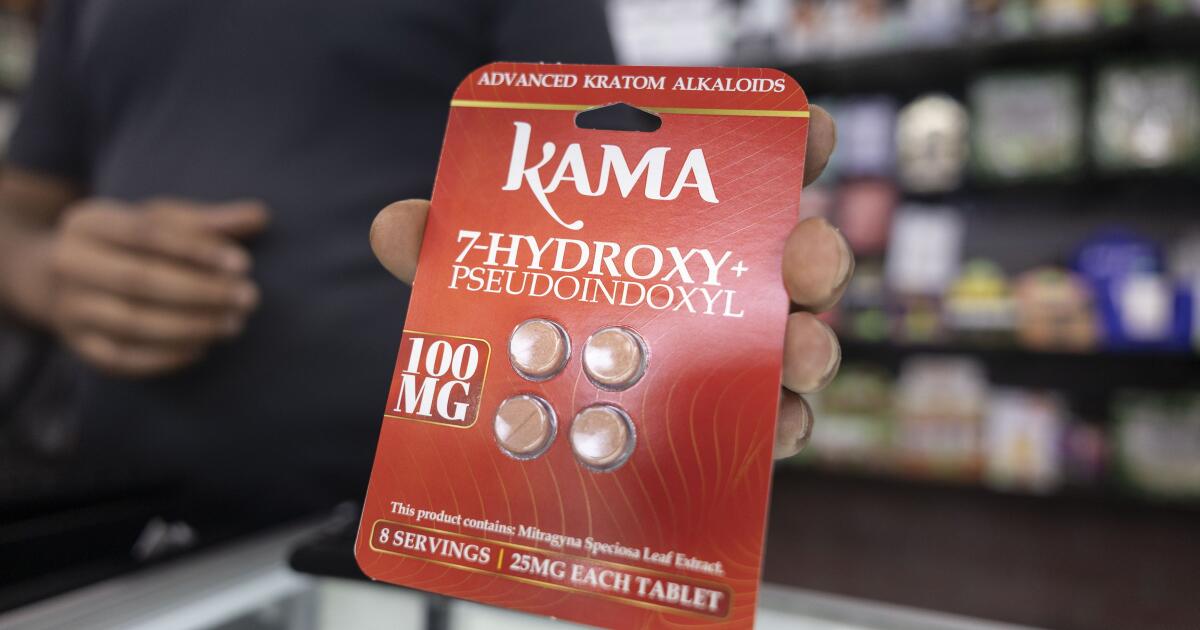
1,200% jump in kratom-related calls to poison control centers in last decade, analysis shows

Lakers ‘elevate’ work for playoffs with Luka Doncic and Austin Reaves injured

Pressure mounts on Peru’s election authorities amid presidential race delay

Tornadoes touch down in Rochester area

Florida High School Football Rankings: Top 25 teams – Oct. 21

How old is Bo Nix? What to know about Oregon quarterback ahead of 2024 NFL Draft

Cleary's 21 help Le Moyne down Central Connecticut State 69-64 in OT

99th annual Pony Swim held in Virginia

Indiana Members Credit Union announced as new anchor tenant at Bottleworks District
Pressure mounts on Peru’s election authorities amid presidential race delay
Tornadoes touch down in Rochester area

Minnesota Republicans reveal which far-left candidate they want to challenge in open Senate race

Swedish rights groups slam ‘honest living’ criteria for migrants

Orbán’s defeat is a win for democracy and a warning to Trump, some say
-

 Ohio3 days ago
‘Little Rascals’ star Bug Hall arrested in Ohio
-

 Arkansas1 week ago
Arkansas TV meteorologist Melinda Mayo retires after nearly four decades on air
-

 Austin, TX1 week ago
ABC Kite Fest Returns to Austin for Annual Celebration – Austin Today
-

 Politics3 days ago
Dem fundraising giant in the hot seat as GOP lawmakers demand answers over dodged subpoena
-
 Science3 days ago
‘Dr. Pimple Popper’ Sandra Lee had a stroke last fall. Here’s how the TV doc is bouncing back
-

 Politics6 days ago
Trump blasts Spanberger ahead of Virginia meetings, says state faces tax base exodus like New York, California
-

 Health1 week ago
Woman discovers missing nose ring traveled to her lungs, causing month-long cough
-

 San Francisco, CA5 days ago
President Trump terminates Presidio Trust