Connect with us

Crypto

BRICS To Replace US Dollar With Cryptocurrency for Trade

Published

on

BRICS To Replace US Dollar With Cryptocurrency for Trade

According to a recent statement from the Chairman of the Russian State Duma Committee on the Financial Market Anatoly Aksakov, the BRICS bloc is working to replace the US dollar with cryptocurrency for trade. Indeed, Aksakoc discussed the alliance’s work to utilize digital assets in place of fiat currency for international transactions.

The economic alliance has long embraced its de-dollarization initiatives, along with the promotion of its local currencies. Subsequently, the development of digital currency solutions has been a priority since the arrival of its BRICS Pay system. Now, those efforts are set to carry the b loc toward a dollar-less future.

US Dollar notes
Image Source: Unsplash

Also Read: BRICS To Announce Membership of New Countries in 2024

BRICS Bloc to Utilize Digital Assets in Place of the Dollar in Trade

Throughout the last year, the BRICS bloc has embraced its opportunity to create a multipolar world. Its five-nation expansion effort enacted at its 2023 annual summit was one of the key pillars of that. However, so too is its commitment to the further embrace of local currencies in unilateral trade dealings.

Now, the alliance is taking a clear step forward in that regard, as the BRICS bloc is seeking to replace the US Dollar with cryptocurrency for international trade. Indeed, Russia stated that the bloc represents a “serious channel to replace fiat currencies in international transactions.”

What makes the prospect of this all the more interesting for the collective is that they appear committed to developing their own Central Bank Digital Currencies (CBDC) for which to substitute with fiat. Alternatively, the United States has been clear on its stance against such a project in the West.

Advertisement
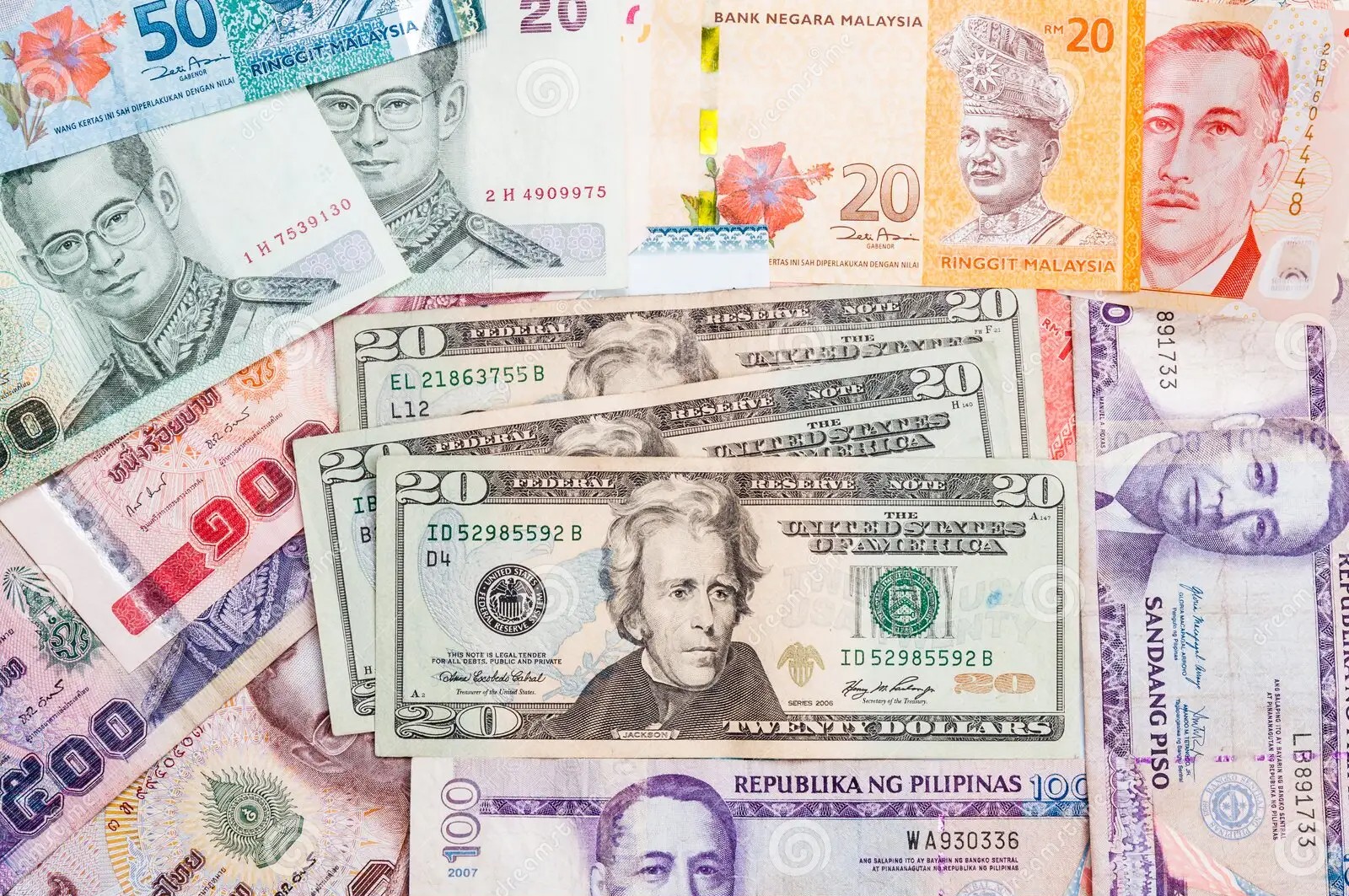
us dollar malaysia ringgit currency bricsus dollar malaysia ringgit currency brics
Source: Dreamstime.com

Also Read: BRICS: Major Update On Russia’s Economy Announced

Altogether, these projects should provide a clear opportunity for the BRICS bloc to continue to de-dollarize. Moreover, Russian Deputy Foreign Minister Sergey Ryabkov has recently discussed the development of new platforms for financial dealings. Specifically, these would support the presence of increased digital assets as opposed to fiat offerings.

Ryabkov discussed the “option of creating a platform that would unite the financial systems” of the BRICS members. What he called a “BRICS Bridge” would require stablecoins or other digitized currency forms. This would integrate a clear way for the ten BRICS countries to de-dollarize.

However, it would also increase concern with the US dollar being absent from any international dealing with the alliance members, and nations seeking to embrace such unilateral trade.

Continue Reading
Click to comment

Leave a Reply

Your email address will not be published. Required fields are marked *

This site uses Akismet to reduce spam. Learn how your comment data is processed.

Crypto

ASML: The Foundational Tech Firm vs. Cryptocurrency Market Volatility – News and Statistics – IndexBox

Published

on

ASML: The Foundational Tech Firm vs. Cryptocurrency Market Volatility – News and Statistics – IndexBox

Mar 22, 2026

According to a report from Yahoo Finance, the cryptocurrency market has experienced significant volatility recently. Bitcoin’s value has fallen considerably from a peak recorded late last year, declining by a notable percentage year-to-date and dropping below a key threshold last month. While such digital assets may hold potential, their extreme price fluctuations can rapidly erase substantial gains, leading to sustained skepticism over many years since their inception.

ASML’s Critical Position in Semiconductor Industry

In contrast, companies that demonstrably add value to the global economy are highlighted. ASML (NASDAQ: ASML), based in the Netherlands, is presented as a prime example of such a firm. The company is described as utterly foundational to the technology sector, operating with a unique market position.

ASML is the sole global manufacturer of extreme ultraviolet lithography machines, which are essential for producing the most advanced semiconductor chips. These highly complex machines are extremely large, require specialized transportation, and carry a price tag exceeding several hundred million dollars each. They function by using a precise laser to etch microscopic patterns onto silicon wafers.

Older lithography systems from other manufacturers cannot produce chips at the most advanced scales, such as those measuring seven nanometers or smaller. Consequently, every major semiconductor fabrication company and, by extension, the broader technology industry relies directly or indirectly on ASML’s equipment. This entrenched reliance suggests the company is well-positioned to maintain its dominant role as demand for semiconductors grows.

Advertisement

This report provides a comprehensive view of the semiconductor wafer manufacturing machine industry in the Netherlands, tracking demand, supply, and trade flows across the national value chain. It explains how demand across key channels and end-use segments shapes consumption patterns, while also mapping the role of input availability, production efficiency, and regulatory standards on supply.

Beyond headline metrics, the study benchmarks prices, margins, and trade routes so you can see where value is created and how it moves between domestic suppliers and international partners. The analysis is designed to support strategic planning, market entry, portfolio prioritization, and risk management in the semiconductor wafer manufacturing machine landscape in the Netherlands.

Quick navigation

Key findings

  • Domestic demand is shaped by both household and industrial usage, with trade flows linking local supply to imports and exports.
  • Pricing dynamics reflect unit values, freight costs, exchange rates, and regulatory shifts that affect sourcing decisions.
  • Supply depends on input availability and production efficiency, creating a distinct national cost curve.
  • Market concentration varies by segment, creating different competitive landscapes and entry barriers.
  • The 2035 outlook highlights where capacity investment and demand growth are most aligned within the country.

Report scope

The report combines market sizing with trade intelligence and price analytics for the Netherlands. It covers both historical performance and the forward outlook to 2035, allowing you to compare cycles, structural shifts, and policy impacts.

  • Market size and growth in value and volume terms
  • Consumption structure by end-use segments
  • Production capacity, output, and cost dynamics
  • Trade flows, exporters, importers, and balances
  • Price benchmarks, unit values, and margin signals
  • Competitive context and market entry conditions

Product coverage

  • Prodcom 28992020 – Machines and apparatus used solely or principally for the manufacture of semiconductor boules or wafers

Country coverage

Country profile and benchmarks

This report provides a consistent view of market size, trade balance, prices, and per-capita indicators for the Netherlands. The profile highlights demand structure and trade position, enabling benchmarking against regional and global peers.

Methodology

The analysis is built on a multi-source framework that combines official statistics, trade records, company disclosures, and expert validation. Data are standardized, reconciled, and cross-checked to ensure consistency across time series.

  • International trade data (exports, imports, and mirror statistics)
  • National production and consumption statistics
  • Company-level information from financial filings and public releases
  • Price series and unit value benchmarks
  • Analyst review, outlier checks, and time-series validation

All data are normalized to a common product definition and mapped to a consistent set of codes. This ensures that comparisons across time are aligned and actionable.

Forecasts to 2035

The forecast horizon extends to 2035 and is based on a structured model that links semiconductor wafer manufacturing machine demand and supply to macroeconomic indicators, trade patterns, and sector-specific drivers. The model captures both cyclical and structural factors and reflects known policy and technology shifts in the Netherlands.

Advertisement
  • Historical baseline: 2012-2025
  • Forecast horizon: 2026-2035
  • Scenario-based sensitivity to income growth, substitution, and regulation
  • Capacity and investment outlook for major producing companies

Each projection is built from national historical patterns and the broader regional context, allowing the report to show where growth is concentrated and where risks are elevated.

Price analysis and trade dynamics

Prices are analyzed in detail, including export and import unit values, regional spreads, and changes in trade costs. The report highlights how seasonality, freight rates, exchange rates, and supply disruptions influence pricing and margins.

  • Price benchmarks by country and sub-region
  • Export and import unit value trends
  • Seasonality and calendar effects in trade flows
  • Price outlook to 2035 under baseline assumptions

Profiles of market participants

Key producers, exporters, and distributors are profiled with a focus on their operational scale, geographic footprint, product mix, and market positioning. This helps identify competitive pressure points, partnership opportunities, and routes to differentiation.

  • Business focus and production capabilities
  • Geographic reach and distribution networks
  • Cost structure and pricing strategy indicators
  • Compliance, certification, and sustainability context

How to use this report

  • Quantify domestic demand and identify the most attractive segments
  • Evaluate export opportunities and prioritize target destinations
  • Track price dynamics and protect margins
  • Benchmark performance against leading competitors
  • Build evidence-based forecasts for investment decisions

This report is designed for manufacturers, distributors, importers, wholesalers, investors, and advisors who need a clear, data-driven picture of semiconductor wafer manufacturing machine dynamics in the Netherlands.

FAQ

What is included in the semiconductor wafer manufacturing machine market in the Netherlands?

The market size aggregates consumption and trade data, presented in both value and volume terms.

How are the forecasts to 2035 built?

The projections combine historical trends with macroeconomic indicators, trade dynamics, and sector-specific drivers.

Does the report cover prices and margins?

Yes, it includes export and import unit values, regional spreads, and a pricing outlook to 2035.

Which benchmarks are included?

The report benchmarks market size, trade balance, prices, and per-capita indicators for the Netherlands.

Advertisement

Can this report support market entry decisions?

Yes, it highlights demand hotspots, trade routes, pricing trends, and competitive context.

  1. 1. INTRODUCTION

    Making Data-Driven Decisions to Grow Your Business

    1. REPORT DESCRIPTION
    2. RESEARCH METHODOLOGY AND THE AI PLATFORM
    3. DATA-DRIVEN DECISIONS FOR YOUR BUSINESS
    4. GLOSSARY AND SPECIFIC TERMS
  2. 2. EXECUTIVE SUMMARY

    A Quick Overview of Market Performance

    1. KEY FINDINGS
    2. MARKET TRENDSThis Chapter is Available Only for the Professional EditionPRO
  3. 3. MARKET OVERVIEW

    Understanding the Current State of The Market and its Prospects

    1. MARKET SIZE: HISTORICAL DATA (2012–2025) AND FORECAST (2026–2035)
    2. MARKET STRUCTURE: HISTORICAL DATA (2012–2025) AND FORECAST (2026–2035)
    3. TRADE BALANCE: HISTORICAL DATA (2012–2025) AND FORECAST (2026–2035)
    4. PER CAPITA CONSUMPTION: HISTORICAL DATA (2012–2025) AND FORECAST (2026–2035)
    5. MARKET FORECAST TO 2035
  4. 4. MOST PROMISING PRODUCTS FOR DIVERSIFICATION

    Finding New Products to Diversify Your Business

    1. TOP PRODUCTS TO DIVERSIFY YOUR BUSINESS
    2. BEST-SELLING PRODUCTS
    3. MOST CONSUMED PRODUCTS
    4. MOST TRADED PRODUCTS
    5. MOST PROFITABLE PRODUCTS FOR EXPORTS
  5. 5. MOST PROMISING SUPPLYING COUNTRIES

    Choosing the Best Countries to Establish Your Sustainable Supply Chain

    1. TOP COUNTRIES TO SOURCE YOUR PRODUCT
    2. TOP PRODUCING COUNTRIES
    3. TOP EXPORTING COUNTRIES
    4. LOW-COST EXPORTING COUNTRIES
  6. 6. MOST PROMISING OVERSEAS MARKETS

    Choosing the Best Countries to Boost Your Export

    1. TOP OVERSEAS MARKETS FOR EXPORTING YOUR PRODUCT
    2. TOP CONSUMING MARKETS
    3. UNSATURATED MARKETS
    4. TOP IMPORTING MARKETS
    5. MOST PROFITABLE MARKETS
  7. 7. PRODUCTION

    The Latest Trends and Insights into The Industry

    1. PRODUCTION VOLUME AND VALUE: HISTORICAL DATA (2012–2025) AND FORECAST (2026–2035)
  8. 8. IMPORTS

    The Largest Import Supplying Countries

    1. IMPORTS: HISTORICAL DATA (2012–2025) AND FORECAST (2026–2035)
    2. IMPORTS BY COUNTRY: HISTORICAL DATA (2012–2025)
    3. IMPORT PRICES BY COUNTRY: HISTORICAL DATA (2012–2025)
  9. 9. EXPORTS

    The Largest Destinations for Exports

    1. EXPORTS: HISTORICAL DATA (2012–2025) AND FORECAST (2026–2035)
    2. EXPORTS BY COUNTRY: HISTORICAL DATA (2012–2025)
    3. EXPORT PRICES BY COUNTRY: HISTORICAL DATA (2012–2025)
  10. 10. PROFILES OF MAJOR PRODUCERS

    The Largest Producers on The Market and Their Profiles

  11. LIST OF TABLES

    1. Key Findings In 2025
    2. Market Volume, In Physical Terms: Historical Data (2012–2025) and Forecast (2026–2035)
    3. Market Value: Historical Data (2012–2025) and Forecast (2026–2035)
    4. Per Capita Consumption: Historical Data (2012–2025) and Forecast (2026–2035)
    5. Imports, In Physical Terms, By Country, 2012–2025
    6. Imports, In Value Terms, By Country, 2012–2025
    7. Import Prices, By Country, 2012–2025
    8. Exports, In Physical Terms, By Country, 2012–2025
    9. Exports, In Value Terms, By Country, 2012–2025
    10. Export Prices, By Country, 2012–2025
  12. LIST OF FIGURES

    1. Market Volume, In Physical Terms: Historical Data (2012–2025) and Forecast (2026–2035)
    2. Market Value: Historical Data (2012–2025) and Forecast (2026–2035)
    3. Market Structure – Domestic Supply vs. Imports, in Physical Terms: Historical Data (2012–2025) and Forecast (2026–2035)
    4. Market Structure – Domestic Supply vs. Imports, in Value Terms: Historical Data (2012–2025) and Forecast (2026–2035)
    5. Trade Balance, In Physical Terms: Historical Data (2012–2025) and Forecast (2026–2035)
    6. Trade Balance, In Value Terms: Historical Data (2012–2025) and Forecast (2026–2035)
    7. Per Capita Consumption: Historical Data (2012–2025) and Forecast (2026–2035)
    8. Market Volume Forecast to 2035
    9. Market Value Forecast to 2035
    10. Market Size and Growth, By Product
    11. Average Per Capita Consumption, By Product
    12. Exports and Growth, By Product
    13. Export Prices and Growth, By Product
    14. Production Volume and Growth
    15. Exports and Growth
    16. Export Prices and Growth
    17. Market Size and Growth
    18. Per Capita Consumption
    19. Imports and Growth
    20. Import Prices
    21. Production, In Physical Terms: Historical Data (2012–2025) and Forecast (2026–2035)
    22. Production, In Value Terms: Historical Data (2012–2025) and Forecast (2026–2035)
    23. Imports, In Physical Terms: Historical Data (2012–2025) and Forecast (2026–2035)
    24. Imports, In Value Terms: Historical Data (2012–2025) and Forecast (2026–2035)
    25. Imports, In Physical Terms, By Country, 2025
    26. Imports, In Physical Terms, By Country, 2012–2025
    27. Imports, In Value Terms, By Country, 2012–2025
    28. Import Prices, By Country, 2012–2025
    29. Exports, In Physical Terms: Historical Data (2012–2025) and Forecast (2026–2035)
    30. Exports, In Value Terms: Historical Data (2012–2025) and Forecast (2026–2035)
    31. Exports, In Physical Terms, By Country, 2025
    32. Exports, In Physical Terms, By Country, 2012–2025
    33. Exports, In Value Terms, By Country, 2012–2025
    34. Export Prices, By Country, 2012–2025
Continue Reading

Crypto

EOW registers case against cryptocurrency firm

Published

on

EOW registers case against cryptocurrency firm

The Economic Offences Wing (EOW) CID police registered a case against a Chennai-based cryptocurrency investment firm and its director for defrauding investors by promising high monthly returns.

Investors claimed that TFT Block Chain Services Private Limited, operating under the name Tycoon Fintech, defrauded the public by collecting investments ranging from ₹20 crore to ₹30 crore.

Continue Reading

Crypto

Cryptocurrency fraud costs Okaloosa County resident over $500k

Published

on

Cryptocurrency fraud costs Okaloosa County resident over 0k
Video above: ‘News 5 Now’ — Top Stories from March 20, 2026 OKALOOSA COUNTY, Fla. (WKRG) — The Okaloosa County Sheriff’s Office is warning residents of a fraud scheme after a resident lost over $500,000. According to a Facebook post from the OCSO, the victim reached out to law enforcement and said he’d been contacted […]
Continue Reading

Trending