Business
Why 'economic headwinds' are suddenly to blame for everything

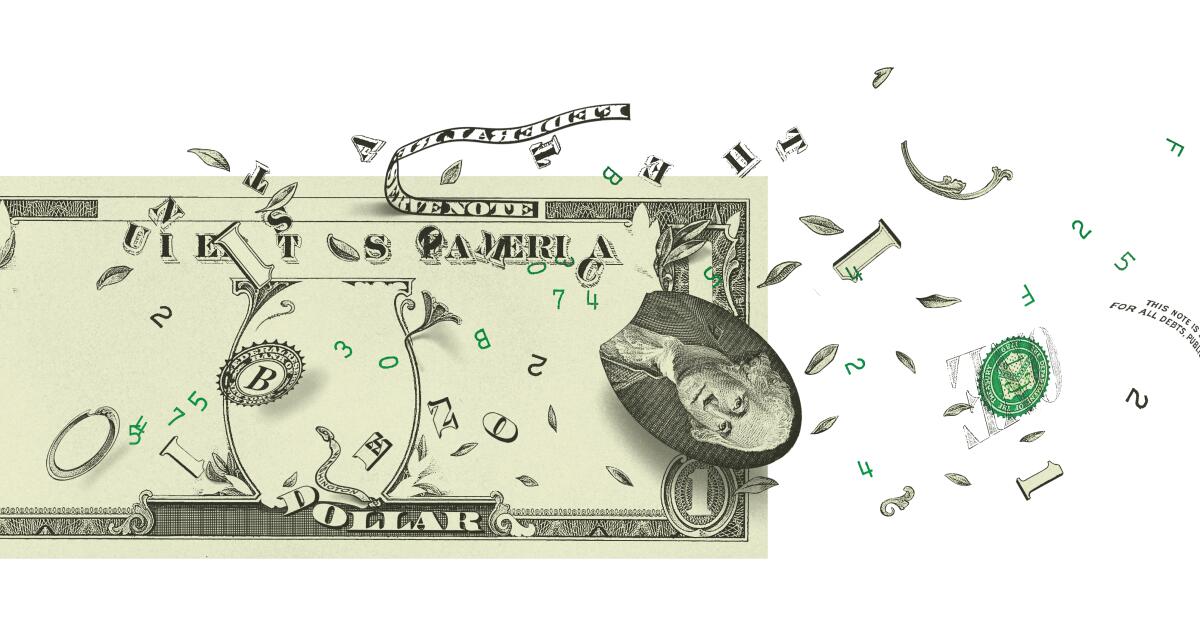
An atmospheric disturbance is whipping through the job market.
When Volvo announced it was cutting more than a thousand jobs last year, its CEO cited a particular phenomenon for the cuts. When the founder of the Messenger announced to his hundreds of employees that they were all laid off without severance, less than a year after the online publication booted up, the same weather pattern got the blame.
Chief executives at accounting firms, cookie companies and Crypto.com have all laid off thousands of workers in the last year, and pointed the finger at one metaphorical culprit: economic headwinds.
The phrase evokes a solemn CEO scanning the sky from the deck of the corporate ship. Eye on the horizon, he senses a change in the weather, a different snap to the rippling canvas, a new chop to the sea. With a grim set to his jaw, he concludes that only one course of action can save the voyage: massive layoffs.
Headwinds have always blown around in business English, but the phrase economic headwinds serves a special purpose: a majestic waving of the hand, an abandon to the fates, an inkling of force majeure.
“It’s a useful term, because we can’t control the wind,” said Thomas C. Leonard, a historian of economics at Princeton University. “If you’re a corporation trying to sell unhappy outcomes to shareholders or regulators, it’s a way of saying it’s a tough environment, but more importantly it’s a tough environment beyond our control.”
It’s a phrase heard often these days in the tech and media sectors, which face real challenges.
Tech companies that could raise and spend cash freely when interest rates were close to zero are struggling to stay afloat. The ad market has hit the doldrums — in part because all those companies that used to have cheap cash to pump into ads now have to keep their powder dry — which has taken the wind out of the sails of many media businesses, which had been facing financial problems for decades. And in L.A., Hollywood studios have been slow to pick up the pace of production after last year’s strikes, as they face questions over the viability of the streaming business model.
Executives in these industries are using the term precisely because of the contrast between their challenges and the wider world, Leonard said.
“The wild thing is, notwithstanding the headwinds in media and technology, the economy is doing unbelievably well,” Leonard said. Inflation is down, unemployment is at historically low levels, the U.S. is outperforming other rich countries, the stock market is booming, and even inequality of wealth and income is falling, Leonard said.
This presents a conundrum for those tasked with swinging the ax: how to explain why your company is ailing when everybody can see blue skies above?
By leaning on economic headwinds, executives can acknowledge a problem while avoiding getting into the messy details — say an outdated business model or internal failings.
EDGAR, the online database of the Securities and Exchange Commission, confirms that economic headwinds are being evoked more now than ever. In the 2000s, only a slight breeze was blowing, with public filings showing a handful of economic headwinds mentions. Things picked up in 2008 and 2009, as the financial crisis battered corporate America, but conditions seemed to subside in the middle of the last decade.
Then high interest rates rolled in. Since 2022, when the Federal Reserve started ratcheting up the federal funds rate to cool down the economy, EDGAR has been logging record after record. Nearly 500 companies mentioned economic headwinds in 2022. In 2023, that more than doubled to over 1,000.
A scan of the Newspaper Archive, which stretches back to the 18th century, tells a similar story. Through the booms and busts of the Gilded Age, the cataclysms of the Great Depression and the whirlwind of the 1970s oil crisis and stagflation, economic headwinds were barely worth mentioning. Most early mentions are riffs on the metaphor of the ship of state, with entire nations beating against the breeze, or come as puns in stories about airplanes or shipping companies.
But something changes after Y2K. Press usage of the phrase follows the same trajectory as the SEC record — with mentions up through the recession, followed by a dip, and now heading to new heights.
The collective experience of the last few years — pandemic, recession, inflation and now interest rate hikes — may have led to a turning of the rhetorical tides, said Robert Reich, professor of public policy at UC Berkeley and former secretary of Labor.
“The dominant economic assumption for really the entire post-World War II era has been that Keynesian macroeconomic management can tame the uncertainties and extremes of the economy,” Reich said. But since 2020, it’s been difficult to avoid the sense that things are spiraling out of control. “Most people felt at sea, and there’s something not necessarily comforting but seemingly realistic about these metaphors now.”
The economy stopped feeling like a precision machine in need of a tuneup, pointed surely toward growth, and started feeling more like an unpredictable journey to an unknown shore.
“Seeing the economy as a boat, one of those old galleons, or a three-masted schooner, tossed on the great waves of uncertainty and the waves of this roiling system makes much more sense to people,” Reich said.
It’s also “a wonderfully convenient way of avoiding responsibility” when things go sideways, Reich added.
Nautical metaphors are nothing new for the world of commerce — trade, finance and the joint-stock company can all trace their roots to seafaring merchants engaged in risky adventures to haul holds full of goods across the world in capital-intensive ships. And business euphemisms aren’t just limited to the seas. Few parts of the natural world have been spared from the corporate lexicon, with its changing landscapes and seismic shifts. Even the cosmos is fair game, especially in a tech world known for its moon shots and escape velocities.
Such fanciful phrases might serve a more grounded purpose: smoothing things over with investors. Research has shown that euphemisms actually work to soften bad news in the financial markets.
Kate Suslava, a professor of accounting at Bucknell University, spent years tracking how the use of metaphors in corporate earnings calls changes how the stock market reacts to new information. She found that investors aren’t total rubes — the stock prices of companies whose executives used negative metaphors like speed bumps or economic headwinds, or mentioned the need to tighten our belt or sharpen our pencils to get back to work after a series of missteps, indeed went down on the day of the earnings call.
What surprised her was that over the following months, the stock prices of the companies in question continued to drift down. “Investors take it as bad news, but it should be even worse news,” Suslava said. “If the market was efficient, they would completely capture it on the date of the call.”
In other words, a softening metaphor gets investors to under-react to the bad news. “Which is exactly the point of euphemisms,” Suslava said. “They work.”


Grocery Outlet is opening new locations across California, rebuilding its network in the Golden State after closing stores early this year.
A new branch in Ontario Ranch is scheduled to open July 23, and more openings are planned for later this summer.
The location will be operated by independent owners Gloria and Jason Pineda. By the end of August, the discount grocery retailer plans to open stores in Ramona, San Francisco, Clovis and Petaluma as well.
The Emeryville, Calif.-based chain announced the closure of 36 stores in March, including nine California locations. The closures were an attempt to roll back an overexpansion in the wrong markets, resulting in a loss in 2025. Grocery Outlet did not announce which locations would be closed at the time, but they were listed for sublease by advisory firm Gordon Bros.
Among those listed was an Ontario location closer than seven miles from the soon-to-open site.
Five other Southern California locations were marked for closing in Azusa, Brawley, El Cajon, La Habra, Ontario and Poway. In Central California, the Kerman, Patterson and Ridgecrest stores were also listed for sublease. Outside of California, stores in Idaho, New Jersey, Maryland, Ohio and Pennsylvania also were listed.
In an earnings call in May, Grocery Outlet Chief Executive Jason Potter said the restructuring was helping boost the company’s profit.
“These closures are now complete and have improved fleet quality and will strengthen the earnings profile of the business over time,” he said.
Grocery Outlet was founded in San Francisco in 1946 as a discount grocery store chain selling overstock of limited-time or holiday food items. There are about 280 Grocery Outlet locations in California, accounting for more than half of its total store count.
Though Grocery Outlet has cultivated a dedicated consumer base on TikTok and other social media posts from grocery bargain hunters, it faces fierce competition from other budget grocery chains, including Aldi, which is set to open 180 stores in 2026. It also competes with Trader Joe’s, Walmart and Amazon, which have steadily gained customers.
Last year it was also hurt by the lapse in federal food assistance during the 43-day government shutdown.
In the wake of rising grocery prices and economic anxiety, some low-income customers who would once have shopped at budget grocery chains such as Grocery Outlet are turning to food banks instead. According to Los Angeles Regional Food Bank, 1.2 million people visit its food banks per month.
Grocery Outlet’s net sales rose 4% in the first quarter from a year earlier to $1.17 billion. It recorded a net loss of $180 million for the period.
It said it had closed locations as part of its optimization plan. It also underwent a store refresh program, changing products and is clustering locations to boost profit and customer traffic.
“Our value-oriented product offering continues to resonate with consumers. While we’re encouraged by the progress we’re beginning to see, we’re not satisfied with our current level of performance and are focused on the work we have in front of us,” Potter said on the earnings call.
Grocery Outlet shares have fallen more than 25% over the last 12 months. The Dow Jones industrial average has climbed more than 15% during the same period.

On July 9, the Trump administration delivered a gift to Cadiz Inc., a politically well-connected firm that has been trying for decades to win approval for a scheme to pump water out of the Mojave Desert and market it to water agencies across the Southland.
The administration approved the company’s application to convert an abandoned 220-mile oil and gas pipeline crossing the desert to carry water instead. Susan Kennedy, the chief executive of Cadiz, called the approval “a pivotal milestone” that would enable the project to move into its construction stage.
Here’s betting that Kennedy’s statement was somewhat premature. The project still faces significant opposition from environmentalists, local Indian tribes and the state of California. It has been declared ready to go — and declared dead, too — so often that it could serve as a character in a zombie movie or streaming series.
I haven’t seen anything to persuade me that there’s not going to be any environmental damage.
— Ileene Anderson, Center for Biological Diversity
Indeed, this is the second time that Trump has greenlighted this project. He did so during his first term, but his decision was overturned during the Biden administration; Trump’s most recent approval overturned that action — but there’s no promising that the next president, whoever that is, won’t overturn this one.
I’ve been covering the Cadiz project for nearly 25 years, starting in 2002; I take credit for helping to put the kibosh on a proposal for the Metropolitan Water District, which supplies water to 13 million Southern California residents, to partner with Cadiz.
In fact, there’s reason to wonder whether Cadiz itself still wants to do the project, even though in the past it described it as its potential corporate lifeblood.
Last year Cadiz reported that nearly 90% of its revenue stemmed from the sale of water filtration equipment manufactured by ATEC, a Hollister firm it acquired in 2022. That segment is its only profitable operation, though the $2.5 million in operating income the unit produced in 2025 was swamped by losses in its other operations — mostly the sale of fruits and vegetables grown on its desert tract — producing an overall loss of $25.6 million. The company has never reported a profit.
Kennedy told me this week that she now sees the water treatment business as “the future of our company — an enormous market opportunity.” She said “demand for filtration is skyrocketing,” with cleansed stormwater “the biggest source of new water supply.” Cadiz has doubled its manufacturing capacity for the equipment, and “we expect to double again.” The company has also signed an agreement to produce hydrogen at its desert site by installing a solar array for power.
Meanwhile, Cadiz is taking steps to hive off the infrastructure it has planned to use for its water project, mostly two unused pipelines, into a special purpose subsidiary. These entities are typically aimed at insulating the parent company from the risks and liabilities of a speculative investment.
In this case, Kennedy told me, the idea is to open the water project more broadly to outside investors.
In practice, that means that the pipelines Cadiz proposes to use to transport desert waters to urban, industrial and agricultural users would fall into the hands of private equity firms, which haven’t been known as a class for their devotion to the public interest. Cadiz would end up with a minority stake in the pipelines, Kennedy says.
Transporting water out of the desert faces so many headwinds that it may make more sense to divest the business and shift over into less controversial enterprises, like filtering poisonous minerals out of reclaimed stormwater and producing hydrogen.
It’s worth reacquainting ourselves with the company’s discreditable history. The Cadiz project was the brainchild of British-born Keith Brackpool, who had a checkered record as an investment promoter. As I wrote in 2002, he pleaded guilty in London in 1983 to criminal charges that included dealing in securities without a license.
Brackpool’s pitch was that by stockpiling water from the Colorado River under the Cadiz sands in years when a surplus was available and delivering it during droughts, the company could assuage the supply crisis confronting Southern California.
I wrote years ago that the project boasted “a sort of shimmering authenticity” — if one didn’t look too closely. Yes, the state faces a long-term water shortage. But the problem is that there’s no surplus water in the Colorado available for California. Cadiz has never made a conclusive case that it could withdraw as much water from its desert tract as it proposed without draining its underground aquifer to a dangerous level or causing its contamination with carcinogenic minerals.
After he started pitching the project in the mid-1990s it began to look as though the company’s principal asset was political juice. Former Rep. Tony Coelho, an important Democratic Party fundraiser, served on the Cadiz board. Cadiz and Brackpool were leading campaign contributors to former Gov. Gray Davis, who was thought to be the source of pressure on the Metropolitan Water District to make a deal with Cadiz. Brackpool hobnobbed with former Los Angeles Mayor Antonio Villaraigosa, who received campaign contributions from him and Cadiz. (Brackpool is no longer associated with Cadiz.)
Kennedy herself had been associated with Cadiz since before she became chief of staff to former Gov. Arnold Schwarzenegger in 2005. Before her appointment, and while she was serving on the state Public Utilities Commission, the firm paid her $120,000 in consulting fees. In 2009, Schwarzenegger endorsed the water scheme as “a path-breaking, new, sustainable groundwater conservation and storage project.”
For years, Cadiz shares traded as a sort of plaything for water investors hoping for a big score over the horizon — what craps players call “betting on the come.” In this case the bet is on the distant prospect that government approvals would eventually make the project real.
For these players, the investments tended to be cheap compared to the potential gains. The largest shareholder of Cadiz, with a 35% stake, is Netherlands-based Heerema International Services, a global industrial infrastructure company. Its holding is worth about $115 million at the current stock price — peanuts for a company that collects revenue of about $5 billion a year.
Then there’s Trump. In March 2017, his Interior Department reversed two Obama administration rulings that had blocked Cadiz’s ability to use a 43-mile pipeline to carry water from the desert to Southern California users. Biden’s Interior Department canceled those rulings. The July 9 action applies to a separate 220-mile pipeline.
In its recent ruling, the Interior Department’s Bureau of Land Management stated that the pipeline conversion would have “no significant impact … on the quality of the human environment” and therefore no environmental impact statement was even needed.
Environmental groups and other plaintiffs who have been fighting the project are “looking at all our options” for legal challenge, says Ileene Anderson, a senior scientist at the Center for Biological Diversity, a plaintiff in lawsuits challenging the project. “I haven’t seen anything to persuade me that there’s not going to be any environmental damage,” she says.
When I spoke with Kennedy in January 2024, a few weeks after she took over as Cadiz CEO, she acknowledged that the company’s name had become a “poison pill.” Her plan was to “change the company so people think about it differently.”
At that time, this amounted to refocusing its water supply program on serving users in San Bernardino County rather than urban users throughout Southern California. The idea was to counteract what she called a “political” claim that its goal was to drain the desert to “fill swimming pools in L.A.”
Kennedy didn’t mention ATEC then, but she talks about it today with unalloyed enthusiasm. Indeed, she asserted that the water filtration and hydrogen production businesses together could use as much of the company’s available water as it would pipe miles across the desert.
Kennedy is correct to maintain that government, which once built Hoover Dam, the Central Valley Project and Glen Canyon Dam as crucial pieces of our water infrastructure, “has gotten out of the business.”
But it’s wrong to say that it’s because government can’t afford such projects. Ceding them to private equity is a choice. Given Americans’ dependence on water as a life-giving commodity, do we really want to establish private firms as toll-takers on the water highway, permitted to charge what they wish to maximize their profits? Cadiz may be beating a path to that future, but it may not be a happy journey.

Hollywood’s fascination with YouTube creators is going to the next level.
Los Angeles-based investment firm Content Partners and media entrepreneur Ed Simpson announced Tuesday that they are launching a new company, Wonderloom Media, that will acquire YouTube-creator led businesses.
Wonderloom’s first acquisition is YouTube true-crime channel Dr. Insanity, which has more than 5 million subscribers and more than 1.3 billion total views.
Content Partners owns or licenses more than 800 films and more than 3,000 hours of television content. The company co-owns the “CSI” franchise.
“This is a kind of next step evolution in the type of IP we will be acquiring,” Alphonse Lordo, a partner at Content Partners, said in an interview.
The effort comes as the film industry continues to struggle to bring more people into movie theaters and has had recent success with the YouTube creator-led films “Obsession” and “Backrooms.” As studios and TV networks have shed jobs over the years, more entertainment workers are applying their expertise at major YouTube creator-led businesses, which have continued to grow their audiences.
YouTube’s audience has shifted from smartphones to TVs, on which many U.S. consumers watch YouTube videos with their families. That in turn has attracted streamers such as Netflix to partner with YouTube creators to bring their content to the same platform that has high-budget television shows and movies.
Simpson, a former TV producer who will be Wonderloom’s chief executive, said Dr. Insanity was the “perfect first acquisition” because it had a loyal audience, proven storytelling and meaningful room to expand. “True crime is an incredibly sticky genre of programming that works just as well as it does on YouTube, as it does on Netflix and linear and cable channels,” he said in an interview.
Financial terms of the deal were not disclosed.
Wonderloom, based in L.A., also will assist entrepreneurs who started YouTube channels grow their businesses.
The new company also is eyeing possible acquisitions in food, travel and general entertainment programming, added Simpson, a former chief strategy officer at Wheelhouse, a production firm behind “America’s Sweethearts: Dallas Cowboy Cheerleaders.”
“This is about building the next generation studio, so we think of this as the beginnings of Paramount, of Warner Bros., of those great studios,” Simpson said. “We see this space following in that very same pattern right now.”
Other Hollywood companies also are getting into the creator business acquisition space. Last month, Century City-based Creative Artists Agency said it was partnering with Integrated Media Co. to form a $250-million holding company called Compound Creative Holdings that will acquire and operate a portfolio of creator economy businesses.
-

 New Hampshire5 minutes ago
NH Forests: A Story of Revival and the Challenges Ahead: Business NH Magazine
-

 New Jersey11 minutes ago
NJ Spine Doctor, Daughter, Granddaughter Killed In Plane Crash, Police Say
-

 New Mexico17 minutes ago
McCauley Springs Fire Reaches 100% Containment
-

 North Carolina23 minutes ago
Massive great white shark spotted off NC coast. See where its headed
-

 North Dakota29 minutes ago
Neighbors, not competitors
-

 Ohio35 minutes ago
Former Powell residents indicted in $9.3M Ohio Medicaid fraud scheme
-

 Oklahoma41 minutes ago
J.D. PicKell: ‘Oklahoma is going to be a wagon once again’
-

 Oregon47 minutes ago
Oregon Ducks’ Big Ten Championship Chances Entering Fall Camp

