Business
Voice of America Journalists Face Investigations for Comments About Trump


Voice of America, the federally funded broadcaster to the world, has long prided itself on serving as an accurate and fair source of news and on being independent of whichever president and party are in power in the United States.
Since the election of President Trump, that independence is increasingly being tested.
In recent months, Voice of America’s parent organization, the U.S. Agency for Global Media, has opened human-resources investigations into Voice of America journalists for reporting on criticism of Mr. Trump or for making comments that were perceived as critical of him, according to several employees. Some journalists raised concerns about the investigations in a meeting this week with the broadcaster’s director.
At least a couple of articles that included criticism of Mr. Trump and his administration were not published or were watered down after publication in recent months, said three Voice of America employees, who spoke on the condition of anonymity because they feared retribution.
And on Friday, the Agency for Global Media informed one of Voice of America’s highest-profile journalists, Steven Herman, that he was being placed on an extended “excused absence” pending a human resources investigation, according to a copy of the letter reviewed by The New York Times. Mr. Herman confirmed receiving the letter, which said the investigation was into whether his “social media activity has undermined V.O.A.’s audiences’ perceptions of the objectivity and/or credibility of V.O.A. and its news operations.”
Weeks earlier, Mr. Herman came under fire from the Trump administration when he cited a quote on social media from an anticorruption watchdog group criticizing cutbacks at the United States Agency for International Development.
Richard Grenell, Mr. Trump’s envoy for “special missions,” wrote on X that Mr. Herman’s comments were “treasonous.”
“You don’t get to work against the official U.S. government policies while being paid by US taxpayers,” Mr. Grenell continued. “You should be immediately fired.”
Also on Friday, Voice of America officials informed Patsy Widakuswara, the broadcaster’s longtime White House bureau chief, that she was being involuntarily reassigned to another beat, employees said. Some Voice of America journalists suspected the move was part of an effort to reduce friction with the Trump administration, although an official at the broadcaster, who wasn’t authorized to talk to the media, denied that.
The Agency for Global Media declined to comment.
The upheaval at Voice of America comes amid a series of broadsides against the media by the Trump administration. The White House has started selecting which news outlets are part of the press pool that covers the president, and it has barred The Associated Press from events because it won’t reclassify the Gulf of Mexico as the Gulf of America. The Federal Communications Commission has opened investigations into whether broadcasters are acting in the public interest. And Mr. Trump has filed or threatened lawsuits against news outlets whose coverage he objected to.
Journalists at Voice of America have been fretting about their future ever since Mr. Trump said he would appoint Kari Lake, a former television news anchor and failed Republican Senate candidate who has frequently spread lies and conspiracy theories, to lead the broadcaster.
Ms. Lake has rebuffed calls from Elon Musk and Mr. Grenell to abolish Voice of America altogether. But she has said the broadcaster’s coverage will be free from what she described as “Trump derangement syndrome,” or T.D.S.
“It won’t become Trump TV,” Ms. Lake said during a speech this month at the Conservative Political Action Conference, an influential gathering of conservatives. “But it sure as hell will not be T.D.S.”
Under federal law, the Voice of America’s director must be approved by a bipartisan board that oversees the Agency for Global Media. The board has not voted on Ms. Lake’s nomination.
The Agency for Global Media told employees in an email on Thursday that, pending her formal approval by the board, Ms. Lake had been named a senior adviser to the media agency and to Voice of America.
“In this capacity she will oversee and advise agency leadership on administration priorities,” the email said.
Mr. Trump has nominated Brent Bozell, a conservative activist and media critic, to run the Agency for Global Media. Mr. Bozell needs to be confirmed by the Senate.
Even before Ms. Lake’s and Mr. Bozell’s arrivals, officials at Voice of America and its parent agency were tamping down on anti-Trump sentiment.
Shortly after the presidential election in November, Mr. Herman, who is the broadcaster’s chief national correspondent, was interviewed on a Voice of America program and was asked about the criteria that Mr. Trump was using to select cabinet nominees.
“What we’re seeing, again, loyalty being the No. 1 attribute rather than experience,” Mr. Herman responded.
Mr. Herman was soon summoned to a meeting with human resources officials at the Agency for Global Media, according to people familiar with what transpired. He was pressured to acknowledge that he had improperly engaged in speculation and analysis. Two other Voice of America journalists said they had encountered similar blowback.
The official at Voice of America, who wasn’t authorized to talk to the media, defended the investigations as part of an effort to safeguard the perceived objectivity and neutrality of Voice of America’s journalism when it is under intense scrutiny by Republicans in the White House and on Capitol Hill.
David Z. Seide, a lawyer at the Government Accountability Project who defends federal whistle-blowers, represents Mr. Herman and other Voice of America employees who face human resources investigations for what they wrote or said about Mr. Trump and his administration. He said it was notable that those investigations were taking place before Ms. Lake or other senior Trump appointees took the helm.
“They’re acting pre-emptively,” Mr. Seide said. “They can read the handwriting on the wall.” He added that he saw the social media investigation into Mr. Herman as a pretext for ousting one of Voice of America’s most prominent journalists.
Longtime Voice of America journalists said they were surprised and alarmed that the Agency for Global Media was scrutinizing their editorial decisions. To preserve Voice of America’s independence, the agency is supposed to be walled off from questions about its journalism.
At a meeting this week in Voice of America’s newsroom in Washington, the broadcaster’s director, Michael Abramowitz, faced questions from employees who worried that the human resources investigations would have a chilling effect on Voice of America journalists, leading them to mute any criticisms of the Trump administration, people who attended the meeting said.
Mr. Abramowitz, a longtime and well-regarded reporter and editor at The Washington Post who took the Voice of America job less than a year ago, responded by noting that he was acting as “a caretaker” and that Ms. Lake would soon replace him, the attendees said.
In his first term, Mr. Trump’s White House publicly criticized Voice of America’s editorial decisions. In 2020, Mr. Trump appointed Michael Pack, an ally of his former aide Stephen K. Bannon, to run the Agency for Global Media.
Mr. Pack was accused of trying to turn Voice of America into a mouthpiece for the Trump administration, and a federal judge ruled that Mr. Pack had violated the First Amendment rights of the outlet’s journalists. A federal investigation later found that he had mismanaged the Agency for Global Media, repeatedly abusing his power by sidelining executives he felt did not sufficiently support Mr. Trump.



Business
Billionaire exodus? California drew 10 times more venture capital than any other state this year
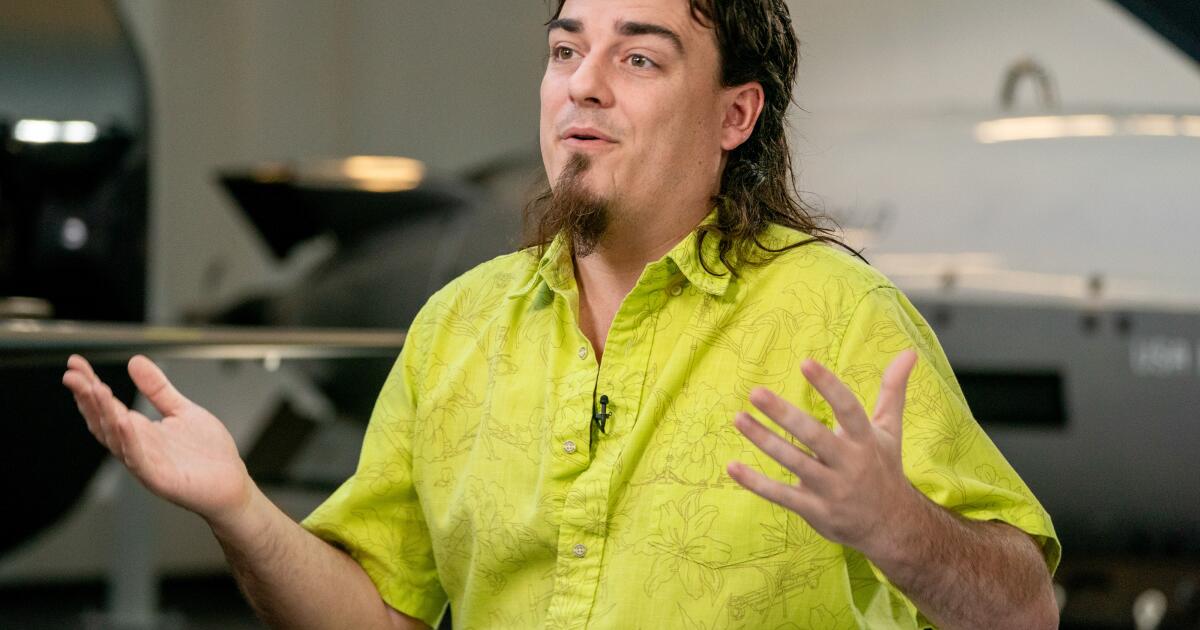
Despite concerns that California’s costs and regulations are bad for business, the state has attracted an unprecedented pile of capital this year, and no other state is even close.
The Golden State’s deep pool of talent, rich investors and other tech infrastructure have made it ground zero for the artificial intelligence explosion. That has helped it attract more than $335 billion in venture capital funding this year, according to PitchBook’s private market funding data released Thursday.
Its next biggest competitor, New York, raised less than a tenth of California’s total. Texas raised 1/40th of the amount.
“California has far and away the most [deals], obviously, a huge amount of that sits in the [San Francisco] Bay Area,” said Kyle Stanford, director of U.S. venture capital research at PitchBook. “Los Angeles, San Diego has a really strong tech market that I think benefits a lot from capital moving easily between San Francisco and L.A.”
Although a campaign for a new tax on billionaires has convinced some ultra-rich residents to shift to other states and businesses often complain that high property and energy costs and an anti-business regulatory regime make it too tough to make money in the state, the inability of the top talent, companies and investors in AI to set up elsewhere shows California’s enduring attraction.
The state’s economy grew 5% last year to a record $4.25 trillion, making it larger than every country other than the U.S., China and Germany. It is home to nearly 400 billion-dollar startups — more than any other state, according to CB Insights.
Southern California has emerged as a go-to address for fast-growing space and defense tech companies.
“California’s workers, entrepreneurs, and innovators continue to prove that investing in California delivers real results,” Gov. Gavin Newsom said in a statement last week in response to strong productivity numbers for the state. “As one of the largest economies in the world, the Golden State demonstrates that a strong workforce, economic growth, innovation, and performance go hand in hand.”
In the three months that ended in June, 1,087 California companies raised $108.8 billion in venture capital. Just three companies — Anthropic, Jeff Bezos’ Project Prometheus and Anduril Industries — absorbed 75% of that total. Anthropic alone raised $65 billion, which valued it at nearly $1 trillion.
Among metropolitan regions, Los Angeles ranked behind only Silicon Valley and New York, which attracted $98 billion and $11.5 billion in venture investment, respectively.
“Capital is flowing back into American innovation with real force,” said Bobby Franklin, president of the National Venture Capital Assn., an industry group that put out the report with PitchBook. “Investment activity is picking up, fundraising is improving, and there are early signs the IPO market is beginning to reopen.”
Investors poured in nearly $8 billion across 207 deals in the Los Angeles, Long Beach, and Santa Ana metro areas, up 28% from a year earlier, according to PitchBook.
The top deals in the region were led by aerospace and defense companies Anduril Industries, which raised $5 billion, and Impulse Space, which attracted $500 million.
Companies in industrial parts, software, consulting and life sciences were the other sectors in the Southland that attracted venture investments. El Segundo-based industrial supplies company Advanced Manufacturing Company of America and Huntington Beach-based aerospace company Mach Industries each raised $300 million.
To be sure, the surge in the size and number of monster deals could be overshadowing other money-raising efforts from smaller companies and investment by smaller funds, industry experts said.
Nearly 90% of invested dollars went to AI firms, up from last year, when around 65% of new funds were allocated to AI.
“If you’re a tech company and you’re not an AI company, you have a very, very difficult opportunity ahead of you to raise capital,” Stanford said.
This concentration of capital in AI leaves smaller, middle-of-the-road venture funds without large AI holdings struggling to return capital to their investors.
Only the largest funds, such as Andreessen Horowitz and Sequoia Capital — which possess the war chest to back OpenAI, Anthropic, and SpaceX — stand to gain from their initial public offerings of stock.
“It’s going to concentrate the fundraising over the next few years as well into these already very large names,” Stanford said.
Beyond the two potential blockbuster listings — Anthropic and OpenAI, each valued around $1 trillion — the IPO pipeline is thin.
“We don’t really have a strong IPO market,” Stanford said. “Obviously, SpaceX’s IPO is great. OpenAI and Anthropic, if they go out this year, will be very large drivers of distribution. But a vast majority of investors do not have exposure to them, and so that money will not make it back to them.”
Whether California’s venture-investing boom can continue at this record-breaking pace now hinges on how the IPOs of Anthropic and OpenAI perform.
“If Anthropic and OpenAI have really strong financials, that’s a big push of support for the rest of the market,” Stanford said.
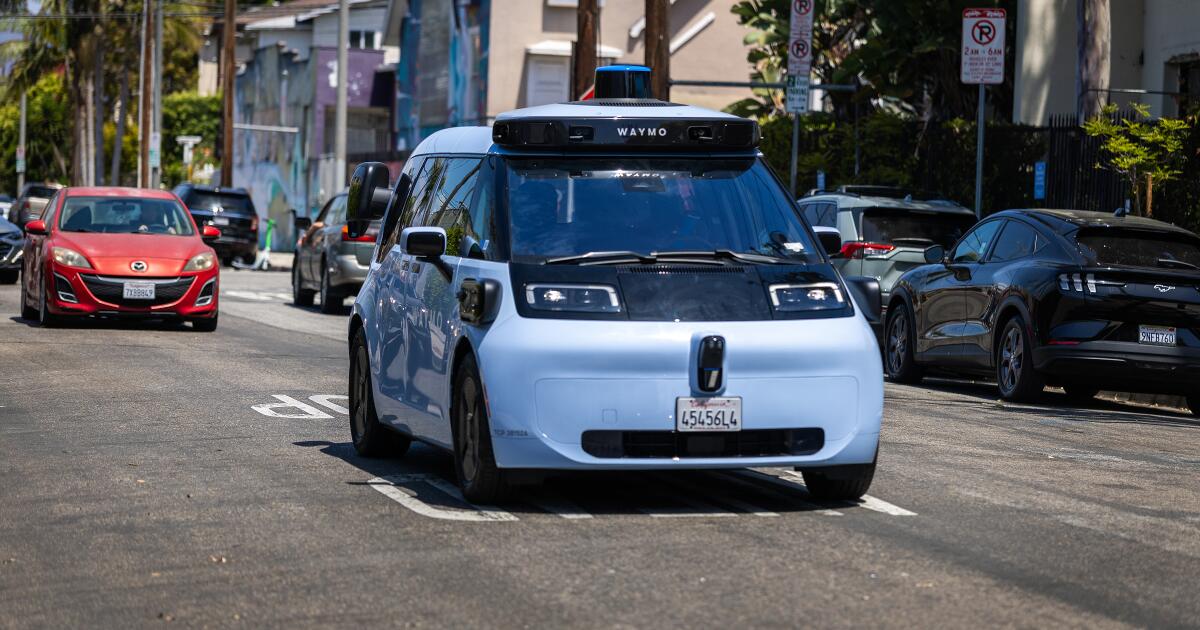
Waymo, the driverless taxi company that operates in more than 10 cities, will soon serve customers in San Diego.
The company has been testing its autonomous vehicles in San Diego with a safety driver behind the wheel since earlier this year. Rides without a human driver became available to employees Thursday and will open to members of the public later this year.
Waymo, which announced the expansion Wednesday, will also bring its taxis to Tampa, Las Vegas and Denver.
“If you’re in one of these four new cities, download the app to be notified when it’s time to ride,” the company said in a blog post.
Waymo has offered fully autonomous rides in San Francisco since 2022 and in Los Angeles since 2024.
It also serves customers in Nashville, Phoenix, Miami and other cities.
In May, Waymo launched a cheaper robotaxi dubbed the Ojai, which is better equipped for difficult driving conditions such as snowy roads.
The Ojai will supplement Waymo’s fleet of Jaguar I-Paces, the company said. In San Diego, services will be provided with the Ojai.
Waymo also announced Wednesday it’s beginning autonomous driving with a safety driver in its newest retrofitted vehicle, the Hyundai IONIQ 5.
“This phase allows us to validate our technology for fully autonomous operations as we work to bring riders even more ways to enjoy Waymo in the future,” the company said.
The company plans to eventually have tens of thousands of driverless taxis made per year, starting with the Ojai, then scaling using the IONIQ 5s.
The move into San Diego and three other cities widens the gap between Waymo and its competitors in the robotaxi race.
Elon Musk’s Tesla robotaxis and Amazon-owned Zoox are shuttling customers autonomously, but are nowhere near the scale at which Waymo operates.
Other companies are working on autonomous trucks and freight trains.
Waymo’s San Diego service area will include Pacific Beach, Normal Heights, La Playa and Southcrest, among other neighborhoods, the company said.

StubHub is getting a red card from some World Cup fans
Two World Cup customers are suing the New York-based ticket-selling company, alleging “false and misleading” advertising that left them without tickets or a refund for the World Cup games they paid to attend.
In federal court in New York last week, two Californians — Julia Reeker Moghal and Reuben Renteria — sued StubHub seeking monetary damages and a ban on the company selling World Cup tickets. The lawsuit aims to become a class action and comes after weeks of fierce criticism and complaints from customers regarding the company’s practices.
Throughout the World Cup, videos have emerged on Instagram and TikTok of StubHub customers describing their nightmare experiences with the ticket-selling platform.
Some said they had purchased tickets to World Cup games as early as November of last year, booked flights and hotels and arranged travel plans, then StubHub notified them days to weeks before the match of a refund for their tickets, which they never requested.
There were similar complaints about last-minute cancellations from people who bought Coachella tickets on StubHub.
In the lawsuit, Moghal said she had purchased three tickets for nearly $2,000 for the June 18 match between Switzerland and Bosnia-Herzegovina at SoFi Stadium in Inglewood, which were then canceled by StubHub. Moghal said she was contacted by StubHub and told her tickets would remain canceled, then was later told the tickets would be available one hour before the game.
When the match began, Moghal said she was at SoFi Stadium, but the tickets never came.
Renteria said he paid around $2,300 for the June 18 Mexico versus South Korea match in Guadalajara, Mexico, but they were canceled
“Devoted soccer fans have traveled from around the world to attend World Cup matches — and they reasonably relied on StubHub to provide the tickets they paid for as well as on StubHub’s warranty,” Blake Hunter Yagman, the attorney representing the two, said in a statement. “Instead of rewarding their business, StubHub sold them World Cup tickets that they either could not provide or on speculation, only to be stranded, in many cases, at the stadium gates without any recourse.”
According to StubHub’s website, its Fan Protect Guarantee states the platform will deliver valid tickets or refund in the event of a ticket issue, and that it will “go out of our way to find replacement tickets” of a comparable value. The lawsuit alleges the replacement tickets many fans were given by StubHub were worse than their original tickets.
FIFA, the World Cup organizer, states in its terms and conditions that the FIFA Marketplace, its own ticket-selling platform, is the only authorized platform for World Cup tickets, and that only tickets purchased through it are guaranteed by FIFA to be valid.
Despite the risk of purchasing through a third-party platform such as StubHub, many fans opted to do so to avoid the 30% FIFA resale tax, believing that the Fan Protect Guarantee would safeguard their order.
Since World Cup tickets began selling on FIFA Marketplace last September, fans have expressed disappointment in the expensive price tag. FIFA utilized a dynamic pricing system for the sale, and as sales phases progressed leading up to the games, the cost of tickets increased tremendously. In March, the extreme cost of tickets prompted 69 members of Congress to write a letter to FIFA urging them to lower their prices.
Tickets for the upcoming Friday match between Spain and Belgium in Los Angeles are selling on StubHub for over $1,300.
StubHub said in various statements to the news and in legal proceedings that ticket cancellations were a result of transfer problems and issues with FIFA’s ticketing infrastructure.
StubHub did not respond to requests for comment.
A FIFA spokesperson responded to this accusation in a statement, saying, “FIFA has no visibility over, or control of, secondary market ticket transactions carried out on third-party platforms. The transactions facilitated on these platforms occur entirely independently of FIFA’s official ticketing platform. With reference to the reliability of the services available to fans on FIFA’s official ticket platform, FIFA rejects any suggestion that the functional issues being experienced by users of third-party platforms with respect to FIFA World Cup 2026 tickets are the result of FIFA’s ticketing infrastructure.”
-

 West Virginia47 seconds ago
Helicopter crashes in Pocahontas County
-

 Wyoming4 minutes ago
Wyoming officials say Meta’s 715,000-square-foot data center is responsible for contaminating its water system with a rare bacterium | Fortune
-

 Crypto9 minutes ago
What Are KOLs Discussing About the Cryptocurrency Market Today?
-

 Finance16 minutes ago
From Love Island to Precious Metals, Prediction Markets Are Changing Finance | PYMNTS.com
-

 Fitness19 minutes ago
80-year-old fitness icon Joan MacDonald reveals her simple exercise for a stronger, more stable core
-

 Movie Reviews31 minutes ago
‘Gail Daughtry and the Celebrity Sex Pass’ Review: We’re Off to Hump the Wizard
-

 World38 minutes ago
Backlash on ethanol-blend fuel intensifies in India, puts carmakers in the dock
-
Politics49 minutes ago
Crews Drape Tarp Over White House in Latest Trump Restoration

