Business
So you want to be a social media star? What to know about the creator economy in 2024

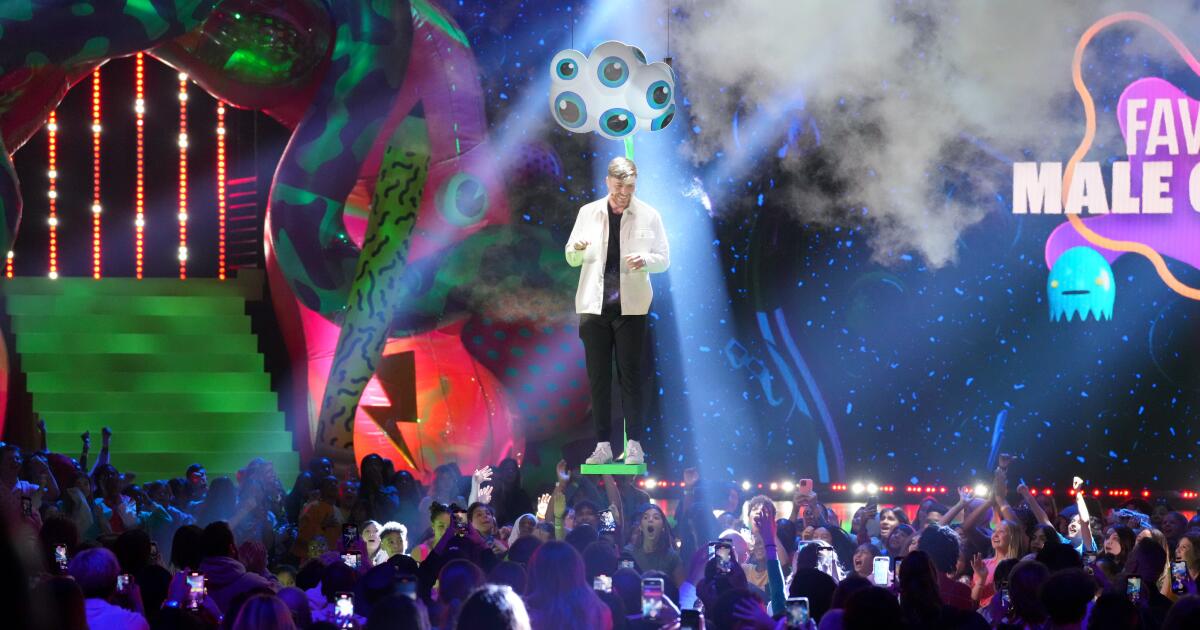
Half a trillion dollars. That’s how large the creator economy, currently pegged at $250 billion, is predicted to grow in the next four years, according to Goldman Sachs.
While people have been making a living off of creating content for online audiences for nearly two decades, what was once a nascent industry is growing up. Brands are getting more strategic about influencer marketing, a thriving ecosystem has emerged to serve creators and their needs, and social platforms are increasingly nudging consumers to spend while they scroll.
What does this mean for influencers and their audiences? The Times asked those who have been in the creator economy for decades to opine on what the new year will bring. We’re still in the early innings, they said, but in 2024, the industry will continue to mature in significant ways.
It will get tougher to build a ‘real’ business.
Most creators start off as one-man bands. They brainstorm, film, edit and post content on their own. Day by day, they grow their followings, and eventually begin to make money. But then what?
“There are two options: You either bring in a manager or agent externally, or you hire a COO or business partner internally,” said Jon Youshaei, a creator and founder of Youshaei Studios. “And more and more, I’m seeing creators bring in a right-hand person internally.”
A lot of this has to do with competition. Although the barrier to entry has never been lower, building a “real business” in the creator economy is getting harder, Youshaei said.
Blake Michael, chief strategy officer of Fourteen Media Group, a consulting firm for creator economy startups, said this necessitates bringing in outsiders to help with growth strategies.
“Niche verticals are so quickly becoming saturated, and that means you’ve got to put more effort into your content to stand out,” Michael said.
Companies will be more selective about who they work with …
In the early days of influencer marketing, creators quickly attracted money and attention from companies clamoring to get in on social media. This year, businesses won’t be as willing to throw money at any influencer that comes their way.
“I just think they’re getting a lot smarter,” said Joe Gagliese, co-founder of Viral Nation, one of the world’s first influencer marketing agencies. “They want to understand: Does this person really align with my brand? What are their views and perspectives on things that might not align with my brand?”
As brands become more disciplined in their efforts in 2024, they will increasingly want to see results they can measure, Gagliese said.
Two influencers who may look the same on paper might produce completely different results. Companies are learning to look at metrics such as community engagement over number of followers, and they’re scrutinizing the type of relationships creators have with their audience.
“There’s creators who people look to and trust for their opinion, and then there’s creators who folks like to be entertained by,” Gagliese said, “and those two types of engagement are very different as it relates to being able to help a brand.”
… But this could mean more opportunities for ‘micro influencers.’
Counterintuitively, the push to formalize channels of influencer marketing will mean more opportunities for creators with smaller followings.
Traditionally, several “inefficiencies” have slowed down the process when companies want to work with influencers, said Zach Ferraro, head of strategic partnerships at Fourthwall, a platform that helps creators sell products and launch memberships.
First, brands had to look for the right creator — and often they didn’t know exactly what they were looking for or what to expect realistically in terms of outcomes, Ferraro said. They had to go back and forth with a manager on rates, which can vary widely, and provide deliverables, such as a certain number of Instagram posts or videos.
To make it worth the friction and costs involved, brands would look only to ink larger deals.
But as companies have become more experienced, platforms that connect creators with brands have proliferated and the process has become more transparent. For example, the company F*** You Pay Me, allows creators to anonymously review brands they’ve worked with and share how much they got paid.
“Smaller, mid-tier micro influencers are going to get more opportunities as friction goes down,” Ferraro said.
Gagliese of Viral Nation agrees.
“I think that creators who have really developed core audiences and communities and have the ability to convert and create those business outcomes will likely get paid more,” he said. These are the influencers who might not have millions of followers but boast smaller, devoted audiences.
Another possibility is for brands to hire smaller creators for in-house content, Ferraro said. “Middle-class” creators who might not be doing as well financially as they want to be could find opportunities offering their expertise to brands looking to build their audiences.
Consumers will pay you for your content too.
With the advent of in-app “tipping” features on social platforms, creators have another way to make money: Their fans can pay them directly without going through a third-party platform, such as Patreon or Buy Me A Coffee.
On TikTok, users can purchase coins to spend on virtual gifts for livestreamers on the platform that can then be converted into earnings. The most popular form of spending is a $19.99 bundle of coins that makes up a quarter of the app’s in-app purchase revenue (TikTok takes 50% of the payout).
Lexi Sydow, head of insights at data.ai, said this is a compelling trend because they represent one-off micro-transactions given in the moment for specific creators that consumers enjoy.
“There’s not necessarily a subscription tied to it,” Sydow said. “You’re saying, ‘Kudos. I like this. I want more of it.’ And I think that that’s powerful for this space because I really do believe we’re in the early days of the growth rates.”
In 2023, TikTok became the first non-game app to generate $10 billion in consumer spending, according to data.ai. This bodes well for social media spending overall, which is only projected to grow.
Other platforms such as Instagram and YouTube have also jumped on the bandwagon to introduce tipping features.
Authenticity will rule…
Eric Wei, co-founder of Karat, a startup that helps creators with their finances and credit, describes the current era of social media content as “sensationalist” — and predicts a trend toward authenticity in 2024.
Just take a look at the top subscribed YouTube channel by an individual, MrBeast, whose recent videos include “I Rescued 100 Abandoned Dogs!” and “$1 vs $100,000,000 Car!”
Although MrBeast will continue to be popular, Wei predicts a movement of creators toward more unedited content. They include fitness YouTuber Sam Sulek, who has 2.75 million subscribers.
“Everyone’s focusing on Sam, why? The guy doesn’t edit,” Wei said. “It’s just him working out at the gym for over an hour.”
Youshaei, who also has a YouTube channel, said he sees the rise of this kind of content counteracting the “hyper-edited” videos that have taken over YouTube in recent years.
… But the rise of fake influencers is coming.
Lil Miquela, self-described as a “19-year-old Robot living in LA,” is one of the first virtual influencers. She charges up to hundreds of thousands of dollars for a deal and has worked with brands such as Burberry, Prada and Givenchy, the Financial Times reported recently.
She posts photos of herself vacationing in Europe, dyeing her hair at the salon and eating at taquerias. Does it matter that she’s not real? She has 2.6 million followers.
Human influencers may soon have to worry about competition from such AI-generated avatars.
Digital avatars that amass followers is not a new idea. Consider Japanese Vocaloid Hatsune Miku and K/DA, a virtual K-pop girl group featuring League of Legends characters.
And Wei points to Iron Mouse, one of the most subscribed female creators on Twitch who uses a virtual avatar and is known as a VTuber.
“It’s already a billion dollar industry,” he said.

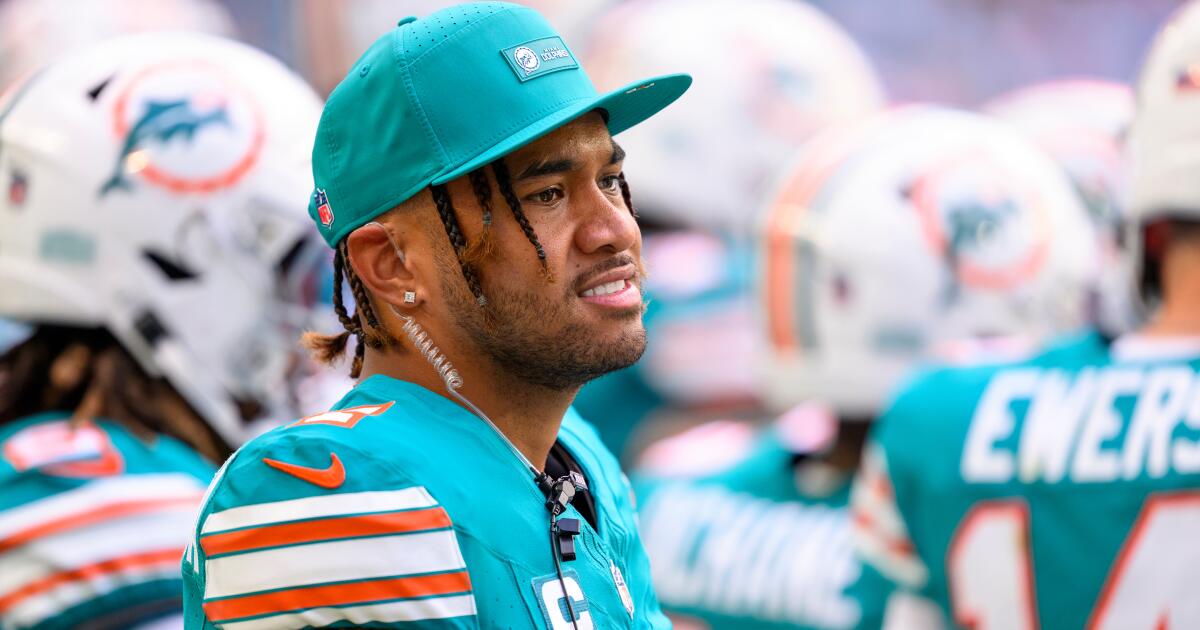

The high-stakes feud between Paramount Skydance President Jeff Shell and Las Vegas gambler and self-professed “fixer” Robert James “R.J.” Cipriani spilled into court on Monday.
Cipriani filed a lawsuit against Shell on claims of fraud and eight other counts, alleging that he reneged on an oral agreement to develop an English-language version of a Spanish music show that streams on Roku TV.
He is seeking $150 million in damages.
In the 67-page lawsuit, filed in Los Angeles County Superior Court, Cipriani claims that in exchange for providing “sophisticated, high-value crisis communications services, entirely without compensation” over 18 months, Shell had agreed to develop the show “Serenata De Las Estrellas,” (Star Serenade), but failed to do so. Cipriani and his wife were to be named as co-executive producers.
“This case arises from the oldest form of fraud: a powerful man took everything a less powerful man had to offer, promised to repay him, lied to him when he asked about it, and then refused to compensate him at all,” states the complaint.
Cipriani — who has producer credits on a 2020 documentary about Vegas, “Money Machine: Behind the Lies,” and the 2015 movie “Wild Card” — intended to make “Serenata” as a “lasting legacy for his mother,” Regina, saying the effort “has been the driving force and the most important thing consuming [Cipriani’s] entire life of almost sixty-five years,” according to the suit.
The show was inspired by a song that the Philadelphia-born Cipriani used to sing to his late mother when he was growing up.
The litigation is the latest twist in a simmering behind-the-scenes scandal that has left much of Hollywood slack-jawed.
For weeks, Cipriani had threatened to file a lawsuit against Shell, with the potential to derail his comeback at Paramount, three years after he lost his job as NBCUniversal’s chief executive over an inappropriate relationship with an underling.
Cipriani’s suit alleges Shell wasdesperate for help in quelling negative stories about him.
It also portrays him as someone who was indiscreet, allegedly sharing sensitive information during the period when the Ellison family, through Skydance Media, was preparing to close its deal to acquire Paramount and then was actively pursuing Warner Bros. Discovery to add to its growing entertainment and media empire.
The eventual rift between the unlikely pair began in August 2024. Patty Glaser, the high-powered entertainment litigator, convened a meeting between the two men.
During the meeting with Shell, the executive expressed to Cipriani his concern that emails and texts between him and Hadley Gamble, the CNBC anchor Shell had been involved with, would come out, saying “that would absolutely destroy me,” according to the suit.
Cipriani claims in his lawsuit Shell was facing “catastrophic personal exposure arising from his conduct toward yet another woman in the media industry,” similar to what had prompted his ouster from NBCUniversal and that he “solicited” his “crisis communications services.”
According to the suit, Cipriani was in a position to help him, having engaged in a “longstanding practice of exposing misconduct in the entertainment and media industries.”
Robert James “R.J.” Cipriani in Amazon Prime Video’s 2025 series “Cocaine Quarterback.”
(Courtesy of Prime)
A high-rolling blackjack player, Cipriani’s colorful résumé includes aiding the FBI in the arrest and conviction of USC athlete-turned global drug kingpin Owen Hanson, who was sentenced to 21 years in federal prison, and filing a RICO suit against Resorts World Las Vegas.
Leveraging his “unique media relationships and industry influence,” Cipriani said in his complaint that he provided Shell with “ongoing threat-monitoring and intelligence services,” and “took proactive steps to suppress, redirect, or neutralize” negative coverage against Shell before publication.
Cipriani said Shell expressed “effusive gratitude” to him after he planted a story about another entertainment industry figure “in order to divert media attention” away from Shell. “Thank you thank you thank you,” Shell wrote in a text to Cipriani, according to the lawsuit, which included a copy of the text.
During tense negotiations over Paramount’s streaming rights for the highly successful “South Park” franchise last summer, Shell allegedly asked to talk to Cipriani about the matter. Cipriani then “orchestrat[ed] the placement of a highly favorable news article,” that was “devastating to Shell’s and Paramount’s adversaries in the dispute,” the suit states.
After a story published in a Hollywood trade, Cipriani wrote to Shell on WhatsApp, “I’m the one that put the article out for you!!!” and “I didn’t want to tell you till it hit so you have plausible deniability.”
According to a message cited in the lawsuit, Shell responded, “I love you!!!! …Thank you Rj,” adding “I owe you dinner at least!”
Despite those boasts, Paramount ultimately paid “South Park” creators millions more than Skydance had intended. To remove obstacles from Skydance’s path to buy Paramount, the media company agreed to two blockbuster deals that include paying the “South Park” production company more than $1.25 billion to continue the cartoon — making it one of the richest deals in television history.
During the course of their relationship, Cipriani further alleges that Shell alerted him to a then-pending $7.7-billion Paramount deal for the rights to UFC fights, while Netflix “believed” it had a “handshake deal” for the same rights, according to the suit.
Cipriani disclosed in his lawsuit that he filed a whistleblower complaint with the Securities and Exchange Commission over the disclosure of material information, claiming that Shell told him that not even UFC President Dana White knew of the transaction. In a WhatsApp message cited in the lawsuit, Shell told Cipriani that the deal was “very hush, hush until we sign.”
While the gambler continued to provide his services to Shell gratis, their relationship began to sour.
Cipriani became enraged that Shell did not uphold his end of the alleged deal to help him with the TV show, viewing it as a slap to him and his mother.
In February, the pair met to resolve their growing dispute. According to the lawsuit, also in attendance was an unidentified entertainment attorney who had represented both men in separate matters.
Patty Glaser has been widely reported as having represented Shell and Cipriani. She introduced them in summer 2024, as The Times reported Saturday.
“We were presented with a draft complaint riddled with clear errors of fact and law,” Glaser said in a statement last week. “We will strongly respond.”
The February meeting did not go well.
Shell not only “refused to compensate” Cipriani, but also told him that he could not “assist” him “in obtaining a television show or other entertainment industry opportunity.”
Cipriani further alleged in his lawsuit that during their “failed summit,” Shell revealed his “disdain” for David Zaslav, the Warner Bros. Discovery CEO, and disclosed that Paramount intended to “sweeten” its pending hostile offer for the studio to fend off Netflix prior to announcing its intention to do so publicly.
After the meeting, Cipriani stated in his complaint that Shell’s attorney privately offered Cipriani a “$150,000 personal loan” to resolve the dispute.
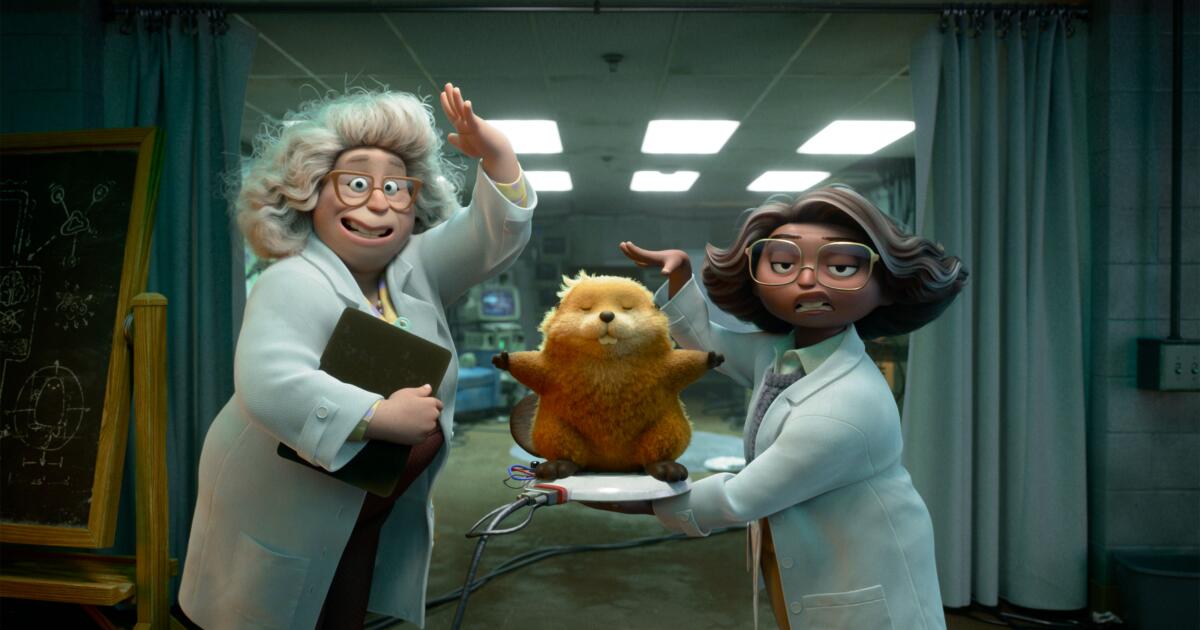
Walt Disney Co. and Pixar’s “Hoppers” took the box office crown this weekend in an encouraging sign for the company’s original animated films.
The film generated $46 million in ticket sales in the U.S. and Canada, marking the highest domestic opening for an original animated movie since 2017’s “Coco,” according to studio estimates. The global box office total for “Hoppers” was $88 million.
The zany movie features a young environmental advocate who “hops” her consciousness into a robotic beaver and bands together with other woodland creatures to stop a planned freeway expansion through a glade.
The film is directed by Daniel Chong, who created the Cartoon Network animated series “We Bare Bears.”
The muscular debut for “Hoppers,” as well as the strong performance from Sony Pictures Animation’s “Goat” last month, has been a positive sign for audience interest in original animated films.
Since the pandemic, theatrical returns for animated sequels have far surpassed that of original films. Disney’s “Zootopia 2,” for instance, has grossed more than $1.8 billion in global box office revenue, with more than $426 million domestically. Disney and Pixar’s 2024 hit “Inside Out 2” also crossed more than $1.6 billion globally.
By contrast, Disney and Pixar’s 2025 original film “Elio” brought in about $154 million in worldwide box office revenue.
Original films are vital to Pixar’s future, as the Emeryville, Calif.-based studio built its reputation on its string of nearly uninterrupted original blockbuster hits, including 1995’s “Toy Story” and 2004’s “The Incredibles.”
Paramount Pictures and Spyglass Media Group’s “Scream 7” came in second at the box office with $17.3 million in its second weekend in theaters. Warner Bros. Pictures’ “The Bride!,” Sony’s “Goat” and Warner Bros.’ “Wuthering Heights” rounded out the top five at the box office, according to data from Comscore.
With several strong releases, as well as popular holdover films from 2025 that continue to bring in revenue, the first few months at the box office have been a notable improvement over last year’s dismal first quarter.
Domestic box office revenue so far is up more than 12% compared with the same time period in 2025, according to Comscore.
Business
Hundreds of applications, no jobs and AI competition: California’s brutal tech work landscape

Laid-off tech worker Joseph Tinner has spent almost a year hunting for a job. It has been a depressing crash course on the sea change in Silicon Valley.
The former product instructor from the San Francisco Bay Area has ridden the tech wave throughout his career, easily jumping from Verizon to Fitbit to Workday. Since losing his job early last year, the 59-year-old has hit a wall.
He applied for hundreds of roles — sometimes going through multiple rounds of consideration — only to get rejected again and again.
“It’s been a roller coaster,” he said. “It just takes a lot of resilience, honestly, to be in this job market.”
He isn’t alone.
Tech companies that aggressively hired during the COVID-19 pandemic have been slashing tens of thousands of jobs. For workers like Tinner, it has been a rough realization that the Silicon Valley shakeout is stretching into another year.
Just last week, Block — the financial tech company that owns payment services Square, Cash App and Afterpay — said it is laying off 4,000 people, or half of its workforce.
Many other tech companies outside the hot artificial intelligence sector are slashing staff. Block blamed AI, saying the powerful technology means it no longer needs as many people.
“The intelligence tools we’re creating and using, paired with smaller and flatter teams, are enabling a new way of working which fundamentally changes what it means to build and run a company,” Jack Dorsey, the co-founder of Block and a founder of Twitter, said in a post on X.
U.S.-based tech employers announced more than 33,000 job cuts from January to February, up 51% compared with the same period last year, the outplacement firm Challenger, Gray & Christmas said Thursday.
Andy Challenger, workplace expert and chief revenue officer for the firm, said he used to be skeptical that companies could replace workers with AI, but he’s starting to become convinced.
“Artificial intelligence has overtaken the attention of these companies in such a dramatic way,” he said.
Mass layoffs in the tech industry started in 2022, after a hiring surge during the pandemic, when demand for online services increased as people were stuck at home.
But many of the world’s most powerful tech companies have continued cutting, even as their profits have grown. They’ve cited various reasons for layoffs, from strategic shifts and restructuring to pivoting to smaller teams and fewer managers.
An advertisement promoting an AI-powered company is seen downtown on Thursday, Oct. 16, 2025 in San Francisco, CA.
(Manuel Orbegozo/For The Times)
Tech companies such as EBay, Meta, Google, Autodesk, Pinterest, Salesforce and others have been shrinking their workforces. Layoffs have also hit the media and entertainment companies, including Los Angeles video game developer Riot Games.
On LinkedIn, laid-off workers who have been out of work — some for more than two years — have been asking for help finding a job. They’ve been sharing stories about their financial and emotional struggles, including losing their confidence, homes and savings as they search for work.
Tech workers who have seen their employers grow over the last decade have noticed a shift in corporate culture. Workers who have been laid off before said it has been tougher and taken longer to land a new job than in previous years.
A longtime Salesforce employee, who was recently laid off and asked to remain anonymous, concerned that speaking to the media could affect their severance, said the sales software company used to be more focused on helping its employees. Salesforce broadcast this value by highlighting its “ohana,” culture, using the Hawaiian word for family.
“I was just incredibly grateful every day to be able to wake up and make a positive change in the world,” the worker said. “I thought that the company was devoted to the same thing.”
But the tone at Salesforce shifted in 2023 as the company faced pressure to cut costs and increase profits. New leaders came in, and the focus changed.
“The company is trying to erase any semblance of the way that it used to be,” the worker said.
Salesforce has said AI is helping it squeeze more profit from fewer people.
“AI is doing 30% to 50% of the work at Salesforce now,” the company’s co-founder and Chief Executive Marc Benioff told Bloomberg.
Salesforce didn’t respond to a request for comment.

Marc Benioff, CEO of Salesforce Inc., during a Bloomberg Television interview at the World Economic Forum in Davos,
(Bloomberg/Bloomberg via Getty Images)
Although technology is changing the way people work, experts and even some AI executives think companies sometime use AI as an excuse to cut workers in what’s referred to as “AI washing.”
Enrico Moretti, a professor of economics at UC Berkeley, said other factors besides AI are fueling layoffs. As a company grows larger and matures, it doesn’t hire as much as before.
“It’s a shift in their position and the maturing of their product, and therefore the technologies and their employment needs,” he said.
Roger Lee, an entrepreneur who created a website to track layoffs, Layoffs.fyi, in 2020, said in an email that tech companies are pouring billions of dollars into AI investments, and cutting headcount helps offset those costs.
When he started tracking layoffs six years ago, Lee wanted to create awareness around tech layoffs and help laid-off workers find their next job. He never anticipated the layoffs would continue today.
“I do think 6 years of persistent layoffs have led many tech workers to re-evaluate the perceived ‘safety’ of tech jobs and their relationship with the industry overall,” he said in an email.
According to Layoffs.fyi’s latest count, there have been more than 35,000 layoffs in the tech sector worldwide so far this year.
Close to half of that total is from Amazon alone.
Unemployed tech worker Tinner was laid off from Workday, a Pleasanton company that provides a platform to businesses, universities and organizations to manage payroll, benefits, finances and other tasks.
In 2025, Workday slashed roughly 1,750 jobs, or 8.5% of its global workforce, citing a prioritization of investments in artificial intelligence and platform development. Then in February, the company said it plans to cut 2% of its workforce, or roughly 400 employees.
As job cuts pile up, Tinner is up against intense competition in a job market flooded with talent from the top companies in tech.
As he ponders his next career steps, he’s also redefining his identity and relationship with work.
He’s even tried pouring beer for fun or thought about doing more artwork.
“Maybe what I need to do is just celebrate all I’ve done instead of getting back into this rat race, on this treadmill, and look for something totally different,” he said.
Feud between Vegas gambler and Paramount exec sparks $150-million fraud lawsuit

His underground puppet shows draw massive crowds to L.A. street corner — and fans don’t even know his name

L.A. Times Concierge: ‘Our anniversary trip to Paris fell through! Help us plan an L.A. escapade that feels special’
CBS News’ Justice Department correspondent Scott MacFarlane exits network

Newsom’s fight with Trump and RFK Jr. on public health

Florida High School Football Rankings: Top 25 teams – Oct. 21

Cleary's 21 help Le Moyne down Central Connecticut State 69-64 in OT

How old is Bo Nix? What to know about Oregon quarterback ahead of 2024 NFL Draft

99th annual Pony Swim held in Virginia

Indiana Members Credit Union announced as new anchor tenant at Bottleworks District

What defence support could Ukraine offer Middle East states amid Iran war?

Warrants served in New Jersey, Pennsylvania as feds look into possible NYC terrorism

Video: Airports Struggle to Staff T.S.A. During Partial Government Shutdown

Before-and-after satellite imagery offers a rare look at damage inside Iran
Hungary's opposition leader Péter Magyar calls on Russia to refrain from election interference
-

 Wisconsin1 week ago
Setting sail on iceboats across a frozen lake in Wisconsin
-

 Massachusetts6 days ago
Massachusetts man awaits word from family in Iran after attacks
-

 Maryland1 week ago
AM showers Sunday in Maryland
-

 Florida1 week ago
Florida man rescued after being stuck in shoulder-deep mud for days
-

 Pennsylvania4 days ago
Pa. man found guilty of raping teen girl who he took to Mexico
-

 Oregon1 week ago
2026 OSAA Oregon Wrestling State Championship Results And Brackets – FloWrestling
-

 News1 week ago
2 Survivors Describe the Terror and Tragedy of the Tahoe Avalanche
-

 Sports5 days ago
Keith Olbermann under fire for calling Lou Holtz a ‘scumbag’ after legendary coach’s death