Business
For companies in the Ozempic-fueled weight-loss economy, it's survival of the fittest


Before he began taking Mounjaro last summer, Nick Lovell was the weight-loss economy’s ideal customer.
He signed up for WeightWatchers and bought “Dr. Atkins’ Diet Revolution” to try the low-carb regimen. He joined his first gym in middle school and has belonged to half a dozen others since. He paid for personal trainers and boutique fitness classes and underwent bariatric surgery in 2008. And yet, his 5-foot-9-inch frame stubbornly held onto its 258 pounds.
All told, Lovell, a photographer from Norwalk, Conn., spent tens of thousands of dollars over the decades on “things that ultimately failed.”
Weekly injections of Mounjaro, a prescription diabetes medication that spurs weight loss, changed everything. Down 80 pounds in 13 months, Lovell has canceled his diet program memberships and no longer belongs to a gym, preferring to exercise on his own at home. He goes out to eat less often. His cravings for ultra-processed foods such as cereal and Velveeta have subsided, and now he buys more fruits and vegetables and high-protein options such as chicken thighs, eggs and cottage cheese instead.
Lovell’s experience with the medication is one of countless success stories to emerge amid a monumental shift in the way people lose weight — and, consequently, how they live and spend.
So far, the powerful new anti-diabetes and anti-obesity drugs — a fast-growing family that also includes Ozempic, Wegovy, Saxenda, Zepbound and dozens more in the works — have been expensive and difficult to obtain because of widespread shortages. But as availability increases and costs come down, GLP-1 medications threaten to upend the long-standing natural order for industries across the board.
Executives and investors are nervously wondering whether droves of slimmed-down users will soon ditch their dieticians, skip the gym, order less at restaurants, and throw out their favorite snack brands. Many companies, acknowledging that the blockbuster class of drugs are a medical breakthrough and not just a fad, are swiftly repositioning themselves with new products and services in a bid to persuade customers that they still have plenty to offer in the booming age of Ozempic.
(Christina House / Los Angeles Times)
“We had to up our game,” said Dr. Gary Foster, chief scientific officer at WeightWatchers. “A lot of people said, ‘Was it an existential crisis for you?’ Absolutely not. When science evolves, we evolve. What we have to do as a brand is think about how we incorporate that.”
The changes to consumer behavior have already had far-reaching ramifications. Apparel retailers say they’ve noticed customers buying smaller sizes. Plastic surgeons are reporting a rise in facelifts and other procedures to correct so-called Ozempic face, the sagging skin that often accompanies rapid weight loss. In February, Lars Fruergaard Jorgensen, the chief executive of Ozempic maker Novo Nordisk, said food company leaders had called him because they were “scared.”
“The question is, how widespread is Ozempic going to become?” said Simeon Siegel, an analyst at BMO Capital Markets. “As it grows, so too will its impact.”
With studies predicting that the market for GLP-1 drugs — which help manage blood sugar levels, slow digestion and reduce appetite — will exceed $100 billion by 2030, businesses aren’t waiting around.
In November, WeightWatchers began offering the prescription medications through its WeightWatchers Clinic, which charges $99 per month for access (the cost of the drugs is separate). Foster said tens of thousands of people have since been prescribed GLP-1s directly from the company’s doctors.
It also introduced the WeightWatchers GLP-1 program, designed for members taking the drugs regardless of where they got them. The program aims to help users develop healthy lifestyle habits by teaching them about nutrition, meal timing, proper protein and hydration intake and the importance of a consistent exercise routine.
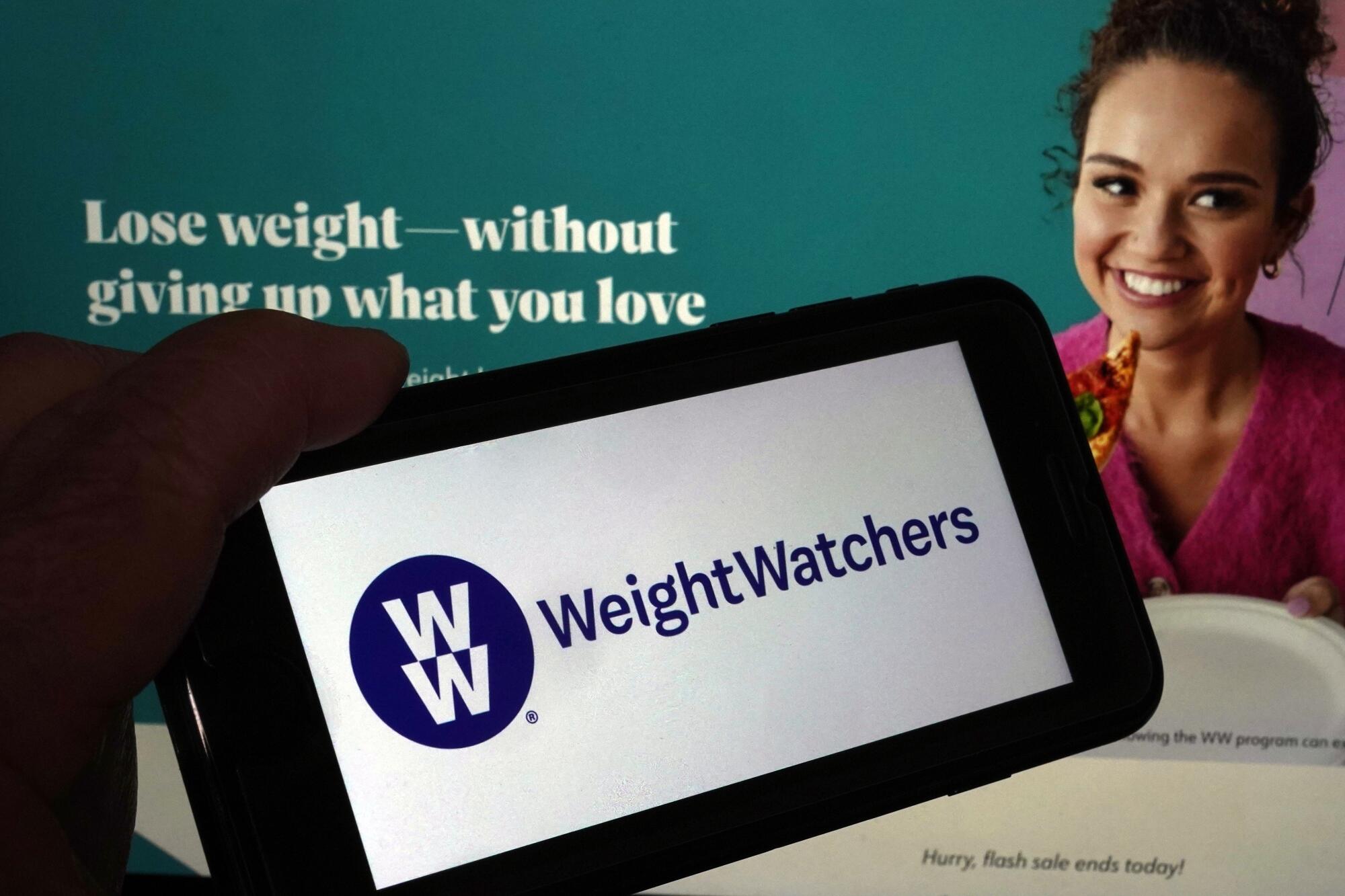
WeightWatchers began offering GLP-1 medications through its in-house clinic in November. Since then, tens of thousands of people have been prescribed the drugs directly from the company’s doctors.
(Richard Drew / Associated Press)
“These medications are not total fixes,” Foster said. “It’s a misnomer to say, ‘Oh, it’s the easy way out.’ When you do need biological treatments, you also need behavior treatments to be successful.”
The pitch is that health is a long-term commitment that is about more than just a smaller number on the scale. On its GLP-1 program page online, WeightWatchers says it is “your companion on your medical weight-loss journey.”
We had to up our game. A lot of people said, ‘Was it an existential crisis for you?’ Absolutely not. When science evolves, we evolve. What we have to do as a brand is think about how we incorporate that.
— Dr. Gary Foster, chief scientific officer at WeightWatchers
Atkins, a WeightWatchers rival, also wants a bite of the lucrative market and has adopted similar language: We’re “your ally in a new era of weight loss,” the low-carb diet program says on a dedicated GLP-1 page on its website.
“The new weight-loss medications have changed EVERYTHING. We’re actually thrilled at what lies ahead.”
With many GLP-1 users reporting muscle loss as a side effect, Atkins is pushing its line of high-protein bars and shakes, “a deliciously easy way to meet your protein requirements to help you maintain lean muscle mass and bone health while you’re losing weight.”
Two months ago, Nestlé, the world’s largest food and beverage company, introduced Vital Pursuit, a line of frozen foods that the company said is “intended to be a companion for GLP-1 weight-loss medication users and consumers focused on weight management.” The Swiss-based giant cited research from J.P. Morgan that predicted that GLP-1 users in the U.S. could reach 30 million by 2030 — or around 9% of the country’s population.

(Nestlé)
“As the use of medications to support weight loss continues to rise, we see an opportunity to serve those consumers,” Steve Presley, chief executive of Nestlé North America, said in a statement. By tapping into the emerging category with its new high-protein pasta bowls and sandwich melts, the food giant is trying to “stay ahead of the trends.”
Abbott, the company behind Ensure and Pedialyte, in January introduced Protality, a line of chocolate and vanilla shakes with 30 grams of protein that “provides nutritional support for adults pursuing weight loss.”
“We’re serving a new group of people who may be at a higher nutritional risk because they may be overweight or have obesity and use weight-loss medications,’’ Hakim Bouzamondo, Abbott’s division vice president of nutrition research and development, said in a statement. The shakes are now sold at stores including CVS and Walmart.
I’m pretty cynical about companies getting into this space now. It seems opportunistic. This is a huge phenomenon, there’s obviously money to be made in it.
— Nick Lovell, a Mounjaro user
Gyms, too, are pivoting to retain clients who are now taking the drugs — and to attract people who might have felt too self-conscious to sign up for a membership before.
Although it might seem counterintuitive, “I think [Ozempic] brings new people in,” said Siegel, the analyst who tracks big-box fitness chains.

Equinox’s personal trainers have gone through a new GLP-1 Program to help tailor their sessions with clients who are on weight-loss medications.
(Equinox)
“When an ‘unfit’ person becomes a fit person,” he said, “more often than not those are the people that become the workout fanatics.”
Luxury health club chain Life Time is trying a multi-pronged approach to appeal to GLP-1 users.
In November the company launched Miora, a wellness clinic located inside one of its athletic clubs in Minneapolis. The clinic offers GLP-1 drugs as well as a host of longevity and performance amenities such as IV therapy and creates personalized programs for members based on their bloodwork and other tests.
Currently in pilot mode, Miora will roll out to Life Time’s other major markets in the coming months, including Southern California.
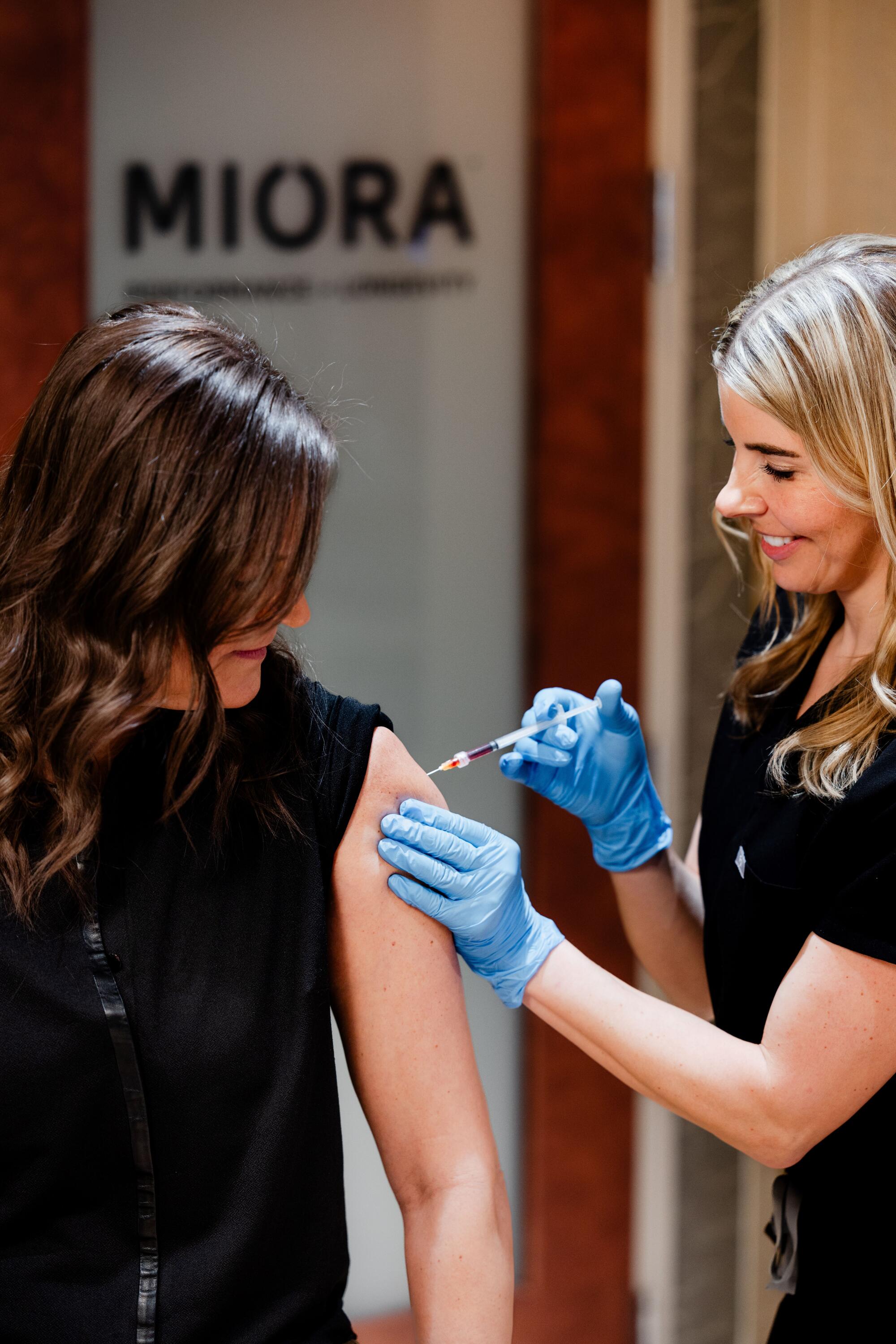
Life Time, a chain of luxury health clubs, has launched Miora, a wellness clinic that offers GLP-1 drugs as well as longevity and performance amenities. The clinic is in pilot mode in Minneapolis and is expected to roll out to other club locations in the coming months.
(Life Time)
In the meantime, the company has created a GLP-1 personal training program for its team of 3,500 fitness trainers, meant to help them understand the specific challenges faced by weight-loss-drug users and tailor their sessions accordingly. That could mean incorporating more strength and resistance training to combat muscle loss or helping prevent weight gain when a member stops taking the drugs or lowers the dosage.
“If we were just to get a fraction [of our potential member base] to engage in the way that we do things differently with GLP-1s — it’s an insane opportunity for the company,” said Cliff Edberg, senior director of Miora.
Personal trainers at Equinox and at Gold’s Gym SoCal locations have received similar GLP-1-focused instruction.
The question is, how widespread is Ozempic going to become? As it grows, so too will its impact.
— Simeon Siegel, an analyst at BMO Capital Markets
“We’re ready and waiting to assist clients using GLP-1 drugs,” said Mike Mitchell, vice president of fitness for Gold’s Gym SoCal.
To monitor the effect of the medications on lean body mass — the difference between a person’s total weight and body fat weight — the franchise group is recommending that members get regular comprehensive body composition scans at one of its 23 locations.
“Supporting individuals who are taking GLP-1 medications requires a nuanced approach,” Mitchell said. “Our role involves providing empathetic and personalized behavior-change coaching.”

Personal trainer Patricia Rubio, left, and Mike Mitchell, vice president of fitness for Gold’s Gym SoCal, at the franchise group’s Hollywood location.
(Christina House / Los Angeles Times)
As groundbreaking weight-loss drugs reshape the consumer landscape, the difficulty for brands will be positioning themselves as authentic partners to GLP-1 users.
“I’m pretty cynical about companies getting into this space now,” said Lovell, the Mounjaro user. “It seems opportunistic. This is a huge phenomenon, there’s obviously money to be made in it. The major conglomerates come across to me more as just protecting their bottom line.”
To make it feel like less of a “money grab,” he said he’d like to see companies immerse themselves in the growing GLP-1 community and get to know their target customers.
“Otherwise, it’s Marie Antoinette: Let them eat cake — or let them eat protein bars, in this case.”


Sony Pictures will invest $100 million and take a minority stake in virtual reality venue operator Cosm, as the studio continues to build a business in communal experiences.
As part of the investment, Sony Pictures Chief Executive Ravi Ahuja will also join Cosm’s board of directors, the studio said Wednesday. The size of Sony’s minority stake was not disclosed.
The El Segundo-based Cosm currently operates three venues — one at Hollywood Park in Inglewood, and the others in Dallas and Atlanta. The company plans to open additional venues in Detroit and Cleveland.
Cosm bills itself as a “shared reality venue,” and its facilities center around a massive, wraparound screen that is intended to envelop viewers with additional digital effects. The company has largely focused on sports, though it has also shown Cirque du Soleil shows and done several collaborations with Warner Bros., including recent screenings of 2001’s “Harry Potter and the Sorcerer’s Stone” in honor of the film’s 25th anniversary.
“Cosm sits at the intersection of several trends shaping the future of entertainment,” Ahuja said in a statement. “We’ve followed Cosm since before launch and have been impressed with the quality of the experience and the enthusiasm it’s generating with audiences.”
The investment is Sony’s latest venture into experiential entertainment. In 2024, the Culver City-based studio acquired dine-in theater chain Alamo Drafthouse Cinema.

The Los Angeles City Council on Tuesday unanimously advanced an ordinance to halt new oil and gas drilling and phase out all existing production over the next 20 years. L.A. is home to more than 2,000 active oil wells.
The measure revives a similar ban passed in 2022, which was struck down by a judge following legal challenges from the oil and gas industry.
It must pass a second vote before final adoption later this summer, and would make L.A. the largest city in the United States to phase out existing oil wells.
“Today, Los Angeles is making a decision that aligns with our need to turn the page on urban oil drilling,” Councilmember Katy Yaroslavsky said during Tuesday’s council meeting. “The absence of an enforceable oil ordinance has had real consequences for our communities.”
The ban in 2022 was seen as a historic move for a region built on the petroleum industry.
But in 2024, a Los Angeles County Superior Court judge invalidated the law, ruling that the state, not the city, has jurisdiction over petroleum production. The legal challenge was brought by oil companies including Warren Resources, which operates a large oil field in Wilmington. Much of the field is beneath the city of Long Beach, but it also extends under Los Angeles.
Shortly after that, state legislators advanced Assembly Bill 3233, which reaffirmed city and county authority to regulate oil and gas activity. It was largely seen as the missing piece that made the original ordinance vulnerable.
“It’s now unequivocal that cities have the authority to regulate, limit and prohibit oil and gas operations within our jurisdiction,” Yaroslavsky said.
The new ordinance, written by the Department of City Planning, prohibits new oil and gas extraction, including drilling, redrilling or deepening existing oil wells for the purposes of production. It also designates all existing and active idle wells as “nonconforming uses,” meaning they may only operate during the phaseout period and are no longer compliant with current zoning.
Warren Resources, which led the lawsuit against the previous ban, did not immediately respond to a request for comment. The company previously argued that the 2022 ban was rushed and would lead to more oil imports to the area, causing increased emissions from tankers and trucks and other environmental consequences.
Many wells in the city operate near schools, homes and parks. Most are concentrated in low-income areas and communities of color, such as Wilmington and the harbor district, West L.A. and South L.A., where residents have long reported respiratory issues, headaches, throat irritation and other health problems. Studies have found oil wells can emit carcinogens and are linked to adverse health effects.
“This ordinance is such an important step toward giving every frontline community in Los Angeles access to clean air,” Silvia Esparza, a South L.A. resident and member of environmental justice group Stand-L.A., said in a news conference ahead of Tuesday’s vote.
Ashley Hernandez, a Wilmington resident and organizer with the nonprofit Communities for a Better Environment, said bloody noses and noxious fumes were a regular part of life in the neighborhood growing up.
She noted that in addition to oil drilling, L.A. residents continue to face other environmental hazards, such as the recent oil pipeline rupture that sent crude into the L.A. River or the ongoing cold storage warehouse fire in Boyle Heights that is spewing toxic smoke.
“I’m here to remind L.A. city and these toxic neighbors that Wilmington residents are more important than any ‘black gold’ under their homes,” Hernandez said. “We need our city to protect our families now and to stop the oil industry’s reign of power in our city. A passage of the oil phaseout ordinance today gives the city a chance to correct this wrong.”
Times staff writer Dakota Smith contributed to this report.

Shares in Elon Musk’s rocket company SpaceX halted their three-day slide that had erased roughly $600 billion off its market value.
SpaceX shares closed at $156.11 with a nearly 1% gain on Tuesday, a slight recovery from a 16% fall on Monday.
That loss dropped the stock below $160.95, where it ended the day June 12 after a 19% surge during its record initial public offering. The IPO gave it a market cap of $2.2 trillion, making SpaceX one of the world’s most valuable public companies.
It also turned Musk into the world’s first trillionaire, a status he retains despite the sell-off.
The downturn probably reflects investor unease over the company’s spending plans and potential debt load, analysts say.
SpaceX raised a total of $86 billion after underwriters exercised their right to sell additional shares, on top of the $75 billion initially raised. It was the largest IPO in history.
A little more than half a billion shares were distributed to institutional and retail investors at a price of $135, with the stock opening at $150 as some holders immediately flipped shares for a profit.
Shares rose as high as $176.52 during the IPO before settling at the $160.95 price. In the weeks since, shares reached a high of $225.64, meaning that some investors lost money or are underwater with paper losses.
Since the IPO, SpaceX has dropped some big bucks.
It announced last week that it was acquiring AI coding startup Cursor for $60 billion in a deal expected to close in the third quarter. The San Francisco company, founded in 2022, enables engineers to instruct software in English to run coding tasks autonomously.
It also sold $25 billion in bonds on Tuesday , unusual for a company that just went public, much less for one that just raised a record sum.
The IPO surpassed the 2019 offering by Saudi Aramco, Saudi Arabia’s state-owned oil giant, which raised $29.4 billion, the prior record holder.
S&P Global issued a report last week that assigned SpaceX a “BBB” credit rating, the lowest possible rating to qualify as an investment grade credit risk. It noted the company will have “elevated capital expenditure” through 2029.
SpaceX rivals OpenAi and Anthropic filed this month for initial public offerings that, while not expected to be as large as Musk’s company, will be large in their own right.
Wedbush analyst Dan Ives, who has been bullish on SpaceX stock, said the market is digesting “massive debt and equity raises from Big Tech players” in the coming years.
“This is part of an industry wave of debt offerings on Wall Street, like Alphabet and SpaceX among others,” he wrote in an email.
With the stock already giving up gains since the IPO, it will be further tested when tranches of locked-up shares held by current and former employees are released.
At least 20% of the shares will be released after second-quarter results are disclosed sometime in the coming months, with all the lockups expiring in December.
SpaceX, based in Texas, is the leading launch services company in the world, with its Falcon 9 rocket accounting last year for the vast majority of satellites sent into space.
It is also the leading satellite-based broadband provider with its Starlink service. But the extraordinary interest in the IPO was driven by Musk’s plans to make the company an AI leader — including plans to launch orbiting satellite data centers powered by the sun that crunch AI data.
He merged his xAI artificial intelligence company into SpaceX this year, with the combined entity recently announcing it was leasing computer power to rivals Anthropic and Google at two terrestrial data centers it has constructed.
Musk moved the company’s headquarters from Hawthorne to Texas in 2024, but it retains large operations in the South Bay city and blasts off regularly from Vandenberg Space Force Base in Santa Barbara County.
Investment research firm Morningstar placed a $780-billion valuation on SpaceX, focusing on its core rocket and Starlink broadband satellite businesses. It suggested investors wait a few months for the stock to settle before buying in.
“I think the day-to-day stock price movements are usually based on market sentiment,” said report co-author Nicolas Owens, an equity analyst at Morningstar. “So I was not surprised when it went way up right after the IPO — and I’m not surprised it [came down]. Not much has really changed in the fundamentals.”
Mike Alves, founder of Pasadena’s Vida Vision Fund, has a stake in SpaceX that accounts for 46% of his AI and robotics fund.
He said he was not perturbed by the stock drop, noting that Facebook fell under $18 a share just months after its May 2012 IPO closed at $38 a share. It has since risen more than 1,000% above its offering price.
“The volatility doesn’t really matter because you’re going to multiply your best investment many times, so I’m not so worried about it,” he said, adding that investors seeking shares could now “scoop them up at a good deal.”
-

 Technology3 minutes ago
A new paper argues Microsoft exaggerated its quantum claims a year ago
-

 World8 minutes ago
Colombia’s ‘El Tigre’ secures presidency as leftist rival finally concedes defeat
-

 Politics15 minutes ago
Comer probes alleged Biden collusion with gun control activists in Glock lawsuit
-

 Sports23 minutes ago
2026 World Cup Third-Place Standings: Who’s In, Who’s On The Bubble
-

 Technology30 minutes ago
FCC phone ID plan could end burner phones
-
Business33 minutes ago
Sony Pictures invests $100 million in virtual reality venue Cosm
-
 Entertainment38 minutes ago
Culture Clash knows the end is near. It wants to go out with a bang
-
 Politics48 minutes ago
Vice President JD Vance’s visit gives ‘The View’ a ratings boost

