Business
Column: With his Truth Social stock, Trump may be laughing all the way to the bank — but his investors have reason to weep

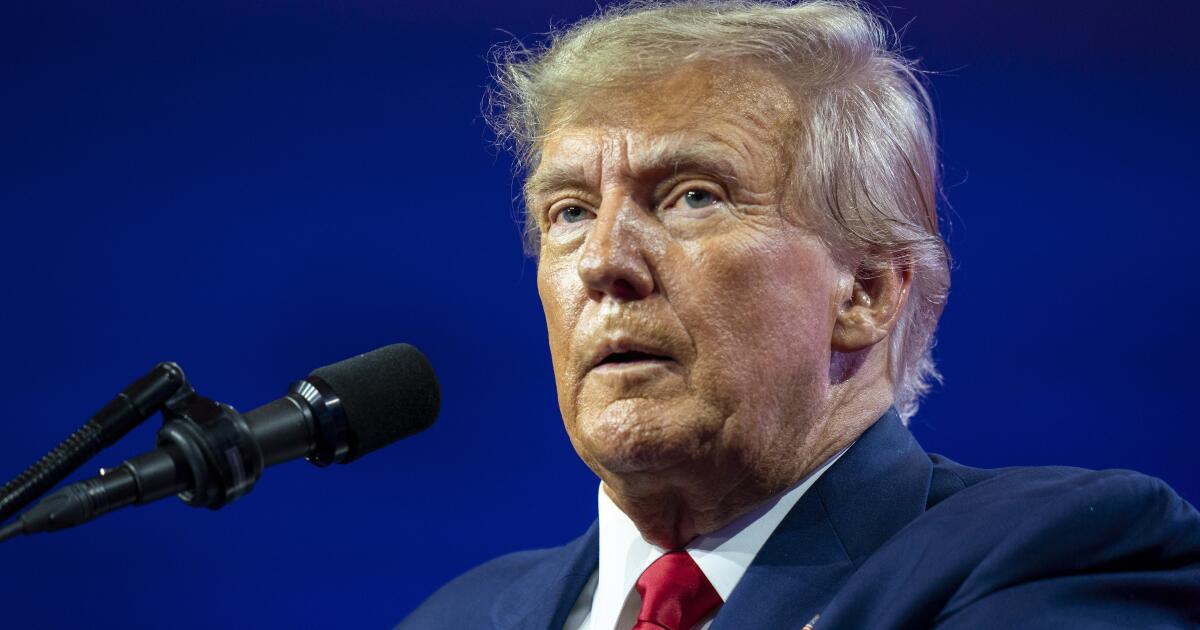
With their life savings, childrens’ college funds and their own retirement prospects at stake, most people probably view investing in stocks as a serious business. Now and then, however, the markets produce comedy gold.
Hello, Trump Media & Technology Group.
The owner of Truth Social, a social media platform exclusively hitched to Donald Trump, staged an initial public offering March 26 amid a torrent of speculation over how many billions the IPO would produce for Trump himself. In the event, the figure was a paper gain of about $5 billion for him, virtually pure profit.
It’s a scam. Just like everything he’s ever been involved in, it’s a con.
— Barry Diller on Trump and Trump Media
The cult of Trump had sent the shares soaring as high as $79.38 on that first day, valuing the company at about $9.5 billion. By the end of the day it had settled back to $57.99. Since then, it has mostly been on the schneid, falling steadily.
As I write, midway in the trading day Tuesday, the shares are quoted at $22.80, down more than 14% on the day. That brings the shares’ slide since they peaked at $79.38 on March 26 to about 70.2%.
Trump, who loves hyperbole, might revel in a three-week plunge that could be some sort of a record. Whether he would call it “beautiful,” one of his favorite superlatives, is another question.
The slide has pared the market value of Trump Media by more than $6 billion from its peak. Trump is still sitting on a paper holding worth more than $2 billion, but his outside investors, many of whom are small investors who bought at or near the top, have been been taken to the abattoir.
“I think they’re dopes,” the veteran entertainment executive Barry Diller said of Trump Media’s investors during a CNBC appearance on April 4.
That’s not to say, given the stock’s volatility, that it might not recover and end up in the green for the day, though whether it can recover the full 69.8% loss, even over time, is subject to doubt.
Still, the raw numbers, being right there for everyone to view in bright red, aren’t as interesting as the underlying grift. Let’s examine that.
It’s fair to say that few if any experienced investment professionals expect Trump Media to have staying power as a high-flying stock. I raised the most pertinent issues a few days before the IPO: The company had meager revenues and huge losses. It was to be taken public via a device — a special purpose acquisition company, or SPAC — that was often used to circumvent government rules for disclosures to investors.
Trump Media’s expected value of $5 billion at the IPO swore at common sense, or at any traditional standard of securities valuation. In short, Trump Media looked like any number of other Trump ventures, such as Trump University — all promise, no delivery.
“It’s a scam,” Diller told his CNBC interviewers. “Just like everything he’s ever been involved in, it’s a con.”
No one at Truth Social responded to my request for a comment about Diller’s remark.
Earlier, I asked whether anyone should believe in the valuation projections, and whether anyone in their right mind would invest. My answers were probably not, and probably not. That was conjecture, not investment advice.
After the IPO, however, more issues were disclosed that contributed to the stock’s precipitous slide. The company’s first annual report, issued April 1, incorporated an obligatory section on risk factors to be pondered by investors that included the traditional warnings about the costs of competition, the prospects of litigation, and the dangers of technology failures — and a couple that aren’t normally seen in corporate disclosures.
One covered the downsides of Trump Media’s linkage with Trump — that Truth Social faced “greater risks than typical social media platforms because of … the involvement of President Trump.” Those risks include “harassment of advertisers or content providers, increased risk of hacking of [Truth Social’s] platform, lesser need for Truth Social if First Amendment speech is no longer believed to be suppressed by other similar platforms, criticism of Truth Social for its moderation practices, and increased stockholder suits.”
The report made clear, if anyone was unaware of this, that the value of its brand “may diminish if the popularity of President Trump were to suffer,” as it would from “the death, incarceration, or incapacity of President Trump.”
Perhaps more telling was the company’s disclosure that it was not planning to “collect, monitor or report” the traditional metrics used by other social media platforms, such as Meta and X (formerly Twitter). Among those performance measures are “average revenue per user, ad impressions and pricing, … monthly and daily active users” — in other words, all the statistics that tell a social media company who, if anyone, is using it, and what their participation is worth in dollars and cents.
Having that information would only “divert” the company’s management, the report said, though it wasn’t clear about how management would fashion a strategy for the future if it doesn’t know where it is at present, including just how many users it has.
The annual report also updated Trump Media’s financial statements to cover the full year 2023: The platform lost more than $58 million on revenue of a bare $4.1 million. Previous disclosures had covered only the first nine months of 2023, when the company said it lost $49 million on $3.4 million in revenue.
On Monday, shareholders got another surprise. Trump Media said in a public filing that it planned to issue 40 million new shares to insiders (36 million of them to Trump himself) and that warrant holders were entitled to 21.5 million additional shares of stock, which could be expected to reach the open market almost immediately upon the warrants’ conversion.
That means existing shareholders are about to be heavily diluted, left with less of the company than they anticipated. The shares plunged more than 18% on Monday.
Who benefits from these maneuvers? Trump does. He is in effect the owner of 64.9% of the company, including the 36 million new shares; no one else owns more than 7.3%. For him this isn’t much of an investment; 36 million of his 114.7 million shares are a handout that didn’t require him to put up his own money. The rest were issued to him via the IPO in return for his interest in Trump Media as a private company.
Trump’s financial role in the founding of Truth Social in 2021 may have been minimal or nonexistent; Reuters reported in 2022 that most of the $38 million raised in the company’s first year came from businessmen who were political allies of Trump and from borrowings from unidentified lenders.
Trump has almost no ability to convert his shareholdings to cash in the near term, however. As a Trump Media insider, he is prevented from selling or borrowing against his shares for at least six months.
If and when he places any of his shares on the market, he would be selling into a declining market. Trump Media is the memiest of “meme stocks,” its value entirely divorced from financial fundamentals and based entirely on his involvement in the enterprise.
That places the value of his stake on a knife-edge. Any indication that he is reducing his commitment would almost certainly provoke a stampede for the exits among other shareholders. Trump would be racing to cash in before the value of his holdings reached the vanishing point.
Who are the other shareholders? According to a survey by the Washington Post, many are retail investors who believe that Trump’s touch is gold, or thought that buying his shares was a way to express faith in Trump and perhaps make some money on the side. At this moment, they are staring into the abyss.


It was a very warm homecoming at the box office this weekend for Christopher Nolan’s “The Odyssey,” as the star-studded epic grossed $124.5 million in the U.S. and Canada, a welcome and massive jolt for theaters after a series of slower weeks.
The Universal Pictures film’s haul outperformed studio expectations of a $117 million domestic opening and set a record for the highest-grossing opening weekend for a live-action or R-rated film so far this year.
“The Odyssey” now ranks as the third-highest domestic debut of 2026, trailing only Disney and Pixar’s “Toy Story 5” ($159.7 million) and Universal, Illumination and Nintendo’s “The Super Mario Galaxy Movie” ($131.7 million).
The film, which stars Matt Damon as Odysseus, brought in a total of $264.1 million worldwide, according to studio estimates. That marks the biggest global opening ever for a Nolan film.
“The Odyssey” was produced by Nolan and his wife and producing partner Emma Thomas for their company, Syncopy, and had a production budget of about $200 million to $250 million.
“It delivers on every sort of promise,” said Jim Orr, Universal’s president of domestic distribution. “It is totally immersive. It is great emotional storytelling. It is something that truly has to be experienced on the big screen.”
The nearly three-hour epic is the first feature to be shot entirely on Imax cameras, a feat that required extensive cooperation between Nolan and the Canadian entertainment tech company, which operates out of Playa Vista.
Nolan first told Imax Chief Executive Rich Gelfond in early 2024 that he was considering making an entire film with Imax cameras and laid out what he’d need for that to happen, including a quieter and lighter camera, a way to make film reloads easier and getting enough trained projectionists.
“It took a fair amount of time and investment” to figure out those challenges, Gelfond said. But by August 2024, the Imax team put together a series of tests to show cinematographer Hoyte van Hoytema. Two months later, Nolan saw the tests and was impressed.
“As filmmakers and studios integrate Imax, we become an increasingly important part of the ecosystem,” Gelfond said. “When a film is released in Imax or shot in Imax, I think it’s a signal to audiences that it’s somewhat special, and the filmmaker is really leaning in in a unique way.”
Anticipation for the film has been building for at least a year, when the first Imax 70mm tickets went on sale. Pre-sales for “The Odyssey” shattered the previous Imax record by nearly double, the company said.
Enhanced formats made up 53% of the domestic weekend’s total, with both film and digital Imax revenue comprising 23.8%. Imax 70mm comprised about 4% of that total, with Imax digital making up the rest. Non-Imax 70mm film screening revenue totaled 3%, while 35mm showings made up 0.3%.
Adding to the film’s mystique is Nolan’s reliance on old-school Hollywood practical effects, such as his use of puppetry, animatronics and robotics in scenes with the Cyclops, as well as a real Viking boat that the actors learned to sail.
The massive reception for the film is a relief for theater owners, who weathered their own rough waters in the last few weeks, as Walt Disney Co.’s live-action “Moana” underperformed in its opening at the box office and Universal and Illumination’s “Minions & Monsters” had a softer debut.
“Moana” came in second at the box office this weekend with a domestic haul of $19 million. “Minions & Monsters” ($14.8 million), “Toy Story 5” ($14.8 million) and Warner Bros. Pictures’ “Evil Dead Burn” ($5 million) rounded out the top five, according to data from Rentrak.

Tennessee propositioned Paramount Skydance, hoping to tempt it to become the next company to leave California.
As California Atty. Gen. Rob Bonta gathered a coalition of 12 state attorneys general to try to block Paramount’s $111-billion takeover of Warner Bros. Discovery, Tennessee slid into Paramount’s DMs, suggesting it would be better treated in the southern state.
Corporate flight from the Golden State has increased in recent years, with many California-based companies fleeing for lower taxes and more lax business regulations. For the first time this year, California was not the state with the most Fortune 500 companies, after Texas dethroned it in June.
California companies packing up their people and headquarters to move to Texas has been a well-traveled road for those looking for options. Now Tennessee wants to be in the running as a prime destination as well.
Here is what you need to know about its efforts:
What happened with Paramount?
In a July 2 letter to Paramount Chief Executive David Ellison, Tennessee Deputy Gov. Stuart McWhorter pitched a relocation of the studio’s Hollywood headquarters to the Volunteer State. In the middle of a brutal legal battle with California regarding the proposed Warner Bros. merger, Tennessee may appear more appealing to Ellison. Paramount relocated its headquarters from New York to Los Angeles in August of last year.
“As Paramount Skydance writes its next chapter, Tennessee offers a compelling proposition: a state where creativity and technology converge, where talent is developed intentionally, and where innovation is embraced,” said McWhorter in the letter viewed by The Times. “We would welcome the opportunity to share our vision for how Tennessee could help shape the future of Paramount Skydance and its talented team.”
Though many in Hollywood have giggled at the idea of a major studio moving to the South, it isn’t totally ridiculous.
Ellison has backing from his father, tech billionaire and Oracle co-founder Larry Ellison. Oracle, once a California-based company, is now moving its headquarters to Nashville.
In December of 2020, the software tech company left California, where it was founded in 1977, to relocate to Texas. In April 2024, it chose Nashville as the home for Oracle’s “world headquarters,” which began construction in February.
Have other companies moved to Tennessee?
Oracle isn’t the first company to set up in Tennessee. Nissan, which had operated its U.S. headquarters out of Gardena since 1960, left the state in 2005 for Franklin. Nissan chose Tennessee for its drastically lower operational costs.
Mitsubishi Motors also moved its headquarters to Franklin from Cypress in 2019. Mitsubishi moved for lower operational costs and to be in a state with less-strict business regulations than California‘s.
Two beloved California burger chains moved to Tennessee.
In 2018, CKE, the parent company of Los Angeles-founded Carl’s Jr., also left California for Tennessee. CKE consolidated Carl’s Jr. and its St. Louis chain, Hardee’s, under its headquarters in Franklin.
In-N-Out — arguably California’s most iconic burger spot known for its animal fries and double doubles— began a transition out of California in 2023. It established a corporate office in Franklin, and last summer, owner and Chief Executive Lynsi Snyder announced her own move to Tennessee.
Last year, Snyder said pandemic-era restrictions and California policy motivated her decision to leave, but she has no plans for In-N-Out to expand farther East. The majority of In-N-Out locations are still in California.
“There’s a lot of great things about California, but raising a family is not easy here. Doing business is not easy here,” Snyder said.
What is so special about Tennessee?
The southern state’s highly business-friendly tax incentives make it an extremely desirable location. Businesses and billionaires are drawn to Tennessee by its lack of state income and property taxes. Instead, the state relies on a 7% sales tax as its main source of tax revenue. Tennessee also offers a number of tax credits and grants for businesses, including many designed to support newly relocated businesses, cover costs of training new employees, and construction.
Tennessee’s central location and well-connected infrastructure support supply chain logistics. Seven interstate highways run through Tennessee, and six of the United States’ class 1 rail lines operate there, allowing companies to cut transportation costs dramatically. Memphis is also home to the busiest cargo airport in the country.
The Tennessee Department of Economic and Community Development says the state has one of the best business incentive programs in the country and has been ranked the third best state for doing business by Chief Executive magazine.
Tennessee Gov. Bill Lee attributes the success to the state’s competitive tax policy, workforce, and quality of life.
“Companies choose Tennessee because they recognize the strength of our workforce, our strategic location and our ability to support long-term growth,” Lee said in an emailed statement. “Tennessee’s success comes from our commitment to helping businesses thrive.”
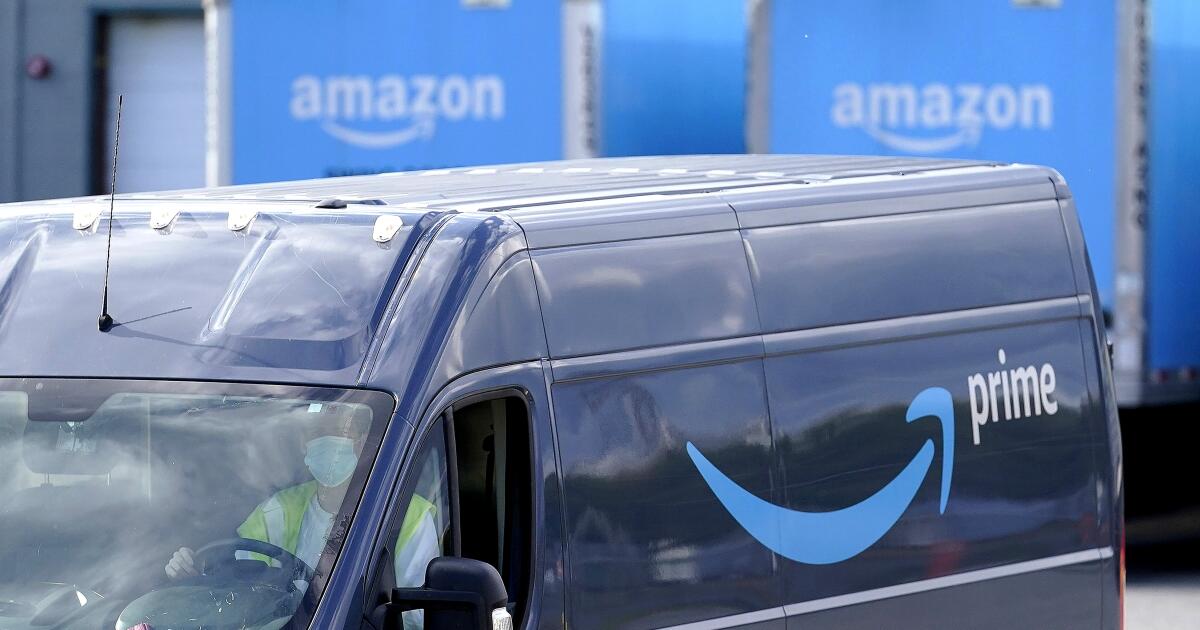
Two Amazon delivery service partners are shutting offices and laying off hundreds.
Xpress Delivery, located in Oakland, will be laying off 80 employees. OnPoint Logistics will be ceasing operations at its San Francisco location and cutting 96 jobs, according to a government filing.
Amazon delivery service partners are independent businesses that partner with Amazon to deliver packages from a local fulfillment center to the delivery station using Amazon delivery vans and provided devices.
In January, Amazon announced it would cut 16,000 jobs from its workforce and announced additional layoffs in May in its selling partner services team.
These are only joining a growing list of layoffs across California’s tech and business hubs. LinkedIn, Cisco, Meta, and Oracle have all announced layoffs this year. Both LinkedIn and Cisco cut around 5% of their workforce overall, with hundreds of those layoffs occurring in California. Meta and Oracle slashed over 10% of their workforces in favor of implementing AI into its operations.
Both OnPoint and Xpress delivery stations will permanently cease operations, and no replacement companies have been announced yet to operate there.
Amazon did not respond to a request for comment.
-
 News24 minutes ago
A cavalcade of international stars headlined the World Cup’s first-ever halftime final show
-

 Los Angeles, Ca2 hours ago
Thieves stealing air-conditioning units in Pasadena, police say
-

 Detroit, MI2 hours ago
Detroit nonprofit rebounds from theft of 400 pairs of shoes with help from the community
-

 San Francisco, CA3 hours ago
Fans gather in San Francisco to watch Spain-Argentina World Cup final
-

 Dallas, TX3 hours ago
Dallas Mavericks acquire former No. 1 pick Zaccharie Risacher in 3-team trade
-

 Boston, MA3 hours ago
Boston Weather: Cooler temperatures, possible storms incoming
-

 Denver, CO3 hours ago
Denver weather: Pinpoint Weather Alert Day continues through Monday evening for heat
-

 Seattle, WA3 hours ago
West Seattle Grand Parade throwback: 1989’s ‘Save the Admiral’ float – and views of the route it traveled

