Business
Column: The Ozempic revolution in weight-loss drugs exposes the weakest links in our healthcare system — drug pricing and insurance

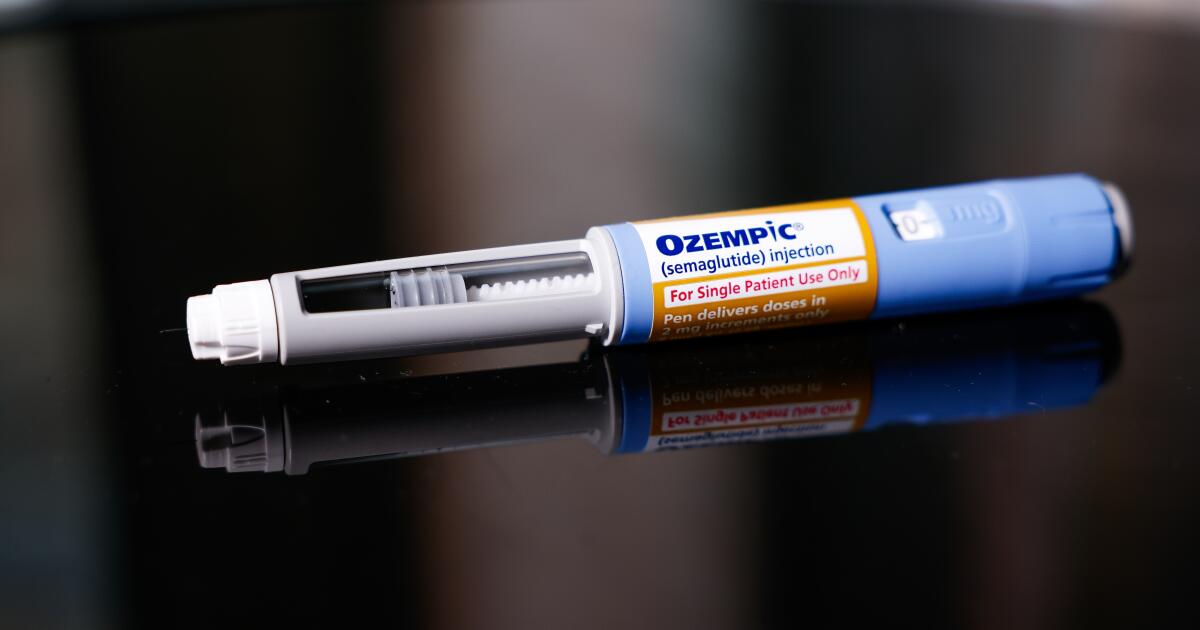
It’s rare — miraculously rare — that a drug can have such a pronounced effect that its immediate benefits translate into healthcare savings for years, even decades. To the wonder drugs Harvoni and Sovaldi, which wipe out hepatitis C, we can now add the weight-loss medicine Ozempic and its cousins Wegovy, Mounjaro and Zepbound.
These drugs have shown remarkable effectiveness in reducing obesity. That points to long-term reductions in users’ vulnerability to the whole spectrum of obesity-related medical conditions, including diabetes, cardiovascular disease, bad knees and sleep apnea.
They appear to work on other unhealthful dependencies such as narcotic and alcohol addiction, and possibly even on Alzheimer’s.
‘Insurers routinely don’t see people for more than a few years at a time …. This limits the length of time that health gains can be internalized as reduced claims.’
— David Anderson, University of South Carolina health policy expert
Yet millions of Americans are unable to access these drugs, thanks to the two big, interrelated flaws in our healthcare system: unrestrained pricing by drug companies and the economics of health insurance.
We’ll explore how these factors work to deny access to drugs that address America’s No. 1 health malady. But first, a look at the seriousness of the obesity epidemic.
Weight is typically measured by the body mass index, or BMI, which correlates weight with height. Roughly speaking (and not accounting for differences between males and females), a “healthy” weight for a 5-foot-10-inch person is reckoned by the Centers for Disease Control and Prevention to be 128 to 173 pounds, which translates to a BMI of between 18.4 and 24.9.
Between 173 and 208 pounds places that person in the “overweight” category and heavier than that is judged to be “obese,” defined as a BMI of 30 or higher. Those with a BMI of 40 or higher, or 278 pounds for a 5-foot-10 adult, are “severely obese.”
America has been getting more obese over time, according to the CDC. In 1960, about 31.5% of U.S. adults were overweight; in 2017, the latest period tracked by the agency, the figure was 30.3%. In 1960, however, 13.4% of adults were obese and 0.9% severely obese; by 2017, about 42.8% of adults were obese and 9.6% severely obese.
The rate of obesity among children — about 20% — is especially worrisome. Obese children are more likely than those with healthy weights to have high blood pressure and diabetes, and more likely to be obese in adulthood.
The toll this epidemic takes on the economy is horrific. Obesity and its consequences cost the U.S. healthcare system nearly $173 billion a year, the CDC estimates.
Experience with the weight-loss medicines thus far shows that they can cut the rates of obesity-related conditions materially. A five-year study of more than 24,000 nondiabetic but obese subjects published earlier this month by a team of Taiwanese researchers found significant reductions not only in heart disease, hypertension, stroke and kidney failure but in mortality from all causes as well. Those in the control group (not receiving the drug) had a 3.5% annual mortality rate; for those given the drug, it was only 0.75%.
So why would stakeholders in our healthcare system not be beating down the doors to make these drugs more widely available?
The answer, of course, boils down to money.
The estimated cost of Wegovy and similar drugs for insurers, net of bulk discounts provided by manufacturers (Denmark-based Novo Nordisk for Wegovy and Ozempic and Indianapolis-based Eli Lilly for Mounjaro and Zepbound) runs from about $8,600 to $9,100 a year. That’s a big lift for insurers contemplating coverage of drugs for which the public demand can be in the millions.
That might work if insurers could be sure that the long-term savings from their enrollees’ health improvements would save them as much or more. In our fragmented healthcare system, however, they can’t be sure that they’ll still be covering those enrollees in the cost-avoidance period. Customers can move to other insurers or leave the employers who were providing the insurance.
“Insurers routinely don’t see people for more than a few years at a time,” observes David Anderson, an expert in health policy at the University of South Carolina. “This limits the length of time that health gains can be internalized as reduced claims.”
As a result, insurers have been placing obstacles in the way of customers seeking coverage. Some require advance authorization before they’ll pay or limit coverage only to patients with a high BMI. Some insurance plans will cover them only for employees already diagnosed with diabetes, the condition for which these medicines were first developed, but not for weight loss alone.
Insurers administering plans for self-insured employers — large companies and institutions — are probably responding to their clients’ directives.
Some big employers that originally covered the weight-loss drugs have pulled back. The Mayo Clinic has imposed a $20,000 lifetime limit on the coverage for its employees. Purdue University will cover the drugs for employees with BMIs over 30, but requires employees to have lost at least 5% of their body weight after three months to continue coverage.
Others have simply dropped the option altogether. That leaves employees or the uninsured on the hook for the cost of $1,000 or more a month.
The insurer best positioned to pay for the weight-loss drugs and to reap the long-term benefits is Medicare, in which enrollees typically remain for life. Moreover, insurers are generally required to cover drugs considered the standard of care for known conditions.
Unfortunately, Medicare is prohibited by law to cover drugs prescribed specifically for weight loss. It can pay for them only if they’re prescribed for a related condition, such as heart disease or diabetes. For example, Wegovy was added to the standard formulary for Medicare’s Part D prescription benefit after it received approval from the Food and Drug Administration in March for the treatment of heart attack risk.
The popularity and efficacy of the drugs prompted legislators in June to update a measure unsuccessfully introduced in 2014 legalizing Medicare coverage for weight loss alone. The new version would cover mostly those who had been taking a drug for at least a year before joining Medicare, however.
Some experts estimate that expanding coverage of the weight-loss drugs would cost Medicare up to $6.1 billion a year, assuming that 10% of patients eligible for the coverage actually receive prescriptions. That would increase the $120-billion annual cost of Medicare prescriptions (net of enrollee premiums and contributions from state programs) by a little over 5%.
Whether that cost would be fully offset by subsequent healthcare savings for Medicare is unclear. Not every patient prescribed the weight-loss drugs tolerates them well enough to stay on them for even a year, and not all will escape a major health crisis that could have been averted by weight loss alone.
But it seems now that our healthcare system will have to deal with the new class of weight-loss drugs in one way or another. Wegovy and Ozempic are expected to be selected for the next round of Medicare price negotiations, due to take place next year with price reductions effective starting in 2027. Drug industry analysts don’t expect the drugs’ popularity to wane. The market for them reached $6 billion last year, according to Goldman Sachs, which projected that it would grow to $100 billion by 2030.
The weight-loss drugs are by no means the most expensive on the market — that trophy belongs to certain cancer drugs and gene therapies, some of which clock in at several million dollars per treatment. But none of those serve a market anywhere near the potential size of weight-loss treatments.
Unless the U.S. moves toward a single-payer healthcare system and starts to place limits on drug prices, it’s the manufacturers of the weight-loss drugs that will reap most of the benefits. Sales of Wegovy and Ozempic made Novo Nordisk the most valuable European company last year and helped drive an increase in profit at Lilly for the second quarter that ended June 30 by nearly 69% over the year-earlier period.
To put it another way, America’s 20th century healthcare system is coming face to face with a spate of 21st century drugs. Something will have to give.


The race to bring air travel to the sky is heating up as Santa Cruz-based Joby Aviation and Toyota launch a joint venture to commercially produce air taxis.
The companies said in a news release Tuesday that they will work together on productivity, quality and costs and move toward mass production of Joby’s electric vertical takeoff aircraft. Joby and Toyota were first linked when Toyota made a nearly $400-million investment in the company in 2020. It has since increased its backing of the company to $900 million.
“It’s really meaningful for us to take on this challenge together with Joby, a partner that shares the same vision,” Toyota Chair Akio Toyoda said. “We believe this strengthened relationship is an important step forward in realizing the future mobility society.”
Joby‘s all-electric vertical takeoff vehicles are designed to hold four passengers and a pilot and can travel at up to 200 mph. The vehicle uses six tilting propellers to achieve vertical takeoff before switching to forward flight.
In February, Joby announced a partnership with Uber to start service in the United Arab Emirates this year, bringing on-demand air taxi rides to the country. It plans to expand to the U.S. after the completion of its final stage of Federal Aviation Administration testing.
Prior to its full FAA certification, Joby is hoping to launch early flight operations later this year as part of a White House program that will bring flights to several states, including New York, Texas and Arizona. Flights in California will not begin until after obtaining FAA certification.
Joby has been in a fierce battle to be the first with taxis in the sky with its Northern California competitor Archer Aviation. The two companies are involved in overlapping lawsuits, with Joby alleging corporate espionage against Archer, and Archer filing a suit alleging dubious ties to China that sparked an investigation into Joby by the U.S. International Trade Commission.
“Toyota has been by Joby’s side for nearly a decade, providing invaluable guidance and support as we built the foundation for manufacturing our aircraft,” JoeBen Bevirt, Joby’s chief executive and founder, said in the news release. “Together, we share a vision of making aerial mobility an everyday reality, and we look forward to delivering on that promise together.”
Joby Aviation’s shares, which have fallen more than 30% this year, climbed 3% on Tuesday to $8.92.
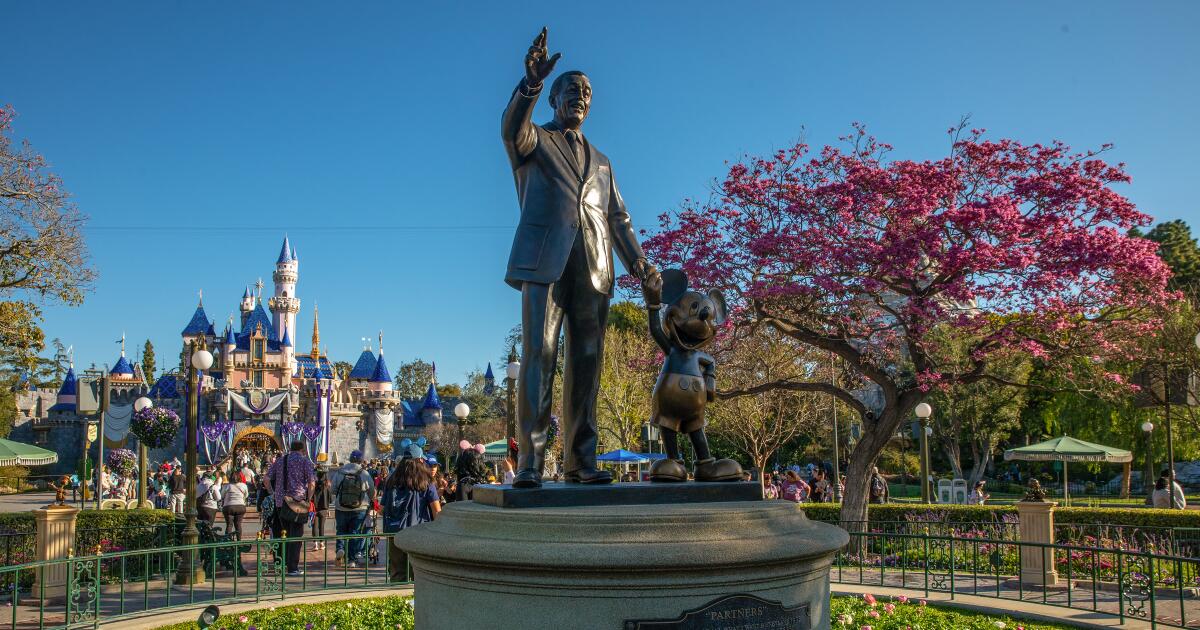
Disneyland Resort in Anaheim will offer $59 tickets for select evening admission to either theme park as part of a new promotion.
The one-day, one-park evening ticket offer will allow attendees to enter Disney California Adventure at 5 p.m. or Disneyland at 7 p.m. Park reservations are still required, as has been the case since the COVID-19 pandemic.
The offer only applies for admission from July 12 through Aug. 5 on Sundays to Wednesdays.
Disneyland Resort is commemorating its 70th anniversary through Aug. 9, and has introduced new shows and additions to rides as part of the occasion.
Walt Disney Co.’s theme parks and experiences business are a crucial boost to its finances, making up about 56% of the company’s operating income last fiscal year.
During the Burbank-based company’s most recent earnings call in May, Disney executives said attendance at its U.S.-based parks was down 1% compared with the prior year, a shift they attributed to “continued softness” in international visitations. However, the company said at the time that it was starting to move past those issues.
Disney’s experiences division reported $9.5 billion in revenue in that fiscal second quarter, up 7% compared with the same period a year ago, something executives said was due to higher guest spending domestically and more capacity on its cruise line.

An aging downtown office complex will be converted into apartments as part of an ambitious plan by local real estate companies to create 4,000 affordable housing units in Los Angeles.
The first project will be a $200-million makeover of the L.A. World Trade Center, a sprawling white elephant of an office complex on Figueroa Street built in the 1970s that will be turned into 512 apartments in one of the largest affordable housing conversions to date downtown.
Future projects being planned in the central city for delivery over the next five years will include other office-to-apartment conversions and new housing built from the ground up.
The 10-story World Trade Center, right, at Figueroa and Fourth streets in downtown Los Angeles, was built in the mid-1970s.
(Myung J. Chun / Los Angeles Times)
Behind the building campaign unveiled Monday are two of the region’s largest real estate companies, Jamison and Kennedy Wilson. Jamison is the city’s most prolific converter of offices to market-rate apartments and currently has a major makeover of a downtown office skyscraper underway for tenants who can pay top rents.
Kennedy Wilson, a real estate investment company based in Beverly Hills, owns Vintage Housing, which builds and operates affordable housing using tax credits and other state and federal financing to help fund it.
Vintage Housing and Jamison’s new affordable housing division, Arden Residential, will take on the campaign to build the housing where qualified tenants will pay rents below market rates.
Rents in the World Trade Center — which will be renamed Sky Castle when it opens in early 2028 — are expected to start at $937 for a one-bedroom unit. Some two- and three-bedroom units would rent for $1,100 and $1,300 per month, respectively, developers said.
Sky Castle will have shared amenities found in more expensive modern apartments, the developers said, such as a fitness center, resident lounge and co-working space. It already has six tennis courts on the roof, which may be converted to pickleball courts, Jamison Chief Executive Garrett Lee said.
The goal is to build higher quality affordable housing by using efficient construction methods Jamison has learned through building more than 8,000 market-rate apartments in the past, Lee said. The makeover of the World Trade Center will mark Jamison’s 15th conversion of an office building to housing.
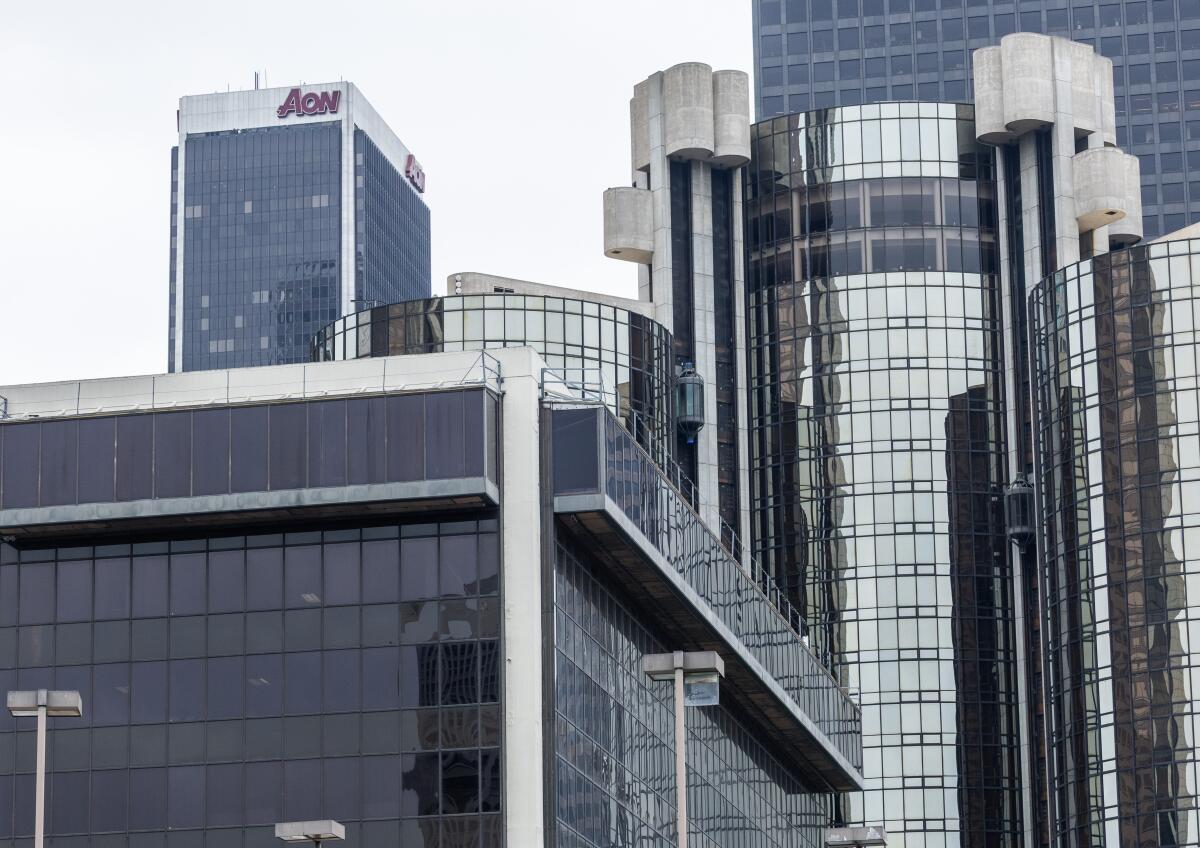
The plan to redevelop the L.A. World Trade Center, bottom left, is one of the largest affordable housing conversions to date downtown.
(Myung J. Chun / Los Angeles Times)
The 10-story World Trade Center was built in the mid-1970s to fanfare saying it would be home to international companies. In 1976, The Times described the center as a place to prepare for an overseas trip where visitors could get passports and visas, as well as exchange dollars for francs, marks, rubles and other currency. There was a language school and branches of U.S., Swiss and Japanese banks.
By the mid-1980s, the 400,000-square-foot office complex covering a city block at Figueroa and Fourth streets had lost its international flavor and was falling out of favor with corporate tenants who were moving into glossy new skyscrapers on Bunker Hill and in other locations.
The building has been cleared of remaining office tenants to allow work to begin in August, Lee said.
Kennedy Wilson is a nationwide operator of market-rate apartments that has also moved into building affordable housing in the last decade, said Nicholas Bridges, global head of capital markets at the company.
Building affordable, workforce housing “in almost all cases requires public subsidies,” Bridges said, and Kennedy Wilson has developed expertise in assembling “a cocktail of public financing sources” that includes low-income housing tax credits and tax-exempt bonds.
In the past, many housing developers have shied away from building affordable housing because assembling the subsidies needed to make construction profitable is challenging.

An artist’s rendering shows what the L.A. World Trade Center could look like after being redeveloped into affordable housing. The new complex is to be called Sky Castle.
(Ian Camarillo)
“It’s complicated,” Bridges said, “and not for the faint of heart.”
Eligible tenants must earn between 30% and 80% of the median income in the area where the housing is built.
Jamison and Kennedy Wilson will develop about 15 affordable housing projects between downtown and the 405 Freeway, Bridges said, many of them in aging office buildings such as the World Trade Center that are already owned by Jamison and are close to public transit.
Substantial potential for affordable housing lies in L.A.’s underused office buildings, he said.
“In this post-COVID world, the way people are utilizing office buildings, particularly older office buildings, has just fundamentally changed,” he said.
It makes sense for developers of conventional multifamily housing to move to building affordable housing, Lee said, because the government supports it through subsidies, zoning reform and the fast-tracking of construction permits. The city of Los Angeles also recently streamlined its adaptive reuse rules to make it easier to convert office buildings to housing.
“There are a lot of incentives pushing us in this direction,” Lee said.
-

 Illinois4 minutes ago
Illinois Product Farmers Market Highlights Local Flavors and Family Traditions
-

 Indiana12 minutes ago
2 Indiana men plead guilty in Montana oxycodone conspiracy case
-

 Iowa14 minutes ago
Iowa’s governor and her family on weeklong tour of Iowa tourist sites – Radio Iowa
-

 Kansas19 minutes ago
New mural to be unveiled Thursday afternoon in North Topeka
-

 Kentucky26 minutes ago
Former Northern Kentucky school bus driver sentenced in child pornography case
-

 Louisiana29 minutes ago
Audit finds barriers hinder Louisiana WIC enrollment – American Press
-

 Maine34 minutes ago
How to safely enjoy the water in Maine as temperatures rise
-

 Maryland42 minutes ago
Rep. Glenn Ivey, Community Members Discuss Gun Violence Solutions

