Finance
Austin financial staff propose delaying bond to 2028


AUSTIN (KXAN) — The city of Austin has released its final bond recommendation to city council members and the mayor. It’s one of at least three base options city council is expected to consider later this month.
City staff ultimately recommended the city council not pursue a bond in 2026 — but rather in 2028 — citing the “decision tree” city council adopted earlier this year.
“Staff also recognizes that there are priority funding areas that will need to be considered in the FY 2027 budget process for programs within the existing bond propositions that have reached 90% of the funds expended,” staff wrote. Those areas include transportation, watershed protection and parks.
In a work session Tuesday, many city council members expressed they still wanted to move forward with a bond this year — especially one that focuses on parks.
“Parks are so central to the identity of Austin; they’re so valued by people here — almost uniquely — amongst so many communities that I know. They are essentially out of capital funds … and I do feel an obligation to continue to get them some capital dollars,” Mayor Pro Tem Chito Vela said.
The Bond Election Advisory Task Force proposal
There are at least two additional base proposals up for consideration: One from a task force that’s been working for roughly a year and a half to identify the city’s greatest needs and another from a group of five city council members that focuses on parks.
The Bond Election Advisory Task Force (BEATF) has identified a package that would cost the city roughly $767 million and would tackle major projects in affordable housing, parks, transportation and flood mitigation.
The BEATF proposal puts money in the following buckets:
- $200 million: Affordable housing
- $175 million: Parks and open space
- $106 million: Facilities (libraries, museums, the Austin animal center)
- $25 million: Homeless Strategy Office (helping fund a new 1,200 bed shelter)
- $147 million: Transportation
- $113 million: Storm and flood mitigation infrastructure
You can find the full list of recommended projects here.
The ‘parks’ proposal
Last month, a group of city council members proposed an additional 2026 bond idea, worth more than $400 million, but that also includes a second bond ask in 2028. The focus of that bond is parks.
In a message board post, five council members pitched the following for a 2026 bond:
• $250-$260 million for parks projects, not including any maintenance facilities
• $50-$60 million for community facilities, such as libraries and cultural arts
• $75-$80 million for active transportation projects
“Should this option ultimately be pursued, we would then use the work of the BEATF and staff for the non-parks categories as the starting point for a 2028 bond discussion,” the council members said.
The BEATF then reworked that additional option — which is not their preferred proposal, but satisfies the ask from some council members — that would come in at $436 million.
The breakdown is:
- $225 million: Parks and open space
- $106 million: Facilities
- $25 million: Homeless Strategy Office
- $80 million: Transportation
You can find the breakdown of that option here.
City staff also put forward a version of this scenario which would cost roughly $390 million.
The breakdown of that alternate proposal is:
- $92 million: Transportation
- $250 million: Parks and Recreation
- $48 million” Community facilities
What happens next?
Council members and the city will now need to narrow down which of these proposals — if any of them — will be the final proposal.
In a work session, council members suggested they would not be able to have a decision made by the end of the month (staff initially put a placeholder for that vote on the May 28 council agenda). Mayor Pro Tem Vela told staff he would like to see a vote happen in July.
The deadline to call an election is in August and voters would have the ultimate say in November.
How much would these cost you?
City staff previously said that for every $100 million in additional debt the city takes on, the average Austin homeowner will see their bill go up by $14.34 annually.
It’s worth noting that your property tax bill will go up over the next several years regardless of whether a bond is approved or not in 2026. City staff say the city still has more than $2 billion in outstanding debt.


The Bermuda bank agrees to buy a 91.7% stake in CIBC Caribbean Bank for $1.8 billion, creating a regional giant.
This article appears in the July/August issue of Global Finance Magazine.
Butterfield Group has agreed to acquire a 91.7% stake in CIBC Caribbean Bank Limited for $1.8 billion — $1.09 billion in cash and the remainder in shares — in a deal that would create one of the region’s largest banking groups.
This is at least the third time in the past seven years that the Canadian Imperial Bank of Commerce (CIBC) has attempted to sell some of its Caribbean interests.
“This deal combines two storied, complementary banks with significant local scale advantages and time-honored customer relationships in their respective core jurisdictions,” said Michael Collins, Butterfield’s chairman and chief executive, in a statement.
The new banking group will hold an estimated $29 billion in assets. The Bermuda-based Butterfield Group—formerly The Bank of N.T. Butterfield & Son Limited—also operates in The Bahamas, the Cayman Islands, the Channel Islands, Singapore, Switzerland, and the U.K. CIBC has a presence in 10 countries and is based in Barbados.
CIBC will hold about 22% of the enlarged Butterfield Group and will have the right to appoint two directors to the board.
The bank’s top brass says the deal underscores a shift in the Caribbean financial sector.
“This is really a change in Butterfield’s positioning because it now picks up both a retail and a business portfolio that spans the entire gamut of the region, and it probably could make it the biggest bank in the region,” former Butterfield CEO Mariano Browne told the Trinidad and Tobago Guardian.
Butterfield has promised to maintain CIBC’s Barbados office. Customers should expect no immediate changes. Existing branches will remain open, and clients can expect improved cross-border payments and expanded consumer, digital, and merchant banking.
The deal, pending regulatory approval, should close in the first half of 2027.
In 2018, CIBC attempted to list FirstCaribbean on U.S. stock markets to raise up to $240 million but withdrew the application less than a month later after failing to drum up sufficient investor interest. A 2019 deal to sell 66.7% of CIBC to GNB Financial Group for $797 million fell through after the deal failed to secure regulatory approval.
Nic Wirtz is a contributing writer based in Guatemala.

Central banks are scaling back on the dollar as institutional bullion buying climbs to record highs.
In the World Gold Council’s (WGC) latest annual survey of central banks, 83% of respondents expect to increase their gold holdings over the next year. That’s up from 76% in 2025. This surge in demand is due to the U.S. dollar’s waning preeminence in global reserves and the growing number of international crises.
Almost three-quarters of central banks predict a lower share of global reserves held in greenbacks over the next five years, and a record 45% say they plan to increase their institutional bullion reserves over the next 12 months, up from 43% last year.
Gold Overtakes Bonds as Ultimate Safe Haven
Gold recently overtook U.S. government bonds as the world’s top reserve asset, according to the June 16 report. The survey polled 76 central banks between February and May; most responses were received after the recent Mideast hostilities began. Greenbacks accounted for 42% of total reported reserves, including gold and foreign exchange, in the third quarter of last year, according to the International Monetary Fund.
A record 90% of those polled by the WGC say gold’s performance during volatile periods is a key reason for acquiring more of it. Similarly, 82% say they value gold for portfolio diversification, and 84% value it as a long-term store of value.
The metal’s role in hedging geopolitical risk is especially important among central bankers in developing and emerging markets, with 85% citing this factor.
Half of respondents seeking to procure more gold say they will finance such purchases through domestic purchase programs denominated in local currency, while 38% say they would buy more gold by selling existing reserve assets.
Global Shift in Gold Storage Strategy
Central banks also appear to be rethinking their gold storage strategy. The survey found that 9% of central banks increased domestic storage over the past year, while 10% say they diversified their overseas storage locations.
The Bank of England remains the most popular gold storage location, cited by 57% of respondents, while the Swiss National Bank saw a sharp drop in preference, from 12% to 6% in 2025.
In the past four years, central banks have, on average, acquired 1,000 tonnes of gold annually, double the 500-tonne average of the previous decade. Mainland China’s bullion stores totaled 74.96 million troy ounces in late May, up 320,000 from April, marking the 19th consecutive month of increase, according to the People’s Bank of China.
Ajay Shamdasani is a contributing writer based in Hong Kong.

SixCap Healthcare Finance added Dan Carroll as senior relationship manager, reporting to the company’s co-founder and chief investment officer, Dan Whitwer.
Carroll brings more than 20 years of commercial finance, portfolio management and healthcare asset-based lending experience to SixCap. Throughout his career, he has managed complex healthcare lending relationships, led portfolio management teams, overseen loan closings and partnered closely with borrowers to support growth while maintaining disciplined credit management.
Most recently, Carroll held leadership positions at Siena, CNH Finance and Triumph Healthcare Finance, building extensive expertise in healthcare lending, credit analysis, loan structuring, risk management and client relationship management.
In his new role, Carroll will oversee borrower relationships across SixCap’s growing healthcare portfolio, working closely with clients to provide proactive portfolio management, responsive service and financing solutions that evolve alongside their businesses.
“We’re thrilled to welcome Dan to the SixCap team,” Whitwer said. “I’ve had the privilege of working alongside Dan and have seen firsthand the integrity, experience and thoughtful approach he brings to every client relationship. He understands healthcare, he understands asset-based lending and, most importantly, he understands the value of building lasting partnerships. As our portfolio continues to grow, Dan’s leadership and commitment to exceptional client service make him a tremendous addition to our team.”
-

 Technology8 minutes ago
Taylor Farms pulls iceberg lettuce from the US market after cyclosporiasis outbreak
-

 World14 minutes ago
Who is Andy Burnham? The Trump critic set to become the UK’s next prime minister
-

 Politics20 minutes ago
Major appeals court declares New Jersey AR-15 ban unconstitutional in landmark Second Amendment ruling
-

 Health26 minutes ago
First death reported in Upper East Side Legionnaires’ disease outbreak as cases rise to 67
-

 Sports32 minutes ago
Raising Cane’s owner Todd Graves on how viral Tom Brady-Rob Gronkowski dunk tank came to be at Fanatics Fest
-

 Technology38 minutes ago
Fox News AI Newsletter: IBM’s AI warning sends ‘shockwave’
-
 Business44 minutes ago
Netflix is the king of streaming. So why is its stock down this year?
-
 Entertainment50 minutes ago
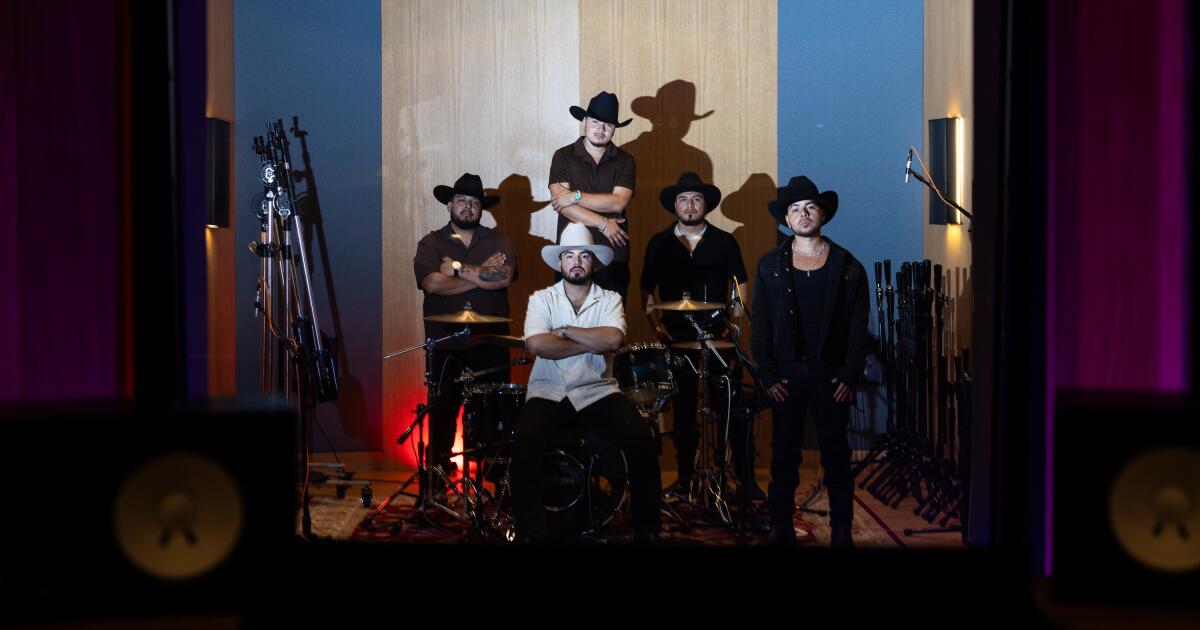
For Los Primos del Este, writing new album ‘Dulce Amargo’ felt like therapy

