Wyoming
American Rare Earths accelerates Wyoming pilot plant project


Australia-based American Rare Earths, which operates a US subsidiary called Wyoming Rare, has advanced the pilot plant program for its Halleck Creek Project in Wyoming to produce a high-purity separated rare earth oxide.
The company has signed agreements for initial processing to be done in Wyoming through Western Research Institute in Laramie and DISA Technologies in Casper, followed by a final stage of hydrometallurgical processing and oxide separation at the Saskatchewan Research Council (SRC) in Saskatoon, Canada.
The pilot plant program has been structured in three stages. The first two stages, milling and sizing followed by mineral separation and concentration, will take place in Wyoming. SRC will handle leaching, impurity removal and oxide refining in the third stage.
This will allow the front end of the pilot plant processing to stay in Wyoming, as it will process ore that has already been extracted from the American Rare Earths Halleck Creek site and stockpiled in Laramie. It will then leverage the downstream facility at SRC to accelerate production, the company said.
The pilot plant will use DISA’s patented high-pressure slurry ablation (HPSA) technology to handle coarser particle sizes and then use the GradePro reflux classifier and induced roll magnetic separators to perform primary mineral separation and secondary concentration.
The SRC facility has a similar process configuration to the type of downstream processing facility American Rare Earths intends to build in Wyoming. The company will use the data generated during the pilot campaign to further develop its plans for the commercial plant and mine.
“The pilot plant and production of pre-production rare earth oxide were previously expected to take several years. This defined pilot pathway now materially shortens the timeline and positions the Company to deliver outcomes within months,” said Mark Wall, CEO of American Rare Earths.
Source: American Rare Earths




WYOMING — Governor Mark Gordon hosted an impromptu panel discussion earlier this week with state veterinarians and the Wyoming Department of Health (WDH) to initiate communication efforts relating to the New World screwworm.
A statement from Gordon’s office says that there are no reported outbreaks of the flesh-eating New World screwworm in the U.S. outside of previously confirmed cases in Texas and New Mexico. Gordon called the session to increase lines of communication about the screwworm ahead of Wyoming’s peak summer travel, backcountry and rodeo season. Included in the panel were State Veterinarian Dr. Hallie Hasel, State Wildlife Veterinarian Dr. Samantha Allen, and WDH Public Health Veterinarian Dr. Emily Curren.
“There are no reported cases in Wyoming; however, Texas and New Mexico are tracking instances, so it is important to keep all citizens informed — including pet owners, campers, rodeo athletes, and sportsmen, in addition to our ag, ranching and wildlife communities.” Gordon said in the statement. “I’m satisfied with the extensive outreach regarding NWS that has been ongoing to our ag, livestock, and wildlife professionals.”
Gordon and the panelists fielded questions and heard commentary from various professionals, including Wyoming Department of Agriculture Director Doug Miyamoto, Director of Wyoming Game and Fish Department Angi Bruce, and Wyoming Livestock Board Director Steven True.
New World screwworm is a deadly, flesh-eating parasite that was previously eradicated in the United States and hasn’t been seen in Texas since 1966. An outbreak of the insects in Panama spurred a state of emergency in 2023, and a case of the screwworm was confirmed in southern Mexico in 2024. The female flies lay their eggs in open wounds of mammals, and the livestock industry is fearful of potential impacts on cattle and beef production.
Below are the key takeaways from the discussion, per Gordon’s statement.
- There are no reported outbreaks of New World screwworm in Wyoming.
- New World screwworms feed on and lay eggs in open wounds of warm-blooded animals, including humans.
- Transmission to humans is very rare.
- New World screwworm is not a food safety issue.
- Livestock and domesticated animals should be checked regularly — daily if possible.
- Contact a veterinarian or medical doctor if open wounds are painful and persistent.
- Keeping fly populations under control at rodeo events protects animals and people.
- Protocols for safe animal transport are currently in place in Wyoming.
- Wildlife and game populations are being monitored for early indicators of fly strikes.


JACKSON, Wyo. – Jackson Hole Public Art (JHPA) is proud to announce the
public installation of 250 Portraits, a community art project featuring self-portraits created and submitted by Wyoming residents from across the state. Launched in honor of the nation’s 250th anniversary, the project invited Wyomingites of all ages and backgrounds to submit portraits of themselves or other Wyoming residents, resulting in a vibrant and deeply personal collection of artwork.
Portraits were submitted by artists ranging in age from 5 to over 80, representing residents from 16 of Wyoming’s 23 counties. Participants included individuals, families, school groups, and educators who worked with their students to take part. The result is a wide-ranging snapshot of the people who call Wyoming home, from young children just beginning to express themselves through art to lifelong residents reflecting on decades of experience and identity.
The portraits are now on display in five large-scale grid installations located throughout downtown Jackson. They can be found at the Center for the Arts, JH Book Trader, the Antler Inn, the alley at Pinky G’s, and the Jackson Hole Elks Lodge. The exhibition will remain on view throughout the summer, giving locals and visitors alike the opportunity to take in the full collection at their own pace.
The exhibit, 250 Portraits, was designed to highlight both individual identity and collective belonging, weaving together faces from communities large and small into a single, statewide visual portrait of Wyoming’s people. By placing the work in accessible, high-traffic locations in downtown Jackson, JHPA hopes to spark conversation among residents and visitors about what it means to be part of a community that spans such a wide and varied landscape.
A self-guided walking map is available to help visitors navigate between the five sites and experience other public art projects throughout Jackson. For more information and to access the 2026 Public Art Map, visit https://www.jhpublicart.org/art/2026map.
Pair your portrait with an audio story! Please consider adding your voice to another state-wide project celebrating the stories of everyday Wyomingites: Re-Storying the West.
-

 Sports9 seconds ago
World Cup Red Cards: 2026 Has More Red Cards Than Each Of Last 2 World Cups
-

 Technology3 minutes ago
China’s brain chip breakthrough raises big questions
-
 Business8 minutes ago
Ranch lovers can soon travel with a TSA-friendly kit of the popular American dressing
-
 Entertainment15 minutes ago
At the Fonda, Jane Remover’s violent yearning heralds a new kind of stardom
-
 Lifestyle18 minutes ago
Beer, with a twist? SoCal dads find solidarity through an unexpected activity
-
 Politics23 minutes ago
Billionaire tax proposal faces hurdles as it moves closer to November ballot
-
 Science30 minutes ago
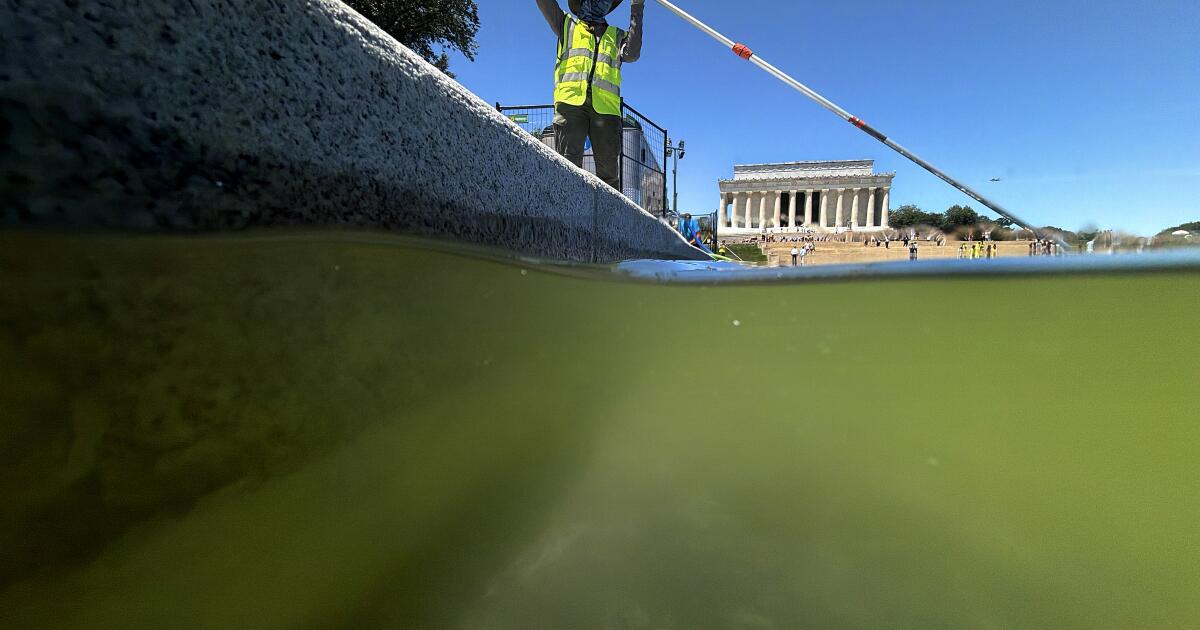
Here’s why the Lincoln Memorial Reflecting Pool went green so fast
-
 Sports33 minutes ago
Shohei Ohtani out of Dodgers’ lineup vs. Orioles for birth of his second child

